We just sent you a verification email. Please verify your account to gain access to
AI Agent Builder Summit. If you don’t think you received an email check your
spam folder.
In order to sign in, enter the email address you used to registered for the event. Once completed, you will receive an email with a verification link. Open this link to automatically sign into the site.
Register For AI Agent Builder Summit
Please fill out the information below. You will recieve an email with a verification link confirming your registration. Click the link to automatically sign into the site.
You’re almost there!
We just sent you a verification email. Please click the verification button in the email. Once your email address is verified, you will have full access to all event content for AI Agent Builder Summit.
I want my badge and interests to be visible to all attendees.
Checking this box will display your presense on the attendees list, view your profile and allow other attendees to contact you via 1-1 chat. Read the Privacy Policy. At any time, you can choose to disable this preference.
Select your Interests!
add
Upload your photo
Uploading..
OR
Connect via Twitter
Connect via Linkedin
EDIT PASSWORD
Share
Forgot Password
Almost there!
We just sent you a verification email. Please verify your account to gain access to
AI Agent Builder Summit. If you don’t think you received an email check your
spam folder.
In order to sign in, enter the email address you used to registered for the event. Once completed, you will receive an email with a verification link. Open this link to automatically sign into the site.
Sign in to gain access to AI Agent Builder Summit
Please sign in with LinkedIn to continue to AI Agent Builder Summit. Signing in with LinkedIn ensures a professional environment.
Head of Gen AI Products, Innovations and New BusinessesDeloitte
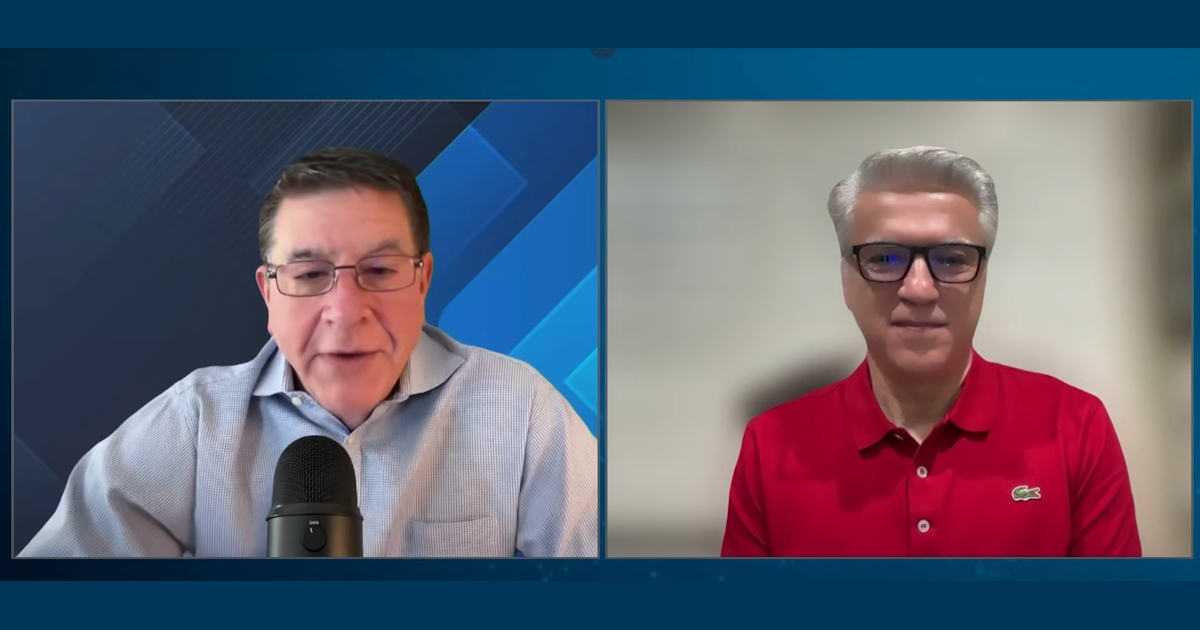
Abdi Goodarzi, head of gen AI products, innovations and new businesses at Deloitte, shares valuable insights with theCUBE Research’s Scott Hebner at the AI Agent Builder Summit. The purpose of the summit is to bring industry leaders together to explore best practices for integrating AI agents into organizational workflows in an aim to transform business operations efficiently.
Goodarzi discusses the growing demand for AI agents, also known as digital workers, in enterprises. The conversation takes a look at Deloitte's approach to leveraging generative ...Read more
exploreKeep Exploring
What are some key capabilities of AI agents that set them apart from traditional forms of automation?add
What steps were taken to make the adoption of agentic AI and digital workforce easier for enterprises while ensuring value creation and minimal additional training requirements?add
What principles are being emphasized in the design of agentic AI for enterprises, including ease of consumption, integration, focused value, domain and industry specific knowledge, and aiding in adoption and transition?add
What key things do you plan to share at the summit regarding building and creating agents properly, and what do you believe people will learn as we delve deeper into this topic in the next two years?add
>> Hello, Scott Hebner here. I'm the principal analyst here at SiliconANGLE Media in theCUBE Research, and we are so excited to be hosting on April 16th, an industry unique digital summit dedicated to exploring best practices in building AI agents and agentic workflows. We're also thrilled that Abdi Goodarzi, the head of generative AI products and innovations at Deloitte, will be joining us at the summit. He'll be sharing his real world experience in helping organizations employ agentic AI and how they're speeding their way to ROI and competitive differentiation. So with that, let me introduce Abdi. Hello, Abdi. Thank you so much for taking your time to be here.
Abdi Goodarzi
>> Hello, Scott. Glad to be here and excited for this summit. Looking forward to it.
Scott Hebner
>> Yeah, no, I really, really appreciate you being a part of the summit. It's going to be a great summit. We're expecting a great audience. I know you've been incredibly busy, very busy with the demand that you're getting from clients, just how to even get started with AI agents and agentic AI, and what do you see as the key drivers of all this demand?
Abdi Goodarzi
>> That's a great question, Scott, and the demand is really to get a lot more value and also drive the cost of work at the enterprise and take the intelligence level of the work and the way the work is executed to a whole new level. If you think about past 25, 26 years, every organization have been thinking about expansion and growth and getting into new markets and getting into new geographies, new products, and so on and so forth. But every time they've done that, they had to actually add more costs to the organization by adding more people, adding new processes and so on and so forth. Now, there's a technology out there that allows them to actually not do that and take advantage of cost optimization, efficiency, and productivity improvements, and actually do work smarter if you ask me. That's a key driver and excitement in the marketplace about creating agents. And we personally do not call them AI agents. We call them digital workers, because that's the new category of workers that are being added to the enterprise.
Scott Hebner
>> Yeah, you're right. I had one customer explain it to me. Their strategy in a nutshell was to provide superpowers to their people, and not just to their people, but to their organization and how they collaborate, which I think as you're indicating here, is you can do a lot more quickly, you can adapt quicker and at lower cost, and you can just do a lot more by having these digital coworkers at your side. And I had one really fascinating conversation about that. I think it was BMW group and yeah, it seems to be, becoming a big part of the industry today is, how do I actually do that? In fact, our research indicates a ton of interest in agentic AI, right? Certainly in 2025, it's really ramped up after, what, two, three years of focus on generative AI. But I also sense some confusion, maybe confusion is the wrong word, but there seems to be various views on how these coworkers are different from AI assistants that most of us have become familiar with powered by generative AI. What's your view about the transition we have from GenAI into the world that we're looking at now as we go forward?
Abdi Goodarzi
>> Yeah, I mean, that's a great actually distinction between AI assistants and AI agents. AI assistants typically are channels to interrogate your data or have a simple conversation with your data in a much easier way than you do it today. Because if today you're asking a question about your data from your systems, you have to come up with coding, querying, and all sorts of activities versus a conversational prompt allows you to do that, which simplifies the simple work of anybody is wondering about how the data is performing inside the enterprise. Now, that's the job of AI assistants and they do simple works and transactional activities that are no more than a few steps. Now, AI agents are supposed to be a lot more educated and a lot more intelligent about the context of the work. Meaning if you're asking an AI agent to execute a transaction for you, they have conceptual knowledge of what that transaction is all about, what business process you're trying to execute. And by training those agents, you allow them to actually become knowledgeable about the work itself rather than just simple steps about how the data is formed or recorded or retrieved. That differentiates between AI agents, the training, the tuning and knowledge and context related information that they provide, and they're capable of executing multiple tasks and executing workflows. And we recently saw the announcement that advanced reasoning is now available, and that's going to take the AI agents to a whole new level.
Scott Hebner
>> Yeah. With all the conversations, what you just said really resonates with me. I think that's a really good way to express it. As I've pulled together all the conversations that I've had, an AI assistant powered by a generative AI, it's really task oriented. You want to automate a simple task, create something, maybe some predictions if you're hooked up to a predictive model where the agents and the coworkers, as you say, now allow you to actually have a goal in mind, plan, maybe help make some decisions with the human co-worker, problem solve. I think, which gets into the reasoning thing that you just mentioned. And then the agentic layer is when you wire all that stuff together and it becomes an organizational thing. And I like the way you're framing this within the notion of a digital workplace that is there to complement humans, right?
Abdi Goodarzi
>> Yeah, absolutely.
Scott Hebner
>> So as you engage with executive teams around the globe, which I know you've been doing a lot of, how should they be thinking about AI agents in terms of being a part of the digital workforce, and what implications do you think there are for the business in terms of how they're going to operate in the future?
Abdi Goodarzi
>> Yeah, I mean, we have a lot of projects and a lot of activities with clients and organizations across the world in different industries and sectors. And some of the commonalities that like I see, they're related to some of the foundational activities that needs to happen before you can take advantage of AI agents. Here are a couple of examples. First of all, identifying use cases that complements the technologies and use of the agentic AI is a very important fact. You could have a use case that does not have a true value realization by creating significant amount of automations to it, and that may be a failure or it could be something that does not resonate to the enterprise that I did not get the value that I was looking for. So selecting use cases is one thing, and that is very important to make sure that you bring something that has true outcome, true value, and you can count on it. Second thing is many organizations are still struggling with system of records and I've said this in many forums. When we did the last 20 some odd years, a lot of transformations in finance, supply chain, customer systems, we created systems of records, but we did not pay attention to how these systems of records were actually recorded and unintentionally we created multiple sets of the same record. Well, AI can only be powered and become intelligent by the use of that data, by the quality of that data. So data itself is another challenge. The third challenge that organizations are looking for is, well, I'm going to go and implement an agenting AI solution. Is that the large capital cost? Is this a complex project that is going to take me months and years before I get or see any value out of it? And those kind of questions are things that executives are grappling with, because the only experience that they have is what they've done in the past and any transformation they did in the past took years and in some cases really, really long time. So those questions are constantly in the back of their minds. And being able to take a step back and understand those foundational challenges and how much complexity they add to your agentic initiatives and innovations is a very important factor.
Scott Hebner
>> Yeah. And I think you're definitely right on data is the lifeblood of AI, so that's where it all starts, right? But actually you bring up the systems of record and all that. So what about going about infusing these new capabilities in relation to their existing technology stack? Because I actually only been out there saying that this is a progressive set of capabilities. It's not rip and replace. Think of it as a journey you're on. Would you agree with that? Obviously, the systems of record sitting in an existing technology stack, right?
Abdi Goodarzi
>> AI is powered by both structured data and unstructured data. And recognizing where that unstructured data resides today can actually be an enabler and an accelerator. A lot of organizations have that unstructured data in repositories, in folders. Some organizations, they have content management systems that is well organized and can help. So figuring out where your unstructured data is and how you can bring it to life quickly will be a big accelerator. The second one is, as everyone in the industry and technology world recognizes, data is the fuel for the AI. I actually say data is the new currency for the enterprise. There are a lot of innovators and organizations that are coming up with assets and solutions and tools to index, to capture, to find and pull out all that data in a much, much easier way. And in fact, collection of that data has become less laborious and more digital, and that is another element that is really accelerating and there's no need for you to think about, "Oh my god, I have data challenges and it's going to take me years before I'm ready." You can actually take advantage of these technologies to accelerate that journey.
Scott Hebner
>> So it sounds like different businesses, different organizations are at different levels of their digital and tech transformation overall in terms of maturity. So I think what you're saying here is depending on where you are on that spectrum of maturity, you need to think about how you approach the AI agent and the co-worker infusion and all the things that you're helping customers do.
Abdi Goodarzi
>> Exactly. And any kind of agentic solution that is built has to be brownfield ready, meaning it cannot be something that you have to rearrange your infrastructure, rearrange a lot of components and complexities that you have in your systems and solutions and make it a "event." If it is an event, then that project has gone wrong. If it is something that can be plug and play and quickly give you value, even if it is a small value that you can scale and get bigger value out of it, that should be the methodology and approach in creating agents. Otherwise, anything that you do that takes a long time, it's just repeating the past and that's not really the promise.
Scott Hebner
>> Right. Well, at the summit we're going to have analysts obviously that cover the marketplace. We're going to have customers, they're going to be talking about their experiences. We're going to have many vendors that provide different solutions. And obviously we're going to have Deloitte, you, which I think is the broad lessons learned in the marketplace, what's working, what's not, because dealing with a lot in a sort of technology agnostic way, right? So when it comes to evaluating different agentic solutions that are out there in the marketplace, what do you think are the key factors that the executive team should really be weighing as they make those decisions and get started and they start the experimentation? And what do you guys look at when you're working with customers?
Abdi Goodarzi
>> Yeah, I mean, the way we approach this, we went back to our roots. We are a professional services. I've been serving the enterprises globally for decades, and this type of service that we provided always complemented the work that humans did along with the systems that they enabled within the enterprise. So we took that mentality back and said, "If you're introducing digital workforce through agentic AI, that same concept and principle has to be intact." Therefore, any agentic workforce and digital workforce that is added to the enterprise needs to be able to adopt and adapt the enterprise very quickly. That is the tuning and training and knowledge that you load your agents with so by the time they show up to the enterprise and gets connected to the systems and people within the enterprise, they can immediately provide value and create outcomes. And that is making the human in the loop and the digital workers in the enterprise an easy transition for organizations. Second thing is, as I said, we've been serving the enterprises and we know the problems. We've been solving these problems for decades. We actually know what they are. So we took a step back and said, "What if we actually go and solve the key problems within the domains and within the industries and have a perspective based on all the knowledge that we have collected over the years and decades, and train our agents with those capabilities and make sure the agents are actually very specific to the industry and almost very specific to the domain. So by the time show up, the additional training and adoption that the agent needs to go through is minimal set of activities?" So we made the consumption and adoption of digital workforce through agentic AI easier for the enterprise, but we did not give up and did not compromise on the value drivers and value creation. And those are the key measures and qualities that we try to bring to life through our agentic capabilities branded under Zora AI.
Scott Hebner
>> Yeah, I was just going to ask you about Zora AI. And you're right, best practices make the tech world evolve and run and it's gold. So it sounds like that's what you're capturing in Zora AI. I'm sure we're going to get into this in a lot more detail during the summit, but maybe a brief overview of Zora.
Abdi Goodarzi
>> Yeah, Zora, again, all these principles that I mentioned, they're absolutely part of our design. Make it easy to consume, make it easy to basically integrate with the enterprise, focus on the value, make sure that its domain and industry specific knowledge is embedded into the agent, and how do you actually become an organization to help the enterprises adopt and transition into the world of agentic AI. So those principles we're not compromising on them. And again, we are bringing forward domain specific digital workforce to the enterprise and also industry specific because there are really industry specific problems that are complex. It requires multiple set of agents to collaborate with each other, integration between the agents, collaboration between the agents, and also, let's not forget, at the end of the day, they're humans in the loop and they need to be part of this equation as well. So we have blueprinted and architected solutions and capabilities that accommodates all these questions that executives ask us day one. Then engineers in those organizations ask us day two, and the outcomes that every one of their users are expecting on day three when the solutions are implemented. So we take all these capabilities forward and we can talk about it more at the summit.
Scott Hebner
>> Yeah, that's great. I'm looking forward to that. So before we wrap up here, any other key things that you plan to share at the summit? And I do think there's going to be a lot, our suspicion is there's going to be a lot that are still just trying to figure out, how do we even get started, right? They're just in the middle of the generative AI and they're getting some value out of that. Now they have this. So what else do you think people are going to learn as we get deeper into this at the summit?
Abdi Goodarzi
>> First of all, it's fantastic that there's a summit about how do you approach building agents and creating agents properly and the right way. That itself is a great kind of activity and I look forward to it. Second thing is I think the next two years will be the 24 months that the rise of digital workforce within the enterprise becomes a reality and it becomes a mainstream business as usual activity. So technology is moving really, really fast. Enterprises are trying to catch up, and the moment the trigger happens and this value realization become real and tangible and something that can be captured, the pace is going to skyrocket and demand for agents are going to be ridiculously high. So this is a great time to take a step back, understand what you need to do, figure out how you can prepare for it so you can be ready when it happens.
Scott Hebner
>> That's awesome. Yeah, it's going to be a lot of fun and hearing from all the industry pioneers and you included. So thank you, Abdi. I really appreciate you taking the time being here, and we'll definitely learn more from you at the summit. For all of you, please visit deloitte.com to learn more in the meantime, and while you're out there, I encourage you to read some very practical yet inspiring papers. There's one, The Cognitive Leap, Reimagine Work with AI Agents, and then there's Zora AI by Deloitte, the Dawn of a New Digital Workforce. I found them fascinating reading. And by the way, while you're out there, subscribe to the Deloitte AI Institute Insights and Perspective newsletter. It's definitely one of the go-to sources that I use to keep up with things. And finally, don't miss the summit on April 16th. We'll be exploring with the help of Deloitte and many other industry pioneers, the key success factors in building AI agents and agentic systems. This is going to include how to deploy domain-specific knowledge, infuse explainable AI and decision intelligence, build and customize and integrate pre-built agents, and wire the agents into dynamic agentic workflows. The theme of the summit will be anchored on achieving trust in AI outcomes. Trust is now the currency of innovation. No trust, no ROI. So visit thecube.net to add the summit to your calendar. We'll see you at the summit and hear more from Abdi and many others. Bye for now.