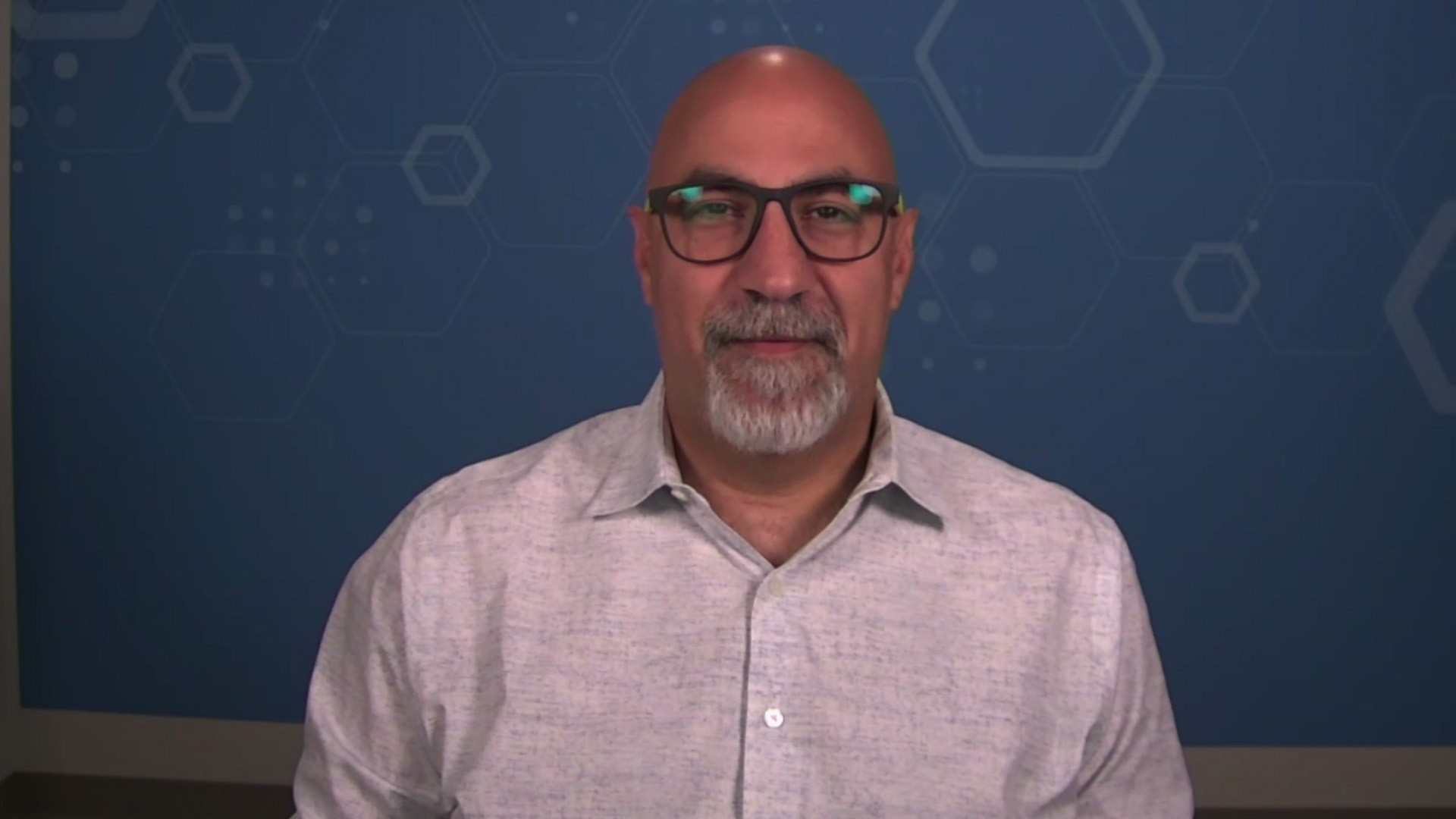
Shadi Shahin, vice president of product strategy at SAS Institute Inc., joins theCUBE’s Scott Hebner at the AI Agent Builder Summit to share how SAS is embedding AI agents into enterprise analytics workflows. Their conversation examines how intelligent agents, combined with SAS’s trusted analytics foundation, help organizations accelerate ROI and elevate decision-making.
Shahin outlines how SAS integrates agentic AI and quantum analytics to advance data platforms and unlock next-generation capabilities. From driving customer satisfaction to enabling smarter, faster operations, the discussion highlights SAS’s commitment to robust governance, explainability and intuitive tools that scale across business processes.
The session explores the strategic value of embedding AI agents into existing workflows, emphasizing transparency and trust as critical enablers of enterprise adoption. Shahin details how SAS equips companies to operationalize AI while maintaining confidence in outcomes through clarity, structure and insight.
Forgot Password
Almost there!
We just sent you a verification email. Please verify your account to gain access to
AI Agent Builder Summit. If you don’t think you received an email check your
spam folder.
In order to sign in, enter the email address you used to registered for the event. Once completed, you will receive an email with a verification link. Open this link to automatically sign into the site.
Register For AI Agent Builder Summit
Please fill out the information below. You will recieve an email with a verification link confirming your registration. Click the link to automatically sign into the site.
You’re almost there!
We just sent you a verification email. Please click the verification button in the email. Once your email address is verified, you will have full access to all event content for AI Agent Builder Summit.
I want my badge and interests to be visible to all attendees.
Checking this box will display your presense on the attendees list, view your profile and allow other attendees to contact you via 1-1 chat. Read the Privacy Policy. At any time, you can choose to disable this preference.
Select your Interests!
add
Upload your photo
Uploading..
OR
Connect via Twitter
Connect via Linkedin
EDIT PASSWORD
Share
Forgot Password
Almost there!
We just sent you a verification email. Please verify your account to gain access to
AI Agent Builder Summit. If you don’t think you received an email check your
spam folder.
In order to sign in, enter the email address you used to registered for the event. Once completed, you will receive an email with a verification link. Open this link to automatically sign into the site.
Sign in to gain access to AI Agent Builder Summit
Please sign in with LinkedIn to continue to AI Agent Builder Summit. Signing in with LinkedIn ensures a professional environment.
Are you sure you want to remove access rights for this user?
Details
Manage Access
email address
Community Invitation
Shadi Shahin, SAS
Shadi Shahin, vice president of product strategy at SAS Institute Inc., joins theCUBE’s Scott Hebner at the AI Agent Builder Summit to share how SAS is embedding AI agents into enterprise analytics workflows. Their conversation examines how intelligent agents, combined with SAS’s trusted analytics foundation, help organizations accelerate ROI and elevate decision-making.
Shahin outlines how SAS integrates agentic AI and quantum analytics to advance data platforms and unlock next-generation capabilities. From driving customer satisfaction to enabling smarter, faster operations, the discussion highlights SAS’s commitment to robust governance, explainability and intuitive tools that scale across business processes.
The session explores the strategic value of embedding AI agents into existing workflows, emphasizing transparency and trust as critical enablers of enterprise adoption. Shahin details how SAS equips companies to operationalize AI while maintaining confidence in outcomes through clarity, structure and insight.
Shadi Shahin, vice president of product strategy at SAS Institute Inc., joins theCUBE’s Scott Hebner at the AI Agent Builder Summit to share how SAS is embedding AI agents into enterprise analytics workflows. Their conversation examines how intelligent agents, combined with SAS’s trusted analytics foundation, help organizations accelerate ROI and elevate decision-making.
Shahin outlines how SAS integrates agentic AI and quantum analytics to advance data platforms and unlock next-generation capabilities. From driving customer satisfaction to enabling sm...Read more
exploreKeep Exploring
What will be discussed at the digital summit on April 16th and who will be joining as a speaker?add
What will he be sharing in his presentation, and how is SAS helping clients with ROI and competitive differentiation?add
What is Shadi Shahin's role at the summit and what can we expect from his presentation?add
What might be causing people to question and have different definitions of value, especially in relation to investing in something like AI agents across the enterprise?add
What are the three main areas that the speaker's company is focusing on across the space in terms of technology platform capabilities?add
>> Hello, Scott Hebner here. I'm the principal analyst for AI at SiliconANGLE Media and theCUBE Research. We are so excited to be hosting, on April 16th, an industry-unique digital summit, dedicated to exploring best practices and market-leading solutions for building AI agents and agentic systems. We're also thrilled that Shadi Shahin, the vice president of product strategy at SAS, will be joining us at the summit. He'll be sharing his real-world experience in helping organizations and employ agentic AI and how SAS is helping their clients speed their way to ROI and competitive differentiation. And more importantly, for those of you that are new to AI agents, how to get started building upon your existing data and analytics infrastructure. For over the last four decades, SAS has been a go-to provider for data analytics and statistical modeling tools, business intelligence software, data management and data-mining solutions and predictive and prescriptive analytics. They have a lot to work with to help ease the transition to agentic AI. So, with that, let me introduce Shadi Shahin to give us a brief preview of what to expect at the summit. He is the vice president of product strategy and orchestrates SAS's strategic initiatives to accelerate innovation, delight customers, and drive market growth. This includes driving work in AI agents and agentic workflows across our organization. So, welcome to the show, Shadi.
Shadi Shahin
>> Thank you, Scott. Thanks for having me. Looking forward to today.
Scott Hebner
>> So, let's just jump into this. Just tell us a little bit more about your role at SAS and your company's strategy for creating future state business models.
Shadi Shahin
>> So, I'm the vice president of product strategy. My role is really looking at the technology landscape, what our customers need and demand of us, and then making sure our technology solves the business problems they're trying to solve. At SAS, we're really into making our customers successful as fast as possible, understanding that the technology landscape is always evolving and we continue to innovate. And you mentioned quantum and agentic AI and other areas. But at the end of the day, we're not in it just for the technology game. We're in it for them to be as productive as possible to get to the decisions they need to make. Whether it's leveraging the data management technologies we have, the visualization, exploration, modeling, deployment, agentic and gen AI capabilities we have. That's all just part of the platform we provide to them so they can get to that business value. And then, on top of that, we provide IP out of the box, where we bring in the 40 plus years of experience we have, solving areas like risk and fraud for governments and public entities or banks for healthcare, for life sciences. We've had practice, we've helped customers solve those problems, so we put those in a box and say, "Here's a repeatable model for you to go and leverage." Those are the areas of focus for us. And obviously, with the gen AI movement and now the agentic push, how do we make sure customers understand that landscape and leverage our technologies and our partners' technologies to get the best value that they need?
Scott Hebner
>> Yeah, out in the marketplace, our research clearly indicates a ton of interest in the promise of AI agents in the broader concept of agentic workflows. But at the same time, I sense a lot of confusion. Different people have different definitions and a different way of articulating the value. I mean, it's consistent, but it's not exactly the same. And I think it's causing a little bit of people to question, "What exactly is the value of this and why do I need to start investing in it?"
So, maybe you can help clarify that by explaining the SAS vision for how AI agents can be effectively deployed across the enterprise and the value that customers can expect to get out of it?
Shadi Shahin
>> I think part of the root cause is it's moving so fast and then people like to latch on to the latest notion, whether it's agents or others. I think first we just need to define it. The AI realm is pretty wide. It goes from traditional reporting to statistical modeling, machine learning, and now we're looking at gen AI capabilities and agents. We were pretty comfortable last year talking about AI assistants. So, those are the systems that help humans make better decisions, give them intelligence as they're working, whether that's for me to generate code or for me as a business user to build a better PowerPoint. Agents is really the ability to give systems the autonomy to make the decisions on our behalf. Now, that's good. At the same time, you can imagine the risk or fear that they could bring on. How can I trust the system to make the right decision? How can I measure the system to make the right decision? How can I make sure that I'm monitoring the decisions as they're happening, so I'm not feeding bad decision on top bad decision, on top of bad decision? And so, agents are really about the autonomy, smarter, the ability to make nested decisions while we have the ability or we feel we need the ability to monitor those, so we're not led down the wrong path?
Scott Hebner
>> Yeah, I do think it's about giving people superpowers, not replacing people. And it's about getting organizations to just multiply their effectiveness, their efficiency, their productivity, saving them money. And like you keep pointing out, which is 100% right, which is make better decisions. The value of that is hard to measure, but incredibly intuitive. So, tell us a little bit about how this affects the SAS product strategy. Meaning, are you building new products for agentic AI or are you infusing AI agents and agentic capabilities into your existing... Give us a little bit of an overview of the portfolio.
Shadi Shahin
>> Yeah, so the first thing we have to do is talk about the three main areas that we're focusing on across the space. And so, the ability in our stack, in our technology platform to provide assistants and agents, so people can leverage the platform better. So, how do I build better models? How to build models faster? How do I get better insights out of my data faster? So, those assistants embedded in the system. And then, we provide the ability for customers to then build their own agents, understanding that this is not a singular thing, you don't just use one system to build agents because integrated within business flows or business systems you have, because that decision is not just a standalone. It's not just simply a model anymore where you're just sending inputs and expecting outputs of a score. It has inputs that are dependencies and it's usually daisy-chained into other systems. And then, we want to provide out-of-the-box agents, where we bring in, again, as I mentioned earlier, our expertise, where we know, in certain businesses, the best way to deploy agents is this way. And so, we will package those and be able to deploy those in customer environments where they're, again, integrated within that business flow. So, it's a holistic approach, where we go in and allow our customers to build their own because they know their data better, they know their systems better, they know their processes better, where they can leverage our technology. And in some cases we can just bring it and say, "Here's the best practice. It's generic enough where you can apply it to the use case you have and we can solve it for you."
Scott Hebner
>> Yeah, I think that makes a ton of sense. I mean, all the research I've done and all the conversations I've had, the progressive approach to building off what you already have and maturing it going forward versus some notion that this is a rip-and-replace strategy when you have to move to agents and agent systems, it really is just moving the ball forward. And as I pointed out in there are pre-summit discussion that we had, I absolutely love the tagline that you have out there, "The quickest way from a billion points of data to a point of view." I think that just captures a ton of value.
Shadi Shahin
>> Yeah, I agree. I think data can be overwhelming, insights can be really challenging, and we keep using the word decisions, are critical. How do you get from all the noise to the right insight to the right decision is what we're really, really focused on, and productivity is the thread that ties all that together. If I can do it easier, faster, cheaper, whatever productivity metric you want to use, but in our sense, if we can get you started and get you to that decision point where you see business value as quickly as possible, that's the key criteria we're focused on.
Scott Hebner
>> Yeah, I recently published some research on the topic of the growth of data. So, if you look at it, it's almost exponential between now and 2030. But if you look at the growth in actual data scientists, human beings, it's much flatter. So, what you have is this gap growing between the amount of newly-generated data and the ability for humans to actually extract value out of it. And some of the surveys today, say anywhere 50%, 40% of executives trust the decisions they're getting from their data because they just worry about how good is the data? What's the quality of it? That's projected to go down to 20% over the next five years if we don't change course on how we're able to extract all that value. And I think that's what you're getting at here with what SAS can help people do. Is that correct?
Shadi Shahin
>> That's correct. We've talked about democratizing data for years, and that's a skillset conversation and a technology conversation. To your point, more data. More good data, more bad data, it doesn't matter, just more data. And we are not necessarily having the workforce to deal with that. So, how do we upscale, through these machines, our users to be able to get the best insights, to be able to trust the data? You alluded to this, right? If we have less faith in the data we have, as we generate more data, whether it's real or synthetic, there's the age of synthetic data moving forward, how do we enable our systems to monitor for that? How do we enable our users to make better decisions without necessarily having to have all the scientific rigor and the background? They don't need to be programmers, they don't need to be statisticians to get the value out of the data they have while understanding and trusting that data.
Scott Hebner
>> Yeah, I would imagine it's not only a challenge of extracting value from all the data, it's knowing what part of the data is most important to focus on. So, there's going to have to be a new way... If it's not already broken, it's going to get even more broken as the future progresses here. So, that's why I think, again, a big fan of building off the capabilities that you have with data analytics and business intelligence and data mining and start to apply agents in that context, I think is a big winner. So, tell me a little bit about if you're a company and you're just getting started, how should they be thinking about, "How do I start to infuse agentic capabilities in relationship to my infrastructure and my existing data?" What are some of the key considerations?
Shadi Shahin
>> I think the criteria, you have to think for yourself as an entity, to your point, where do I get started? It's easy to get enamored with the technology and say, I'm just going to feed it all my data and it's just going to give me an answer and run me an agent internally. What's the risk appetite you have? What's the criticality of the data you want to use? And then, what are the use case you're trying to solve? And I would start with an achievable outcome. Don't shoot for the moon out of the gate, because then it's just failure. Whether it's in the data prep area or all the way at the top of your decision or for your coders, find a place to get started where you know can monitor and you can measure the value of that agent. And then, don't try to solve it for 100 agents, solve it for one and then iterate and continue. I think the easiest place to do that is in a place of comfort where you know can measure the gains. Fixing a long-lasting problem that you've spent maybe a decade trying to solve for business processes or technology implementations may not be the ideal area. Building on successes is a way to go to get started, and then you can get the funding you need to do the next ones. I think we undervalue the mess that the data is, and we tend to focus on the higher-order value of a business challenge. But if you don't get your data right from the very beginning, you just create this error rate that propagates throughout every single iteration moving forward. And so, whether it's at the data end or providing the machines or the agents, the ability to build better models or to build decisions is what I would do. And then, I would think through which areas am I comfortable with probabilistic answers? Which are areas that I need more business rules or deterministic answers on? And think of the dependency of all of those. I need rigor here. I need more insights here. I need the rules applied in this area. And then, integrate that and build... It's still a project. It still has all the rigor that you need to apply within any software development implementation solution. And again, just taking a bunch of data, throwing it to your large LLM of choice and hoping it'll just solve your problem is a recipe for disaster.
Scott Hebner
>> Yeah, I definitely agree with that. And it sounds like the right approach is score some points, put some points on the board, learn as you go, let best practices develop. The technology will clearly start to mature every couple months that goes by and just make some wins, create some wins that you can measure and then it will start to build on itself. I think the other point you make that's really critical is data is definitely the bloodline of AI. As we say, there's no AI without an IA in information architecture. So, as you go down this journey, that's a real critical part of the equation here is getting underneath all this data and making sure that not only are you taking advantage of it, but you're using the right value and you have the right quality controls around it, right?
Shadi Shahin
>> Completely agree, and you have the way to measure that. I think we know that synthetic data is here, and that's good for businesses to be able to create synthetic data, so they can build better models because they can detect more rare events or they can create more statistically-relevant data to build better models, that also introduces the risk of just really erroneous data or bad data because bad actors are out there. And so, if these large language models are trained on the data that's out there in the wild and we see more synthetic data out there, you can see how this could lead us to a place where the hallucinations get increased, the bad responses get created more and more. And so, we have to recognize that. Meaning, that the data we have is the data we need to trust, and you need to apply a rigor there to make sure you understand what you have at your disposal, where the gaps are, and make sure that the models you build you can trust. We will keep coming back to this theme of how do I trust it? How do I make sure not only my data, but my models, my decisions are acting on my behalf If they're autonomous in the right way. And it starts with the data, but it's much more than that. How do I make sure I'm continuously understanding what's happening, so I'm not caught in a moment of something bad has happened and I'm having to react to it?
Scott Hebner
>> Yeah. Trust, trust, trust. Don't solve the trust issue, then you're going to have a hard time getting value out of all this and getting your workforce to actually use it, which is ultimately what I think people need to do here. So, from my understanding of your portfolio, your product set, there are several aspects of it. So, I like to unwind this a little bit. And let's start with AI agent development and deployment capabilities. For a customer that's looking to get involved in actually building agents and deploying them and putting points on the board, as you mentioned, where would they start?
Shadi Shahin
>> So, once you've established the business case you're trying to solve for, you're going to leverage large language models, you're going to look at that. I think for us, we have the technology that allows you to build the types of agents you need. So, is it a completely autonomous agent? Is there a human in the loop? Is there a human on the loop? And then think of the different things you need. As I mentioned, there's the data that comes in, the transformations that are required, the lineage and governance that needs to be applied to that. There's probably some rule-based things that have to happen, business rules based on processes or human flows. Then you have most likely some deterministic things that need to be embedded, some more statistical rigor. And then, you're going to have a conversational interface, some reasoning where you're going to leverage a large language model to then lead to a deployment asset. Think of it as a self-contained unit that you want to embed in a business flow or an application at the edge, wherever it may be. And then, you want to be able to continuously monitor that. So, if it's running, what is it doing? How is it doing it? Can I explain why it's done it? Can I see what it's doing? And then, can I measure what it's done and then be able to come back to the beginning if the data was the cause of the error rate or the bias that I detected in my decision, can I go back and remedy that? Or is it the model that I use or the business rule that I applied or the handoff between humans having the ability to do all of that in one system in real time to be able to again, build, deploy, manage, monitor, and evaluate is what we provide and what we feel our customers demand. Because if you just build and just lob the grenade over the wall and make it somebody else's problem and say, "Well, let me know how it works," but you're ultimately responsible for that business decision, that's where we start seeing friction. The owner of that system that's supposed to manage it doesn't have visibility and understanding is not necessarily going to understand the criticality of that. And so, providing that single pane for people to look through and understand what it is they've built and what it is they've deployed. Those are the areas. And again, some things are going to be batch-oriented, something is going to be real time, some things going to be recommendations to somebody to make a decision, where they'll be the ultimate responsible party. We need to provide the complete system to do all of those things.
Scott Hebner
>> Right. So, you're developing, you're deploying, but one area that SAS always been very strong and recognized for it is in governance, explainability, which as you mentioned earlier, becomes really critical when you're making business-critical decisions from your analytics and your data. That's part of this platform too, correct?
Shadi Shahin
>> Absolutely. So, providing A, the guardrails when you're building those systems, understanding am I within a certain location where there are very specific rules, whether it's a EU AI Act or other governing bodies that have come in and say, "Thou shall not, shall not," or, "You should provide under these systems." So, providing that build time and my building according, am I using these systems according to the guidelines and roles that I've been given? And then, the ability to then monitor and measure. And we say explainability, we talk about transparency, we talk about interpretability, because we talk about these large language models, they have billions of parameters, but that's not the only thing that's in the flow. You build a machine learning algorithm. You need to know what are the features I use? What are the weights that were embedded? Is there bias in the system? What mitigating controls am I putting in place to do that? What compensating controls am I making sure that I'm, again, aligning to the regulations and the imperative I have as a business? And so, when you're building and when you're deploying, and then when you're monitoring, you need transparency and lineage throughout all of that. So, AI governance is at the core of that because some things are mandated and clearly articulated through the governing bodies and regulations. Some things are evolving. I think as technology continues to move fast, they'll continue to evolve. But think of it as the traditional software development lifecycle. There are things you can and there are things you can't do. We've known those, again, they evolve with the cybersecurity orders that are coming. It's the same thing with these AI agents. The risk, however, is a lot bigger because here you have these autonomous agents. So, the impact of those, if you get them wrong, can be disastrous. We tend to go through the SDLC, or software development lifecycle, for software we've built for years, and that applies to AI systems that we've built over the past decades. Here, because there's the notion of it's easy and I could just leverage an integration point with an LLM provider that I don't have to apply the same rigor. We think of it as still the same mechanisms. You're building a system. Okay, it's intelligent, it has reasoning in the backend, but it still needs to go through an understanding of what I've done. And it's not code coverage you're measuring for, it's not unit tests you're writing. It's really transparency, explainability, and understanding, so you can understand if you can't trust at first, you can at least understand, introspect, and then analyze the decision based on what you've built. And then, you can trust over time as you've monitored it.
Scott Hebner
>> So, you're taking the development, the deployment, the governance, the explainability, you're applying it, which I've always admired by the way, and in highly industry-vertical ways. And after all, every business operates within the unique confines of their industry. And all this comes together in SAS Viya, correct?
>> Yep, good. And that's what everyone should go out to the SAS portal, that's part of the AI Agent Summit website, and you can learn much more about that. And I think it's time for us to wrap up. And I really appreciate you taking the time to be here. It's a very insightful conversation. For all of you, please make sure you do visit that SAS portal. It's dedicated to all the assets that will help you get started with them and just with agentic AI and AI ages, particularly in an heavy analytics-based environment. You can certainly learn more out there about SAS Viya. There's also some great reading that I want to make sure that you're aware of, I highly recommend it, it was really good to read it. Beyond the black box: How agentic AI is redefining explainability, AI Agent Governance: The new frontier of Trustworthy AI, and then Understanding the components of an AI agent: A five-step life cycle. And of course, make sure you visit SAS.com. And you can access the entire AI Agent Builder Summit by visiting theCUBE.net or on our YouTube channel. So, thank you for tuning in, really appreciate it. Bye for now.















 Scott Hebner