Join us for an insightful exploration from the AI Agent Builder Summit, where industry experts examine the evolving landscape of digital labor powered by agentic artificial intelligence. The summit emphasizes best practices, emerging solutions, and transformative approaches to integrating agentic AI into business processes, focusing on empowering enterprises to excel in the digital era.
Meet Tommi Holmgren of Sema4.ai, Vice President of Product, and Paul Codding, co-founder and Senior Vice President of Product and Customer Experience at Sema4.ai, as they provide an in-depth analysis of the innovative tools and strategies Sema4.ai is developing. Hosted by Scott of theCUBE Research, this discussion offers valuable insights into how organizations can leverage AI for enhanced business outcomes.
The conversation begins with Holmgren and Codding discussing Sema4.ai's collaboration with Snowflake, introducing the new Team Edition available on the Snowflake Marketplace. The discussion highlights Sema4.ai's advanced "SAFE" framework (secure, accurate, fast, and extensible) that ensures a robust and secure integration with enterprise infrastructures. Key topics also include the use of Snowpark Container Services for deployment, enhancing the security and scalability of AI applications.
According to Holmgren and Codding, the introduction of natural language processing within Sema4.ai empowers business users, facilitates seamless integration with existing systems, and democratizes AI agent development. This democratization is anticipated to drive enterprise AI adoption and foster innovation, enabling non-technical staff to leverage AI for daily tasks. Scott emphasizes the importance of trust and interoperability in deploying AI agents as digital coworkers, aligning with theCUBE's research on digital labor.
Forgot Password
Almost there!
We just sent you a verification email. Please verify your account to gain access to
AI Agent Builder Summit. If you don’t think you received an email check your
spam folder.
In order to sign in, enter the email address you used to registered for the event. Once completed, you will receive an email with a verification link. Open this link to automatically sign into the site.
Register For AI Agent Builder Summit
Please fill out the information below. You will recieve an email with a verification link confirming your registration. Click the link to automatically sign into the site.
You’re almost there!
We just sent you a verification email. Please click the verification button in the email. Once your email address is verified, you will have full access to all event content for AI Agent Builder Summit.
I want my badge and interests to be visible to all attendees.
Checking this box will display your presense on the attendees list, view your profile and allow other attendees to contact you via 1-1 chat. Read the Privacy Policy. At any time, you can choose to disable this preference.
Select your Interests!
add
Upload your photo
Uploading..
OR
Connect via Twitter
Connect via Linkedin
EDIT PASSWORD
Share
Forgot Password
Almost there!
We just sent you a verification email. Please verify your account to gain access to
AI Agent Builder Summit. If you don’t think you received an email check your
spam folder.
In order to sign in, enter the email address you used to registered for the event. Once completed, you will receive an email with a verification link. Open this link to automatically sign into the site.
Sign in to gain access to AI Agent Builder Summit
Please sign in with LinkedIn to continue to AI Agent Builder Summit. Signing in with LinkedIn ensures a professional environment.
Are you sure you want to remove access rights for this user?
Details
Manage Access
email address
Community Invitation
Paul Codding & Tommi Holmgren, Sema4.ai
Scott Hebner of SiliconANGLE Media and theCUBE Research facilitates a dynamic discussion at the AI Agent Builder Summit. The summit explores the transformative value of Agentic AI and its implementation in building intelligent AI agents and workflows.
In this video, Hebner and colleagues Rob Strechay and Paul Nashawaty, both principal analysts at SiliconANGLE Media and theCUBE Research, share insights on Agentic AI. They discuss its implications for various sectors, the technology roadmap for building AI agents, and strategic success factors for businesses beginning their journey with Agentic AI. Hebner outlines the summit's ambitious agenda, including input from industry pioneers across companies such as Semaphore.ai, Deloitte, and IBM.
The discussion highlights several key takeaways, emphasizing the importance of developing trust in AI systems, as articulated by Hebner. Strechay emphasizes integrating AI within the broader technological ecosystem, while Nashawaty focuses on overcoming skill gaps and enhancing operational efficiency. Together, they outline a roadmap to effectively harness Agentic AI, reinforcing AI's role as a critical enabler, rather than a replacement, in organizational processes.
Co-Founder, SVP of Product and Customer ExperienceSema4.ai
Paul Codding, co-founder and senior vice president of product and customer experience at Sema4.ai Inc., and Tommi Holmgren, vice president of product at Sema4.ai Inc., join theCUBE’s Scott Hebner at the AI Agent Builder Summit to explore secure, scalable AI integration in enterprise environments. Their discussion unpacks the SAFE framework — secure, accurate, fast and extensible — and how it powers the company’s agentic architecture.
The segment highlights Sema4.ai’s new Team Edition on the Snowflake Marketplace and its use of Snowpark Container Servic...Read more
exploreKeep Exploring
What are the key imperatives for success in AI and digital labor as discussed at the AI Agent Builders Summit?add
What recent developments have occurred regarding the team's edition and its partnership with Snowflake?add
What recent developments or partnerships have contributed to the growth and momentum of the company's platform?add
What are the key features and security measures implemented in Team Edition regarding data access and integration with Snowflake?add
What are the benefits of using the platform within the Snowflake security perimeter?add
What are some use cases for automating complex business processes that begin with a document?add
>> Hello, welcome to this special edition of the AI Agent Builder Summit with Sema4.ai. We're here to explore the proven best practices and solutions from industry leaders that are shaping the future of digital labor, powered by agentic AI. I'm Scott Hebner, the principal analyst for AI here at SiliconANGLE Media and theCUBE Research, and thank you very much for tuning in today. At the summit, we heard from over 20 industry pioneers about agentic AI and the journey ahead of us. And we gained a consensus view that there are three core imperatives that are key to success. One, you need to codify ROI and empower business users. Two is you have to achieve trust in outcomes. It's absolutely mission-critical. No trust, no ROI. And then, thirdly, digital labor, humans working with coworkers, if you will. It's not just a technology transformation, it's a cultural transformation. No company brings these three imperatives to life more than Sema4.ai. Today, we'll hear about array of new capabilities that Sema4.ai has just launched that further strengthen their leadership in these areas. To tell us more about the latest innovations they've cooked up in partnership with their customers, I'm pleased to introduce the co-founder and senior vice president for product and customer experience at Sema4.ai, Paul Codding, and with the repeat of parents here at the AI Agent Builder Summit, Tommi Holmgren, the VP of product at Sema4.ai. Welcome, guys, to the show.
Paul Codding
>> Thanks, Scott. No, we really appreciate you having us on.
Scott Hebner
>> Yeah, it was really great to see the two sessions that you guys have already done as part of the event here. One talking about the strategic direction that you guys are taking and the other one about customers. And you had Emerson there. Really great setup I think for this video. For any of you guys that have not seen those, you should go back to the portal and watch them. That will provide some additional context after watching what we're going to discuss today. So, again, guys, thanks for being here. So, before we get into what you guys have just launched with the Team Edition for your Enterprise AI Agent Builder platform, could you give us an update on what's happening with Sema4.ai since we last talked, which was about a month ago or so?
Paul Codding
>> Yeah, of course. Yeah, I think the big news obviously first, Scott, is that our Team Edition is available in the Snowflake Marketplace. It's a big milestone for us. It enables customers to really quickly be able to build, deploy, and manage agents directly within their Snowflake environment, connecting their Snowflake data and our ability to connect really closely with our Cortex AI, to be able to help them go from data to insights to action. And we'll dive into that, obviously, shortly as we go through this and show a demo. But our big updates from a customer and partnership perspective, number one is our partnership with Snowflake has deepened significantly. We're really excited to have them participate in our latest round of funding, along with many other world-class investors, to really help us make sure that we're well-positioned to be able to execute on our horizontal agent platform vision. We're also seeing really great customer momentum with industry leaders in the area. Koch Industries, Emerson Electric, Linetec, they're all expanding their use of our platform. And what really excites us is how these successes are helping us attract larger companies, like ISVs, that are looking at building their agent solutions on top of our platform, Snowflake included. So, we're really excited about the momentum, the additional funding and the work that we've done with Team Edition.
Scott Hebner
>> That's awesome. Well, you guys have been very strong in emphasizing your SAFE approach, right? Secure, accurate, fast, extensible. That's your approach for AI agents in the enterprise. So, how does the Team Edition that you're launching, specifically built on Snowflake, embody the safe principles? And what's unique in terms of advantages that business will get by deploying AI within their Snowflake environment?
Paul Codding
>> Yeah. For us, it starts with security. Security is foundational. The way that we engineered Team Edition is to make sure that everything's run effectively in the customer's Snowflake security boundary. We leverage Snowpark Container Services to make sure we have isolation and security within that environment. All the authentication that we use is really focused on making sure we can leverage Snowflake credentials or SSO, no new security configurations needed. We have complete auditing that goes directly through Snowflake's native logging. Number two is accuracy. So, our focus there is how do we make sure that we can give agents high-quality direct access to Snowflake data? And we take advantage of a lot of the new great innovations with Snowflake Cortex. We integrate directly with their large language models, with Cortex Analyst and Cortex Search, to make sure that agents are grounded with the enterprise data that you have stored within Snowflake. And our Zero-Copy architecture makes it possible for our agents to have really quick low-latency access to other enterprise datasets that you might have, whether it's Excel files or it could be Postgres, or other database systems that you're using for your applications. Our agents can connect directly to those agents to make sure that we have the full view of the data that they need to be able to make really good decisions and people to perform complex work. The next is fast, right? Oh, sorry, go ahead, Scott.
Scott Hebner
>> Oh no, go ahead. Keep going.
Paul Codding
>> Yeah, I was going to say the next is fast. We want to make it really easy, not only for customers to be able to quickly build agents using things like our Studio, they can do that directly on their laptop, but we wanted to make it really easy to deploy. One of the big challenges we saw with customers is they could quickly experiment with agents, but they struggled to get those agents into production shared with their business teams. So, our one-click deployment from Snowflake Marketplace makes it really easy to deploy all the infrastructure you need quickly within your Snowflake environment. And then, you can build agents directly with our Studio Pablo Show, so they run directly in your Snowflake environment. It allows you to go from experimentation to production really quickly. And the last point is extensible. So, we want to make it really easy for you to be able to connect your agents directly to the different enterprise applications that you're using. It could be Google Workspaces, Microsoft SharePoint, Salesforce, SAP, right? These agents have to perform real work, which means they have to have really great connectivity to those enterprise applications. So, we've built an SDK to make it easy to build custom integrations. We've also embraced MCP, or model context protocol, to make it easy for agents to be able to interact with the huge ecosystem of MCP servers that people are building. And our goal is really make it easy to be able to connect our agents to the rest of your enterprise apps.
Scott Hebner
>> Yeah, I tell you, anyone that watches this video, I'm sure, and then the previous two that we had at the summit, and just my observation from spending the last many months really getting to know you guys, is I really applaud the focus on trust. Because in the end, people have to trust these agents to really make them coworkers, and you guys are all over that. And then, two, the extensibility part of it and the interoperability, because ultimately, you got to tap into the existing infrastructure, the existing data, the applications, and you guys are also emphasizing that in a big time way. And I think those are really two mission-critical success factors, in addition to what I was talking about before. So, the SAFE framework really brings that all together. With that, can you explain how the Sema4 Zero-Copy data access works within the Snowflake ecosystem? And how does that capability enhance both security and performance for businesses looking to leverage their existing Snowflake data for AI applications?
Tommi Holmgren
>> Yeah, sure, Scott. I think the Zero-Copy data access really comes to life with our Snowflake-deployed agents. And previously, the Zero-Copy meant that we don't copy the data over to the agent, but now we actually bring the agent all the way to where your data lives. So, within your Snowflake security envelope, you have your data and you also run your agents. So, agents come to your data. And all of the services that you utilize from the Snowflake ecosystem such as a Cortex search for unstructured data, you might use a Cortex Analyst for structured data, Lookup natural language for SQL. All of those services that you've deployed in your Snowflake account are available for the agents within the same security perimeter. So, it's really like, I think a new way of thinking that the data doesn't come to the agent, the agent goes to the data.
Scott Hebner
>> Yeah, rather than bringing the data to your AI, bring the AI to your data. And I assume a big benefit of that is the flexibility you have, not just the security of it and the whole safe framework, but it also gives you additional flexibility to adapt quickly and it becomes a little bit more composable, right? Is that fair?
Tommi Holmgren
>> Exactly.
Scott Hebner
>> Yeah. Yeah. Okay. Well, the ability for business users to create AI agents, you have the ability to enable these actual human beings, not the real tech folks that use natural language and a key feature within Sema4.ai. So, how does a combination of the run books and the AI assistant, Sai, and a Team Edition democratize the development? And what impact do you see in having enterprise AI adoption and innovation when you're able to have more than just your development team get these agents out into play?
Paul Codding
>> Yeah, that's a great question, Scott. I think one of our big focuses is how do we make it easy for the people who know the problem that they need to solve, the work that needs to be done, the data that needs to be accessed the best? How do we enable them to be able to build the agents themselves? Because at the end of the day, these agents need to be able to perform work. And the people doing that work are predominantly non-technical people. These are not Python experts or AI experts. And so, our natural language run books make it easy to quickly get what's in your head, what you want the agent to do onto paper to be able to enable it really quickly to be able to perform that work. And so, a lot of the work that we've done is to make it easy for you to be able to describe the work that needs set actually be accomplished, and then the agent takes it from there. To make sure that you're not staring in a blank sheet of paper and saying, "Okay, now I have to describe my entire business process. Great." We created Sai. Sai's our built-in AI. It's part of Studio, and it allows you to basically just describe what is the problem that you're trying to solve, what's the work that you want this agent to perform? And it will work back and forth to ask clarifying questions. You can upload your existing process documents. And it basically synthesizes all that down to, "Okay, I've understood the work, now here's what your run book looks like. Here's the best practices sections that you need. Here's the guardrails that they recommend, and here are the array of different actions that this agent would need to be able to perform that work."
And a lot of the times we'll have maybe an action or action gallery that allows you to connect to Zendesk or Snowflake for some things, but if we don't, Sai can also help create a starting point for some custom actions to integrate with your custom system. So, it gets you a long way down the path to be able to build effective agents just using natural language and the knowledge that you have.
Scott Hebner
>> I think that's incredibly powerful. I've noticed a subtle change in the discourse out there over the last nine months as the agents have come on the scene and it was a lot about technology and it was about agentic AI and AI agents. And I'm seeing more and more of the phrases of digital labor and digital co-workers and partnering up humans with digital agents. And the best way to really make that happen is to actually allow the actual user, the person that's going to be teamed up with the agent to have a big role in defining what that agent is going to do to help them. And it sounds like it's exactly what you're enabling, correct?
Paul Codding
>> Oh, correct. And I mean that's where we see it actually having a business impact itself. We want to enable those people who are doing the work to be effective.
Scott Hebner
>> Yeah, because I've heard loud and clear from many end user customers that I've talked to about this that you don't want to have the development team have to build these things, and by the time they build them and deploy them out to a business user, things may have changed. And that empowering notion, and that's why I called it out in the upfront intro about the ability to do that is so key. It has to be codified, but it has to also involve the actual user of the agents and one that's going to be partnering with it. So, I think that's a great-
Paul Codding
>> It is. Yeah, And I think your point made a great point, Scott. I think we talk a lot about using natural language to help build your agent, but that's only step one. As we all know, business processes change frequently. And so, we wanted to make it easy also as a business process changes, as thresholds changes, as it evolves that the business user can do that themselves directly without going through that full development life cycle and process.
Scott Hebner
>> Yeah, that's awesome. So, the Team Edition also leverages the snowpark container services for deployment. Can you just elaborate on how that integration works and what the benefits are in terms of security and scalability and the ease of management, particularly if you're in an enterprise setting?
Tommi Holmgren
>> Yeah, Scott. Snowpark Container Services, we chose to deploy the Team Edition in Snowflake because we wanted to find the easiest possible way to get from an idea to actually deploy the agent, and Snowpark Container Services allows us to run the entire platform within Snowflake. And it means that we get few really critical benefits or our customers get the benefits, like security. So, first of all, the entire agent and the platform runs within the same Snowflake security perimeter. It means that, for example, SSO, the login that the end users are using to go and work with the agents leverages the same logins that you already have for your Snowflake accounts. There's no new deployments needed for that. The second one is the simplified governance. So, Snowflake has a really strong and advanced roles and access control system, and we fully leverage that in our platform. So, it means that you can, for example, choose exactly which data sets or services within Snowflake you are exposing to your agents, and that's on an agent level. And finally, the auditing is really strong within Snowflake. So, there's a build in telemetry and event system that we fully leverage. So, all of the events within a platform, they go to the Snowflake's existing telemetry system. And the admins really love these features which are already existing on the platform, no new deployments needed and you're good to go.
Scott Hebner
>> Yeah, and Sema4.ai has been very vocal about your ability to help transform static analysis into dynamic outcome-driven action. And so, now with the new Team Edition, you're integrating with Snowflake, enabling transformation. Can you provide a little bit of an example, maybe, on how this actually might play out in a real-world business scenario?
Tommi Holmgren
>> Yeah, I was thinking of showing a demo. So, I want to show you a real-life example that goes end-to-end and I'm also showing the Snowflake Marketplace. How do you get access to Sema4.ai Team Edition from the marketplace, get it going, deploy an agent and use an agent. So, we will do this super quick and we'll go. So, we are looking at the Snowflake Marketplace first. You find Sema4.ai Team Edition application currently from the front page. You can use search if you don't find it anymore there. You go and request the application from the marketplace. It's available in all of the AWS regions of Snowflake today. And once you've requested it, we approve and you install the application. I've already installed it. We save a little bit of time here, and then you launch the application. So, what you see here is fully deployed Sema4.ai application Control Room and Work Room. So, Control Room for operating, Work Room for working with the agents. And now I logged into the Control Room, where we basically have a couple of agents already built. And I'm using the call center planner agent today, which is leveraging Cortex Search. So, I have transcripts of thousands of previous call center calls. I'm using Cortex Analyst, which allows me to query the structured data, like the call records. And I also have access to Google Docs, which means that I can go back to our training scripts for call center agents who are working with customers. And I just deployed the agent. I define a couple of secrets that allow the agent to access certain databases and semantic model files within my Snowflake account. So, I give the secrets to the agent and the agent gets deployed. So, now let's think about the business scenario here. I'm interested in improving our training scripts for the call center agents. So, I will have the previously made script, which I will pop up here in a second. So, it's in my Google Doc. By the way, the agent is deploying right now. So, we will have a look at the script while the deployment is happening. So, this is my script and I made it on purpose a bit rude and rough, so we can see the difference that the agent will make. So, this is our script today, and as a person who's improving our operations within a call center, I want to use an agent to really make this something else and something different. So, my agent is now deployed and I'm ready to go in the workroom where humans collaborate with an agent. First of all, I need to log in with my Google account because I want agent to be able to access the resources on Google Drive as me, for example, the Google Docs. So, we deployed everything. I think it took like five minutes. Let's start with a simple question. What's our average satisfaction rating of all of the calls that I have in my database? The agent uses Cortex Analyst, so it goes from natural language to SQL, and then it'll run the query automatically against my dataset and fetch me the result. So, these queries, for example, getting to the satisfaction, I have not predefined anything. So, it all happens based on my question, the agent's understanding of the underlying data and then running a query against my Snowflake dataset. Now, let's do something more complicated. So, I want the agent to analyze the 10 best satisfaction calls related to billing because my script was about the billing-related issues and I want the agent to suggest updates to the script, so that it would be better when we are training the new call center agents. And obviously, it needs to go to Google Doc to fetch the previous script. So, this is really critical here. It's not just about insights and getting access to data, but it's about acting with the surrounding systems that you use for your business. So, in this case, it would be Google Docs, it could be Salesforce, it could be Zendesk, or it could be SAP NetSuite. So, the agents really bring together the insights of a data and the action against enterprise systems that you have in your company. The agent is working here, so it is analyzing, let's see, billing-related calls first. So, it's using Cortex Search, so basically, goes through the transcripts of thousands of calls, tries to find the billing related calls out of them, and then it goes and looks at the satisfaction rating of those calls to identify the top-10 calls. And with this, we will be then able to generate a better script for our call center agents. And you can also see here that the agent adjusts its approach. So, it tries one thing first, maybe the first approach didn't fully work, goes back, finds another way. And using the same tools available, it'll finally find a way to get to the actual data that it needed for performing the task that the human gave. So, now, we are almost done with this part. So, it is now retrieving the original document. So, it has 10 call transcripts, it has my script from the Google Doc, and it will put them together to suggest missed changes in the script, so that it would be aiming for better calls in the future. So, you can see there's remove these parts at these parts. I will conclude the demo here, but obviously, the next step would be that I say that, "Hey, let's go and update my document."
Finally, I want to show you really quickly that how do you build these agents? So, we already deployed an agent that somebody has built and Paul was talking about the business user experience of iterating the run book. So, I just wanted to quickly show that this is all that the run book has for this particular agent. So, I briefly described the context and couple of steps, and that's all the agent has. So, as a business user, it would be easy for me to go back and edit this agent if I want some other behavior.
Scott Hebner
>> It actually sparks a question. So, you guys have also been very vocal about document intelligence being a core pillar of the Sema4.ai platform. So, I think what you're showing... Well, maybe you can define that a little bit more detail. And then, in terms of the Team Edition, how is it utilizing the Snowflake capabilities? I know they have Snowflake Document AI and which I think helping process unstructured data and documents and to do analysis against it. So, what capabilities does this bring to enterprise, dealing with complex document-centric workflows, the combination of both you companies?
Paul Codding
>> Yeah, so a lot of the use cases that our customers start with are trying to automate complex business processes that start with a document. It could be an invoice, it could be a payment remittance, it could be an email with multiple attachments. And the work that they want to perform is, "Hey, once I get that document, I need the agent to be able to have high-quality access to that data, so they can automate the rest of the steps."
And so, in our Enterprise Edition, we have our document intelligence capability that we can use to be able to perform really quick high-quality data extraction. For Team Edition, we leverage Snowflake's document intelligence or their Document AI solution. And our focus there is providing a really high-quality integration. So, if you have existing documents that you're using Document AI with, we will integrate naturally as once you actually have your document, it's extracted, your data's in Snowflake, our agents can then pick that data. And then, basically, automate the next set of steps that the agent has to take to go from, I have an invoice to, I have extracted data to now and the go ahead and automate the rest of that business process. So, we're really leveraging their document. AI is one of the core engines for extracting structured data out of unstructured content. And then, our agents perform the actual business process around it. We also have an integration where we can integrate directly with Document AI where you can actually drag and drop files to our agent. We will hand those to Document AI, process them, and then once the data's ready for us, the agents can then go on about their business, so to speak.
Scott Hebner
>> So, with the combination of Sema4.ai and the Snowflake Document AI, it also allows you to get to documents that are pretty much anywhere, right?
Paul Codding
>> Yeah, correct. And I think a lot of organizational data that we see that's high-value is trapped in these unstructured data sources. And so, a lot of the work that people are doing today is having to review, understand, and process those documents. So, the combination of Document AI to be able to get high-quality extraction and our agents to be able to automate the rest of the business process allows our companies to take advantage of this information and automate a lot of the business processes that humans do today that are tough.
Scott Hebner
>> And going back to one of our previous short discussions is it's also for end user business people to actually do the same thing. They can get access to all that, right?
Paul Codding
>> Yeah, you got it. Yeah.
Scott Hebner
>> You don't have to depend as much on your development teams anymore. I think that's really key because you're right, everyone operates on documents and probably will for a long, long time. So, getting that all automated and powering agentic workflows with that's absolutely key.
Tommi Holmgren
>> And Scott, one thing to add there is that the recent innovations by Snowflake, for example, Openflow for accessing documents and unstructured data to platforms like Box or SharePoint, those are all available when you operate within the Snowpark Container services. So, our agents have a quick access to all of the latest things that the Snowflake keeps on innovating on and releasing.
Scott Hebner
>> Yeah, part of the E in the SAFE approach, right .
Tommi Holmgren
>> Exactly.
Paul Codding
>> Yeah. Yeah.
Scott Hebner
>> Well, this is all really great stuff. I mean it's really meaningful stuff too, and I think it aligns to everything I've learned over the last year or so, talking to so many different companies. I think you guys are doing an absolutely fantastic job and focusing on the right things and you guys are making clear progress with innovation. And I love the obsession you guys have in working with actual customers to come up with these things, a lot of good stuff. But before we go, can you just summarize, take it from a business ROI perspective, how these new capabilities will be compelling to enterprise business leaders? The technology is really powerful, my observation, but if I'm a business person, a CEO, a CFO, maybe I'm running a line of business, what's the ROI proposition for them?
Paul Codding
>> Yeah, great question. I think what customers appreciate about our platform is that it's a horizontal platform. You can use it from solving invoice reconciliation use cases to plant-reporting use cases, to automating the process of triaging different resumes and CVs or comparing contracts. There's a wide array of different use cases across a business that you can solve with our horizontal platform, it's not about point solutions, it's about how to bring this transformational technology to every line of business that you have. And our customers will typically start with high-value use cases. Things that people are doing today that they just have not found a good way to automate. Maybe RPA has gotten them to maybe 20% of where they want to be, but deploying our agents and helping solve that problem can get them to 80% or more automation, which they really appreciate. The other is making sure that we have the tools that it takes to directly work with the people who are doing the work today, really focusing on lowering the barrier of entry for people to build agents that perform that meaningful work. And what we see is there's a collaborative flywheel effect that we have as more agents are created, more actions are developed and shared within the different business units. You get a lot of reusability, reusable actions, reusable agents, reusable runbooks, even, that people can take and riff on for their specific business process. And that really helps with our platform advantage. You can start with one use case and you get a lot of reusability as you go and move to the next set of use cases. Each of them become more cost-effective and it creates a virtuous cycle we have in increasing returns for your investment.
Scott Hebner
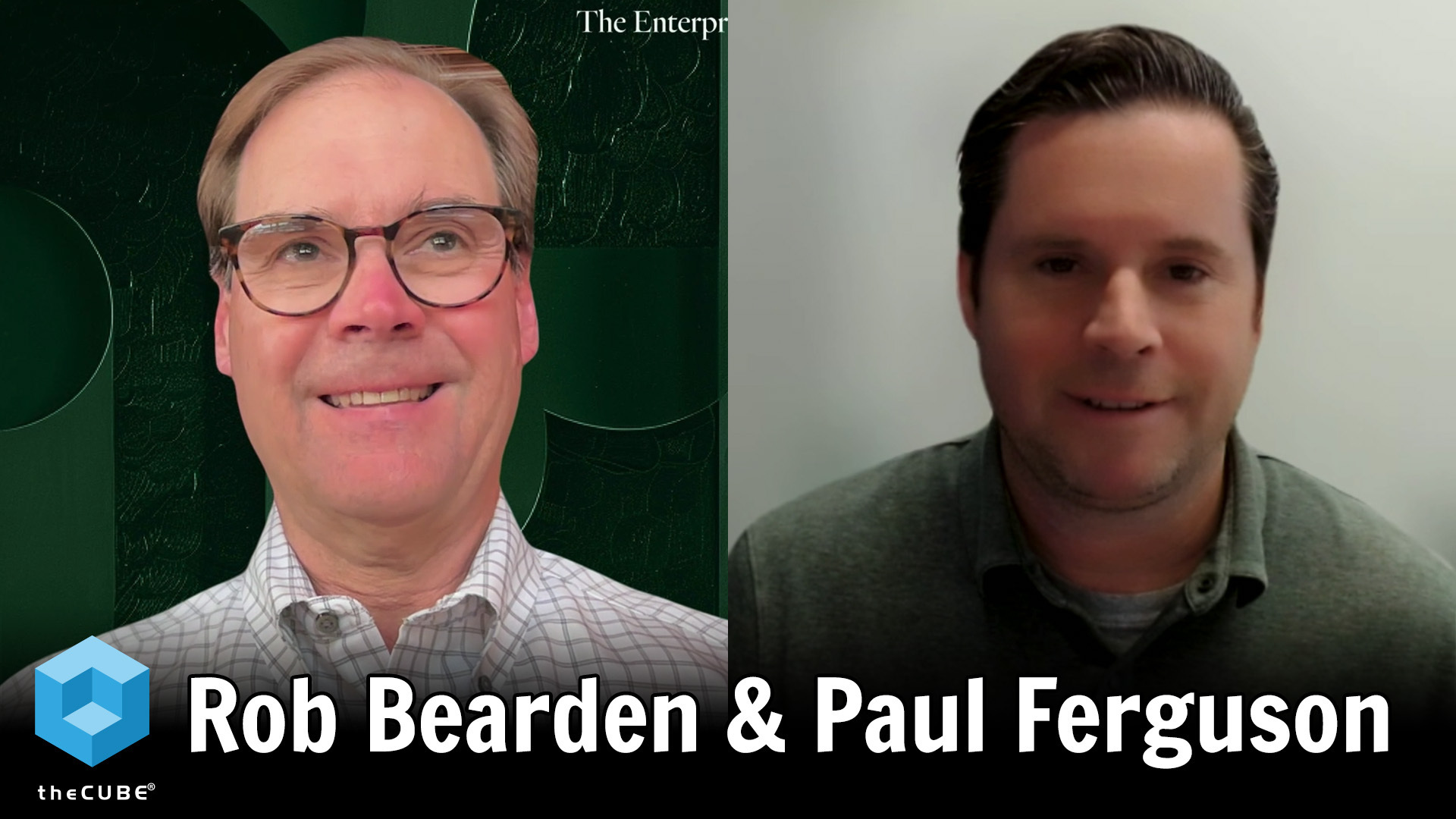
>> Yeah, I do recall the session that you guys did with Paul Ferguson at Emerson and he referenced the 80% automation of the accounts payable stuff, which really wasn't possible before they got involved with you, so I think that's a great example. All right. Well, finally, before we go here, for our audience, how can they get started with Team Edition?
Paul Codding
>> The best way to get started with Team Edition is to go to your Snowflake Marketplace. It's available today. There's a 30-day free trial. It allows you to quickly build and deploy agents directly within your Snowflake environment. Maybe it takes about five minutes to install. You can visit the Marketplace, you can also go to our Team Edition page on Sema4.ai, but we are excited for you to use the product and build agents that perform real work.
Scott Hebner
>> That's awesome. Well, look, this has been a really great discussion, very informative. It's inspiring to see the continued innovation, as I said before, from Sema4.ai and that big-time focus on customer ROI. So, Paul and Tommi, thanks so much for being here. Really, really great. And thank you all for tuning into the AI Agent Builder Summit. And make sure you visit the summit portal on theCUBE.net to watch the other two sessions with Sema4.ai. And also, you can go visit the Sema4.ai portal on the summit website to access this video session and other materials that I'm sure you'll find very valuable. We'll see you all soon again. We are the leader in enterprise tech news and analysis. Bye for now.