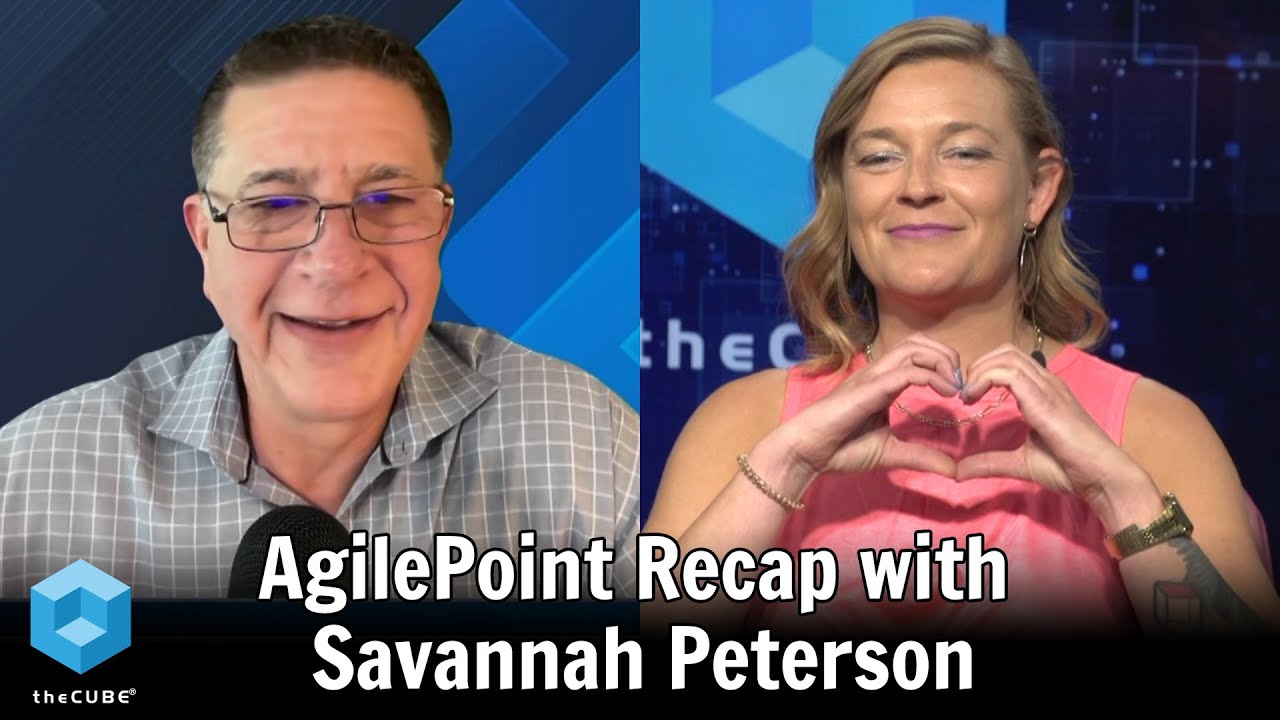
Savannah Peterson, principal analyst and host at SiliconANGLE Media, Inc., and Scott Hebner, principal analyst at theCUBE Research, explore transformative insights from the AI Agent Builder Summit. This session details key takeaways from Sema4.ai's participation, focusing on the forefront of agentic artificial intelligence and its potential in shaping the future of digital labor.
The video offers a comprehensive recap of the summit, with insights from various speakers across industries. Peterson and Hebner discuss the pioneering role of Sema4.ai in advancing agentic AI, emphasizing the importance of trust, safety, and a human-centric approach in AI deployment. The hosts, leveraging their expertise from theCUBE Research, provide an in-depth analysis of the summit discussions.
Key takeaways from the session include Sema4.ai's focus on empowering business users to create agentic workflows that are adaptable in real-time. According to Peterson and Hebner, the emphasis on integrating AI in a manner that enhances trust is crucial for realizing return on investment. The session also addresses real-world applications of agentic AI and the significance of targeting labor expenditure over information technology spend for broader AI implementation.
Forgot Password
Almost there!
We just sent you a verification email. Please verify your account to gain access to
AI Agent Builder Summit. If you don’t think you received an email check your
spam folder.
In order to sign in, enter the email address you used to registered for the event. Once completed, you will receive an email with a verification link. Open this link to automatically sign into the site.
Register For AI Agent Builder Summit
Please fill out the information below. You will recieve an email with a verification link confirming your registration. Click the link to automatically sign into the site.
You’re almost there!
We just sent you a verification email. Please click the verification button in the email. Once your email address is verified, you will have full access to all event content for AI Agent Builder Summit.
I want my badge and interests to be visible to all attendees.
Checking this box will display your presense on the attendees list, view your profile and allow other attendees to contact you via 1-1 chat. Read the Privacy Policy. At any time, you can choose to disable this preference.
Select your Interests!
add
Upload your photo
Uploading..
OR
Connect via Twitter
Connect via Linkedin
EDIT PASSWORD
Share
Forgot Password
Almost there!
We just sent you a verification email. Please verify your account to gain access to
AI Agent Builder Summit. If you don’t think you received an email check your
spam folder.
In order to sign in, enter the email address you used to registered for the event. Once completed, you will receive an email with a verification link. Open this link to automatically sign into the site.
Sign in to gain access to AI Agent Builder Summit
Please sign in with LinkedIn to continue to AI Agent Builder Summit. Signing in with LinkedIn ensures a professional environment.
Are you sure you want to remove access rights for this user?
Details
Manage Access
email address
Community Invitation
Sema4.ai Recap with Savannah Peterson
Scott Hebner of SiliconANGLE Media and theCUBE Research facilitates a dynamic discussion at the AI Agent Builder Summit. The summit explores the transformative value of Agentic AI and its implementation in building intelligent AI agents and workflows.
In this video, Hebner and colleagues Rob Strechay and Paul Nashawaty, both principal analysts at SiliconANGLE Media and theCUBE Research, share insights on Agentic AI. They discuss its implications for various sectors, the technology roadmap for building AI agents, and strategic success factors for businesses beginning their journey with Agentic AI. Hebner outlines the summit's ambitious agenda, including input from industry pioneers across companies such as Semaphore.ai, Deloitte, and IBM.
The discussion highlights several key takeaways, emphasizing the importance of developing trust in AI systems, as articulated by Hebner. Strechay emphasizes integrating AI within the broader technological ecosystem, while Nashawaty focuses on overcoming skill gaps and enhancing operational efficiency. Together, they outline a roadmap to effectively harness Agentic AI, reinforcing AI's role as a critical enabler, rather than a replacement, in organizational processes.
>> Hello. Thank you for tuning in into the AI Agent Builder Summit. This is the Analyst Post-Game Show where we summarize our key takeaways from the three sessions that Sema4.ai participated in. Our goal is to help you separate the signals from the noise and to highlight the core differentiators of each of our sponsors. I'm Scott Hebner, the principal analyst for AI at SiliconANGLE Media and theCUBE Research, and I'm joined by Savannah Peterson, a colleague and principal analyst here at theCUBE Research and a superstar host that you may have seen many times on theCUBE broadcasts. And actually-
Savannah Peterson
>> Thank you, Scott. Excited to be here.
Scott Hebner
>> Yeah, I'll even say more. I mean, a really wonderful person who doesn't only care about business and technology, but also the society we live in. It's been really great getting to know you, Savannah.
Savannah Peterson
>> Thank you, Scott. That was a very kind thing to say. I'm actually here in my Pride dress. We're filming here in June and I am wearing a rainbow and I love that you and I are both very vocal and empowered advocates and allies when it comes to everyone that we touch with our videos and in our personal communities.
Scott Hebner
>> I absolutely am, and I live it firsthand with one of my sons and I think we're making good progress. Ways to go out there, but all good stuff. So I thank you for leading the charge on that.
Savannah Peterson
>> I appreciate you, Scott. I appreciate that we've gotten to have the discourse. I've actually got my Pride stickers here on my laptop too, so we're really spreading the joy, and I'm super excited because I was really impressed and proud of you for doing such a fantastic job with this summit, so I cannot wait to break it all down with you.
Scott Hebner
>> Yeah, I tell you, I've learned a lot. We had 20 speakers in total, and you bring all that information together and I think there's some key themes emerging here, because our objective was to explore the transformational value of agentic AI and how it's going to power the future of digital labor. And I think what our audience kind of needs here is what are the action-oriented insights that you and I are taking from it that can help them speed their way to ROI? And as I said before, I know I learned a ton, and so let's kind of jump in this and talk about Sema4.ai, which is really a pioneer in the space of agentic AI and making great progress. Tony, let's bring up the chart that kind of illustrates at least the major takeaways that I observed here. One is they are really focused on the agentic enterprise in terms of digital labor. It's not just about technology and building new types of software. They're actually thinking of it from how do I help people that run businesses and that participate in workflows, create their own digital agents that can help them be more productive and give them superpowers. So it's very much a mindset that comes from the actual people that these agents are going to work with, not the technology side of the house providing them to the people that are going to use them. I thought that was really an interesting point of view. They're all over trust, right? No trust, no AI. You got to understand that people are only going to use these agents and partner with them to do things if they trust them. So they got to be safe, they got to be accurate, they got to be fast and responsive, and they have to be explainable, and that's their safe framework. And then business users, as I said before, are able to create these agentic workflows. And I think that's really key, right? Is that they can not only create them, but they can actually adapt them as their business processes change in real time. So it's a powerful capability that actually empowers the business in ways that I haven't really seen across too many of these providers.
Savannah Peterson
>> Yeah. You brought up a couple of things there, Scott, that I think are notable. In reverse order, everyone's talking about agentic. I think I've, no joke, had 250 interviews and conversations about it in the last quarter alone. However, achieving that impact and that business-wide scale and value realization is actually a big challenge, or I shouldn't say a challenge so much as a question mark for a lot of companies right now. And I think it's great that that's a mindset that they're focused on and that they're thinking about it from a holistic perspective. I also really appreciate that they're focused on the human being behind the digital workforce, and I think that's a big differentiator. We've been having a lot of conversations recently about you can tell folks who say, "Oh, here's a tool and it makes you more productive." No human really thinks about being 9% more productive. They think about having time to do better, more exciting things, more productive work with their day, but that's not the way that human language talks. It's not NLP for these customer service teams, quite frankly. Those are for the people quantifying their output. So I like that it sounds like there is a very consistent feedback loop and empathy in the design of the digital workforce that they're offering. Is that something that you also took from their interviews?
Scott Hebner
>> I did. There's a big difference. The old world would be, well, the users need some software to do something and they go to the IT side of the house and by the time they build it and deploy it, things have changed. And now you're enabling the business user through natural language. Just having a dialogue with an agent to actually build your workflow, it's really cool stuff and it is going to be empowering, I think. And again, it's being done in that safe environment, and it's a good combination of the things that they're focused on, I think.
Savannah Peterson
>> Definitely. I think the other thing that you mentioned that honestly can't be stated enough is trust. So much of this is going to come down to trust, trust within the agentic systems that are deployed, trust within the technology stacks that are implemented in this transformation that we're a part of, and trust within teams that everyone's looking after each other and this technology isn't going to be used to eliminate a human workforce. It's going to be used to augment it and to foster more creativity and a better work economy for all of us. I think I'd be very curious to know how they're measuring trust. Did you get to talk to them at all? Are they looking at that as some sort of score within their customers?
Scott Hebner
>> Well, they have this approach called Safe, so they do measure, and part of their value proposition is safe in the sense of obviously you have to have security, you have to have compliance, you have to have data privacy. But they're also talking about safe in terms of the trust side of things, which to me is more about these things are only going to get used if the business users trust them. If they don't trust the outputs they're given or the recommendations, it is not going to go anywhere, right? Trust is becoming the currency of innovation I think in this new world, and that's where they've been emphasizing in a big time way, is we can help you not only secure everything, but we can help you gain the trust of your user so that they actually get ROI out of it. And I think that's sort of a cultural transformation that they're onto versus just a technology transformation.
Savannah Peterson
>> Absolutely, yeah. Did they give you any use cases or verticals or industries where they're finding traction at this stage?
Scott Hebner
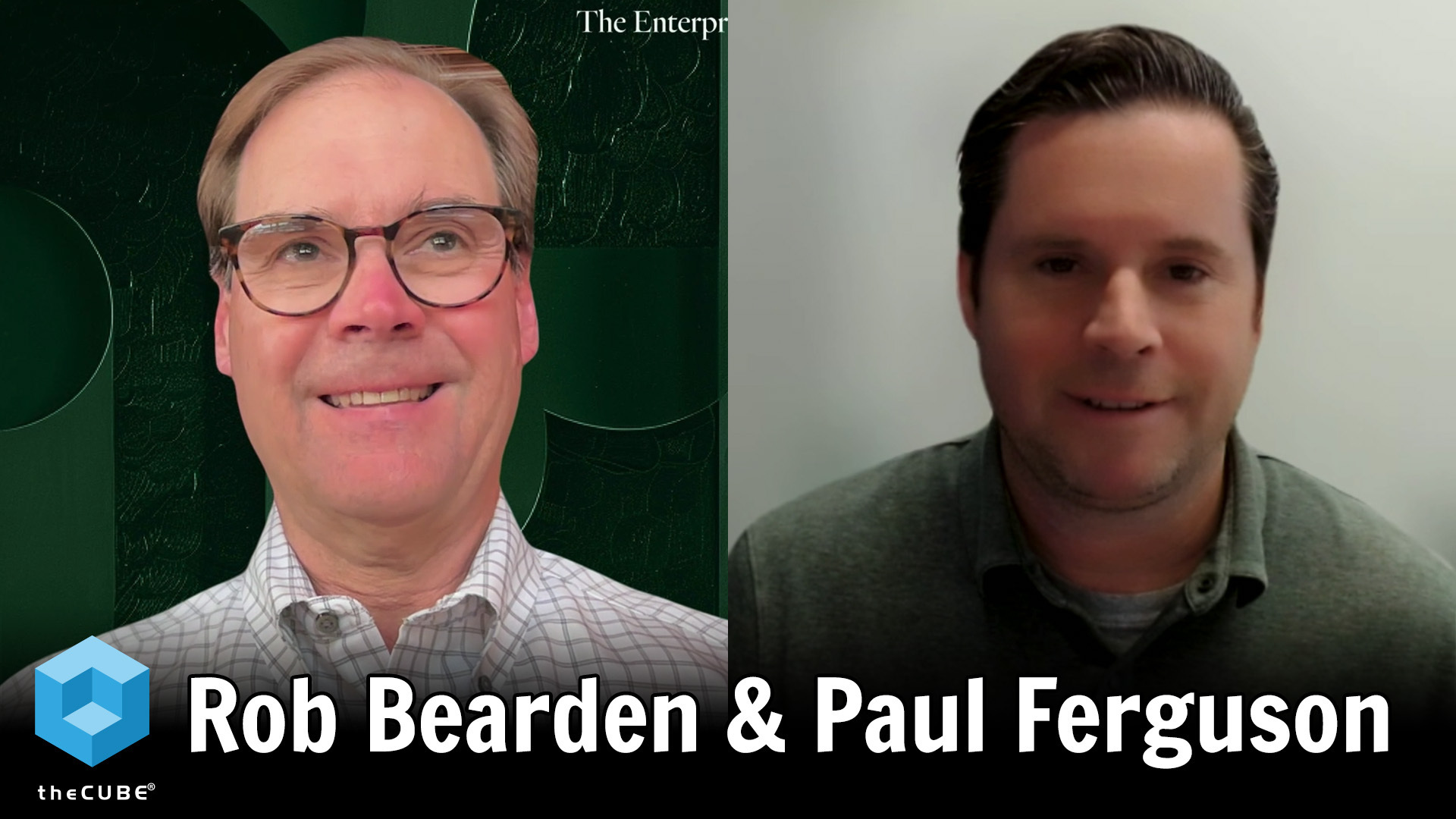
>> Well, right now they're doing a lot around document and documents that tend to be unstructured and they tend to be spread all over the universe. So there's a lot of workflows that involve that. And one of them that they actually talked about, they had one of the leaders from Emerson, Paul Ferguson, on one of the sessions, and they were able to automate 80% of the work having to be done with accounts payable in terms of you get the invoices and you have to pay them out and all that stuff. And then the agent was able to do it in a way that it was trusted by the team and they weren't able to do before through the standard technologies. But I think they're very much cross industry and it's a platform approach, a holistic approach where it's not just meant to be one part of the business, but all parts of the business, and IT plus the business users. So they're covering all the different angles. In fact, that kind of brings me to another point here, which is if we bring up, Tony, the next chart here about the future of work, and this is a Deloitte study which I found really interesting, which is, and the point of this chart is that it's not just about creating an agentic workflow for a particular process in your business, it's also about getting those various workflows to actually work with each other. So you get the HR department working with finance, working with marketing, working with product development, because right now there's a lot of siloed processes in these enterprises. So what this chart here is saying is, according to Deloitte, 72% recognize the importance of this boundary-less collaboration, and AI can help do that. 41% are doing something, 11 are doing great things with it. And you can see on the bottom right here, there's real ROI, right? They're more likely to achieve the business outcomes and they're more likely to get the trust of the humans to actually get positive feedback so they are able to do their work better. And I thought this was interesting because Sema4 is focused on not just singular workflows, but getting multiple workflows to work together.
Savannah Peterson
>> Yeah, definitely. I mean, actually I posted about this yesterday. I find myself using AI where I already am not necessarily going to a separate tab to do that, and that's across a few different properties. I have multiple devices as analysts, we're always testing things, but I find myself integrating into stuff that's already embedded. And I thought about this a lot and I'm glad that we're talking about this because when it comes to agentic, there's always a bit of fatigue when it comes to adopting a new technology or implementing something else. I mean, I even personally have these issues sometimes with our tracking software because I don't always want to go into another platform and go do something. And when we're thinking about frontline work, which is where a lot of agentic is showing up initially, these folks are not necessarily super excited about learning a new thing and seeing what it's going to do for them and yada, yada, yada. And I think companies that focus on this user experience being incredibly intuitive and easy and thoughtful, and not just about the end result but about the experience thereof are really going to be in a strong position because that's how it's going to win. I mean, I think a lot of people using ChatGPT out the gate, I use Gemini all the time because we're a Google Docs company, so it's an interesting, we're at a very interesting time. So I think their approach is at least incredibly wise from a user experience perspective.
Scott Hebner
>> Yeah. You know the old saying, right? The more you help do something, the more likely you are to use it. And I think they're taking that to heart. One last point here, which we, Tony, if you can bring up the next chart here, which is, and I know we're not financial analysts, I just kind of like to play one sometimes. But this chart is basically saying, look at the opportunity that Sema4.ai has here. And what this is really saying is that IT spend of an average enterprise is about 5% of their total spend, and that's where a lot of the software as a service budget would come to. And the notion here is rather than targeting IT spend with agentic AI solutions, you should be targeting the labor spend, which is like 60% of an average enterprise's spend. And with their approach of focusing on labor as a priority, and that's who they're going to be selling to and that's who they're empowering to build these agents and agentic workflows and to adapt them, I think I'm really bullish on where this kind of capability and in particular Sema4.ai can go because they really are a leader in this sort of holistic approach.
Savannah Peterson
>> Yeah. Where was this data from, Scott?
Scott Hebner
>> This was data that, it's actually theCUBE research. So what I did was I went out and aggregated a bunch of different surveys from McKinsey and Deloitte, a few others. I think Gartner was in there. Also, I had done a podcast with the CEO of HOAI Homeowner Association AI, and they actually build agents and agentic workflows for Homeowner Associations. And we did a podcast on what makes an AI startup successful in this new era, and one of his three big points was target the labor spend, not IT, because that's where this is all heading.
Savannah Peterson
>> I think that is actually a really, I mean, it feels almost obvious as you say that, but I think that people are looking at this from a different lens, from a very specific IT spending lens versus, and that's natural. It makes sense that that would be where this would start from an MVP and prototyping perspective, but when it comes to full company implementation, it's definitely going to be a labor consideration. I think you bring up a really good point there, Scott. Seems like you had a pretty fascinating interview with these folks.
Scott Hebner
>> Yeah. And John Furrier was also making the point that we're entering a new super cycle of business innovation and it's all around labor. And then we had Benioff, the CEO of Salesforce saying that he'll probably be the last CEO there that's going to manage only a human workforce. And you see where this is all heading. It's going to get really exciting.
Savannah Peterson
>> Yes, it is. Exciting time to be in the roles that we all get to play here.
Scott Hebner
>> Yeah. All right, Savannah, great insights. Very, very helpful. Thank you so much for being here. It's super appreciated.
Savannah Peterson
>> My pleasure.
Scott Hebner
>> For all of you out there, thank you for tuning into the AI Agent Builder Summit. Make sure you visit the Summit portal on theCUBE.net, or our YouTube channel to watch all three of the Sema4.ai sessions. It will definitely be worth your time, I promise. You can also visit the Sema4.ai portal on the Summit website where you can access this video session and the others, as well as some additional materials. We'll see you real soon. Again, we are the leader in enterprise tech and analysis. Bye for now.
>> Hello. Thank you for tuning in into the AI Agent Builder Summit. This is the Analyst Post-Game Show where we summarize our key takeaways from the three sessions that Sema4.ai participated in. Our goal is to help you separate the signals from the noise and to highlight the core differentiators of each of our sponsors. I'm Scott Hebner, the principal analyst for AI at SiliconANGLE Media and theCUBE Research, and I'm joined by Savannah Peterson, a colleague and principal analyst here at theCUBE Research and a superstar host that you may have seen many times on theCUBE broadcasts. And actually-
Savannah Peterson
>> Thank you, Scott. Excited to be here.
Scott Hebner
>> Yeah, I'll even say more. I mean, a really wonderful person who doesn't only care about business and technology, but also the society we live in. It's been really great getting to know you, Savannah.
Savannah Peterson
>> Thank you, Scott. That was a very kind thing to say. I'm actually here in my Pride dress. We're filming here in June and I am wearing a rainbow and I love that you and I are both very vocal and empowered advocates and allies when it comes to everyone that we touch with our videos and in our personal communities.
Scott Hebner
>> I absolutely am, and I live it firsthand with one of my sons and I think we're making good progress. Ways to go out there, but all good stuff. So I thank you for leading the charge on that.
Savannah Peterson
>> I appreciate you, Scott. I appreciate that we've gotten to have the discourse. I've actually got my Pride stickers here on my laptop too, so we're really spreading the joy, and I'm super excited because I was really impressed and proud of you for doing such a fantastic job with this summit, so I cannot wait to break it all down with you.
Scott Hebner
>> Yeah, I tell you, I've learned a lot. We had 20 speakers in total, and you bring all that information together and I think there's some key themes emerging here, because our objective was to explore the transformational value of agentic AI and how it's going to power the future of digital labor. And I think what our audience kind of needs here is what are the action-oriented insights that you and I are taking from it that can help them speed their way to ROI? And as I said before, I know I learned a ton, and so let's kind of jump in this and talk about Sema4.ai, which is really a pioneer in the space of agentic AI and making great progress. Tony, let's bring up the chart that kind of illustrates at least the major takeaways that I observed here. One is they are really focused on the agentic enterprise in terms of digital labor. It's not just about technology and building new types of software. They're actually thinking of it from how do I help people that run businesses and that participate in workflows, create their own digital agents that can help them be more productive and give them superpowers. So it's very much a mindset that comes from the actual people that these agents are going to work with, not the technology side of the house providing them to the people that are going to use them. I thought that was really an interesting point of view. They're all over trust, right? No trust, no AI. You got to understand that people are only going to use these agents and partner with them to do things if they trust them. So they got to be safe, they got to be accurate, they got to be fast and responsive, and they have to be explainable, and that's their safe framework. And then business users, as I said before, are able to create these agentic workflows. And I think that's really key, right? Is that they can not only create them, but they can actually adapt them as their business processes change in real time. So it's a powerful capability that actually empowers the business in ways that I haven't really seen across too many of these providers.
Savannah Peterson
>> Yeah. You brought up a couple of things there, Scott, that I think are notable. In reverse order, everyone's talking about agentic. I think I've, no joke, had 250 interviews and conversations about it in the last quarter alone. However, achieving that impact and that business-wide scale and value realization is actually a big challenge, or I shouldn't say a challenge so much as a question mark for a lot of companies right now. And I think it's great that that's a mindset that they're focused on and that they're thinking about it from a holistic perspective. I also really appreciate that they're focused on the human being behind the digital workforce, and I think that's a big differentiator. We've been having a lot of conversations recently about you can tell folks who say, "Oh, here's a tool and it makes you more productive." No human really thinks about being 9% more productive. They think about having time to do better, more exciting things, more productive work with their day, but that's not the way that human language talks. It's not NLP for these customer service teams, quite frankly. Those are for the people quantifying their output. So I like that it sounds like there is a very consistent feedback loop and empathy in the design of the digital workforce that they're offering. Is that something that you also took from their interviews?
Scott Hebner
>> I did. There's a big difference. The old world would be, well, the users need some software to do something and they go to the IT side of the house and by the time they build it and deploy it, things have changed. And now you're enabling the business user through natural language. Just having a dialogue with an agent to actually build your workflow, it's really cool stuff and it is going to be empowering, I think. And again, it's being done in that safe environment, and it's a good combination of the things that they're focused on, I think.
Savannah Peterson
>> Definitely. I think the other thing that you mentioned that honestly can't be stated enough is trust. So much of this is going to come down to trust, trust within the agentic systems that are deployed, trust within the technology stacks that are implemented in this transformation that we're a part of, and trust within teams that everyone's looking after each other and this technology isn't going to be used to eliminate a human workforce. It's going to be used to augment it and to foster more creativity and a better work economy for all of us. I think I'd be very curious to know how they're measuring trust. Did you get to talk to them at all? Are they looking at that as some sort of score within their customers?
Scott Hebner
>> Well, they have this approach called Safe, so they do measure, and part of their value proposition is safe in the sense of obviously you have to have security, you have to have compliance, you have to have data privacy. But they're also talking about safe in terms of the trust side of things, which to me is more about these things are only going to get used if the business users trust them. If they don't trust the outputs they're given or the recommendations, it is not going to go anywhere, right? Trust is becoming the currency of innovation I think in this new world, and that's where they've been emphasizing in a big time way, is we can help you not only secure everything, but we can help you gain the trust of your user so that they actually get ROI out of it. And I think that's sort of a cultural transformation that they're onto versus just a technology transformation.
Savannah Peterson
>> Absolutely, yeah. Did they give you any use cases or verticals or industries where they're finding traction at this stage?
Scott Hebner
>> Well, right now they're doing a lot around document and documents that tend to be unstructured and they tend to be spread all over the universe. So there's a lot of workflows that involve that. And one of them that they actually talked about, they had one of the leaders from Emerson, Paul Ferguson, on one of the sessions, and they were able to automate 80% of the work having to be done with accounts payable in terms of you get the invoices and you have to pay them out and all that stuff. And then the agent was able to do it in a way that it was trusted by the team and they weren't able to do before through the standard technologies. But I think they're very much cross industry and it's a platform approach, a holistic approach where it's not just meant to be one part of the business, but all parts of the business, and IT plus the business users. So they're covering all the different angles. In fact, that kind of brings me to another point here, which is if we bring up, Tony, the next chart here about the future of work, and this is a Deloitte study which I found really interesting, which is, and the point of this chart is that it's not just about creating an agentic workflow for a particular process in your business, it's also about getting those various workflows to actually work with each other. So you get the HR department working with finance, working with marketing, working with product development, because right now there's a lot of siloed processes in these enterprises. So what this chart here is saying is, according to Deloitte, 72% recognize the importance of this boundary-less collaboration, and AI can help do that. 41% are doing something, 11 are doing great things with it. And you can see on the bottom right here, there's real ROI, right? They're more likely to achieve the business outcomes and they're more likely to get the trust of the humans to actually get positive feedback so they are able to do their work better. And I thought this was interesting because Sema4 is focused on not just singular workflows, but getting multiple workflows to work together.
Savannah Peterson
>> Yeah, definitely. I mean, actually I posted about this yesterday. I find myself using AI where I already am not necessarily going to a separate tab to do that, and that's across a few different properties. I have multiple devices as analysts, we're always testing things, but I find myself integrating into stuff that's already embedded. And I thought about this a lot and I'm glad that we're talking about this because when it comes to agentic, there's always a bit of fatigue when it comes to adopting a new technology or implementing something else. I mean, I even personally have these issues sometimes with our tracking software because I don't always want to go into another platform and go do something. And when we're thinking about frontline work, which is where a lot of agentic is showing up initially, these folks are not necessarily super excited about learning a new thing and seeing what it's going to do for them and yada, yada, yada. And I think companies that focus on this user experience being incredibly intuitive and easy and thoughtful, and not just about the end result but about the experience thereof are really going to be in a strong position because that's how it's going to win. I mean, I think a lot of people using ChatGPT out the gate, I use Gemini all the time because we're a Google Docs company, so it's an interesting, we're at a very interesting time. So I think their approach is at least incredibly wise from a user experience perspective.
Scott Hebner
>> Yeah. You know the old saying, right? The more you help do something, the more likely you are to use it. And I think they're taking that to heart. One last point here, which we, Tony, if you can bring up the next chart here, which is, and I know we're not financial analysts, I just kind of like to play one sometimes. But this chart is basically saying, look at the opportunity that Sema4.ai has here. And what this is really saying is that IT spend of an average enterprise is about 5% of their total spend, and that's where a lot of the software as a service budget would come to. And the notion here is rather than targeting IT spend with agentic AI solutions, you should be targeting the labor spend, which is like 60% of an average enterprise's spend. And with their approach of focusing on labor as a priority, and that's who they're going to be selling to and that's who they're empowering to build these agents and agentic workflows and to adapt them, I think I'm really bullish on where this kind of capability and in particular Sema4.ai can go because they really are a leader in this sort of holistic approach.
Savannah Peterson
>> Yeah. Where was this data from, Scott?
Scott Hebner
>> This was data that, it's actually theCUBE research. So what I did was I went out and aggregated a bunch of different surveys from McKinsey and Deloitte, a few others. I think Gartner was in there. Also, I had done a podcast with the CEO of HOAI Homeowner Association AI, and they actually build agents and agentic workflows for Homeowner Associations. And we did a podcast on what makes an AI startup successful in this new era, and one of his three big points was target the labor spend, not IT, because that's where this is all heading.
Savannah Peterson
>> I think that is actually a really, I mean, it feels almost obvious as you say that, but I think that people are looking at this from a different lens, from a very specific IT spending lens versus, and that's natural. It makes sense that that would be where this would start from an MVP and prototyping perspective, but when it comes to full company implementation, it's definitely going to be a labor consideration. I think you bring up a really good point there, Scott. Seems like you had a pretty fascinating interview with these folks.
Scott Hebner
>> Yeah. And John Furrier was also making the point that we're entering a new super cycle of business innovation and it's all around labor. And then we had Benioff, the CEO of Salesforce saying that he'll probably be the last CEO there that's going to manage only a human workforce. And you see where this is all heading. It's going to get really exciting.
Savannah Peterson
>> Yes, it is. Exciting time to be in the roles that we all get to play here.
Scott Hebner
>> Yeah. All right, Savannah, great insights. Very, very helpful. Thank you so much for being here. It's super appreciated.
Savannah Peterson
>> My pleasure.
Scott Hebner
>> For all of you out there, thank you for tuning into the AI Agent Builder Summit. Make sure you visit the Summit portal on theCUBE.net, or our YouTube channel to watch all three of the Sema4.ai sessions. It will definitely be worth your time, I promise. You can also visit the Sema4.ai portal on the Summit website where you can access this video session and the others, as well as some additional materials. We'll see you real soon. Again, we are the leader in enterprise tech and analysis. Bye for now.