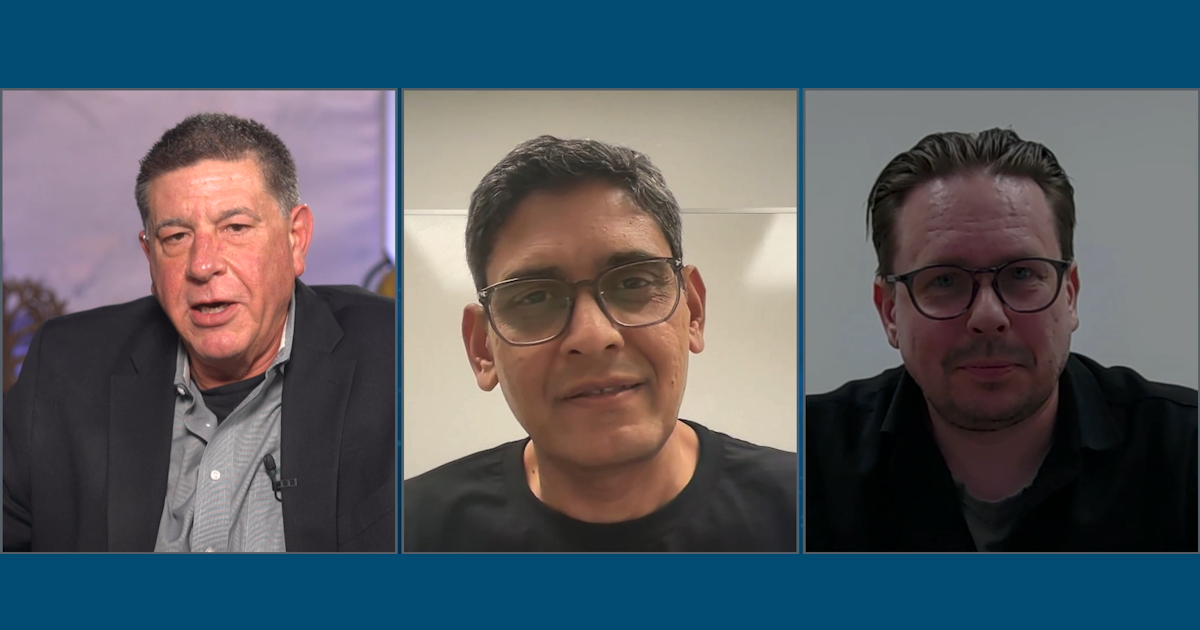
Sema4.ai's Approach to AI Agents at the AI Agent Builder Summit
Ram Venkatesh, co-founder and Chief Technology Officer at Sema4.ai, presented valuable insights at the AI Agent Builder Summit. The session features expert discussions on real-world customer solutions and highlights the rapid return on investment achieved through Sema4.ai's Enterprise AI platform. It explores the transformative capabilities of AI agents in automating workflows and enhancing business-critical activities.
With over 25 years in enterprise software, Venkatesh leads this engaging session alongside Tommi Holmgren. They discuss the foundational principles guiding Sema4.ai’s enterprise agents, emphasizing security, accuracy, speed, and explainability. The video host from theCUBE Research collaborates with Venkatesh in exploring how Sema4.ai shapes the future of AI-driven automation.
The video showcases Sema4.ai platform’s ability to integrate data context and streamline execution through natural language runbooks while upholding compliance and auditability. Venkatesh emphasizes the importance of trust in AI systems, a sentiment echoed by analysts who highlight trust as the "currency of innovation." This comprehensive session provides viewers with a step-by-step understanding of effectively implementing AI agents, featuring live demonstrations by Holmgren.
Forgot Password
Almost there!
We just sent you a verification email. Please verify your account to gain access to
Sema4.ai Summit Portal. If you don’t think you received an email check your
spam folder.
In order to sign in, enter the email address you used to registered for the event. Once completed, you will receive an email with a verification link. Open this link to automatically sign into the site.
Register For Sema4.ai Summit Portal
Please fill out the information below. You will recieve an email with a verification link confirming your registration. Click the link to automatically sign into the site.
You’re almost there!
We just sent you a verification email. Please click the verification button in the email. Once your email address is verified, you will have full access to all event content for Sema4.ai Summit Portal.
I want my badge and interests to be visible to all attendees.
Checking this box will display your presense on the attendees list, view your profile and allow other attendees to contact you via 1-1 chat. Read the Privacy Policy. At any time, you can choose to disable this preference.
Select your Interests!
add
Upload your photo
Uploading..
OR
Connect via Twitter
Connect via Linkedin
EDIT PASSWORD
Share
Forgot Password
Almost there!
We just sent you a verification email. Please verify your account to gain access to
Sema4.ai Summit Portal. If you don’t think you received an email check your
spam folder.
In order to sign in, enter the email address you used to registered for the event. Once completed, you will receive an email with a verification link. Open this link to automatically sign into the site.
Sign in to gain access to Sema4.ai Summit Portal
Please sign in with LinkedIn to continue to Sema4.ai Summit Portal. Signing in with LinkedIn ensures a professional environment.
Are you sure you want to remove access rights for this user?
Details
Manage Access
email address
Community Invitation
Ram Venkatesh & Tommi Holmgren, Sema4.ai
The AI Agent Builder Summit presents insightful discussions featuring key industry figures such as Ram Venkatesh, co-founder and Chief Technology Officer of Sema4, and Tommi Holmgren. This video examines proven best practices and solutions in the realm of agentic artificial intelligence and how Sema4’s Enterprise AI platform enables organizations to efficiently adopt and innovate with AI agents.
In this session, principal analyst Scott Hebner of theCUBE Research leads the discussion, with insights from Venkatesh on how Sema4 advances the capabilities of AI agents. Venkatesh’s 25 years in enterprise software guide the conversation toward the platform’s security, accuracy and speed in agent deployment. The video also features Holmgren, who demonstrates Sema4.ai’s core features for building and managing enterprise AI agents.
Key takeaways from the discussion, as highlighted by Venkatesh, underscore the importance of foundational security and compliance in deploying AI agents. The session covers Sema4’s SAFE (Secure, Accurate, Fast, Explainable) model, emphasizing trust and reliability in automation. This innovative approach, stressed by theCUBE analysts, fosters real business value, beginning with small, meaningful applications to drive Return on Investment effectively.
>> Hello, welcome back to the AI Agent Builder Summit featuring the proven best practices and solutions of industry leaders in agentic AI. I am Scott Hebner, the principal analyst for AI at SiliconANGLE Media and theCUBE Research. We really appreciate you tuning in. In this session we'll build upon the highly interesting discussions that Sema4.ai CEO Rob Bearden hosted around real-world customer solutions and the ROI that was rapidly achieved. We certainly heard about the transformative nature of AI agents, both to intelligently automate workflows and to empower workers to focus on more business-critical activities, all using the Sema4.ai Enterprise AI platform. Our objective today is to bring to life the value and unique capabilities of this platform, and most importantly, how it can help your organization more rapidly climb the ladder to the promised land of agentic AI. To fill you in on the details, I'm going to turn it over to Ram Venkatesh, the co-founder and CTO of Sema4. With over 25 years of experience in enterprise software, Ram is responsible for the long-term strategy and vision for Sema4.ai, bringing together insights from across the engineering product and go-to-market functions and of course their customers. So Ram welcome. Really appreciate you taking the time to be here.
Ram Venkatesh
>> My pleasure to be here. Thank you for having me on.
Scott Hebner
>> Yeah, I'm excited to get the deeper dive here as I'm sure many others are. I'm going to turn it over to you and just let you kind of dive into this and we'll be back and forth a little bit as you go through the show.
Ram Venkatesh
>> Absolutely. We're super excited to share a little bit about our approach to enterprise AI agents and the Sema4 agent platform. I'm also going to be joined today by Tommi Holmgren. A little bit later in the show who will be taking us through the actual details of the product itself. To step back and think about what are guiding principles at Sema4 when we think about enterprise agents, it really comes down to four key things for us. First and foremost, start with security. So if you think of security and governance as sort of a foundational pillar, that's really critical for enterprises, especially large mission-critical enterprises are the kinds that we are all familiar with. For them to adopt any technology, that's got to be the foundation from which you can start from. A lot of that is about predictability. It's about command and control. It's about making sure that you have the belts and suspenders in place for you to be able to adopt AI at scale. The second part of this is directly about the accuracy of agentic execution. So we are talking about work that is material to the business, that is decision-making that's core to what your enterprise actually does. We really like the massive unlock that LLMs have had on agentic automation, but it's the second L that we really like, that's about language and reasoning and so on and so forth. Accuracy on the other hand, is all about the semantic context that that agent is operating in. So we truly believe that from an enterprise standpoint, accurately specifying your enterprise's work, having full access to your enterprise's data context, I mean all of your structured data, your unstructured data, your semi-structured business documents, being able to ask questions and get definitive answers from them. That's really what makes our agents very, very accurate when it comes to decision-making in the context of an agentic orchestration. The third key point to keep in mind when you think about enterprise agents, we believe is speed or the ability to quickly move the pace of the business. So fast execution for us is not so much about the agent doing the work, but also how quickly can you specify what the agent should do? The business user is fundamentally we think the person who should be in charge when it comes to defining what it is that the agent actually does. This is a construct that we call the run book, which is a natural language description of the intents, the outcomes, and also the steps that an agent is supposed to perform as it goes about deciding what to do in the context of a particular task. And finally, the kinds of work that we are describing here, they have a very high element of auditability and compliance. So you need to be able to demonstrate to yourself and also to your auditors that this is what you said you will do in a particular context. This is what you actually did and here's the forensic trail for how the plan was selected and how it was actually executed. So explainability is a key part of having a robust agentic solution. So if you put all of these together as we really like the single simple way to think about it as we call these safe agents, right? So secure, accurate, fast, and explainable. That's the cornerstone of how we think about enterprise AI agents. So from a product standpoint, this breaks down into a very central part of this entire thing is the command and control that is required from a security and governance standpoint. That's where we start today. I would love for Tommi to take you through how that gets realized in our platform today. Tommi, over to you.>> Thanks, Ram. I'm going to dive straight into the demo, show you a bit of our product. This is a quick glimpse and we started from studio. So Sema4.ai studio is where the agent build happens. I'm first connecting my studio, linking it to our control room, which is our centralized command for managing all the enterprise agents. I use my enterprise SSO to create this connection between the building tools and the control room. Once these two are connected, I already have an agent that I've built. You can see it here. I'm going to publish my agent, which means that I am shipping all my agent code, including the run book, all the connections to the actions, basically the whole agent. I'm shipping it over to the contract room, which then takes care of managing and running the agent at scale and securely. So now we see the agent being published and I flip my view over to the control room, which is a web-based platform for managing these agents. Here I will see all the details of the agents that somebody else has built. If I'm the operator and I decide to deploy the agent to the production. First I choose the workspace which creates separation between, for example, the business teams. In my case, I'll deploy this into the support workspace, but I could also deploy it to finance or marketing or whichever workspace would be the appropriate one. I securely manage the API keys for this agent. It needs to access external systems, so I need to be able to manage the service accounts that this agent needs. Finally, I hit continue and basically the agent gets deployed into our agent computer made available to the business user who accesses it through our workflow. I'm taking a little shortcut here. I already have an agent deployed the same agent, so I'm opening it in our workroom and you will see how the agent chat experience is tailored for the business user. We have removed all of the bells and whistles that the developer persona would need when building agents and actions. This is purely focused on you getting the work done. Here we also see a very important aspect of agents. They're able to assume the role or the account of an end user so the business user can log into their, for example, Google account or Microsoft account and let agent use those credentials in accessing various systems securely. And obviously agent starting to perform work, accessing systems, enterprise data, and pulling it all together in a beautiful chart in this case. That's the first demo segment. So back to you Ram.
Scott Hebner
>> I actually got a question on just... It was great to see you have all these pre-built connectors, common systems like Google, Microsoft, but what if I need to connect to some other application, maybe something custom in my own enterprise?>> That's a great question, Scott. We have a pre-built library of connectors ship with the platform, but we also provide a full developer experience and the SDK and the framework for building any connectors on Python. So if you have systems that require custom action access, it's easy for any developer to build these experiences
Scott Hebner
>> And that these agents, they can also connect to databases and data warehouses and all that.>> Yeah, correct. And I think Ram will continue talking about this in a second.
Ram Venkatesh
>> Happy to. I think this is where if you think of what makes these agents accurate. It is the ability to be able to connect to a number of different data sources in your enterprise. So Scott, to your question, there's probably more than a hundred of these kinds of data sources that we support today, and it's fairly easy to add another one of these as well. So this comes down to agents being able to ask questions from your enterprise. Think of this very simply as questions about the past. This typically goes to an analytical warehouse, kind of a setup, questions about the present because usually your analysts and your agents are working on the current state of the system, like an invoice that's in flight right now or a payment that needs to be made. So these kinds of questions usually go against either directly against your operational stores like an Oracle database or a SQL Server database, or more commonly it could be SAP or your ERP.
And then the final piece is being able to ask questions about the future. So these are predictive insights about what is the forecast going to be for next week. So all three of these kinds of data sources can be accessed very, very conveniently from an agentic model. So hopefully that gives you a little bit of a taste of the control room and our central command and control and management experience. Next we want to talk to you a little bit about our agentic model, what makes our agents tick? We like to refer to these agents essentially as think of them as having left brain, right brain, and hands and feet. So the right brain for our agent is essentially the business logic. This is the specification of what the agent does in a natural language run book. The left brain is exactly what you were asking about a few minutes ago. These are all of the data sources that the agent has access to, your transactional data, historical data, and then APIs to connect to various applications, both SaaS and on-premise. And then finally, the hands and feet are really about the agents being able to take actions to achieve outcomes. The model context protocol is all the rage right now in terms of what's possible with an agent today. So this Python based action framework for us is essentially the way that you can connect our agents to enterprise applications, existing APIs, your existing Python investments that you have. So think of this as a next generational automation S code RPA layer. So that is what is really the agentic model that powers how the agent is able to do its work. So data and actions are two key parts of that agentic model. Tommi touched upon this idea of our built-in actions and custom actions. So all of this is brought together in an action gallery. So just like we want the business user to be fully in control of how the business process is specified, we want the developer to be completely in control about publishing these actions in a very, very robust way. So our action framework is geared towards enterprise ready securable, properly debuggable with full audit trails and so on. So that's why this action gallery is so critical for you to have a reusable set of actions that you can pull down and use in the context of a particular agent. But the heart of it still though, is in studio and the way that you actually define the agent. We want to enable a very conversational, very rapid experience that's very comfortable for a business user. So they can go from an idea to an agent that they have running essentially in a matter of minutes. Rather than just talk to you about this, we are very excited to give you a sneak peek today, our AI assisted agent creation experience and we call it SAI, and I'd love for Tommi to take you through the core SAI experience for defining an agent. Over to you, Tommi.>> Thanks Ram. I'm actually really, really excited about this. Building agents with AI kind of makes sense, right? So I'll show you a really quick demo and we build an agent. I actually use this agent myself. So we build an agent for preparing for the meetings throughout the weeks and days. We are looking at the studio again. So I start by clicking the SAI button and it brings me a view which has basically one text field. Think of it like a Google text field. So I describe my agent in plain English. I want to access my calendar, I want to search Google for participants. I want to get some additional information from linear tickets, and I want an outcome of a clean document that explains how do I need to prepare for the meeting. So you can see that SAI splits into two panels, but left side is like an interactive chat where I interact with SAI and improve the agent.
And on the right side I can continue to see the agent being built as I interact with SAI. So now we've done the name for the agent, which is meeting maestro. We've done the description for the agent and SAI starts asking me for clarification questions on topics that I identified from my initial short description, but it wasn't clear enough. So SAI asked me that, "Okay, so which kind of calendar are you using? What you going to focus on in terms of the information of the participants?" And so forth. And it's not limited only to text interaction. So I can also give SAI files. So for example, if I have an enterprise process description document or SOP or this kind of documents, I can just drop it into SAI and it basically reads my document and start preparing my runbook based on that document. Now we see on the right side that the first iteration of the runbook has been generated, and in the next step we start looking at which are the actions that are required for this agent to be able to perform its work. And it gives me a suggestion based on the gallery of actions that we provide. And in this case, we get Google Docs, Google Calendar, Google search, and Linear. So four actions were identified that are necessary for this agent to perform its work. I don't like one, so I just ask SAI to switch the Google search to another action package that we also provide from our gallery. Next, I have two of the action packages that requires API keys so secrets to access my platforms. I configured these actions right on the spot inside, adding two API keys, and now all my actions are configured and ready to go. Now SAI is performing its last steps, so basically saving my runbook based on all the changes I made into an agent. And finally it builds the entire agent. So from zero to build agent, I think it took two minutes maybe, three minutes of work. And now finally, SAI is deploying my agent so I can get to it and start testing out how it works. And let's make a quick check that did we get a meeting maestro preparation agent that works. So last steps of the deployment happening, the agent is deployed and we land into the chat interface, which is very familiar than our workroom. So you can see how this will feel and look for the business user. An important aspect here. SAI also utilizes actions that connect to platforms like Google Calendar and Google Docs. So I log in as myself, give this agent on my desktop or in workroom, just access to those things just for me. So I'm not sharing these credentials with anybody else. It's just my session that connects with my calendar. And now we can be ready to ask for a prep for the meeting with Ram tomorrow. Now the agent goes and it checks my calendar, lists the events from tomorrow, goes to Google to search for details of Ram, and probably our company, searches linear for issues and then creates a document. And we've actually done. So I get a link to a Google Doc, it's stored in my drive. I open it all done. So that was an agent built with SAI in about five minutes. Over to you Ram.
Ram Venkatesh
>> That's awesome, Tommi. Now I know how you're so prepared for your meetings. That's pretty cool. So yeah, I think that we showed you what the first time user experience is for creating an agent with AI. We're just getting started here. What is really exciting for us about runbooks, and a lot of this comes from the first set of customer deployments that we did probably starting nine months ago, is that while an agent has all these different parts, the agent has a runbook, it has code, it has SQL and queries that you're using to talk to the data, through all of that, what Tommi showed you around the runbook, that's the part that businesses want to actually change the most. So if you think of it from a change management standpoint, previously it's been so hard for line of businesses to express what they want in the first place and then make changes to it as the work continues to evolve. So what we are showing you here is a very simple model for business users to create agents based on runbooks. And in subsequent videos, we'll show you how you can actually edit these agents and continue to work inside the same AI assisted way for you to be able to build out highly capable, highly accurate, but at the same time highly flexible agents in a matter of minutes. So to put it all together, over the last 20 minutes or so, we've taken you through this journey for how everything is foundationally based around the control room and then our perspective on what constitutes an enterprise agent. We've shown you the build experience for creating an agent and that entire, what is it, the assembly model with data access and actions. So we like to say the way to think of this way of constructing an agent is it's built by business users in studio. It's built for business users in the workroom and then all the stuff in the middle works like software. So in a nutshell, that's Sema4's approach to building safe, accurate, fast and explainable agents. I really appreciate the time today. Thank you, Scott.
Scott Hebner
>> Now it's really fascinating and just a couple questions before we wrap up here. Be it the business, the speed of driving new innovations that is often implemented in the software and the capabilities, so it looks really easy to deploy the agents into production for the first time, but what happens when you need to make updates to the agents? Is there a risk that updating an agent breaks the business user or some sort of workflow or how's that all managed?
Ram Venkatesh
>> Yeah, that's a really good question because it's really the day in day out that agents have to shine at. So this is where this is a part of the agent where it just has to behave like software. So in the pieces that Tommi showed you in the control room, you can actually upgrade an agent, you can roll back the agent if you didn't like the change that he just did, and then you can roll it forward. You can segregate agents into dev test and staging and production. So you can apply conventional software, SDLC lifecycle controls to how you actually take an agent from, here's a change for an agent to here's the agent actually doing the work in production. Because at steady state, once you have an agentic automation process, if that agent is down, your business is down. So this is why we paid a lot of attention to all of these aspects of how you go about defining and managing agents.
Scott Hebner
>> Yeah, let me just ask you a question that our research is clearly showing in just about every conversation I've had, seems to come back to the word trust. The more we're expecting these agents and agentic workflows to actually help us make decisions and plan and problem solve and potentially even start working autonomously on our behalf or if human capital is not feasible or warranted, it always comes back to trust. And it seems to me that trust is becoming the currency of innovation. No trust, no ROI in the next phase of AI. What are your thoughts on that and how do you help ensure that the agents are going to get trusted by the users?
Ram Venkatesh
>> Yeah, this is an important point, is that we've all seen the ChatGPT demos and you can kind of have these wonderful, innovative experiences where generating content is the key thing that you do. But for the kinds of work we are talking about, I believe that trust is so foundational. So if people are going to actually process mission-critical invoices or mission-critical healthcare use cases that these are the kinds of things that we are doing today, I believe that it takes a long time to build up trust and then you can lose it in an instant. So apply that to the agentic model. We like to say that our focus on data, our focus on sort of making sure that you have predictable execution. Our agents are great at plan following. These are not about agents that can construct a new plan every time to do the work. I don't think that that particularly builds trust. So I think that all the elements of how we think about this agentic model, we've spent a lot of time listening to probably more than a hundred Fortune 500 CXOs at this point about how they plan to deploy agentic automation and why they're doing this in the first place. And all of that goes into core elements of our safe model for how we think about enabling enterprise agents. So I think trust is foundational and we're thinking about it very hard and we are doing our best to make sure that the agents to deploy have this bias towards predictability, which is I think the foundation for trust.
Scott Hebner
>> So one last question before we wrap up here. For those in the audience that are just now getting started with AI agents and agentic workflows or just starting to think about how do I create a strategy and start the investment stream, what would be your top piece of advice for them on how just to get started?
Ram Venkatesh
>> Yeah, I think for us, we like to say start small, but think big. There's a lot of hype and people think that, oh, everything's agentic and there's an agent for every part of my business. That's the think big part. But I think that in reality, we are still at the start of a very exciting journey. This is the first things. So build up the confidence in understanding how an agent is actually going to work. And the best place to do that is pick up a problem that's material but not the most important problem in your company. So you know that by solving that in an agentic way, put that in the hands of your users and go through that journey. The best way to understand how agents are going to transform your business is to experience one. And I think that's where we encourage them to start with a small simple use case. We call this rapid agent deployment program where we can go from a concept to being in production in eight weeks or so. That kind of a motion I think is very conducive to building up confidence in an agentic strategy.
Scott Hebner
>> I think a great example of that is what you did with Emerson, right? In the conversation we had with Paul Ferguson on the other session, and score some points, show some ROI, then you build from it and you extend it and then people start to trust it. And it's a progressive journey. It's not rip and replace. It's not like you got to solve world peace on day one. It's just like you said, beginning of a long-term journey here, right?
Ram Venkatesh
>> Right. And keep it real, foundation on real business value. And then the art of the possible shows itself and you can build end-to-end processes. I think Paul will talk a little bit more about that as well. The opportunities are endless, but you've got to start in a very concrete place.
Scott Hebner
>> Right. Awesome. Thank you, Ram. I really appreciate you being here. This was a really great showcase and I think brings a lot of this to life for the audience and certainly for me. So again, I really appreciate you being here. And to our valued audience, thank you for tuning in to the AI Agent Builder Summit. Please visit the Sema4.ai portal on the AI Agent Builder Summit website to access this video session. The other one as well as pre-built clips that you can share what you learned and share the clips with your colleagues and on social media. And there's some really great reading out there that I highly recommend, some great articles on the future of AI agents and agentic AI. So you can also visit theCUBE.net to watch all the other sessions that are part of the AI Agent Builder Summit. I hope you've enjoyed what you have seen so far. We are the leader in tech news and analysis. Bye for now.
>> Hello, welcome back to the AI Agent Builder Summit featuring the proven best practices and solutions of industry leaders in agentic AI. I am Scott Hebner, the principal analyst for AI at SiliconANGLE Media and theCUBE Research. We really appreciate you tuning in. In this session we'll build upon the highly interesting discussions that Sema4.ai CEO Rob Bearden hosted around real-world customer solutions and the ROI that was rapidly achieved. We certainly heard about the transformative nature of AI agents, both to intelligently automate workflows and to empower workers to focus on more business-critical activities, all using the Sema4.ai Enterprise AI platform. Our objective today is to bring to life the value and unique capabilities of this platform, and most importantly, how it can help your organization more rapidly climb the ladder to the promised land of agentic AI. To fill you in on the details, I'm going to turn it over to Ram Venkatesh, the co-founder and CTO of Sema4. With over 25 years of experience in enterprise software, Ram is responsible for the long-term strategy and vision for Sema4.ai, bringing together insights from across the engineering product and go-to-market functions and of course their customers. So Ram welcome. Really appreciate you taking the time to be here.
Ram Venkatesh
>> My pleasure to be here. Thank you for having me on.
Scott Hebner
>> Yeah, I'm excited to get the deeper dive here as I'm sure many others are. I'm going to turn it over to you and just let you kind of dive into this and we'll be back and forth a little bit as you go through the show.
Ram Venkatesh
>> Absolutely. We're super excited to share a little bit about our approach to enterprise AI agents and the Sema4 agent platform. I'm also going to be joined today by Tommi Holmgren. A little bit later in the show who will be taking us through the actual details of the product itself. To step back and think about what are guiding principles at Sema4 when we think about enterprise agents, it really comes down to four key things for us. First and foremost, start with security. So if you think of security and governance as sort of a foundational pillar, that's really critical for enterprises, especially large mission-critical enterprises are the kinds that we are all familiar with. For them to adopt any technology, that's got to be the foundation from which you can start from. A lot of that is about predictability. It's about command and control. It's about making sure that you have the belts and suspenders in place for you to be able to adopt AI at scale. The second part of this is directly about the accuracy of agentic execution. So we are talking about work that is material to the business, that is decision-making that's core to what your enterprise actually does. We really like the massive unlock that LLMs have had on agentic automation, but it's the second L that we really like, that's about language and reasoning and so on and so forth. Accuracy on the other hand, is all about the semantic context that that agent is operating in. So we truly believe that from an enterprise standpoint, accurately specifying your enterprise's work, having full access to your enterprise's data context, I mean all of your structured data, your unstructured data, your semi-structured business documents, being able to ask questions and get definitive answers from them. That's really what makes our agents very, very accurate when it comes to decision-making in the context of an agentic orchestration. The third key point to keep in mind when you think about enterprise agents, we believe is speed or the ability to quickly move the pace of the business. So fast execution for us is not so much about the agent doing the work, but also how quickly can you specify what the agent should do? The business user is fundamentally we think the person who should be in charge when it comes to defining what it is that the agent actually does. This is a construct that we call the run book, which is a natural language description of the intents, the outcomes, and also the steps that an agent is supposed to perform as it goes about deciding what to do in the context of a particular task. And finally, the kinds of work that we are describing here, they have a very high element of auditability and compliance. So you need to be able to demonstrate to yourself and also to your auditors that this is what you said you will do in a particular context. This is what you actually did and here's the forensic trail for how the plan was selected and how it was actually executed. So explainability is a key part of having a robust agentic solution. So if you put all of these together as we really like the single simple way to think about it as we call these safe agents, right? So secure, accurate, fast, and explainable. That's the cornerstone of how we think about enterprise AI agents. So from a product standpoint, this breaks down into a very central part of this entire thing is the command and control that is required from a security and governance standpoint. That's where we start today. I would love for Tommi to take you through how that gets realized in our platform today. Tommi, over to you.>> Thanks, Ram. I'm going to dive straight into the demo, show you a bit of our product. This is a quick glimpse and we started from studio. So Sema4.ai studio is where the agent build happens. I'm first connecting my studio, linking it to our control room, which is our centralized command for managing all the enterprise agents. I use my enterprise SSO to create this connection between the building tools and the control room. Once these two are connected, I already have an agent that I've built. You can see it here. I'm going to publish my agent, which means that I am shipping all my agent code, including the run book, all the connections to the actions, basically the whole agent. I'm shipping it over to the contract room, which then takes care of managing and running the agent at scale and securely. So now we see the agent being published and I flip my view over to the control room, which is a web-based platform for managing these agents. Here I will see all the details of the agents that somebody else has built. If I'm the operator and I decide to deploy the agent to the production. First I choose the workspace which creates separation between, for example, the business teams. In my case, I'll deploy this into the support workspace, but I could also deploy it to finance or marketing or whichever workspace would be the appropriate one. I securely manage the API keys for this agent. It needs to access external systems, so I need to be able to manage the service accounts that this agent needs. Finally, I hit continue and basically the agent gets deployed into our agent computer made available to the business user who accesses it through our workflow. I'm taking a little shortcut here. I already have an agent deployed the same agent, so I'm opening it in our workroom and you will see how the agent chat experience is tailored for the business user. We have removed all of the bells and whistles that the developer persona would need when building agents and actions. This is purely focused on you getting the work done. Here we also see a very important aspect of agents. They're able to assume the role or the account of an end user so the business user can log into their, for example, Google account or Microsoft account and let agent use those credentials in accessing various systems securely. And obviously agent starting to perform work, accessing systems, enterprise data, and pulling it all together in a beautiful chart in this case. That's the first demo segment. So back to you Ram.
Scott Hebner
>> I actually got a question on just... It was great to see you have all these pre-built connectors, common systems like Google, Microsoft, but what if I need to connect to some other application, maybe something custom in my own enterprise?>> That's a great question, Scott. We have a pre-built library of connectors ship with the platform, but we also provide a full developer experience and the SDK and the framework for building any connectors on Python. So if you have systems that require custom action access, it's easy for any developer to build these experiences
Scott Hebner
>> And that these agents, they can also connect to databases and data warehouses and all that.>> Yeah, correct. And I think Ram will continue talking about this in a second.
Ram Venkatesh
>> Happy to. I think this is where if you think of what makes these agents accurate. It is the ability to be able to connect to a number of different data sources in your enterprise. So Scott, to your question, there's probably more than a hundred of these kinds of data sources that we support today, and it's fairly easy to add another one of these as well. So this comes down to agents being able to ask questions from your enterprise. Think of this very simply as questions about the past. This typically goes to an analytical warehouse, kind of a setup, questions about the present because usually your analysts and your agents are working on the current state of the system, like an invoice that's in flight right now or a payment that needs to be made. So these kinds of questions usually go against either directly against your operational stores like an Oracle database or a SQL Server database, or more commonly it could be SAP or your ERP.
And then the final piece is being able to ask questions about the future. So these are predictive insights about what is the forecast going to be for next week. So all three of these kinds of data sources can be accessed very, very conveniently from an agentic model. So hopefully that gives you a little bit of a taste of the control room and our central command and control and management experience. Next we want to talk to you a little bit about our agentic model, what makes our agents tick? We like to refer to these agents essentially as think of them as having left brain, right brain, and hands and feet. So the right brain for our agent is essentially the business logic. This is the specification of what the agent does in a natural language run book. The left brain is exactly what you were asking about a few minutes ago. These are all of the data sources that the agent has access to, your transactional data, historical data, and then APIs to connect to various applications, both SaaS and on-premise. And then finally, the hands and feet are really about the agents being able to take actions to achieve outcomes. The model context protocol is all the rage right now in terms of what's possible with an agent today. So this Python based action framework for us is essentially the way that you can connect our agents to enterprise applications, existing APIs, your existing Python investments that you have. So think of this as a next generational automation S code RPA layer. So that is what is really the agentic model that powers how the agent is able to do its work. So data and actions are two key parts of that agentic model. Tommi touched upon this idea of our built-in actions and custom actions. So all of this is brought together in an action gallery. So just like we want the business user to be fully in control of how the business process is specified, we want the developer to be completely in control about publishing these actions in a very, very robust way. So our action framework is geared towards enterprise ready securable, properly debuggable with full audit trails and so on. So that's why this action gallery is so critical for you to have a reusable set of actions that you can pull down and use in the context of a particular agent. But the heart of it still though, is in studio and the way that you actually define the agent. We want to enable a very conversational, very rapid experience that's very comfortable for a business user. So they can go from an idea to an agent that they have running essentially in a matter of minutes. Rather than just talk to you about this, we are very excited to give you a sneak peek today, our AI assisted agent creation experience and we call it SAI, and I'd love for Tommi to take you through the core SAI experience for defining an agent. Over to you, Tommi.>> Thanks Ram. I'm actually really, really excited about this. Building agents with AI kind of makes sense, right? So I'll show you a really quick demo and we build an agent. I actually use this agent myself. So we build an agent for preparing for the meetings throughout the weeks and days. We are looking at the studio again. So I start by clicking the SAI button and it brings me a view which has basically one text field. Think of it like a Google text field. So I describe my agent in plain English. I want to access my calendar, I want to search Google for participants. I want to get some additional information from linear tickets, and I want an outcome of a clean document that explains how do I need to prepare for the meeting. So you can see that SAI splits into two panels, but left side is like an interactive chat where I interact with SAI and improve the agent.
And on the right side I can continue to see the agent being built as I interact with SAI. So now we've done the name for the agent, which is meeting maestro. We've done the description for the agent and SAI starts asking me for clarification questions on topics that I identified from my initial short description, but it wasn't clear enough. So SAI asked me that, "Okay, so which kind of calendar are you using? What you going to focus on in terms of the information of the participants?" And so forth. And it's not limited only to text interaction. So I can also give SAI files. So for example, if I have an enterprise process description document or SOP or this kind of documents, I can just drop it into SAI and it basically reads my document and start preparing my runbook based on that document. Now we see on the right side that the first iteration of the runbook has been generated, and in the next step we start looking at which are the actions that are required for this agent to be able to perform its work. And it gives me a suggestion based on the gallery of actions that we provide. And in this case, we get Google Docs, Google Calendar, Google search, and Linear. So four actions were identified that are necessary for this agent to perform its work. I don't like one, so I just ask SAI to switch the Google search to another action package that we also provide from our gallery. Next, I have two of the action packages that requires API keys so secrets to access my platforms. I configured these actions right on the spot inside, adding two API keys, and now all my actions are configured and ready to go. Now SAI is performing its last steps, so basically saving my runbook based on all the changes I made into an agent. And finally it builds the entire agent. So from zero to build agent, I think it took two minutes maybe, three minutes of work. And now finally, SAI is deploying my agent so I can get to it and start testing out how it works. And let's make a quick check that did we get a meeting maestro preparation agent that works. So last steps of the deployment happening, the agent is deployed and we land into the chat interface, which is very familiar than our workroom. So you can see how this will feel and look for the business user. An important aspect here. SAI also utilizes actions that connect to platforms like Google Calendar and Google Docs. So I log in as myself, give this agent on my desktop or in workroom, just access to those things just for me. So I'm not sharing these credentials with anybody else. It's just my session that connects with my calendar. And now we can be ready to ask for a prep for the meeting with Ram tomorrow. Now the agent goes and it checks my calendar, lists the events from tomorrow, goes to Google to search for details of Ram, and probably our company, searches linear for issues and then creates a document. And we've actually done. So I get a link to a Google Doc, it's stored in my drive. I open it all done. So that was an agent built with SAI in about five minutes. Over to you Ram.
Ram Venkatesh
>> That's awesome, Tommi. Now I know how you're so prepared for your meetings. That's pretty cool. So yeah, I think that we showed you what the first time user experience is for creating an agent with AI. We're just getting started here. What is really exciting for us about runbooks, and a lot of this comes from the first set of customer deployments that we did probably starting nine months ago, is that while an agent has all these different parts, the agent has a runbook, it has code, it has SQL and queries that you're using to talk to the data, through all of that, what Tommi showed you around the runbook, that's the part that businesses want to actually change the most. So if you think of it from a change management standpoint, previously it's been so hard for line of businesses to express what they want in the first place and then make changes to it as the work continues to evolve. So what we are showing you here is a very simple model for business users to create agents based on runbooks. And in subsequent videos, we'll show you how you can actually edit these agents and continue to work inside the same AI assisted way for you to be able to build out highly capable, highly accurate, but at the same time highly flexible agents in a matter of minutes. So to put it all together, over the last 20 minutes or so, we've taken you through this journey for how everything is foundationally based around the control room and then our perspective on what constitutes an enterprise agent. We've shown you the build experience for creating an agent and that entire, what is it, the assembly model with data access and actions. So we like to say the way to think of this way of constructing an agent is it's built by business users in studio. It's built for business users in the workroom and then all the stuff in the middle works like software. So in a nutshell, that's Sema4's approach to building safe, accurate, fast and explainable agents. I really appreciate the time today. Thank you, Scott.
Scott Hebner
>> Now it's really fascinating and just a couple questions before we wrap up here. Be it the business, the speed of driving new innovations that is often implemented in the software and the capabilities, so it looks really easy to deploy the agents into production for the first time, but what happens when you need to make updates to the agents? Is there a risk that updating an agent breaks the business user or some sort of workflow or how's that all managed?
Ram Venkatesh
>> Yeah, that's a really good question because it's really the day in day out that agents have to shine at. So this is where this is a part of the agent where it just has to behave like software. So in the pieces that Tommi showed you in the control room, you can actually upgrade an agent, you can roll back the agent if you didn't like the change that he just did, and then you can roll it forward. You can segregate agents into dev test and staging and production. So you can apply conventional software, SDLC lifecycle controls to how you actually take an agent from, here's a change for an agent to here's the agent actually doing the work in production. Because at steady state, once you have an agentic automation process, if that agent is down, your business is down. So this is why we paid a lot of attention to all of these aspects of how you go about defining and managing agents.
Scott Hebner
>> Yeah, let me just ask you a question that our research is clearly showing in just about every conversation I've had, seems to come back to the word trust. The more we're expecting these agents and agentic workflows to actually help us make decisions and plan and problem solve and potentially even start working autonomously on our behalf or if human capital is not feasible or warranted, it always comes back to trust. And it seems to me that trust is becoming the currency of innovation. No trust, no ROI in the next phase of AI. What are your thoughts on that and how do you help ensure that the agents are going to get trusted by the users?
Ram Venkatesh
>> Yeah, this is an important point, is that we've all seen the ChatGPT demos and you can kind of have these wonderful, innovative experiences where generating content is the key thing that you do. But for the kinds of work we are talking about, I believe that trust is so foundational. So if people are going to actually process mission-critical invoices or mission-critical healthcare use cases that these are the kinds of things that we are doing today, I believe that it takes a long time to build up trust and then you can lose it in an instant. So apply that to the agentic model. We like to say that our focus on data, our focus on sort of making sure that you have predictable execution. Our agents are great at plan following. These are not about agents that can construct a new plan every time to do the work. I don't think that that particularly builds trust. So I think that all the elements of how we think about this agentic model, we've spent a lot of time listening to probably more than a hundred Fortune 500 CXOs at this point about how they plan to deploy agentic automation and why they're doing this in the first place. And all of that goes into core elements of our safe model for how we think about enabling enterprise agents. So I think trust is foundational and we're thinking about it very hard and we are doing our best to make sure that the agents to deploy have this bias towards predictability, which is I think the foundation for trust.
Scott Hebner
>> So one last question before we wrap up here. For those in the audience that are just now getting started with AI agents and agentic workflows or just starting to think about how do I create a strategy and start the investment stream, what would be your top piece of advice for them on how just to get started?
Ram Venkatesh
>> Yeah, I think for us, we like to say start small, but think big. There's a lot of hype and people think that, oh, everything's agentic and there's an agent for every part of my business. That's the think big part. But I think that in reality, we are still at the start of a very exciting journey. This is the first things. So build up the confidence in understanding how an agent is actually going to work. And the best place to do that is pick up a problem that's material but not the most important problem in your company. So you know that by solving that in an agentic way, put that in the hands of your users and go through that journey. The best way to understand how agents are going to transform your business is to experience one. And I think that's where we encourage them to start with a small simple use case. We call this rapid agent deployment program where we can go from a concept to being in production in eight weeks or so. That kind of a motion I think is very conducive to building up confidence in an agentic strategy.
Scott Hebner
>> I think a great example of that is what you did with Emerson, right? In the conversation we had with Paul Ferguson on the other session, and score some points, show some ROI, then you build from it and you extend it and then people start to trust it. And it's a progressive journey. It's not rip and replace. It's not like you got to solve world peace on day one. It's just like you said, beginning of a long-term journey here, right?
Ram Venkatesh
>> Right. And keep it real, foundation on real business value. And then the art of the possible shows itself and you can build end-to-end processes. I think Paul will talk a little bit more about that as well. The opportunities are endless, but you've got to start in a very concrete place.
Scott Hebner
>> Right. Awesome. Thank you, Ram. I really appreciate you being here. This was a really great showcase and I think brings a lot of this to life for the audience and certainly for me. So again, I really appreciate you being here. And to our valued audience, thank you for tuning in to the AI Agent Builder Summit. Please visit the Sema4.ai portal on the AI Agent Builder Summit website to access this video session. The other one as well as pre-built clips that you can share what you learned and share the clips with your colleagues and on social media. And there's some really great reading out there that I highly recommend, some great articles on the future of AI agents and agentic AI. So you can also visit theCUBE.net to watch all the other sessions that are part of the AI Agent Builder Summit. I hope you've enjoyed what you have seen so far. We are the leader in tech news and analysis. Bye for now.



 Scott Hebner