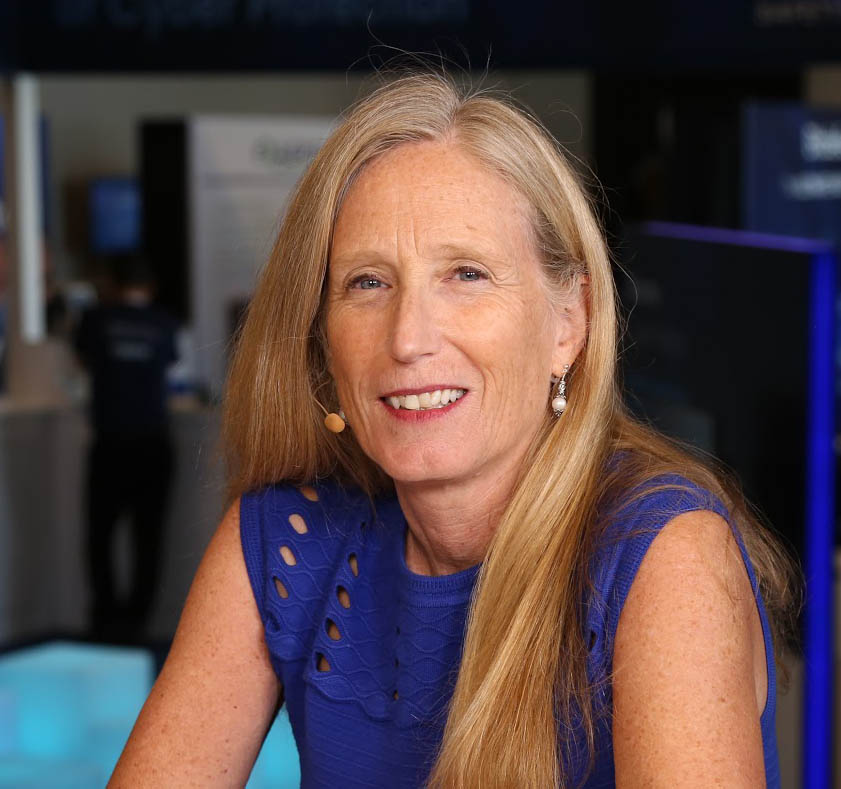
Linda Babcock, Professor of Economics at Carnegie Mellon University, talks with John Furrier at Acronis Global Cyber Summit 2019 from the Fontainebleau Miami Beach in Miami, FL.
#Acronis #AcronisCyberSummit #CyberFit
https://siliconangle.com/2019/10/17/is-being-helpful-in-the-workplace-hurting-womens-chances-of-promotion-acronissummit-womenintech/
Being helpful in the workplace may hurt women’s chances of promotion
There’s a new pothole in the path to equality in the workplace. The balancing act between being assertive enough to get attention, yet not too assertive as to be seen as “unwomanly” has been well-documented.
Now, new research shows women are facing another barrier, one that inadvertently holds back the women who are most dedicated to their work and go out of their way to take care of the tasks that men relegate as unimportant.
“The newest work that we have shows that it’s actually the day-to-day things that happen at work that’s holding women back,” said Linda Babcock (pictured), professor of economics at Carnegie Mellon University. “Men spend much more time than women at … promotable tasks that are rewarded. Women spend much more time than men on these tasks that we call non promotable that are not rewarded.”
Babcock spoke with spoke with John Furrier, host of theCUBE, SiliconANGLE Media’s mobile livestreaming studio, during the Acronis Global Cyber Summit event in Miami Beach, Florida. They discussed gender inequality in the workplace and steps that organizations and employees can take to increase diversity and inclusion (see the full interview with transcript here). (* Disclosure below.)
This week, theCUBE spotlights Linda Babcock in our Women in Tech feature.
The battle of the sexes continues
Best known as the author of ‘Women Don’t Ask: Negotiation and the Gender Divide” and its follow up, “Ask For It: How Women Can Use the Power of Negotiation to Get What They Really Want,” Babcock is a respected scholar of gender inequality in the workplace.
As well as chair of the Department of Social and Decision Sciences at Carnegie Mellon University, Babcock is founder and faculty director of the Program for Research and Outreach on Gender Equity in Society (known as PROGRESS) and the CMU Leadership and Negotiation Academy for Women.
Babcock’s research sits at the junction of economics and psychology, and she is currently researching the barriers that prevent women from advancing in the workplace.
“Women Don’t Ask” was named one of Fortune magazine’s 75 smartest business books of all time, and it drew the world’s attention to the differences between how women and men negotiate. “Women are less likely to negotiate than men over … pay [and] opportunities for advancement,” Babcock said. “And it really harms them in the workplace because men are always out there asking for it and organizations reward that.”
However, leaning in to demand what they want is a tactic that can backfire for women. Society has no problem with men who stand up and speak out, “but our world has a very narrow view about what’s acceptable behavior for women,” Babcock said.
She refers to the balancing act that women have to do in the workplace as a tightrope. “Women need to go out and assert themselves, but they have to do it in a way that our side of society finds acceptable,” she said. “That tightrope constrains women and doesn’t allow them to be their authentic selves.”
How being helpful hurts women’s promotion chances
Babcock’s recent research into the gender differences in task assignment has added another dimension to the constraints facing women’s advancement in the workplace. “There are tasks that you can classify as being promotable,” Babcock said. “”These are noticed [and] rewarded. But there’s lots of other things that happen in your organization that are often below the surface that are important to do valued but actually not rewarded.”
These tasks can be as mundane as cleaning out the office refrigerator or as critical to smooth operations as informally resolving low-level disputes between colleagues, recruiting interns, and mentoring new employees. And it’s women who usually volunteer to organize social events, such as office parties or birthday celebrations.
The solution, according to Babcock, is for men to step up to the plate and shoulder some of the responsibility for the tasks that have no tangible reward. “What men can do is start asking men to do some of these things that are important but yet not rewarded, because the portfolio is really out of balance and women are shouldering the burden of these tasks disproportionately,” she said.
...
(* Disclosure: TheCUBE is a paid media partner for the Acronis Global Cyber Summit. Neither Acronis International GmbH, the sponsor for theCUBE’s event coverage, nor other sponsors have editorial control over content on theCUBE or SiliconANGLE.)
Forgot Password
Almost there!
We just sent you a verification email. Please verify your account to gain access to
Acronis Global Cyber Summit 2019 | Miami. If you don’t think you received an email check your
spam folder.
Sign in to Acronis Global Cyber Summit 2019 | Miami.
In order to sign in, enter the email address you used to registered for the event. Once completed, you will receive an email with a verification link. Open this link to automatically sign into the site.
Register For Acronis Global Cyber Summit 2019 | Miami
Please fill out the information below. You will recieve an email with a verification link confirming your registration. Click the link to automatically sign into the site.
You’re almost there!
We just sent you a verification email. Please click the verification button in the email. Once your email address is verified, you will have full access to all event content for Acronis Global Cyber Summit 2019 | Miami.
I want my badge and interests to be visible to all attendees.
Checking this box will display your presense on the attendees list, view your profile and allow other attendees to contact you via 1-1 chat. Read the Privacy Policy. At any time, you can choose to disable this preference.
Select your Interests!
add
Upload your photo
Uploading..
OR
Connect via Twitter
Connect via Linkedin
EDIT PASSWORD
Share
Forgot Password
Almost there!
We just sent you a verification email. Please verify your account to gain access to
Acronis Global Cyber Summit 2019 | Miami. If you don’t think you received an email check your
spam folder.
Sign in to Acronis Global Cyber Summit 2019 | Miami.
In order to sign in, enter the email address you used to registered for the event. Once completed, you will receive an email with a verification link. Open this link to automatically sign into the site.
Sign in to gain access to Acronis Global Cyber Summit 2019 | Miami
Please sign in with LinkedIn to continue to Acronis Global Cyber Summit 2019 | Miami. Signing in with LinkedIn ensures a professional environment.
Are you sure you want to remove access rights for this user?
Details
Manage Access
email address
Community Invitation
Linda Babcock, Carnegie Mellon University | Acronis Global Cyber Summit 2019
Linda Babcock, Professor of Economics at Carnegie Mellon University, talks with John Furrier at Acronis Global Cyber Summit 2019 from the Fontainebleau Miami Beach in Miami, FL.
#Acronis #AcronisCyberSummit #CyberFit
https://siliconangle.com/2019/10/17/is-being-helpful-in-the-workplace-hurting-womens-chances-of-promotion-acronissummit-womenintech/
Being helpful in the workplace may hurt women’s chances of promotion
There’s a new pothole in the path to equality in the workplace. The balancing act between being assertive enough to get attention, yet not too assertive as to be seen as “unwomanly” has been well-documented.
Now, new research shows women are facing another barrier, one that inadvertently holds back the women who are most dedicated to their work and go out of their way to take care of the tasks that men relegate as unimportant.
“The newest work that we have shows that it’s actually the day-to-day things that happen at work that’s holding women back,” said Linda Babcock (pictured), professor of economics at Carnegie Mellon University. “Men spend much more time than women at … promotable tasks that are rewarded. Women spend much more time than men on these tasks that we call non promotable that are not rewarded.”
Babcock spoke with spoke with John Furrier, host of theCUBE, SiliconANGLE Media’s mobile livestreaming studio, during the Acronis Global Cyber Summit event in Miami Beach, Florida. They discussed gender inequality in the workplace and steps that organizations and employees can take to increase diversity and inclusion (see the full interview with transcript here). (* Disclosure below.)
This week, theCUBE spotlights Linda Babcock in our Women in Tech feature.
The battle of the sexes continues
Best known as the author of ‘Women Don’t Ask: Negotiation and the Gender Divide” and its follow up, “Ask For It: How Women Can Use the Power of Negotiation to Get What They Really Want,” Babcock is a respected scholar of gender inequality in the workplace.
As well as chair of the Department of Social and Decision Sciences at Carnegie Mellon University, Babcock is founder and faculty director of the Program for Research and Outreach on Gender Equity in Society (known as PROGRESS) and the CMU Leadership and Negotiation Academy for Women.
Babcock’s research sits at the junction of economics and psychology, and she is currently researching the barriers that prevent women from advancing in the workplace.
“Women Don’t Ask” was named one of Fortune magazine’s 75 smartest business books of all time, and it drew the world’s attention to the differences between how women and men negotiate. “Women are less likely to negotiate than men over … pay [and] opportunities for advancement,” Babcock said. “And it really harms them in the workplace because men are always out there asking for it and organizations reward that.”
However, leaning in to demand what they want is a tactic that can backfire for women. Society has no problem with men who stand up and speak out, “but our world has a very narrow view about what’s acceptable behavior for women,” Babcock said.
She refers to the balancing act that women have to do in the workplace as a tightrope. “Women need to go out and assert themselves, but they have to do it in a way that our side of society finds acceptable,” she said. “That tightrope constrains women and doesn’t allow them to be their authentic selves.”
How being helpful hurts women’s promotion chances
Babcock’s recent research into the gender differences in task assignment has added another dimension to the constraints facing women’s advancement in the workplace. “There are tasks that you can classify as being promotable,” Babcock said. “”These are noticed [and] rewarded. But there’s lots of other things that happen in your organization that are often below the surface that are important to do valued but actually not rewarded.”
These tasks can be as mundane as cleaning out the office refrigerator or as critical to smooth operations as informally resolving low-level disputes between colleagues, recruiting interns, and mentoring new employees. And it’s women who usually volunteer to organize social events, such as office parties or birthday celebrations.
The solution, according to Babcock, is for men to step up to the plate and shoulder some of the responsibility for the tasks that have no tangible reward. “What men can do is start asking men to do some of these things that are important but yet not rewarded, because the portfolio is really out of balance and women are shouldering the burden of these tasks disproportionately,” she said.
...
(* Disclosure: TheCUBE is a paid media partner for the Acronis Global Cyber Summit. Neither Acronis International GmbH, the sponsor for theCUBE’s event coverage, nor other sponsors have editorial control over content on theCUBE or SiliconANGLE.)