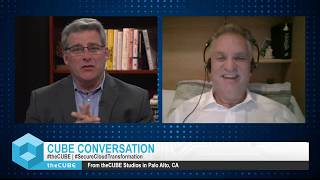
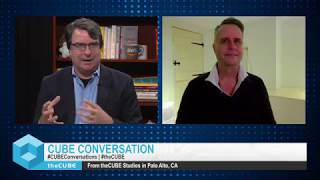
Sazzala Reddy, CTO of Datrium talks with Peter Burris for a CUBEConversation from our studio in Palo Alto, CA.
#theCUBE #CUBEConversations
https://siliconangle.com/2019/10/31/disaster-recovery-essential-for-data-protection-datrium-cloud-scalable-dr-cubeconversations/
Disaster recovery essential for data protection, and cloud makes it scalable.
Any aspiring digital business today must invest in data protection, because if data is going to be a differentiating asset within a business, then the steps to protect it and make sure that it’s where it needs to be, when it needs to be there and in the form it’s required are vitally important. But good data protection consists of a continuum of services that are required to do a good job of taking care of a company’s data — including disaster recovery. But how can DR truly be effective?
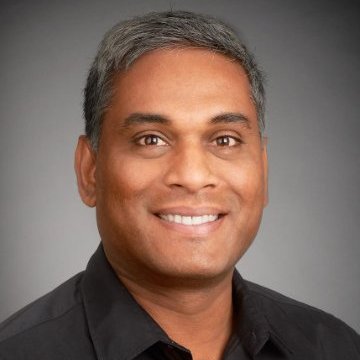
“Disaster recovery has mostly been a disaster,” said Sazzala Reddy (pictured), co-founder and chief technology officer of Datrium, Inc. “It’s never really worked for anybody. So what cloud offers you is an opportunity to simplify that and basically get your disaster recovery to be fail proof.”
Reddy spoke with Peter Burris (@plburris), host of theCUBE, SiliconANGLE Media’s mobile livestreaming studio, at theCUBE’s studio in Palo Alto, California. They discussed data protection, disaster recovery, and how the cloud is helping navigate this complicated situation (see the full interview with transcript here). (* Disclosure below.)
Disaster recovery, data protection, Datrium’s solutions
So how does cloud help from a disaster recovery standpoint? According to Reddy, there are multiple things that factor into this. The cloud offers simplicity first and foremost in a cost-efficient manner so that a new software stack can emerge.
“Running in the cloud … you can store your data, you can have all these back-ups there in a steady state, and not paying very much,” Reddy said. “You only pay for the VMware server’s computer services when you really need them. And when you don’t need them anymore, you fix your data center, you push a button, you bring all the data back and shut down the VMware servers. So it’s like paying for insurance after you have an accident. That changes the game.”
The cost efficiencies of doing DR helps it suddenly become affordable for everyone involved, according to Reddy. Another important factor is the ability to test one’s data protection and recovery to make sure that it’s working, which is good to do in the cloud. Datrium has been working to make services as a platform solutions that can help this testing and practice process become more and more easier for customers.
“How can we, with software, transform that in such a way that you get notified when actually something is going to go wrong for you?” Reddy concluded. “Because we own primary, back-up and DR — all the three legs of the stool in terms of how the DR should be working — we check continuous compliance checks every half an hour so that we can detect if something is going wrong.”
Watch the video interview with Reddy below, and be sure to check out more of SiliconANGLE’s and theCUBE’s CUBE Conversations. (* Disclosure: Datrium, Inc. sponsored this segment of theCUBE. Neither Datrium nor other sponsors have editorial control over content on theCUBE or SiliconANGLE.)
Forgot Password
Almost there!
We just sent you a verification email. Please verify your account to gain access to
CUBE Conversations 2019 | Palo Alto and Boston. If you don’t think you received an email check your
spam folder.
Sign in to CUBE Conversations 2019 | Palo Alto and Boston.
In order to sign in, enter the email address you used to registered for the event. Once completed, you will receive an email with a verification link. Open this link to automatically sign into the site.
Register For CUBE Conversations 2019 | Palo Alto and Boston
Please fill out the information below. You will recieve an email with a verification link confirming your registration. Click the link to automatically sign into the site.
You’re almost there!
We just sent you a verification email. Please click the verification button in the email. Once your email address is verified, you will have full access to all event content for CUBE Conversations 2019 | Palo Alto and Boston.
I want my badge and interests to be visible to all attendees.
Checking this box will display your presense on the attendees list, view your profile and allow other attendees to contact you via 1-1 chat. Read the Privacy Policy. At any time, you can choose to disable this preference.
Select your Interests!
add
Upload your photo
Uploading..
OR
Connect via Twitter
Connect via Linkedin
EDIT PASSWORD
Share
Forgot Password
Almost there!
We just sent you a verification email. Please verify your account to gain access to
CUBE Conversations 2019 | Palo Alto and Boston. If you don’t think you received an email check your
spam folder.
Sign in to CUBE Conversations 2019 | Palo Alto and Boston.
In order to sign in, enter the email address you used to registered for the event. Once completed, you will receive an email with a verification link. Open this link to automatically sign into the site.
Sign in to gain access to CUBE Conversations 2019 | Palo Alto and Boston
Please sign in with LinkedIn to continue to CUBE Conversations 2019 | Palo Alto and Boston. Signing in with LinkedIn ensures a professional environment.
Sazzala Reddy, CTO of Datrium talks with Peter Burris for a CUBEConversation from our studio in Palo Alto, CA.
#theCUBE #CUBEConversations
https://siliconangle.com/2019/10/31/disaster-recovery-essential-for-data-protection-datrium-cloud-scalable-dr-cubeconversations/
Disaster recovery essential for data protection, and cloud makes it scalable.
Any aspiring digital business today must invest in data protection, because if data is going to be a differentiating asset within a business, then the steps to protect it and make sure that it’s where it needs to be, when it needs to be there and in the form it’s required are vitally important. But good data protection consists of a continuum of services that are required to do a good job of taking care of a company’s data — including disaster recovery. But how can DR truly be effective?
“Disaster recovery has mostly been a disaster,” said Sazzala Reddy (pictured), co-founder and chief technology officer of Datrium, Inc. “It’s never really worked for anybody. So what cloud offers you is an opportunity to simplify that and basically get your disaster recovery to be fail proof.”
Reddy spoke with Peter Burris (@plburris), host of theCUBE, SiliconANGLE Media’s mobile livestreaming studio, at theCUBE’s studio in Palo Alto, California. They discussed data protection, disaster recovery, and how the cloud is helping navigate this complicated situation (see the full interview with transcript here). (* Disclosure below.)
Disaster recovery, data protection, Datrium’s solutions
So how does cloud help from a disaster recovery standpoint? According to Reddy, there are multiple things that factor into this. The cloud offers simplicity first and foremost in a cost-efficient manner so that a new software stack can emerge.
“Running in the cloud … you can store your data, you can have all these back-ups there in a steady state, and not paying very much,” Reddy said. “You only pay for the VMware server’s computer services when you really need them. And when you don’t need them anymore, you fix your data center, you push a button, you bring all the data back and shut down the VMware servers. So it’s like paying for insurance after you have an accident. That changes the game.”
The cost efficiencies of doing DR helps it suddenly become affordable for everyone involved, according to Reddy. Another important factor is the ability to test one’s data protection and recovery to make sure that it’s working, which is good to do in the cloud. Datrium has been working to make services as a platform solutions that can help this testing and practice process become more and more easier for customers.
“How can we, with software, transform that in such a way that you get notified when actually something is going to go wrong for you?” Reddy concluded. “Because we own primary, back-up and DR — all the three legs of the stool in terms of how the DR should be working — we check continuous compliance checks every half an hour so that we can detect if something is going wrong.”
Watch the video interview with Reddy below, and be sure to check out more of SiliconANGLE’s and theCUBE’s CUBE Conversations. (* Disclosure: Datrium, Inc. sponsored this segment of theCUBE. Neither Datrium nor other sponsors have editorial control over content on theCUBE or SiliconANGLE.)