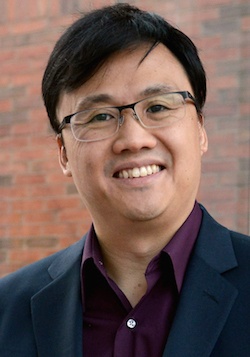
Eugene Santos Jr., Ph.D., Professor of Engineering at Dartmouth College, Bob Friday, VP & CTO at Mist, and Ed Henry, Sr. Scientist & Distinguished Member Technical Staff at Dell EMC join John Furrier in theCUBE Palo Alto Studio for an "Around theCUBE" with John Furrier segment.
#theCUBE #UnpackingAI
https://siliconangle.com/2019/10/23/ai-for-all-panel-assesses-impact-of-new-machine-learning-tools-and-rise-of-quantum-computing-cubeconversations/
AI for all: Assessing new machine learning tools and rise of quantum computing
Artificial intelligence is getting personal. Advances in massive data gathering and processing, coupled with wholesale leaps in machine processing power are setting the stage for a world where AI could closely simulate the human brain and become ingrained in many aspects of daily life.
How soon that becomes reality could depend a lot on the humans who control it, because the ability to run basic AI initiatives has evolved to a point where generating a machine-learning model is as easy as planting roses in the backyard.
“People like Google and Facebook have made it so easy for the average person to actually do an AI project,” said Bob Friday (pictured, second from right), vice president and chief technology officer of Mist, a Juniper company. “Anyone in your audience could actually train a machine-learning model over the weekend. You personally could become a data scientist over the weekend.”
Friday spoke with John Furrier, host of theCUBE, at SiliconANGLE Media’s livestreaming studio in Palo Alto, California, as part of an “Around theCUBE: Unpacking AI” panel discussion. Friday was joined by Eugene Santos Jr. (second from left), Ph.D, professor of engineering at Dartmouth College, and Ed Henry (right), senior scientist and distinguished member of the technical staff — machine learning — at Dell EMC. They discussed the impact of AI on daily life, continued dependence of the technology on basic math, how machine intelligence could mimic the human brain, and the future influence of quantum computing. (* Disclosure below.)
AI becomes real
What is paving the way for AI to become an integral part of daily life is its presence in a host of interactions many people have come to accept as routine. People who use smart assistants on mobile or home devices are using AI. Social media feeds are heavily impacted by AI tools, as are music, streaming services, and most of the advertising served on digital platforms.
“A good chunk of AI is real,” Santos said. “It depends on what you apply it to. If it’s making some sort of decisions for you, that’s AI coming into play.”
Despite advances that AI and machine learning have made, the actual field is still very much in its earliest stages. As with much of computing, the mechanics behind AI are still dependent on basic math, which instructs machines how to generate results, and programs must rely on the speed of computer processors or clock cycles.
“Right now, it’s all math,” Henry explained. “Computers don’t work like brains; our brains don’t have a clock. There’s no state that’s kept between different clock cycles.”
Mimic the human brain
AI and machine learning are powered by training models that require vast amounts of data, while the human brain can intuitively learn new tasks with only a minimal amount of instruction. Could AI reach a place where it can match the reasoning of human brains?
A new scientific paper on artificial neural networks raises the possibility that the next generation of intelligent algorithms could enable machines to generalize learning in much the same way as the human brain.
“Are we going to take our human biases and train them into the next generation of AI devices?” Friday asked. “From my point of view, it’s inevitable that we will build something as complex as the brain eventually.”
Influence of quantum computing
One of the potential game changers for advancing AI is quantum computing, the ability to leverage mechanical phenomena and manipulate bits of information at a speed and scale much greater than what is commonly available today.
For example, Google Sycamore, a 53-qubit computer, can reportedly solve a problem in 200 seconds that would have taken a supercomputer 10,000 years.
“It will fundamentally change the way we approach these problems,” Henry said. “Quantum computing allows you to evaluate the entire search space at once. The technology, once we crack that quantum nut, will not look anything like what we have today.”
The development of AI has been in process for many decades, and reaching a point where the technology can truly emulate human intelligence remains the ultimate prize.
...
Here’s the complete video of the panel, one of many of SiliconANGLE’s and theCUBE’s CUBE Conversations. (* Disclosure: Juniper Networks Inc. sponsored this segment of theCUBE. Neither Juniper nor other sponsors have editorial control over content on theCUBE or SiliconANGLE.)
Forgot Password
Almost there!
We just sent you a verification email. Please verify your account to gain access to
CUBE Conversations 2019 | Palo Alto and Boston. If you don’t think you received an email check your
spam folder.
Sign in to CUBE Conversations 2019 | Palo Alto and Boston.
In order to sign in, enter the email address you used to registered for the event. Once completed, you will receive an email with a verification link. Open this link to automatically sign into the site.
Register For CUBE Conversations 2019 | Palo Alto and Boston
Please fill out the information below. You will recieve an email with a verification link confirming your registration. Click the link to automatically sign into the site.
You’re almost there!
We just sent you a verification email. Please click the verification button in the email. Once your email address is verified, you will have full access to all event content for CUBE Conversations 2019 | Palo Alto and Boston.
I want my badge and interests to be visible to all attendees.
Checking this box will display your presense on the attendees list, view your profile and allow other attendees to contact you via 1-1 chat. Read the Privacy Policy. At any time, you can choose to disable this preference.
Select your Interests!
add
Upload your photo
Uploading..
OR
Connect via Twitter
Connect via Linkedin
EDIT PASSWORD
Share
Forgot Password
Almost there!
We just sent you a verification email. Please verify your account to gain access to
CUBE Conversations 2019 | Palo Alto and Boston. If you don’t think you received an email check your
spam folder.
Sign in to CUBE Conversations 2019 | Palo Alto and Boston.
In order to sign in, enter the email address you used to registered for the event. Once completed, you will receive an email with a verification link. Open this link to automatically sign into the site.
Sign in to gain access to CUBE Conversations 2019 | Palo Alto and Boston
Please sign in with LinkedIn to continue to CUBE Conversations 2019 | Palo Alto and Boston. Signing in with LinkedIn ensures a professional environment.
Are you sure you want to remove access rights for this user?
Details
Manage Access
email address
Community Invitation
Around theCUBE, Unpacking AI Panel | CUBEConversation, October 2019
Eugene Santos Jr., Ph.D., Professor of Engineering at Dartmouth College, Bob Friday, VP & CTO at Mist, and Ed Henry, Sr. Scientist & Distinguished Member Technical Staff at Dell EMC join John Furrier in theCUBE Palo Alto Studio for an "Around theCUBE" with John Furrier segment.
#theCUBE #UnpackingAI
https://siliconangle.com/2019/10/23/ai-for-all-panel-assesses-impact-of-new-machine-learning-tools-and-rise-of-quantum-computing-cubeconversations/
AI for all: Assessing new machine learning tools and rise of quantum computing
Artificial intelligence is getting personal. Advances in massive data gathering and processing, coupled with wholesale leaps in machine processing power are setting the stage for a world where AI could closely simulate the human brain and become ingrained in many aspects of daily life.
How soon that becomes reality could depend a lot on the humans who control it, because the ability to run basic AI initiatives has evolved to a point where generating a machine-learning model is as easy as planting roses in the backyard.
“People like Google and Facebook have made it so easy for the average person to actually do an AI project,” said Bob Friday (pictured, second from right), vice president and chief technology officer of Mist, a Juniper company. “Anyone in your audience could actually train a machine-learning model over the weekend. You personally could become a data scientist over the weekend.”
Friday spoke with John Furrier, host of theCUBE, at SiliconANGLE Media’s livestreaming studio in Palo Alto, California, as part of an “Around theCUBE: Unpacking AI” panel discussion. Friday was joined by Eugene Santos Jr. (second from left), Ph.D, professor of engineering at Dartmouth College, and Ed Henry (right), senior scientist and distinguished member of the technical staff — machine learning — at Dell EMC. They discussed the impact of AI on daily life, continued dependence of the technology on basic math, how machine intelligence could mimic the human brain, and the future influence of quantum computing. (* Disclosure below.)
AI becomes real
What is paving the way for AI to become an integral part of daily life is its presence in a host of interactions many people have come to accept as routine. People who use smart assistants on mobile or home devices are using AI. Social media feeds are heavily impacted by AI tools, as are music, streaming services, and most of the advertising served on digital platforms.
“A good chunk of AI is real,” Santos said. “It depends on what you apply it to. If it’s making some sort of decisions for you, that’s AI coming into play.”
Despite advances that AI and machine learning have made, the actual field is still very much in its earliest stages. As with much of computing, the mechanics behind AI are still dependent on basic math, which instructs machines how to generate results, and programs must rely on the speed of computer processors or clock cycles.
“Right now, it’s all math,” Henry explained. “Computers don’t work like brains; our brains don’t have a clock. There’s no state that’s kept between different clock cycles.”
Mimic the human brain
AI and machine learning are powered by training models that require vast amounts of data, while the human brain can intuitively learn new tasks with only a minimal amount of instruction. Could AI reach a place where it can match the reasoning of human brains?
A new scientific paper on artificial neural networks raises the possibility that the next generation of intelligent algorithms could enable machines to generalize learning in much the same way as the human brain.
“Are we going to take our human biases and train them into the next generation of AI devices?” Friday asked. “From my point of view, it’s inevitable that we will build something as complex as the brain eventually.”
Influence of quantum computing
One of the potential game changers for advancing AI is quantum computing, the ability to leverage mechanical phenomena and manipulate bits of information at a speed and scale much greater than what is commonly available today.
For example, Google Sycamore, a 53-qubit computer, can reportedly solve a problem in 200 seconds that would have taken a supercomputer 10,000 years.
“It will fundamentally change the way we approach these problems,” Henry said. “Quantum computing allows you to evaluate the entire search space at once. The technology, once we crack that quantum nut, will not look anything like what we have today.”
The development of AI has been in process for many decades, and reaching a point where the technology can truly emulate human intelligence remains the ultimate prize.
...
Here’s the complete video of the panel, one of many of SiliconANGLE’s and theCUBE’s CUBE Conversations. (* Disclosure: Juniper Networks Inc. sponsored this segment of theCUBE. Neither Juniper nor other sponsors have editorial control over content on theCUBE or SiliconANGLE.)