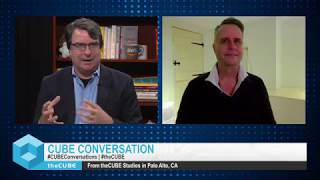
Mitch Gudgeon, Co-Founder & CEO of TalentFit AI sits down with Jeff Frick for a CUBEConversation at theCUBE Studios in Palo Alto, CA.
Headhunting AI nails elusive culture factor in workplace staffing
https://siliconangle.com/2019/04/09/headhunting-ai-nails-elusive-culture-factor-in-workplace-staffing-cubeconversations-startupoftheweek/
Companies of all sorts, from retail to natural resources, are trying to gain a competitive advantage with data analytics and artificial intelligence. Beyond better marketing, product design, and customer experience, AI can also help the hiring process. A company’s human capital contributes hugely to its bottom line. Predictive analysis can gauge applicants for company and cultural fit and prevent ill-fated mismatches.
TalentFit Solutions Inc. is bringing AI to employee recruiting and retention. The startup is parsing existing research and statistics to find out why poor hiring happens. And it’s training algorithms to steer companies toward people who will fit in and excel in their unique work environments.
Some estimates suggest the cost of making one bad hire can be up to three times that hire’s salary, according to Mitch Gudgeon (pictured), co-founder and chief executive officer of TalentFit.
Gudgeon spoke with Jeff Frick (@JeffFrick), host of theCUBE, SiliconANGLE Media’s mobile livestreaming studio, at theCUBE’s studio in Palo Alto, California. They discussed the cost savings and competitive edge that companies can gain with data analytics for hiring (watch complete video interview with transcript here).
This week, theCUBE spotlights TalentFit in our Startup of the Week feature.
Good company, good employee, bad hire
Gudgeon’s own experience as a company misfit inspired him to found TalentFit. Just after he completed his MBA, he landed a job at what seemed like a fine organization to join and grow with. “We went through the hiring process, did all the due diligence, and realized once I joined the team that my ideal culture wasn’t exactly what the culture was in the organization,” he said.
The organization and its culture weren’t inherently bad; they just were not the best fit for Gudgeon. “I wasn’t able to actually feel that I got what I needed from the company — and them probably from me too,” he said.
Research on the subject shows that hiring mistakes like this are quite common. In fact, 95% of organizations make bad hires each year, according to one survey from Brandon Hall Group.
TalentFit hopes to help employers make fewer mistakes by putting hard data and advanced technology into their hands. Ideally, the tool would have greater predictive power than “feeling out,” textbook HR guidelines, degree worship, etc.
“It would be pretty nice now to be able to say, ‘Hey, you actually align — and the data shows this too,'” Gudgeon stated.
Quantifying the ‘good fit’
Company culture is not just about a group of co-workers having some things in common. It could help to have friendly employees that could have a beer or enjoy hobbies together. But deeper shared values about the company’s mission are what can make a real difference in outcomes, Gudgeon pointed out. A good fit is achieved when employees’ core values align with the company’s values. The more of them they can hire, the happier and more productive bosses and employees will be.
With analytics, companies can figure out who is excelling and why, and then hunt for more of that type of employee. “Organizations have a huge amount of data about their employees: their personal details, education, family background, and so on,” said Aditya Narayan Mishra, chief executive officer of CIEL HR Services, as quoted by HR Technologist. “They also have data about employees’ performance and behaviors. Hence, they can correlate all these three dimensions to determine the typical profile of an employee who is likely to be successful with them.”
Companies should strike a balance between recruiting people who share core values and curating a clone factory, he added. “If you’re just bringing in people that kind of fit the culture, are you just kind of going birds of a feather? Are you missing the opportunity of what’s so important right now in terms of diversity, diversity of opinion, diversity of background, diversity of point of view?” he asked.
TalentFit tracks demographic data in an attempt to audit its algorithm for bias.
Culture: Soft word, hard outcomes
Companies — especially those vying for scarce talent — increasingly must deliver value to employees beyond dollars. “I think it used to be leadership set the direction, and you had to listen to what was going on and you had to sort of abide by the rules of the culture. And if you didn’t, you were gone,” Gudgeon said.
..................
#CUBEConversation #theCUBE #TalentFitAI @SiliconANGLE theCUBE #theCUBE @theCUBE
Forgot Password
Almost there!
We just sent you a verification email. Please verify your account to gain access to
CUBE Conversations 2019 | Palo Alto and Boston. If you don’t think you received an email check your
spam folder.
Sign in to CUBE Conversations 2019 | Palo Alto and Boston.
In order to sign in, enter the email address you used to registered for the event. Once completed, you will receive an email with a verification link. Open this link to automatically sign into the site.
Register For CUBE Conversations 2019 | Palo Alto and Boston
Please fill out the information below. You will recieve an email with a verification link confirming your registration. Click the link to automatically sign into the site.
You’re almost there!
We just sent you a verification email. Please click the verification button in the email. Once your email address is verified, you will have full access to all event content for CUBE Conversations 2019 | Palo Alto and Boston.
I want my badge and interests to be visible to all attendees.
Checking this box will display your presense on the attendees list, view your profile and allow other attendees to contact you via 1-1 chat. Read the Privacy Policy. At any time, you can choose to disable this preference.
Select your Interests!
add
Upload your photo
Uploading..
OR
Connect via Twitter
Connect via Linkedin
EDIT PASSWORD
Share
Forgot Password
Almost there!
We just sent you a verification email. Please verify your account to gain access to
CUBE Conversations 2019 | Palo Alto and Boston. If you don’t think you received an email check your
spam folder.
Sign in to CUBE Conversations 2019 | Palo Alto and Boston.
In order to sign in, enter the email address you used to registered for the event. Once completed, you will receive an email with a verification link. Open this link to automatically sign into the site.
Sign in to gain access to CUBE Conversations 2019 | Palo Alto and Boston
Please sign in with LinkedIn to continue to CUBE Conversations 2019 | Palo Alto and Boston. Signing in with LinkedIn ensures a professional environment.
Are you sure you want to remove access rights for this user?
Details
Manage Access
email address
Community Invitation
Mitch Gudgeon, TalentFit AI | CUBEConversation, March 2019
Mitch Gudgeon, Co-Founder & CEO of TalentFit AI sits down with Jeff Frick for a CUBEConversation at theCUBE Studios in Palo Alto, CA.
Headhunting AI nails elusive culture factor in workplace staffing
https://siliconangle.com/2019/04/09/headhunting-ai-nails-elusive-culture-factor-in-workplace-staffing-cubeconversations-startupoftheweek/
Companies of all sorts, from retail to natural resources, are trying to gain a competitive advantage with data analytics and artificial intelligence. Beyond better marketing, product design, and customer experience, AI can also help the hiring process. A company’s human capital contributes hugely to its bottom line. Predictive analysis can gauge applicants for company and cultural fit and prevent ill-fated mismatches.
TalentFit Solutions Inc. is bringing AI to employee recruiting and retention. The startup is parsing existing research and statistics to find out why poor hiring happens. And it’s training algorithms to steer companies toward people who will fit in and excel in their unique work environments.
Some estimates suggest the cost of making one bad hire can be up to three times that hire’s salary, according to Mitch Gudgeon (pictured), co-founder and chief executive officer of TalentFit.
Gudgeon spoke with Jeff Frick (@JeffFrick), host of theCUBE, SiliconANGLE Media’s mobile livestreaming studio, at theCUBE’s studio in Palo Alto, California. They discussed the cost savings and competitive edge that companies can gain with data analytics for hiring (watch complete video interview with transcript here).
This week, theCUBE spotlights TalentFit in our Startup of the Week feature.
Good company, good employee, bad hire
Gudgeon’s own experience as a company misfit inspired him to found TalentFit. Just after he completed his MBA, he landed a job at what seemed like a fine organization to join and grow with. “We went through the hiring process, did all the due diligence, and realized once I joined the team that my ideal culture wasn’t exactly what the culture was in the organization,” he said.
The organization and its culture weren’t inherently bad; they just were not the best fit for Gudgeon. “I wasn’t able to actually feel that I got what I needed from the company — and them probably from me too,” he said.
Research on the subject shows that hiring mistakes like this are quite common. In fact, 95% of organizations make bad hires each year, according to one survey from Brandon Hall Group.
TalentFit hopes to help employers make fewer mistakes by putting hard data and advanced technology into their hands. Ideally, the tool would have greater predictive power than “feeling out,” textbook HR guidelines, degree worship, etc.
“It would be pretty nice now to be able to say, ‘Hey, you actually align — and the data shows this too,'” Gudgeon stated.
Quantifying the ‘good fit’
Company culture is not just about a group of co-workers having some things in common. It could help to have friendly employees that could have a beer or enjoy hobbies together. But deeper shared values about the company’s mission are what can make a real difference in outcomes, Gudgeon pointed out. A good fit is achieved when employees’ core values align with the company’s values. The more of them they can hire, the happier and more productive bosses and employees will be.
With analytics, companies can figure out who is excelling and why, and then hunt for more of that type of employee. “Organizations have a huge amount of data about their employees: their personal details, education, family background, and so on,” said Aditya Narayan Mishra, chief executive officer of CIEL HR Services, as quoted by HR Technologist. “They also have data about employees’ performance and behaviors. Hence, they can correlate all these three dimensions to determine the typical profile of an employee who is likely to be successful with them.”
Companies should strike a balance between recruiting people who share core values and curating a clone factory, he added. “If you’re just bringing in people that kind of fit the culture, are you just kind of going birds of a feather? Are you missing the opportunity of what’s so important right now in terms of diversity, diversity of opinion, diversity of background, diversity of point of view?” he asked.
TalentFit tracks demographic data in an attempt to audit its algorithm for bias.
Culture: Soft word, hard outcomes
Companies — especially those vying for scarce talent — increasingly must deliver value to employees beyond dollars. “I think it used to be leadership set the direction, and you had to listen to what was going on and you had to sort of abide by the rules of the culture. And if you didn’t, you were gone,” Gudgeon said.
..................
#CUBEConversation #theCUBE #TalentFitAI @SiliconANGLE theCUBE #theCUBE @theCUBE