Dirk-Peter van Leeuwen of SUSE, chief executive officer, joins Paul Nashawaty of TheCUBE Research at SUSECON 2026 to discuss resilience, choice and artificial intelligence across enterprise IT. van Leeuwen draws on extensive experience leading open source infrastructure across cloud, edge and enterprise Linux, and they outline SUSE's roadmap and strategy for portability, data sovereignty and edge expansion.
The conversation explores SUSE's five pathways to greater resiliency, Kubernetes-based portability, data sovereignty concerns, recent edge acquisitions and the company's approach to enabling AI adoption. Key takeaways include van Leeuwen's emphasis on delivering resilient flexible platforms that preserve legacy investments while enabling AI adoption, and they warn that proprietary AI recipes risk rapid obsolescence. Nashawaty and van Leeuwen note SUSE prioritizes portability through Kubernetes to reduce vendor lock-in, harmonize multi-cloud and on‑prem deployments, and extend infrastructure to industrial edge domains to protect data sovereignty and lower total cost of ownership. The discussion highlights SUSE Linux Enterprise Server and other open source solutions that support hybrid cloud strategies and industrial IoT deployments.
Forgot Password
Almost there!
We just sent you a verification email. Please verify your account to gain access to
SUSECON 2026. If you don’t think you received an email check your
spam folder.
In order to sign in, enter the email address you used to registered for the event. Once completed, you will receive an email with a verification link. Open the link to automatically sign into the site.
Register for Susecon 2026
Please fill out the information below. You will receive an email with a verification link confirming your registration. Click the link to automatically sign into the site.
You’re almost there!
We just sent you a verification email. Please click the verification button in the email. Once your email address is verified, you will have full access to all event content for Susecon 2026.
I want my badge and interests to be visible to all attendees.
Checking this box will display your presense on the attendees list, view your profile and allow other attendees to contact you via 1-1 chat. Read the Privacy Policy. At any time, you can choose to disable this preference.
Select your Interests!
add
Upload your photo
Uploading..
OR
Connect via Twitter
Connect via Linkedin
EDIT PASSWORD
Share
Forgot Password
Almost there!
We just sent you a verification email. Please verify your account to gain access to
SUSECON 2026. If you don’t think you received an email check your
spam folder.
In order to sign in, enter the email address you used to registered for the event. Once completed, you will receive an email with a verification link. Open the link to automatically sign into the site.
Sign in to gain access to SUSECON 2026
Please sign in with LinkedIn to continue to SUSECON 2026. Signing in with LinkedIn ensures a professional environment.
Are you sure you want to remove access rights for this user?
Details
Manage Access
email address
Community Invitation
Dirk-Peter "DP" van Leeuwen, SUSE
Dirk-Peter van Leeuwen of SUSE, chief executive officer, joins Paul Nashawaty of TheCUBE Research at SUSECON 2026 to discuss resilience, choice and artificial intelligence across enterprise IT. van Leeuwen draws on extensive experience leading open source infrastructure across cloud, edge and enterprise Linux, and they outline SUSE's roadmap and strategy for portability, data sovereignty and edge expansion.
The conversation explores SUSE's five pathways to greater resiliency, Kubernetes-based portability, data sovereignty concerns, recent edge acquisitions and the company's approach to enabling AI adoption. Key takeaways include van Leeuwen's emphasis on delivering resilient flexible platforms that preserve legacy investments while enabling AI adoption, and they warn that proprietary AI recipes risk rapid obsolescence. Nashawaty and van Leeuwen note SUSE prioritizes portability through Kubernetes to reduce vendor lock-in, harmonize multi-cloud and on‑prem deployments, and extend infrastructure to industrial edge domains to protect data sovereignty and lower total cost of ownership. The discussion highlights SUSE Linux Enterprise Server and other open source solutions that support hybrid cloud strategies and industrial IoT deployments.
In this interview from SUSECON 2026, Dirk-Peter "DP" van Leeuwen, chief executive officer of SUSE, joins theCUBE Research's Paul Nashawaty to discuss how open-source infrastructure is giving enterprises the resilience and flexibility to modernize legacy environments while navigating the rapid pace of AI adoption. Van Leeuwen frames the defining challenge confronting enterprise CIOs: the simultaneous pressure to adopt AI and manage years of accumulated technical debt — all without surrendering control over sensitive data. He explains why data sovereignty has b...Read more
exploreKeep Exploring
Yes — the text answers a question like this:
How can organizations reduce complexity when adopting new technologies within an open ecosystem, balancing mission-critical partnerships, existing/legacy investments, and cost control so they can free budget for AI initiatives?add
How do open source/open standards like Kubernetes enable organizations to avoid cloud vendor lock-in and deploy workloads across multiple clouds or on-premises (particularly for large AI implementations)?add
How does your company view the edge/IoT market, and how does this recent acquisition — including the decision to open-source it — fit into your overall infrastructure strategy?add
What are the company's plans and expectations for the coming year regarding its products and strategy?add
>> Hi, welcome back to SUSECON 2026. My name is Paul Nashawaty. I'm the practice lead and principal analyst at TheCUBE Research. I'm here with DP. DP, how you doing?
Dirk-Peter "DP" van Leeuwen
>> I'm very well. Thanks for having me.
Paul Nashawaty
>> Yeah, thanks for being on. This is a great, great show. There's a lot going on. The keynote, really exciting. A lot's happening. Let's talk about, let's just jump right in. Resilience into choice and flexibility. What does that mean to you?
Dirk-Peter "DP" van Leeuwen
>> Well, it means many things, honestly, but it's more actually what it means to our customers. Our customers are facing a time where AI is taking over at an extremely high pace. And for our customers to compete and play in this world, they were going to have to make changes. They're going to have to adopt AI. They're going to have to compete with AI. They're going to have to figure out how they develop with AI. At the same time, they are often having a large amount of legacy systems that they have for many, many years. Decisions they've made in the past are catching up with them. Vendors are telling them that they have to upgrade their old systems and they have to migrate things to newer versions. And these are all very confusing times because if you've got to work on your legacy and on your incumbent systems and at the same time you want to innovate, then you get into a very complex situation and customers need to unclutter all of this. So we're trying to offer them the resilience and we're trying to offer them that resilience in a very flexible, open source way because there's another problem that is associated to AI and that is data sovereignty.
Paul Nashawaty
>> Yes.
Dirk-Peter "DP" van Leeuwen
>> And if you think about AI and all the great things it does and all the fantastic amount of outputs you get from large language models, people often don't think what is it the source of that? What have these models learned all this information from? And if the information that the models learn from is intellectual property, then you don't want your intellectual property to leave through the front door because a large language model offers it up to the wider audience and you have no way on capitalizing on that. So data sovereignty and data security is really on front of mind of every large enterprise before they start adopting AI.
Paul Nashawaty
>> Absolutely. And I was thinking back when you joined SUSE. I was at the SUSECON was 2013, right? Is that what it was at? And it was in Munich, I believe, right?
Dirk-Peter "DP" van Leeuwen
>> It was, yeah.
Paul Nashawaty
>> Yeah, yeah. And this is where your vision came out. I was remember having the conversation with you in the hallways there. And it's great to hear now at 2026 now and see that that has all come together now. So it's really great. And there's a lot more to come, right? When we look at what's happening. But we look at the choice happens kind of approach, the tagline that you have here. I agree with it. I think it's great that open ecosystem is very powerful. Power of mission critical partnerships kind of plays into that. The ecosystem is a big factor here. The partnerships that we've seen here, all the announcements that we see, it's really impressive to see how it's all coming together. What are your thoughts around reducing, like there's the partnerships, but there's also reducing the complexity for organizations to adopt these new approaches.
Dirk-Peter "DP" van Leeuwen
>> Yeah. And that's really what it's all about because customers do want to tap into all the new technology. They don't want to have the very complexity of multiple systems. And that's what in the past drove customers to a single vendor strategy because they felt, okay, if I need to adopt this technology, I will just go to one cloud provider or I just go to one operating system provider and they will provide it all for me. But now it turns out that's not how it works because now people find themselves stuck. They find themselves in a place where the vendors dictate the prices and you have no flexibility as to how you're going to operate. So what is important for us now is to find that balance for our customers and help them to, in a world that's very complex, to simplify things, but also do it in a way that you don't have to throw away everything you invested in. And you want to retain what you have, you want to retain what works, but you don't want to pay the highest price for all your legacy and existing systems. You want to lower the cost of ownership of things that you already have for many years that are stable. And at the same time, you want to then also free your budget to do all those things you need to do with AI. So navigating through that is what we help our customers with.
Paul Nashawaty
>> Yeah. And so when we look at that, we're looking at maximizing your existing IT investment, but you're also bridging the gap between your heritage environments and your net new configurations that you're building. So I think that's a really a powerful approach. One thing I did want to talk about during the keynote, right? We were talking about, we were listening about the five pathways to greater resiliency, right? That was a great story because when you look at that kind of elevation or that progression, anybody can enter in at any phase of their maturity. They can enter regardless where they are. So let's talk a little bit about that.
Dirk-Peter "DP" van Leeuwen
>> Yeah. So these five pathways are really the cornerstone of our strategy moving forward to help customers navigate digital sovereignty, to help them understand how they go to really leveraging the open source values, switching vendors if they want to, how they adopt AI, how they move into a cloud world, how to implement edge. Those are the key things that we're talking about. And the nice thing is that if you, and you do remember seeing us three years ago, it hasn't really changed.
Paul Nashawaty
>> No.
Dirk-Peter "DP" van Leeuwen
>> It's just refined itself and it's really capturing what customers are experiencing and it all revolves again around choice.
Paul Nashawaty
>> Yeah. And that's where I was going. That's why I always brought it up that about three years ago when we were looking at that, you outlined this vision, this roadmap, this where you wanted to take the company and it's here. It's coming to that point, which I think is amazing, because I mean it's very few people can actually go, "Okay, I'm going to join the... " I think you were six weeks on the job.
Dirk-Peter "DP" van Leeuwen
>> I was, yeah.
Paul Nashawaty
>> And then you basically said, "This is where we're going to go." And I'm like, "Okay, let's see where this actually goes." But this is great. It's very powerful. I like the pathways. I think that they really highlight the different areas that organizations are talking about. But I want to just talk about each one in particular. When we look about sovereignty and open standards, we see that there's 54% of organizations plan to use multi-region or multi-cloud deployments to protect themselves against failures, right? This is a challenge. We also see in our research that 65% of organizations use two or more clouds. What SUSE has done is has the ability to harmonize that across those multiple environments. Can you talk a little bit about that? Because I think that pathway is important, especially when you start looking at the data.
Dirk-Peter "DP" van Leeuwen
>> Well, yeah, in an open source world or in an open standards world, it's about two things really, because you can pick a cloud provider, you can pick multiple cloud providers even. But the thing is you want to develop in a consistent way. You want to develop your infrastructure in a way that allows you to move this infrastructure across to different cloud providers. And that now becomes more of a topic for most customers because what you saw them do in the past, they would have one system of record maybe on one cloud provider and then they had another system on another cloud provider, but they would not be interoperable. So you couldn't move it from one provider to the other. You just had a multivendor strategy, but not the ability to move it across. What our technology offers based on the Kubernetes technology, for example, is to develop using Kubernetes and then to decide where you deploy. And that flexibility that you then create allows you to go to any cloud provider or go back on prem if you need to. And what is interesting is that I see a lot of customers now talking, especially when they talk about the large AI implementation in large enterprises, bringing it back on prem is actually a real topic because large companies don't want their data in the cloud. They don't even want to have it outside of their own premises. This is the core of their value that they just don't want to play with. They want to keep it safe, but they also don't want to now go to a new methodology of implementing it. So we're allowing them to implement it and then run it wherever they want.
Paul Nashawaty
>> Yeah. I mean, it goes through the second pathway that you were talking about, optimizing operational efficiencies and cost. You mentioned about the portability piece, the application portability piece. We see in our research at 20% of organizations say it's critical that their applications are portable. And that's to your point, whether they're repatriating back on prem or moving to another cloud or whatever it may be, they need to be able to move around seamlessly. And that's where there's harmonization across these different ecosystems matter. But the reducing the proprietary tax, that was an interesting kind of statement. What are your thoughts on that?
Dirk-Peter "DP" van Leeuwen
>> Well, this is an effect of life that everybody is like... I don't have any more conversation with a CIO where this does not come up. It's like every CIO has concerns about what Broadcom is doing to VMware with the whole pricing, and there's other vendors that are buying other companies that make people concerned. So these concerns are top of mind and they're real concerns. And so whatever any CIO is now doing, it's revolving around how do I detach myself and how do I become less dependent on these single vendors? And we help there. We actively help there. We have solutions. We are capable of doing it in such a way that you don't have to make a massive switch. We allow you to use what you're having in the best possible way and then also adopt new technology. And we like to help with the innovation part because it's not just about unlocking the lock-in that customers had from previous vendors. It's also helping them get access to new technology.
Paul Nashawaty
>> But it also helps them with modernizing their new workloads. Yeah. And they're moving forward, but it's that bridge in the gap piece where they have the heritage environment that may be encapsulated. Some of it may not even modernize. Some of it may stay where it is and
Dirk-Peter "DP" van Leeuwen
>> That's it, yeah.
Paul Nashawaty
>> ...you have the ability to look at that. So that's an interesting perspective as well. And I like that when the messaging that I was hearing was ensuring that seamless modernization across your quarter edge to cloud.
Dirk-Peter "DP" van Leeuwen
>> Yeah.
Paul Nashawaty
>> And you just had a recent acquisition at the edge for the tiny edge pieces, the industrial edge, I think that's important as well. So I think a lot of these things is just showing that the vision is coming together, the pieces are all falling into place, you're really showing that growth.
Dirk-Peter "DP" van Leeuwen
>> Yeah, that's a great point. We felt that the edge is actually an industry or a part of the industry where we play very heavily, but it's equally a part that hasn't been as well-defined as other parts. There's no clear leadership. There's not one single company you would recognize as the edge player, and therefore it's also an opportunity. For us, it's an opportunity. For our customers, it's an opportunity. And if you look at where we play, we're really an infrastructure player. The largest, most business critical servers, the largest servers in the world are running SUSE. But on the other side of the spectrum, you have this very small service that we have our K3s, which is the very small Kubernetes that runs in an edge play. We have SLE Micro, which is our micro Linux that runs... But after that, you get into devices that are so small, they don't even have an OS, but they still need to communicate and you still need to maintain this infrastructure. This is the IoT where you have protocols like Modbus and others, and you need to manage that in a harmonious way. And the other thing there in that space, it's like it's not necessarily open source. This is a vast, huge market of small devices that are all connected and nobody knows exactly how. And by open sourcing this acquisition that we've just done, we're harmonizing also the whole open source story across that infrastructure layer. And that makes it a real complete strategy for us.
Paul Nashawaty
>> I think that's really exciting. I've known that team for some time, and I think that it's great. It's a great synergy between the two teams. So finally, I'll ask you about innovating with AI and next gen tech. That's really what's happening. That's that fifth pathway that you have. What does that do for allowing for flexible foundations allow around AI? I mean, we have to talk about AI. It's the thing of 2026, right? So we have to talk about it.
Dirk-Peter "DP" van Leeuwen
>> No, AI is on everybody's mind, but AI comes with a big concern, with a couple of big concerns, right? And when we think about our role in the industry, it's to connect open source technologies to enterprise use cases. If you're an enterprise, you need to adopt AI. First of all, you're worried about your data, you're worried about your IP. Secondly, you're worried about the speed of innovation, because AI innovates at a pace that we've never seen before. And that means that a vendor may tell you, "Okay, if you want AI, you need this. This is our recipe for AI and here are all the tools and here is everything that you need." And then you're back into a proprietary environment. You will find that if you choose such a solution, you will be outdated immediately. The moment you install it's outdated. There's no doubt about it because this is the pace at which AI innovates.
So you have to find the solution that allows you to consume the continuous stream of innovation that comes from AI and do it on a platform that is stable enough to handle that innovation because you want a stable core. You need a foundation that you invest on with your GPUs and with all the infrastructure you need and then benefit from all the innovation on top without having to constantly rip and replace, rip and replace. That was the vision that I had for our AI solution. And when I asked the team, okay, develop something that can withstand the fast pace of innovation in AI, but also make something that is uniquely designed for AI so customers have the best possible platform to deploy it on. And that's our AI solution.
Paul Nashawaty
>> Yeah. Yeah. Well, I'll tell you, leading up to SUSECON in 2026, lots of press releases, lots of announcements, lots happening. So I'll ask you this, what's next? What's going to happen if we're at SUSECON in 2027? What do you see happening in the future?
Dirk-Peter "DP" van Leeuwen
>> Well, if I would be able to tell you or if I would tell you anything, I would be wrong. And this is what it is, right? I'm very happy to see that what we saw three year as an opportunity is still working for us in that sense. We're building on what we're doing and it's a very strong foundation and it gives us the flexibility to react fast to the market and what the market needs. Where we are next year is going to be a continuum of what we're doing now. A lot of the stuff will still be there. A lot of the stuff will have evolved and become even better. One thing I like to say is that I think our Linux, our SLES 16 that we just launched in November last year, that was the first release in seven years is actually a state-of-the-art product that is now also revolutionizing what you would call an old-fashioned operating system. And we've taken it to a whole new level with AI integration and all the kind of things. So I can see building on that, we will see new things, we will see new things in the cloud, new things in AI, and who knows what our edge strategy will be bringing us next year.
Paul Nashawaty
>> Well, I look forward to seeing it. And DP, it's always a pleasure talking to you. This has been great. Thank you for being on with me today.
Dirk-Peter "DP" van Leeuwen
>> Likewise.
Paul Nashawaty
>> Yeah. Thank you.
Dirk-Peter "DP" van Leeuwen
>> Great to be here. Thank you so much.
Paul Nashawaty
>> Thank you. And thank you for watching. Paul Nashawaty coming to you live from SUSECON 2026 from TheCUBE, your leading source of tech news.







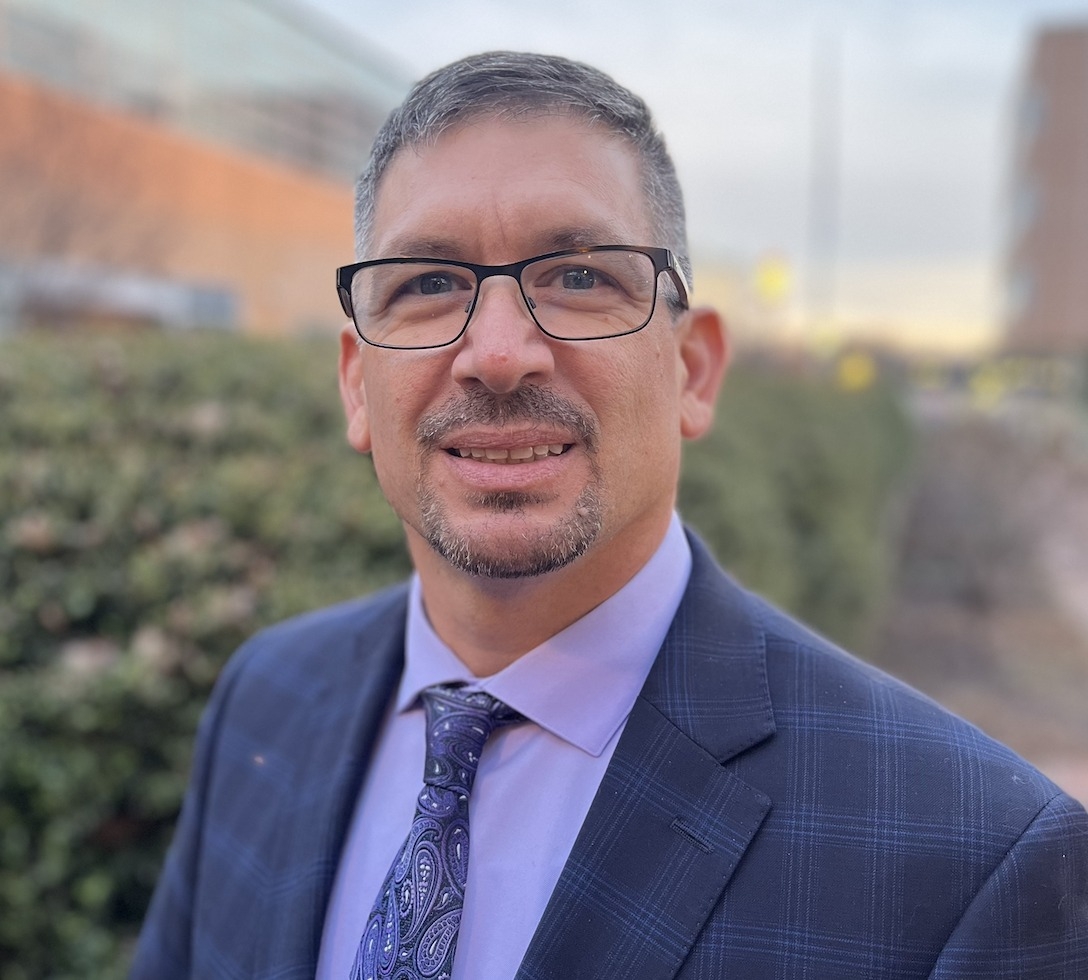 Paul Nashawaty