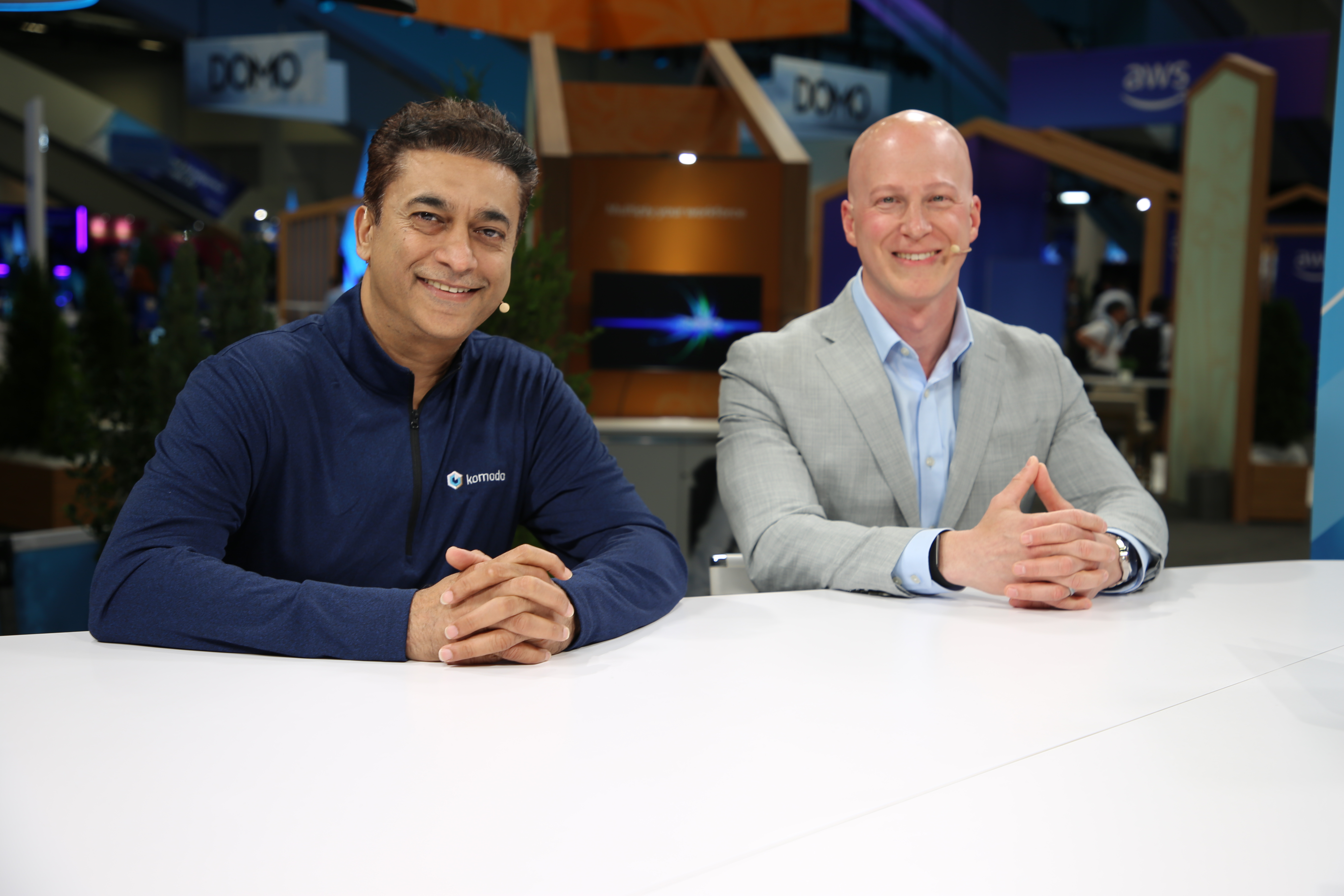
In this interview from Snowflake Summit 2026, Jesse Cugliotta, vice president and global head of healthcare and life sciences at Snowflake, joins Amit Sangani, chief technology officer of Komodo Health, to talk with theCUBE's Rebecca Knight and Dave Vellante about how AI is transforming healthcare by turning fragmented patient data into trusted, production-ready intelligence. Sangani, a veteran of Meta's AI platforms including Llama and PyTorch, explains why healthcare's fragmented data landscape — spanning claims, labs and prescriptions across hundreds of providers — makes unified patient journey data the essential foundation for any meaningful AI system. Cugliotta underscores the stakes, noting that the average patient chart runs 46,000 words and that AI-powered summarization can fundamentally change how physicians make decisions at the point of care.
The conversation also explores how Komodo Health built its agentic intelligence layer on top of 350 million longitudinal patient records, using multi-agent orchestration and frontier LLMs to deliver step-by-step analytical workflows with deterministic guardrails. Sangani details five pillars of trust — governed data access, explainability, reproducibility, validation and HIPAA compliance — that keep results within a defined variance range and make every answer fully auditable. Cugliotta adds that the Snowflake partnership extends beyond infrastructure: customers purchasing Komodo data can have it shared directly into their existing Snowflake environments, eliminating complex ingestion pipelines. From deep pharmaceutical research tools like Marmot to an upcoming developer SDK that gives engineers direct access to the Healthcare Map, the discussion closes with a clear directive for healthcare CIOs — senior leadership must get hands-on with AI to drive the process change that moves initiatives from pilot to production.
Forgot Password
Almost there!
We just sent you a verification email. Please verify your account to gain access to
Snowflake Summit 2026. If you don’t think you received an email check your
spam folder.
In order to sign in, enter the email address you used to registered for the event. Once completed, you will receive an email with a verification link. Open the link to automatically sign into the site.
Register for Snowflake Summit 2026
Please fill out the information below. You will receive an email with a verification link confirming your registration. Click the link to automatically sign into the site.
You’re almost there!
We just sent you a verification email. Please click the verification button in the email. Once your email address is verified, you will have full access to all event content for Snowflake Summit 2026.
I want my badge and interests to be visible to all attendees.
Checking this box will display your presense on the attendees list, view your profile and allow other attendees to contact you via 1-1 chat. Read the Privacy Policy. At any time, you can choose to disable this preference.
Select your Interests!
add
Upload your photo
Uploading..
OR
Connect via Twitter
Connect via Linkedin
EDIT PASSWORD
Share
Forgot Password
Almost there!
We just sent you a verification email. Please verify your account to gain access to
Snowflake Summit 2026. If you don’t think you received an email check your
spam folder.
In order to sign in, enter the email address you used to registered for the event. Once completed, you will receive an email with a verification link. Open the link to automatically sign into the site.
Sign in to gain access to Snowflake Summit 2026
Please sign in with LinkedIn to continue to Snowflake Summit 2026. Signing in with LinkedIn ensures a professional environment.
Are you sure you want to remove access rights for this user?
Details
Manage Access
email address
Community Invitation
Jesse Cugliotta, Snowflake & Amit Sangani, Komodo Health
In this interview from Snowflake Summit 2026, Jesse Cugliotta, vice president and global head of healthcare and life sciences at Snowflake, joins Amit Sangani, chief technology officer of Komodo Health, to talk with theCUBE's Rebecca Knight and Dave Vellante about how AI is transforming healthcare by turning fragmented patient data into trusted, production-ready intelligence. Sangani, a veteran of Meta's AI platforms including Llama and PyTorch, explains why healthcare's fragmented data landscape — spanning claims, labs and prescriptions across hundreds of providers — makes unified patient journey data the essential foundation for any meaningful AI system. Cugliotta underscores the stakes, noting that the average patient chart runs 46,000 words and that AI-powered summarization can fundamentally change how physicians make decisions at the point of care.
The conversation also explores how Komodo Health built its agentic intelligence layer on top of 350 million longitudinal patient records, using multi-agent orchestration and frontier LLMs to deliver step-by-step analytical workflows with deterministic guardrails. Sangani details five pillars of trust — governed data access, explainability, reproducibility, validation and HIPAA compliance — that keep results within a defined variance range and make every answer fully auditable. Cugliotta adds that the Snowflake partnership extends beyond infrastructure: customers purchasing Komodo data can have it shared directly into their existing Snowflake environments, eliminating complex ingestion pipelines. From deep pharmaceutical research tools like Marmot to an upcoming developer SDK that gives engineers direct access to the Healthcare Map, the discussion closes with a clear directive for healthcare CIOs — senior leadership must get hands-on with AI to drive the process change that moves initiatives from pilot to production.
Jesse Cugliotta, Snowflake & Amit Sangani, Komodo Health
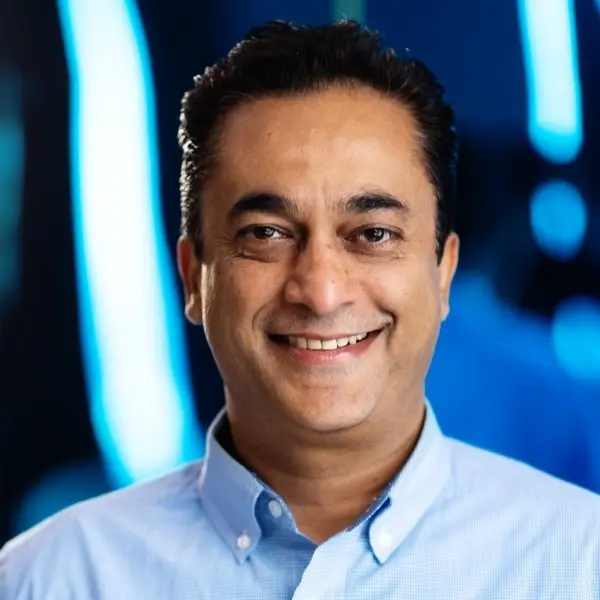
Jesse Cugliotta
VP, Global Head of Industry GTM - Healthcare & Life SciencesSnowflake
Amit Sangani
Chief Technology OfficerKomodo Health
In this interview from Snowflake Summit 2026, Jesse Cugliotta, vice president and global head of healthcare and life sciences at Snowflake, joins Amit Sangani, chief technology officer of Komodo Health, to talk with theCUBE's Rebecca Knight and Dave Vellante about how AI is transforming healthcare by turning fragmented patient data into trusted, production-ready intelligence. Sangani, a veteran of Meta's AI platforms including Llama and PyTorch, explains why healthcare's fragmented data landscape — spanning claims, labs and prescriptions across hundreds of pr...Read more
exploreKeep Exploring
What made you decide to join Komodo (or what attracted you to work with Komodo)?add
How does Komodo's Healthcare Map work, and how does it support auditable, reproducible analytics for pharmaceutical research such as tracking patient journeys and medication transitions?add
What do healthcare providers want from AI systems in terms of trust, transparency, and explainability when they ask questions?add
- How does Snowflake fit into the deterministic component of your system/architecture?
- What is your go-to-market relationship with Snowflake?add
Jesse Cugliotta, Snowflake & Amit Sangani, Komodo Health
search
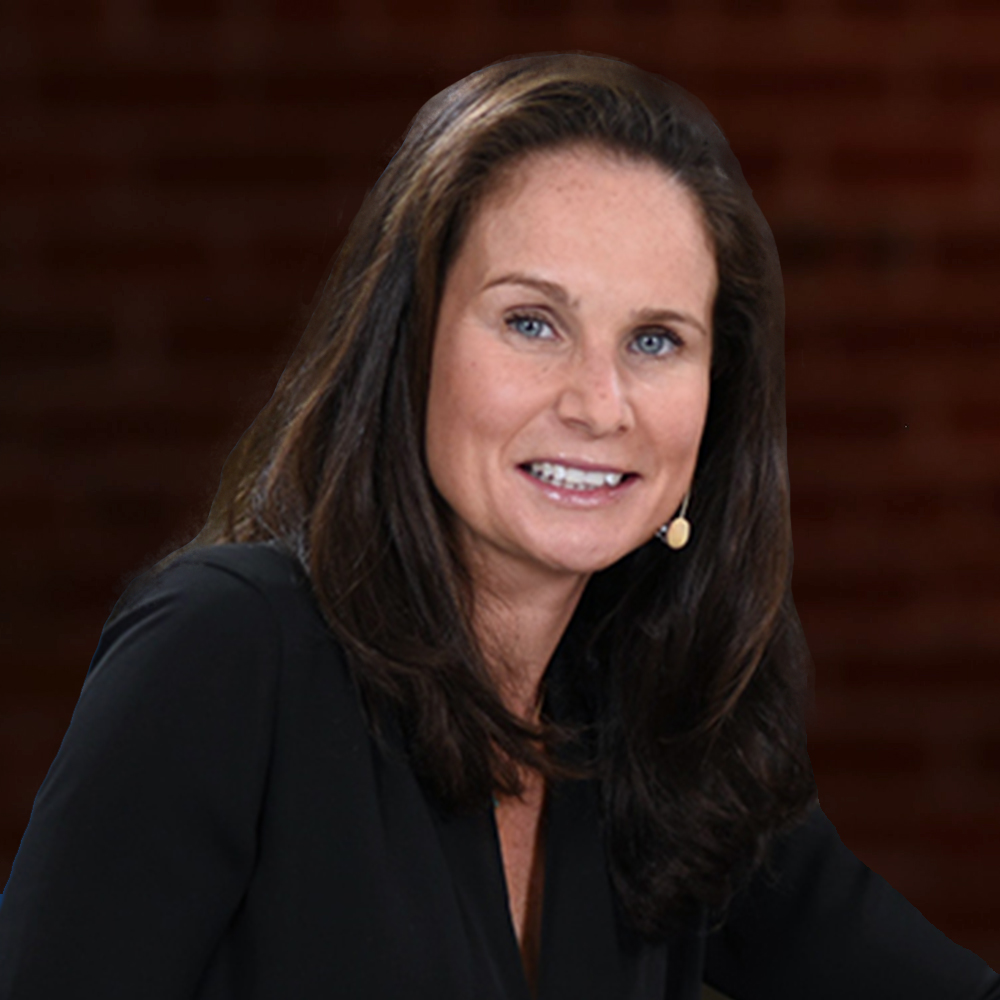
Rebecca Knight
>> Good afternoon everyone and welcome back to theCUBE's live coverage of the Snowflake Summit 2026 here in Moscone. This is our last segment of the day. I'm Rebecca Knight alongside Dave Vellante. What a show it's been.
Dave Vellante
>> Blew by, didn't it?
Rebecca Knight
>> It really has. We've had so many terrific guests, so many great interviews and we have another great interview ahead of us now. I would like to welcome to our show Jesse Cugliotta, Global Head of Healthcare and Life Sciences at Snowflake. Welcome, Jesse.
Jesse Cugliotta
>> Thank you for having us.
Rebecca Knight
>> I'd like to welcome Amit Sangini, Chief Technology officer at Komodo Health. Welcome, Amit.
Amit Sangani
>> I'm excited to be here.
Rebecca Knight
>> Welcome back, exactly.
Amit Sangani
>> I know. I was here last year as well.
Rebecca Knight
>> You were indeed, but in a different role. You spent 11 years working at Meta, working on some of the most scaled AI platforms in the world. What made you want to make the switch into healthcare AI and join Komodo as CTO?
Amit Sangani
>> Yeah, it's a great question. I spent almost the last 20 years building technology platforms, and last 10 years when I was at Meta I worked on two of the most important AI platforms, Llama and PyTorch. What I learned there over the last 10 years or the last three to four years, especially when PyTorch went from 15% market share to almost 95% market share today, pretty much every machine learning models have built, that when you build production based systems what matters is not just the model, but all the tooling and the infrastructure and everything around that. It starts with the basic data foundations. Healthcare has massive opportunity. I looked at Komodo and a bunch of other companies and I found that when you have this foundational data and then you build AI and intelligence layer on top of it, you can do magic. If you look at healthcare as an industry, there's so many different companies which has data, but it's all fragmented. When a patient goes to the doctor, gets a diagnose for a particular treatment, gets the claims, prescription and all of that, you have all these different buckets where the data comes from, but there's no single organization which has a complete view of the entire patient journey. Arif Nathoo and Web Sun, who are the founders of Komodo, they spent last decade actually building this foundational layer, where they have 350 million patient data, patient journey data, which is longitudinal and time series data. I was super excited when I saw that, and building AI intelligence on top of that was my dream. What I learned at Meta, where reference architectures and taking it to production was a very difficult task. You can build great demos, but when you have to actually build a production based system, it's extremely hard. I get to do it at Komodo and that's why I was super excited to join.
Dave Vellante
>> Jesse, I haven't heard this term in a while, killer app. The killer app for the PC, you had spreadsheets and Word processing and presentation graphics. In the internet, the killer app was email. It turns out in big data, the killer app was SQL. The killer app in AI right now seems to be coding, but average people can't relate to that. They can certainly relate to healthcare. I, for one, think that healthcare life sciences is one of the industries that is going to really benefit from AI. How do you think about the AI impact on healthcare? What's happening? Give us the lay of the land in life sciences and healthcare.
Jesse Cugliotta
>> I think AI is accelerating upon the foundation that Amit just talked about. There are so many things that we typically would speak to as low hanging fruit within this industry, that have plagued the practitioners for years. Think about all the processes that exist in a hospital or health system that literally still involve paper or a fax machine, for example, because it was designed that way due to a regulatory constraint 40 plus years ago. The technology that has moved since then has basically just tried to digitize the paper process, but you're still ultimately working with documents. There's incredible capabilities to do things like to be able to summarize a patient's chart. The average patient chart is 46,000 words. That's the length of Fahrenheit 451. If you're walking into an emergency room and the physician has 27 other patients, they're not reading through your entire chart history, even if they could get access to it. The ability to leverage AI to be able to do things like that, to provide a more complete picture to understand, what is the most accurate way to work up this particular patient, are they a candidate for admission or to be able to be sent home, really has a critical impact not just on the caregiver's day-to-day experience as a clinician, but then on the patient outcome as well.
Rebecca Knight
>> Yeah. No, in what you're describing too, we all have personal stories of hearing about doctors that missed things because they weren't talking to their colleagues about certain things in a patient's life. Talk a little bit about how Komodo Health, because you're Komodo Health, you're talking about the patient journey, which is in part the paperwork, the insurance claims, all of that stuff, but it's also the person's, the human's body and their health that goes along with it. Talk a little bit about what you're doing to improve healthcare for all of us.
Amit Sangani
>> Yeah, absolutely. What Komodo is doing is basically they have a healthcare map, which is their foundational data platform product, and they are sourcing this data from numerous different providers, but then they are cleansing it, de-duping it, making it available such that we can build analytic applications on top of that. That's a pretty hard process because if you take an example, a patient goes to a doctor, gets diagnosed, then they get a prescription. The data is all over the place, from claims, to labs, to prescriptions, to health organizations and all of this. How do you combine all of that data for a single patient and create a full journey? Now you aggregate that across a different segment or therapeutic areas. Once you do that, then it becomes really powerful, whether it's for diabetic patients or other therapeutic areas, and that's what Komodo is doing. Once they have this, they took a long time to build this. Now we are building the intelligence on top of that. It's not just a chatbot, it's for big analysts at big pharma companies who can come in and do deep research. If somebody wants to do understanding of GLP-1 medication, where patients move from let's say injectable GLP-1 medication to oral therapy and they want to see the impact of that and when did it get accelerated, they'll be able to find that, and it requires deep research. You have to create cohort of analysis, understand who are the patients within a particular geographical location, certain demographics, get that information. It's a workflow which you have to go through, and Komodo actually creates that entire workflow which is entirely auditable, explainable, reproducible. In the world of AI, deterministic answers are very difficult to get, but because we build all the guardrails we are able to do all of that and provide it to our customers.
Dave Vellante
>> Okay. It sounds like you've solved this on a black box problem. When I go back to, I remember the show Silicon Valley. I love that show.
Rebecca Knight
>> Oh, yeah. I love that show.
Dave Vellante
>> Hot dog. It's almost become a documentary at this point. No, really. Hot dog, no hot dog. You're thinking before that was cats, like, how does it know it's a cat? Nobody could really answer how it knew. Now you see the LMs will show you what it's doing, but it's going so fast and it's so complicated. You really don't know how it arrived at the answer. Double click on that, how do you provide that level of transparency?
Amit Sangani
>> This is an excellent question and this is what our customers actually want. The biggest thing in healthcare is trust. These healthcare providers, when they ask a question, they don't want just an answer because an answer definitely varies quite a bit depending on the underlying data. They want to understand what is the underlying data providing and how did you derive at that answer? They want to see every step. The first step is the plan. How is the AI going to create a plan and help me understand what cohorts they are creating, how they are doing the filtering, what SQL is being written, what is a Python, which basically generates the report and we, Komodo, our product actually provides all of that with great transparency. You can see each and every step, you can click on that step to see the files, you can see the entire execution report, you can see where the data is flowing. They can change any step in the flow where they feel like, "Oh, I don't see this particular step in that workflow. Can I add it or can I modify it?" They'll be able to do that without affecting other flows. That gives them the trust that when the final answer comes, it's like almost like a kid when they are doing the math problem and if they just give you an answer, you say, "Okay, what are the steps you followed?" That's exactly what we are doing.
Dave Vellante
>> The deterministic piece, how does Snowflake fit into that?
Amit Sangani
>> Yeah. We are using Snowflake in the backend and the AI tools for Snowflake provides us. We are actually using it significantly. We are also using the caching layer. We are creating the guardrails on top of Snowflake. The efficiency which we get from Snowflake is just tremendous, and that allows us to create all the guardrails where the answers don't deviate more than certain 10% variation or that. That is how we are using Snowflake.
Jesse Cugliotta
>> One thing I'll add to that too is that beyond the fact that you guys are working with us as an end customer, we think about this as a partnership for our mutual customers as well. I think this becomes incredibly important. People are often asking us, who else are you working with, which is in our ecosystem because they are building their own data landscape directly on Snowflake. When they're purchasing assets and data from vendors like Komodo, the ability to already have that available on Snowflake makes the overall ingestion of pipeline that much simpler. To your point around trust, if you are moving pieces you have every time you're moving data around or actually migrating that from one place to the other, the easier that gets. We start to be coherent in that mission.
Dave Vellante
>> What's the go to-market relationship?
Jesse Cugliotta
>> The go to-market relationship today with Snowflake is that we allow customers to build their own data foundation directly with their own clinical data. As they were able to purchase real world assets and other data directly from Komodo, they can be shared directly into Snowflake into their own estate.
Dave Vellante
>> That's in the marketplace or... ?
Amit Sangani
>> Yeah. The way we are using, we are using Snowflake as the backend data lake. We are using it for two primary purposes. One is storage and one is compute. When people run queries against us, so we basically pass on those queries against Snowflake. It's a product.
Dave Vellante
>> It's hidden in them, to the customer?
Amit Sangani
>> Yeah. But the great thing about Snowflake is it provides all the detail understanding, the dashboards, the detail level of... We have several products. Marmot is our core intelligence platform, but we have a bunch of other legacy products, and every product it basically splits out and helps us understand the details of where our spend is and how we can optimize that.
Dave Vellante
>> When I come in, I see Marmot?
Amit Sangani
>> Yeah.
Dave Vellante
>> Then Snowflake is in the backend, customer doesn't even see Snowflake or AWS or anything else.
Amit Sangani
>> Correct.
Dave Vellante
>> It's your product. Okay, cool. Very simple.
Rebecca Knight
>> What you're really describing is reshaping life sciences and the health industry. From a builder and developer's perspective, Amit, how does that change how they're spending their time and how they're going about building solutions in a healthcare organization?
Amit Sangani
>> Yeah. Typically, there are different roles within a healthcare organization. Typical analysts or researchers use our product, and so they would want to create a different size market sizing opportunity for a new drug which is coming out in the clinical trial stage, or they might have different queries depending on their needs. They would basically use Marmot and they would get the whole detailed report and it's a very deeply detailed report. You can't get that same thing on cloud or OpenAI easily. You can get some information but it's very light. It's like 5% of what the detailed information you can get from Marmot. Once they have that, then they would basically use that internally for FDA regulations, for their internal board meetings and all of that different purposes. For developers, they will now have access to one of our core products called Komodo Development Kit, which we haven't yet announced, we will be announcing very soon, where they will be able to use that SDK to get access to the healthcare map data directly, with all the authorization and authentication in place. That will allow them to not just depend on Komodo, they can build their own applications on top of our data, which we think is super exciting.
Dave Vellante
>> How are you training the system and how do you use LLMs, the frontier models?
Amit Sangani
>> Yeah. We have an agentic layer sitting on top of the healthcare map data. It's a multi-agent orchestration which we do. We are using LLMs, the frontier models. We are using pretty much all of them depending on the needs. Then the agentic system interacts with Snowflake in the backend to get the data out and then does all the massaging. We have evals in place which we run. Our primary goal is to build five pillars of trust. One is access to our government access data, which is the foundation. Second is explainability, being able to audit. That is part of our architecture. Third is reproducibility. You can reproduce this today, six months from now with the same query. Obviously, underlying data changes, then there'll be different results, but the plan of action is the same. Fourth is the validation. When the customer gets the output, they see that it's validated. Lastly, everything is governed through privacy, HIPAA compliance, and all of that.
Dave Vellante
>> Excellent.
Rebecca Knight
>> Based on all the things that you've just said, a lot of CIOs in healthcare are nervous about getting AI wrong because of trust, because of explainability, because of security issues. What is your advice to them, to our viewers who are watching and saying, "I want some of that, but I'm scared and there are some resistance within my organization." What's your advice?
Jesse Cugliotta
>> My advice is I would dive in head first. People often ask us the question, why do some folks always fail at the pilot stage with AI? What is differentiating about those that go beyond that and actually scale to something into production? When I look at, this may be a bit controversial, but when I look at the last six months I think anyone who's in an individual contributor position or an IC has been challenged to say, "I need to use AI to transform the way that I do my job because my job is changing whether I want it to or not." People have embraced the discomfort of that. We've done that at Snowflake. We're very proud of the changes that we've all made. I think the organizations where we actually start to see people move beyond the pilot phase and into production and see value with this is where it's not just the ICs that are doing this, but senior leadership is getting hands on with this as well, because they now have the capability to understand how is this actually adding value to day-to-day work for myself, as well as the folks that are a part of my organization. They typically have the authority to actually drive process change to go along with that, to actually integrate some of these new changes, applications, prototypes or capabilities that they're building, directly into the workflow of whatever it is that they do.
Dave Vellante
>> That's the big promise that is in front of us. We're getting kicked out of here.
Rebecca Knight
>> Indeed. Well, Amit and Jesse, thank you both so much for coming on the show. Really, really fascinating conversation.
Jesse Cugliotta
>> Thank you for having us.
Amit Sangani
>> Thank you.
Jesse Cugliotta
>> Great way to close. Thank you.
Rebecca Knight
>> Yes. Thank you. That wraps up theCUBE's interviews for its Snowflake Summit 2026. I'm Rebecca Knight for Dave Vellante.
Dave Vellante
>> Wait, wait, tell people, go to SiliconANGLE.com.
Rebecca Knight
>> Yup, check it out.
Dave Vellante
>> theCube.net, that's where all the on demand stuff is going to be. Check out thecuberesearch.com. A lot of good research there. Then the cubeai.com, ask it what happened at Snowflake Summit, top five takeaways, you'd get a great answer.
Rebecca Knight
>> All right. There you go. Good, good. You've been watching theCUBE, the leader in enterprise tech news and analysis.
















 Rebecca Knight
 Dave Vellante