We just sent you a verification email. Please verify your account to gain access to
Snowflake Summit 2025. If you don’t think you received an email check your
spam folder.
In order to sign in, enter the email address you used to registered for the event. Once completed, you will receive an email with a verification link. Open this link to automatically sign into the site.
Register For Snowflake Summit 2025
Please fill out the information below. You will recieve an email with a verification link confirming your registration. Click the link to automatically sign into the site.
You’re almost there!
We just sent you a verification email. Please click the verification button in the email. Once your email address is verified, you will have full access to all event content for Snowflake Summit 2025.
I want my badge and interests to be visible to all attendees.
Checking this box will display your presense on the attendees list, view your profile and allow other attendees to contact you via 1-1 chat. Read the Privacy Policy. At any time, you can choose to disable this preference.
Select your Interests!
add
Upload your photo
Uploading..
OR
Connect via Twitter
Connect via Linkedin
EDIT PASSWORD
Share
Forgot Password
Almost there!
We just sent you a verification email. Please verify your account to gain access to
Snowflake Summit 2025. If you don’t think you received an email check your
spam folder.
In order to sign in, enter the email address you used to registered for the event. Once completed, you will receive an email with a verification link. Open this link to automatically sign into the site.
Sign in to gain access to Snowflake Summit 2025
Please sign in with LinkedIn to continue to Snowflake Summit 2025. Signing in with LinkedIn ensures a professional environment.
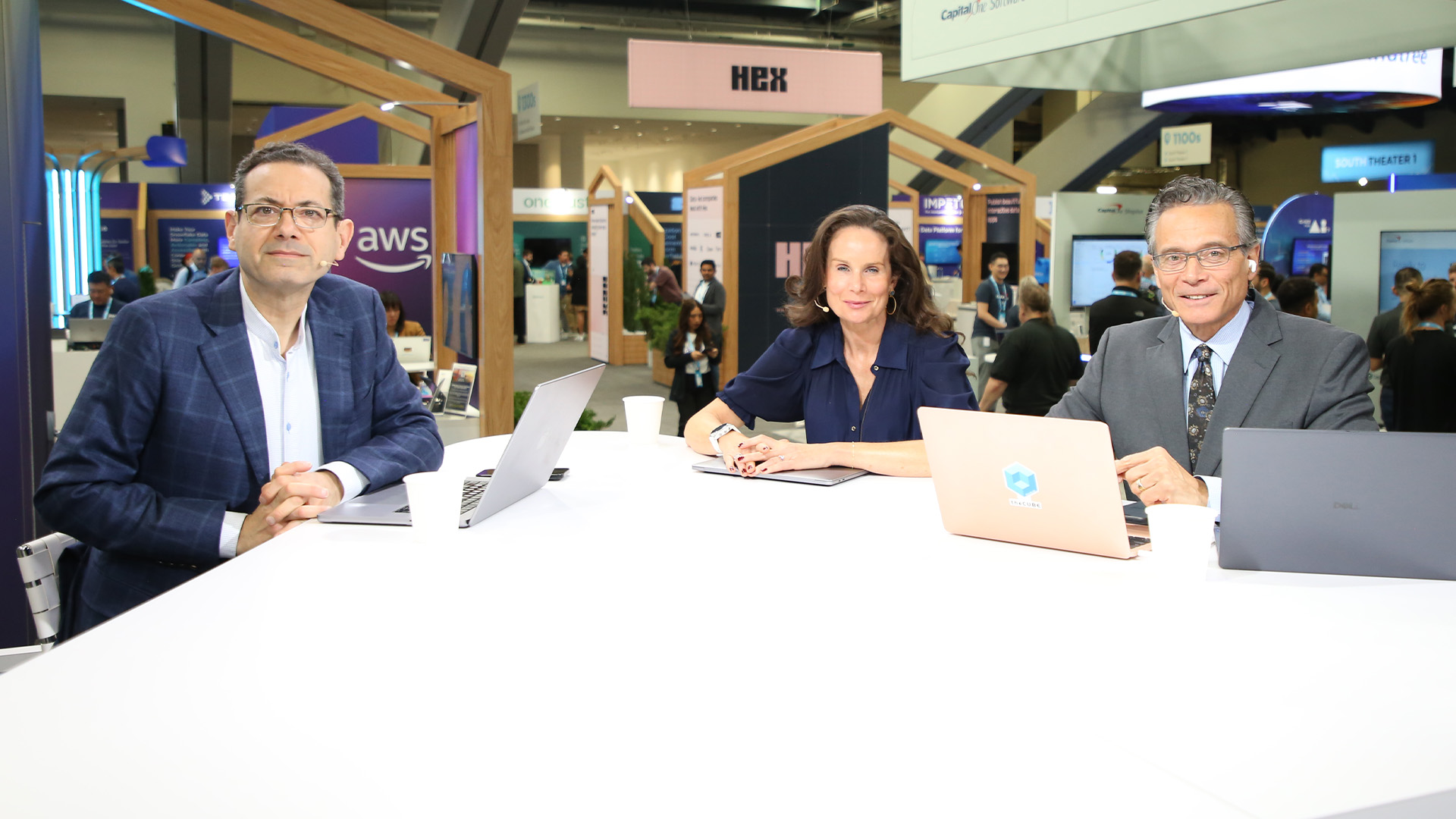
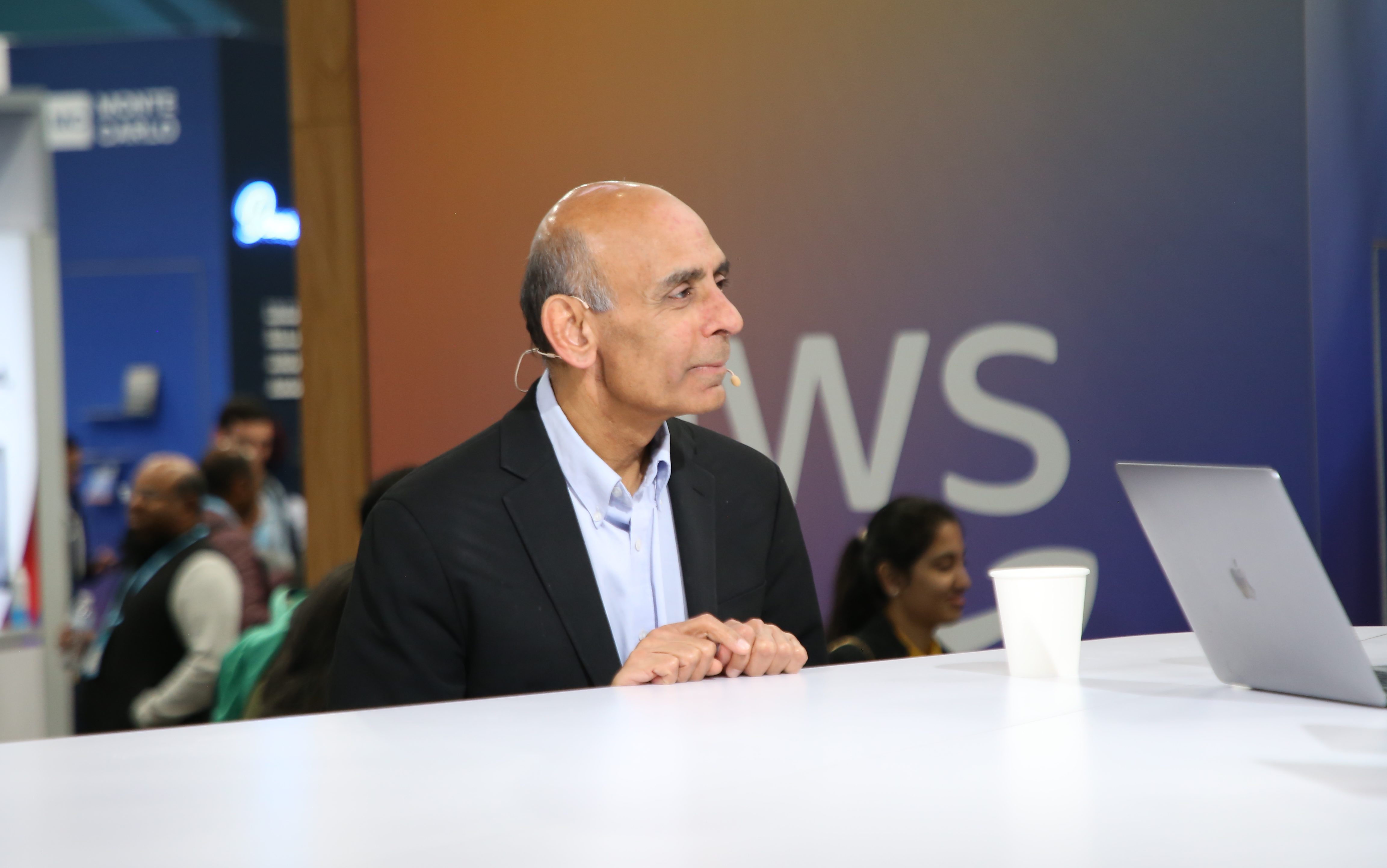
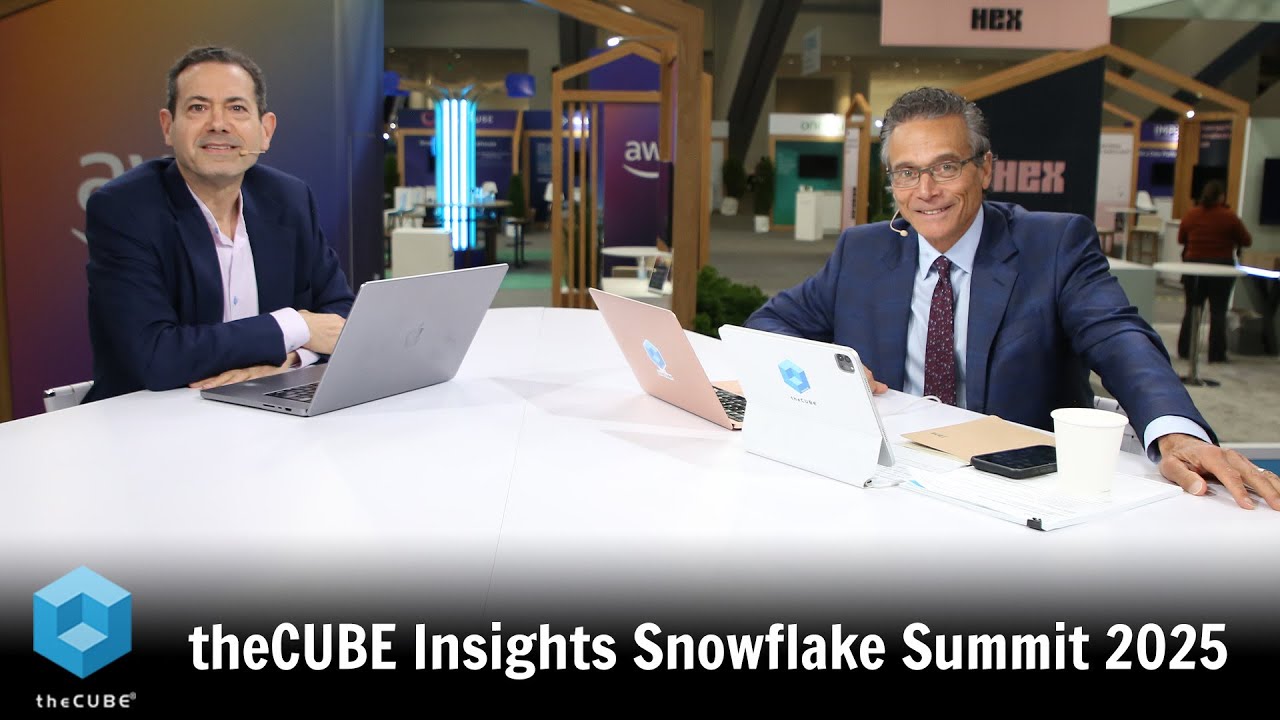
Day two of #SnowflakeSummit 2025 kicks off with an AnalystANGLE round-table as theCUBE’s Rebecca Knight and Dave Vellante sit down with industry veteran Sanjeev Mohan to decode Snowflake’s expanding AI Data Cloud playbook. Broadcasting live from Moscone Center, the trio probe what Snowflake’s builder-keynote signals for app-dev, agentic workloads and the fast-evolving modern-data stack.
Highlights you’ll hear in this session: • CrunchyData acquisition unraveled – why a DoD-hardened Postgres engine could replace Unistore for OLTP-plus-analytics and w...Read more
exploreKeep Exploring
What open source Postgres database has recently been acquired, and which one is potentially the next to be acquired?add
What are the similarities between integrating Crunchy with Snowflake and MySQL HeatWave in terms of combining operational and analytical data for a single pane of glass view?add
What are the benefits of elastic scaling in Snowflake compared to the traditional T-shirt size approach?add
What are some potential implications for Fivetran in light of Snowflake's integration of Datavolo and Snowpipe Streaming into OpenFlow?add
What are some of the products and features offered by Snowflake, such as SnowConvert, Snowflake Intelligence, and the data science agent?add
>> Good morning, everyone. We are back here on theCUBE for day two of our live coverage of the Snowflake Summit 2025 here at the Moscone Center in San Francisco. I'm your host, Rebecca Knight, alongside my co-host and analyst, Dave Vellante. We are both back fresh from the Builder keynote this morning. What'd you think?
Dave Vellante
>> It was different. I think they did a really good job of laying out what their strategy is around app dev, which is different from the traditional enterprise SaaS world. That's not what Snowflake's trying to do. They're trying to come up with novel AI-powered agentic apps that aren't necessarily powering the enterprise, but might be powering new modes of how we work.
Rebecca Knight
>> Well, we're going to be talking about that this morning, all day in fact. But I would also like to welcome our guests to the show. A good friend of theCUBE, I should say, Sanjeev Mohan. Thank you so much for returning here to share your insights on what had happened today, yesterday, and even day before on analyst day.
Dave Vellante
>> Sanjeev is back. All right.
Rebecca Knight
>> He's back for more.
Rebecca Knight
>> Thank you so much. This is like second home for me.
Rebecca Knight
>> Aww.
Dave Vellante
>> Thank you.
Rebecca Knight
>> Welcome. So why don't we talk about some of the acquisitions that are really in the spotlight right now. Let's start with Crunchy. What's your hot take, Sanjeev?
Dave Vellante
>> So very interesting, because it's yet another open source Postgres that has been acquired. The question is which one is next? And so, there's a long list. And a lot of Postgres vendors are looking to get acquired, because three weeks ago now, Databricks acquired Neon, and now Snowflake has acquired Crunchy, very different databases. People think, "Oh yeah, they're both Postgres."
But they cannot be poles apart, because Neon is meant for very different use cases, which are very ephemeral, and agents will bring up a database and shut it down. But Crunchy is a super hardened, it is a DoD hardened database that they built their own Kubernetes operator, for instance. They have no longer just an OLTP, they have an OLAP. So they have analytical, which is interesting because that analytical piece actually overlaps with Snowflake. So Snowflake has to make a decision now on what part of Crunchy they're going to adopt, which is transactional and what to do with analytical.
Dave Vellante
>> Well, you would think they're going to kill the OLAP piece of it or maybe spin it out, or whatever. But the other question is this, first of all, they claim that this was not a response to Databricks, that Databricks actually responded to them, because they knew this was in the works.
Dave Vellante
>> Yes.
Dave Vellante
>> We love the back and forth between those two companies. But the other question is, is this essentially a replacement for Unistore, which was announced in I think 2022 to great excitement around transactions, could never really ship it. Finally, I guess are shipping it. It's evidently exceeding expectations, but I would suspect expectations were pretty low. Is Crunchy, essentially a replacement for Unistore? And then the other questions are, is it going to be another SKU? Is it going to be integrated into the Snowflake data platform? Do you have thoughts on that?>> Yeah, so I've asked these questions and my understanding is it will be integrated, Crunchy will run inside Snowflake security parameters, or perimeter.
Dave Vellante
>> Sure. Okay.>> And the whole, because you still have to go from operational to analytical, so it doesn't magically show up. These are two different products, but they're going to hide that whole data movement and make it look like one. So single pane of glass, you can now write a query once it's integrated, where you can join analytical data with operational data.
Dave Vellante
>> Different use case, but it sounds a little bit like MySQL HeatWave.>> Yes.
Dave Vellante
>> You know what I mean? You got transactions over here and you've got analytic over here. You've got a single pane of glass. You've got very high speed connections between the two.>> Correct.
Dave Vellante
>> And some magic in between.>> Right.
Dave Vellante
>> Okay. And that's fine. It solves the problem. I guess the other question I would have, and I don't want to go too rat holey on Crunchy, but will Snowflake be in a position to actually affect and execute transactions within right to, whether it's CRM, ERP, HR systems? They're a step away from that, because they don't have the process knowledge. Those are still going to have to be the domain of the application. So where does that put transactions?>> So Dave, I don't see Snowflake playing in that space at all. Not yet. Maybe in the future, but I don't see it. I see Snowflake as the engine and all the CRM, all the order management, manufacturing, all of that will continue. Those may get transformed from being monolithic ERP into agents, but different vendors. Snowflake is an engine. So Snowflake can now say, "If you want to consolidate, then just use us for transactional and analytical." It's not always a success story. I mean, you've been following SAP for a long time. I mean, how long SAP tried with Sybase and HANA, right?
Dave Vellante
>> It's not easy.>> It's not easy.
Dave Vellante
>> Well, this is why, Tony Baer and I were talking last night, and he was saying that he felt like Salesforce, instead of buying Informatica should buy a database company. And I said, "No, Salesforce, they don't want to be the data platform. They look at data platform as infrastructure. They're happy to cede that to Snowflake and Databricks, and others. They want to be the agent layer on top of that, but...">> Correct. And actually, now I would say, why would Salesforce want to buy a database company? Because there's a little bit of standardization happening at the storage level thanks to Iceberg.
Dave Vellante
>> Exactly. So why own the data? They got a good database. They got to work on it.>> Correct, yeah. So there's a lot of standardization going on. At agent level, there is standardization, communication with MCP and A to A. The only place there's no standardization is metadata. There is no metadata standard.
Dave Vellante
>> Well, isn't Jamak trying to solve that problem?>> We talked about it. It's a different process. See more on the data products, but the metadata standard, we need a TCP IP for metadata basically. And there are open standard, there's something called Open Metadata has been around for four years, I don't think has gone anywhere. Open Lineage. And in fact, Snowflake is supporting Open Lineage.
Dave Vellante
>> Yeah. Well, and that trickles in, is it not to Unity and Polaris, which is the governance catalogs. But let's get into some of the announcements real quick.
Rebecca Knight
>> Well, there were many, but actually even before we do, I want to ask Sanjeev about his take about yesterday and then some of the announcements we heard on the stage yesterday, and what your take is about what's going on at the platform level. We heard about adaptive computing. Of course, Marriott was on stage, in fact announced this new product. And then also Warehouse 2.0 want to get started with Warehouse?
Dave Vellante
>> Okay, yeah, let's start with Warehouse. What's happening is super exciting with this thing called Gen-2 Warehouse. And in Gen-2, the idea is that actually even with adaptive, it's no longer T-shirt size. So it's elastic, totally elastic scaling now, which means that as a user, I am going to request, I want to store X amount of data, or I want to do an ETL compute or something like that. And Snowflake can then provision the resources for me. As my needs grow, they can incrementally scale it up. Today what happens is that I have to choose a T-shirt size, and I have no idea what's my right T-shirt size.
Rebecca Knight
>> Gain weight, am I losing? Right.
Dave Vellante
>> And let's say my T-shirt size gives me, let's say eight VCPUs, and now I have a need for a little bit more compute. So where do I go? I go to the next T-shirt site. So I get eight more CPUs, but I only wanted one, and now I've got an over-provision cluster. This is what Snowflake is doing is truly cloud, what cloud was built for. Oracle's been saying this for a long time.
Dave Vellante
>> Couple years now. It's interesting, Sanjeev, because the problem that Snowflake, one of them that they originally solved was the separation of compute and storage. And customers used to complain, "I need more storage. I don't need to buy another compute cluster." But you were forced to do that. Snowflake and BigQuery solved that problem then, but it created a new problem.
Dave Vellante
>> Yes, a new problem.
Dave Vellante
>> Which was T-shirt sizes. So they solved that. They created a new bottleneck, and now they're attacking that bottleneck, which is a good thing. And I think they would argue that while Oracle, it's true, is doing it in its own little world, from the standpoint of modern data stack, modern data platforms, they are really the first to do that.>> Correct. So now talk about Gen-2. With Gen-2, Snowflake is promising performance boost of two to four times. So that's what you see in the press, but if you peel the onion, you find out that the cost of Gen-2 cluster is 1.3 times the cost of original. So it's going to cost customers more, but because they're going to run the jobs faster, so overall it'll even out.
Dave Vellante
>> But you got to get 30% better performance, 1.3 times performance to break even, which I would think they're going to be able to achieve.>> Right. So then the question comes then what's the benefit for the customer? Because your TCO is not going to come down. So what Snowflake-
Dave Vellante
>> Sure it will. Why wouldn't it? If you get two X performance->> If you get two X, yes.
Dave Vellante
>> If you get 1.8 X, your TCO should come down over time.>> Yes, sure. So Snowflake is being very careful. They don't want to promise that your TCO will come down, but what they're saying is that because your job finished in half the time, so you are 50% more productive to do other things. And that's the storyline.
Rebecca Knight
>> That's the economic benefit there.>> Yes.
Rebecca Knight
>> Okay. So from what you're hearing, are customers buying that? I mean, is that compelling enough for them?>> I've already met some customers who are already using Gen-2, because Gen-2 Warehouse, all of a sudden we are all talking about it. It's been out for four weeks, so it's not new. And so, they're already customers using it.
Dave Vellante
>> The reason why this is so important is, and we've talked about this, is the point of control, is moving in this open world from the database to the governance catalog. And as we've said, the values even move further up. But what that means, and really Iceberg and Databricks really force this, is that the best engine is going to win. So Snowflake has to have the absolute best engine to win that. So that's why 2.0 is so important, at least in my view. Do you buy that?>> Yeah, completely. I think this 2.0 is how it should have been right from the beginning.
Dave Vellante
>> 2.0 is what 1.0 should have been?>> Yes. Yes. I think so. Actually, I have a pet peeve about Iceberg, which is it's consuming a ton of my time. Every day on LinkedIn, there are all kinds of article, nuances of Iceberg, deletion vectors are missing and streaming is not good, compaction. And why in the world are we wasting our time on Iceberg? Iceberg should be invisible. We should never have to think about it. But we are spending inordinate amount of time on Iceberg.
Dave Vellante
>> What's funny about that, Sanjeev, in my many decades of doing research, I would say that the outcome always trumped the fear of lock-in, with the exception of about 15 to 20% of the customers. So you would think the majority of the customers, and that's probably what's actually happening in the marketplace, is they're getting on with their day. They're doing whatever they're doing inside of Snowflake, using Horizon. And okay, maybe there's a portion of the estate that's moving, and I'm sure it is to Iceberg tables. And so, they're forcing Snowflake to manage those tables in the same spirit. But I agree with you, I feel like we're over-rotating on this.>> Completely. We should be spending our time not on Polarises of the world. We should be spending our time on Horizons of the world. Because the difference is that Polaris is a technical metadata store, and Horizon is where the business knowledge is being captured. So the business semantic, the knowledge draft, that is what will fix AI.
Dave Vellante
>> Although because of Iceberg, portions, more of that Horizon role-based access control function is trickling out to the open source world. Again, this is an interesting dynamic that's being forced by Iceberg and open table formats in the competition.>> So next week we are back here for Databricks Summit, and you'll hear more about RBAC, ABAC, attribute-based access control, because that's the next Horizon. The role-based access control is done. That's the basic, but how do you capture the business semantic? For example, if I'm a business user, I want to say, "I want my invoices to be secure." What's an invoice? Invoice is a concept that's made up of number of tables.
Dave Vellante
>> Yeah, yeah. But also, I mean, they are making progress in terms of not only being able to read, but also write, being able to update other governance platforms. So as we know, there's catalogs of catalogs. And so, Snowflake's doing the hard work there, which is necessary. I mean, they have to do it. That's what customers want. That's what the market's demanding.>> Right.
Dave Vellante
>> Okay. So other announcements. There's so many announcements, I feel like a little bit, it was like a little mini re-invent with all the announcements trying to keep up. I mean, the stack of announcements that I have here, it's pretty significant.
Rebecca Knight
>> Well, we mentioned adaptive compute, and I want to hear Sanjeev's take on that, because we had Christian Kleinerman of course, who's the head of product with a Marriott executive, talking about how their teams were really working together and collaborating on this project for easier management, better utilization, and faster performance. I'm curious if you think it will deliver.
Dave Vellante
>> I 100% believe in it. When I talk to customers, you see there's a spate of consolidation going on. Why is it happening all of a sudden? Because we are coming out of this zurp-infused modern data stack, where we had massive choices. Every specialized super micro segment of the landscape or the pipeline had 20 different players. So customers are saying, "We are not interested."
And we just talked about there's no common metadata standard, which means that you're constantly integrating and there's so much of overhead. So the whole idea why I think this would be successful is because customers are saying, "We want minimal overhead."
What AWS would call undifferentiated heavy lifting. Why we pay our IT folks to help deliver business goals, not to tune the database and tune the cluster, and size it. So Marriott wants their IT people to go experiment with the newest LLM and see how it can work, not spend time saying, "What is the T-shirt size for this job?"
Rebecca Knight
>> Or drowning in tickets from-
Dave Vellante
>> Yes.
Rebecca Knight
>> Exactly. Exactly.
Dave Vellante
>> How about open flow? Let's talk about that.
Rebecca Knight
>> Yes.
Dave Vellante
>> What's your take on it? How's it compare to alternatives?
Rebecca Knight
>> Right. So I did a whole team. Joe Witz and Luke Roquet, they were at Cloudera, and Joe Witz actually invented Apache NiFi when he was part of the US defense government stuff. So NiFi was kind of buried in the slew of so many different standards. What Snowflake is doing is they're taking the best of Datavolo, which they acquired, and Snowpipe Streaming, and they're putting it all together into OpenFlow. So now the question begs that, what happens to Fivetrans of the world?
Dave Vellante
>> Well, they would say that Fivetran is really good for simple use cases.
Rebecca Knight
>> That's what they told us, yes.
Dave Vellante
>> We deal with all the complex stuff, which I'm sure Fivetran would say, "Wait a minute.">> I know. And then they also hinted that in Fivetran you have to temporarily land your data in the internet and then you bring it over. We have no such thing. You go from the source to the target. For most complex use cases, I'm not buying it. The product just got announced. So how can it be better than something that's been around?
Dave Vellante
>> I think Fivetran has a very capable high-speed data mover and has dealt with some of these challenges. I don't know. Again, it feels really kind AWSy to me. Well, the customers are asking for it.>> Yes.
Dave Vellante
>> So we're doing it.>> And Dave, what I found interesting was the name OpenFlow. Last year we were here for Databricks Summit and they bought Arsion and they launched Lakeflow. So now you've got Lakeflow and OpenFlow. So
Dave Vellante
>> The naming conventions are interesting. All right, so that's cool. How about Cortex? What do you see in the innovations on Cortex, which is kind of the AI agent layer?>> Yeah.
Dave Vellante
>> Seems to be doing well in the marketplace. I mean, it's getting adoption, according to Eric Bradley in the ETR research.>> What I liked are some demos we were shown. You know who was the biggest customer of Snowflake, Rebecca?
Rebecca Knight
>> Tell me.
Dave Vellante
>> I know.>> He knows. The biggest customer of Snowflake is Snowflake.
Rebecca Knight
>> Of course, yes.>> And so, Snowflake has 8,000 people using Cortex. And actually I think we were told 30 person adoption so far. So what Snowflake has done is they are eating their own dog food or drinking their own champagne.
Dave Vellante
>> Let's go with dog food.>> So what they're doing is they are building these assistants for their salespeople, for support people, and they're seeing quite a dramatic turnaround in the amount of time it takes to close a support ticket, for instance. So this is all being built on Cortex. So I was very impressed to see these are all working products, production that are in use.
Dave Vellante
>> Of course we're out of time, but just to comment, SnowConvert, which is all about bringing stuff into a lot of migration stuff, they have to do that to simplify migration. It really needs to be inside of Snowflake to capture the value. So, SnowConvert, and then a bunch of AI stuff, Snowflake Intelligence, which is a natural language interface that you can query through. I think it's table stakes, but to get it to work and all the text to SQL stuff. They also have a data science agent, which is super important, because they were getting killed frankly in the data engineering, data science space. And now that's a workload that they can go after very aggressively. A bunch of stuff on apps and collaboration, some of which we heard today, which is->> Marketplace, internal marketplace, external marketplace. This is quite a bit.
Dave Vellante
>> The stuff they're doing with the publications like Gannett.
Rebecca Knight
>> Yes. Exactly.
Dave Vellante
>> And USA Today, where they're basically helping them monetize. Interesting. Small today, we'll see-
Rebecca Knight
>> We'll see....
Dave Vellante
>> what kind of impact it has.>> So I know we are out of time. We haven't talked about native apps. That's a huge topic.
Dave Vellante
>> And it has been for a couple of years, but yeah. And it's evolving.
Dave Vellante
>> Yeah, right. So if you remember, I asked this question that there's a bit of a pushback on native apps. So if I may take a second. So the way native apps work is, they have to work in a very strict parameter, and it says, "You must use these APIs." And if you are going to open, let's say ports, network ports, then it defeats a purpose.
Dave Vellante
>> It's app store.>> Yeah.
Dave Vellante
>> Right? It's iPhone.
Rebecca Knight
>> Correct. Yes. So this is where some vendors are like, "It's too restrictive for us."
For example, to run as a native app, it's containerized. So where is it running? It's running on SPCS. Snowpark Container Service, which is built on Kubernetes, but it's not-
Dave Vellante
>> But you can't take advantage of.
Dave Vellante
>> It's not pure Kubernetes. It is using their own primitives. So that's why. But native apps are still growing healthy, and...
Dave Vellante
>> I mean, it's a good point. Kubernetes is all about write once, run anywhere.>> Correct.
Dave Vellante
>> And you're saying you can't necessarily run anywhere.>> Right. Yes.
Dave Vellante
>> Yeah. So that's interesting. But it's still clever that they are using the best of Kubernetes within their own estate.>> Yes, correct.
Dave Vellante
>> So to be continued.>> Yes.
Rebecca Knight
>> To be continued. Indeed. We have a great lineup of guests. We've lots of Snowflake executives of course, as well as customers. Rakuten, Whoop, Komodo Health. So I look forward to getting into more of that with you today. Thank you so much, Sanjeev Mohan. A pleasure as always.>> Thank you so much.
Dave Vellante
>> Thanks, Sanjeev.
Rebecca Knight
>> I'm Rebecca Knight, for Dave Vellante, stay tuned for more of theCUBE's live coverage of Snowflake Summit. You're watching theCUBE, the leader in enterprise tech news and analysis.