We just sent you a verification email. Please verify your account to gain access to
Snowflake Summit 2025. If you don’t think you received an email check your
spam folder.
In order to sign in, enter the email address you used to registered for the event. Once completed, you will receive an email with a verification link. Open this link to automatically sign into the site.
Register For Snowflake Summit 2025
Please fill out the information below. You will recieve an email with a verification link confirming your registration. Click the link to automatically sign into the site.
You’re almost there!
We just sent you a verification email. Please click the verification button in the email. Once your email address is verified, you will have full access to all event content for Snowflake Summit 2025.
I want my badge and interests to be visible to all attendees.
Checking this box will display your presense on the attendees list, view your profile and allow other attendees to contact you via 1-1 chat. Read the Privacy Policy. At any time, you can choose to disable this preference.
Select your Interests!
add
Upload your photo
Uploading..
OR
Connect via Twitter
Connect via Linkedin
EDIT PASSWORD
Share
Forgot Password
Almost there!
We just sent you a verification email. Please verify your account to gain access to
Snowflake Summit 2025. If you don’t think you received an email check your
spam folder.
In order to sign in, enter the email address you used to registered for the event. Once completed, you will receive an email with a verification link. Open this link to automatically sign into the site.
Sign in to gain access to Snowflake Summit 2025
Please sign in with LinkedIn to continue to Snowflake Summit 2025. Signing in with LinkedIn ensures a professional environment.
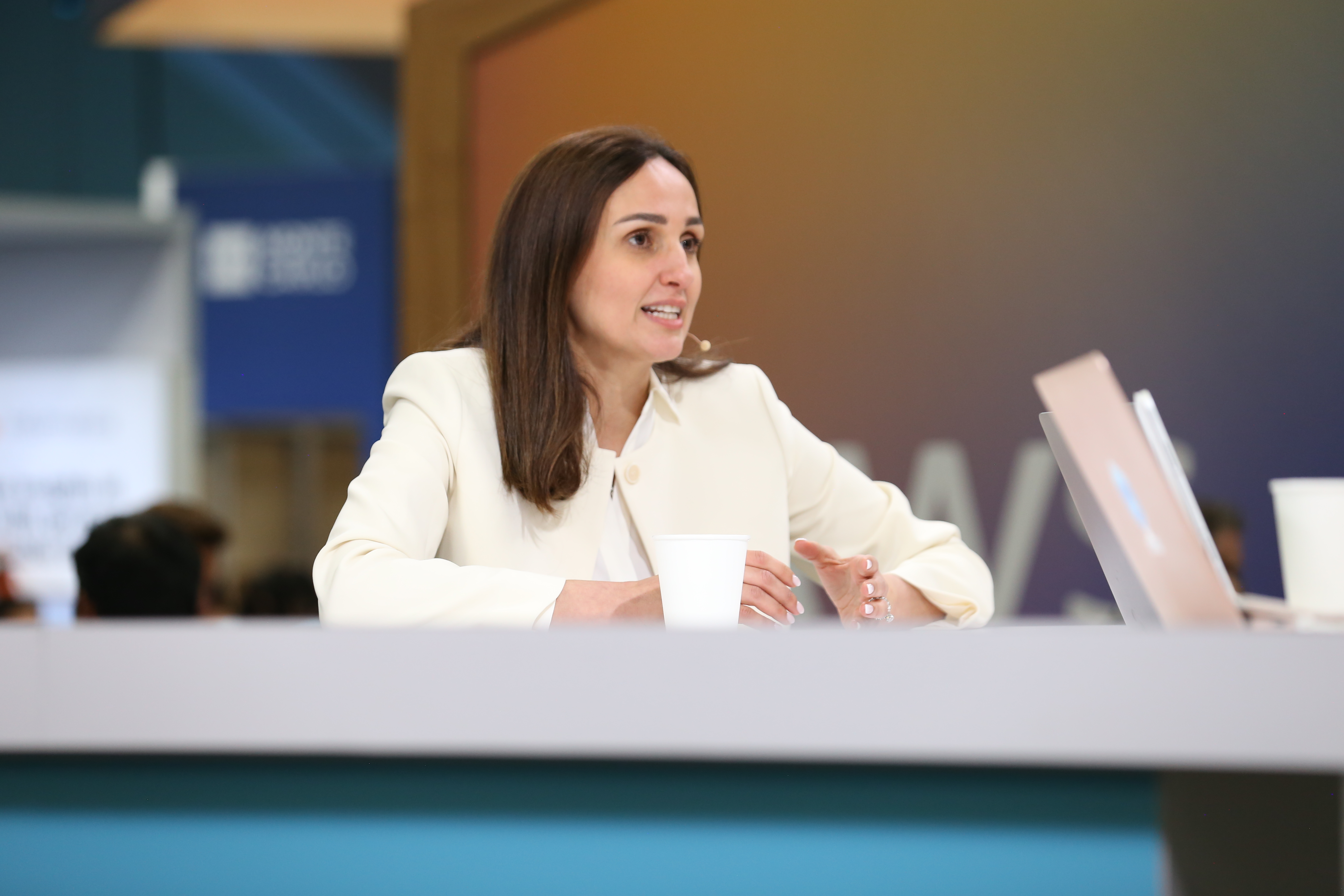
In this interview from the Snowflake Summit 2025 show floor, Anahita Tafvizi, chief data analytics officer at Snowflake, joins theCUBE’s Dave Vellante and John Furrier to unpack how the AI Data Cloud is reshaping the chief data officer’s charter. Drawing on leadership roles at Instacart, Google and eBay, Tafvizi explains why CDOs now straddle product strategy and data governance, and how Snowflake’s “customer zero” philosophy accelerates internal innovation while setting a blueprint for customers.
Tafvizi details how her teams test-drive Snowflake Cort...Read more
exploreKeep Exploring
What experiences have influenced your approach in how you do your job at Snowflake?add
What are some key considerations and challenges facing Chief Digital Officers in today's age of data and AI?add
What is one of the most interesting aspects of the speaker's role and how is it different from other data leadership roles they have had?add
What are some ways that the company ensures governance and easy access for customers in their product development process?add
>> Good afternoon everyone, and welcome back to theCUBE's Live coverage of Snowflake Summit 2025 here in San Francisco, California. I'm your host, Rebecca Knight. Alongside my co-host and analyst, Dave Vellante. I would like to welcome Anahita Tafvizi. She is the chief data analytics officer at Snowflake. Welcome Anahita.
Anahita Tafvizi
>> Thank you so much. Excited to be here.
Rebecca Knight
>> We're excited to have you. So I want to ask you about your career because it's a really interesting one. You've had data analytics roles at some of the most marquis companies there are. Let me see, Google, eBay, Instacart. I'm curious if you want to start talking a little bit about how those experiences throughout your career have informed your approach in how you do your job at Snowflake.
Anahita Tafvizi
>> Absolutely. You're right. I've had the privilege of running the data teams for some of the most interesting and some of the most intellectually challenging problem spaces in the industry. So I started my career in tech at eBay where I ran the data team there for the advertising section of the business. Then I went to YouTube and Google and I joined Instacart actually early on in the pandemic. It was a very interesting time to be there across a four-sided marketplace. So the number of data challenges were really very, very, very interesting. It's always thinking about how do you solve all these trade-off problems across a four-sided marketplace? And I was a customer of Snowflake then at Instacart. So that was an interesting perspective to have, the lens of the customer. I joined Snowflake November of last year, so it's been less than a year, but it's been really incredible. There's no better place to be in this interesting age of data and AI than Snowflake today. So I'm very excited to be here. The role that I play here is similar to the roles I've had in the past, which is bringing the data to inform the decisions, whether it's a product launch decision, whether it's a revenue acceleration decision. The second component of it is smart operations. So using the right data to create the right targets, to create the right accountabilities to make sure that the teams focus on the right targets. And then at Snowflake, actually I have the privilege of also being the first customer of our own products, which creates an interesting dynamic with us on our product team, but also with us and then the customers because I do a lot of customer meetings telling them how do we use our own products internally, what we have learned, the mistakes we have made, so that hopefully they will avoid it, but also showing them the magic of our product. So it's been a very interesting experience being here.
Dave Vellante
>> So in the sea of Cs, I want to ask you about, there's chief data officer, there's now chief data AI officer, there's chief data and analytics officer, which you are, chief digital officer, chief AI officer. There's the CIO, the CSO, the CISO, on and on.
Anahita Tafvizi
>> Many of those.
Dave Vellante
>> Now, what's interesting is you're relatively new to chief data officer.
Anahita Tafvizi
>> That's right.
Dave Vellante
>> So if you think about the history of the CDO, it started as this back office function-
Anahita Tafvizi
>> That's right.
Dave Vellante
>> In highly regulated industries, and it was about data quality. And it was really boring. It was important, but nobody even knew it was important. That evolved, and then the big data era, it got more important, it got more prominence, the title came out, the compensation went up, which is a good thing. Now everything's getting munged together. So how do you think about, as somebody who doesn't have all that... I don't mean it as a pejorative... But old baggage. How do you think about the role? What is the role?
Anahita Tafvizi
>> You're absolutely right. The role has very much evolved and I'd say it's never been more strategic and central than now. At this age of data and AI, the role is, not only do you bring the right data and insights, but how do you accelerate decisions? How do you bring the right AI technology also to the organizations? How do you help with the data and literacy across the organization? And then how do you balance the technology and the speed of innovation with the governance and the foundations that's needed to get there? So we spend a lot of time constantly thinking about these tensions of governance versus innovation velocity. And I'd say that may be the difference between the role of CTOs who are primarily focused on technology and innovation, the CIOs, which are primarily focused on the governance and then the CDOs, which have to balance both. So it's certainly a very interesting time to be in this role.
Dave Vellante
>> So it's interesting though, and I think it's forward-thinking that you don't have AI in your title. I think I'm right about that. And I was talking to John Rose about this. He's the CTO and the chief AI officer at Dell, and I was asking him about that role. And he's like, "Look, eventually the chief AI officer is going to go away. It's going to be embedded-
Anahita Tafvizi
>> Everybody is. Exactly.
Dave Vellante
>> Into all of the different Cs. And you're front running that.
Anahita Tafvizi
>> Yes, in fact, interesting. When we started using a lot of our own AI products internally, I had this moment of thinking about my own organization and should I create a separate AI forward team within the data organization to really focus on how do we make our data AI ready, how do we build the right semantic models? Or do I keep it decentralized? And then I came to the same realization as you're saying is AI has to be everyone's job, not just one team's job. And so we kept it within every team, embedded in every team, and we want everyone to think about how to future-proof the technology, how to future-proof the solutions that we are building, and basically look at AI as part of their early job. So I agree with you. I don't believe that we need necessarily a chief AI officer because it should be everybody's.
Rebecca Knight
>> So Snowflake often talks about being customer zero, and you started this conversation by talking about how you are users of your own products and you are helping iterate those products, giving ideas for them. Talk a little bit about how that works and how that creativity, that innovation, that culture is created here.
Anahita Tafvizi
>> It's one of the most interesting aspects of my role. I've really, really enjoyed it. It's different from other data leadership roles that I've had, which is very focused on driving internal decisions and internal smart operations into really thinking about the product and constantly thinking about how do I use the product while it is still being built? And then how do I constantly bring the voice of the customer to these conversations, and then how do I go and show it to the customer? So it's actually had this very interesting new addition to the role that we have, especially at Snowflake. We do use all of our products before they go to the hands of our customers. One of the examples of that that were announced today at the Platform Summit was the Snowflake Intelligence, which we have been working with the Snowflake Intelligence product team over the last few months. And one of the use cases of the Snowflake Intelligence is what we have built internally that we call GTMAI Assistant. And it's been very interesting to work together with the team as we developed this interesting technology for our customers while being the first users of it, find the magic of the product and show it internally to our own GTM organization, but also find all the base that it can potentially go wrong and then help the product team see that from the lens of the customer, whether it's role-based access control or how do you think about governance? How do you think about this speed? How do you think about the quality? How do you make sure that these AI natural language interfaces actually will get it correct? The Snowflake Intelligence that we use internally for our GTM team has access to both your structured and unstructured data through a natural language interface. So you go in as a seller and you can ask questions of your data, whether it's your unstructured data, such as your sales enablement materials, your training materials, your latest pitch decks, and you want to know where to find them. What's the latest talking points that we have been using with the customers? Or you want to ask a question from your structured data, for example, "How has been the revenue of this particular customer? What are the use cases they're using? Or how should I think about the competitors of my customers and what are the use cases they have with Snowflake so that I can go encourage my customer to also use that?" That requires then the agent to go work across all these sources of data, sometimes run a SQL query, sometimes do a search query. And so then, when it goes to the hand of the customer, the question is how do they know it's correct? How can they have the trust for this data? And as you have been hearing a lot today, we're all about easy, connected and trusted. So trust is one of the most important value props of our product. And so we have had a lot of conversations around what is our launch criteria, when do we think the product is ready, how good the quality needs to be? And we held a very high bar that we really believe that the quality for when you use your data has to be 100%. It's a very binary question. If I ask, "How much was my Q1 revenue?" There's only one correct answer, you cannot be almost correct. And you can't also be 95% of the times correct, because you never know as a salesperson, "Am I now in the 5% bucket or am I in the 95% bucket?"
And it's a SQL query. You can see the SQL query, but as a seller you might not be familiar with that. And the whole point of this is democratizing access to data to people who don't write codes in SQL or Python. So it doesn't really help that we are giving them necessarily that SQL as a way to ensure quality. So we held the bar really high. We said, "We have to be 100% accurate." Yes, we show the SQL query. We also, as you saw in the demos today, we have a verified query badge next to it so the user can know when they can trust the data and when it's something that's been created by the data teams.
Dave Vellante
>> I have 10 questions from what you just said.
Anahita Tafvizi
>> Let's do it.
Dave Vellante
>> So on the Q1 revenue example, it's not as simple. Getting 100% is not necessarily easy.
Anahita Tafvizi
>> Not easy.
Dave Vellante
>> Because how do you know that it's not bookings that you're getting? Or maybe it's quarterly versus annual revenue. So you've got to figure out how to harmonize all that. So how did you handle that? How do you harmonize that?
Anahita Tafvizi
>> So this is basically what we call the semantic layer where it's like, "Well, how do you translate your data with the business context?" So then when you ask an actual language question, it can actually then understand what you're talking about. "What does fiscal year mean in the context of Snowflake?" "What does a GVP mean in the context of Snowflake? It's a global vice president. It's a very specific to Snowflake business context. But then when you look at these data tables, you just see something says "Fiscal Year '25," or it says GVP. You're like, "Okay, what does it mean?" So translating that, adding that translation layer is an important job that you have to do to make your data AI ready. And that's the semantic layer that we have talked about. And one of our product announcements today is how do we make that easier to do for the data teams? So that's one aspect of it is adding that translation layer to your data. The second aspect is in order to build a trust, you have to create a long list of verified queries. So if a user comes in and asks a question about consumption revenue, this is the table you go to. If they ask a question about booking, this is the table you go to. If they ask a question about use case, this is the table you go to, and these are the verified queries. So when the user now goes and asks this question, they will see if it uses a verified query for that particular question. They will get this green badge and they can know that this is a correct answer and they can trust it. We also then, on the background, look at these questions and look at the answers that it's giving. And if you find that the model is making any mistakes, then we go and add another one to the verified list of queries. So then over time the model gets even better and better as well.
Dave Vellante
>> Now, you mentioned, you gave an example of sales presentations. I want to key on that one because... Maybe it's not... Well Snowflake is now 10 years old, but for a lot of companies this might've even been a bigger problem. When you applied AI, did you have to go through a curation process? Any salesperson can create a sales deck, put it up in the shared drive, and then maybe it's emphasizing warehouse, well we say data cloud now. Did you have to go through a curation process and then how did you adjudicate going forward?
Anahita Tafvizi
>> Exactly. And so I think part of this again goes back to the tension between how wide do you want to make the scale of, I guess, your solution versus the quality of it. Because to your point, you can give access to your entire Slack messages, entire Google Drive, now there's more context, but is it high quality context? Or you can curate a specific set of pitch decks enablement materials. So the approach that we took is a very curated set of materials that we update and keep regularly that we then use for these agents so that it can always give you the data that you can trust. But there is different models that you can think of and whether you want to give it more context but then be okay with a lower quality or not.
Dave Vellante
>> Planning cycles rely on good analytics. I think of... I don't know how Google did it. I'm more familiar with Amazon's OP-1, OP-2, the famous. And I know they're not static documents, but they kind of are static documents. So how do you balance the need for real-time planning with what historically has been this annual planning cycle? Snowflake is probably best in class at that.
Anahita Tafvizi
>> We do do annual planning just like many companies. And then we do quarterly planning on the product side. On the finance side, which my team helps is, we do a revenue forecasting and we do that using sophisticated data series and statistics modeling in order to do forecasting. And that forecast gets updated on a daily basis. So we do use for that as well. We use our own Snowflake as well for that.
Rebecca Knight
>> I want to ask about agents-
Anahita Tafvizi
>> Yes, let's do that.
Rebecca Knight
>> Because there is so much momentum and buzz around them, but that comes of course with new questions around trust and security and governance, especially at a time where there's scary new research saying that there's evidence that agents have agency and have capacity to be manipulative. How do you think about that balance in terms of wanting to go forward with the momentum but also needing to make sure you are doing things right as you're innovating?
Anahita Tafvizi
>> So we have actually, that tension is very real. In fact, today we had a CDO panel and one of the questions we were discussing with other data leaders across the industry was that balance between governance and execution velocity or innovation velocity. And you're right, it's a very interesting times that there's things that are changing on a weekly basis. And on one hand, you want to really keep up. On the other hand, you really want to be worried about trust and governance. And so I really think of trust and governance as foundations to enable innovation versus against innovation, if you will. Yes, it does take time, but it actually then creates better solutions and creates better trust with your users ultimately. So we have been very strong on ensuring that there is the right governance, there is the right foundation on the data side, and then providing that solution to our customers as well. Now, on the product side, we spend a lot of time also on thinking about how to make that easy. Again, if you go back to the easy, connected and trusted, how do you bring both easy and trusted to the product area? So for example, even this creation of semantic models in an automated way is one of the examples of how do we... Or flowing your access controls from your Snowflake to your agents is another way that you can make sure that you continue to have the governance but not make it very difficult for the customers.
Dave Vellante
>> What would you say... A weird question... Is the number one thing that people, maybe it's misconception or the thing that they get wrong about data, or mistake? What's the number one thing that you would say, "Don't do that."?
Anahita Tafvizi
>> I'd say, one of the things, and I don't know if that's necessarily a number one or one that is top of mind I will tell you, as a data professional, as many data professionals will tell you, dashboard sprawl has been a problem that we've all dealt with. Anybody comes in, builds a dashboard, now you look at this data, you're like, "Which one is correct? Is this is the right metric? They're not the same metrics.
Dave Vellante
>> ARR, NRR.
Anahita Tafvizi
>> You have to answer all your questions about, "Is this the right quarter? Why are this data not matching?" And it doesn't really help. Yes, you have more dashboards, you have built them fast there, but now you have all of this and you don't even know which one you should be looking at. And I do worry that agent sprawl will be the new dashboard sprawl. So back to the point about how do you ensure the right governance, how do you make sure the right quality, how do you make sure that you certify all of your agents and that, when you give it to the users, they know which ones they can trust is an important one that we are really trying to prioritize against Snowflake.
Dave Vellante
>> So it's maybe overestimating how easy it is or-
Anahita Tafvizi
>> It is easy. It is easy, but I think that the trade-off with being easy is that anyone can make it. And so then how do you make sure that it's actually done correctly and it's trustworthy and it's based on the right data, and again, the right access controls and everything that we talked about?
Dave Vellante
>> Easy doesn't mean quality.
Anahita Tafvizi
>> Exactly. Exactly.
Rebecca Knight
>> Well, that's a good note to end on. Thank you so much, Anahita.
Anahita Tafvizi
>> Of course. Thank you for having me.
Rebecca Knight
>> A pleasure having you on theCUBE.
Anahita Tafvizi
>> Thank you so much.
Dave Vellante
>> Thank you very much.
Anahita Tafvizi
>> I appreciate that.
Rebecca Knight
>> I'm Rebecca Knight for Dave Vellante. Stay tuned for more of theCUBE's live coverage of Snowflake Summit. You're watching theCUBE, the leader in enterprise tech news and analysis.