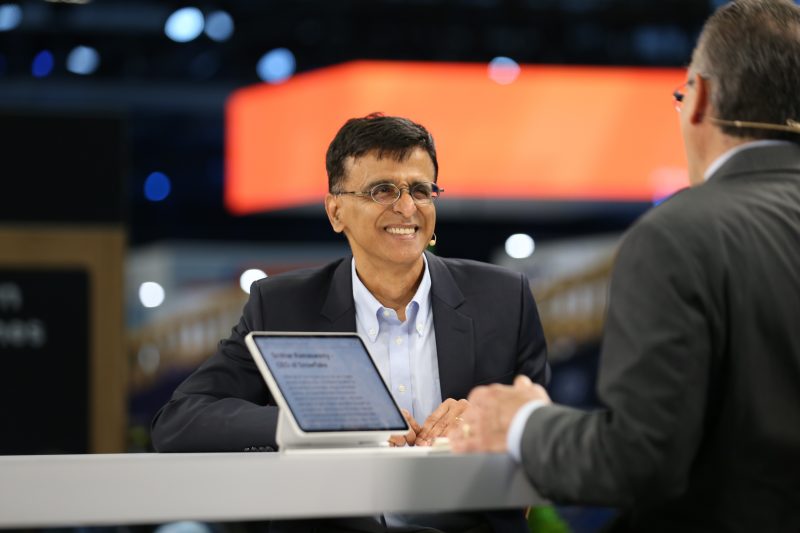
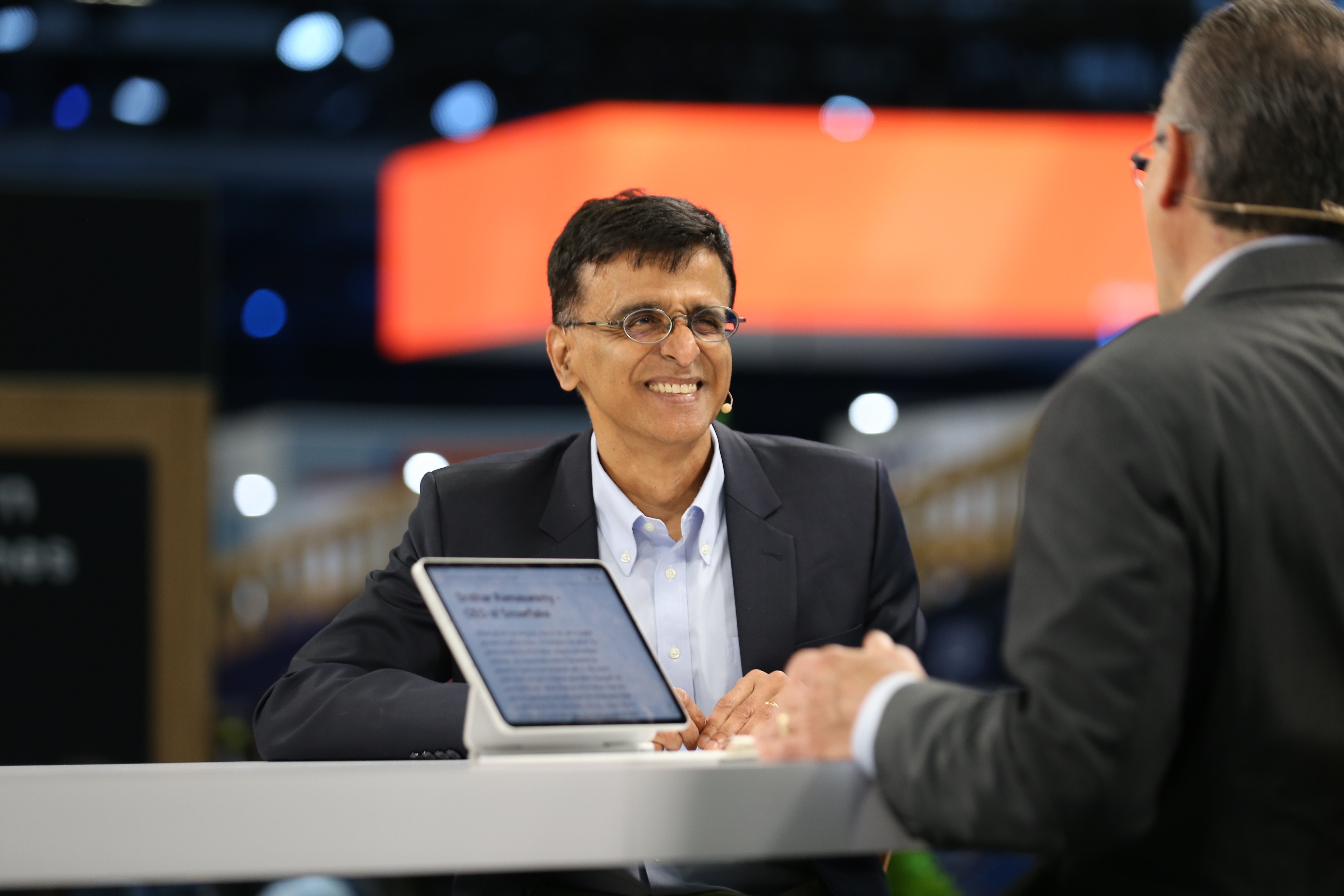
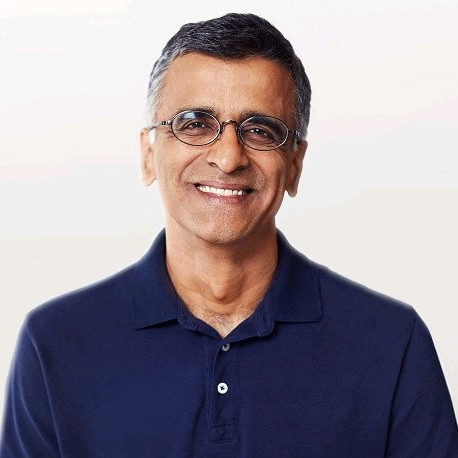
In the video, Sridhar Ramaswamy, CEO of Snowflake, discusses the evolution and capabilities of Snowflake as a cloud computing platform centered on data. He emphasizes that Snowflake is not just about data storage and processing; it also integrates collaboration and AI to enhance its utility for customers and partners. Ramaswamy highlights the expansion of Snowflake's core capabilities with features like Iceberg, Polaris, and hybrid tables, which facilitate better data management and interoperability.
A significant point of discussion is the integration of AI as both a platform-level and application-level capability, making it a pervasive technology across Snowflake's offerings. This integration aims to make the platform more versatile and user-friendly, thereby increasing its appeal to a broader range of users.
Ramaswamy also touches on the balance between tight integration within the platform and openness to support diverse data formats through initiatives like supporting the Iceberg format with the Polaris catalog. This strategy is intended to enhance data interoperability, allowing customers to leverage all their data within Snowflake effectively.
The overarching theme of Ramaswamy's talk is that by centering on data while expanding capabilities in AI and collaboration, Snowflake aims to provide a more comprehensive, efficient, and useful product for its users.Sridhar Ramaswamy, CEO of Snowflake, discusses the company's growth and future plans. Snowflake aims to be the best platform for data storage and processing, while offering collaboration and AI capabilities. He emphasizes the importance of being a tightly-integrated platform that can handle various data tasks. The recent announcement of Iceberg, an open-source project for data processing, aligns with the company's vision of supporting data interoperability. Snowflake's efficient compute engine appeals to data scientists and analysts. The ease of use and efficiency of the platform, especially when it comes to data engineering and AI modeling, is highlighted. Semantic cataloging is also discussed, with potential to improve data analysis and decision-making. Snowflake is focused on developing products that leverage language models and provide additional semantic information. The interview concludes with a discussion on the future of AI and its impact on existing application ecosystems. Snowflake aims to be at the forefront of this technology and provide value to business users.
Forgot Password
Almost there!
We just sent you a verification email. Please verify your account to gain access to
Snowflake Data Cloud Summit 2024. If you don’t think you received an email check your
spam folder.
In order to sign in, enter the email address you used to registered for the event. Once completed, you will receive an email with a verification link. Open this link to automatically sign into the site.
Register For Snowflake Data Cloud Summit 2024
Please fill out the information below. You will recieve an email with a verification link confirming your registration. Click the link to automatically sign into the site.
You’re almost there!
We just sent you a verification email. Please click the verification button in the email. Once your email address is verified, you will have full access to all event content for Snowflake Data Cloud Summit 2024.
I want my badge and interests to be visible to all attendees.
Checking this box will display your presense on the attendees list, view your profile and allow other attendees to contact you via 1-1 chat. Read the Privacy Policy. At any time, you can choose to disable this preference.
Select your Interests!
add
Upload your photo
Uploading..
OR
Connect via Twitter
Connect via Linkedin
EDIT PASSWORD
Share
Forgot Password
Almost there!
We just sent you a verification email. Please verify your account to gain access to
Snowflake Data Cloud Summit 2024. If you don’t think you received an email check your
spam folder.
In order to sign in, enter the email address you used to registered for the event. Once completed, you will receive an email with a verification link. Open this link to automatically sign into the site.
Sign in to gain access to Snowflake Data Cloud Summit 2024
Please sign in with LinkedIn to continue to Snowflake Data Cloud Summit 2024. Signing in with LinkedIn ensures a professional environment.
>> Hi, everybody. We're here at Moscone South. This is the Wednesday, actually, of Snowflake Summit 2024. Really excited to be back in San Francisco, and even more excited to have Sridhar Ramaswamy, who's the newly-minted CEO of Snowflake. Thanks so much for spending some time on theCUBE.
Sridhar Ramaswamy
>> Super excited to be here at theCUBE. Thank you for having me.>> You're very welcome. So, okay, first thing I want to ask you is you've met with I think over 100 customers now.
Sridhar Ramaswamy
>> That's right. That's right. That's right. I'm on the road every other week.>> That's the only way you can meet 100 customers in a short timeframe. What have you been learning? What have you taken away from those conversations?
Sridhar Ramaswamy
>> The first thing, and it really warms your heart as a CEO, is just the amount of respect and trust that people have for Snowflake. And a lot of our customers run pretty much all of their data on Snowflake. They want us to do more. This is where the things that we announced today around Iceberg or what we are doing with Polaris, they are all a big deal because that's what a lot of big customers want. On the other hand, a lot of excitement about AI. People don't quite know how to get started, and they're looking to us for what are simple, effective, cost-effective ways in which to get started with AI. So, I end up talking about our roadmap, what is possible, the kind of applications, whether it's chatbots or Cortex Analyst talking to your data. So, it generally tends to fall into one of these two buckets.>> So, anytime you have a CEO change at a very successful company, people want to know, "Well, who is this guy?" And so, you are a product person first and first. Tell us a little bit about your mission in life, your passion for product.
Sridhar Ramaswamy
>> Yeah, so I'm a computer scientist by training. Funnily enough, did a PhD in databases many years ago and worked at places like Bell Labs on things like query processing. And so, I feel very much at home at Snowflake. This is where I've spent the vast majority of my life. But it was really at Google where I spent over 15 years that I learned the power of combining amazing technology with amazing product to build a great business. I worked on Google search pretty much since day one. It was a $1.6 billion business. The day I joined, I left it was $100 billion, and I ran that team for the better part of 10 plus years. And it's really in making product and business come together that I get joy and satisfaction. And again, meeting with all of these customers, hearing from them about how important Snowflake is to their business, that's what gets me excited. It's conversations like this about the impact that we can have. I love technology, but I love making a difference to people's lives.>> So, being part of that incredible growth, you've got to be an optimist, of course. However, my co-CEO and co-founder, John Furrier, called you a wartime AI CEO. Do you feel like we're in an AI war, that the pace of play is so fast that you have to have that mindset?
Sridhar Ramaswamy
>> The pace of play is absolutely a little breathtaking. The thing that I will call out about my tenure as the leader of ads is I brought a sense of urgency. I brought a drive to seize opportunity because I really think of these as stuff that you need to do quickly, otherwise there'll be competition, otherwise the opportunity will vanish. And so, 100%, I have that mentality of get things done right now. And I would say it's actually very apt for the AI world because it is moving so incredibly quickly. Not a week passes by without another model breakthrough, without somebody else getting another amazing product done. And that was an essential part of the mentality that I brought to the team. Remember, we announced Cortex AI as a product in November. We said, "We are going to be doing this." We said, "Private preview." It went into GA three weeks ago. That is unheard of pace in enterprise software, but that's what you need to succeed today. And rather than wartime CEO, I would stress that the quality that I bring to the table is to make my teams have the gas pedal floored even when we are ahead, even when it's not wartime, because to me, that is what creates sustained success.>> Speed has never been more important. So, we identify what Snowflake did as sometimes we call it the fifth data platform, separating compute from storage, simplifying cloud data warehouse, making infinite scalability. So, people want to know, are you a data cloud? Are you a data AI cloud? Are you an AI company? Are you an application platform? Are you all of the above?
Sridhar Ramaswamy
>> The best way that I can answer this is to start with two words that you used is a data cloud, but let's unpack that. What does it really mean? We think of ourselves as a cloud computing platform, but centered on data. And so, we absolutely want to be the best platform that there is for storing data, for running data processing. That's the core. That compute engine that is so magical, that's the core of Snowflake, and we are expanding it. Again, things like Iceberg, Polaris or Hybrid Tables, which is for transactional data, it expands that core. But over time, we have added on capabilities like collaboration that make us much more useful in a interconnected network sort of world. And AI I honestly see as a horizontal layer. It's a little bit like mobile phones. Every company was affected by mobile. I think it's the same with AI, simply because it's almost a new human computer interface. So, you see us do things both at a platform layer like Cortex AI, meaning any analyst can use AI, any Python writer can use AI. But we also develop application-level things where, for example, an analyst can set up a pipeline to extract structured data, say from contracts super easily, so AI is one of these pervasive technologies. But at our core, our thesis is that a cloud that's centered on data is a more useful product for customers, is more useful for partners to build on, and that's the vision that we have. It's really the chapters that you outline strong data core, collaboration as a very powerful business enabler on then AI and applications as this next generation of things that can make Snowflake stronger.>> And that was enabled by the very tight integration, the very efficient compute engine that you had. I remember, Sridhar, it was 2022 in Benoit's keynote, he asked, "How many people have even heard of Iceberg?" And just a handful of... I was one of the few hands that went up. And now, today, it's all the talk. And so, you have talked about Iceberg going on the offense. And I want to understand this and unpack it a little bit because you've got this very tight integration, which is your core value proposition. And now, you've got this tension to go open. The more open you are, generally it's the more difficult to have control and governance. How are you squaring that circle? Help us understand that.
Sridhar Ramaswamy
>> I think this is a great question. I think a lot of it is driven by broad industry trends, and the thing that we are hearing from our largest customers is that data interoperability. So, that yes, Snowflake can act on data, can write data, be the good steward of data, but however, they don't want to be in the business of making a copy of the data anytime they want to, let's say, write a program and run on top of that data. So, they want that data interoperability. But we still bring value to the table in terms of helping our customers efficiently do the bulk of data processing on their data. What I think of when you talked about playing the offense here with Iceberg is supporting the Iceberg format, leaning into it with the Polaris catalog lets us bring the power of Snowflake to all of the data that a customer has, not just the part that they brought into Snowflake. And especially in the world of AI with lots of unstructured data, lots more things to be doing. Bringing our efficient compute engine to act on all of the data is going to be a big business unlock for us. So, there is a world in which there'll be data that is not governed as tightly, maybe it's broadly governed, and there'll be high-quality data that Snowflake manages and is really saying that both of these are fine and people perhaps will do coarse-grain permissioning on one side and do finer-grain permissioning for the data that really matters, the heart of the heart in Snowflake. I don't think of these as contradictions. I think of these as opportunities where we can help our customers do more.>> I want to push on that a little bit because this is a really key issue. Okay, so you've got Polaris, it's open source. You're the main committer, but you've got other folks as well. But Horizon is the real governance fine jewelry, is that fair to say? And that's going to be inside of Snowflake. You've got to be inside of Snowflake to really take advantage of that. So, I'm hearing a best of both worlds, right?
Sridhar Ramaswamy
>> 100%.>> Help us understand because you're not giving away your core IP to the world. You're allowing that core IP to be tapped if you're inside of Snowflake, so that kind of protects your moat, if you will, if I can use that term. At the same time, you're opening up with Polaris to a much wider audience, which I could argue gets them interested in Snowflake and maybe brings them in for that high quality, high touch experience that they need. Am I getting it?
Sridhar Ramaswamy
>> You're absolutely getting it. And yes, it is a little bit of how do we get the best of both worlds? The data that is inside Snowflake, it has been curated, it has been governed. These are the crown jewels of a company. And things like Horizon, which is all around better governance, better catalog, better sharing within an enterprise. These are all qualities that we do bring, but I would say that the primary value prop of Snowflake is like this incredibly tightly-integrated platform that lets you do data engineering, data processing in Python, SQL, machine learning algorithms as well as AI in one tight compute engine. And overall, making it possible for our customers to act on all of their data, understanding that some things are going to be better curated, more tightly curated than others. I see this as actually a strict win. Over time, of course, we want people to have that mentality about all of the data that they have. But let's face it, lots of customers have 100 times as much data sitting in cloud storage as inside Snowflake. And so, embracing that opportunity working with people feels like the right thing for us to do.>> So, last question on this. So, by having a true open source Polaris that attracts folks, but you've then got to have the best product and the best experience for Horizon, and that's how you win.
Sridhar Ramaswamy
>> That's right, that's right, that's right. Having the world's best compute engine, having the world's best collaboration, the higher level functionality, having the world's best AI when it comes to creating AI applications, that is how we win. It's absolutely going to be a competitive space, but you need to have a world-leading product and not be in the custom format space. I actually think that that ship has sailed.>> So, there's a perception from some customers that I've talked to that, "Oh, we do the data engineering work outside of Snowflake because it's too expensive." First of all, I've never seen the analysis done. Maybe I have to go do it myself. I'll put that on-
Sridhar Ramaswamy
>> I have seen lots of analysis. I'll have stuff to say about that.>> Okay, so help us understand that. But the way I look at it is you've got streaming, you've got analytics, you've got machine learning, you've got gen AI, and you've got data engineering all inside of the very efficient Snowflake. One engine, one set of metadata, and there's clearly value there. So, it's a value discussion, not just necessarily a TCO piece. We all understand TCO is not necessarily the acquisition cost or one little slice, it's the whole picture. So, if you have data on that, I'd love for you to share it.
Sridhar Ramaswamy
>> So, we have done lots of migrations of data engineering workloads, say from open source things, like Spark over to Snowflake, and we consistently find that those pipelines are way more efficient. We are also making it much simpler to create data pipelines with things like dynamic tables. Dynamic tables is basically a way for you to specify a SQL query to create a table and then say, "I want this data refreshed every five minutes, every 10 minutes, every 30 minutes." And you can string together a sequence of these to create a pipeline, no complex engineering required, and stuff is just recomputed in place. And now, if you combine that with Iceberg support, you can run Snowflake data engineering on any portion of your pipeline. Most of our customers find that we're actually incredibly efficient for cases like this, whether it is a small job or a giant job. And now, the benefit with AI is that if you want to run models as part of your data engineering pipeline, those are just SQL commands. You don't need to spin up GPUs. You don't need to make another commitment. We make all of that possible out of the box, and that's the magic of Snowflake, which is that tightly-integrated platform that just gets the job done.>> And I'm guessing this has resonated well with 100 plus customers that you've talked to. Your challenge is to make that appeal or make that case to the non-Snowflake customers. Is that fair?
Sridhar Ramaswamy
>> 100%. I think the broader appeal is going to be important. We have close to 10,000 customers. That list is growing, but we are investing more. For example, for the data scientist, we have a notebook offering that also went into public preview. I've personally used it being a product guy myself. It's amazingly easy to use. It's tightly integrated with Snowflake, and it's also long overdue. And so, we see things like that as appealing to the different audiences that are within an org. It's as much as an issue of winning their hearts and minds as it is of just functionality.>> You mentioned something in the last earnings call that I want to ask you about. You talked about a Snowflake schema to make it possible that people have a conversation with it, giving semantic information. The example you used here is give Mike Scarpelli an app that knows about finance. What we're talking about here is billings means same thing for every single app. It's been very difficult for technology companies to create that capability broadly. Why has it been so difficult, and what's the scope of that statement?
Sridhar Ramaswamy
>> Let me give you an analogy. In my house for example, there are 30 things that are kind of not working quite perfectly. They kind of work, but they kind of don't. Do I want to go fix all of them one week? No, it takes an enormous amount of time. I'm like, where's the utility? And I would say semantic catalog projects suffer from this issue, that in any big organization, there's just lots of stuff. There's legacy. And saying you're going to be pristine, perfect is just not a thing that people can afford to do because the ROI is not clear. It's an infinity of work for what's the gain? When I talked about semantic catalog, I was meaning it in the context of Cortex Analyst, which went into public preview yesterday. The idea is that if you do a small amount of work that cleans up a schema, meaning it tells the AI model what the schema is about, so that it unifies words like billings. It has a specific meaning at Snowflake. Revenue has a specific meaning at Snowflake. If you can do that, all of a sudden, there's an unlock up here is a finance app that Mike can use. I think an effort like this is immediately tied into value. And by the way, we have another product announcement where we are using the power of language models to create additional semantic information. And so, I would broadly say semantic models as a broad concept are really hard because a lot of people have to do a lot of work without necessarily seeing value. I think part of what AI can do is create value in these pockets because if you tell somebody, "Wait, you can make your analysts a whole lot more efficient because most common questions can be asked and answered directly by Cortex Analyst," that is incentive to create that semantic catalog. And by the way, we'll also interoperate, if somebody has already done a semantic catalog, we will ingest that into Cortex Analyst, so that they can use the investments that they already have. But to me, this is much more of a do work as you need, as opposed to making a massive investment.>> But it sets up a really interesting strategic discussion. As you come from the bottom up, you don't have the business logic embedded today in your apps. You're just getting started. Is the assumption that with this gen AI era, we're going to create a new set of data apps that could be highly disruptive to the existing application ecosystems that are out there and blow us away with new function, new capabilities. And that's how this new era will evolve.
Sridhar Ramaswamy
>> You're asking a great question, which is what is the impact of language models, their fluency with language, their ability to sift data, their ability to use a tool like issue a piece of SQL? I think that chapter is still being written as you know. Last year famously, we talked about how search was going to get massively disrupted, and oops, it did not get as massively disrupted. I do think that AI technologies are basically going to have a huge impact on how information is going to get consumed. Whether these are narrow apps that specific people can use and not really like the broad business intelligence layer I think is a little bit of an open question. But the reason we, at Snowflake, are very interested in this area is because we think of it as a massive business unlock because every business user can now directly interact with Snowflake. And so, we want to be there to create that value. We have great partnerships with all of the BI companies. We are going to continue to work with them, and honestly, no one knows how all this is going to turn out. We know that the future is going to be different, but I think it's an open call where it's going to end up.>> And we also know it comes back to the data. Sridhar, thanks so much for spending some time. I know you're super busy. We really appreciate your time on theCUBE.
Sridhar Ramaswamy
>> Thank you. This is an amazing conversation. Thank you for your time.>> You bet. All right, keep it right there. We're right back right after this short break. This is Dave Vellante for Rebecca Knight. You're watching theCUBE.
>> Hi, everybody. We're here at Moscone South. This is the Wednesday, actually, of Snowflake Summit 2024. Really excited to be back in San Francisco, and even more excited to have Sridhar Ramaswamy, who's the newly-minted CEO of Snowflake. Thanks so much for spending some time on theCUBE.
Sridhar Ramaswamy
>> Super excited to be here at theCUBE. Thank you for having me.>> You're very welcome. So, okay, first thing I want to ask you is you've met with I think over 100 customers now.
Sridhar Ramaswamy
>> That's right. That's right. That's right. I'm on the road every other week.>> That's the only way you can meet 100 customers in a short timeframe. What have you been learning? What have you taken away from those conversations?
Sridhar Ramaswamy
>> The first thing, and it really warms your heart as a CEO, is just the amount of respect and trust that people have for Snowflake. And a lot of our customers run pretty much all of their data on Snowflake. They want us to do more. This is where the things that we announced today around Iceberg or what we are doing with Polaris, they are all a big deal because that's what a lot of big customers want. On the other hand, a lot of excitement about AI. People don't quite know how to get started, and they're looking to us for what are simple, effective, cost-effective ways in which to get started with AI. So, I end up talking about our roadmap, what is possible, the kind of applications, whether it's chatbots or Cortex Analyst talking to your data. So, it generally tends to fall into one of these two buckets.>> So, anytime you have a CEO change at a very successful company, people want to know, "Well, who is this guy?" And so, you are a product person first and first. Tell us a little bit about your mission in life, your passion for product.
Sridhar Ramaswamy
>> Yeah, so I'm a computer scientist by training. Funnily enough, did a PhD in databases many years ago and worked at places like Bell Labs on things like query processing. And so, I feel very much at home at Snowflake. This is where I've spent the vast majority of my life. But it was really at Google where I spent over 15 years that I learned the power of combining amazing technology with amazing product to build a great business. I worked on Google search pretty much since day one. It was a $1.6 billion business. The day I joined, I left it was $100 billion, and I ran that team for the better part of 10 plus years. And it's really in making product and business come together that I get joy and satisfaction. And again, meeting with all of these customers, hearing from them about how important Snowflake is to their business, that's what gets me excited. It's conversations like this about the impact that we can have. I love technology, but I love making a difference to people's lives.>> So, being part of that incredible growth, you've got to be an optimist, of course. However, my co-CEO and co-founder, John Furrier, called you a wartime AI CEO. Do you feel like we're in an AI war, that the pace of play is so fast that you have to have that mindset?
Sridhar Ramaswamy
>> The pace of play is absolutely a little breathtaking. The thing that I will call out about my tenure as the leader of ads is I brought a sense of urgency. I brought a drive to seize opportunity because I really think of these as stuff that you need to do quickly, otherwise there'll be competition, otherwise the opportunity will vanish. And so, 100%, I have that mentality of get things done right now. And I would say it's actually very apt for the AI world because it is moving so incredibly quickly. Not a week passes by without another model breakthrough, without somebody else getting another amazing product done. And that was an essential part of the mentality that I brought to the team. Remember, we announced Cortex AI as a product in November. We said, "We are going to be doing this." We said, "Private preview." It went into GA three weeks ago. That is unheard of pace in enterprise software, but that's what you need to succeed today. And rather than wartime CEO, I would stress that the quality that I bring to the table is to make my teams have the gas pedal floored even when we are ahead, even when it's not wartime, because to me, that is what creates sustained success.>> Speed has never been more important. So, we identify what Snowflake did as sometimes we call it the fifth data platform, separating compute from storage, simplifying cloud data warehouse, making infinite scalability. So, people want to know, are you a data cloud? Are you a data AI cloud? Are you an AI company? Are you an application platform? Are you all of the above?
Sridhar Ramaswamy
>> The best way that I can answer this is to start with two words that you used is a data cloud, but let's unpack that. What does it really mean? We think of ourselves as a cloud computing platform, but centered on data. And so, we absolutely want to be the best platform that there is for storing data, for running data processing. That's the core. That compute engine that is so magical, that's the core of Snowflake, and we are expanding it. Again, things like Iceberg, Polaris or Hybrid Tables, which is for transactional data, it expands that core. But over time, we have added on capabilities like collaboration that make us much more useful in a interconnected network sort of world. And AI I honestly see as a horizontal layer. It's a little bit like mobile phones. Every company was affected by mobile. I think it's the same with AI, simply because it's almost a new human computer interface. So, you see us do things both at a platform layer like Cortex AI, meaning any analyst can use AI, any Python writer can use AI. But we also develop application-level things where, for example, an analyst can set up a pipeline to extract structured data, say from contracts super easily, so AI is one of these pervasive technologies. But at our core, our thesis is that a cloud that's centered on data is a more useful product for customers, is more useful for partners to build on, and that's the vision that we have. It's really the chapters that you outline strong data core, collaboration as a very powerful business enabler on then AI and applications as this next generation of things that can make Snowflake stronger.>> And that was enabled by the very tight integration, the very efficient compute engine that you had. I remember, Sridhar, it was 2022 in Benoit's keynote, he asked, "How many people have even heard of Iceberg?" And just a handful of... I was one of the few hands that went up. And now, today, it's all the talk. And so, you have talked about Iceberg going on the offense. And I want to understand this and unpack it a little bit because you've got this very tight integration, which is your core value proposition. And now, you've got this tension to go open. The more open you are, generally it's the more difficult to have control and governance. How are you squaring that circle? Help us understand that.
Sridhar Ramaswamy
>> I think this is a great question. I think a lot of it is driven by broad industry trends, and the thing that we are hearing from our largest customers is that data interoperability. So, that yes, Snowflake can act on data, can write data, be the good steward of data, but however, they don't want to be in the business of making a copy of the data anytime they want to, let's say, write a program and run on top of that data. So, they want that data interoperability. But we still bring value to the table in terms of helping our customers efficiently do the bulk of data processing on their data. What I think of when you talked about playing the offense here with Iceberg is supporting the Iceberg format, leaning into it with the Polaris catalog lets us bring the power of Snowflake to all of the data that a customer has, not just the part that they brought into Snowflake. And especially in the world of AI with lots of unstructured data, lots more things to be doing. Bringing our efficient compute engine to act on all of the data is going to be a big business unlock for us. So, there is a world in which there'll be data that is not governed as tightly, maybe it's broadly governed, and there'll be high-quality data that Snowflake manages and is really saying that both of these are fine and people perhaps will do coarse-grain permissioning on one side and do finer-grain permissioning for the data that really matters, the heart of the heart in Snowflake. I don't think of these as contradictions. I think of these as opportunities where we can help our customers do more.>> I want to push on that a little bit because this is a really key issue. Okay, so you've got Polaris, it's open source. You're the main committer, but you've got other folks as well. But Horizon is the real governance fine jewelry, is that fair to say? And that's going to be inside of Snowflake. You've got to be inside of Snowflake to really take advantage of that. So, I'm hearing a best of both worlds, right?
Sridhar Ramaswamy
>> 100%.>> Help us understand because you're not giving away your core IP to the world. You're allowing that core IP to be tapped if you're inside of Snowflake, so that kind of protects your moat, if you will, if I can use that term. At the same time, you're opening up with Polaris to a much wider audience, which I could argue gets them interested in Snowflake and maybe brings them in for that high quality, high touch experience that they need. Am I getting it?
Sridhar Ramaswamy
>> You're absolutely getting it. And yes, it is a little bit of how do we get the best of both worlds? The data that is inside Snowflake, it has been curated, it has been governed. These are the crown jewels of a company. And things like Horizon, which is all around better governance, better catalog, better sharing within an enterprise. These are all qualities that we do bring, but I would say that the primary value prop of Snowflake is like this incredibly tightly-integrated platform that lets you do data engineering, data processing in Python, SQL, machine learning algorithms as well as AI in one tight compute engine. And overall, making it possible for our customers to act on all of their data, understanding that some things are going to be better curated, more tightly curated than others. I see this as actually a strict win. Over time, of course, we want people to have that mentality about all of the data that they have. But let's face it, lots of customers have 100 times as much data sitting in cloud storage as inside Snowflake. And so, embracing that opportunity working with people feels like the right thing for us to do.>> So, last question on this. So, by having a true open source Polaris that attracts folks, but you've then got to have the best product and the best experience for Horizon, and that's how you win.
Sridhar Ramaswamy
>> That's right, that's right, that's right. Having the world's best compute engine, having the world's best collaboration, the higher level functionality, having the world's best AI when it comes to creating AI applications, that is how we win. It's absolutely going to be a competitive space, but you need to have a world-leading product and not be in the custom format space. I actually think that that ship has sailed.>> So, there's a perception from some customers that I've talked to that, "Oh, we do the data engineering work outside of Snowflake because it's too expensive." First of all, I've never seen the analysis done. Maybe I have to go do it myself. I'll put that on-
Sridhar Ramaswamy
>> I have seen lots of analysis. I'll have stuff to say about that.>> Okay, so help us understand that. But the way I look at it is you've got streaming, you've got analytics, you've got machine learning, you've got gen AI, and you've got data engineering all inside of the very efficient Snowflake. One engine, one set of metadata, and there's clearly value there. So, it's a value discussion, not just necessarily a TCO piece. We all understand TCO is not necessarily the acquisition cost or one little slice, it's the whole picture. So, if you have data on that, I'd love for you to share it.
Sridhar Ramaswamy
>> So, we have done lots of migrations of data engineering workloads, say from open source things, like Spark over to Snowflake, and we consistently find that those pipelines are way more efficient. We are also making it much simpler to create data pipelines with things like dynamic tables. Dynamic tables is basically a way for you to specify a SQL query to create a table and then say, "I want this data refreshed every five minutes, every 10 minutes, every 30 minutes." And you can string together a sequence of these to create a pipeline, no complex engineering required, and stuff is just recomputed in place. And now, if you combine that with Iceberg support, you can run Snowflake data engineering on any portion of your pipeline. Most of our customers find that we're actually incredibly efficient for cases like this, whether it is a small job or a giant job. And now, the benefit with AI is that if you want to run models as part of your data engineering pipeline, those are just SQL commands. You don't need to spin up GPUs. You don't need to make another commitment. We make all of that possible out of the box, and that's the magic of Snowflake, which is that tightly-integrated platform that just gets the job done.>> And I'm guessing this has resonated well with 100 plus customers that you've talked to. Your challenge is to make that appeal or make that case to the non-Snowflake customers. Is that fair?
Sridhar Ramaswamy
>> 100%. I think the broader appeal is going to be important. We have close to 10,000 customers. That list is growing, but we are investing more. For example, for the data scientist, we have a notebook offering that also went into public preview. I've personally used it being a product guy myself. It's amazingly easy to use. It's tightly integrated with Snowflake, and it's also long overdue. And so, we see things like that as appealing to the different audiences that are within an org. It's as much as an issue of winning their hearts and minds as it is of just functionality.>> You mentioned something in the last earnings call that I want to ask you about. You talked about a Snowflake schema to make it possible that people have a conversation with it, giving semantic information. The example you used here is give Mike Scarpelli an app that knows about finance. What we're talking about here is billings means same thing for every single app. It's been very difficult for technology companies to create that capability broadly. Why has it been so difficult, and what's the scope of that statement?
Sridhar Ramaswamy
>> Let me give you an analogy. In my house for example, there are 30 things that are kind of not working quite perfectly. They kind of work, but they kind of don't. Do I want to go fix all of them one week? No, it takes an enormous amount of time. I'm like, where's the utility? And I would say semantic catalog projects suffer from this issue, that in any big organization, there's just lots of stuff. There's legacy. And saying you're going to be pristine, perfect is just not a thing that people can afford to do because the ROI is not clear. It's an infinity of work for what's the gain? When I talked about semantic catalog, I was meaning it in the context of Cortex Analyst, which went into public preview yesterday. The idea is that if you do a small amount of work that cleans up a schema, meaning it tells the AI model what the schema is about, so that it unifies words like billings. It has a specific meaning at Snowflake. Revenue has a specific meaning at Snowflake. If you can do that, all of a sudden, there's an unlock up here is a finance app that Mike can use. I think an effort like this is immediately tied into value. And by the way, we have another product announcement where we are using the power of language models to create additional semantic information. And so, I would broadly say semantic models as a broad concept are really hard because a lot of people have to do a lot of work without necessarily seeing value. I think part of what AI can do is create value in these pockets because if you tell somebody, "Wait, you can make your analysts a whole lot more efficient because most common questions can be asked and answered directly by Cortex Analyst," that is incentive to create that semantic catalog. And by the way, we'll also interoperate, if somebody has already done a semantic catalog, we will ingest that into Cortex Analyst, so that they can use the investments that they already have. But to me, this is much more of a do work as you need, as opposed to making a massive investment.>> But it sets up a really interesting strategic discussion. As you come from the bottom up, you don't have the business logic embedded today in your apps. You're just getting started. Is the assumption that with this gen AI era, we're going to create a new set of data apps that could be highly disruptive to the existing application ecosystems that are out there and blow us away with new function, new capabilities. And that's how this new era will evolve.
Sridhar Ramaswamy
>> You're asking a great question, which is what is the impact of language models, their fluency with language, their ability to sift data, their ability to use a tool like issue a piece of SQL? I think that chapter is still being written as you know. Last year famously, we talked about how search was going to get massively disrupted, and oops, it did not get as massively disrupted. I do think that AI technologies are basically going to have a huge impact on how information is going to get consumed. Whether these are narrow apps that specific people can use and not really like the broad business intelligence layer I think is a little bit of an open question. But the reason we, at Snowflake, are very interested in this area is because we think of it as a massive business unlock because every business user can now directly interact with Snowflake. And so, we want to be there to create that value. We have great partnerships with all of the BI companies. We are going to continue to work with them, and honestly, no one knows how all this is going to turn out. We know that the future is going to be different, but I think it's an open call where it's going to end up.>> And we also know it comes back to the data. Sridhar, thanks so much for spending some time. I know you're super busy. We really appreciate your time on theCUBE.
Sridhar Ramaswamy
>> Thank you. This is an amazing conversation. Thank you for your time.>> You bet. All right, keep it right there. We're right back right after this short break. This is Dave Vellante for Rebecca Knight. You're watching theCUBE.