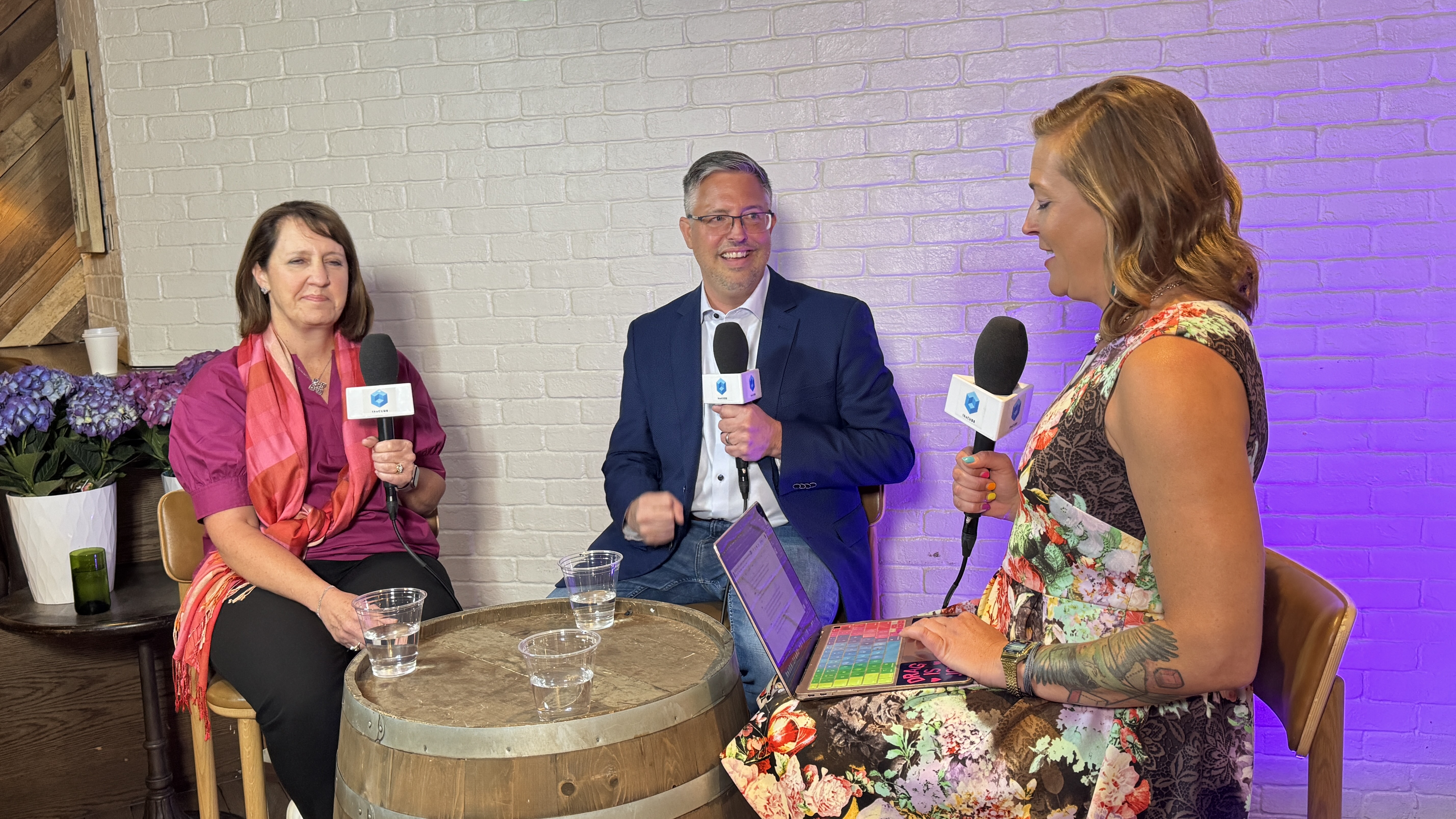
At Knowledge 2025, Savannah Peterson sits down with Tom Bruss, managing director for Accenture ServiceNow Business Group and ServiceNow account lead at Accenture, and Lisette Smyrnios, managing director for global workplace at Accenture, to unpack how the Accenture-ServiceNow partnership is redefining the workplace experience. With a focus on innovation at scale, they reveal how a global workforce of 800,000 employees benefits from AI-infused tools and smarter operations.
Smyrnios shares what it takes to manage employee experience across 650 offices worldwide. She emphasizes creating seamless, efficient environments for both clients and staff. Bruss brings a tech-first lens, explaining how Accenture leverages platforms such as ITSM Pro Plus and Creator Plus to boost productivity and streamline IT service delivery.
Together, Smyrnios and Bruss illustrate how automation, AI and ongoing collaboration drive meaningful outcomes. From faster IT resolutions to strategic prioritization of high-value use cases, their shared goal is to elevate workplace performance. The message is clear: the future of work isn’t just digital, it’s intelligent, adaptive and people-centered.
Forgot Password
Almost there!
We just sent you a verification email. Please verify your account to gain access to
ServiceNow Knowledge 2025. If you don’t think you received an email check your
spam folder.
In order to sign in, enter the email address you used to registered for the event. Once completed, you will receive an email with a verification link. Open this link to automatically sign into the site.
Register For ServiceNow Knowledge 2025
Please fill out the information below. You will recieve an email with a verification link confirming your registration. Click the link to automatically sign into the site.
You’re almost there!
We just sent you a verification email. Please click the verification button in the email. Once your email address is verified, you will have full access to all event content for ServiceNow Knowledge 2025.
I want my badge and interests to be visible to all attendees.
Checking this box will display your presense on the attendees list, view your profile and allow other attendees to contact you via 1-1 chat. Read the Privacy Policy. At any time, you can choose to disable this preference.
Select your Interests!
add
Upload your photo
Uploading..
OR
Connect via Twitter
Connect via Linkedin
EDIT PASSWORD
Share
Forgot Password
Almost there!
We just sent you a verification email. Please verify your account to gain access to
ServiceNow Knowledge 2025. If you don’t think you received an email check your
spam folder.
In order to sign in, enter the email address you used to registered for the event. Once completed, you will receive an email with a verification link. Open this link to automatically sign into the site.
Sign in to gain access to ServiceNow Knowledge 2025
Please sign in with LinkedIn to continue to ServiceNow Knowledge 2025. Signing in with LinkedIn ensures a professional environment.
Are you sure you want to remove access rights for this user?
Details
Manage Access
email address
Community Invitation
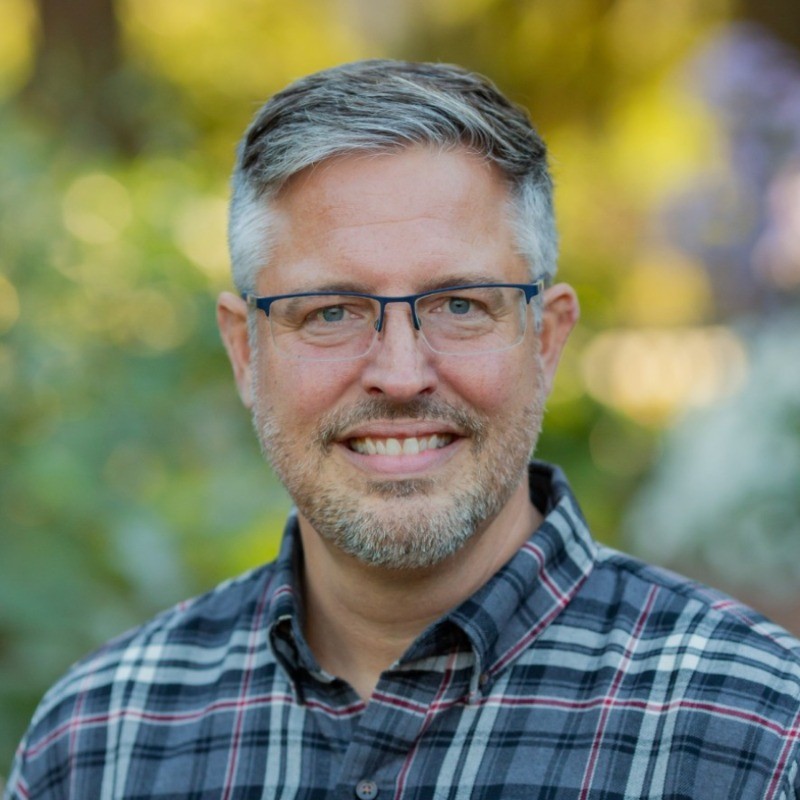
Tom Bruss & Lisette Smyrnios, Accenture
At Knowledge 2025, Savannah Peterson sits down with Tom Bruss, managing director for Accenture ServiceNow Business Group and ServiceNow account lead at Accenture, and Lisette Smyrnios, managing director for global workplace at Accenture, to unpack how the Accenture-ServiceNow partnership is redefining the workplace experience. With a focus on innovation at scale, they reveal how a global workforce of 800,000 employees benefits from AI-infused tools and smarter operations.
Smyrnios shares what it takes to manage employee experience across 650 offices worldwide. She emphasizes creating seamless, efficient environments for both clients and staff. Bruss brings a tech-first lens, explaining how Accenture leverages platforms such as ITSM Pro Plus and Creator Plus to boost productivity and streamline IT service delivery.
Together, Smyrnios and Bruss illustrate how automation, AI and ongoing collaboration drive meaningful outcomes. From faster IT resolutions to strategic prioritization of high-value use cases, their shared goal is to elevate workplace performance. The message is clear: the future of work isn’t just digital, it’s intelligent, adaptive and people-centered.
Managing Director, Accenture ServiceNow Business GroupAccenture
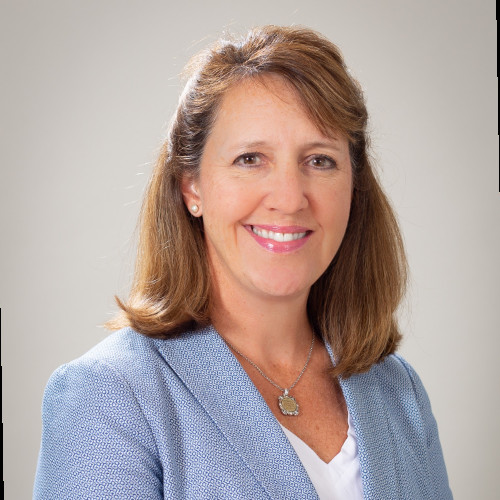
Lisette Smyrnios
Managing Director, Global WorkplaceAccenture
At Knowledge 2025, Savannah Peterson sits down with Tom Bruss, managing director for Accenture ServiceNow Business Group and ServiceNow account lead at Accenture, and Lisette Smyrnios, managing director for global workplace at Accenture, to unpack how the Accenture-ServiceNow partnership is redefining the workplace experience. With a focus on innovation at scale, they reveal how a global workforce of 800,000 employees benefits from AI-infused tools and smarter operations.
Smyrnios shares what it takes to manage employee experience across 650 offices wo...Read more
>> Good afternoon, nerd fam, and welcome to Las Vegas, Nevada. We're here at the Accenture Reinvention Lounge as a part of our Knowledge 2025 coverage. Very excited to be discussing multiple aspects of the partnership. Today, talking about Accenture and ServiceNow working together as a collaborative environment. We've got two brilliant folks, Lisette and Tom from Accenture. Thank you so much for taking the time today.
Tom Bruss
>> Thanks for having us.
Lisette Smyrnios
>> Yeah, absolutely.
Savannah Peterson
>> This is going to be a fun one. Y'all are one of ServiceNow's top 10 customers, and you're going to be talking about how you've been making it work for you and how this collaboration has been going. Lisette, I'm going to start with you. Tell us a little bit about your role and what brings you here today.
Lisette Smyrnios
>> Yeah. So, I am the global workplace lead at Accenture and looking after roughly 650 offices around the world, supporting our 800,000 employees. And-
Savannah Peterson
>> Just a couple of people you're looking at.
Lisette Smyrnios
>> Just a couple of people. So, really the operations, how we run the offices, how can we be efficient and how can we deliver really an engaging employee experience for not only our people, but also the clients that come to our offices.
Savannah Peterson
>> Absolutely. And what about you, Tom?
Tom Bruss
>> I'm part of Accenture's ServiceNow Business Group, helping our clients implement ServiceNow technology and helping our clients reinvent work. But I have a bit of a unique role, because I also have some responsibility for Accenture's own internal ServiceNow implementation. So, Lisette is my customer in terms of implementing our new technologies.
Savannah Peterson
>> That's exciting. So, who has the tougher job?
Lisette Smyrnios
>> He does. I think, yes.
Savannah Peterson
>> So Tom, sitting there, talk to us about Accenture's journey with implementing ServiceNow AI and what that's been like.
Tom Bruss
>> Well, we've been on our journey for about 18 months now. We're doing the ITSM Pro Plus product, as well as Creator Plus. So, we're starting with IT. We started about 18 months ago with some basic skills that we rolled out to our IT agents. We had over 5,000 IT agents globally that we enabled with some basic skills, right, case summarization, resolution notes, eventually we layered on knowledge-based articles. Basic stuff, right? At the same time, we also roll out things like text-to-code and text-to-flow for our developers. So we have a lot of demand. We're working with nearly every corporate function of Accenture. We have over 100 applications built on the platform, and we have a lot of developers trying to keep up with all the backlog from our business. So, some of those creator and developer capabilities help us speed up our delivery cycles. In terms of our generative AI, from there, we took it a step further. The latter part of 2024, we started layering on skills kit. So we started to be able to take some of those skills, and we were able to start to customize them to our environment. So for example, HR. Our HR group uses ServiceNow for all their case management, but their knowledge lives elsewhere. So we're able to use skill kit to tailor to some of those niche use cases that are specific to Accenture. So fast-forward, now we're in 2025. It's all agentic. We launched our AI agent studio about five, six weeks ago after ServiceNow made the announcement.
Savannah Peterson
>> Congratulations.
Tom Bruss
>> Yes. So we have been tinkering with robots. We've got a couple of agentic solutions in the work, working on one with our workplace organization and also working with our service desk on some incident management basic service desk functions, right? So, we're at the point where we're getting a couple of solutions ready to go. We've got a few little robots going, and we're expecting the demand to take off from our business in the next six months.
Savannah Peterson
>> It sounds like you've got a lot of momentum right now, laid the right foundation and are ready to launch this rocket ship. Lisette, talk to me about rolling this out across those 650 offices and 800,000 employees, I think you mentioned earlier, actual figures.
Lisette Smyrnios
>> Yeah. So, I would say, we are daily coming up with use cases so there is no shortage of where we see the potential. And I think, right now, it's focusing on where can we focus on those use cases to get the most bang for the buck as quick as possible. So, I think we're working very collaboratively internal with Tom's team to really understand where can we get that most impact? And not only for our workplace teams and the workplace admins in their roles so they can be more front of house and delivering on experience and have them automate, right, as many of those admin-type operational tasks. And then there's the other focus is the end user and making their lives easier, because there's 800,000 of them. So, how can we make it easier for them to book space in our offices to meet up with colleagues in our offices and connect? So, the use cases are abundant, and it's really focusing in and trying to get there quickly and where we can make the most impact.
Savannah Peterson
>> I can imagine that's got to be quite the tension of prioritization and deciding which use cases to tackle first. Tom, talk to me a little bit about that process and build on that. Was that in terms of the conversation and how you all came to agentic together?
Tom Bruss
>> Well, we were actually talking about this over breakfast this morning.
Lisette Smyrnios
>> Yeah.
Tom Bruss
>> Nothing better than a breakfast burrito to prioritize your use cases. But I think there's three criteria. One, as Lisette said eloquently, bang for the buck, volume. Where can we go after volume? But I think that there's a couple others you need to consider. One is, what are some use cases we can focus on that we're going to be comfortable getting to autonomous quickly? Because that's the real step chance, right?
Savannah Peterson
>> That's a great... You're absolutely right.
Tom Bruss
>> We're starting off with some human in the loop and there's probably, we were talking about it today, there's going to be processes, we are always going to want that human. Which is fine, right, but your bigger productivity boosts are going to be the things that eventually you're comfortable with.
"All right. We're fine letting the robots. This is low value. It's repeatable. We're comfortable with having a fleet of robots got to do this." So, what are those use cases we think we can get to autonomous to really have that productivity boost as opposed to the assist on the side? And then the third criteria, really, as we were talking about it, it's our experience so far is that the technology has been easy. The adoption has been hard.
Savannah Peterson
>> Please elaborate on that.
Tom Bruss
>> Yeah. Well, for employees, it's there. You want them to have a good experience with it. Some people are a little hesitant to use it. And what we found is once they get that aha moment of what is in it for me, how is this making my life better, that's when it starts to take off. So, I mentioned some of those basic skills we rolled out first for our IT service agents, case summarization, resolution notes. Those were fine. It got some adoption. As soon as we rolled out knowledge-based articles, they were like, "Oh, I hate writing knowledge-based articles. This is great." And it was an aha. And now we can start to say, "Oh, here's a knowledge-based article that looks like the incident you're working on." So, it's bringing your people along for the ride so that they really see the power of what this can do for them. Not something this big scary thing out there, but really, how can it take away all that mundane soul crushing work that I don't want to do anymore, and let me do what I do best.
Savannah Peterson
>> Well, you just brought up a great point and something that's a big part of our conversation here, and as a part of this series is people don't think in terms of minutes per se. When we talk about gain by a few minutes, yes, that has great impound on ROI and it is a valuable measure of AI. I'm not diminishing that by any means. But for that frontline worker, they're not thinking about it like that. They want more fulfilling, purposeful work that's going to make them feel better about their job and be able to surprise and delight the other side of that, that other community member, whoever they might be. So Lisette, tell me a little bit about how you tackle this and how you lead with empathy when you're implementing AI at scale like this.
Lisette Smyrnios
>> Yeah. And I think it's taking some of the fear out. So, I do think the employee is looking at, "Am I going to lose my job?" Right? And I think that's one of the main things to communicate. And we're starting to see that with some of the other, the Copilots, the ChatGPTs. We're doing it with the executive assistants and we're starting to see where they realize, the light bulbs clicking. It's like, "Oh my gosh. Actually, this is making me faster and better at what I'm doing."
But leading with what is it in it for them I think is really important, so they see that. And the more that they can start just practicing and using and it becomes second nature, and then I think literally it's going to be in months, they're going to realize, "I can't remember my life without it." Right? I mean, I think it's going-
Tom Bruss
>> Exactly....
Lisette Smyrnios
>> to be so embedded in their roles, they won't realize what it was like before.
Savannah Peterson
>> It's going to be like winds during funneling grapes and cold climates, and it feels amazing and you forget there was ever winter.
Lisette Smyrnios
>> Yeah, exactly.
Savannah Peterson
>> Produce season. Yeah, I think on a total slow process amnesia and I do think that's it. How are you sharing those stories? I totally agree with you, Lisette, about that aha moment, I was able to see a couple myself. It really is so magical. How do you capture that and spread that across the organization?
Lisette Smyrnios
>> Yeah. Well, we're constantly doing a lot of internal town halls, messaging and having individuals themselves. Sure, it's nice when Tom and I speak in a call, but it's having them talk about what made the difference for them or how they used it or the benefits it's bringing. So I think, it's the individuals themselves talking to their peers is much more impactful than us leadership just saying, "This is a good thing."
Tom Bruss
>> Couldn't agree with that more. Absolutely. It's the having that viral word of mouth, "Did you realize this? Did you realize that in Teams, it can take meeting notes for you?" I'm like, "Oh, wow." And somebody showed me how to do that. And with our agents, it's when you think about some of the things it'll do, people become service desk agents, they get into technology support because they want to solve problems. Nobody wants to do 20 password resets a day. That's not why they're there. So, if somebody gives you a tip, we've been getting tips for your whole career. If somebody gives you a great tip, you know you could do this and it saves you 10 minutes and you're like, "Wow. That's fantastic."
So, it's far better viral, word of mouth, current, people. Sure we have videos, sure we have training materials, there's websites, things you go tips and tricks, but it really is what are those use cases that catch fire? And you would believe it within an 800,000 person organization, word spreads fast-
Savannah Peterson
>> It does....
Tom Bruss
>> if something happens at Accenture.
Savannah Peterson
>> It does. And it spreads a lot faster that way. If you word of mouth, morphing, still the best morphing. It's part of why we love that the help tell stories like yours. How do you think this is going to allow Accenture more broadly to help their community and customers leveraging ServiceNow?
Tom Bruss
>> I mean, I think it's simple. It's less time doing administrative overhead and more time with our clients. That's what we do. Nobody wants to spend three hours a day trying to figure out, "I've got to go on leave. I got to do this." All this stuff that we have to do on a daily basis, that's not what we want to do. It's not what we're good at and I think that will differentiate us. I believe that the organizations that are going to be the most successful in the 21st century are those that embrace this technology, embrace this Copilot, embrace this assist that's sitting with you to supercharge what you do and allow you to do more what you do best and less administer via.
Savannah Peterson
>> Yes, absolutely. Well said. Lisette, what are you seeing on the ground and what tasks do you find people are most delighted to be relieved of?
Lisette Smyrnios
>> I would say, so what these we are talking about this morning was there is friction, especially in offices that are overutilized, where there's a wait list. It seems like an unusual problem nowadays, but we do run offices that they're 80, 90% full when we have wait list for meeting rooms from the offices. And in many we're trying to meet with clients and it's important to... So, how can we optimize our space? And lots of the agentic we're talking about is going to help us do that faster so that we can quickly move people around and really support everyone that needs to use the space. And that's to their place, it's reducing their workload and making that all happen timeously at getting there. So, we're having one reservation platform like WSB for ServiceNow, and those standard platforms, are going to help us get more faster. And ServiceNow will be building agents within their platform where there other agents, but all they working. And as I'm learning Marengo, right? Isabrik and AM Controller.
Tom Bruss
>> Yes.
Lisette Smyrnios
>> Yes, so I feel like my job is trying to build in that consistency with the to get us in faster.
Savannah Peterson
>> I love that. What would you say? And that was a great example. I hadn't even thought about braineous for meeting rooms. So you're absolutely right and that's a friction that really doesn't lean . That's one of those I was going to miss that.
Tom Bruss
>> Right.
Lisette Smyrnios
>> So I challenged Tom to solve my no-show problem, right?
Tom Bruss
>> Yes.
Lisette Smyrnios
>> That's why I tell him his job's hard.
Tom Bruss
>> She was actually wait listed recently and if anybody could get off a wait list, you'd think it would be Lisette, but so we're like, yeah, got to solve that problem. Got to solve that problem.
Savannah Peterson
>> I like it. I like that you can actively solve each others problem and do it a little bit of a . What would you say, or maybe have said to these folks who are adopting this technology who might be a little afraid of AI just taking their job? But perhaps theme another technology we're adopting for adoption sake, which is happening sometimes before people see that AI. How do you start to get them up and over that? Yeah, go for it.
Tom Bruss
>> Yeah, I'll start. I mean, I think it's painting that vision of what the art of the possible is with some of this stuff. And what we have found, especially with the agentic stuff, is when people see this stuff in action, you've got to present to them that, oh, when you see these agents starting to work together. Right now we've got a couple of agentic solutions that we're getting close to launching. Each one has three different agents under the cover, three robots. So we've got a total of six robots working together. I've got six Lego pieces. I was talking to a customer the other day who referred to them as Lego pieces. I can't remember the customer's name, but I loved the metaphor. So I've got six Lego pieces and I can make a couple of cool things out of it, right? In six months we will probably have 100 Lego pieces. I know that ServiceNow had, they just announced as of today, they've got 100 other Lego pieces pre-built agents in their toolbox right now. So, think about when this is 100, 1,000 and I think we'll get there six months, 12 months, very, very quickly. Think about the things you can build and do with that and how that's going to differentiate your organization, supercharge your people. If you've got a fleet of super humans doing what your business does versus people still caught out working the old way. I mean, it's a strategic differentiator. And I think painting for people that picture of the vision and where this is going and that this really is, as Bill McDermott said in the keynote, a once-in-a-lifetime transformational inflection point. So, it's an opportunity. Take advantage of it.
Savannah Peterson
>> Awesome. Love that Lego analogy. Shout out to that client.
Tom Bruss
>> Yeah, I loved it.
Savannah Peterson
>> So that's another one. Lisette, what about you?
Lisette Smyrnios
>> So, for people that are scared, and I used another analogy as phones. When we went from phone to a smart and just, you can't even imagine your life before, right? Smart wheel, smartphones are everything. I do half of my work on my phone as I'm moving around trying to find... So, it's making you so much more efficient. The data's there. You still, to your point, you still have to assist it, right, so it's a basic analogy, but people can relate to that of smartphone. Everyone has one. So I think, it is trying to take that fear out of it is important. So, they're still doing your job. They might just be doing it differently and focus on other things that are more value-op.
Tom Bruss
>> Yeah.
Savannah Peterson
>> Love it. Yes, it's all about that and a lot of empathy and a lot of curiosity and creativity. I mean, cellphone example is a good one, wi-fi is a good one. This is definitely our next leap.
Tom Bruss
>> Yeah. Bring it to light. Take the fear out of it. Right now, AI can be this amorphous thing that we keep talking about, but as soon as you see it in action and you get your hands dirty with it and you're like, "Oh, this is cool." It just alleviates a lot of tension, I think.
Savannah Peterson
>> Yeah. And realizing how much less navigation, even through browsers or tabs or knowledge articles or whatever it might be, just that toil alone and the time saved is really delightful. I've got one last question for you both. When we are hanging out here at Knowledge 2026, what do you hope to be able to say a year from now that you can't yet say today?
Tom Bruss
>> You want me to go first? Okay. I was going to say this year it's a agentic, agentic, agentic. You want it to be leading the way with agentic and have some objective solutions. I would guess that next year at this time, we'll be talking about autonomous. That'll be the next thing we'll be talking about. So, how did you take these agents? What processes did you make fully autonomous because that's where you get the two, three X-type gains. The assists give you a nice 10, 20%, but what processes were you most comfortable making fully autonomous? For us, I think, if I had to put a crystal ball on it it'll probably be the low-hanging fruit, the easy button is probably tier one service desk. Eliminate all those password resets, those basic issues that again, people who do service desk for a living don't want to do. They want to solve the more complex problems. So, maybe we will have, I hope we'll have a fully automated tier one service desk and then the humans will do tier two, tier three. The more complicated challenging things and or processes or incidents where we said, "Well, I want a human in the loop for this."
Maybe it's a security thing. I want there at least to be a little seeing and oversight.
Savannah Peterson
>> Yeah. Very good point on security.
Tom Bruss
>> I want to be able to tell, we don't just have a few agents out there, we have reinvented the way we think about technology support.
Savannah Peterson
>> Love that. All right. Lisette, your chance to follow up on that doozy.
Lisette Smyrnios
>> We've eliminated my wait list for . We can just now automate it. And we have transformed the workplace role in that they're focused now on just experience and face-to-face and delivering that high-touch service in our offices and everything else operational. Maybe 80% is agents, whether it's assisted or automated. I think that would be huge. And then having the integration with the different platforms and the workflows. To me, that is huge because now, we have workflows, but they're not all integrated. So, driving that end-to-end integration with WSD, service tickets, asset management. We are talking about what we're envisioning, health and safety. So, there's so much potential out there so I'm really excited about that integration.
Savannah Peterson
>> Well, we're excited too. Look forward to checking back in with you both next year to see how this has progressed. I love your automation call-out. I'm going to be keeping my ears open for it. Lisette and Tom, thank you so much for coming to spend time with us today.
Tom Bruss
>> Thanks for having us.
Lisette Smyrnios
>> Great.
Tom Bruss
>> Great to be here.
Savannah Peterson
>> Really appreciate the insights and thank all of you for tuning in wherever you might be. We're here at the Accenture Reinvention Lounge in fabulous Las Vegas, Nevada. My name's Savannah Peterson. You're watching theCUBE, the leading source for enterprise tech news.





 Savannah Peterson