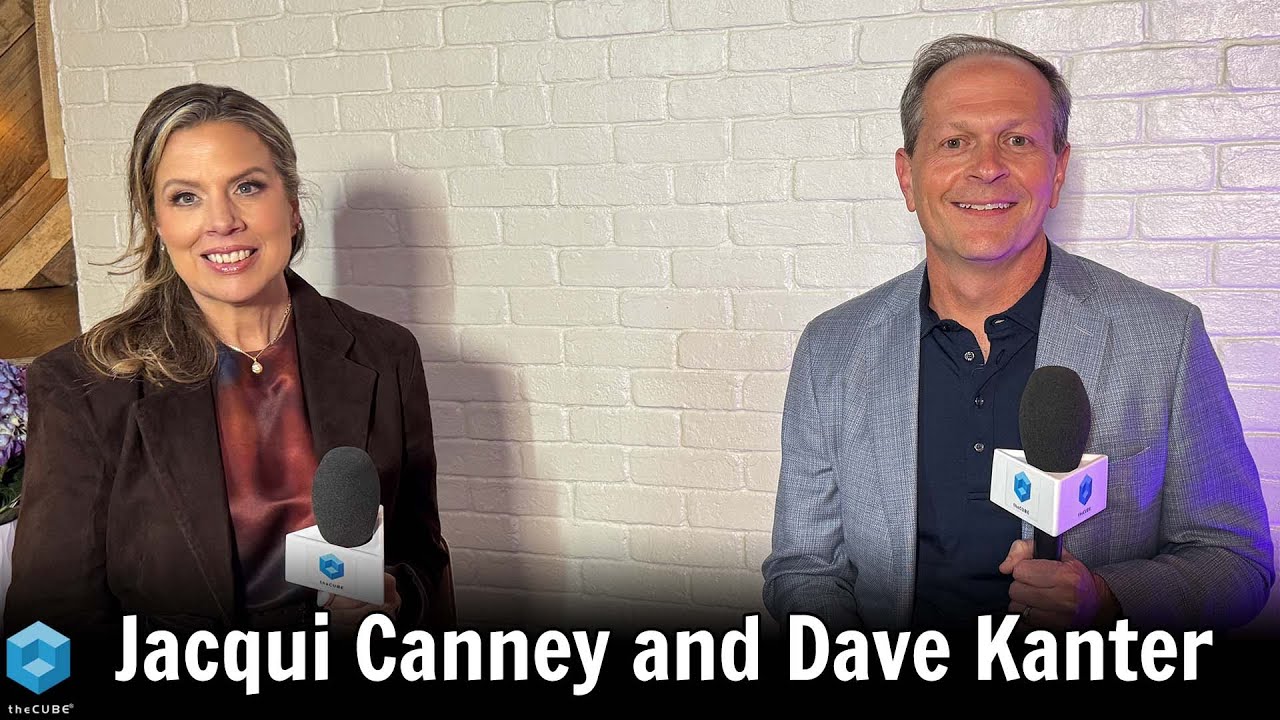
Savannah Peterson of theCUBE Research is joined by Dave Kanter, senior managing director for Global ServiceNow Business Group lead at Accenture, and Dorit Zilbershot, group VP of product management, AI experiences and innovation at ServiceNow, at Knowledge25. They explore how trustworthy, enterprise-grade AI is being redefined through bold innovation, cross-team collaboration and integrated platforms like ServiceNow’s AI agent fabric.
Zilbershot dives into the capabilities of distributed intelligence and AI asset management, spotlighting ServiceNow’s control tower as a game-changer in enterprise AI governance. Kanter expands on the “trusted agent huddle,” a forward-looking initiative designed to foster secure agent-to-agent communication at scale, ushering in a new era of orchestrated digital decision-making.
They reveal how low-code solutions and agentic design principles are shaping the next wave of productivity. Zilbershot emphasizes the value of autonomy in AI systems, while Kanter connects the dots to real-world applications that empower enterprise teams. Together, they paint a clear picture of how ServiceNow and Accenture are co-creating the future of work.
Forgot Password
Almost there!
We just sent you a verification email. Please verify your account to gain access to
ServiceNow Knowledge 2025. If you don’t think you received an email check your
spam folder.
In order to sign in, enter the email address you used to registered for the event. Once completed, you will receive an email with a verification link. Open this link to automatically sign into the site.
Register For ServiceNow Knowledge 2025
Please fill out the information below. You will recieve an email with a verification link confirming your registration. Click the link to automatically sign into the site.
You’re almost there!
We just sent you a verification email. Please click the verification button in the email. Once your email address is verified, you will have full access to all event content for ServiceNow Knowledge 2025.
I want my badge and interests to be visible to all attendees.
Checking this box will display your presense on the attendees list, view your profile and allow other attendees to contact you via 1-1 chat. Read the Privacy Policy. At any time, you can choose to disable this preference.
Select your Interests!
add
Upload your photo
Uploading..
OR
Connect via Twitter
Connect via Linkedin
EDIT PASSWORD
Share
Forgot Password
Almost there!
We just sent you a verification email. Please verify your account to gain access to
ServiceNow Knowledge 2025. If you don’t think you received an email check your
spam folder.
In order to sign in, enter the email address you used to registered for the event. Once completed, you will receive an email with a verification link. Open this link to automatically sign into the site.
Sign in to gain access to ServiceNow Knowledge 2025
Please sign in with LinkedIn to continue to ServiceNow Knowledge 2025. Signing in with LinkedIn ensures a professional environment.
Are you sure you want to remove access rights for this user?
Details
Manage Access
email address
Community Invitation
Dave Kanter, Accenture & Dorit Zilbershot, ServiceNow
Savannah Peterson of theCUBE Research is joined by Dave Kanter, senior managing director for Global ServiceNow Business Group lead at Accenture, and Dorit Zilbershot, group VP of product management, AI experiences and innovation at ServiceNow, at Knowledge25. They explore how trustworthy, enterprise-grade AI is being redefined through bold innovation, cross-team collaboration and integrated platforms like ServiceNow’s AI agent fabric.
Zilbershot dives into the capabilities of distributed intelligence and AI asset management, spotlighting ServiceNow’s control tower as a game-changer in enterprise AI governance. Kanter expands on the “trusted agent huddle,” a forward-looking initiative designed to foster secure agent-to-agent communication at scale, ushering in a new era of orchestrated digital decision-making.
They reveal how low-code solutions and agentic design principles are shaping the next wave of productivity. Zilbershot emphasizes the value of autonomy in AI systems, while Kanter connects the dots to real-world applications that empower enterprise teams. Together, they paint a clear picture of how ServiceNow and Accenture are co-creating the future of work.
Dave Kanter, Accenture & Dorit Zilbershot, ServiceNow
Dave Kanter
Senior Managing Director and Global ServiceNow Business Group LeadAccenture
Dorit Zilbershot
ServiceNow GVP, Product Management, AI Experiences and InnovationServiceNow
Savannah Peterson of theCUBE Research is joined by Dave Kanter, senior managing director for Global ServiceNow Business Group lead at Accenture, and Dorit Zilbershot, group VP of product management, AI experiences and innovation at ServiceNow, at Knowledge25. They explore how trustworthy, enterprise-grade AI is being redefined through bold innovation, cross-team collaboration and integrated platforms like ServiceNow’s AI agent fabric.
Zilbershot dives into the capabilities of distributed intelligence and AI asset management, spotlighting ServiceNow’s c...Read more
Dave Kanter, Accenture & Dorit Zilbershot, ServiceNow
search
Savannah Peterson
>> Hello agentic AI fans, and welcome back to Accenture's Reinvention Lounge here in fabulous Las Vegas, Nevada at Knowledge 2025. My name's Savannah Peterson. Very excited for this panel today with Dave and Dorit. Thank you both. Busy week, I know.
Dorit Zilbershot
>> Oh, very busy.
Savannah Peterson
>> Yes, very busy. Very busy week for ServiceNow. Dorit, I want to start with you since you were a first-time guest on the show and we get to see Dave a fair bit. So tell me a little bit about the announcements coming out of ServiceNow this week as well as the big talk you're giving.
Dorit Zilbershot
>> Oh, yeah, very exciting. So I think there's two big announcements that we've made this week. One is the AI agent fabric and our ability to communicate and collaborate with AI agents across the enterprise coming from other systems. I'm very excited about this because we created a distributed intelligence across the enterprise, which each system kind of brings their own intelligence into the game, and really moving away from brittle and hard-coded integrations to systems that just know how to operate with one another. So that's one. And then the second one is the AI control tower. As we have thousands of AI agents running around in the enterprise, we want to make sure that our customers have a way to manage and control not just their AI agents, but all their AI assets, whether it's models or systems or integrations, be able to see what's going on, whether you created them in ServiceNow or outside of ServiceNow. So really targeting C-suite, AI COE teams to have the governance and control over all the AI.
Savannah Peterson
>> Never been more critical than it is now on that front. Everyone always fighting for that single pane of glass to be able to see everything that's going on within their organization, a conversation, I'm sure you have a lot, Dave.
Dave Kanter
>> We did, Savannah, and it's absolutely incredible to have Dorit here. We've been working together with our teams here to really deliver on this promise of bringing agents, make them real for our clients. And Dorit's big announcement this week, she'll be on stage tomorrow. Hope everyone will be there. This whole topic of agent-to-agent collaboration is the next step to lead together on.
Savannah Peterson
>> Yeah, go ahead. I was just going to say you have a term for this trusted agent collaboration, a trusted agent huddle, correct?
Dave Kanter
>> Yeah. So in April, Accenture made a big announcement about the trusted agent huddle. I worked very closely with Dorit. ServiceNow is a core platform and partners of the huddle, leading the way with how we get agent-to-agent communication across platforms, multiple technology platforms to really take advantage of all the investments that our customers have made in all of these platforms and all these technologies. And then also, as part of the big announcement that Accenture is part of, of leading the way with the AI agent fabric. And Dorit and our teams are working together already here to prove this out, and it's going to be another game changer for our clients.
Savannah Peterson
>> So how is it going to be a game changer? How is this going to change the way we work, Dorit?
Dorit Zilbershot
>> So if today we really have to have these hard-coded integrations where you have to fully understand how another system is working, what their API are, what's the data model, we're basically moving into this agentic communication where I don't have to fully understand what the other system is doing and can just hand over a task, just like I can tell Dave, "Oh, can you schedule a meeting with your chief AI officer?" and the meeting is being scheduled. So it's similar thing. We can just tell another system what we need it to accomplish, and as developers, we don't have to worry too much about those different systems. So they can change the data model, they can change the API, but the integration still works.
Savannah Peterson
>> Nothing breaks on the backend just because you changed the light bulb.
Dorit Zilbershot
>> Exactly.
Savannah Peterson
>> It's a really important play with an infrastructure. How important is that agility to your customers? I would imagine you have these conversations across partnerships. Dave, I'll ask you that.
Dave Kanter
>> Yeah, it's top of mind right now because they're looking out to the future and the roadmaps. One of the conversations that we talk to them about is you have to do this in a very secure and seamless way. So that's the top of mind of seeing the power. But back to the investments they've made, they think they actually get even greater ROI on the investments already been made. We can get this agent-to-agent collaboration and interoperability when using the ServiceNow platform. I think as all of our customers look closely at what Dorit and the team have designed and built, just a really well-thought-out approach about how all of the assets that an organization has now around agents are all a ServiceNow data model, and it's going to allow that visibility and the security to get them comfortable to move forward.
Savannah Peterson
>> Yeah, how it comes back down to that trust. Building on that for a second, Dave, what is it about the ServiceNow approach that is particularly innovative and makes them such a critical partner for y'all?
Dave Kanter
>> Yeah, absolutely. The first thing to start with is the ServiceNow AI Agent Studio, it's a low-code approach to build agents. What does that mean? Speed. The other thing too is the investments and the employees that they've already made, these employees, we can quickly re-skill to be able to use the studio. And I think this power of the ServiceNow platform is this low-code approach to workflows initially and now this new form of agentic workflows where we can use tools with skills and with other workflows and other information to bring this to life.
Dorit Zilbershot
>> Yeah. I truly believe that ServiceNow, 20 years of building the platform, was really all work just to get to this point, to make sure our customers can benefit from agentic AI with workflows as our foundation, with CMDB and our experience with managing IT assets. Now we can manage AI assets. So it's really bringing all the underlying capabilities that we already have and just making advantage of this new technology and providing benefits for our customers.
Savannah Peterson
>> Yeah, it's like the sprinkles on top of an already well-designed cupcake.
Dorit Zilbershot
>> Exactly.
Savannah Peterson
>> That just make it a little more exciting and a little more relevant for whatever trend is going on right now or whatever solution that people need to build. So you talked about this being a 20-year moment in the making, so to speak. This is a question for both of you because I'm super curious. When did the conversation shift from AI, which has been a longer-term conversation, even though we've had the ChatGPT inflection point of browser-based adoption, but I know we've all been talking about AI for a little while. When did agentic become such a focal point? Dorit, I'll start with you.
Dorit Zilbershot
>> So exactly a year-
Dave Kanter
>> She loves this question.
Dorit Zilbershot
>> I love this question because it was exactly a year ago. So I was standing on stage showing the future of AI and where ServiceNow is going, and I was presenting the autonomous AI assistant. Because at the time, talking about AI agents sound confusing because we have human agents, now we have AI agents. What does it mean? So we called it autonomous AI assistant, and it felt innovative. It felt like something new. People weren't feeling .
Savannah Peterson
>> Very much so.
Dorit Zilbershot
>> It felt like science fiction and it's such a rewarding experience to be here a year after and actually see AI agents everywhere, across every corner of the enterprise and really being the future of work.
Savannah Peterson
>> Yeah, absolutely. And to a place where you have a lot of real-world use cases and examples. Dave, I know you love sharing some. You want to give us some more?
Dave Kanter
>> Yeah, I do. I just want to comment as well. Dorit has been working in the field of AI for how many years now?
Dorit Zilbershot
>> Oh, no, that's not the-
Dave Kanter
>> Anyway, it's been a long time. But I remember talking to Dorit as we were looking to co-innovate on a number of things. Dorit would say, "You know what? She feels like she has one of the best jobs on the planet because she's leading the way with this." So I think that's worth sharing for all our viewers out there.
Savannah Peterson
>> Absolutely.
Dave Kanter
>> So in terms of the use cases that are out there, we've talked about a number of them, and I think as we look ahead, in particular, to agent to agent, our teams have started to take a look at looking at functions that maybe haven't naturally thought about working together. Taking marketing, we're going to have a big marketing campaign, but we do actually now need to go in and provision websites into technology organization. We need to go get procurement approval to run an event and do something like this. Those are just some of the examples. So those are all work in progress. We move back here a year, we're going to be able to share even more about the results that are happening, but these are the kinds of conversations we're having together as partners.
Savannah Peterson
>> What a fun conversation to be able to have. Go ahead, Dorit.
Dorit Zilbershot
>> No, I think it's really exciting. I think that the partnership and the work that both companies are doing around AI agents really unlocks new use cases for us and for our customers. We've never thought about doing something with marketing, but all of a sudden, yes, of course, we can do something with marketing and of course know vendor management and procurement and all those. Yes, now we can have AI agents doing that. So it's really exciting to have this partnership and those discussions.
Savannah Peterson
>> It is such a wonderful snowball effect when you start to realize, "Wait, we could apply this here, here, here, and here." Is there anywhere that really surprised you or delighted you that it's been rolled out in the organization so far internally?
Dorit Zilbershot
>> I think for me, and Dave kind of alluded for my many years of experience, but I've been in the enterprise software for many years and I'm used to... It takes time for enterprise customers to adopt a new technology. You usually wait six to 12 months before you start seeing new adopters. We actually saw new customers go into production less than a week after we released our AI agents. That was-
Savannah Peterson
>> Brought within a week?
Dorit Zilbershot
>> Yes. And not just one, several. And so that was kind of a moment that was like, "Oh, this technology is really bigger than everything we think because it's not just changing work, it's changing how we're thinking about enterprise software and how much our customers are actually ready for this."
Savannah Peterson
>> Yeah. Well, as Bill says, "It's the iPhone for the enterprise," right?
Dorit Zilbershot
>> It is, yes.
Savannah Peterson
>> It's one of his favorite quotes. Yeah. Wow. That's really exciting. Have you been surprised by anything recently on the agentic side?
Dave Kanter
>> Surprised? I think building on what Dorit did share, I think one of the things too about the enterprise software, we used to think about releasing a couple of times a year. Now, just this speed and pace of expectation, 10 to 12 times a year. So I just think back to this innovation that Dorit mentioned, we're covering new use cases we didn't think would match. So I think that's to me, the level of innovation. We talk about innovation a lot, Savannah. But the speed and pace, I feel like you can, in the halls here, feel the pace that people are moving around, we need to move and go faster.
Savannah Peterson
>> It is absolutely a velocity. You can feel it just in the energy too. The curiosity and eagerness to learn rather than, "Oh, I'll figure that out later." No, I need to know now if I want to keep up. All right, one final question for you both. I'm going to frame it a little bit different so you don't get the same question twice. What story do you hope to be able to tell? And this could be from your personal workday or from the team more broadly or the partnership. What story do you hope to be able to tell me next year this time? You were talking 12 months ago earlier, so 12 months in the future. What are you going to tell me next year that you can't tell me today? Dorit, I'll start with you.
Dorit Zilbershot
>> So here's what I think it will be, and my prediction, what I think will be the biggest story in Knowledge 2026. I think we will start talking about workforce of AI agents, and not just AI agents who are teammates, but really be able to outsource work to AI agents. So just like you, you're able to hire a team, you can hire a team of AI agents. But I do think it will mean that there will be new types of roles that will be created in the enterprise of the people that onboard the people who manage those teams of AI agents and make sure that they're doing what they need to do. And so that I think is where the enterprise is going towards.
Savannah Peterson
>> Yeah, absolutely. I love that. I think you're onto it. I love thinking of them as a team that is constantly hydrated and well-oiled and just is happy to work all the time and do all the messy things that nobody else-
Dorit Zilbershot
>> But with the security, with the governance.
Savannah Peterson
>> Oh, yeah, with the trust. Yes, exactly . All right, Dave, what story are you going to be telling me?
Dave Kanter
>> Yeah. A year from now, I actually hope this story that we tell you is told by our customers, so those on the front line. So instead of Dorit and I meet up here, you'll have a couple of our customers up here sharing what happened, how this technology is helping change ways of working, how they're driving new levels of innovation. So that's where we want to be in a year, Savannah.
Savannah Peterson
>> Well, you know how I feel about that, Dave. So I really look forward to telling those stories all the way from the executive to that front line chair and really empowering people to feel confident and trust this revolution on the work side, and how we reinvent work is going to benefit them across the board and our families and our friends. Dorit and Dave, thank you both so much.
Dorit Zilbershot
>> Thank you.
Dave Kanter
>> Great to be here.
Savannah Peterson
>> Always a joy. Y'all are the best. And so are all of you, wherever you might be tuning in. We're in Las Vegas, Nevada here in the Accenture Reinvention Lounge at Knowledge 2025. My name's Savannah Peterson. You're watching theCUBE, the leading source for enterprise tech news.





 Savannah Peterson