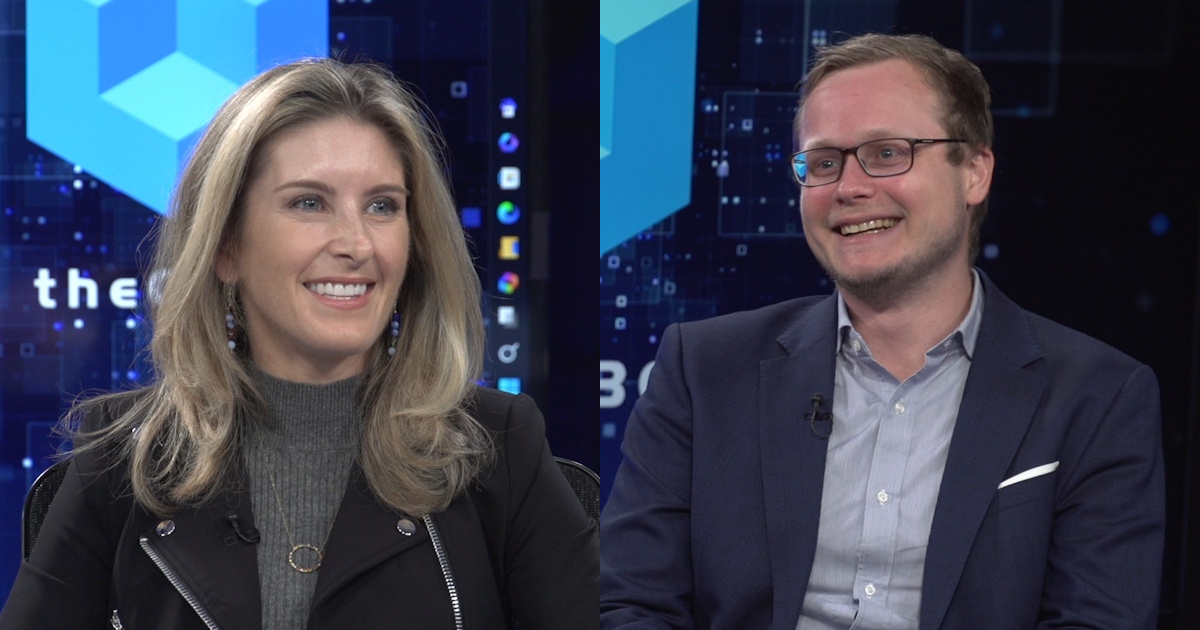
Join theCUBE's Savannah Peterson for an exclusive conversation with Marcelle Howard, director of AI solution success, platform product at ServiceNow, and Alexander Herttrich, principal director at Accenture DACH, as they unpack the transformative power of AI in today’s enterprise landscape. Together, they explore how AI is reshaping business processes and driving efficiency through platforms such as ServiceNow.
The exclusive discussion highlights how AI seamlessly integrates into existing workflows, enhances cross-functional collaboration and introduces new capabilities that unlock business value. Hear firsthand insights from Accenture's and ServiceNow’s experts on the critical role of starting with a strong platform foundation for AI success.
Howard and Herttrich also share their perspectives on human-centered AI design, emphasizing the importance of augmenting human tasks rather than replacing them. Discover how AI can simplify complex operations, boost productivity and spark innovation across industries — all while keeping people at the heart of transformation.
Forgot Password
Almost there!
We just sent you a verification email. Please verify your account to gain access to
From Vision to Reality: How AI Is Transforming Work Now. If you don’t think you received an email check your
spam folder.
Sign in to From Vision to Reality: How AI Is Transforming Work Now.
In order to sign in, enter the email address you used to registered for the event. Once completed, you will receive an email with a verification link. Open this link to automatically sign into the site.
Register For From Vision to Reality: How AI Is Transforming Work Now
Please fill out the information below. You will recieve an email with a verification link confirming your registration. Click the link to automatically sign into the site.
You’re almost there!
We just sent you a verification email. Please click the verification button in the email. Once your email address is verified, you will have full access to all event content for From Vision to Reality: How AI Is Transforming Work Now.
I want my badge and interests to be visible to all attendees.
Checking this box will display your presense on the attendees list, view your profile and allow other attendees to contact you via 1-1 chat. Read the Privacy Policy. At any time, you can choose to disable this preference.
Select your Interests!
add
Upload your photo
Uploading..
OR
Connect via Twitter
Connect via Linkedin
EDIT PASSWORD
Share
Forgot Password
Almost there!
We just sent you a verification email. Please verify your account to gain access to
From Vision to Reality: How AI Is Transforming Work Now. If you don’t think you received an email check your
spam folder.
Sign in to From Vision to Reality: How AI Is Transforming Work Now.
In order to sign in, enter the email address you used to registered for the event. Once completed, you will receive an email with a verification link. Open this link to automatically sign into the site.
Sign in to gain access to From Vision to Reality: How AI Is Transforming Work Now
Please sign in with LinkedIn to continue to From Vision to Reality: How AI Is Transforming Work Now. Signing in with LinkedIn ensures a professional environment.
Are you sure you want to remove access rights for this user?
Details
Manage Access
email address
Community Invitation
Marcelle Howard, ServiceNow & Alex Herttrich, Accenture
Join theCUBE's Savannah Peterson for an exclusive conversation with Marcelle Howard, director of AI solution success, platform product at ServiceNow, and Alexander Herttrich, principal director at Accenture DACH, as they unpack the transformative power of AI in today’s enterprise landscape. Together, they explore how AI is reshaping business processes and driving efficiency through platforms such as ServiceNow.
The exclusive discussion highlights how AI seamlessly integrates into existing workflows, enhances cross-functional collaboration and introduces new capabilities that unlock business value. Hear firsthand insights from Accenture's and ServiceNow’s experts on the critical role of starting with a strong platform foundation for AI success.
Howard and Herttrich also share their perspectives on human-centered AI design, emphasizing the importance of augmenting human tasks rather than replacing them. Discover how AI can simplify complex operations, boost productivity and spark innovation across industries — all while keeping people at the heart of transformation.
Marcelle Howard, ServiceNow & Alex Herttrich, Accenture
Marcelle Howard
Director, Platform Product, AI Platform FoundryServiceNow
Alex Herttrich
Director, Global ServiceNow GenAI LeadAccenture
Join theCUBE's Savannah Peterson for an exclusive conversation with Marcelle Howard, director of AI solution success, platform product at ServiceNow, and Alexander Herttrich, principal director at Accenture DACH, as they unpack the transformative power of AI in today’s enterprise landscape. Together, they explore how AI is reshaping business processes and driving efficiency through platforms such as ServiceNow.
The exclusive discussion highlights how AI seamlessly integrates into existing workflows, enhances cross-functional collaboration and introduce...Read more
Marcelle Howard, ServiceNow & Alex Herttrich, Accenture
search
Savannah Peterson
>> Hello, wonderful CUBE community, and welcome back to our studios in Palo Alto, California. My name's Savannah Peterson, very excited to be having a behind-the-scenes conversation today with Accenture and ServiceNow. Please welcome Marcelle and Alex to the stage, thank you both for taking the time today to talk to me.
Marcelle Howard
>> It's a pleasure.
Savannah Peterson
>> It's going to be a fun chat. I'm particularly thrilled about this one because it's easy to get lost in the speeds, and feeds, and specs of AI and people talking about compute. The reality is the stories that are going to inspire the future are talking about what people are actually doing with AI, and the places that companies are achieving ROI. Y'all see a lot of different verticals and enterprises coming through your doors, and I'm curious, I'm going to treat this interview like I'm a potential customer walking in the door, and I'm going to start with you, Alex. I give you a call, you're a consultant, and I say, "Hey, so I want to do something with AI. I'm developing my AI strategy or implementing it for 2025. What do I do?"
Alex Herttrich
>> That's a good question. So, I've been starting with this right after ChatGPT came out. So I had my own epiphany, I saw it and I immediately saw that it's going to change everything, at least on the work I'm doing, ServiceNow, service management, business processes and so on. So for me, the thing I usually do first is maybe I show one visual that explains, "Okay, this is the big picture where this plays," but I'm really a person that goes into something that you can connect to. So, I'm showing you something that you, so if you're a ServiceNow person on the client side, try to show you something where you can immediately see, "Oh, this is really going to change the way how my people how I'm working," because there's a lot of fatigue around, "Okay, AI can do this, and here's a slide, and here's this big picture. I think it has to be very technical-
Savannah Peterson
>> And even legacy system fatigue. Oftentimes when a new technology gets brought into a company, there's that groan of, "Oh, we have to learn a new tool, we have to implement this thing. Is it really going to be better than the process that we had before?" So, how do you convince them?
Alex Herttrich
>> I think most of the time when it comes to ServiceNow and the conversations we're having, like I said about AI, AI is let's say another step after you've built a foundation. So, it's basically you need to have a platform, ServiceNow platform is basically used in IT and HR, and many other functional areas or industry areas, and AI is something that builds on top of the platform. So it's not bringing a new tool, it's rather bringing new capability that helps you automate intelligence on top of your existing processes. And that's also a benefit of ServiceNow and this is why most customers have started hundreds of PCs. So, it's not like they are hearing this for the first time-
Savannah Peterson
>> There's no silver bullet. I feel like that's what everyone's secretly looking for is the silver bullet and the easy button. To your point though, we're still in the prototyping phase.
Alex Herttrich
>> I think we've seen now the first emerging, like lots of small flowers came up with terms, "Hey, you can do AI here and there," and so on. But now we want companies want to see few big trees growing out of it.
Savannah Peterson
>> Love the analogy.
Alex Herttrich
>> And this is where you need a lot of, let's say playing field. So, you need a platform that is already scaled, because you won't make a big impact if you first need to change the ways of working and bringing other people on a new tool. And this is often like a process that takes a year too. You want to do something that creates a transformative impact like three months or six months, and that's what you can do with AI on top of the ServiceNow platform.
Savannah Peterson
>> I love that. So ServiceNow, if I'm extending your metaphor analogy, is essentially the fantastic, rich, fertile soil that all of these projects can grow in. Talk to me a bit about the platform and how you are able to work with such a variety of different customers with your reach and partnering with Accenture.
Marcelle Howard
>> Yeah, Savannah. So, I would say the platform really has a very substantial impact with our customers. It has allowed for the orchestration of many different flows, many processes to take place across several different disciplines. And I would say customers oftentimes will want to start with the platform and then build out and expand that to address different types of use cases, whether we want to tackle employee growth and optimization, whether we want to tackle IT, and deflection, and productivity and look at the gains there, or look at system optimization. And there's a lot of different dimensions in which the platform can play into, but it integrates a lot of the different legacy systems and ways in which work can come together. So, it really becomes a central nucleus to then build upon this, and then you have AI underpinning all of this. And so, part of the challenge that we see with customers is there is so much you can do, like what Alex said, and distilling that-
Savannah Peterson
>> I can imagine, yeah.
Marcelle Howard
>> Yeah, into what's practical and what's going to move the needle with the business, and figuring out what use cases are going to be high value, what use cases are going to be medium value and lower value, and deciding what is a now strategy and what is a longer term strategy to "lay the seeds" of the foundation for the more strategic place down the road.
Savannah Peterson
>> It's really a mission control for ops. And I think you said something, Marcelle, that I want to highlight there that I don't know that is talked about as commonly. It's not just about specifically one segment of a business that gets optimized or improved. It's like you said, it's across disciplines, it's across teams, it's across different ends of a supply chain or whatever it might be that you are managing to make the whole thing better. It's not just one tiny piece of this puzzle, and I think that's really imperative. Alex, are you noticing any trends in where people start with these POCs like you're talking about? Are there certain areas where it looks like time to value is easier to achieve, for example, so they can see that ROI and double down on the investment?
Alex Herttrich
>> The way how I see it, obviously you deploy AI where you use ServiceNow already today. There are some conversations where we're having a client wants to pivot into new space and thinks, "What I have today won't allow me to get the benefits of AI, so I want to pivot to another platform in that space that allows me to really leverage AI once I get there." But these are like 6 months, 12 months, 18 months endeavors because you first need to basically build a lot of foundation to it. So, the conversations we are having is with customers that say, "I use ServiceNow for all of my IT, for all of my customer service, for all of my HR." And then the conversation is towards, "How can I actually change the whole operating model that I have? I have my total cost of ownership, I have my people, I have my customers, I have the customer value that I generate, I have the operations and the platform cost, and the partner cost as well for helping people build this stuff. And how do I now fund this investment? How do I master the business case, the energy to be able to get it to go somewhere?" And the best case scenario is when you can optimize customer value. So, when you are at a place where what you do creates a top line impact or creates a net positive impact, because then you can circle around many of the more tough conversations in terms of, okay, if the only thing you get is efficiency, then what are the people that are next to you not on your payroll that are going to pay for your transformation investment? And that's a conversation that I think is to some extent happening somewhere, because when people and companies have a vision of where they want to go with this freed up capacity. So, if you develop this vision of I need these people to be freed up because they're our best tech engineers and I need them to do development, or have my best customer service agents and they should not work on the same ticket every day, but actually do customer outreach and create customer value instead of working on a more reactive customer service operation space. So, these are the conversations that you need to combine together with your technology conversation about what can AI do to make you more productive, better deflection, better quality of your products and services? You need to bring these two conversations together on the let's say C-level conversation in terms of what are my five big bets of AI? And obviously in this partnership, what we are trying to find is the customers where ServiceNow has a bigger state and where it's very clear that ServiceNow is going to be one of these big bets, and we can't really create a big impact on the organization. Because ServiceNow creates this platform where I can scale AI because it's one new capability of the platform but you can deploy it across everything that you do on the platform, hundreds of processes, hundreds of roles that are engaged there.
Savannah Peterson
>> It makes so much sense, it's already integrated, it's just adding a bit of magical frosting on to that integration.
Alex Herttrich
>> Some AI sprinkle.
Marcelle Howard
>> It is.
Savannah Peterson
>> A little fertilizer, we're in the garden still, but watched the Martha Stewart doc over Thanksgiving if you can't tell. Marcelle, y'all have been partners for a while. And I'm curious, Alex mentioned his epiphany moment roughly two years ago, I wonder what could have happened around then.
Marcelle Howard
>> Christmas '22, yeah.
Savannah Peterson
>> Yeah, it was an interesting time for all of us nerds I think, in a lot of ways. How has the ServiceNow approach been to this integration? Obviously given how much you do for your customers and how widespread your market reach is, there's got to be a bit of sensitivity and also hype and excitement to deploying these types of features.
Marcelle Howard
>> Absolutely, yeah. And where ServiceNow plays as we are really best-in-class platform, but where the accretive gains come in with Alex, and his team and Accenture is helping organizations bring this to life in a way that is bespoke to them. And every single organization has unique processes, has unique people, has unique things about it that need to be addressed as we're transforming operations. So, Accenture can come in and say, "Let's work together to have this trifecta of what is going to make the customer successful," where Accenture can shine with their expertise in the consulting space and the technical space, and where ServiceNow can come in and the applied technology to bring it all together and make it happen. And so, we've seen gains that have never before been realized. And when I first got into really this space of platform, employee experience wasn't even a thing. Employee experience was a brand new category and customers would ask, "Why do I need this, and what is it going to do for my business?" And that wasn't really that long ago. So, we see now the trajectory of bridging this whole ask of things like experience, leveraging AI to drive that experience, and then watching those organizations all of a sudden go, "We're going to completely fundamentally change the way people interact with their business and their company." And that's really been the spirit of this program is making that fundamental change where it's also bringing in this element of this is really the first time we've interacted with AI on a consumer grade level to the extent in which we have.
Savannah Peterson
>> 100%.
Marcelle Howard
>> So, people's grandparents are using it to get facts and information, people's kids are using it to help with homework. It is a default mechanism to go in and say, "Give me a recipe for a great dish for a holiday." And we are now seeing that come in, and the expectations are higher than ever of what is this experience going to be like? How do I bring AI into my role as opposed to this concept of AI is just taking over. It's really how do we incorporate this to strengthen the impact that people and humans can make in their jobs, whether they're end users, whether they're professional users, and just seeing that really come to light I think has been a first.
Savannah Peterson
>> That is such a well-articulated example of it. I think when we talk about artificial intelligence, people think of something that is fabricated. And granted, we're talking about LLMs and we're talking about something that is digital, but on the flip side it's about making more intelligent experiences, and that's what you just discussed. And I think that's such a tipping point for when someone learning about this, perhaps on the adoption side, is a bit nervous of new technology, which is common. And then all of a sudden realizes, "Wait a minute, it's not just about this linear task list that I've normally been doing and how that might change, it's that my entire experience at work might change." And I know that that's a conversation you're both having a lot of. Alex, can you give me any examples of how the day-to-day workflow for some of the customers you're seeing is changing and adapting, and the examples you're seeing succeed with AI?
Alex Herttrich
>> Yeah. So, basically when you think of what impact ServiceNow makes, you basically can start with two keepers, one is your customer that's interacting with your service that you're providing on your ServiceNow platform, and the other is the agent that's basically the pro user working on the ServiceNow platform doing the work. When it comes to agents or end customers, Marcelle just said, it's much easier to get it out there because you can build it into the experience. People are used to ChatGPT, they're used to search engines and ServiceNow has the search engine, has the chat interface. So, it's easy to drive it out there and you can make it a very convenient experience. So, I think this aspect of transforming employee experience, customer experience with this is great, because question answering is such a powerful thing. I mean, when you want to learn about something, it doesn't help you if someone says, "This document has the information you want," the answer is-
Savannah Peterson
>> That knowledge graph is a wonderful example of how AI is going to work, yeah.
Alex Herttrich
>> Exactly. So, it's also about how do we build experience for Accenture employees that are now serving kinds, and how do we create a path for them going forward? And what we saw is that it's basically a trajectory. So, we've been basically starting with human-in-the-loop and augmented experience. So, there is something that is difficult for me to do, large language models can read really fast so they can reach through a lot of content and give me the quintessence of it. And then I, as an agent, can do things faster that otherwise would've taken me a lot of heavy lifting and calories to get done. So, we can make life easier and accelerate things. So, that's the current phase we are in where we have the scale use cases around that. So, agents are required to perform root cause analysis, create communications, write new knowledge articles, understand complex cases, or some customers use it for cases that have more than 120 pages of like it's a book. So you get to work assigned, you need to, "Hey, please fix this issue for this customer." And then you say, "Okay, do we read this book now for the next-"
Savannah Peterson
>> Exactly, and 45 minutes later we're on page 17. Well, yeah.
Alex Herttrich
>> Exactly. So it was a very, very good dialogue between the business, because the business said, "We have these kind of problems." And then, with us and with the ServiceNow together in terms of what we think is achievable today, and then we had to massage a little bit. Some ideas were pushed from IT and say, "I think we can do this." And then as business came in, I think we should be doing this because it fits better in how we want to evolve our operations and how our experience for our people. And then, we merged it into one list, business and IT coming together, and then we've worked on this. And I think it's very difficult to drive adoption or get adoption, it's once you put it out there it's not that everyone is going to use it every day for everything. It's a journey where you need to have some champions that speak about it and say, "Hey, I do this every day. It's like I have five times more coffee breaks now."
Savannah Peterson
>> I think that's just it, it creates more time for creativity, and for strategy, and problem solving versus repetition and frustration. And that could be from even, well anyone in the community at that point, whether they're working for the company or interacting with it. I'm curious, just building on that a little bit, how long do you think it'll be before we don't realize we're using AI to do things? It's just already there, it's just a part of the workflow. Or maybe that's already happening with your customers.
Marcelle Howard
>> I think that that's where you would see that the ultimate definition of success is when it just becomes invisible in the fabric of that experience.
Savannah Peterson
>> Yeah.
Marcelle Howard
>> Would you agree? Where it just is a seamless flow that somebody doesn't have to second guess and say, "Well, let me just make sure that this is the right article," or, "This is the right catalog item," or, "This is the right summary." Where AI disappears is really end state, but the practicality and the work you need to do, the greediness to get there, I think is really what's happening and taking place today so that that can be possible in the future.
Savannah Peterson
>> Yeah. How close do you think we are to that future?
Marcelle Howard
>> Quite close.
Savannah Peterson
>> Oh, I'm sorry. You don't even know.
Marcelle Howard
>> Yeah, I think there's a lot of push for innovation. I think you do have to balance it. What if we go back to with first principles? It's start slow and scale up, and I think that very much applies. There's this urge to rush and let's get these use cases in, let's use AI and let's apply it everywhere. And what I think we don't account for is there's concepts of change fatigue, there's concepts of really how fast can we absorb change? And you talked about how different people interact with it. If I'm an agent or developer and a professional user of this where I'm going to be doing this day in and day out, my rate of adaptation is going to be different from an employee or an end user-
Savannah Peterson
>> Absolutely.
Marcelle Howard
>> ... who just goes in two or three times a year and says, "I need to engage with my organization for various reasons, benefits, something broke on the technology side, or I have a direct report that has a question and I have no idea where to even find the answer. So, I'm going to engage the company that hopefully that's going to provide." But I think there's a lot of different components. And then there's the trust component, too. Are we doing this in a way that's transparent, responsible, and people understand how they interact. And more importantly have a way to give feedback and a way to have a channel to say, "This is working or this isn't," and have that be addressed in a way that is kind and compassionate for the people in the organization where they don't feel bombarded by AI, they don't feel railroaded. They have a way to really have reconnaissance around, "My voice is heard, I'm being considered," and I don't know if that does require different roles or a way to look at how we address it organizationally, and get that employee feedback as a two-way channel.
Savannah Peterson
>> I love that. There's also that emphasis on empathy, perhaps AI gives us more time to be empathetic humans across the board. I have two-ish questions left for you. And you can wear your professional hat for this or you can wear your personal hat, I'm going to let you do it either way. Are there any particular use cases that you've seen deployed in the wild? And I recognize you may have to respect some confidentiality so you can be as aloof as you need to, but some examples where you personally got really excited to see things starting to work? Alex, I'm going to start with you, given-
Alex Herttrich
>> Yeah. So I had, basically six weeks after I had my ChatGPT moment, we had a hackathon. And the first time we built an auto-response chatbot that was basically using information ServiceNow to answer questions. And it was able to do that in like 70 languages. Now, when we went there and it was working, it was really magical. And it's still, I think at every single point in time when you're able to build a very complicated process, so you talk to the problem management team or change management team and they explain to you a very complicated thing they're doing, like, "We go here, we read this, then we search here, and we go there and do this then," and to analyze the risk of a change or analyze the root cause of a problem. And then, you decompose that into different steps and elements, and then suddenly this whole thing works in 10 seconds and the result you get is better than what you see most of the time because people are having to do this in a crunch of time. And then these magical moments when you are able to suddenly use the intelligence of large language models, combine it with the data and the workflows in ServiceNow platform, and then create these moments where people say, "That really works." So, that's magical. So this is something, and I really have to say that I'm working with teams across five different clients, one very large one, a software company, others in the manufacturing industry or the energy industry, and all of the teams are super excited. So, when they work on this it's obviously a cool thing to work on right now, but I really see that because you make such good progress and the progress you're making is like step, it's not like I write the script and automate something, but it's suddenly something that wasn't possible a year ago, it's suddenly possible now. So, it's really that all of the teams have a super high energy level and it's exciting project. So, I'm very gracious that I have the opportunity to work with these teams.
Savannah Peterson
>> I can tell. I hope everyone who's watching at home or at work, or wherever they might be, can feel that energy and excitement that I can. I can tell you're actually quite excited about it.
Alex Herttrich
>> Still I am. Two years now, so still level excitement is there.
Savannah Peterson
>> Yes, absolutely. What about you, Marcelle?
Marcelle Howard
>> Yeah, I would say that the people quotient is just so exciting. To see the AI champions in the organization that we've perhaps been working with over the course of several years really say, "This has been career-defining for me to champion this in my company, bring this in, really have the best of ServiceNow, have the best of Accenture coming in and making this all possible." But when you see people actually thriving in their roles, because of the work we're doing and because of this technology, and when they can serve the needs of their end users better, for example. So on the agent side, it's not the most glamorous stuff. It's not like, "Hey, we're producing this incredible, seamless end-to-end experience, I think agentic gives the glimpse of that into the future. But if we look backwards, because everyone's excited about, "Oh, agentic flows," and this and that, and we're at a really unique point where we can do a retrospective today and say that the groundwork, and the points, and the use cases that companies have applied today in summarizing incidents and cases, in helping augment the work of developers where they can code faster, and make corrections faster, and essentially address the needs of the business faster, reduce the backlog and the pipeline, aside from the exciting and glamorous, let's make this dazzle for end users. When we see those come to light, you almost say, "We have really in a way started terraforming and creating the path for agentic already." And seeing those-
Savannah Peterson
>> That's a great point.
Marcelle Howard
>> ... stones and pathways really come to life as critical components, because these companies are already doing the hard work. Underneath it all AI is just data, passion, and just a willingness to really come together and bring people together with a mindset and say, "Let's make this happen."
Savannah Peterson
>> Data, passion and compute. Yes.
Marcelle Howard
>> Ingredients for life.
Savannah Peterson
>> Yeah, it's like making Italian food, you only need a couple of key ingredients. But you're absolutely right, and I think you just hit another unsung hero in this, which is the champions of these projects. Your career is changed forever if you're embracing this right now, and leveraging partnerships and technology like you're both sharing with the world, you're going to be the people promoted and brought into that thing. Forget losing your job, how about having a job you never fathomed you could have and leading a division you never knew was possible? Anything is possible. It sounds like you and the team are doing a lot of cool stuff. Speaking of, would you like to say hi to the team? I know they might be watching.
Marcelle Howard
>> Yeah. Shout out to AI Solution Success. This team is magic, so I just really love working with Alex, with your team. Our team obviously, and just, it's been a gift being a part of the Lighthouse program.
Savannah Peterson
>> I love that. Well, and we're here to continue shining light on the Lighthouse, although that's probably inverse of that. Alex, I know you're going to have some special members of your family watching.
Alex Herttrich
>> Yeah, let's see. I mean, we discussed, we need to dub the video because my children don't speak English.
Savannah Peterson
>> You can say it in German. Would you like to say hi?
Alex Herttrich
>> Hi.
Savannah Peterson
>> That's very cute. What's the conversation like at the dinner table with your family, Alex?
Alex Herttrich
>> So, my son uses ChatGPT for reviewing his homework, so he's already, I've hooked him onto it. And my wife is using, she's working in HR and she's using it to write newsletters. So, I've spread the magic already to some members of my family. My two younger ones don't write yet, so they still need to learn a little bit.
Savannah Peterson
>> Maybe they won't ever have to write. Who knows what-
Alex Herttrich
>> A driver's license is something I don't plan to invest into anymore.
Savannah Peterson
>> Gosh, that's crazy. Crazy to think about, wow. Well, Alex, Marcelle, this has been absolutely fantastic. Thank you both for coming in to hang out with me, and for all the exciting stuff you do. If folks aren't excited after this interview, like I am, well, then they're never going to be excited about what's possible with AI. And thank all of you for tuning in, wherever you might be joining us for this special behind the scenes with Accenture and ServiceNow. I'm here in Palo Alto, California, my name's Savannah Peterson. You're watching theCUBE, the leading source for enterprise tech news.




 Savannah Peterson