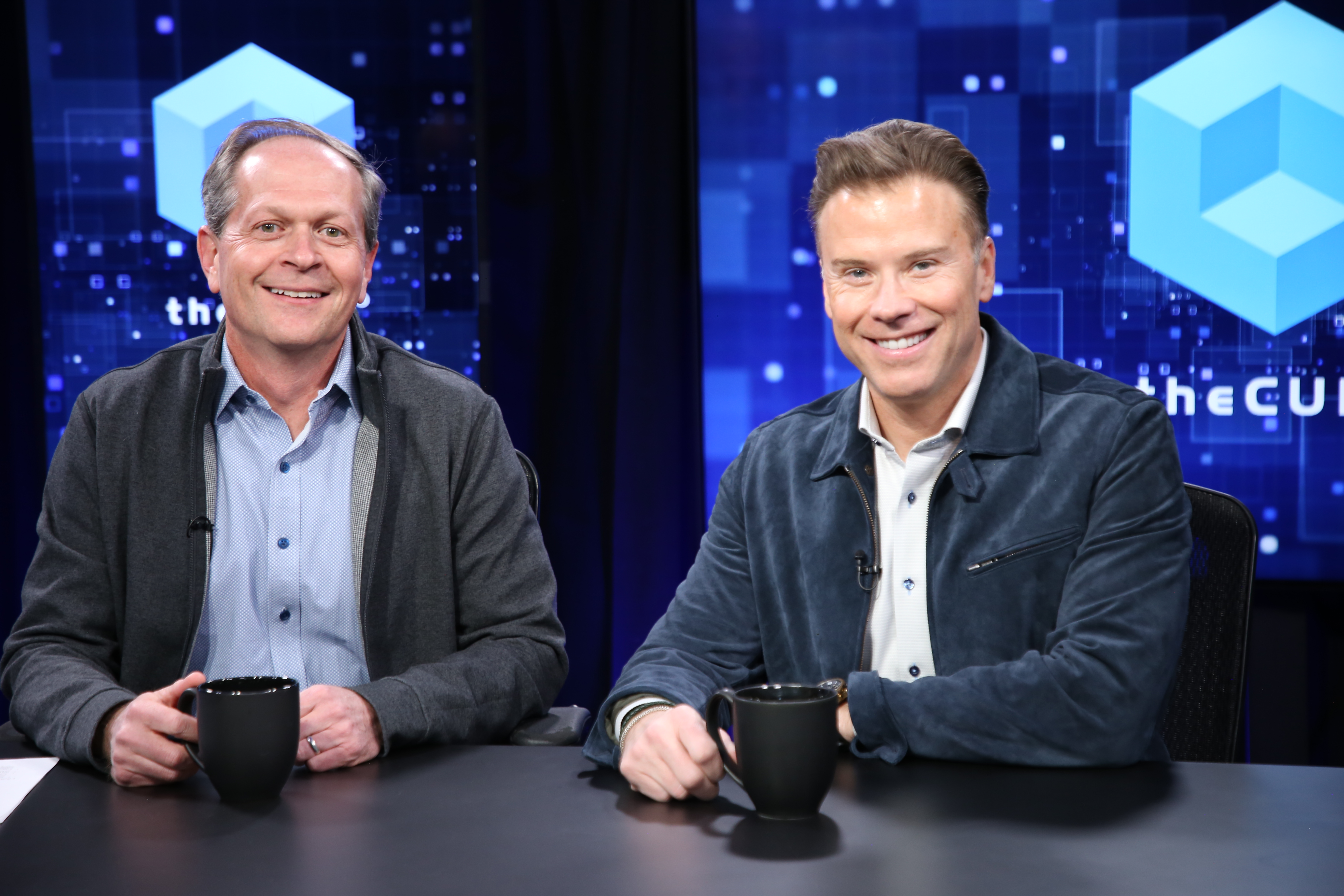
Join theCUBE's Savannah Peterson as she talks with Dave Kanter, senior managing director, global lead of the Accenture ServiceNow Business Group, and Paul Fipps, president of global customer & field operation at ServiceNow, about the a groundbreaking AI collaboration between ServiceNow and Accenture. They discuss the integration and application of artificial intelligence to drive business transformation and innovation.
This exclusive interview explores the evolving role of AI in the enterprise landscape, highlighting how it simplifies complexities and empowers employees across industries. Don't miss insights from Accenture’s extensive AI initiatives and ServiceNow’s pioneering advancements, bolstered by innovative partnerships with leading technology giants.
The conversation also reveals key takeaways about leveraging AI to increase productivity without sacrificing jobs, as well as how AI tools enhance everyday tasks, create new efficiencies and allow employees to focus on value-driven work. Plus, Kanter and Fipps discuss the strategic importance of the AI Lighthouse program, which embodies innovative approaches to service platforms and seamless automation.
Forgot Password
Almost there!
We just sent you a verification email. Please verify your account to gain access to
From Vision to Reality: How AI Is Transforming Work Now. If you don’t think you received an email check your
spam folder.
Sign in to From Vision to Reality: How AI Is Transforming Work Now.
In order to sign in, enter the email address you used to registered for the event. Once completed, you will receive an email with a verification link. Open this link to automatically sign into the site.
Register For From Vision to Reality: How AI Is Transforming Work Now
Please fill out the information below. You will recieve an email with a verification link confirming your registration. Click the link to automatically sign into the site.
You’re almost there!
We just sent you a verification email. Please click the verification button in the email. Once your email address is verified, you will have full access to all event content for From Vision to Reality: How AI Is Transforming Work Now.
I want my badge and interests to be visible to all attendees.
Checking this box will display your presense on the attendees list, view your profile and allow other attendees to contact you via 1-1 chat. Read the Privacy Policy. At any time, you can choose to disable this preference.
Select your Interests!
add
Upload your photo
Uploading..
OR
Connect via Twitter
Connect via Linkedin
EDIT PASSWORD
Share
Forgot Password
Almost there!
We just sent you a verification email. Please verify your account to gain access to
From Vision to Reality: How AI Is Transforming Work Now. If you don’t think you received an email check your
spam folder.
Sign in to From Vision to Reality: How AI Is Transforming Work Now.
In order to sign in, enter the email address you used to registered for the event. Once completed, you will receive an email with a verification link. Open this link to automatically sign into the site.
Sign in to gain access to From Vision to Reality: How AI Is Transforming Work Now
Please sign in with LinkedIn to continue to From Vision to Reality: How AI Is Transforming Work Now. Signing in with LinkedIn ensures a professional environment.
Are you sure you want to remove access rights for this user?
Details
Manage Access
email address
Community Invitation
Dave Kanter, Accenture & Paul Fipps, ServiceNow
Join theCUBE's Savannah Peterson as she talks with Dave Kanter, senior managing director, global lead of the Accenture ServiceNow Business Group, and Paul Fipps, executive vice president of worldwide sales at ServiceNow, about the a groundbreaking AI collaboration between ServiceNow and Accenture. They discuss the integration and application of artificial intelligence to drive business transformation and innovation.
This exclusive interview explores the evolving role of AI in the enterprise landscape, highlighting how it simplifies complexities and empowers employees across industries. Don't miss insights from Accenture’s extensive AI initiatives and ServiceNow’s pioneering advancements, bolstered by innovative partnerships with leading technology giants.
The conversation also reveals key takeaways about leveraging AI to increase productivity without sacrificing jobs, as well as how AI tools enhance everyday tasks, create new efficiencies and allow employees to focus on value-driven work. Plus, Kanter and Fipps discuss the strategic importance of the AI Lighthouse program, which embodies innovative approaches to service platforms and seamless automation.
President of Global Customer & Field OperationServiceNow
Dave Kanter
Senior Managing Director and Global ServiceNow Business Group LeadAccenture
Join theCUBE's Savannah Peterson as she talks with Dave Kanter, senior managing director, global lead of the Accenture ServiceNow Business Group, and Paul Fipps, president of global customer & field operation at ServiceNow, about the groundbreaking AI collaboration between ServiceNow and Accenture. They discuss the integration and application of artificial intelligence to drive business transformation and innovation.
This exclusive interview explores the evolving role of AI in the enterprise landscape, highlighting how it simplifies complexities and e...Read more
>> Hello AI community, and welcome to an exciting new series from ServiceNow and Accenture where we are talking about how AI is going to transform how we work. My name's Savannah Peterson here in theCUBE studios in Palo Alto, California. Very excited to be joined by Dave and Paul today, thank you both so much for taking the time.
Dave Kanter
>> It's wonderful to be here, Savannah.
Savannah Peterson
>> We're already having fun.
Dave Kanter
>> We already are. We've warmed up.
Savannah Peterson
>> If this segment is anything like the last 20 minutes in the green room, then everybody's in for a treat. We're going to cover a lot of topics right now. We're going to talk about the partnership, we're going to talk about all of the Lighthouse projects, but I want to bring up something that we were just talking about a second ago and we were having a bit of a tagline discourse that led me to exactly where I want to start this conversation. Dave, can you tell me your favorite tagline?
Dave Kanter
>> My favorite tagline?
Savannah Peterson
>> Yes.
Dave Kanter
>> Favorite tagline together.
Savannah Peterson
>> Yes, your favorite collective tagline.
Dave Kanter
>> We're going to put AI to work for people, and what I love about that is everything that we're doing with this technology is about making this work for all employees, for customers that have a more delightful experience in what they're doing every day, but in particular to let the employees across the organization in every corner of the office use their brains and what their strengths are to grow their business and drive innovation. And to me, putting AI to work for people just encapsulates everything that we want to do together in our partnership.
Savannah Peterson
>> I totally agree, and the reason that struck me so much, I mean, we're having a conversation about how we combat the myths of the doomer side of the AI conversation. And to your point, I mean the framing is usually, oh, AI is going to come take my job. It's not, a computer never came and took your job, this isn't how this works, there's an evolution. But I'm curious, and Paul, I want to ask you because you are very much on the front lines of this, how do we transform work? And as a more complex add-on to that, how do we communicate how we're going to transform work so that it's digestible for the communities that we're working with?
Paul Fipps
>> Yeah, it's really interesting. We talk about putting AI to work for people, as Dave just said, but the way we do that is we are the AI platform for business transformation. And I know that can sound a little buzzwordy.
Savannah Peterson
>> Not at all.
Paul Fipps
>> But at the end of the day, the way that we visualize it is pretty simple, Savannah. We just think about all of the different systems that have been built over the past 50 years. If you think about the technology that customers have put in, and then between the pandemic and now, so call it four and five years later, all of the point solutions that have been added on top of that architecture. Many of our customers are just swimming in a sea of complexity and the investments there. I actually said to somebody recently, I met with more CFOs in the past year than I ever have in my time at ServiceNow, because they're all saying, "How do you help me with this complexity and streamline the architecture to get rid of some of these costs out of my IT budget so I can invest in AI?"
So we start there, we start with the complexity that our customers are facing, and then we take the ServiceNow platform and we put that on top. And so all of the integration work that we have, all the ways that we can actually streamline those business processes across all those point solutions in that complex technology architecture is the way that we start. That is where we've been for a long time with a single data model, single architecture born in the cloud. Now, when you add AI to that and you think about all those repetitive tasks that come even when you actually optimize those workflows across every corner of your business where AI has taken us, and we'll talk more about it with Dave and the partnership with Accenture is way beyond that when we think about putting AI to work for people.
Savannah Peterson
>> What's the number one thing you hope AI does for you at work?
Paul Fipps
>> For me?
Savannah Peterson
>> Yes.
Paul Fipps
>> The number one thing it does for me is stop approving things like travel and expense reports.
Savannah Peterson
>> Oh, bless, that whole process.
Paul Fipps
>> Right.
Savannah Peterson
>> Just.
Paul Fipps
>> Completely automated.
Savannah Peterson
>> Yeah.
Paul Fipps
>> And in fact, we just showed a demo at our sales kickoff last week automating that entire process.
Savannah Peterson
>> So that's going to happen soon?
Paul Fipps
>> It's going to happen soon.
Savannah Peterson
>> We can implement that here at theCUBE within the next few hours.
Paul Fipps
>> Absolutely.
Savannah Peterson
>> Great. Can't wait.
Paul Fipps
>> Absolutely.
Savannah Peterson
>> You can help us onboard that while you're in the studio.
Paul Fipps
>> Happy to help.
Dave Kanter
>> Happy to help. Matter of fact-
Paul Fipps
>> Happy to help....
Dave Kanter
>> we actually have a draft statement of work in order form with us.
Savannah Peterson
>> Is that actually what this piece of paper is? Yeah.
Dave Kanter
>> Yes, absolutely, right here, Savannah.
Savannah Peterson
>> Oh, I love it. Dave, what about you? What do you hope AI does for you? How do you want to put it to work for you personally?
Dave Kanter
>> Yeah, I mean it's another great question. I mean, think about all the administrative work and the amount of time we search to get key information for important events, for important meetings. To be able to take that, have agents, pull all that for us, summarize that, but also recommend our next steps. I'm hoping to use that time to be spending more time with customers and more time with my team because I feel like what's happened over the last four or five years, especially coming out of the pandemic, we're putting more and more on our people every day, and the hours are getting longer, and this is an opportunity here to apply these agents to take care of that highly repetitive administrative work that matters. But I want to get all of our team members, we're out with customers every day, that's the goal. And I think agents are going to allow us to get there a lot faster.
Savannah Peterson
>> I totally agree with you. It's not that we're giving anything up or losing anything to this technology, it's what we're gaining back, and all the cool, empowering things we're going to be able to do with that. Speaking of cool and empowering things, y'all have been working together for a while, co-collaborating on a series of different projects and initiatives over an extended period of time. When we had, as you referenced it earlier, Dave, which I appreciate the big bang moment of, we'll call it November of 2023, can't imagine what happened then. How did your teams come together to assemble this wonderful crew that you have to build the future?
Dave Kanter
>> Yeah, I mean it was a special moment. I think there are a couple of things that happened in late 2023. A couple of things. I think one, just from perspective on how we think about what happened in the world of AI in late 2023. First of all, the world of AI in 2023, prior to November 2023, we thought about analytics. Our AI is an analytics discipline doing correlations and advanced reporting and some machine learning.
Savannah Peterson
>> Forecasting and.
Dave Kanter
>> All those good things. And then in a moment, we had this breakthrough where foundation models cracked the natural language barrier and overnight, press release, announcement after announcement about what that could mean. We view this as this big bang moment for the technology where all of a sudden, AI was in the engagement layer, in the transaction layer, and how we think about systems overnight began to change overnight. Overnight.
Savannah Peterson
>> Quite literally.
Dave Kanter
>> How we're going to use them, how we're going to design them, who's going to design them, how we're going to operate them. And it's this huge unbelievable potential. And through all of our partnership that we've had, we've had a partnership with ServiceNow since 2012. In 2020, we announced our Accenture ServiceNow business group. The market reaction was, "Huh, we're going to use ServiceNow? We're going to reinvent work?"
And we're like, "This is not a ticketing platform anymore, this is a workflow platform for the future," so that was the thought. So through that business group formation, we have regular cadence top to top, and we had this very special program that also formed in late 2023 known as AI Lighthouse through an idea, through our discussions with our CEOs where we looked at the conversations we're having with our customers who are coming to us and saying, "Listen, I've made a ton of investment in all these enterprise technologies. How are these all going to work? How do I make sense of all these announcements? What do I do?" And through that discussion sparked an idea that we should go, our CEO said, make AI real for our customers together. And as part of that-
Savannah Peterson
>> Yes, please.
Dave Kanter
>> The announcement came.
Savannah Peterson
>> For the world to also, yes.
Dave Kanter
>> And the challenge to both Paul and me to go make this real.
Paul Fipps
>> Yeah.
Dave Kanter
>> And very rapidly, we took that to go move at this exponential pace of how we work with customers together.
Paul Fipps
>> If I could just build on that.
Savannah Peterson
>> Please.
Paul Fipps
>> It was really interesting because at that time, in addition to all the technology and the innovation and the excitement, there was a lot of studies done and certainly Accenture led the way on how much productivity could be gained through generative AI. If you remember, 3 and 4 trillion, I mean just enormous amounts of productivity gains across all functions, all industries. And so we really wanted to figure out how do we come together and give some of our customers first mover advantage? So this is very early days, and at ServiceNow, we were very early with production level capabilities with generative AI in the platform. In fact, we launched 10 months after November 2023, we launched our first set of in-production gen AI capabilities. And so very fast to market.
Savannah Peterson
>> That's impressive, shipping in sub a year under those unexpected circumstances. It's not like we knew the big bang was going to happen exactly then.
Paul Fipps
>> For sure. We had been building AI capabilities into the ServiceNow platform for a while. We had acquired some companies in Canada, but this was, so we were very far down the path with large language models at that point, which allowed us to go into production early on. But that gave Dave and I, and the rest of the teams that we put on this the opportunity to look at it and say, "What can we actually do for customers now that will drive at scale use cases and real return on investment?"
Savannah Peterson
>> I want to dig into those because I'm very excited about it. You two have worked on 30 to 40 different very large marquee customers through this program and have been now working on this for a couple years. Talk to me about some of the use cases and some of the results if you can share any spicy data with me.
Dave Kanter
>> Yeah, we'd love to. And as you said, you're right, Paul and I personally covered all of those initial conversations.
Savannah Peterson
>> I had a feeling you might've been involved there. Breaking bread at the dinner table for those.
Dave Kanter
>> Then our teams did dozens and dozens of workshops getting into the client's environment, proving where are we going to go with this technology? And again, how do we make this real for the organization and the employees? I mean a couple of examples, and I think what makes our partnership very special is not only are we partnering going to customers, but we're also a key customer of ServiceNow. What does that matter is from an Accenture standpoint, we have nearly 790,000 people around the world, across 49 different countries and 200 cities.
Savannah Peterson
>> Casual.
Dave Kanter
>> One of the best ways that we could go and prove to customers that this works is making it work within our own organization too. And my team, in addition, responsible for delivering these services out at every customer, also providing those services back to Accenture. I think that's what makes our partnership so strong is that we can have this direct feedback. But just to give you a sense what some of the dynamic of supporting this many employees around the world, we want our employees with customers, not in our offices, is actually our goal. We've got a support being remote out at wherever that location may be, and we do not want our employees spending their time doing a lot of administrative work. When technology problems happen on a laptop or whatever remotely, it's a big productivity hit and an impact potentially on a client. We have about 12,000 agents today within our IT organizations supporting these requests. Just to give you a sense, in the next minute that we're chatting, six incidents will come in from around the world. Now, with ServiceNow technology, because we're running that platform over 1,900 workflows across Accenture.
Savannah Peterson
>> Not a small number of workflows.
Dave Kanter
>> IT, HR, finance, interlink.
Savannah Peterson
>> 1,900, you said?
Dave Kanter
>> 1,900.
Savannah Peterson
>> Just to make sure everyone grasps the scope of that.
Dave Kanter
>> 1,900. And again, this is applying reinventing work across every corner of our organization. So those six incidents, four of those will have an assist today.
Savannah Peterson
>> Wow.
Dave Kanter
>> And what does that mean for one of those agents? Well, today, if we look at that incident resolution process with the Now Assist agent that we have running, we tackle about two steps on that process, helping summarize, dealing with resolution notes and some of the auto-routing, and that's saving 100 hours or so every single day for us. We're also, part of this 1,900 hundred workflows, we have a number of very specific Accenture processes. You're not going to find those out of box. Great thing with the ServiceNow platform is that we can build workflows specific for our company, and we do that regularly. What we have found by giving what are called the Creator Pro Plus workflows, these are allowed to create low-code apps quickly. We are getting velocity improvements of getting those apps live 15 to 20% higher than we were over a year ago.
Savannah Peterson
>> That makes a huge difference over the course of a quarter, over the course of a year.
Dave Kanter
>> So now, our environment's ready, we're ready for the agentic AI agents that are coming next. Our team is ready to talk with them today. Our environment's all upgraded, and we are going to be using a set of out-of-box workflows and a set of other, we already have targeted the next five workflows that we're going to go after internally. And then we think about the back to those IT agents, those six incidents, we actually think we're going to go and tackle and have agents running multiple steps today that are now done today manually, that we can actually automate them and rethink how that whole process is going to work.
Savannah Peterson
>> That's going to free up a lot of mind-share too.
Dave Kanter
>> Yes.
Savannah Peterson
>> That's so exciting. You talked about 1,900 workflows, you've identified the next five. I bet you have to do a fair bit of this, Paul. How do you help people prioritize where they're putting their efforts or their investment at this stage since we are so early?
Paul Fipps
>> Yeah, it's really important and it's an important part of the process. We did Lighthouse. We really wanted to join forces with Accenture so we could think about what are the key business processes that will drive the highest return on investment. We were thinking about how to prioritize there because up until that point, generative AI had been very exciting, very exploratory. We saw customers with thousands of pilots but weren't sure where to make their investments to actually grow those and drive ROI. We went in and did these discovery workshops ahead of time before any software was purchased, before any services were purchased. It was all focused on what are the best outcomes for that customer, and what will drive the highest ROI. And we want to tackle those. By the way, some of those can be the most complex. Dave just highlighted a few. I mean, first of all, Accenture's an amazing company, but to have 700,000 people globally, you can imagine the at scale ROI that Dave is looking for in that case. But other customers, we went after every single industry, went after financial services, manufacturing, and we saw the same types of challenges in those industries. In fact, some analysts predict that most people to get their jobs done have to actually interact with 17 different systems a day.
Savannah Peterson
>> Wow.
Paul Fipps
>> And that's about a 30% productivity drain. Now, I think Accenture would probably not be in that category because they're very advanced, but many companies out there, again, all that acquisition. So if you're a person trying to get your job done and you have to swivel chair into 17 different systems, you can imagine the productivity loss, and obviously engagement goes down, all those things. So a lot of what we're doing, a lot of the examples Dave gave, what we've seen very successful with Lighthouse is eliminating a lot of that swivel chair work and automating a lot of the small tasks that people then can redirect their time to focus on the bigger things.
Savannah Peterson
>> That's such an important point. I'm visualizing this as 17 open tabs and trying to go between them just to get my one answer and my one thing solved for whatever that customer may be, and it's chaos. It's not just that we're streamlining processes and workflows or decreasing complexity, we're also creating space by decreasing cognitive load. And that's where I think a lot of the human potential is really going to be realized and we'll really get to feel the impacts of that. You've now had a couple of years in the trenches really on the front lines of this. Have there been any real big surprises on the journey? Anything you didn't expect or interesting insights you can share? Yeah, go for it, Paul.
Paul Fipps
>> I think what I would say is that pleasantly surprised is when we got into the workshops with our customers, the creativity and how you would actually apply this. I'll give you an example that's probably, it now seems obvious, but at the time it wasn't. One of the customers that we worked on together is a large technology customer, and in the early days, they had already started to build some agents inside of the platform. They wanted to make sure that those agents, they didn't lose those agents. And at ServiceNow, we actually connect to all the LLMs. We have a whole architecture that allows you to take advantage of any investments you've made outside of the platform, but they wanted to bring that experience in the platform.
One of the things they wanted to do was they were running their customer service on top of ServiceNow or within ServiceNow. As the request would come in, they wanted to be able to personalize the response based on who the requester was. So you could be a technician, you could be a business owner, you could be a senior executive submitting a request. They want to be able to categorize and then use AI to summarize the response based on persona.
Savannah Peterson
>> Talk about know your audience.
Paul Fipps
>> Know your audience. Now, today we do that out of the box, but at that point, that was very innovative to think about how am I personalizing the message because these summarizations are making these fulfillers, or what we call the agents much, much more productive, but only if you're actually matching the right response with the right customer.
Savannah Peterson
>> That's what email personalization always wanted to be.
Paul Fipps
>> Absolutely. That's right.
Savannah Peterson
>> At its simplest form.
Paul Fipps
>> So the creativity was very exciting. We were seeing from customers as we were getting to these workshops, and then we would lay it out by process, by function, by persona, and really figure out where that ROI was going to come from. But I think that's what pleasantly surprised me, Dave, as we got deep in the customer.
Dave Kanter
>> I feel like with that example, Paul, too, it just turbocharged this cycle of innovation. I mean, it's amazing to watch the ServiceNow product team. Used to two major releases a year. Now, releases are dropping on the AI front quarterly, but almost monthly. And just to see through all of our Lighthouse engagement, how open they were to the feedback we were getting real time from these pioneering customers. And I think it's made all of us better.
Paul Fipps
>> Totally agree.
Dave Kanter
>> All of us better.
Paul Fipps
>> And now you see the evolution. We started off with Now Assist and the things Dave talked about and some of the examples that we've given here and we've seen from customers, and we can give you lots of data points, but the evolution now is from that assist to that advisor to now autonomous.
Savannah Peterson
>> It is exciting. And I know, I mean we're talking about how nerds are having a moment right now. This is all very exciting for any of us who have been in this space, and the apex of the conversation right now is very much around agentic. I'm curious, since you're actually seeing this at scale within your teams as well as within your customers, how are the agents interacting with the agents, and how is that adoption going?
Dave Kanter
>> It's fantastic.
Savannah Peterson
>> Yeah?
Dave Kanter
>> We could geek out here for a minute.
Savannah Peterson
>> Let's go, Dave. That's the point.
Dave Kanter
>> So as Paul talked about, one of the things that our teams are so energized about how we're going to drive adoption, and we should probably chat a little more about the ways of working. Let's just talk about the technology from a standpoint. I think one of the things that the ServiceNow platform builds on, first of all, position of strength. ServiceNow is a platform. It's designed to integrate with all the other platforms and investments that an organization's-
Savannah Peterson
>> That interoperability is really key.
Dave Kanter
>> Absolutely right.
Savannah Peterson
>> Every one of your partners I ever talk to, or customers, it's one of the things they bring up.
Dave Kanter
>> Yeah, it's absolutely key. So how do you deliver on this promise of agentic AI? Well, you need a couple of things. One, you need an agent architecture, one that can orchestrate or coordinate multiple agents, and you're going to see that in the ServiceNow platform. You also need to know responsibly, what are these agents firing off? It's one thing to have moved to this world of intent-based where I can say, "Hey, I need this done," and it happens. We need to know that the outcome's predictable when we need to make sure when someone requests an update to a change of address that's going to go to your payroll and your paycheck. We want 100% of that time to work.
Savannah Peterson
>> We need the trust there.
Dave Kanter
>> We need the trust there, so we have that. That's one layer that we have in the platform is this control tower for managing all these agents in the platform and going out to other agents. The second thing too, where we think the platform is just as a distinct advantage is it's designed for multimodel. Each of these models every day this weekend see more and more innovation that's happening. These models are going to continue to shift what we use for reasoning, what we do for different problems that we're trying to solve, and the platform will have that. And then most importantly, we've got to bring it together and integrate all your data so we can build upon what's already there at ServiceNow, plus this new data fabric to bring this all together. Our teams are so excited because we can configure all of this within the platform, and we can monitor it all so that we can know that every time we do one of these agents. We think about this the way our teams together think about this with customers, Savannah, is that we will have a team of agents that operates that end-to-end workflow. And each of those agents is going to designed to be really, really good at its task. If that's analyzing an incident, "Hey, do I have all the information that I need?"
If not, instead of raising that to Savannah, I'm going to go request that information, get it full. I'm then going to categorize and prioritize, should this be top of the list or can this wait? And I'm going to keep track of that and let Savannah, I'm going to let you know how I've made that choice, and then I'm going to hand it off for someone to go resolve. And that will be an agent, not a person, to go look at all the other 5, 10, 2000 times this incident has happened and what we resolved with and suggest. And then Savannah, you can decide which path to take. And once that's all resolved, we'll have your friendly agent send out all the communications that this has been resolved, update all those notes. That's how we're thinking about this as a team of agents designed with an incredibly elegant architecture.
Paul Fipps
>> Yeah, it's really well said. One of the important things Dave just said is we know generative AI is fueled by data. All AI, I should say is fueled by data. What we've built now with the Workflow Data Fabric that Dave just talked about is first of all the foundation of, that's what we call RaptorDB Pro. This is a incredibly high-powered database that we just innovated on and launched late last year.
Savannah Peterson
>> You gave me some really compelling numbers on that earlier, I don't want you to miss the opportunity to share as well.
Paul Fipps
>> Well, we're seeing customers, right? We were talking about before, Savannah, we're seeing customers who have large instances of ServiceNow see 5X improvement in speed, whether that's analytical speed or transaction processing, but we know from tests that it can be as high as 27X in terms of performance so it's incredible.
Savannah Peterson
>> That's wild.
Paul Fipps
>> It's incredible.
Savannah Peterson
>> Congratulations.
Paul Fipps
>> Thank you. That's the product and engineering team doing amazing things, by the way.
Savannah Peterson
>> Shoutout to them.
Paul Fipps
>> That's what it is, yeah. We have what we call net new innovation at ServiceNow is the teams that we have doing that are amazing, really. So when you think about the Workflow Data Fabric, you also have these partnerships that we have with Databricks and with Snowflake for zero copy. So if a customer keeps their data in one of those technologies, they can actually work flow across those systems that we talk about integrating in, plus that data without ever bringing it into ServiceNow. That's completely their choice. So now you can work flow processes of systems where you don't have to move the data and pay twice. The foundation of Workflow Data Fabric is very compelling, but let me give you a real world use case, which is software provisioning. Imagine how many times we request at work a new application for wherever you work. And if you can imagine, any size company is going to have thousands of these per month. And typically, they're not very well-defined. They don't have context, it's just I need application A. An agent who's handling that request has to go through many steps. Is this person authorized? What kind of profile do they have? What do they actually need in the first place? And because ServiceNow has context, because we're inside the platform, we know who that person is, we know what their role is in the organization, we know what they should be provisioned over time. What happens is you can automate that entire process with multiple agents to the point where the entire process is automated based on policies you have, and then you install the software automatically. So that entire request is handled. Now, what's even more interesting is typically that takes about four days response time on average when you look across a large customer base. So now you're instantly providing those applications, installing them automatically. And back to Dave's point around productivity, it's enormous, but you're also not over-provisioning, which we see a lot of our customers who have bought a lot of software that their teams aren't necessarily using because they don't need it. And so you save money on provisioning the right software at the right time, and driving the productivity completely automated.
Savannah Peterson
>> It's a win-win.
Paul Fipps
>> It's a win-win.
Savannah Peterson
>> In every direction. Well, I'm going to go ahead and say it, it seems like this has been a very successful initiative when we talk about the Lighthouse endeavor and the partnerships and projects you both have been working on, what's next?
Dave Kanter
>> We need to take what we've learned from Lighthouse and bring AI to the enterprises with agentic AI. Make it real. Again, make it real.
Savannah Peterson
>> Please make it real. Louder for the people in the back.
Dave Kanter
>> Make it real.
Savannah Peterson
>> Just please make it real for all of us.
Dave Kanter
>> One of the things, we're going to take our learnings. So it's about how we bring that unbelievable product, get it implemented, how we integrate with all the data. We're going to also put this focus on, as we talked about the how do we take our learnings around ways of working. We had some early learnings during Lighthouse that we could bring the technology, but unless we could get the agents in the product and customer support in the IT help desk to want to use this, we don't get the gains, nor do they get the time back to spend their minds on what they do best. We're going to see that for enterprises. We are also discussing together as we go to enterprise, every enterprise is bringing this discussion with a very industry-focused conversation. How we address these issues in telco around customer support, making sure if there were any network outages, we can handle that better faster versus in the financial services industry around trade settlements. These are all nuanced changes that matter and how we think about ways of working. So you're going to see and feel that from us together with this very industry-focused way of bringing H&I. The second thing is we're going to take this to nations as well. We think the opportunity for public service organizations around the world is tremendous. Of course, there are going to be similar concerns. There is so much work to be done. Let's get all of the employees around the world focused on what they do best and we're going to, whole idea is automate out all these repetitive tasks.
Savannah Peterson
>> Yeah, it's not going to take your work, it's going to make your work suck less. It's really what I've been saying for a long time. I stand behind this statement. I'm sure we have the footage from two and a half years ago when I said that the first time, but that's the reality of it, right? It's going to get less sludgy, less heavy. I think of all the admin time no one told me about when I was younger and looking forward to adulting. And then you're like, "Wow, this is just a lot of paperwork." There's so many ways around that I think we're going to see and which is so, so exciting. Do you see the same on the horizon?
Paul Fipps
>> I do see the same, and I think I'd build off of what Dave and I really reflected on a lot of the learnings and to improve the next phase. And what I would say is Accenture, so with what our product and engineering team has done with the platform, it now allows Accenture to innovate even faster for customers. So that's one. I think the other thing that we did well and what continue to do is partner with the C-suite because many C-level executives are trying to figure out, where do I invest in generative AI?
Savannah Peterson
>> Many? I would say all of them.
Paul Fipps
>> All of them. Well said, all of them.
Savannah Peterson
>> I'll say it for you, Paul.
Paul Fipps
>> All of them. And so we want to make sure that we are the strategic partner to help them understand where they can actually drive real ROI. Know we've got more than a thousand customers who have actually bought what we call ServiceNow Pro Plus SKUs. And so that's our gen AI product. We have a huge base of customers who are already driving at scale ROI use cases, and that's just going to accelerate, but it really matters getting to the C-suite, helping them and their boards understand how you use this to drive productivity and efficiency, but also leverage to drive differentiation in their marketplace.
Savannah Peterson
>> Yeah, absolutely. I look forward to interviewing all 1,000 of those happy customers soon on our next-
Paul Fipps
>> Yes. Yeah, great. We'll get them here at theCUBE.
Savannah Peterson
>> Would actually be super fun because I think it matters, it does matter by industry. I've been having these, a lot of conversations. I was just at the Consumer Electronics Show, and there are a lot of industries who feel like tech is just talking to tech people right now. To your point, I think it's interesting you brought up that you've been communicating with a lot more CFOs. I'm not surprised, AI is really expensive.
Paul Fipps
>> Right.
Savannah Peterson
>> Compute is not cheap, and neither are the ecosystems around it. But I do think, I think it's really important that you're doing that because I think what's going to happen here, people talk about the democratization of AI or the new industries that are going to evolve as a result. And the reality is it doesn't happen if these industries aren't included in the come up.
Paul Fipps
>> Yeah, it's a really important point. And from a CFO standpoint, what we've learned in those conversations is the first is help me reduce my operating expense and a IT budget by consolidating capabilities on the ServiceNow platform. That's one. And then help me drive productivity and efficiency. Dave talked about this earlier, putting AI to work for people, it means growing your business with the same people. It's really operating leverage is what they care about, not necessarily getting rid of the workforce, which I think is on some people's minds.
Savannah Peterson
>> I want to say that for a second. You really just hit the nail on the head. I think when people think about productivity or it's one of the easier places to illustrate and discuss early gains when it comes to AI. The reality is that doesn't mean that there's not a finite amount of production that these teams are capable of doing. It's not like, oh, we got productivity back, so now I have useless and I have nothing to do. No, now you get to go do the other cool things you wanted to do. It's like reduction of lack of productivity, almost to a point because those were not the most human optimized activities. That isn't the highest function of our compute inside our own heads of our NPU for that matter.
Dave Kanter
>> And building that, we just launched our Accenture 2025 Technology Vision. As part of that, we surveyed 4,000 senior executives around the world, and one of the key facts was 95% of the executives expect through this technology that the majority of the time of their employees will be freed up for innovation. That expectation builds on what Paul just said is that's what all leaders need is to get their employees out, helping innovate and grow the business and drive out efficiency so it's encouraging. We're hearing this through so many different avenues. This is where we want to focus.
Savannah Peterson
>> Yeah, it is really encouraging. Okay, I have two final questions for you. This has already been robust and we could probably talk for the next three hours and probably should schedule a couple more hours to do that, but okay. Last few questions for you, real quick. If you could say one thing to people, companies, executives, your family members who might be skeptical about artificial intelligence and where we're at per our early apprehension conversation, I should say, around this new wave of technology, what would you like to tell them right now? Paul, I'll start with you.
Paul Fipps
>> Well, I do this, so I have two daughters and I encourage them all the time, use it as much as you can because even if you get started, you start to understand what the tool does. And no matter what we think, AI is a tool. It's a tool designed to help you in whatever tasks that you're pursuing at that time. I think the more you use it, the more comfortable you get, the more that apprehension goes away. It's like every new technology that's been released since the dawn of time. I think what I would always encourage people, whether it's in your personal life or in your professional life, use the tools.
Savannah Peterson
>> Yeah, use it. Yeah, but it's like don't knock until you try it. There's a lot of different ways in which that is very applicable. How old are your daughters?
Paul Fipps
>> 23 and 21.
Savannah Peterson
>> You want to say hello to them?
Paul Fipps
>> Hello, daughters. They would love that.
Savannah Peterson
>> Hello, daughters. That's so formal and private.
Paul Fipps
>> Yes.
Savannah Peterson
>> Do you work in AI and privacy? My gosh, that statement wouldn't imply that at all. That was outstanding, thanks for going along for the ride, Paul. What about you, Dave?
Dave Kanter
>> It's so well said, Paul. Matter of fact, I go into this with both my kids as well. They'll ask me a question, I'm like, "Have you put this on Perplexity or ChatGPT or whatever?"
They're doing their schoolwork and they're like, "Dad, please stop saying that as your first response."
But the reality is when you start using this personally, we can think about this work again, this repetitive work. Paul and I are now talking with our customers every single day. Historically, we might have a team or an analyst pulling together prep and briefing materials. It could take hours, days to do that. That's just reality. We want to be about being prepared and for customer visits. Now you can, in these tools, you can prep and get background that used to take hours and days in minutes. I think that just brings to life if you apply this across workflow processes, what the opportunity is going to be, and that's what gets us really excited. And then being out there and seeing, we're seeing in our own organization working with customers, we're seeing the results. So we just get more and more confident every day. And by the way, this is going to drive a ton of goodness. What better than being able to spend time with customers?
Savannah Peterson
>> Just that. Just say that. This is going to, goodness.
Dave Kanter
>> It is. And that's what we believe, I really do believe.
Savannah Peterson
>> Yeah, I believe that. How old are your kids?
Dave Kanter
>> My daughter's 18 and my son's 16.
Savannah Peterson
>> Would you like to say hi?
Dave Kanter
>> I would love to say over there. Hello, Whitney. Hello, Brady.
Savannah Peterson
>> Yes, they got names.
Dave Kanter
>> Yeah.
Savannah Peterson
>> I love that. That's super exciting. Okay, final question for you. And you're right, there's so much hope, there's so much potential. I feel it in your voice. I hope the audience can feel the energy on this stage right now. Last question. This has been fantastic. Thank you both. Seriously, no joke, have enjoyed this immensely. When I have the chance to interview you again, hopefully very soon, let's call that within six months or so, what do you hope to be able to say then that you can't yet say today? Dave, I'm going to go with you first since I got Paul last time.
Dave Kanter
>> Yeah. We're running very quickly right now to get ready for ServiceNow's knowledge event in May 2025. We hope all of our audience can join us there. And our goal is to have our customers on stage, Savannah, telling you about how they've changed their ways of working. That, the next time we chat, that's what I want to be able to talk more about. And you can hear from our customers about these real improvements and the goodness that this brought to drive innovation and their companies. That to me is what success is all about.
Savannah Peterson
>> I'm here for it, can't wait to help you tell those stories and get inspired by them.
Paul Fipps
>> I would double down on that. I mean, I think our CEO's got this vision around eliminating the soul-crushing work that just people do every single day. And that's everything from, I talked about T&E, but that's everything from approving. If you're a retail company, you got to approve 700,000 vacation requests a month. These kinds of things, they just eat into your productivity, eat into the innovation. So I think having customers acknowledge and throughout 2025 really drive just exponential ROI for themselves and just get that productivity back inside their companies.
Savannah Peterson
>> I love that, no more soul-crushing work.
Paul Fipps
>> That's right.
Savannah Peterson
>> More goodness.
Paul Fipps
>> Yes.
Savannah Peterson
>> We've nailed it, gentlemen. This is really just such an exciting kickoff-
Paul Fipps
>> Going to be a great year....
Savannah Peterson
>> to this series. Paul, Dave, thank you so much. This is awesome.
Dave Kanter
>> Love the conversation.
Paul Fipps
>> Yep, thank you.
Dave Kanter
>> Thank you, Savannah.
Savannah Peterson
>> We have to keep this going. They're lucky I'm actually wrapping it up, we could go for another few hours. Thank all of you, wherever you might be tuning in. We're here in Palo Alto, California. My name's Savannah Peterson, you're watching theCUBE, the leading source for enterprise tech news.






 Savannah Peterson