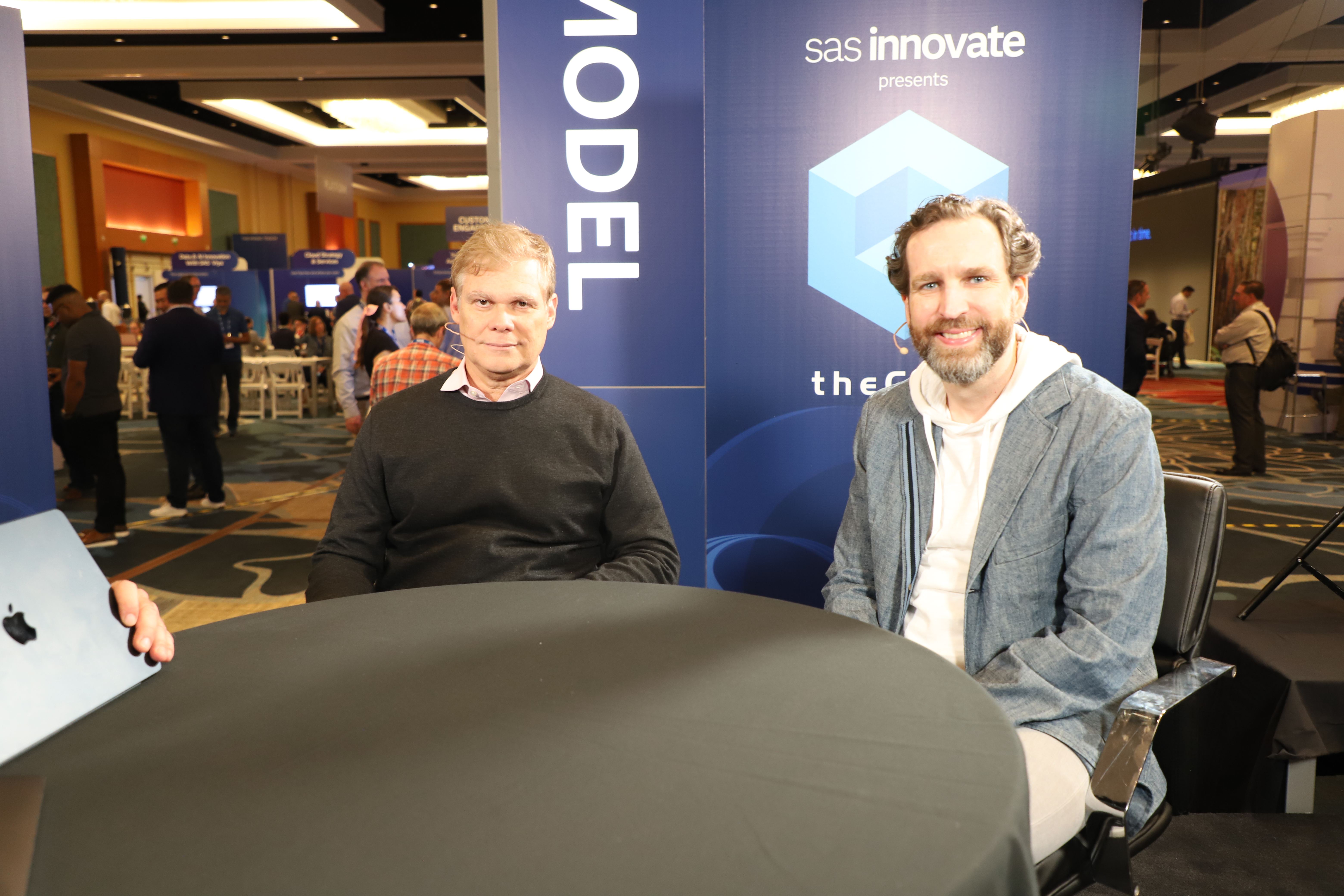
At SAS Innovate 2025, theCUBE’s Rebecca Knight and Scott Hebner sits down with Jared Peterson, senior vice president of research and development at SAS, and Eduardo Joia, chief technology officer and managing director for the financial services industry at Microsoft. The discussion explores how their partnership is evolving to push the boundaries of AI and tackle some of the most complex challenges facing today’s enterprises.
Peterson and Joia unpack key innovations showcased at the event, highlighting how decision intelligence is transforming business value. They spotlight tools such as Decision Builder, built on Microsoft Fabric, and the SAS Viya Workbench, platforms designed to unify data, models and rules to deliver real-time, AI-powered insights with precision and trust.
The conversation takes a look at emerging technologies such as Copilot and agentic AI. Joia explains how Microsoft is scaling productivity across its ecosystem while preparing for quantum innovations. Peterson illustrates how SAS is using AI to simplify complex decision flows in financial services, underscoring the practical impact of trusted, operationalized intelligence in the field.
Forgot Password
Almost there!
We just sent you a verification email. Please verify your account to gain access to
SAS Innovate 2025. If you don’t think you received an email check your
spam folder.
In order to sign in, enter the email address you used to registered for the event. Once completed, you will receive an email with a verification link. Open this link to automatically sign into the site.
Register For SAS Innovate 2025
Please fill out the information below. You will recieve an email with a verification link confirming your registration. Click the link to automatically sign into the site.
You’re almost there!
We just sent you a verification email. Please click the verification button in the email. Once your email address is verified, you will have full access to all event content for SAS Innovate 2025.
I want my badge and interests to be visible to all attendees.
Checking this box will display your presense on the attendees list, view your profile and allow other attendees to contact you via 1-1 chat. Read the Privacy Policy. At any time, you can choose to disable this preference.
Select your Interests!
add
Upload your photo
Uploading..
OR
Connect via Twitter
Connect via Linkedin
EDIT PASSWORD
Share
Forgot Password
Almost there!
We just sent you a verification email. Please verify your account to gain access to
SAS Innovate 2025. If you don’t think you received an email check your
spam folder.
In order to sign in, enter the email address you used to registered for the event. Once completed, you will receive an email with a verification link. Open this link to automatically sign into the site.
Sign in to gain access to SAS Innovate 2025
Please sign in with LinkedIn to continue to SAS Innovate 2025. Signing in with LinkedIn ensures a professional environment.
Are you sure you want to remove access rights for this user?
Details
Manage Access
email address
Community Invitation
Jared Peterson, SAS & Eduardo Joia, Microsoft
At SAS Innovate 2025, theCUBE’s Rebecca Knight and Scott Hebner sits down with Jared Peterson, senior vice president of research and development at SAS, and Eduardo Joia, chief technology officer and managing director for the financial services industry at Microsoft. The discussion explores how their partnership is evolving to push the boundaries of AI and tackle some of the most complex challenges facing today’s enterprises.
Peterson and Joia unpack key innovations showcased at the event, highlighting how decision intelligence is transforming business value. They spotlight tools such as Decision Builder, built on Microsoft Fabric, and the SAS Viya Workbench, platforms designed to unify data, models and rules to deliver real-time, AI-powered insights with precision and trust.
The conversation takes a look at emerging technologies such as Copilot and agentic AI. Joia explains how Microsoft is scaling productivity across its ecosystem while preparing for quantum innovations. Peterson illustrates how SAS is using AI to simplify complex decision flows in financial services, underscoring the practical impact of trusted, operationalized intelligence in the field.
CTO & Managing Director, Financial Services Industry for MicrosoftMicrosoft
Jared Peterson
SVP, RNDSAS
At SAS Innovate 2025, theCUBE’s Rebecca Knight and Scott Hebner sits down with Jared Peterson, senior vice president of research and development at SAS, and Eduardo Joia, chief technology officer and managing director for the financial services industry at Microsoft. The discussion explores how their partnership is evolving to push the boundaries of AI and tackle some of the most complex challenges facing today’s enterprises.
Peterson and Joia unpack key innovations showcased at the event, highlighting how decision intelligence is transforming business...Read more
exploreKeep Exploring
What is the name of the game today at SAS Innovate in Orlando, Florida?add
What are some details about the partnership between SAS and Microsoft and how has it benefited customers in the fast-evolving AI and data landscape?add
What are some common concerns that customers have when it comes to implementing AI technology and seeing real business value from it?add
What are two big things that customers are slowing down due to when it comes to decision-making agents and intelligence of decisions?add
>> Hello everyone and welcome back to theCUBE's live coverage of SAS Innovate here in Orlando, Florida. I'm your host, Rebecca Knight, sitting alongside my co-host and analyst, Scott Hebner. Scott, intelligent decisioning, that is the name of the game today.
Scott Hebner
>> It is, and as I pointed out earlier today, that theme came across very strongly in the keynote. Very well done how it tied everything together, and since I've been here, I've been checking out the booths and focusing in the trustworthy part of all this. A lot of good stuff here.
Rebecca Knight
>> A lot of good stuff-
Scott Hebner
>> A lot of good stuff.
Rebecca Knight
>> ... and we're going to get into it in this next segment. I would like to introduce our next guest. We have Eduardo Joia. He is the CTO and Managing Director of Financial Services Industry at Microsoft. Thank you so much for coming on the show, Eduardo.
Eduardo Joia
>> Welcome.
Rebecca Knight
>> And Jared Peterson, who has been busy on the main stage this morning-
Jared Peterson
>> That's right.
Rebecca Knight
>> ... SVP of Platform Engineering at SAS. Thank you both so much for coming on theCUBE.
Jared Peterson
>> Happy to be here. Yeah, awesome.
Rebecca Knight
>> So SAS and Microsoft have been partners for nearly five years. I want to start with you, Eduardo, and have you talk a little bit about how the relationship has grown and what it means for customers, particularly at a time when AI and data are moving at breakneck speeds.
Eduardo Joia
>> Well, we're great partners. We've been partners for five years. SAS and Microsoft, we have built this Decision Builder, which is part of the package. It sits within Fabric and it's another service that we have there, and basically as a platform, it enables you to have access to the 1800 LLM services that we have. So opens the door, creates a very powerful platform on top of which Jared here can build specialized products for their customer set.
Jared Peterson
>> I mean, when I think about the Microsoft and SAS partnership, first of all, we work just really, really well together. Our teams really, really enjoy working together. There's a lot of cross pollination. When you think about the partnership, you can think about it in phases. So first at SAS, we're just really big consumers of Azure, so we build a lot of our business on top of the Azure ecosystem and all the services there. But we also are partnered together of trying to, how do we actually sell Viya together? How do we take Viya into Microsoft accounts? How does Microsoft... how can they help our customers maybe if they're going through a cloud migration, that kind of thing. But from the R&D perspective, where I'm coming from, maybe the most exciting part of the partnership is where Eduardo just was, thinking about Decision Builder on Fabric, all of our co-engineering efforts together. So you've got Decision Builder on Fabric. We talked this morning about SAS Viya Workbench, how it started on AWS, but now is in private preview on Azure. We've done a lot of great work together via Copilot. We talked about that this morning. That's all built on top of Azure Open AI services, and so we're really just... Data Maker, which we also talked about. That's also on the Azure marketplace. So all these co-engineering efforts and just tons of great work happening together.
Scott Hebner
>> You guys have been doing decision intelligence for a long time, right, you're known for that.
Jared Peterson
>> Right.
Scott Hebner
>> And you do it really, really well.
Jared Peterson
>> That's right.
Scott Hebner
>> So by integrating into Microsoft Fabric, what is that bringing?
Jared Peterson
>> Yeah, yeah. It was interesting, Scott, when we looked at Fabric and we knew we wanted to do something with Microsoft in the Fabric space. You've got this notion of Fabric where they're bringing data, they're bringing compute to customer problems. When we looked at it, we felt like there was this opportunity where we have intelligent decisioning on the pure Viya side, and we felt like decisioning was something, there was a capability we could bring into the Fabric ecosystem that would truly be complementary to what Microsoft was already doing in Fabric. So intelligent decisioning, and now Decision Builder in Fabric is really all about that last mile of AI and analytics. It's like, okay, great, I've got data, I use that data to train a model. Fantastic, good results, but how do I actually take that model out into my enterprise? How do I surround it maybe with an ensemble it with other models or business rules? That last mile is really the, that's where you get into some of the tricky parts of actually getting to real value, real business value with AI and analytics. So yeah, we're excited about it.
Scott Hebner
>> And on the AI front, if there's anything, at least I've been learning is it's probably the ultimate team sport in high-tech, right?
Jared Peterson
>> Yeah.
Scott Hebner
>> You got to work together more than ever.
Jared Peterson
>> That's right.
Scott Hebner
>> So I'm assuming this partnership through the Fabric brings the ecosystem together too, right, more choice?
Eduardo Joia
>> So think of Fabric as being... Fabric was designed to be like what we call OneLake. So many organizations today as they grow, they have different data styles. So the issue that Fabric addresses is it lets the AI... AI is all about data. You have the right data, you're going to have a very powerful AI. So what Fabric does it connects out these different data styles and makes them available for you to use in AI. So it creates an abstraction layer. You don't have to worry if the data's in SharePoint or SQL or even on AWS or Google, it's there, you can consume it. Then on top of it, we provide this foundation and then we provide a larger language models, which we train with responsible AI, all of that. Then we make available to the gentleman here, and then his job is, he builds a platform on top of ours.
Jared Peterson
>> That's right. Yeah. So you see Fabric as this kind of horizontal capability or even just the world of Microsoft Services as a horizontal capability and then SAS. We're really interested, still a horizontal perspective, but we're instantiating the analytics life cycle on top of that or within all of that. Like how do you go from data to modeling to actually that last mile of deployment, decisioning, those kind of things.
Rebecca Knight
>> So can you explain to us through a real world use case-
Jared Peterson
>> Sure.
Rebecca Knight
>> ... about how customers are solving these problems more easily and how it's actually benefiting them in terms of their productivity, in terms of their bottom line, Eduardo?
Eduardo Joia
>> Well, we have what we Copilot, right? Which provides individual productivity at the personal level. So you have a Copilot within Office or within... now we have Copilot for Viya as well-
Jared Peterson
>> That's right.
Eduardo Joia
>> ... which I think it's in Preview, correct?
Jared Peterson
>> Yeah.
Eduardo Joia
>> That provides individual productivity. This is already in place. We're now moving to what we call agentic AI, where you have AI that can reason we itself. Think of two, three or four agents cooperating to address a business problem or resolve a solution. That's the next level. That's what we're focusing on in partnership with them. Agentic AI, I think it's the next big wave. Copilot's today, agentic AI tomorrow.
Jared Peterson
>> Yeah. And maybe some other just thoughts of practical real world examples. So if you take intelligent decisioning, which we were just talking about, and we think of intelligent decisioning as these decision flows really are your instantiating agents. Those agents know how to actually use models. They know how to use business rules to get to a business outcome. How does that get used in the real world? Well, lots of financial institutions all across the world use intelligent decision to make decisions about your credit card swipe and fraudulent transactions. So that's how you see these decision flows, these agents being instantiated into real world use cases. Those decision flows that it's really this visual programming palette of sort. You're building them in this drag and drop interface, and now you add Copilots on top of that and you make it just that much more accessible and productive.
Eduardo Joia
>> I think of Microsoft rules here as providing the framework for the agents, the different large language models that run responsibly, that are scalable at a global basis with a solid infrastructure that you can use with the computer and its storage, but it's not industry specific. The use cases really come from Jared here. He builds a use case for fraud, for instance, on top of the solid foundation we give him.
Jared Peterson
>> Yeah, well said.
Scott Hebner
>> Your experience now is in financial services, right-
Eduardo Joia
>> Correct.
Scott Hebner
>> ... up in New York? We've always said, if you can solve these kinds of problems in financial services, maybe life sciences, there's a very small number of industries where-
Eduardo Joia
>> Super regulated.
Scott Hebner
>> ... the velocity of all the decisions you have to make-
Jared Peterson
>> That's right.
Scott Hebner
>> ... the trust you have to have in them, the compliance.
Rebecca Knight
>> Highly regulated, yes.
Scott Hebner
>> Yeah, highly regulated.
Eduardo Joia
>> Sustainable, highly regulated, and without... with the right no bias, there's a lot of there, we call that responsible AI, and we build... That's another benefit we give to our friend here. We build the right guardrails in our LLMs to avoid prompt injection, which will be a bad actor trying to hijack the AI. So that guardrail, that framework which is necessary for regulating those financial services is what we make available.
Jared Peterson
>> Yeah, it's interesting. I love that you guys mentioned the notion of health and life sciences, financial services, AI, but in this secure regulatory environment. I think about our two companies, I know from the SAS perspective, we've been playing in those industries for years. So who's better positioned to be this intermediary translating like, this is what's happening in the market. This is where our customers demand, how can we bring all this together in a responsible way.
Eduardo Joia
>> In a responsible way, and scalable at a global level and safe, hacker-proof, blah, blah, blah, blah. You see what I mean?
Jared Peterson
>> Yeah.
Rebecca Knight
>> Absolutely.
Eduardo Joia
>> It's really a good partnership.
Rebecca Knight
>> I'm curious about what you would say sets this partnership apart. One of the things that really came through when you were talking early, when we started this conversation, Jared, is how much you enjoy working together, and there's so many... It seems like your cultures are similar and there's a lot of cross-pollination opportunities. As Scott said, this is a team sport. So I'm curious how you would describe this SAS/Microsoft partnership as uniquely positioned to bring this decisioning capability to customers.
Jared Peterson
>> Yeah, I think about... like I just mentioned think about you've got these two companies, they're both celebrating their 50-year anniversaries, right?
Rebecca Knight
>> They're the middle-aged of technology industry.
Scott Hebner
>> They're comfortable now.
Eduardo Joia
>> It's a comfortable
Jared Peterson
>> You've got this powerhouse on the desktop now, cloud computing, reinvigorated just this... it's super impressive engineering culture. Then on the SAS side, you've got, and I don't feel like this is an exaggeration, a company that in some ways created the whole space of big data, big data analytics, and now you're bringing all that together. And we really are... I do think it's a unique partnership. I meet with the Microsoft team all the time. They're in Cary, we're in Redmond. Our engineering teams are locked together. I mean, they work together, they scrum together, they develop together, code together, and Microsoft is very much invested in our future and we're very much invested in theirs.
Eduardo Joia
>> Those are two companies which really excel at what they do from a product point of view, very customer-centric. The cultures are very similar. It's a good match.
Scott Hebner
>> And highly trusted-
Jared Peterson
>> Yeah.
Eduardo Joia
>> And highly trusted.
Scott Hebner
>> ... and proven. I want to head just a little bit into the future where you guys are going to go here. So obviously we've been on this journey over a long period of time, descriptive analytics, then we get predictive and being prescriptive, and now we're moving into the world of AI decision intelligence, I think resets things a little bit, right?
Eduardo Joia
>> Yeah. 43
Scott Hebner
>> So I'm curious to where you see all that heading. I loved in the general session the unicorn sitting on the rainbow-
Eduardo Joia
>> Right, right.
Scott Hebner
>> ... because generative AI is correlation-based, right, is statistical probabilities. A prediction is not a judgment-
Eduardo Joia
>> Sure, yeah.
Scott Hebner
>> ... and you need judgments to make decisions. So I'm just curious to where SAS is heading in that direction. Then how you guys are going to partner because you're obviously doing a lot in that space too with agents, and where do you think this all heads?
Jared Peterson
>> Yeah, I mean, interesting question. As we were talking earlier, I mean, I think you think about things like causal AI, causal modeling that's an area where we've done a lot of research and have a lot of capabilities in the Viya platform already. I also think though, when you think about our partnership and where we're going together, I really think we're just getting started when it comes to the ways that generative AI can complement analytics and those kind of things. I also think when we partnered together, we talked about quantum on stage a lot this morning. That's an area already in our partnership that we're also exploring together because Microsoft has made a ton of investments in quantum. They'll continue exposing quantum through Azure services. That's another area where we're very much looking to work together and complement each other. So I don't... I mean, when we think about the future and seeing the future, I think the things that we're working on right now together are going to be the future.
Eduardo Joia
>> Yeah. I like to say, I get it, in two weeks I'm obsolete because within Microsoft... I got to tell you, it's amazing. We think and learn something. I'll prompt engineer, blah, blah. Nope, that's obsolete. We don't need to do that. We have an agent that do the prompt for another agent. So it's moving so fast.
Scott Hebner
>> It's .
Eduardo Joia
>> It's really hard to predict the future. What I can predict is that we're going to continue to work together that will be successful and that our customers are going to love it.
Scott Hebner
>> You're going to have a job but you're just going to have superpowers.
Eduardo Joia
>> Yeah.
Jared Peterson
>> And win the New York lottery that-
Scott Hebner
>> Then it doesn't matter does it?
Eduardo Joia
>> Then it doesn't matter, right?
Scott Hebner
>> Yeah.
Jared Peterson
>> Awesome.
Rebecca Knight
>> Well, things are moving so fast and companies are grappling with increasing volumes of data and the pressure to act quickly and to have these solutions. I'm curious to how you're helping them build these decision flows, but also making sure that they feel comfortable with what their concerns are and how you're helping them allay their concerns. So maybe I should say, what are the biggest concerns you're hearing from customers and how are you helping them overcome those concerns and hurdles.
Jared Peterson
>> Right, right. Yeah, I mean, so in no particular order. Concerns that we hear from customers, I often will have a variation of a conversation like this with a customer, which is, we've got a lot of internal POCs going on. We're spending a ton of money on all things AI, but we're struggling to actually recognize actual real business value. We got a lot of demos, a lot of fancy demos, but we're struggling to translate those into actual value in our business. So that's where I think when Viya comes to the table, we're trying to... we're bringing all these years of expertise of getting our customers through this prescribed, you start with data, you explore your data, you build your models, you deploy your models. That flow is very much focused at those exact concerns, right? Like, okay, is my data in the shape that I need it to be in for my models? When I train the models are the models, are they accurate? But not just accurate, do they have bias in them? Are they properly... are they fair? Okay, now I'm satisfied there. How do I govern those models? Because models decay, the world changes around us. Are the results still good? Then from a deployment perspective, can I monitor them? Can I see lineage? Can I understand where I started, where I ended? Bias really focuses all of those concerns, but I think the biggest one right now is people are trying to say, "Okay, this all looks cool." Back to the rainbow and the unicorns, how do I actually get to the real value? There is real value, and Microsoft, I think is really on the bleeding edge of, this is how transformative some of this can be. So there's real value, we're trying to help them get there.
Scott Hebner
>> And I know we're going to have to wrap up here in a second, but one last quick question, or maybe it's more of an observation that you can comment on. Just from all my conversations, two big things here. One is when it comes to decision-making agents, trust is the currency for the innovation.
Jared Peterson
>> That's right.
Scott Hebner
>> And people are only going to use these things if they trust them. You guys are both well-positioned individually and together to help drive that concern. I think the second thing is when you get into intelligence of decisions, it's always very domain-specific and nuanced markets. Not just within industries, but within very specific like legal case law, for example. You get very domain-specific, and you guys both are heavy-duty experts in different industries and the domains.
Jared Peterson
>> That's right.
Scott Hebner
>> You agree with that?
Eduardo Joia
>> Yeah, absolutely.
Scott Hebner
>> Yeah. I think those are the things that are getting customers to slow down a little bit. It's a trust issue and the decisions are very, I need to have domain expertise, my knowledge.
Jared Peterson
>> Scott, from the SAS perspective, I was actually having this conversation with somebody earlier. We really think about, between the market what's happening, our customers being this trusted partner of translating, okay, here's how you take this and actually get to real value. We've done that historically across the years, and we've done that in industries, in specific domains, and so we think that's where we can really, really bring some unique experience and it's great when we can do that, come to the table with a customer, with a partner like Microsoft.
Rebecca Knight
>> Terrific note to end on. Thank you so much, Jared and Eduardo. Great conversation.
Eduardo Joia
>> Thank you.
Jared Peterson
>> Pleasure to be here. Thanks for having us.
Rebecca Knight
>> I'm Rebecca Knight for Scott Hebner, stay tuned for more of theCUBE's live coverage of SAS Innovate 2025. You're watching theCUBE, the leader in enterprise tech news and analysis.









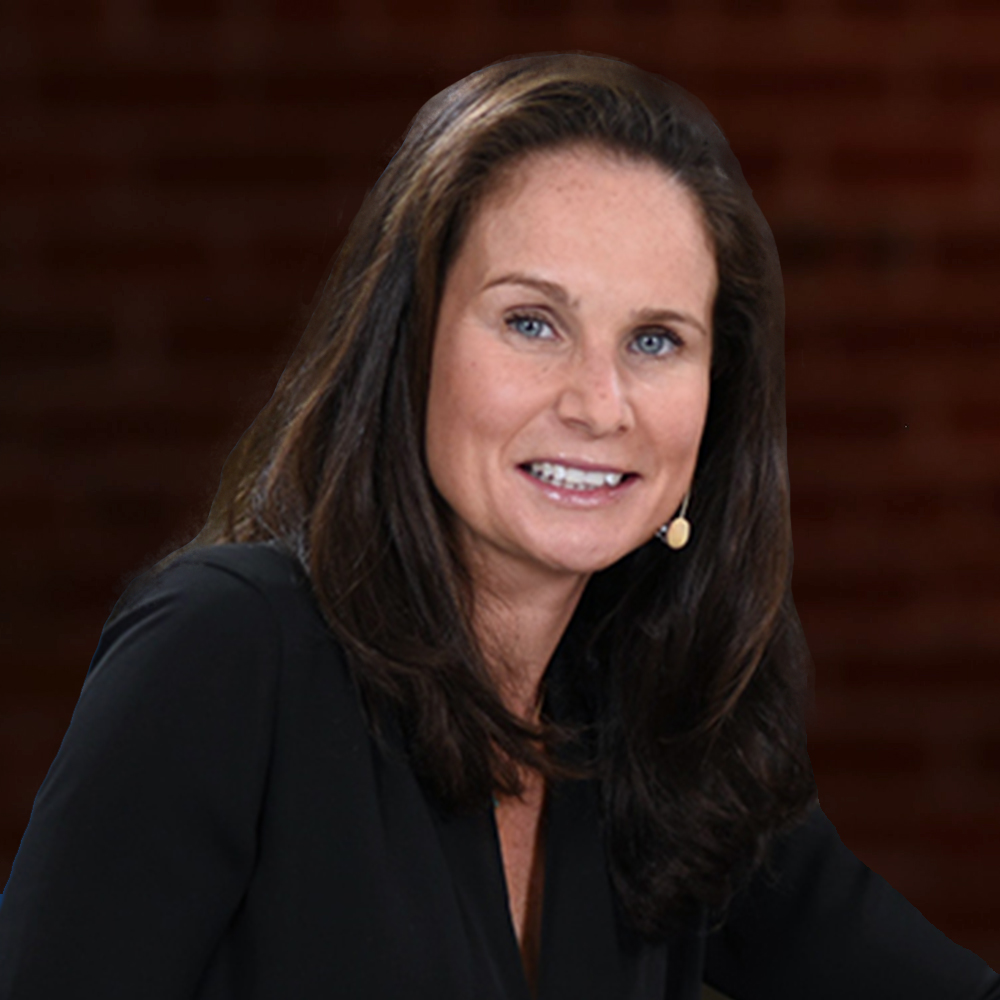 Rebecca Knight
 Scott Hebner