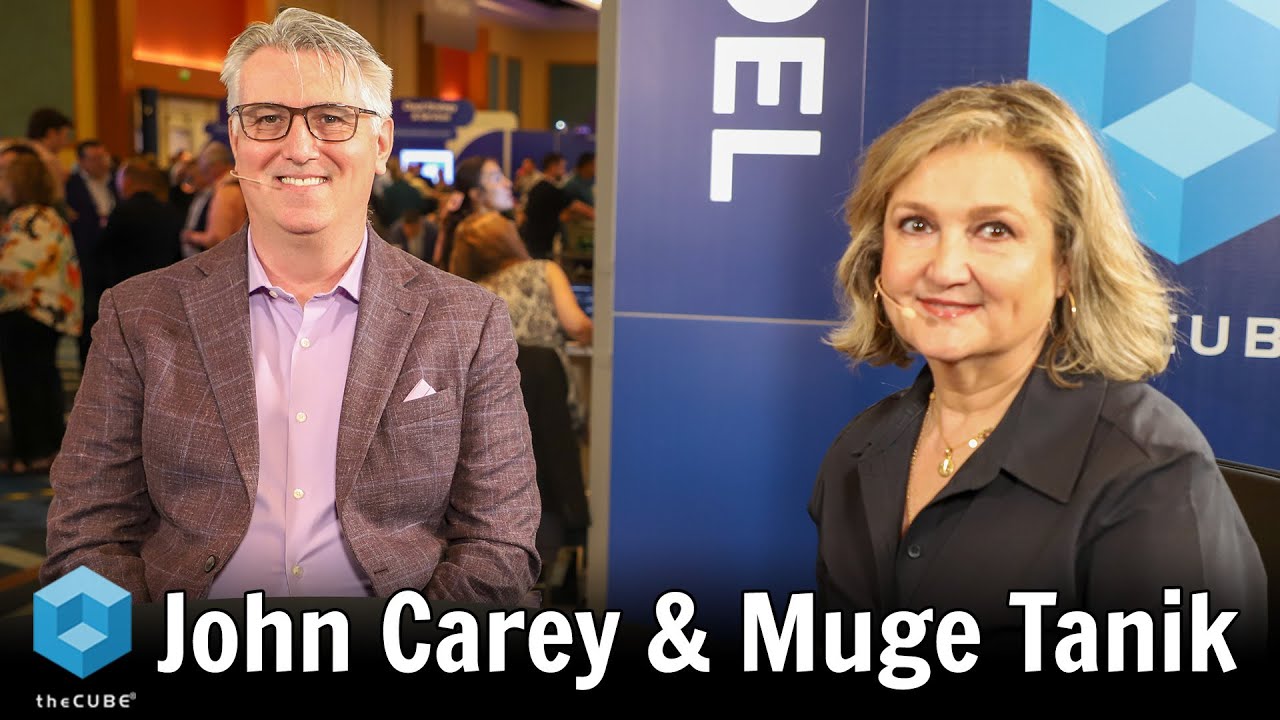
In this analyst wrap-up discussion at SAS Innovate, theCUBE’s Scott Hebner, Rebecca Knight and Paul Gillin reflect on the top technologies and takeaways from the event. The conversation highlights how SAS is integrating generative AI, agentic AI, digital twins and quantum computing into its Viya platform to address real-world challenges.
Hebner points to customer-centric innovation as a defining theme, with examples such as Procter & Gamble’s use of quantum computing, illustrating the practical value of applied AI. The analysts explore how SAS aligns advanced technologies with enterprise needs, delivering sophisticated capabilities without sacrificing usability.
The discussion also underscores SAS’s engineering-driven culture and 50-year legacy in data and analytics. According to Hebner, this foundation positions the company to lead in decision intelligence, especially as trust and transparency become central to the next phase of enterprise AI adoption.
Forgot Password
Almost there!
We just sent you a verification email. Please verify your account to gain access to
SAS Innovate 2025. If you don’t think you received an email check your
spam folder.
In order to sign in, enter the email address you used to registered for the event. Once completed, you will receive an email with a verification link. Open this link to automatically sign into the site.
Register For SAS Innovate 2025
Please fill out the information below. You will recieve an email with a verification link confirming your registration. Click the link to automatically sign into the site.
You’re almost there!
We just sent you a verification email. Please click the verification button in the email. Once your email address is verified, you will have full access to all event content for SAS Innovate 2025.
I want my badge and interests to be visible to all attendees.
Checking this box will display your presense on the attendees list, view your profile and allow other attendees to contact you via 1-1 chat. Read the Privacy Policy. At any time, you can choose to disable this preference.
Select your Interests!
add
Upload your photo
Uploading..
OR
Connect via Twitter
Connect via Linkedin
EDIT PASSWORD
Share
Forgot Password
Almost there!
We just sent you a verification email. Please verify your account to gain access to
SAS Innovate 2025. If you don’t think you received an email check your
spam folder.
In order to sign in, enter the email address you used to registered for the event. Once completed, you will receive an email with a verification link. Open this link to automatically sign into the site.
Sign in to gain access to SAS Innovate 2025
Please sign in with LinkedIn to continue to SAS Innovate 2025. Signing in with LinkedIn ensures a professional environment.
Are you sure you want to remove access rights for this user?
Details
Manage Access
email address
Community Invitation
Show Wrap
In this analyst wrap-up discussion at SAS Innovate, theCUBE’s Scott Hebner, Rebecca Knight and Paul Gillin reflect on the top technologies and takeaways from the event. The conversation highlights how SAS is integrating generative AI, agentic AI, digital twins and quantum computing into its Viya platform to address real-world challenges.
Hebner points to customer-centric innovation as a defining theme, with examples such as Procter & Gamble’s use of quantum computing, illustrating the practical value of applied AI. The analysts explore how SAS aligns advanced technologies with enterprise needs, delivering sophisticated capabilities without sacrificing usability.
The discussion also underscores SAS’s engineering-driven culture and 50-year legacy in data and analytics. According to Hebner, this foundation positions the company to lead in decision intelligence, especially as trust and transparency become central to the next phase of enterprise AI adoption.
In this analyst wrap-up discussion at SAS Innovate, theCUBE’s Scott Hebner, Rebecca Knight and Paul Gillin reflect on the top technologies and takeaways from the event. The conversation highlights how SAS is integrating generative AI, agentic AI, digital twins and quantum computing into its Viya platform to address real-world challenges.
Hebner points to customer-centric innovation as a defining theme, with examples such as Procter & Gamble’s use of quantum computing, illustrating the practical value of applied AI. The analysts explore how SAS aligns a...Read more
exploreKeep Exploring
What was your opinion on the integration of various technology components into SAS Viya?add
What were some of the key points discussed in the conversation with the CIO, Jay Upchurch, about composite AI and generative AI technology?add
What is the importance of governance, trust, transparency, and compliance in the approach of SAS, particularly in regards to their long history in the industry?add
What are the potential future implications of advancements in AI technology?add
>> Hello everyone. We are wrapping up one day of live coverage on theCUBE of SAS Innovate 2025. I'm your host, Rebecca Knight, sitting alongside my co-host and analyst, Paul Gillin, as well as my other co-host and analyst, Scott Hebner. Gentlemen, what a day we've had. We've had a brilliant keynote. We had media briefing just for us, not to mention the conversations we've had here on theCUBE as well as at the lunch and around the coffee table. What have we learned? What have we learned? Scott?
Scott Hebner
>> I think a lot of pieces came together. I thought they did a really nice job in telling a holistic picture and backed it with real technology and products. So they took generative AI and they took agents and agentic AI and they took digital twins and quantum AI and the whole notion of the underlying data engineering, I mean, they just tied it all together into Viya. And I think a lot of people are asking questions about these technologies, they're hearing about them, and this is really the first time I've seen it all come together in a very simple, customer-driven point of view. And it wasn't just the keynote, it was supported by all the conversations that we had throughout the day today. Good job.
Rebecca Knight
>> Yeah. Paul?
Paul Gillin
>> Well, I've been engaged with SAS at various levels for a long, long time. And one thing I've always respected about this company is it is an engineering-driven culture. And that was evident today. I thought the program, the topics, the speakers were very much focused on technology and what technology can do for their customers. It is not a marketing-driven agenda. And so, I learned a lot today. And frankly, I often don't learn much at these conferences, but I did today, I learned about what I didn't know about digital twins, about practical uses of quantum computing. They're really making this stuff work, and that's, I think, unique in the pantheon of trade shows.
Rebecca Knight
>> An engineering culture and an engineering themed show, but really grounded in practicality too and really showing you here's how this works. What were the most compelling use cases that you saw today in terms of either the digital twins or the quantum AI? What struck you?
Paul Gillin
>> The quantum example was eyeopening to me, the one they had this morning with a person from Procter and Gamble, describing how they have this massively complex problem with many different permutations and were able to apply quantum computing to cut the time to solution from six hours to 12 minutes. It's a technology that a lot of people aren't familiar with, that they don't really know how it works. Maybe P&G doesn't know how it works, but they're care is they got the results and the results were dramatic. And it was, really, one of the first examples I've seen of a practical application of quantum technology.
Rebecca Knight
>> Which is still kind of a mystery to me. I mean, you were talking about it way back in.
Paul Gillin
>> I still can't explain it. I don't know anyone who can.
Rebecca Knight
>> Something to wrap your brain around. How about you, Scott?
Scott Hebner
>> I would say that Georgia Pacific with the digital twin, and it wasn't just digital twins, it was digital twins infused with gaming technology. So it was what-if scenario, simulations of different approaches you can take to optimize the outcome, but it was done through a gaming interface essentially, so you can visualize it. And I think that's a brilliant partnership. I haven't seen many other companies that they're talking about bringing gaming technology into their simulation. Digital twin usually means a process digital twin, where they were turning it into simulations of what if with the gaming technology. So I thought that was really compelling.
Paul Gillin
>> Scott and I had an interesting interview about sports, about applications of analytics to sports, and really, that whole experience has been turned upside down by analytics. And you can see, it's kind of a use case of how do you model perfectly an organization and how an organization operates when you have tons, you collect tons of data and you apply analytical models to really figure out every possible scenario for how you should apply your resources? And that's something. I found that discussion fascinating.
Scott Hebner
>> Yeah. And that's another aspect of the holistic picture. They brought 5G into it and the innovations that's coming with that with Ericsson, right?
Paul Gillin
>> Yep.
Scott Hebner
>> And they tied it to their fan experience work, but that then tied to the digital twins. So everyone we talked to was just telling a different part of the holistic story. It's clear that SAS knows what they are about and what they're driving with their customers.
Paul Gillin
>> Now, how about you?
Rebecca Knight
>> Well, I was just going to say, I did the interview with the Georgia Pacific, and one of the points that one of the SAS executives said is, "We're making it more fun by gamifying all of this and making this part of the process." And he said, "That's shallow," but in fact, that's not shallow at all. If you are enjoying your work, if you are saying, "Oh, here's how I could do this. If I tweaked this," you're not only going to be more satisfied in your job, you're going to be a better colleague and a better employee, you're going to stay more loyal to your employer. So this is really important. And I think that a lot of the technologists of the future will, not only want to see these kinds of tools and demand them, but they'll also expect this level of fun in their work because that's what they want in their personal life too.
Paul Gillin
>> The GP demo was funny because they actually had an avatar of a person as part of the demo and the person was doing jumping jacks and was lying down on the equipment. It was fun.
Rebecca Knight
>> Right. Right.
Scott Hebner
>> What's the old adage? A picture's worth a thousand words. And this ties back to the whole trust issue, right? If people are really going to use AI, they need to be able to understand why it's recommending something, be able to explain it. And now they're adding the visual element to it, which is like a gaming experience, but it's visual so you can actually see the effects of what may happen and what... Yeah, I mean, it's just, again, bringing it all together into a very, I think, differentiated story for AI.
Paul Gillin
>> Another thing that struck me this morning was when they kicked off the speech, the CTO almost dismissed generative AI out of the box.
Rebecca Knight
>> Right.
Paul Gillin
>> And I thought maybe we've reached a turning point where we're realizing that this was a shiny new object, it's kind of run its course now, we've figured out what it's good for and it's not good for a lot of things. So they're past that, they're trying to move on, and I think that's good.
I think the industry as a whole needs to get... The industry as a whole has been paralyzed for the last two years by genAI. Everybody's got to have a genAI story, and so, companies have been scrambling to try to come up with their own take on it. I think what SAS was saying is that's just part of the puzzle, there's a lot more potential here in different kinds of AI and let's move past the shiny object.
Rebecca Knight
>> Link up with us and we'll show you that. Yeah.
Scott Hebner
>> One of the conversations that Paul and I had was with the CIO, Jay Upchurch, and we were talking about composite AI. And what's interesting about his job is he's the CIO for SAS, but he also helps to host the environments for customers. So he's actually involved with real customers, not just SAS. And he was telling a great story about how you have to take all these different technologies and sort them out and use them together. And generative AI was more of a foundational technology, good at a few key things, but it's really how you build around and on top of that generative AI model. And that's what he was saying, right? We're just in the infancy of all this AI. The next phase of AI is really about decision intelligence, SAS has a huge history to build on that with.
Paul Gillin
>> I think what generative AI has done is redefine the user interface. So we're getting away from menus and the sort of clunky way we've interacted with computers in the past and we're moving to our conversational, and that's fantastic. I mean, that's a big jump in productivity.
Rebecca Knight
>> Especially for non-techies that are able to use English as my programming language.
Scott Hebner
>> Well, as you guys know, one of the areas I'm focusing my research on is AI decision intelligence. And we were talking to Jared Peterson when he brought up causal AI, it's AI that understands cause and effect. That really struck me because I'm a huge proponent of that because prediction is not a judgment, you need to make judgments, judgments are based on cause and effect. You kind of put all the pieces together here. That's part of this composite AI story is you don't do everything with causal AI, but it's part of the puzzle pieces that you build off generative AI on. And so, again, a lot of things that people are hearing about out there, they just brought together and make sense, it's all part of Viya.
Rebecca Knight
>> Another big element of a lot of our conversations today centered around governance and trust and transparency and compliance. Obviously, SAS has a real story to tell here. What's your take on their approach to it in terms of how they... It starts even before you start coding, that's what Reggie Townsend said up on the main stage.
Scott Hebner
>> I would say the company's been around 50 years.
Rebecca Knight
>> Middle age. Middle age. Middle age.
Scott Hebner
>> Yeah. Yeah. Yeah. And they're anchored in data and decision making. It used to be descriptive kind of analytics, and then it was predictive, and then it was prescriptive. So they've always dealt with data, and therefore, decisions. And you have to have trust if you're a provider of that. So anyone that has been thriving for 50 years, I think, takes trust, governance, all the regulatory compliance, privacy. I mean, all that stuff is always a concern from a customer perspective, so they have a rich history in it. And I thought, again, it was weaved through everything they talked about today, trust, trust, trust. You walk into this hall and the thing right in front of you, the sign is trustworthy AI. I think they're all over that.
Rebecca Knight
>> Yeah.
Paul Gillin
>> Yeah. It's important that Reggie Townsend, whose title is Vice President of Data ethics Practice at SAS, was front and center, not only in the keynote, but in the media briefing today. I think they're trying to send a message that this trust issue is paramount, it's the number one factor that's holding back broader adoption of AI. And arguably, the trust problem could be getting worse. And they, I think, understand that it's an impediment to their business. If their customers don't trust AI, it's not good for SAS, so they're trying to make this a front and center issue.
Scott Hebner
>> Yeah, I mean, with generative AI, if you're using it for what it's good for, which is automating tasks, identifying patterns, anomalies, generating content, that's kind of low risk stuff, it's for an individual, it's not going to sink your business. When you start using AI to actually make decisions, which means you're using your data and you have to be accountable for those decisions that could affect bottom line, trust goes from kind of nice to have to an absolute necessity. It really is the currency of innovation going forward. And so, they're in a good position to build on that just given their history.
Rebecca Knight
>> What do you think about the fact that they are 50 years old? I mean, if they were a human, they'd be getting their AARP card right about now. At a time where we are surrounded by a lot of AI characters in the news and who are trying to maybe shove their vision of AI down our throats in a lot of ways, the maturity of a company like SAS, and you'd put Microsoft and Intel, other older companies in that same category, how do you think that their maturity affects their approach and their worldview and their perspective and the products they therefore produce?
Paul Gillin
>> Well, being old has never been a virtue in this industry, as you know.
Rebecca Knight
>> That's right. That's what I mean.
Paul Gillin
>> On the other hand, Microsoft is 50 years old, so there are accomplished companies that a track record is important, and as this industry matures, I think track record becomes a more important issue. Like I said, this has always been an engineering-driven company. I think it's always given SAS more credibility than the typical vendor that it goes back to Jim Goodnight and his co-founder who were over college professors who founded this company, very focused on facts and supporting decisions. It's a well-grounded company and I think they're in a good position to lead in that respect.
Scott Hebner
>> Yeah, I mean, I go back to the word you used Rebecca, which was practical, which to me equates to learning from history. If you're in this industry long enough, you start seeing the same movie over and over again, just different characters. And there's a lot to be said about learning from the past, what works, what doesn't work, how to not to get ahead of yourself in technology ramp ups, and there's a lot to be said for that, right? Two is, I think, you build a customer base that you serve well over a long period of time, and clearly, haven't had defections from that customer base. And I think you feed off of the innovation and the success of your customers. And then, the other thing I noticed with them too is they do bring in a lot of new talent. In fact, the lady that you guys talked to on quantum, I think she's only been at SAS-
Paul Gillin
>> Four months. Four months. Yeah.
Scott Hebner
>> Yeah, four months, right? And-
Rebecca Knight
>> Good hire.
Scott Hebner
>> Yeah, very good hire. She was really, really sharp on a very complex topic like quantum, right? So they're bringing in new talent. My experiences at IBM where hundred-something years, a hundred, but they keep reinventing themselves, and this is what SAS reminds me of that. They have this ability to keep reinventing themselves, and that comes from history and a customer base and learning the lessons of what works and what doesn't work, which goes to your word practical. They weren't hype. This was not a hype-based conference. It was very productive and practical, and here's how you kind of move down this path.
Rebecca Knight
>> We have time for one last question that I want to ask you both what you asked of Jay Upchurch, the CIO, and that is, it is 2028, we're at SAS Innovate 2028, what are we talking about? What are the conversations that we're having here on theCUBE? Because we will certainly be here. And they're going to be talking about in the main stage.
Paul Gillin
>> We'll still be talking about AI. We're just going to be talking about practical applications of AI, probably new types of AI that we don't even-
Rebecca Knight
>> Can't even conceive of yet.
Paul Gillin
>> ... don't even conceive of now. But this is like when the internet hit, I still remember the first time I saw a web browser in 1994, when the internet hit, that dominated the discussion of the industry for 20 years, and I think we're going to see the same thing happen here.
Rebecca Knight
>> Okay.
Scott Hebner
>> I think we're going to go from technology to digital labor, digital workforces, everyone has their own assistants that are skilled in what they're skilled in. And I don't buy into this whole notion that AI is going to replace everybody, I think it's going to give people superpowers, it's going to make them love their jobs more. And I think we're going to talk about digital labor. You asked one of the key questions, I think it was to Jay, about, well, we haven't heard about robotics. When you talk about digital labor, right now, we're talking about to help you make better decisions on what insurance claims to accept and what blah, blah, blah, blah, it's more knowledge work, but you can easily see that, in three years, starting to be more physical on manufacturing plants or someone who's letting the kids across the street in front of the school. I mean, they're robots, right?
Paul Gillin
>> Yeah.
Scott Hebner
>> Three years from now, just think about it, genAI has been around for... What? ... two and a half years, and look how far we've come. And three years, Jay was right, three years is a long time to think about.
Rebecca Knight
>> Kind of mind-blowing. Well, gentlemen, this has been an absolute pleasure. I've really enjoyed working with you both today.
Paul Gillin
>> And you.
Scott Hebner
>> You too. Been great.
Rebecca Knight
>> Thank you. I am Rebecca Knight for Paul Gillin and Scott Hebner. This wraps up our coverage of theCUBE's coverage of SAS Innovate 2025. We will catch you next time. I want to thank our crew, Anderson, Alex, Colin, and Andrew. I've got everyone, right? Yes. Thank you so much for tuning in. You have been watching theCUBE, the leader in enterprise tech news and analysis.