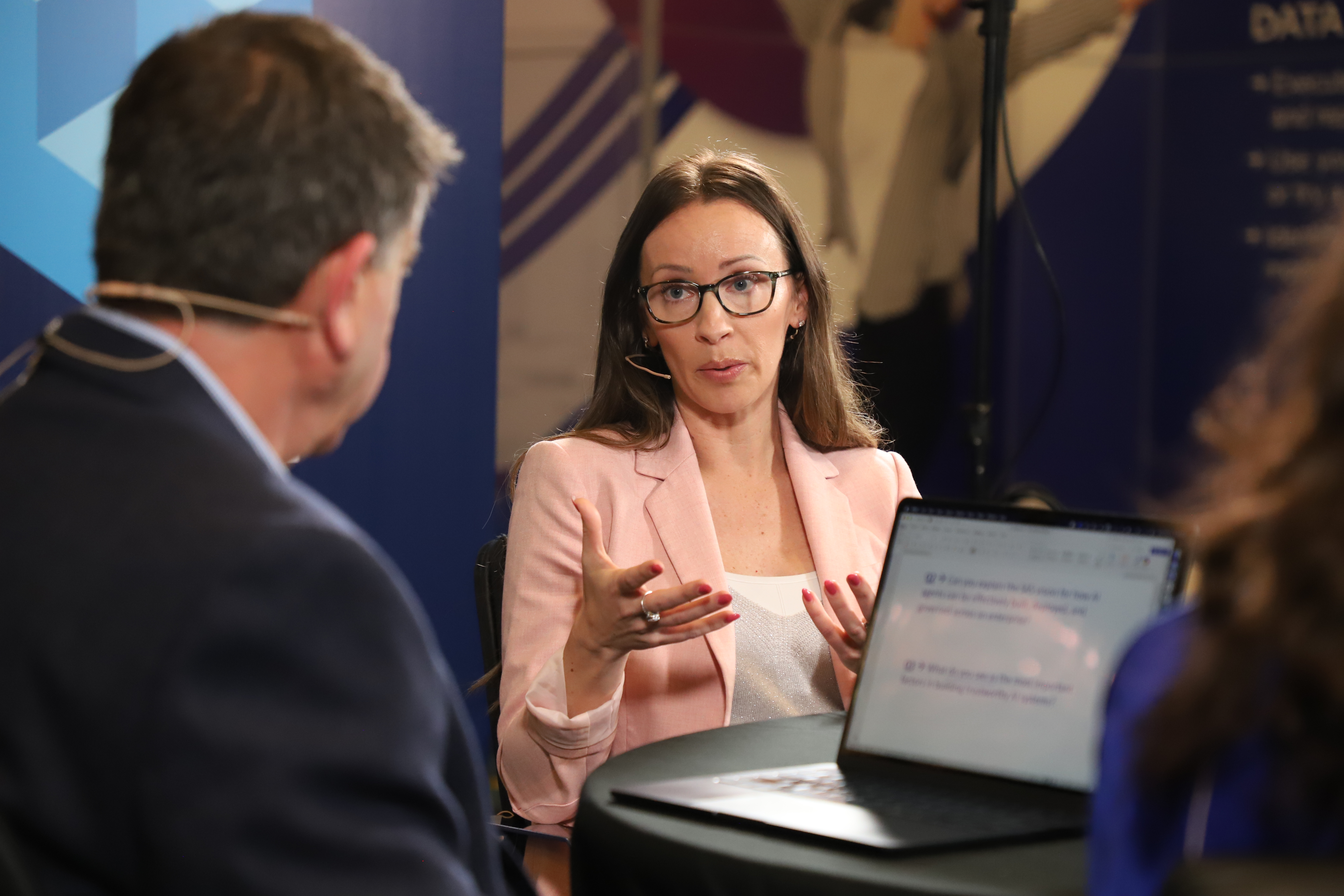
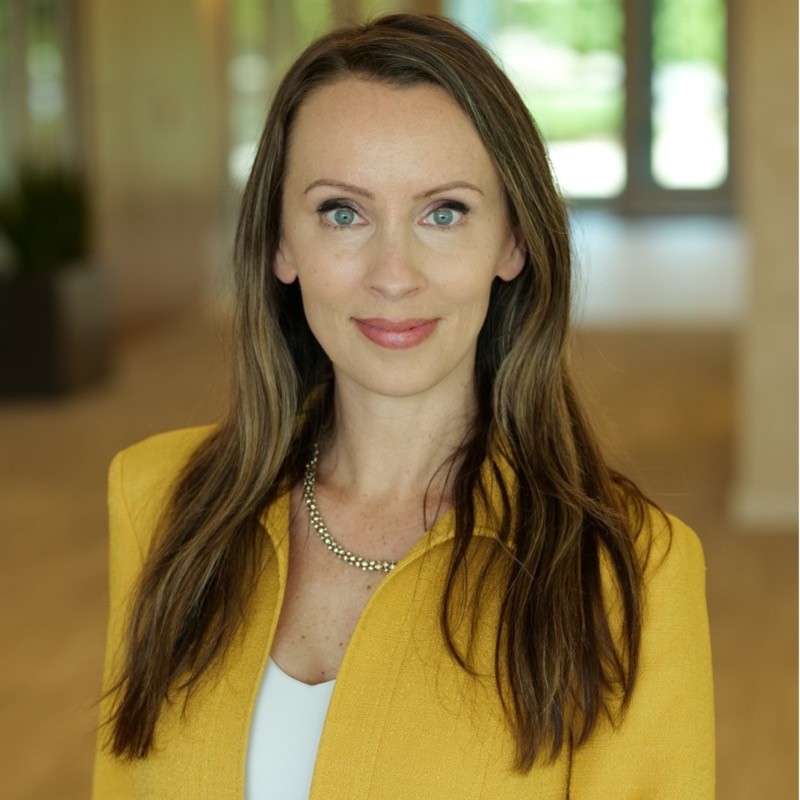
Alice McClure, senior director of product marketing at SAS Institute, joins theCUBE’s Scott Hebner and Rebecca Knight at SAS Innovate 2025 to explore the role of agentic AI in decision-making. The conversation focuses on how SAS is helping enterprises balance autonomy, governance and human oversight in AI systems.
McClure outlines the company’s three-pillar approach: AI assistance, decisioning and prebuilt models, as a way to scale AI with trust. She also discusses the importance of traceability and aligning AI tools with business goals.
With a focus on real-world outcomes, McClure emphasizes how SAS supports responsible AI adoption across industries. The session highlights both the promise and responsibility of building AI that works for people, not just processes.
Forgot Password
Almost there!
We just sent you a verification email. Please verify your account to gain access to
SAS Innovate 2025. If you don’t think you received an email check your
spam folder.
In order to sign in, enter the email address you used to registered for the event. Once completed, you will receive an email with a verification link. Open this link to automatically sign into the site.
Register For SAS Innovate 2025
Please fill out the information below. You will recieve an email with a verification link confirming your registration. Click the link to automatically sign into the site.
You’re almost there!
We just sent you a verification email. Please click the verification button in the email. Once your email address is verified, you will have full access to all event content for SAS Innovate 2025.
I want my badge and interests to be visible to all attendees.
Checking this box will display your presense on the attendees list, view your profile and allow other attendees to contact you via 1-1 chat. Read the Privacy Policy. At any time, you can choose to disable this preference.
Select your Interests!
add
Upload your photo
Uploading..
OR
Connect via Twitter
Connect via Linkedin
EDIT PASSWORD
Share
Forgot Password
Almost there!
We just sent you a verification email. Please verify your account to gain access to
SAS Innovate 2025. If you don’t think you received an email check your
spam folder.
In order to sign in, enter the email address you used to registered for the event. Once completed, you will receive an email with a verification link. Open this link to automatically sign into the site.
Sign in to gain access to SAS Innovate 2025
Please sign in with LinkedIn to continue to SAS Innovate 2025. Signing in with LinkedIn ensures a professional environment.
Are you sure you want to remove access rights for this user?
Details
Manage Access
email address
Community Invitation
Alice McClure, SAS
Alice McClure, senior director of product marketing at SAS Institute, joins theCUBE’s Scott Hebner and Rebecca Knight at SAS Innovate 2025 to explore the role of agentic AI in decision-making. The conversation focuses on how SAS is helping enterprises balance autonomy, governance and human oversight in AI systems.
McClure outlines the company’s three-pillar approach: AI assistance, decisioning and prebuilt models, as a way to scale AI with trust. She also discusses the importance of traceability and aligning AI tools with business goals.
With a focus on real-world outcomes, McClure emphasizes how SAS supports responsible AI adoption across industries. The session highlights both the promise and responsibility of building AI that works for people, not just processes.
Alice McClure, senior director of product marketing at SAS Institute, joins theCUBE’s Scott Hebner and Rebecca Knight at SAS Innovate 2025 to explore the role of agentic AI in decision-making. The conversation focuses on how SAS is helping enterprises balance autonomy, governance and human oversight in AI systems.
McClure outlines the company’s three-pillar approach: AI assistance, decisioning and prebuilt models, as a way to scale AI with trust. She also discusses the importance of traceability and aligning AI tools with business goals.
>> Good afternoon everyone, and welcome back to The Cube's Live coverage of SaaS Innovate 2025 here in Orlando. I'm your host, Rebecca Knight, and I'm sitting alongside my co-host and analyst, Scott Hubner. Welcome, Scott. Thank you. Great to be working with you. Absolutely. The tech industry is big, but it's also a small world that you, you've been in this industry a long time. You're running into all sorts of people you've known from past jobs, past lives. >> I am like tons of 'em. Including someone who's in somebody up. >> Exactly. With that, I would like to welcome our next guest, Alice McClure, senior Director, product marketing at SaaS. Thank, thank you so much for coming on. Thank you. Thank >> You. >> Both worked together at a, at a former >> Empire. Yes. Yes. This is a huge treat to see. Scott, it's been a little while, so, so this is awesome to be able to chat with you. You >> Did say I didn't age a bit. Oh, >> Not a bit. Yeah. And you wanted to make sure I caught that. You wanted to make sure that that came, that got on camera too, that on >> Record. >> Put put it into the ledger for the >> Rest of the time. That will be your lower third. Exactly. Love it. Aged a bit. So Alice, you lead product strategy here at SaaS, so why don't you start by walking us through SAS's, long track record with decisioning and how it's evolved with Agentic AI and the work you're doing today. Sure. >> Yeah, I'd love to. I, I have to tell you, the AG agent AI space is a bit of, it's a bit of a bread and butter space for us. And yes, there's a long track record and we've been doing this for years and years, perhaps not calling it AG Agent ai, but the decisioning space is, is definitely a bread and butter. And, you know, if you, I, if I take a step back and I think about the market on whole, and I think about, well, the hype around agen ai, what, what, what's really driving it the most? And there's lots of drivers of course, but I, I think one big aspect of it is the autonomy of the agents themselves and the, the fear in the system around that autonomy. And that autonomy can be very good and very useful for certain use cases, the personal productivity use cases, right? Even outside of the enterprise, you're looking at, you know, personal assistance. You're looking at schedulers, you're looking at shopping bots, and we love these things, right? These are great in many respects, but as you look to the enterprise, of course, it starts to become a conversation around governance, around the traceability of decisions around the auditability of what these agents are doing and being able to trace it back to the original data that informed it all. So it's a big conversation, and again, one that we've been involved with for many years. I, when we look at, when we look at the macro audience of who we're targeting here, it's really the builders and buyers of AI ultimately. So you think about the builders, they, they're, they need to be personally productive. They're, the teams that they work on need to be personally productive. The buyers need to be able to address very complicated business cases and address very complex, ultimately outcomes that they're looking to achieve. And so it's those two audiences that ultimately are agentic AI strategy is really all about and making sure that we're serving them with the right tools and the right solutions. >> Yeah. Well you, you mentioned that AI agents or Gentech AI means a lot of different things to a lot of different people. Then from a SaaS perspective, you have AI assistance that people have become accustomed to. They're built on gen ai, now you have the rise of AI agents that a lot of people are just trying to figure out like what that is. And then of course, egen systems. How would you sort of simplify that for people on the >> Absolutely. You know, and, and you almost, you said it, you summarized it very well in terms of, we, we do think about it like a three pillar strategy ultimately, and it does start with AI assistance and yes, it's, it's more generative in nature, but it's all about helping people to do work in our software. So whether they're, they're executing code and we can help them to, to develop that code, ultimately to explain the code as well. And then also building model pipelines within the Safi platform. So there's these via copilots that yes, are generative in nature, pulling in LLMs, of course, that builders of ai, those assistants are so important. But moving into the really core agen space around decisioning is, you know, the building, the deployment and the governance of agents and enabling that to happen and enabling that to happen, of course, in a low code, no code mechanism where you're able to bring in business rules, you're able to bring in the workflow, the path to decisioning, and you're able to bring in both deterministic and non-deterministic models into the mix and be able to track the path of that decision and govern it along the way and have lineage all the way back again to where you started with the data. And then the third aspect of this, there's a lot, we've got a lot going on, is the package agents. So, you know, pre-packaged, pre-built models and agents, and those are very use case specific of course. And they really are meant to address those very targeted and, and narrow situations that either run off of our platform directly or off of our software and solutions, or they can be standalone in nature as well. >> Alice, let's talk about trust, because as Scott often says, no one's gonna use these things if they don't trust them. This is a big part of conversations around ai, particularly at a time when AI is becoming more powerful and hallucinations are getting worse. From your perspective, what are the most important factors in building AI systems that organizations and, and users can actually rely on? >> A hundred percent. It, you know, it goes back, I I will say a lot of what we do around AI ultimately does go back to decisioning. And for us, certainly as we build our software, we have all sorts of mechanisms in place. We have our data ethics practice that, you know, when we build software in and of ourselves, that is a, a hugely governed process of course. But when we look at the decisioning process for our customers, that that process in and of itself is truly the governing mechanism to where you're putting the decision flow into place. You're pulling in the different types of models that you have already championed through using the VIA platform and part of our model management systems, you're pulling that decision together. And that in and of itself is a governing mechanism to where you can continue to have the lineage and the traceability of those decisions and see them happening in real time and see the path to decision, see how things are flowing, make sure that you are building in a learning mechanism as you go to where you know that you're going to need to tweak that decision flow and those models at some juncture, you need to be able to go and look at those models. And we have a mechanism to do that by way of using model cards, where at any point in time you can go in and take a look at the model and almost we, we call it like a nutrition label for your model. You can see the health of it, you really can. And, and it's those types of mechanisms that are so important to constantly be aware of ultimately the health of your decisions and the health of those agents therein. >> Yeah. You know, you think about digital labor, digital coworkers, you know, they're designed to give people humans, you know, superpowers, right? And I, you know, the trust thing in, in my view, has two sides to the coin. One is the explainability, the understandability, you know, I trust this thing in the sense of the integrity of it, right? And it's my, it's my coworker, right? Very smart one too. The other side of the coin, which I think you got you touched on a couple minutes ago, is if you are working, you're generally working in some very specific domain. I'm doing legal contracts, I'm doing CRM, I'm doing, you know, labeling of, you know, drugs at a, at a pharmacy. I'm doing something very domain specific, which also is in an industry, right? And so you have to have decisions that really understand your domain. And I think with your models and your prebuilt agents, you're tackling that, right? >> That that is a huge part of what we're tackling. You know, we, SaaS is really our foundational go to market, certainly is with our core technology, but our, our industry lens of it all and the expertise that we bring to bear there is something that SaaS has been known of for decades. And so taking that expertise and that experience with our customers and being able to package that in a pre prepackaged, ready to deploy model or, or agent if you will, that is where we really saw a major opportunity and demand from our customers to be able to do just that. So it is very specific to, you know, medication adherence or a payment integrity document analysis certainly is, is one of the example models as well. Very narrow, very specific, and right up our alley with the engagements that we've been having with customers for years and years. >> How do you make sure that your AI agents are aligned with business goals? A particularly at a time when there is a tremendous amount of uncertainty in the business environment, new strategies, market shift tariffs. How do you make sure that, that the agents are aligned? Yeah, >> I, I get this question a lot actually when, and it, it's usually on the more negative side of the coin, which is how do we make sure that things don't get out of alignment? And it's, it can be very fear-based in that way. And I certainly understand that it, it's what the decisioning, it's what decision intelligence is all about, is about setting up the business rules, incorporating the LLMs, prepping the data, running the champion models, pulling the right models into that decision process and aligning the totality of that flow with the associated business goal that you have. That's what decision intelligence is all about. And yes, the incorporation be able to build agents as part of that and to be able to deploy them and govern that is, is even more of a benefit, frankly. But if you don't have decision intelligence and you are a little bit more arbitrarily deploying agents across your business that have, you know, kind of a narrow application, if the human isn't in the loop, obviously that can lead to a lot of concerns. So we definitely recommend that humans be, take a really a hybrid approach, but recommend that more often than not, you know, humans do need to be in the loop, right? In some way, shape, or form. So I, to answer your question, it's, it's really, it's what decisioning is all about is setting yourself up in direct alignment with those goals and then building the process and business roles to ultimately help you get there. >> You touched on the human in the loop, the human not in the loop. In the keynote this morning, you had three dimensions, right? Yeah. You had governance and trust, alright then, then you had decisions, which is what this is all about. See, you talked about those two things. What about the human in the loop versus not having the human in the loop, but how do you, how do you balance that? >> Absolutely. You were paying attention, like, you know what >> I what taking copious notes. Yeah. Yes. >> Yeah. How do you balance that? So in, you know, I suppose I could use an example perhaps if you, one of the examples that was shared on the main stage was all about home loan and the loan application process and where can you inject agents along the way as you step through that process. And it's, it's a potentially a very complicated process that could be fraught with error bias and bias. Yes. Depending on, depending on the models you're using and how those models have been trained. So, you know, you can look at the upfront process for example, and say, okay, maybe there's an initial agent that can be deployed where the human is is maybe less in the loop. That is the initial review of that application. But then from there, my goodness, that human has got to become part of that process to check for some of those disastrous things that can potentially do potentially happen as, as we saw the statistics that Brian was going through accident. It happens. And so the checks imbalances along with the software, along with the automation of it all, looking at those processes and ultimately determine what's right. And the agents that you employ that do have the human in the loop being specific, being very clear about what's the role that you want the human to play. And when I think it's nice to say, oh, the human will be in the loop and they'll, they'll pause and we'll check things and, but to be clear about the role of the agent, the role of the human is part of, I think a very important aspect of the design process of these agents to be clear and concise as we go. >> Yeah, I imagine the more you trust the agent, the more it proves itself, the more you can unleash it to be autonomous. Yeah. So you're touching on Yeah, they make decisions. We, you know, you govern them to create trust and then the more autonomous they become, the more valuable they are. Right. The enterprise, but you have to trust them first and that unleashes them. Yeah. You're, you're addressing all three dimensions of an agent, so it's great. >> So how do organizations get started, especially at a time where they're under a lot of pressure to, to, to implement AI and they're excited about the potential of tapping into agent ai. What, what do you recommend as a practical first step and how to start >> Generally speaking? I would say start with what, you know, start with your domain expertise. Start with a problem that is sizable enough to be important, but don't, you know, don't shoot for the moon, don't shoot for the stars just yet. Start with something tactical where you can prove the success and you learn a couple lessons along the way and then grow. I mean, it's just like any, probably basic life and advice, but start, try to get some of those initial successes under your belt. Keep humans in the loop. No doubt. As you expand, you can start to have a better idea of where some of that more complete autonomy can be. But again, I, if it's, it's general advice and it depends certainly on the situation the customer's needs and use cases, but I think that that's probably the safe way to go, the logical way to go to where you can build on those successes, get the incremental budget that you may need to build on that in the future, but you're gonna wanna have a couple wins under your belt. Yeah. To start >> With some points on the board, then you start to grow, grow from there. And just for clarity, the place to get started with SaaS is via, there's not some new product that you're building that capability in. It's the same thing people are used to. It's just now has Genta capabilities and infused >> It. It's that bread and butter. Yeah, it's SAS via, which has been in market for years and years and, and the intelligent decisioning application that is core to the SAS via platform, which we've also had in market for years and years. Yes. That's, that is really the place to start. And, and we also talked about the prepackaged models as well. That is, that is separate outside of intelligent decisioning and via, but it's directly aligned in terms of a lot of those models run directly off Avaya. >> Last question, future oriented. What is exciting you most about this space in terms of where AI is headed and for enterprises? >> Very quiet. I am excited. I'm excited for the fear to get out of the system a bit more. I'm excited to see customers winning with agent deployments. I'm excited for us to, for the market in general, to have a level of confidence and feel empowered around these kinds of decisions and building these kinds of decisions. So that I, that's what I look forward to is I think everyone's kind of settling into this and if thinking about this from a decisioning perspective, which helps you think about it more holistically versus I think just here, autonomous agents that are a bit of a one off kind of strategy. >> Excellent, excellent. So some cautious optimism is what we want more of. Alice, thank you so much for coming on the Cuba great conversation. Thank you. >> Thank you very much. I'm >> Rebecca Knight for Scott Hubner. Stay tuned for more of the Cube's live coverage of SaaS Innovate 2025. You're watching the Cube, the leader in enterprise tech news and analysis.