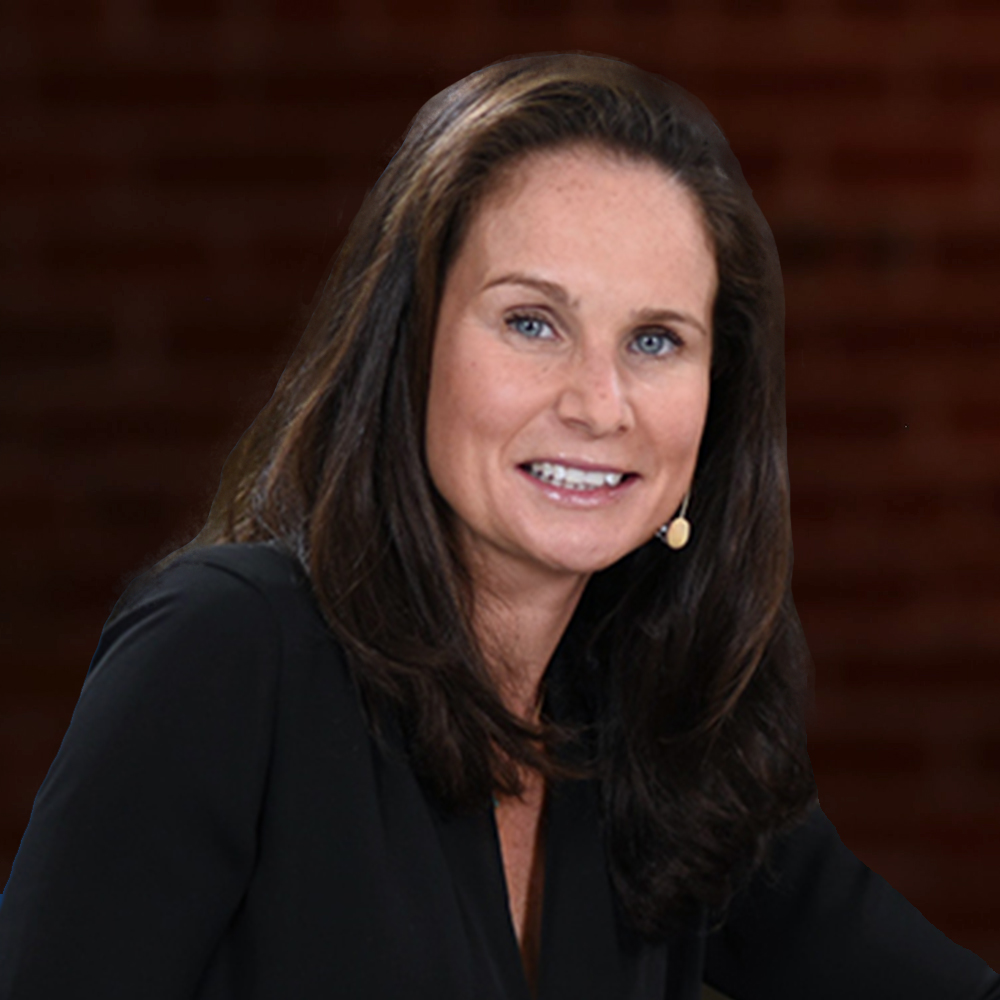
Amy Stout, principal product manager for quantum computing at SAS Institute, joins theCUBE’s Rebecca Knight and Paul Gillin at SAS Innovate to discuss global interest in quantum AI and what it means for enterprise strategy. The conversation draws on recent SAS survey findings, revealing both rising enthusiasm and the key hurdles facing adoption.
Stout shares how quantum computing could reshape analytics and machine learning, while addressing the complexity and cost barriers that still stand in the way. She highlights use cases in healthcare and finance, as well as ongoing work in optimization and simulation to advance practical applications.
The discussion also explores SAS’s collaborations with quantum hardware leaders and the push to simplify access to quantum capabilities. Integrating quantum should one day be as intuitive as selecting a processing option, making it easier for organizations to adopt advanced computing as part of everyday workflows, according to Stout.
Forgot Password
Almost there!
We just sent you a verification email. Please verify your account to gain access to
SAS Innovate 2025. If you don’t think you received an email check your
spam folder.
In order to sign in, enter the email address you used to registered for the event. Once completed, you will receive an email with a verification link. Open this link to automatically sign into the site.
Register For SAS Innovate 2025
Please fill out the information below. You will recieve an email with a verification link confirming your registration. Click the link to automatically sign into the site.
You’re almost there!
We just sent you a verification email. Please click the verification button in the email. Once your email address is verified, you will have full access to all event content for SAS Innovate 2025.
I want my badge and interests to be visible to all attendees.
Checking this box will display your presense on the attendees list, view your profile and allow other attendees to contact you via 1-1 chat. Read the Privacy Policy. At any time, you can choose to disable this preference.
Select your Interests!
add
Upload your photo
Uploading..
OR
Connect via Twitter
Connect via Linkedin
EDIT PASSWORD
Share
Forgot Password
Almost there!
We just sent you a verification email. Please verify your account to gain access to
SAS Innovate 2025. If you don’t think you received an email check your
spam folder.
In order to sign in, enter the email address you used to registered for the event. Once completed, you will receive an email with a verification link. Open this link to automatically sign into the site.
Sign in to gain access to SAS Innovate 2025
Please sign in with LinkedIn to continue to SAS Innovate 2025. Signing in with LinkedIn ensures a professional environment.
Are you sure you want to remove access rights for this user?
Details
Manage Access
email address
Community Invitation
Amy Stout, SAS
Amy Stout, principal product manager for quantum computing at SAS Institute, joins theCUBE’s Rebecca Knight and Paul Gillin at SAS Innovate to discuss global interest in quantum AI and what it means for enterprise strategy. The conversation draws on recent SAS survey findings, revealing both rising enthusiasm and the key hurdles facing adoption.
Stout shares how quantum computing could reshape analytics and machine learning, while addressing the complexity and cost barriers that still stand in the way. She highlights use cases in healthcare and finance, as well as ongoing work in optimization and simulation to advance practical applications.
The discussion also explores SAS’s collaborations with quantum hardware leaders and the push to simplify access to quantum capabilities. Integrating quantum should one day be as intuitive as selecting a processing option, making it easier for organizations to adopt advanced computing as part of everyday workflows, according to Stout.
Amy Stout, principal product manager for quantum computing at SAS Institute, joins theCUBE’s Rebecca Knight and Paul Gillin at SAS Innovate to discuss global interest in quantum AI and what it means for enterprise strategy. The conversation draws on recent SAS survey findings, revealing both rising enthusiasm and the key hurdles facing adoption.
Stout shares how quantum computing could reshape analytics and machine learning, while addressing the complexity and cost barriers that still stand in the way. She highlights use cases in healthcare and finance...Read more
exploreKeep Exploring
What were the key findings from the recent global survey conducted with over 500 business leaders across various industries regarding their interest and investment in quantum AI?add
What is SAS focusing on in terms of integrating quantum processing into their existing classical data and analytics solutions?add
What are some common misconceptions about the role of quantum computing in the future?add
What are the two key aspects of why now is the right time to start utilizing quantum technology in data science?add
>> Good afternoon everyone, and welcome back to theCUBE's live coverage of SAS Innovate here in Orlando, Florida. I'm your host, Rebecca Knight, sitting alongside my co-host and analyst, Paul Gillin. Let's talk about quantum AI, Paul.
Paul Gillin
>> I'm psyched for this discussion because quantum, I wrote a feature back in 2018 that said quantum was just around the corner, and that was seven years... And it's still just around the corner. It's still just around-
Rebecca Knight
>> I was going to say prescient Paul, very prescient.
Paul Gillin
>> Yeah, yeah. Well, I was overly optimistic, but our guest understands this stuff much more deeply.
Rebecca Knight
>> Indeed, she does. I'd like to welcome Amy Stout. She is the principal product manager of Quantum Computing at SAS. Thank you so much for coming on theCUBE, Amy.
Amy Stout
>> Thank you for having me. Great to be here.
Rebecca Knight
>> So you've been in quantum AI for eight years, you said?
Amy Stout
>> Yes.
Rebecca Knight
>> I'd like to start by talking about this recent SAS survey on quantum AI. I know you've recently conducted a survey to determine how interested businesses are, and frankly how aware they are of quantum AI. Can you talk us through a little bit about what you found in terms of where they want to go and where they're still unsure?
Amy Stout
>> Absolutely. We conducted a survey just last month in April, and this was a global survey, it was over 500 business leaders across the world from China, France, Mexico, the UK and the US. And these respondents were also across industries, so we had representation from healthcare and life sciences to manufacturing, retail, government, and banking. And the survey results, to your point, were really fascinating in that the interest in quantum is very high. More than 60% of these respondents indicated that they are actively investing or exploring opportunities in quantum AI already. Now, these business leaders also did cite some crucial barriers to adoption when it comes to quantum. This includes things like the high cost, the lack of understanding or knowledge, as well as the uncertainty around real world practical use cases. The respondents did indicate though that they see the highest potential for impact in business functions like data and analytics, machine learning, as well as research and development. So what SAS overall really found from this survey back in April was that while interest in quantum AI is definitely on the rise, these organizations do still need a clear roadmap and guide to better leverage this technology and that's really where SAS can help.
Paul Gillin
>> Now we heard an interesting case study today from P&G where they had a problem involving multiple quintillions of permutations of ingredients that they addressed with quantum. What are some other use cases where quantum has unique value?
Amy Stout
>> Absolutely. When it comes to problem classes, there's really three main types of problems that quantum is well suited to address. That includes optimization, machine learning, and then simulation of nature, so think things like molecular modeling, chemistry, material science types of problems. When it comes to industry use cases, this can include things like in life sciences, enhanced drug discovery, in manufacturing, better materials, and even optimized business processes. And furthermore, in the financial sector, things like portfolio optimization and fraud detection, things that help with better risk management.
Rebecca Knight
>> So going back to what you were talking about earlier with the trepidation that so many organizations feel around around quantum AI, unsure of the cost and unsure of actually how it will impact their bottom line and their productivity, I know that SAS is working with a number of partners in this area, how do these partnerships help you offer a broader solution and also help you overcome the trepidation but also the challenges that are perceived?
Amy Stout
>> Absolutely. We have fantastic collaborators on the quantum hardware side. So SAS is focused of course on data and analytics. How can we bring the power of quantum processing into our existing classical data and analytics solutions that exist? So we work across the board. There's multiple different types of hardware approaches when it comes to quantum computing. There's things like quantum annealing, like with the company D-Wave that was a great collaborator who we've been working with over the years. We're also exploring things like superconducting quantum computing, companies like IBM, who's one of our collaborators are doing that type of hardware. Furthermore, we're looking at neutral atom-based quantum computing with QuEra. So across the board with these collaborators, our goal at SAS is to make the use of quantum simple, fast, and intuitive for our customers. We're aiming to find the right integration points to bring in these different types of hardware architectures in a simple and easy-to-use manner for our SAS customers.
Paul Gillin
>> So you just referred to three different types of quantum hardware and there are others, is your job as SAS to make those distinctions invisible to the customer?
Amy Stout
>> Absolutely. Our goal is really to abstract it a bit. We want to make sure that our end users don't need to understand the underlying physics behind quantum computing, we want it to be as easy as a button. Where today they're picking what CPU or GPU they might use as their cores, we want to add in an option for them to pick a QPU or a quantum processing unit and show them, "Okay, what kind of cost, what kind of benefit can this provide to you?" And that will differ based on the type of problem. Our goal at SAS and with the tools that we're developing is to make that easy to use for our end users in a way where it's abstracted, they don't need to have all the underlying knowledge. It's as easy as a click of a button.
Rebecca Knight
>> So that's what it looks like in practice in terms of choosing the CPUs, the GPUs rather than having to, as you said, have this understanding of this very complex physics behind this. So what has the response been to that? Are customers open to that or do they feel as though this is so arcane and complicated, I must be missing something?
Amy Stout
>> I would say more so the former than the latter, there is, especially this week at Innovate, there's been such exciting interest from the customers I've spoken with already. They really want, they've heard quantum, they want to be able to use it, but they don't really know how, where or when to use it. And when we tell them about the vision that we have to bring them this easy-to-use model, they're thrilled. They're so excited to use it. Now I will note it's not ready yet, it's something that hopefully in the next 12 months-
Rebecca Knight
>> Just around the corner.
Paul Gillin
>> Just around the corner.
Amy Stout
>> Just around the corner, exactly. Well said. So yes, we're seeing a lot more excitement than trepidation these days, I would say.
Paul Gillin
>> Well, what are some real use cases and real life use cases you've seen customers applying quantum?
Amy Stout
>> Well, I think the one that was referenced this morning was really fantastic, this consumer packaged goods customer who had a problem-
Paul Gillin
>> Procter & Gamble.
Amy Stout
>> Yes, exactly. And so they were looking for, how can we take a process that was currently taking them weeks with their in-house processes, what was really exciting is from the exploration of the quantum models and then what we ultimately landed on with the hybrid model, even the SAS classical optimization was still, it was six hours. It was far better than what they were currently using and then extrapolating that to bring in the speed of quantum in this instance that we used with D-Wave quantum annealing as well as the optimality and the accuracy that we got from the results on the SAS Optimization Solver, we were able to bring the best of both worlds. So that is one of my favorite practical, real world use cases that we've been doing with customers so far.
Rebecca Knight
>> What are some of the biggest misconceptions that you hear about quantum in terms of how organizations might not fully understand what they're dealing with?
Amy Stout
>> Absolutely. I think there's a couple of misconceptions. One of which is, it's more of a question, when will quantum take over? And the reality is it is not expected to completely replace our classical solutions. It is intended to work in a hybrid mode. At SAS, we think of quantum as an accelerator. So like I mentioned earlier, take the HPC workflow that a customer has today, CPU, GPU, maybe FPGA, add in that quantum processing unit that QPU, and that's what we're looking at. We'll call to the QPU for very complex portions of a specific larger problem. That's one misconception. Another one is really about, are we going to have a personal quantum computer? And while I have no crystal ball, I can't tell what 50 years looks like, I can say that in the near term we likely are not expecting to have that. We'll be using it for these really meaty complex problems in optimization, machine learning and simulation of nature.
Paul Gillin
>> Do you foresee a quantum Big Bang? Will there be a ChatGPT of quantum computing that suddenly captures everyone's imagination?
Amy Stout
>> I think so. And it's interesting, the team and I have been talking about this a lot, we are kind of waiting for the ChatGPT moment for quantum. And that's where SAS is really in the most exciting space across the quantum landscape because while our collaborators on the hardware side are doing such a great job to scale the hardware to the maturity needed for these practical real-world use cases, we're getting to develop the tools, the software layer and applications to allow customers to explore where, how and when quantum can be used across the gamut so that when we do have that ChatGPT moment, they're ready to implement it. They're not having to start from zero to start their research from scratch.
Rebecca Knight
>> So what would be your advice for the CIOs and the CTOs who are watching and interested in what you're talking about but aren't necessarily sure of where to begin?
Amy Stout
>> I think the first great place to begin is by understanding what quantum is and how it can help you, like we've been talking about that is one really important piece of quantum is it's kind of nebulous, there's a lot of articles out there, but I would say leaning on your trusted partners like SAS to help guide you through that. At SAS, that's really what we're doing is we're exploring all the different ins and outs of quantum computing, the different hardware, the different applications, so we're here to help with guiding through that process. The other thing I would say is just to keep an eye on that progress. Certain things in the quantum computing market, like error correction, look for those types of advancements and maybe we can all start to get a better crystal ball of when that ChatGPT type moment might happen.
Paul Gillin
>> Well, speaking of crystal balls, I'll ask you the same question we asked Jay Upchurch, your CIO in the last session, which is, three years from now, we're at SAS Innovate 2028, what are we saying about quantum computing?
Amy Stout
>> My dream is that in 2028 at SAS Innovate, we will say, "Look at these 15 production level use cases and applications that are being used with SAS data and analytics powered by QPU processing." That is my goal. That is the goal of the quantum team. We really are trying to make quantum simple, fast and intuitive for our customers. We want to be there to provide the tools and to help them in a collaboration and partnership model on specific use cases in business problems.
Rebecca Knight
>> I don't know which word has been used more here at SAS Innovate, quantum AI or trust, but these are both real themes of this show. So how is SAS making sure that quantum AI, the way it's developing, is aligning with its core values around trust and transparency and responsibility?
Amy Stout
>> Oh, absolutely. This is a huge topic for us and it's really important, like we're seeing with AI, Reggie Townsend earlier this morning had a great quote talking about the fact that, "AI governance, data and ethics that starts before the first line of code." I thought that's a great quote, and that's really how we view the same concepts of trust when it comes to quantum AI as well. So that's something that our team is actively exploring and baking into every layer of what it is that we're building for our customers.
Rebecca Knight
>> I want to ask you about your career because you've been in quantum AI for eight years, you said before the cameras were rolling-
Amy Stout
>> Yes.
Rebecca Knight
>> ... which is incredible to me, I really just only learning about this. I wasn't writing papers, writing articles about it in 2018. So what do you say to young people right now who want to forge careers in AI, but it is moving so quickly it's hard to know what to study and where to focus? What's your advice?
Amy Stout
>> I think one of the best pieces of advice is to self-teach. I have an engineering background educationally, but I'm not a quantum physicist. So a lot of my early learnings back in 2016 was by reading lecture notes from John Preskill at Caltech on quantum information science. And from there, growing your network I think is huge. The quantum industry is still relatively small. Everyone is so welcoming and everyone that's in quantum, I find us very passionate about it. So don't hesitate to reach out to people, ask them about their career path, follow folks on LinkedIn and just stay up to date with all of the exciting news that keeps happening each month it seems these days.
Paul Gillin
>> Does quantum eventually become like... Do QPUs become like GPUs where we don't really care whether they're there or not, we just care that they work?
Amy Stout
>> That's exactly how we expect. We at SAS, we expect that it will be another accelerator that it's something where at the end of the day a customer is going to want speed, they're going to want accuracy and optimality, they'll want trust, and whatever hardware gets them there, that's great. Whatever software helps them get there, that's great. And at SAS, we're trying to make all of that easy where, "Hey, here's the problem I want." "Awesome, here's how you're going to solve it," making it that easy for them.
Paul Gillin
>> Do you see any of the companies that are building quantum processors now as being in the lead?
Amy Stout
>> That's an excellent question. To be honest, having worked at various hardware companies too and across different hardware modalities, types of hardware, it's such a close race, and I even personally, I wouldn't even view it as much as a race. I don't necessarily think there will be one clear winner, I think that multiple hardware modalities will be well-suited depending on the type of problem that we're going after. So superconducting, neutral atom, quantum annealing are three really leading approaches. But also there's trapped ion, there's topological, there's a lot that's coming out and new ones might come out next year that we've never even thought about yet. So the world is our oyster, really.
Rebecca Knight
>> Amy, last question. I want you to address the organizations out there who maybe are saying, "This sounds good, but I want to wait until it's ready. I want to wait until quantum is done and then I'll invest." What would be your advice in terms of getting started now or at least starting to explore?
Amy Stout
>> Absolutely. I love this question because it's true. It is, it's just around the corner and we don't know exactly when it will hit, but what I will say is there's two key aspects of why now is the right time. Number one is the learning curve. So your traditional data scientists that you have in your organization, it might take some time to up skill on what it is that they want to do with quantum, like I mentioned earlier, that's something that SAS is looking to provide within our tool set. So up skill, training and education. And then the second piece of why now is really first mover advantage. So a lot of the advantages, especially on some of these intractable problems that we can't solve classically today, that quantum is expected to help, if your organization is at the forefront of this research and development and implementation once the hardware is ready, you're 10 steps ahead of your competition.
Rebecca Knight
>> Amy Stout. Excellent. Thank you so much for coming on theCUBE, a really great conversation.
Amy Stout
>> Thank you so much for having me, I appreciate it.
Rebecca Knight
>> I'm Rebecca Knight, for Paul Gillin, stay tuned for more of theCUBE's live coverage of SAS Innovate. You're watching theCUBE, the leader in enterprise tech news and analysis.






 Rebecca Knight
 Paul Gillin