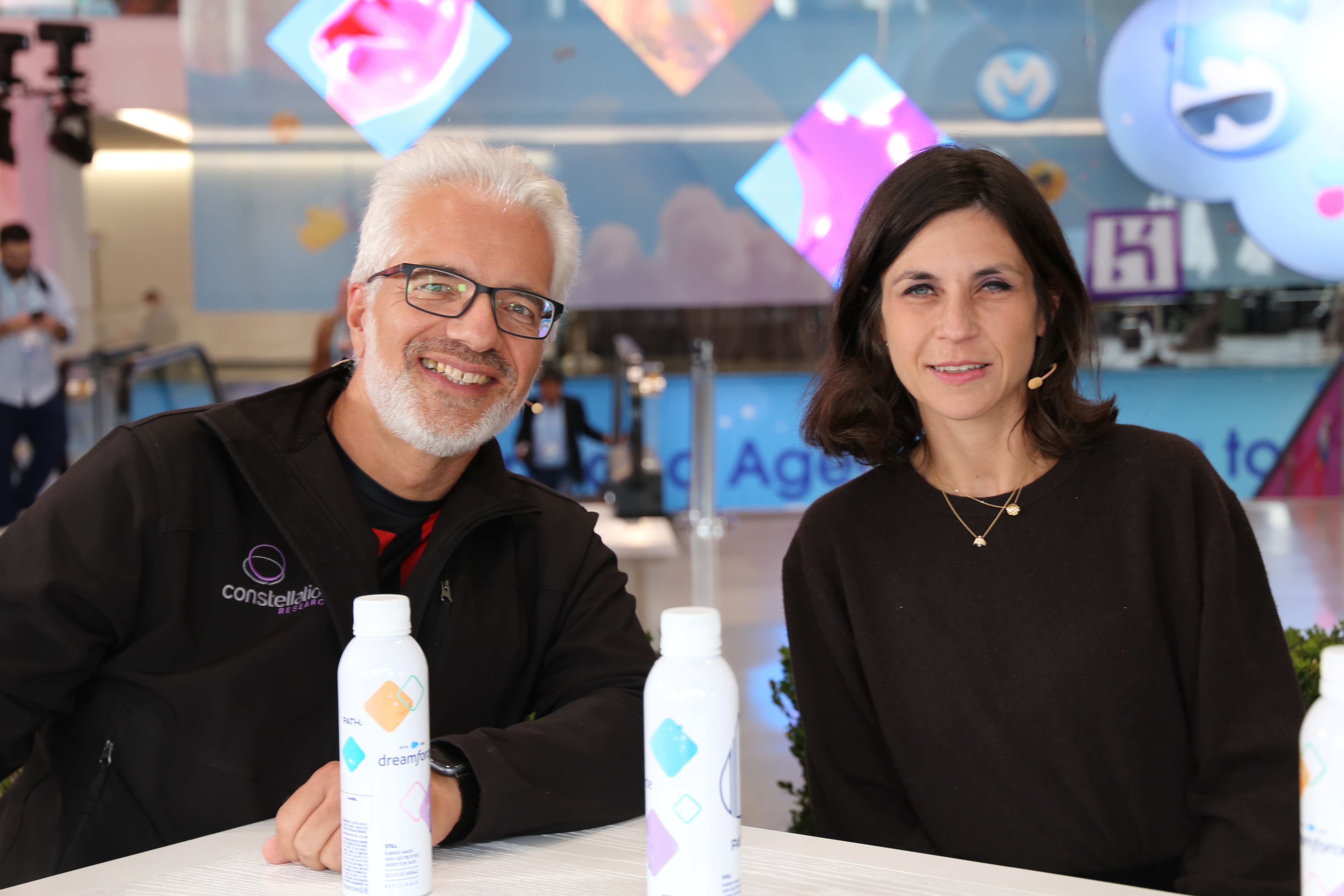
In this Dreamforce interview, Raphaelle d’Ornano joins Holger Mueller with theCUBE’s John Furrier and Gemma Allen to unpack Salesforce’s agentic roadmap and what it means for the enterprise. The discussion probes how Agentforce, real-time Data Cloud context and Slack as the primary surface come together under trust and governance – plus where gaps remain (from background business processes to ERP and supply chain). d’Ornano argues Salesforce should move beyond the “CRM” ticker and be recognized as an agentic orchestration platform, while Mueller pushes back that agents still rely on SaaS APIs and that Salesforce is expanding as a platform-and-apps company. You’ll hear candid takes on what’s production-ready, where customers are actually building and why execution, not just naming, will determine outcomes.
The conversation dives into observability and analytics for agents, the pace of customer-built agents (including pre-briefed upgrades), and the practical realities of “vibe coding” inside complex enterprises where human-in-the-loop and approvals remain key. The guests explore Slack’s role as a context engine and moat, real-time data patterns (latency, zero-copy claims, SLAs), and the emerging sprawl of data lakehouses. d’Ornano shares a Wall Street lens for separating AI enablers from AI adopters and her “AI optionality” framework for identifying orchestrators vs. the bypassed – alongside a nuanced view of “AI bubble” vs. “AI circularity” and market reactions to high-profile partnerships. The segment closes with letter grades for the keynote (ranging from B+ to A-) and a look at how category lines are being redrawn as agentic automation becomes routine business labor.
Forgot Password
Almost there!
We just sent you a verification email. Please verify your account to gain access to
Dreamforce 2025. If you don’t think you received an email check your
spam folder.
In order to sign in, enter the email address you used to registered for the event. Once completed, you will receive an email with a verification link. Open the link to automatically sign into the site.
Register for Dreamforce 2025
Please fill out the information below. You will receive an email with a verification link confirming your registration. Click the link to automatically sign into the site.
You’re almost there!
We just sent you a verification email. Please click the verification button in the email. Once your email address is verified, you will have full access to all event content for Dreamforce 2025.
I want my badge and interests to be visible to all attendees.
Checking this box will display your presense on the attendees list, view your profile and allow other attendees to contact you via 1-1 chat. Read the Privacy Policy. At any time, you can choose to disable this preference.
Select your Interests!
add
Upload your photo
Uploading..
OR
Connect via Twitter
Connect via Linkedin
EDIT PASSWORD
Share
Forgot Password
Almost there!
We just sent you a verification email. Please verify your account to gain access to
Dreamforce 2025. If you don’t think you received an email check your
spam folder.
In order to sign in, enter the email address you used to registered for the event. Once completed, you will receive an email with a verification link. Open the link to automatically sign into the site.
Sign in to gain access to Dreamforce 2025
Please sign in with LinkedIn to continue to Dreamforce 2025. Signing in with LinkedIn ensures a professional environment.
Are you sure you want to remove access rights for this user?
Details
Manage Access
email address
Community Invitation
Editorial: Raphaelle d'Ornano, Decoding Discontinuity & Holger Mueller, Constellation Research
In this Dreamforce interview, Raphaelle d’Ornano joins Holger Mueller with theCUBE’s John Furrier and Gemma Allen to unpack Salesforce’s agentic roadmap and what it means for the enterprise. The discussion probes how Agentforce, real-time Data Cloud context and Slack as the primary surface come together under trust and governance – plus where gaps remain (from background business processes to ERP and supply chain). d’Ornano argues Salesforce should move beyond the “CRM” ticker and be recognized as an agentic orchestration platform, while Mueller pushes back that agents still rely on SaaS APIs and that Salesforce is expanding as a platform-and-apps company. You’ll hear candid takes on what’s production-ready, where customers are actually building and why execution, not just naming, will determine outcomes.
The conversation dives into observability and analytics for agents, the pace of customer-built agents (including pre-briefed upgrades), and the practical realities of “vibe coding” inside complex enterprises where human-in-the-loop and approvals remain key. The guests explore Slack’s role as a context engine and moat, real-time data patterns (latency, zero-copy claims, SLAs), and the emerging sprawl of data lakehouses. d’Ornano shares a Wall Street lens for separating AI enablers from AI adopters and her “AI optionality” framework for identifying orchestrators vs. the bypassed – alongside a nuanced view of “AI bubble” vs. “AI circularity” and market reactions to high-profile partnerships. The segment closes with letter grades for the keynote (ranging from B+ to A-) and a look at how category lines are being redrawn as agentic automation becomes routine business labor.
Editorial: Raphaelle d'Ornano, Decoding Discontinuity & Holger Mueller, Constellation Research
Raphaelle d'Ornano
Founder & CEODecoding Discontinuity
Holger Mueller
Principal Analyst & VPConstellation Research
In this Dreamforce interview, Raphaelle d’Ornano joins Holger Mueller with theCUBE’s John Furrier and Gemma Allen to unpack Salesforce’s agentic roadmap and what it means for the enterprise. The discussion probes how Agentforce, real-time Data Cloud context and Slack as the primary surface come together under trust and governance – plus where gaps remain (from background business processes to ERP and supply chain). d’Ornano argues Salesforce should move beyond the “CRM” ticker and be recognized as an agentic orchestration platform, while Mueller pushes back t...Read more
exploreKeep Exploring
What is the overall impression and feedback on the keynote presentation?add
What is the current perspective on Salesforce's branding and its alignment with its capabilities?add
What is the speed of adoption for enterprise AI and agentic AI compared to the adoption of technologies like ChatGPT?add
What are the roles and perceptions of Salesforce and its clients in the context of orchestrating agentic systems?add
What are the current categories in the industry landscape and how do they interact?add
Editorial: Raphaelle d'Ornano, Decoding Discontinuity & Holger Mueller, Constellation Research
search
>> Welcome back. I'm John Furrier, host of theCUBE. We are here live in San Francisco, Dreamforce 2025 with my co-host, Gemma Allen. I'm from New York City with theCUBE. Of course, we're bringing all the action in San Francisco, connecting Wall Street and Silicon Valley. This panel conversations is with experts. We have a financial analyst, a great Substack writer, and of course, incubating a hedge fund. More on that later. And Holger is here, CUBE alumni, veteran. Guys, we're day one in at Dreamforce, Marc Benioff, it's a circus, like always. Welcome to theCUBE, Raphaelle, thanks for coming on.
Raphaelle d'Ornano
>> Thanks for having me. It's a pleasure.>> Holger, I'm going to go to you first because you've seen these many events. They've tried out everything, they got the announcements. What's your take of this agentic roadmap from Salesforce? A lot of new names, Data 360, some renaming of things, but it's a multi-year process. We've been briefed before. So you've been briefed on all the information, extract all the signals, tell us what's going on.
Holger Mueller
>> I think it was a great keynote because it was short. It didn't go too long. Benioff shared in the Q&A, they cut it down, which was great. It was only about product. The only thing I didn't like, it was not about the other products in the background, which customers are using. We all know agentic AI is only as good as the APIs in the background, and pretty much all the vendors are acting like it's all about AI and we don't have to upgrade the background business processes, which never happened. So that was a big miss from my perspective. We also saw, if you missed that, the launch into the ERP space because there's no agent force for supply chain management, which was something which was kind of off. Not surprised about IT ticket service management, not about HR. We've seen that before. So overall, good keynote, short and sweet.>> Raphaelle, you're going to be on theCUBE as a contributor, but it should be noted, you've got a great Substack, Decoding Discontinuity. You're incubating a hedge fund. You've got kind of a hybrid. You're a media writer because of Substack. You've got the financial analyst background, you're incubating a hedge fund and you're an advisor to CEOs, Fortune 50 companies. So if you're the advisor, you're the consiglieri, you're the consultant to Marc Benioff, what would you say to him? Good show, the positioning okay? Are things hanging together? A lot of naming, trying to reposition. Salesforce is now called Dreamforce. Now you've got Agentforce. Do they change the name of their company? Elon suggested they should change the name of the company. What's your take on Salesforce? They're hugely successful, they print money, but what's your take on them as a company right now?
Raphaelle d'Ornano
>> So I think my first take was that they should change their ticker. It makes no sense that Salesforce is CRM anymore because that's just not what they are at all. And I think, when you come out of this keynote, and even without coming out, just in the keynote, you say to yourself, "Salesforce has perfectly understood that agentic AI is a new paradigm and that's been clear from day one." And we need to give them the credit for that because they were the first and Mark was the first to really get that, which is super important. Today's Salesforce is, for me, an agentic AI orchestration platform, able to go not just in the CRM space, but to the broader enterprise orchestration landscape and the names that we have all over here of the agentic enterprise, that's a very good qualification term for Salesforce. So I think what is not clear yet is that the distinction we have between horizontal application software infrastructure, that doesn't mean anything anymore in the agentic world. You need to rebuild new categories and Salesforce has been doing that over the past year. It's just that no one knows that yet. So that's what I would give as an advice to Marc. Let's get the market to understand what is actually happening because it's super powerful if executed well.>> You know the old expression, you can't move an aircraft carrier on a dime. It takes some time to move. Do you think that they're making progress? Gemma, you can feel free to weigh in too on this because we see companies in New York all the time on the financial side. Sometimes you're so focused on EBITDA, hitting the 30-day shot clock, even if they move to six months, it's different, this conversation. Folks, tell me what are they doing right or wrong? Are they moving fast enough? We're in an age of high acceleration, road to super intelligence this year. Everyone is coming out of the woodwork, so can they move fast enough? That's the question.
Raphaelle d'Ornano
>> Well, first I think a lot of people are quite unfair to CRM, if we take the sticker. Enterprise AI adoption and agentic AI adoption is something that is an architectural redefinition of a business. So you're changing the architecture, your tech architecture, you're changing your business model architecture. And by doing that, you're changing the business model of your clients' architecture. So you have three changes when you think about this. This is not as quick as the adoption of ChatGPT. You cannot compare like, "Oh, Salesforce is not able to price agent force." But actually looking at private company data, it's one of the fastest adoption rates that we're seeing. But no one is saying that. So I'm not saying that just to give the credit to Salesforce, but to say, "Wait a minute, and let's really consider the paradigm that is at stake." And I would also add that they're actually in a very good position in the sense that they master the customer data, not the ID data, not the HR data. So since they have access to customer data, they're actually super well positioned to be building that orchestration platform. So it's all going to boil to the question of execution.>> I'm going to go to Holger on this one because this little German reference, it actually wasn't planned-
Holger Mueller
>> Of course.>> But George Gilbert was on the earlier intro segment-
Holger Mueller
>> Good.>> And he quoted a story from 30 years ago when Hasso Plattner when SAP was rolling out their stuff. All the people who made the best little module for SAP, he said, "We're going to burn you guys all into the ground." Meaning because SAP ended up doing that. So as an example, they ran the table, SAP had a run there. I'm over simplifying it. But look at SAP back in the old days. Now Salesforce might have an opportunity to have that platform. What's your take on the app side? Because the software market has changed. I'm sure you don't disagree with Raphaelle on the fact that the whole world has changed, this new category, but the data is the same, still people are going to use apps.
Holger Mueller
>> Correct.>> So what is your view on the app side? Is it a burn everyone to the ground moment with the platform?
Holger Mueller
>> No, no. I think to quote more present people, Satya Nadella is wrong that agents are the end of SaaS because agents run->> Are the end of SaaS?
Holger Mueller
>> He said they are the end of SaaS. That's his quote. I don't think he's right because agents leverage business APIs in the background which are delivered via SaaS. And the interesting thing, so Hasso, I like my colleague Gilbert reference to Hasso Plattner's era because that was the first time that you put all the data of an enterprise on the client-server system, on a data-level part. And the similar thing is, two years ago, Salesforce had the innovation here with Genie, remember, to bring data real-time under second in the data cloud. And we all know, you can ask a preschooler today, what makes AI? It's the data. So Salesforce for the first time has a coherent platform strategy, building a data platform, then agenetic framework. Let's put in perspective, last year, they did something unheard of in the enterprise software industry. They upgraded 1,000 customers before coming here expecting them to build one agent. The customers on average built 10 agents here. This is why it was so easy to build them, but never ending. I'm doing this, it's almost... I won't tell how long, but never you announce stuff at conferences. You don't give something live to customers and they do stuff at the conference. Unheard of. So Salesforce has about one year in the enterprise software space to build agentic applications on their framework. And they're using that and it shows. They have day two problems like observability of agents. Look at the competition, there's nobody announcing observability of agents because they're just launching their agentic framework and their first packaged agents. There's analytics on agents. And the interesting thing is there's also still the normal Salesforce speed happening, which traditionally, we can make the joke here. Marc would come back from Hawaii, he read an IBM report, and then two years later, Salesforce's product development would have what he was talking about.>> Take that hill.
Holger Mueller
>> We see the two years coming right now with the Data.com becoming agents, with Tableau becoming agents, with MuteSoft becoming agents. So there's still some normal Salesforce->> Agentfied as infrastructure. Well, that brings up a good question because like Andy Jassy once said to me on theCUBE many re:Invents ago, I think 2015, he said, "John, when you're doing something compelling, you got to be prepared to be misunderstood for a very long time and be comfortable with that." And some people aren't. They read the press clippings. They want to, "Oh, you got to get an agent." So the question for you guys is, what is the most misunderstood thing about Salesforce today, given that they... You guys, I agree with you on all your points about them being early. What's the biggest misunderstanding?
Gemma Allen
>> And if I can add one thing to that question too, what are the blind spots? There's so much conversation about speed and agility and adoption. What are you talking to Fortune CEOs about? What are the blind spots that nobody is speaking about publicly?
Raphaelle d'Ornano
>> So I think that Salesforce in this agentic AI paradigm has two modes that one they spoke about at the conference this morning, another one not. The first is what I call the context modes. Do your agents have access to the right context to actually make a decision that is an informed decision and that is going to produce a result because it has the right context? So that's a very critical mode. And Salesforce has that, and Slack is actually a super strong engine in that. And they were very smart to block the access to Slack by the way a couple of months ago because they understand and they already understood that that is a very strong mode. Number one. Number two, they have a workflow mode, meaning they understand how business outcomes are delivered because they have seen that over and over the years. And so they're able to say, "Well, you're building an agentic system. We know what's going to work, what's not going to work, because we've been doing that for 30 years, not in an agentic AI world, but before." And so, when you add both of these aspects, you can become an orchestrator. Now, Mark said this morning, "We're not an orchestrator. Our clients are an orchestrator." I completely agree. It's the end clients like PepsiCo, Williams-Sonoma, FedEx that were the clients that were mentioned this morning that are going to be the orchestrators. And Salesforce is going to be the platform that enables these clients to be the orchestrators of agents. So that's my view of those two modes that are not->> Holger, what's your take on them being misunderstood and blind spots?
Holger Mueller
>> I don't see them so much to get as the orchestrator. They're an applications company. They're building agents to power the applications to preserve the applications, get their back ends. The misunderstanding is that Salesforce is only a CRM or CX company. They're a platform company which is going into different areas and needs to grow. They're getting flack from ServiceNow as an example, there's another platform company from the perspective. So you have to look at the market as platform companies, application companies and application companies with an AI framework. And the competition is to build agents as fast as possible, as reliable as possible.>> Would you say, George and I were riffing on this with Gemma earlier, are they a data infrastructure company or what? What would you call them?
Raphaelle d'Ornano
>> No.>> Okay, go ahead.
Holger Mueller
>> The growth is coming from the platform side for the longest part, remember? It used to be sales, service, marketing. They would only have the applications. Then all of a sudden, with different acquisitions they've done, the platform part was bigger than sales, their largest part of the business, which is now a service. So it would break it out. But the infrastructure platform part is a big, big part, which is a good preparation because we live... Remember, we had this conversation before, John. We live in the era of business best practice uncertainty. Nobody knows exactly how you're going to run an enterprise in two to three years, which is hell for any standard software vendor because they want to build it for everybody the same way. And if you don't know what the same way is, you can't build it. So they're all waiting. So everybody's becoming .>> This is the death of general purpose software. Basically we're in an era of transition, not death.
Holger Mueller
>> I think it will be a swing. It will be a swing.
Raphaelle d'Ornano
>> I think->> Slow death.
Raphaelle d'Ornano
>> We're in an era of category redefinition. That's why I strongly disagree with and I think Marc would disagree with, Salesforce is not a data infrastructure company, but Salesforce is not even a pure horizontal application and certainly not a pure CRM player. What are they in this new agentic paradigm? That is the question. And that's what we need to figure out. And then we will see, well, is that a platform? I really think they are a platform and they should be a platform because that's the only viable economic outcome in the story. But the name and the framing of the category is still to be built, and they actually have an opportunity to build that.>> So what ticker should they use? You're the consultant-
Gemma Allen
>> You've got to copyright it, though.>> You're getting free... She's like, "I don't get paid for this."
Gemma Allen
>> She has to copyright it.>> "I better get copyrighted on it."
Holger Mueller
>> AI, AI.
Raphaelle d'Ornano
>> You're right. I need to think about it. It would have agentic, it would have orchestration, it would have enterprise. So I need to mix both of these three terms and come up with something.
Gemma Allen
>> One thing I think is really interesting about Salesforce is it's a flywheel. It's got an incredible ecosystem around it. There's been people who have been loyal to the product, loyal to Salesforce for years, and this idea that now, in this agentic world, everyone is a developer, that developers are more creative-minded, they're artisans of industry, et cetera. It shifts a little bit though the ethos that's been so fundamental in building the brand loyalty and the identity of this company. So how do you guys think about that? How do you imagine five years from now that will change? And how do you think you continue to foster huge loyalty in a world where everything is a little bit more ambiguous?
Raphaelle d'Ornano
>> Well, they encouraged this morning their clients to vibe code their own agents, which was one of the standout features of the keynote. So I think this is super complicated from an enterprise AI architecture. From a tech architecture, if you're working in a software company today, it's perhaps the most fascinating job ever. It changes every single day. There's new research, there's new frameworks, so I don't think that the developers are going to be bored in any way. I think it's just the nature of what is being done is very different in the same way that our work, as humans, is going to be very different. We're going to be supervising agents more and more, and we will still be working hopefully, but we will be working in a completely different way. And so, I think R&D teams are going to be operating like that.>> You think vibe coding, what they're proposing is going to be okay? Enterprise, as you say, is very complicated. I vibe coded on the weekend in the summer. I did four or five apps I wanted, and I'm like, "Okay, yeah, I did a PostgreSQL database, but my APIs didn't work. Well, I'm going to the beach." I didn't have time to wire it up. That's just me. I'm the lazy guy. But now enterprise, you can't just vibe code your way at the enterprise. I guess I'm skeptical.
Holger Mueller
>> Well, it's all about enterprise acceleration. What can make an enterprise move faster, become more agile and get things done in software and code? So everything which will give developers, business users who are developing a leg up to get that automation that they need to own their automation destiny on the business user side. Because there's things that will never be built by standards of the vendors. There will never be an IT budget.>> Does AI wire up those brittle... Not brittle points, those key glue layers or glue connections?
Holger Mueller
>> Definitely. Definitely. It will help, but it will be running around with scissors. You can hurt yourself or you can do wonderful things. It's going to be with caution.>> He's German.
Holger Mueller
>> And CIOs will look at it and CISOs will look this stuff, so we will see how that will pan out. But we can't stop the technology progress and the capability, and to your question, who's going to be around in 3, 4, 5 years is who's going to provide value to enterprises who have to move faster, become more agile. It's very simple.>> Raphaelle, I want to ask you about your hedge fund, your incubator, you mentioned that. Tease that out. Obviously that's a good opportunity. Financial markets we've been covering since I've been at the NYC for a year, Gemma lives in New York now on the team. I've always been curious how they squint through EPS work because everyone's been sandbagging earnings for... Go back. It's not even an art anymore, it's obvious. But product-led growth, category shifts, things we were just talking about are what the financial analysts are starting to look at. What's your view of how Wall Street and the global financial markets will look at this? You've got stable coins, you've got token economics, real-world assets on chain, a lot of things going on in the financial infrastructure as well. What's your view of valuations, of AI? If business model changes, one little small tweak could drive revenue and cost efficiencies that could change the balance sheet and income statement.
Holger Mueller
>> You haven't even said Bitcoin.>> You can also go to crypto. We'll go to that later. But just in general valuation, look at the market. Sideways options are up. NVIDIA, CoreWeave, VBS, Lambda, it's a whole crazy market right now.
Raphaelle d'Ornano
>> Oh, sure. So I've dedicated my life to understanding what this is about. I obsess on this topic every single minute of the day. So first, we need to put companies in two categories. The AI enablers, so the companies like NVIDIA, AMD, OpenAI that are actually enabling this whole AI build-out. So they respond to different rules. And the AI adopters, so all the AI companies that are in software and in real-world companies also. I think that AI or agentic AI specifically is a real options value. So I've modeled this throughout the whole S&P 500, and I've actually attached an AI optionality, which is, is the company able to be an orchestrator or will the company be bypassed in this agentic world? Which gives me a score. And I have scored all of the companies according to what is the hidden value or the hidden non-value, this value attached to those companies. So if you take Salesforce, so Salesforce would be worth 100 as a basis points, is it worth 120, 150 or is it worth zero because it's actually going to be bypassed by AI agents and it's actually worth nothing, and we know that today. So you can run this in a very->> So you're tracking the walking dead, basically?
Raphaelle d'Ornano
>> Yeah, I'm tracking the walking dead. And the goal is to go long and short on the companies that we think are strong orchestrators and short on companies, which again, I say the moat breaks before the revenue.>> So your key metric on this index or classification is what? The ability to leverage agents and be an orchestrator? What's the key pivot or variable?
Raphaelle d'Ornano
>> You want to look at, number one, the financial fundamentals. Do they provide you the right adaptability to enter this transition? And then you want to look at your AI optionality, which is a combination of your potential to orchestrate versus your risk of being bypassed. And that's what you want to assess. The financial fundamentals allow you to say you're healthy when you enter the transition or you're already in a very bad shape and it's probably going to be difficult.
Gemma Allen
>> And just quickly, what do you say when people talk about the bubble, when they talk about this idea that AI is almost like a new age Ponzi scheme. You've got companies buying from companies, buying from companies, it's a cycle. What are your thoughts on that? What's your response to those headlines?
Raphaelle d'Ornano
>> So I would say there's two debates. One is on the AI bubble, one is on AI circularity, and I think these two should not be conflated because they bear two very different risks. So on the AI bubble, it goes back to my point on AI enablers, AI adopters. I think there's big valuations in what is enabling the AI stack. So it's perhaps a bubble. I don't think it's going to pop for the next years because the race to build this is huge. And I don't see this stopping now. I would say we're more like in 1997, not in 1999, if I was to make a reference.>> Google hasn't come yet.
Raphaelle d'Ornano
>> I would say that's my point on number one. I would say that all the companies that have this AI optionality attached to them, I think they're actually undervalued on many aspects. So I think that's a huge opportunity on the public markets right now. And I think that the AI circularity, that revolves a lot around OpenAI. I think that's a huge problem. And I think OpenAI is great. I think that they're enabling this technology in many ways, but what we're seeing right now is really dangerous and we should be cautious because... And what was interesting is that, from a stock market perspective, Salesforce announced the partnership of OpenAI. Their stock was down 2% today. What is that about? Figma announces a partnership->> AMD announces it, and Broadcom announces-
Raphaelle d'Ornano
>> What is that?>> The stocks shoots.
Raphaelle d'Ornano
>> So I think that was... I was saying to myself the whole day->> They don't make semiconductors.
Raphaelle d'Ornano
>> "That's very unfair." They announced something with OpenAI, their stock goes down. Do they have Dreamforce? That's strange.>> That is really weird because I think that's very bubblicious. Holger, she's got a good perspective. I like where she's going with that. From an industry analyst's perspective, the industry landscape is changing. There's no magic quadrant for what she's talking about, what we're talking about, and we can't even put them in a category yet because they're evolving. So there is no Gartner magic quadrant for this. What does the industry landscape look like from your perspective?
Holger Mueller
>> I think the industry landscape falls into, we have now four categories. You have infrastructure, platform, software as a service, and some people will play in multiples, like Oracle plays in all of them. We talked about Salesforce playing in platform and software as a service. Now there's also the AI infrastructure as a service, which runs on top of infrastructure as a service players. And between these four, we have veritable fights. We see the AI vendors coming into the agent building market and building agents being enterprise ready within the consumer space. So it's going to be a fight about who's going to be the better data foundation for everything. It always starts in data. Maybe I'm too much of an enterprise guy, but the enterprise don't go home and say, "I don't care what I did yesterday. The auditor's going to come. I have to close the quarter." So you can't forget about that. So who's going to win the data? And this year is the year the data lake houses. Every ERP vendor under the sun except for the one who's in Las Vegas now have announced the data lake in the classic form. And the CIOs are going to wake up somewhere in the next six months and "Wait a minute, I'm paying for seven to nine data lake houses. I can't afford that. I don't want that. It's my customer, employee information. There's liability that... Okay, it will have my ERP going there." We said about the flags for Salesforce. Will Salesforce have enough gravitas to be the place where you put your data? Then you have your quants doing something and your existing cloud vendors . So two, three data lake houses is going to be the maximum and to fight for the agentic framework, how fast can you build agentic applications is in full swing, right? Obviously the people who have a data platform have an advantage because they understand the data structure and can build it. All the ERP vendors build with our platform because we understand everything on the data side. Then there's pure best of breed development tools that always have been development tools. I think the rule of all is, it's going to stay the same. And sorry for boring, enterprise software has always been the one who kept the eyes and the clicks of the user? Maybe the click works into voice or eye movements. Maybe it's going to be only the eyes->> It is data.
Holger Mueller
>> But whoever sees what is being done, everybody is in the background, who's an API, who's not going to get the monetization they deserve and the valuation they deserve.>> Well, this has been quite the global conversations, the global market. We got Germany, France and Ireland represented in America. This is truly the market we're in. We're a global platform. Thank you so much for sharing your insights.
Raphaelle d'Ornano
>> Of course.>> Really appreciate it. Again, the world is changing. I guess final question, we'll go around the horn. Letter grade A, B, C, D, F, report card, Dreamforce keynote, Gemma. Give him a letter grade.
Gemma Allen
>> I'm going to give it a B+.>> Raphaelle.
Raphaelle d'Ornano
>> I would give the same, actually. I would have said B, but I'm more going to B+.
Holger Mueller
>> B+ to A-.>> I'll give him an A- because theCUBE is here.
Holger Mueller
>> Oh, yeah, yeah, yeah.
Raphaelle d'Ornano
>> Sure.
Holger Mueller
>> Very objective, of course.>> I could review the grade too. Thanks so much.
Raphaelle d'Ornano
>> Sure.>> Great perspective again.
Raphaelle d'Ornano
>> Of course.>> The experts are weighing in here on theCUBE. Again, the world is changing, a massive shift, a lot of value extraction going to happen. Who's going to be on the right side of history will determine new metrics. New analysis coming in every day. Very fast on the road to super intelligence at theCUBE. Thanks for watching.











 Gemma Allen