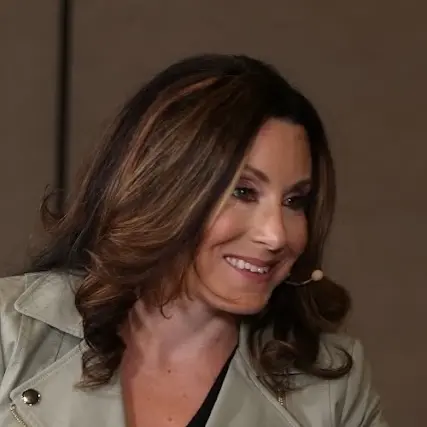
Krista Case of theCUBE Research, principal analyst and practice lead for cyber resilience and security, joins host Rebecca Knight to analyze the keynote discussions at SailPoint Navigate 2026. Case draws on their expertise at theCUBE Research in identity security and cyber resilience to examine trust and governance for agentic artificial intelligence, AI, including ownership and lineage, runtime controls, resource discovery, monitoring and the role of identity platforms within a broader enforcement and control ecosystem.
Case emphasizes the need for evidence-based trust in AI agents and continuous monitoring. They recommend establishing behavior history, independent evaluation and incident visibility. Panelists and analysts propose practical steps such as finding agents, assigning owners, defining scope, retaining kill switches while building prevention, prioritizing identity as a control plane and developing resilience and recovery capabilities to complement containment.
Almost there!
We just sent you a verification email. Please verify your account to gain access to
SailPoint Navigate 2026. If you don’t think you received an email check your
spam folder.
In order to sign in, enter the email address you used to registered for the event. Once completed, you will receive an email with a verification link. Open the link to automatically sign into the site.
Register for Sailpoint Navigate 2026
Please fill out the information below. You will receive an email with a verification link confirming your registration. Click the link to automatically sign into the site.
You’re almost there!
We just sent you a verification email. Please click the verification button in the email. Once your email address is verified, you will have full access to all event content for Sailpoint Navigate 2026.
I want my badge and interests to be visible to all attendees.
Checking this box will display your presense on the attendees list, view your profile and allow other attendees to contact you via 1-1 chat. Read the Privacy Policy. At any time, you can choose to disable this preference.
Select your Interests!
add
Upload your photo
Uploading..
OR
Connect via Twitter
Connect via Linkedin
EDIT PASSWORD
Share
Almost there!
We just sent you a verification email. Please verify your account to gain access to
SailPoint Navigate 2026. If you don’t think you received an email check your
spam folder.
In order to sign in, enter the email address you used to registered for the event. Once completed, you will receive an email with a verification link. Open the link to automatically sign into the site.
Sign in to gain access to SailPoint Navigate 2026
Please sign in with LinkedIn to continue to SailPoint Navigate 2026. Signing in with LinkedIn ensures a professional environment.
Are you sure you want to remove access rights for this user?
Details
Manage Access
email address
Community Invitation
theCUBE Insights
Krista Case of theCUBE Research, principal analyst and practice lead for cyber resilience and security, joins host Rebecca Knight to analyze the keynote discussions at SailPoint Navigate 2026. Case draws on their expertise at theCUBE Research in identity security and cyber resilience to examine trust and governance for agentic artificial intelligence, AI, including ownership and lineage, runtime controls, resource discovery, monitoring and the role of identity platforms within a broader enforcement and control ecosystem.
Case emphasizes the need for evidence-based trust in AI agents and continuous monitoring. They recommend establishing behavior history, independent evaluation and incident visibility. Panelists and analysts propose practical steps such as finding agents, assigning owners, defining scope, retaining kill switches while building prevention, prioritizing identity as a control plane and developing resilience and recovery capabilities to complement containment.
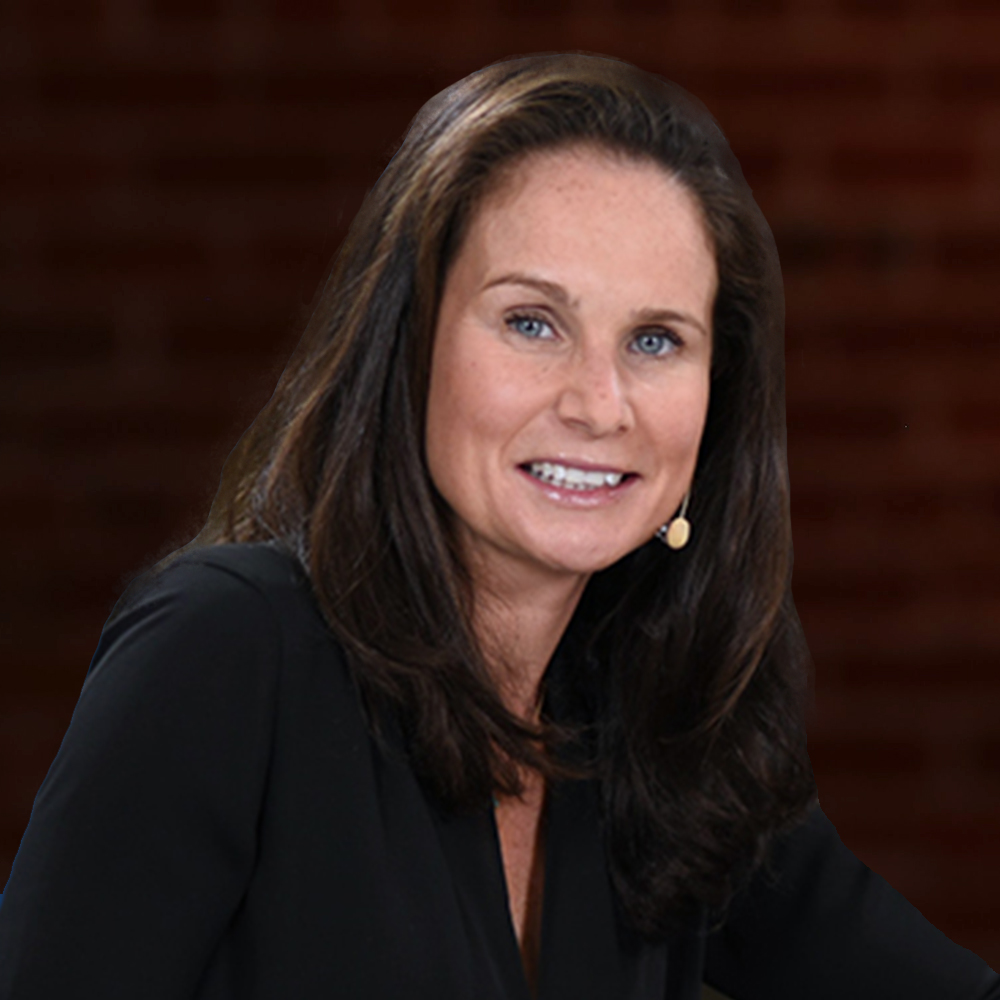
Principal Analyst and Practice Lead for Cyber Resilience and SecuritytheCUBE Research
HOST
In this interview from SailPoint Navigate 2026, theCUBE Research's Krista Case joins theCUBE's Rebecca Knight to break down the biggest themes from the event's keynote sessions, including insights from Margaret Mitchell, chief ethics scientist at Hugging Face; Chandra; and Matt Mills, chief executive officer of SailPoint Technologies, on trust, accountability and governance in the agentic AI era. Case highlights Mitchell's push to move beyond simple verification of who published an agent toward understanding its behavior history and independently monitoring i...Read more
exploreKeep Exploring
What stood out about the keynote conversations this morning at SailPoint Navigate 2026?add
Are organizations encountering unclear ownership of AI agents, and is shared accountability for those agents’ actions an industry-wide problem?add
How should Jakob Houde’s short list of best practices — find your agents, assign owners, define scope, keep a kill switch, build toward prevention, and make identity the control plane — be evaluated, and is it a to‑do list that CISOs should follow?add
>> Good morning, everyone, and welcome back to theCUBE's live coverage of SailPoint Navigate 2026. We are kicking off our second consecutive day of wall-to-wall coverage. Terrific guests. I'm your host, Rebecca Knight, sitting alongside Krista Case, who is the principal analyst, a research analyst for theCUBE. Krista, we are back.
Krista Case
>> We are back, Rebecca. Excited for a great Day Two. We're fresh off the keynote. Looking forward to unpacking it with you.
Rebecca Knight
>> Yeah. So as you just said, we're both fresh off the keynotes. They were terrific. We had Chandra, of course, who we're going to have on the show later today. Matt Mills, who we had on yesterday, the CEO, customers from Unum and Honeywell, and then a very special conversation with the chief ethics scientist at Hugging Face. And of course, Hugging Face has been in the news a lot recently. Start by telling our viewers a little bit about what struck you about the keynote conversations this morning.
Krista Case
>> Yeah, Rebecca, I think this morning was interesting because it really focused on the evidence that we need before we can start to trust AI agents. And of course, Dr. Margaret Mitchell of Hugging Face, she really provided some unique context in that, which I'll get to in a minute. But there were a lot of conversations around things like ownership, lineage, policies, monitoring, and how all of these converge into controls that need to work at runtime in order to secure and govern our AI agents. So, in particular, Dr. Margaret Mitchell, she was kind of talking about this concept of strict verification versus truly understanding if an AI agent is trustworthy. So, we need to go beyond just kind of verifying maybe who published a tool or an agent, but we really need to understand things like their behavior history. We need to be able to do things like monitor their behavior and independently evaluate the actions that they're taking. And also, of course, have insights into potential incidents that occur as a result of the actions of these AI agents. So really, again, I think that was really one of the things that stood out to me, especially from her parts of the conversation. And then another thought that I thought was really interesting was the fact that there's a new set of issues around resource discovery that are arising because these agents can find their own tools, they can develop their own skills, they can call on other agents to do certain actions. So the application stack that enterprises are trying to govern, it's very fluid, it's very dynamic. And that also really changes the potential execution path as well. So when we think about, you know, I guess how we get our arms around that and really at the end of the day what it means to facilitate autonomy, you know, really there's a spectrum there of potential levels of autonomy that we can give to agents and it all needs to be able to tie back to their risk at the end of the day.
Rebecca Knight
>> Well, exactly. these are some of the words we kept hearing over and over again on the main stage this morning. Words, shared accountability, responsibility. There's— I've seen a t-shirt around here, something like, "You can't put an AI agent in jail, in prison," meaning it's really hard. An AI agent is, of course, not governed by the same— it lacks consciousness and intent. So, it's not governed by the same laws that we are governed by. Someone is left holding the bag. And that is something that Chandra talked about. He said, I think I wrote it down, half of agents discovered they have no known owner, which is frightening.
Rebecca Knight
>> That—yeah, I wanted to run that by you. Is that something that you are hearing from the organizations that you work with too? Is this endemic to the industry?
Krista Case
>> Yeah. Yeah, I think so, Rebecca. I think certainly kind of understanding who actually owns an agent at the end of the day is a problem that enterprises are trying to solve. and I think in general, a lot of enterprises are still struggling with just the pure discovery. So really just understanding the various AI agents that are in use across their environments. What I think is really interesting here, and Sean touched on it a little bit, but the shared accountability model, and at theCUBE Research we've been doing some thinking and writing on this, in the cloud era, we kind of had clear lines of accountability between the technology provider and the customer. The customer is still responsible for their data, for example, whereas the technology provider may be responsible for the cloud infrastructure. In this era, the customer is holding the bag at the end of the day for the outcome that that agent takes. To your comment on, we're not going to be putting agents in jail. And so, again, I think that that creates some interesting conversations for— or I should say between customers and vendors around those lines of responsibility and accountability. I think we're still in very early days, but as we continue to— or as we potentially see other instances of something like a Hugging Face incident where these agents are taking unexpected actions that have these risky and inadvertently malicious outcomes, I think we'll continue to have more conversations and potentially even set some boundaries, you know, around these responsibilities.
Rebecca Knight
>> Boundaries, because particularly around what you said in terms of who owns the outcome. It might not be a certain process, it might not be a certain bit of research or answer, but it's who owns the ultimate outcome of this process. And that's what organizations, and as you said, the vendors too, are trying to figure out right now. The kill switch that came up. And Chandra said, I'm going to say something a little controversial. We need to kill the kill switch. The kill switch, it sounds so great. It sounds easy. Just done. Unplug it. We don't have to worry about it. But what he said is that it might— it kills the action, but it does nothing about what led to that action. And so we need more preventive medicine. Yes, because it's the need to use the kill switch is a symptom of a larger problem. And he also talked about the problems with who's governing the kill switch. Whose responsibility is it to say, okay, we need to take this action? I'm curious about what you're hearing about the kill switch. we've talked about it a lot here on theCUBE, too, and we're destined to talk about it more today.
Krista Case
>> Yes.
Rebecca Knight
>> But what's your take on it right now?
Krista Case
>> Yes. As you mentioned, Rebecca, we're going to have Chandra on later this morning, actually, and I'm sure we'll dig into this more with him. My two cents is, I see the problems that he raises with the kill switch. So certainly if we have capabilities like strong preventative measures in place, if we have things like continuous monitoring to be able to catch, whether it be, agent drift or whether it be an actual malicious attack on the environment to detect that quickly, the stronger or the higher we can build those fences, so to speak. Obviously, it puts us in a better position because then we don't have an incident. However, as you mentioned, there is the question of who governs and oversees that kill switch, like we were talking about in terms of, what does the customer own, what do they have responsibility for? There's also the issue that we need to make some of these decisions exceptionally fast, right? So we might even have to start leaning on AI to kind of be the watchman for the other AI agents so that creates a whole other potential host of issues. one thing that I would like to kind of dig in more a little bit with SailPoint and these other companies that are talking about kill switches is the concept of resilience, because even if we were to begin addressing some of these upfront issues with the kill switch, it only solves one part of the problem, which is containment. And granted, that's a very important problem to solve, right? If there is an issue, We need to be able to lock it down and contain it. But that also doesn't give us the ability to roll back and recover as appropriate when there is an issue. And I'm not going to go ahead and suggest that maybe that should even be directly in SailPoint's domain or another one of these identity providers. That's going to encompass recovering things like data systems, maybe even understanding context behind a model and kind of why it made a certain decision. But I do think that this plays into that resilience conversation. And so I would love to see a stronger bridge between these kill switches and then actually the ability to remediate and recover.
Rebecca Knight
>> Well, right. One of the other things that's been a hot topic, it was a hot topic today on the main stage, but also in Washington, DC, is regulation.
Krista Case
>> Yes.
Rebecca Knight
>> And I was struck by how much the practitioners on stage, including many SailPoint executives, said, "I never thought I'd say this, but a little regulation might be helpful here." Yes. Yeah. There are obviously some governance and controls, but of course the rules vary by state, and there is no real link between an agent's actions and a responsible human's actions. And of course, we had the White House last week talking about, "I want you to regulate yourselves." He gave that mantle to the AI industry, and we just have to hope that they take it seriously and act responsibly and are not shipping products that are dangerous and that are unsafe. What are you hearing in the conversations that you're having with organizations? Is this desire for regulation, is it actually accurate? are you hearing that people really want, please regulate us?
Krista Case
>> Yeah, so the conversations that I'm having, Rebecca, all come down to the fact that enterprises are moving ahead with these AI initiatives. I've spoken with a number of CISOs and other security professionals that have said this agentic AI era has entirely changed my executive leadership and my board, their appetite for risk. And they understand that they have to tolerate a certain level of risk. So I bring that up to say that this whole new model and way of doing business is moving so fast that IT and security are trying to keep up. At the same time, we've been doing some research around AI governance and I think it was Chandra on stage this morning that mentioned there's, you know, what, 18 or something like that, potential frameworks for how to secure and govern some of these AI models. We've been trying to map back into some of them as well. So I would say there is definitely an appetite for things like guidance, things like help me to understand how I need to rethink my teams. Like we were talking about earlier, who's accountable for what, who has a role in not only the upfront detection and prevention, also the recovery, and also digging into my toolset and really understanding what are the new risks that are created by these AI agents and where do I need to start rethinking or integrating new capabilities? So I would say yes, I think that there is potentially at least more of an openness and appetite for regulations than we typically see from this audience. I think the potential catch and maybe the thing that I'd be looking for would be regulation that actually focuses on maybe some of the— not only the accountability that we've been talking about, but also the outcomes. So what are businesses trying to achieve at the end of the day by using this AI? And I mentioned that to say because we also don't want these potential regulations and pieces of legislation to stall these initiatives. We hear that as well, that we can't be the department of no, whether we're in security, IT, whether we're in GRC. That's just not acceptable to the business. So there will need to be some sort of balance there.
Rebecca Knight
>> Jakob Houde of Honeywell, who is coming on the show later, he developed a short list of best practices: find your agents, assign owners, define scope, keep a kill switch, but build toward prevention, as we talked about. And make identity the control plane. What do you make of that list? Is that check, check, check? It's a to-do list for every CISO in the room.
Krista Case
>> Yeah, I think it's a really smart list. I really do. One thing, just especially given that we're here at SailPoint Navigate, Rebecca, that I would look at is, identity as the control plane. I do push back on that a little bit. I think it's a really great critical point of enforcement. And I think it's only going to become more important as we have these swarms of AI agents, that are again taking autonomous actions on our behalf. But there certainly are other points of enforcement and control that need to come to the table. And it really does seem to be an ecosystem approach. So that's really where I would push back a little bit. And again, we do hear SailPoint talking, very regularly about how they're working with partners and how they're working to bring not only these comprehensive points of visibility to the table, but also the appropriate and comprehensive points of control as well.
Rebecca Knight
>> Well, Krista, I am so excited to dig into these topics and much more today on our second day of coverage of SailPoint Navigate. It's— yesterday was so much fun and today is only going to get better.
Krista Case
>> We're having a blast. Indeed.
Rebecca Knight
>> I'm Rebecca Knight for Krista Case. Stay tuned for more of theCUBE's live coverage of SailPoint Navigate. You're watching theCUBE, the leader in enterprise tech news and analysis.