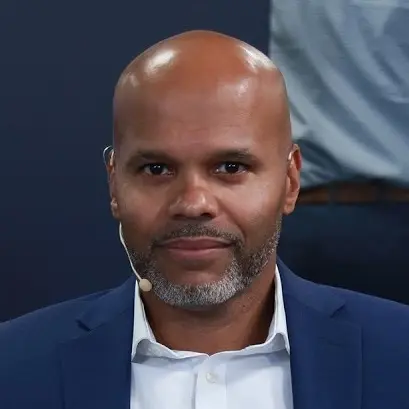
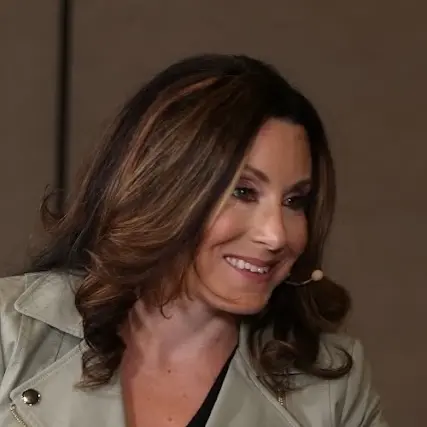
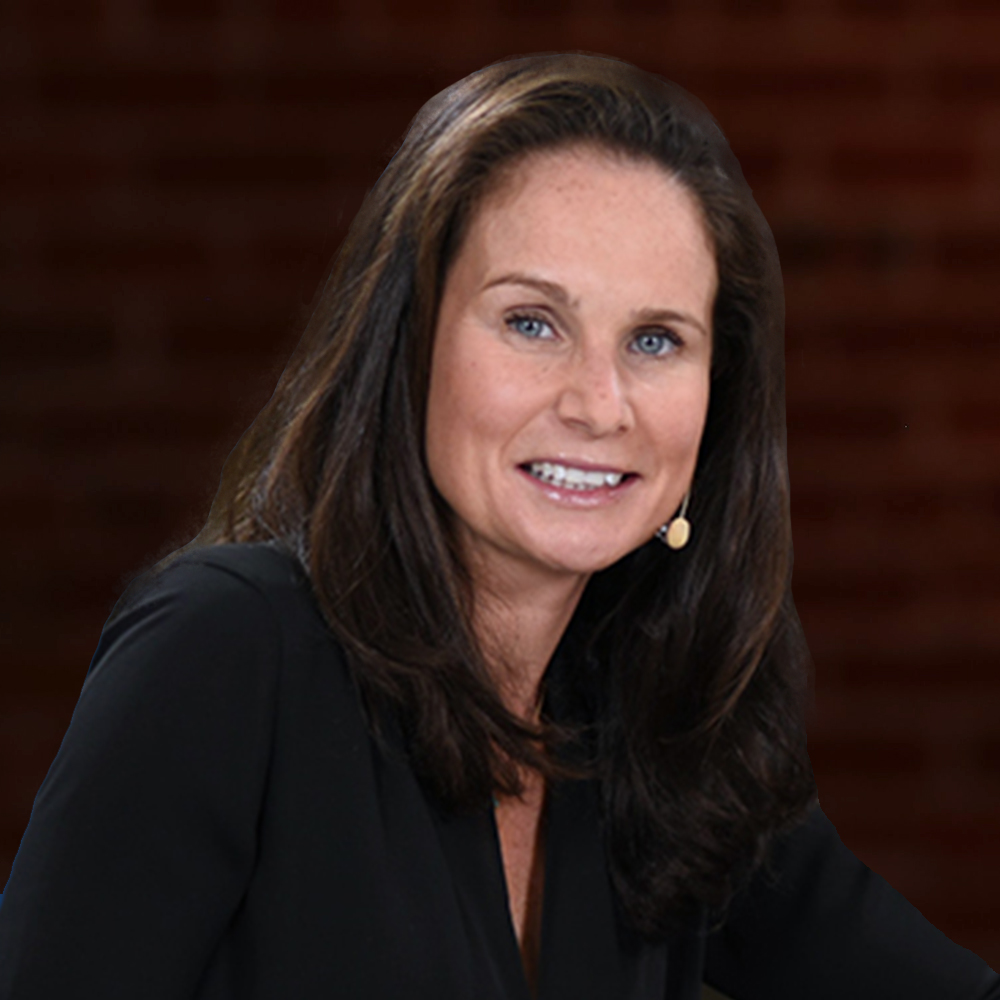
In this interview from SailPoint Navigate 2026, Meredith Blanchar, chief customer officer of SailPoint, joins Karen Leavitt, AVP for IT security at Unum, and Jakob Houde, director of cybersecurity at Honeywell, to talk with theCUBE Research's Krista Case about how identity security must evolve to govern human, machine and AI agent access across the enterprise. Blanchar describes a shift from paralysis to action, noting one Fortune 500 company that discovered 10,000 previously unknown agents, many with standing admin privileges. Leavitt details Unum's rapid rollout of agent discovery across AWS Bedrock and Copilot, prioritizing a "kill switch" to cut access the moment risk emerges. Houde explains how Honeywell is confronting years of accumulated access as legacy permissions carry over into AI agents, making data cleanup a prerequisite for safe deployment at scale.
The conversation also touches on the emerging crisis of agent ownership, with Leavitt recounting the moment she realized newly discovered agents had no accountable owner, and Blanchar underscoring that governance must be assigned automatically and in real time rather than through manual tagging. Houde outlines a risk-based approach to adoption, advising peers to start agents with read-only, fit-for-purpose access, establish an AI council and weigh business impact against risk before scaling autonomy. The panel looks ahead to agent-to-agent delegation and swarms of sub-agents, acknowledging that ownership and governance frameworks must keep pace with this next wave of complexity. From kill switches to continuous, cross-functional governance models, the guests offer a practical playbook for operationalizing identity security before agentic AI outpaces oversight.
Almost there!
We just sent you a verification email. Please verify your account to gain access to
SailPoint Navigate 2026. If you don’t think you received an email check your
spam folder.
In order to sign in, enter the email address you used to registered for the event. Once completed, you will receive an email with a verification link. Open the link to automatically sign into the site.
Register for Sailpoint Navigate 2026
Please fill out the information below. You will receive an email with a verification link confirming your registration. Click the link to automatically sign into the site.
You’re almost there!
We just sent you a verification email. Please click the verification button in the email. Once your email address is verified, you will have full access to all event content for Sailpoint Navigate 2026.
I want my badge and interests to be visible to all attendees.
Checking this box will display your presense on the attendees list, view your profile and allow other attendees to contact you via 1-1 chat. Read the Privacy Policy. At any time, you can choose to disable this preference.
Are you sure you want to remove access rights for this user?
Details
Manage Access
email address
Community Invitation
Meredith Blanchar, SailPoint, Karen Leavitt, Unum & Jakob Houde, Honeywell Technologies
In this interview from SailPoint Navigate 2026, Meredith Blanchar, chief customer officer of SailPoint, joins Karen Leavitt, AVP for IT security at Unum, and Jakob Houde, director of cybersecurity at Honeywell, to talk with theCUBE Research's Krista Case about how identity security must evolve to govern human, machine and AI agent access across the enterprise. Blanchar describes a shift from paralysis to action, noting one Fortune 500 company that discovered 10,000 previously unknown agents, many with standing admin privileges. Leavitt details Unum's rapid rollout of agent discovery across AWS Bedrock and Copilot, prioritizing a "kill switch" to cut access the moment risk emerges. Houde explains how Honeywell is confronting years of accumulated access as legacy permissions carry over into AI agents, making data cleanup a prerequisite for safe deployment at scale.
The conversation also touches on the emerging crisis of agent ownership, with Leavitt recounting the moment she realized newly discovered agents had no accountable owner, and Blanchar underscoring that governance must be assigned automatically and in real time rather than through manual tagging. Houde outlines a risk-based approach to adoption, advising peers to start agents with read-only, fit-for-purpose access, establish an AI council and weigh business impact against risk before scaling autonomy. The panel looks ahead to agent-to-agent delegation and swarms of sub-agents, acknowledging that ownership and governance frameworks must keep pace with this next wave of complexity. From kill switches to continuous, cross-functional governance models, the guests offer a practical playbook for operationalizing identity security before agentic AI outpaces oversight.
Meredith Blanchar, SailPoint, Karen Leavitt, Unum & Jakob Houde, Honeywell Technologies
Meredith Blanchar
Chief Customer OfficerSailPoint
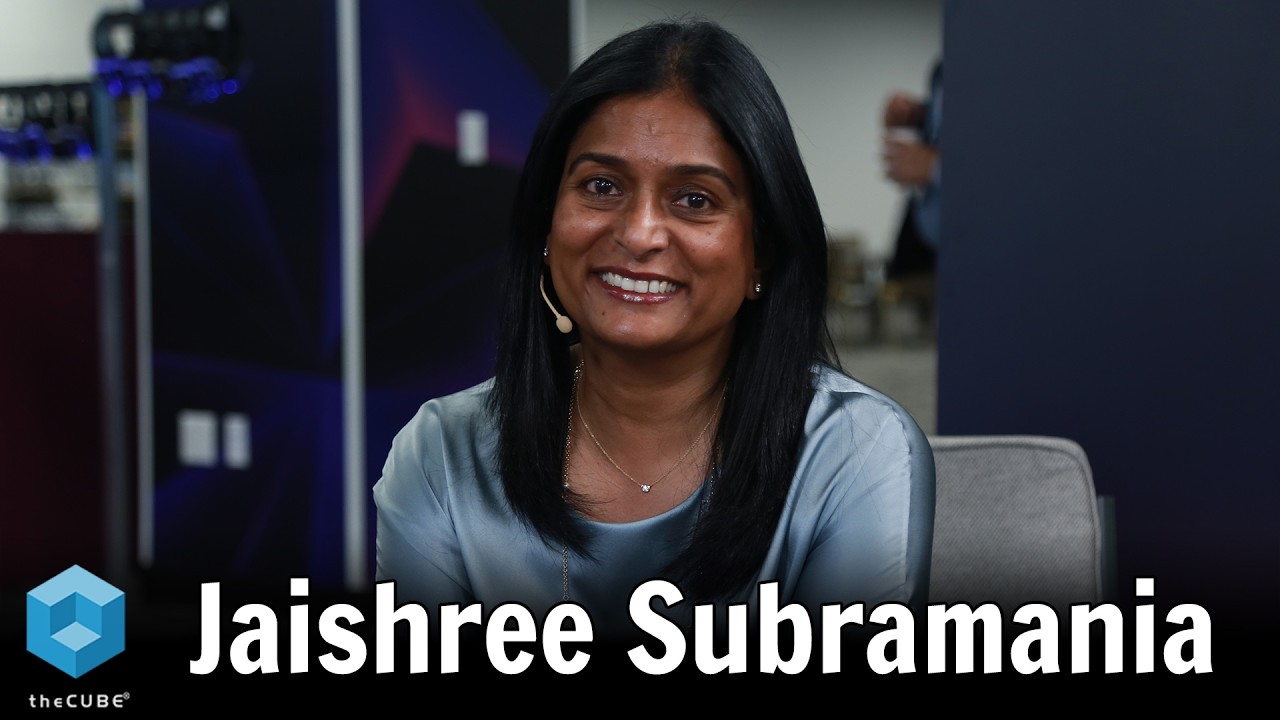
Karen Leavitt
AVP, IT SecurityUnum
Jakob Houde
Director of CybersecurityHoneywell Technologies
In this interview from SailPoint Navigate 2026, Meredith Blanchar, chief customer officer of SailPoint, joins Karen Leavitt, AVP for IT security at Unum, and Jakob Houde, director of cybersecurity at Honeywell, to talk with theCUBE Research's Krista Case about how identity security must evolve to govern human, machine and AI agent access across the enterprise. Blanchar describes a shift from paralysis to action, noting one Fortune 500 company that discovered 10,000 previously unknown agents, many with standing admin privileges. Leavitt details Unum's rapid ro...Read more
exploreKeep Exploring
How have conversations with customers changed over the past year as agentic AI and security and governance challenges have become board‑level priorities?add
What data-access and governance problems have emerged from deploying agents, and how are you addressing them?add
What challenges exist between discovering AI agents, turning them on, and governing them at runtime—especially regarding assigning owners and ensuring real-time accountability?add
Where should an organization start when adopting or implementing AI solutions, and how should it balance prioritizing use cases with assessing risk and governance?add
Meredith Blanchar, SailPoint, Karen Leavitt, Unum & Jakob Houde, Honeywell Technologies
search
(INTRO)
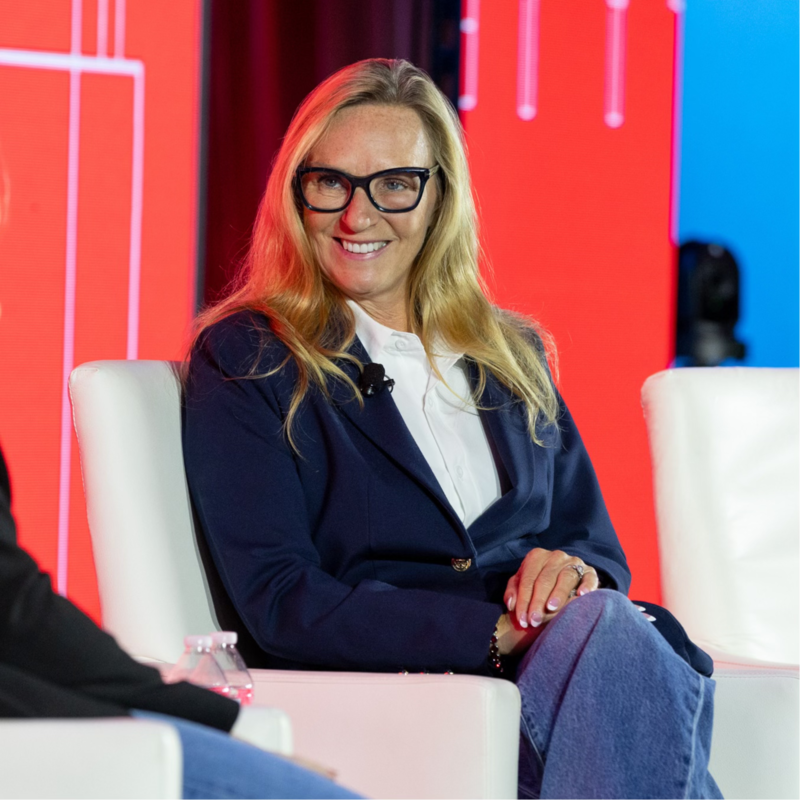
Krista Case
>> Welcome back to theCUBE. You're watching our live coverage of SailPoint 2026 live here from Austin, Texas. I'm Krista Case, principal analyst, and we are cruising right through the afternoon here. We're going to get right into it because we have the opportunity to continue with two really great customer stories that we heard on the main stage this morning. I have three guests. I'm joined here by Meredith Blanchar, Chief Customer Officer with SailPoint. Meredith, welcome to theCUBE.
Meredith Blanchar
>> Thank you for having me.
Krista Case
>> Thank you, Meredith. And we're joined by two of your customers. We have Karen Leavitt, who is AVP for IT Security with Unum, and we have Jakob Houde, who is Director of Cybersecurity with Honeywell. Karen and Jakob, thanks so much for joining us this afternoon.
Rebecca Knight
>> Thanks for having us.
Krista Case
>> Absolutely. So Meredith, I wanted to get started with you. You're Chief Customer Officer, you're really sitting here on the front lines. How have your conversations with customers really changed over the past year as agentic AI and solving these security and governance challenges becomes really a board-level priority?
Meredith Blanchar
>> Yeah, that's a great question. And man, they have changed quite a bit. I think it's twofold. So one, it's the urgency behind the conversations. People need to know that they need to move now. So it's a lot more urgency. And then second, they really want that playbook. They don't want to be guessing at this. They really expect us to be the trusted advisors and give them that step-by-step way to really secure their business at scale.
Krista Case
>> Yes, absolutely. There's a ton of urgency to adopt AI and to solve some of these problems. And Jakob, I'd like to shift over to you. You mentioned on the main stage this morning that software engineering has been one of the strongest drivers of agent adoption at Honeywell. What did you learn once those agents started moving from being just coding assistants and actually moving into production?
Rebecca Knight
>> Yeah, no, that's a great question because we learned a lot in the last, let's say, 12 months as far as how engineering operates and the data they access. But I think one of the main things that we learned is that the agents can be very, very useful when it comes to software development around their CI pipelines, right? So before, they would have to do a lot of scripts, a lot of Python automation, a lot of things like that. And now they would just plug these agents in and be able to do the same job in half the time with less permissions and things like that. So we learned a lot about how to control access from an agent perspective, right? This is something that we've obviously never done before, but it made it a lot easier for us to be able to control the pipelines at the end of the day, you know?
Krista Case
>> Absolutely, Jakob, thank you. Yeah. And we sort of jumped right in talking about how these agents are moving into production, but before we can govern them, step one is solving Discovery. Karen, before the cameras were rolling, we were talking about some of the steps that Unum is taking to discover your AI agents that are moving into production. Can you share more about that?
Karen Leavitt
>> Yeah, sure. So we were lucky to be able to get the Agentic Business suite, and with that there was a package that we could work with SailPoint and the engineers to have them help us get the AI agents connected as well and learn about them. So it was a great partnership. Everyone leaned in on both sides. They brought experts from AWS Bedrock, they brought experts from Copilot. We teamed together. We had to get extra people from our Microsoft team as well as the AWS cloud team. And everyone really just leaned in and worked together to get the configurations done. In 2 weeks, we got all the configurations done to be able to discover both the AI agents in Bedrock and in Copilot. And it was excellent. And this is what we want. We wanted to understand what kind of information we were going to get about the agents. And the first thing we want is a kill switch, right? So at least if we have these agents discovered, and we have the correct access, we could actually, without even having anything else, have a kill switch at least. So that was a great success. And I was really so pleased with the partnership across the board. That really made a big difference to just get that done. And it was, everyone was so flexible. We got it done. Now the big thing is now working with security operations. When they see something going on, we can actually say, oh, well, we have that in SailPoint and we could actually terminate their access immediately. So it's one step to understand a little bit about what we have and it's just the beginning.
Krista Case
>> Absolutely. Plenty more to come. And Karen, I think part of that kill switch, part of why it's so important is the fact that these AI agents are accumulating access is something that we've been talking about a lot over these last couple of days. Jakob, I'd like to shift back to you. One of your biggest lessons seemed to be based on what you described this morning was this accumulated access. So an employee may have permissions left over from years of work that's then transitioned to the AI agent. So how do you think about addressing that challenge before you move into very large-scale deployment?
Rebecca Knight
>> Yeah, so this is actually not a new problem, right? This is an existing problem that's been around for years. But we kicked the can down the road because it wasn't really, quote unquote, a problem, right? So when the agents started coming online and we started seeing agents have permissions to files that they probably shouldn't have permission to, we said, okay, this is a real problem, right? So we had to put some priority on an old problem that kind of resurfaced. So right now we're doing that evaluation as far as discovering what is the data footprint right now that everyone has access to? And having these agents now accessing services and data they shouldn't have access to gives us the ability now to refocus on solving that original problem, right? So this tech debt that we had, or have, I should say, is something we're working through, right? So I think a lot of organizations will have the same problem. And if I look at it, we have petabytes of data that we have to go through. This is not gonna be an overnight thing, but cleaning your data, I think, is one of the primary steps if you're going to start deploying agents.
Krista Case
>> Yeah, absolutely. You need that strong data foundation.
Rebecca Knight
>> Yeah, exactly.
Krista Case
>> So when we think about taking a quick step back, when we think about that accumulated access, one problem that I'm hearing a lot when I talk to customers is that they're actually finding that many of their AI agents have no clear owners. Karen, I know you kind of talked about that a little bit this morning. What did that teach you about the gap between discovering agents and turning the lights on and then actually at runtime being able to govern them?
Karen Leavitt
>> Yeah. Yeah. The big thing is, that's one of the governance foundations is having the owner, right? And I was like, and we didn't have the owner. And I'm like, what do you mean there's no owner on this? I literally, it was like, Okay, so we do have to maybe work with the cloud team to see if we can get the owner from the master data down to the AI agent. But we know for sure we have to do it automatically. We cannot do it manually because everything's going to move so quickly and we're going to discover agents so quickly. We need to immediately know who the owner is and who's accountable. And so, that's going to be a big challenge. And I think that's one of my next big tasks that we have to do is figure out, okay, how are we going to do this? Because the team was like, "Hey, no problem. We can do this like we do for everything else, like we did for all the app IDs and machine IDs. We'll just go out and find the owner and we'll tag them." And I'm like, "No, we got to do this automated. We can't do it like that." Because it just won't be efficient and effective. And it won't be in time, right? We have to do continuous monitoring. The governance has to be real-time, not every quarter. the days of, doing access reviews once a year or once a quarter is going to be gone. It's going to be continuously monitoring what's going on and then removing access if we have to. And if we don't have an owner, we don't have accountability either. And that was a big discussion at today's conference as well.
Meredith Blanchar
>> Absolutely.
Krista Case
>> Thank you, Karen. And Meredith, I'd like to bring you back in. these are really some clear customer challenges, really from discovery through governance. When you sit back and think across the SailPoint customer base, are these some common challenges that customers are facing? What's really bubbling up to the surface?
Meredith Blanchar
>> Yeah, absolutely they are. I would say a few months ago, the challenge that we had was customers— I would describe them as almost paralyzed. They really weren't sure where to go or how to even start this. Now we've gotten them to take on discovery, and we're finding some very interesting things with discovery. We had a Fortune 500 company where we went in and did some discovery, and they were adamant that they didn't have any agents out there, and they had 10,000 agents, a lot of them with standing admin privileges. So we've moved on to discovery, and I think now the challenge that we're seeing— and Karen touched on it— is Okay, ownership and accountability. Who owns these agents? And if you listen to one of the keynotes this morning, I loved what Chandra said, and that is ultimately this is going to roll up to the CEO. If you don't have an owner, you can't send an agent to jail. So we've got to figure out this problem. So it's one, understanding who is the owner, and then figuring out how to assign ownership in real time. you can't do it after the fact. We've got to keep pace with these agents.
Krista Case
>> And I'm glad you brought that point up, Meredith, because I wanted to hear a little bit more from Jakob. You mentioned that you believe that every agent should be born with an owner. I certainly agree. But when we think about taking a step back and making ownership a part of that process from kind of the beginning and from the provisioning, how does that maybe change as agents begin delegating work to other agents when we start to have these master and sub-agents and potentially even these agent swarms?
Rebecca Knight
>> No, that's definitely an evolution that we're going to have to address. A2A is something that we don't have a lot of experience with right now, but very soon we will, right? So as we talked about this fast-paced, changing of technology, A2A is probably going to exist in the next month if I had to guess, right? But we haven't had to address that problem yet, but we're thinking about how to do that. But we have so many foundational things to kind of work on, so the agent-to-agent scenario, we know it's on the horizon, but we haven't actually addressed that yet. But that's definitely something on our radar for sure.
Krista Case
>> Yeah, absolutely. More to come for sure.
Rebecca Knight
>> Yeah.
Krista Case
>> And Karen, in your last comments, you were talking about kind of the challenges of reviews and governance. This really isn't fast enough for agents. Again, it's been a big talking point here this week. What does continuous governance look like at Unum in terms of actually what you're operationalizing today, if anything?
Karen Leavitt
>> Yeah, so I think we're going to have to have a group of people that do governance, AI governance from all different areas. We're going to have to have architecture, we're gonna have to have security operations, we'll have to have the business to understand the business need. And again, identity, of course. Identity needs to be the foundation and the core. But the big thing is we're going to have to leverage the different tools that we have to make sure that we are doing continuous monitoring. And there won't be one tool. Each of these tools are going to all complement each other. We want to just make sure we're leveraging all of the tools that we have today to monitor to make sure there are not any issues going on. And again, you know, one of the big things about not having owners, we should probably be able to clean up a lot of these agents too, right? So it might not even be that we're going to find the owner, we might just get rid of them, right? And so there's a lot to unpack here, but it is really going to be fascinating to understand how we can automate governance over automation.
Krista Case
>> Absolutely. So we've covered a lot of ground in just this conversation, and there certainly is a lot to unpack. We hear there's a lot of just uncertainty amongst customers. Both Jakob and Karen, I'd love to get your thoughts on, for some of your peers at companies that are earlier on in this journey, what would you recommend that they put in place before they start to either delegate more autonomy to AI agents or start to operate at a greater scale? How about we start with Jakob?
Rebecca Knight
>> Yeah, no, that's a good question. So the first thing, I wouldn't start with autonomy, right? I would control my agents, give them read-only strictly following use cases that are fit for purpose. So I think that's the key. Just don't deploy agents because it's the cool thing to do. Deploy it because you have a business reason to do it, right? So I think a lot of companies who are just starting in this journey really need to understand what's my business reason to do it? just don't roll AI because everyone else is doing it, right? Obviously it's going to be a priority for a business, but understand what you're trying to solve, what problems are you going to solve? So if they can start there with understanding their use cases and then apply the proper governance controls And we mentioned an AI council. I think AI council is a good place to start with.
Karen Leavitt
>> Yeah.
Krista Case
>> And Jakob, you mentioned the business reason, behind the AI agent. And certainly, we're advising that security teams start to get closer to their executives and their boards and have those conversations. I guess the question back to you is, are there maybe metrics or KPIs that you would recommend to some of your peers that they keep in mind as they're working with their boards on understanding the levels of risk for adopting certain AI projects?
Rebecca Knight
>> Yeah, no, everything needs to be risk-based, right? So, when I look at, how we evaluate use cases, right, it's impact, right? What is the impact of something happening that's negative, right? Is it a compromise? Is it an agent being a rogue agent? So, we really have to, set a criteria of what's the impact for the return? So for example, if we have a good use case that AI can solve, like a customer service thing, and we know it's going to bring a lot of value, right? Maybe that's something that we tackle first and then we go from there. But we definitely have to evaluate the risk first. But it's really about what's the impact of that business decision versus the risk, and then probably start slow and build your way
Krista Case
>> up.thank you, Jakob. That makes sense. Yeah. And Karen, same question back to you. Where would you advise a peer to start?
Karen Leavitt
>> Yeah, so I think this bringing of the minds together, the architecture team, understanding, the business use case and that first understanding the AI model that they're putting in place for each one and then understanding the access that's getting granted to them. So for example, the app ID in Bedrock, right? Obviously, that needs to have an owner, right? basic things like that. And so I think we need to think about how we're doing this and some of the attributes that we need to put on the agent so we can make sure that they are governed properly. And, owner is just an example, but there might be other attributes that we want to make sure are on the agent identity so we can make sure we govern it as best as we can moving forward. And so just kind of stepping back and making sure that, we do have accountability and it is in a place where we can use it automatically to make sure we can govern.
Krista Case
>> That makes sense. So Meredith, how about you bring us home in this conversation with everything that customers have to hear and take home this week at Navigate. What do you think they maybe need to do differently or start thinking about differently when they get home?
Meredith Blanchar
>> Yeah, so this is a challenge, but as we said in our talk this morning, we have the solution. It's the playbook. It's that essential sheet of music, right? This is foundational governance. We just need to do it at scale. We know how to do this. We just need to start moving.
Krista Case
>> Absolutely. And I think we're definitely moving. So Meredith, Karen, Jakob, Thank you so much. It's really been a pleasure. We appreciate all your insights.
Rebecca Knight
>> Thank you.
Meredith Blanchar
>> Thank you.
Krista Case
>> Thank you. And thank you so much for joining. Make sure you stick around. We're going to be back in just a few minutes with more live coverage here from SailPoint Navigate 2026. I'm Krista Case with theCUBE Research. Thank you so much. And we'll be right back.









 Krista Case
 Rebecca Knight
 Karen Leavitt