Levent Besik of SailPoint discusses autonomous identity, Agentic Fabric protection and governance, integration of the Entro acquisition and the platform's re-architected unified data model at SailPoint Navigate 2026. Besik brings deep experience in identity, security and artificial intelligence, including prior work co-founding Enterprise Cloud AI at Google. They address Autonomous Identity, Agentic Fabric capabilities, Entro integration and general availability timing, the extensible unified data model and unified lineage, and roadmap priorities such as autonomous agents and audit automation.
Key takeaways highlight three dimensions of agent risk: scale, complexity and speed, and the requirement for machine-speed defenses. Besik states that "you need machine speed to fight machine attacks," which guides the design of coordinated autonomous guardian agents and staged autonomy levels to build trust. Entro capabilities move to general availability in November, while unified lineage and the new data model enable stronger policy enforcement, audit efficiency and cross-graph governance.
Almost there!
We just sent you a verification email. Please verify your account to gain access to
SailPoint Navigate 2026. If you don’t think you received an email check your
spam folder.
In order to sign in, enter the email address you used to registered for the event. Once completed, you will receive an email with a verification link. Open the link to automatically sign into the site.
Register for Sailpoint Navigate 2026
Please fill out the information below. You will receive an email with a verification link confirming your registration. Click the link to automatically sign into the site.
You’re almost there!
We just sent you a verification email. Please click the verification button in the email. Once your email address is verified, you will have full access to all event content for Sailpoint Navigate 2026.
I want my badge and interests to be visible to all attendees.
Checking this box will display your presense on the attendees list, view your profile and allow other attendees to contact you via 1-1 chat. Read the Privacy Policy. At any time, you can choose to disable this preference.
Select your Interests!
add
Upload your photo
Uploading..
OR
Connect via Twitter
Connect via Linkedin
EDIT PASSWORD
Share
Almost there!
We just sent you a verification email. Please verify your account to gain access to
SailPoint Navigate 2026. If you don’t think you received an email check your
spam folder.
In order to sign in, enter the email address you used to registered for the event. Once completed, you will receive an email with a verification link. Open the link to automatically sign into the site.
Sign in to gain access to SailPoint Navigate 2026
Please sign in with LinkedIn to continue to SailPoint Navigate 2026. Signing in with LinkedIn ensures a professional environment.
Are you sure you want to remove access rights for this user?
Details
Manage Access
email address
Community Invitation
Levent Bisek, SailPoint
Levent Besik of SailPoint discusses autonomous identity, Agentic Fabric protection and governance, integration of the Entro acquisition and the platform's re-architected unified data model at SailPoint Navigate 2026. Besik brings deep experience in identity, security and artificial intelligence, including prior work co-founding Enterprise Cloud AI at Google. They address Autonomous Identity, Agentic Fabric capabilities, Entro integration and general availability timing, the extensible unified data model and unified lineage, and roadmap priorities such as autonomous agents and audit automation.
Key takeaways highlight three dimensions of agent risk: scale, complexity and speed, and the requirement for machine-speed defenses. Besik states that "you need machine speed to fight machine attacks," which guides the design of coordinated autonomous guardian agents and staged autonomy levels to build trust. Entro capabilities move to general availability in November, while unified lineage and the new data model enable stronger policy enforcement, audit efficiency and cross-graph governance.
In this interview from Navigate 2026, Levent Bisek, chief product officer of SailPoint, joins theCUBE's Rebecca Knight and theCUBE Research's Krista Case to discuss how identity security is being rebuilt to govern humans, machines and autonomous AI agents together. Bisek details how the ratio of non-human to human identities has climbed to 144-to-1, driving three compounding pressures: scale, complexity and speed. He explains why a single agent can spin up dozens of credentials, tokens and sub-identities across an exponentially growing access graph, and why r...Read more
exploreKeep Exploring
What is the biggest insight about the cybersecurity threat posed by autonomous AI agents, and what defenses are required?add
What is the current state of Entro's integration into the SailPoint platform, and is it fully integrated?add
What was your favorite part of the conference, and which upcoming features or use cases on the roadmap are you most excited about?add
What is SailPoint's core differentiator, and how does its unified platform and unified graph for lineage and access models benefit customers compared with a fragmented model?add
>> Hello everyone, and welcome back to theCUBE's live coverage of SailPoint Navigate here in Austin. I'm your host Rebecca Knight, sitting alongside Krista Case, the principal analyst at theCUBE Research. Krista, let's talk about autonomous identity.
Krista Case
>> I'm excited.>> Hot topic.
Krista Case
>> Yeah, it really is. And digging into the product itself, I'm really excited for our next guest.
Rebecca Knight
>> Well, who better to dig into the product itself than Levent Besik, CPO at SailPoint. Welcome. Welcome back to theCUBE, Levent. I know you and Krista had a great conversation at Black Hat.
Krista Case
>> Thank you.>> So glad to be back here. Thank you so much. Welcome back, Levent.
Rebecca Knight
>> So you've been the CPO since April, so not that long.>> That's right.
Rebecca Knight
>> 6 months. Why don't you start by telling us how these 6 months have been and how do you find the SailPoint strategy approach, all of it?>> Culture.
Krista Case
>> It's—>> thank you. look, it's been a great ride so far. Look, you know, the company has done a lot of the legwork for renewing its platform, creating a new data model. Really coming with a strong offering. So it was an honor for me to take over and then start doing the tweaks in the product strategy and doing a much more direction into both Agentic Fabric and creating our Agentic Protection and Governance use cases as well as, of course, Autonomous Identity. So really exciting thing for me to be here and be able to do all this. I've been in identity and security and AI for a while. I started my journey back at Google, actually, when I was co-founding the Enterprise Cloud AI solution for developers and solution builders. And it was very clear even back then. And this is a long time ago now, maybe 10 years ago. Even back then, it was very clear that security would be a key, key need for AI adoption to take off. So it's an honor now to be able to do that here. And driving the product strategy and direction.
Krista Case
>> Absolutely, Levent. And when we sat down at Black Hat, you talked about 3 layers of agent protection: the prompt, the agent's plan, and then the runtime authorization and monitoring. That latter piece of which we've heard a lot about here at Navigate, and it ties into that sort of autonomous AI protection and governance that we've been talking about. So I'm curious now that you've had more experience from a customer perspective, to that model, can you comment on what's working well and maybe what's on the roadmap to continue working on over the next 6 months to 12 months?>> Yeah, absolutely. So on the— look, I think we should first start with how the agents really changed the game. I think at Black Hat we're talking quite a bit about scale and the scale of agents. Back then I think it was 80 to 1. Now we're saying it's 144 non-humans to one human identity. So scale is still shooting up, right, significantly. But I think now what's getting more important, and that's what we're building Agentic Fabric for, is two additional dimensions. So scale is definitely an important dimension, but there's two more dimensions that we are solving for. Second one is complexity of the exposure area. So if you look at these recent frontier model incidents, right, it was all autonomous agents sneaking out, doing things. But if you look at how they did, what they did, right? One of them was basically an exposed credential that was left by a human, right, that got compromised. Another one was a token, a human token that got hijacked, right? Another one was a misconfiguration. So these are all effectively doors that humans left open and agents just walked through, right? So I think the biggest realization right now is that you cannot secure agents just with agents. You have to secure agents and humans and everything in between together. You have to secure the entire graph and that graph is exponentially growing, right? 'Cause an agent creates multiple identities. It can use my credential, it can create its own machine identity, it can access multiple resources, create multiple access tokens or refresh tokens. One agent can create 28 different artifacts, right? That is, and you have to secure all of them. And that's really complex for our customers to go through. So I think that second dimension complexity is definitely a huge consideration here. And the third one is speed, right? These frontier incidents are now showing us, I think at Black Hat, we only had one. Now we have like, I don't know, 4, 5. It seems like every other week there's a new one, unfortunately. In one of these incidents, an agent was able to get access to what we call cluster admin access, like basic root access, right? In under a second. Normally it would take a human days if not weeks to be able to get to that level of access. Why? Because it could do 14,000 actions rapidly to get to that point. It spawned other agents, it coordinated with other agents. So the third dimension is speed. The speed, the machine speed, is undeniably a huge factor. So you have scale, a lot more agents than humans, you have the complexity geometrically growing across that graph that we talked about, and you have the speed of machines, right? Doing this at machine speed, the human speed cannot control this, it cannot manage it. So what you need is AI speed protecting and securing and authorizing AI, basically, right? That's what you need to do, and that's what Autonomous Identity is all about. So I think that's the biggest insight that we want to have our customers take away from SailPoint Navigate is you need machine speed to fight machine attacks that happen at machine speed. And the way that we think about this is, look, if you look at identity governance and administration, there's a lot of obviously critical policy decisions that you have to make every day. But there's also a lot of tedious things that you do a lot that you have to do. And after a while it might get rubber stamped quite a bit, to be very frank with you, because you're doing the same thing over and over again. And how do we reduce that cognitive load of the administrators, who've honestly been now dealing with all this deluge of attacks, right, of all the surface area that they have to manage and have them focus on the few things that matter, right, that they have to secure, that set the policy, set the posture, what they need to accomplish.
Krista Case
>> And Levent, building on that, you know, so we've been talking this afternoon here in theCUBE about zero standing privilege. And you're talking about that machine speed. So I guess from your perspective, what maybe needs to replace human approval as we need to move at machine speed? And I guess what evidence do you think customers should be looking for in order to allow the system to either grant privilege or revoke privilege autonomously?>> Absolutely. The way that we're imagining this is setting up and offering our customers a set of Autonomous Agents, Guardian Agents, if you will, that serve multiple purposes. There's going to be a lot of, eventually probably more than a dozen, right? But they'll all be coordinated on one single surface area, one dashboard. The analogy or metaphor I use here quite a bit is obviously self-driving cars, right? That's the obvious thing. And if you think about it, right, today, we have Waymos, right? You can sit in the backseat and take a car. But if you think about it, there was a journey there that happened before you sat in the backseat of a Waymo and you trusted that system, right? Think about what that journey has been. I'm dating myself now, right? I remember driving on the highways of Indiana, right? with no GPS and with a stick shift. And in order to find for myself where I'm going to go, I have to look up on a map, make a plan, right? And then jump in my car, plan where I'm going to get gas, do all these things, right? And then over time, what happened? We got automatic transmission, so I don't have to switch gears anymore, but the car is going just fine, right? And then I got cruise control. What happened? I don't— I started using my gas pedal a bit less, but I still have control. I can still hit the gas and accelerate or decelerate, but cruise control is doing the job for me, the hard work for me. And then we've done adaptive cruise control. So now I can adjust to the car in front of me. Now I don't have to even brake. So I'm still in control, but I do less and less of that legwork, if you will, literally. And over time, I got GPS. Now it's telling me where to go. And initially, I didn't trust it. But now it has traffic information, real-time accident information. Why would I not trust it? So now I listen to GPS and I just go there. And eventually I found myself in a Tesla, right? And I'm realizing how the self-driving works. I'm building trust in it and finally end up in the backseat of a Waymo where the car is showing me where it's going. Now, that was a journey of trust that I slowly built over many years. And that's what we want to go do for our customers. We want to build the levels of autonomy, if you will, in our governance administration and build that trust for them. And we realize if you build a self-healing, self-governing system today, no one's going to use it because you have to go through that journey of trust. So that's why we're building level 2, level 3, level 4 autonomous agents. And over time, customers are going to see how they're learning, how they're acting. The agents will learn from how customers are acting, how they're behaving, how they're making decisions. And it's going to be, at first, recommendations, meaning that customers can interject or interfere or stop. But eventually, I think we're going to build that trust and the customers will see that the autonomous system is going to be maybe 100 times safer than the human-run system. Still human in control, still have a stop button, still have the ultimate policy control. But that's what we're going to build. And I think that's the evolution of the authorization model that we're going to come to in this offering that we want to create.
Rebecca Knight
>> Entro as an acquisition closed in June. What is, from your perspective, the state of integration right now? Is it fully integrated into the SailPoint platform?>> We're testing it out. We literally have a limited availability in the company where they're testing it right now. We want to get it into the hands of our customers in November. So look, I've been through some large acquisitions in other companies in a prior life, and one thing that we learned, I learned personally very dearly, is You cannot delay your integration. As a matter of fact, the longer integration takes, the more confusion it creates, the more confusion for your partners, too, which platform are they going to build on top of? Which platform are your customers going to go buy? How do you then migrate your customers to this new platform? So we walked into this eyes wide open and said, we're going to get Entro capabilities on our core Atlas platform as soon as possible. That was the goal, even before the papers were signed. The team walked in with that mission. And they did a great job. Entro team, they basically have built almost all of the functionality that our customers are asking for in our core platform. And we're almost there. So we're going to announce— we announced it. We're GAing it in November. So I want to be humble about it. I did some cursory research. I think this is the fastest integration of its kind in the corporate history. But I would love to hear if anyone else integrated something else that fast before. I'm really excited because now the customers can quickly use Agentic Fabric, SailPoint Agentic Fabric with all capabilities ready to go in GA format.
Krista Case
>> And so Levent, another interesting development from kind of a product and an architecture perspective. So Chandra has been very public about the fact that SailPoint had to take 12 to 18 months to fundamentally re-architect the underlying data model.>> That's right.
Krista Case
>> You had a beautiful analogy a few minutes ago about kind of, okay, building trust with the Waymo and how that ultimately becomes safer. I'm curious your take on sort of this re-architecture of the underlying data model in kind of, I guess, that process. What were maybe some trade-offs or some key points of re-architecture that had to happen in order to make this AI governance, this AI agent governance possible.>> Yeah. No, look, we're standing on the shoulders of giants here. Chandra obviously was in the company before I joined, for a year before I joined, right? It was very visionary of him to go build that unified data model. If that didn't exist, we couldn't integrate Entro as fast, right? The fact that we had that unified model, one data model that kind of combines all of our centralized platform services is absolutely, you know, it was a blessing, right? And that's kind of like, you know, we're building on top of that. And look, of course, while we're building that model, you have to make optimizations because you can always build the perfect product, but it's going to take forever to build. Or you can build 90% perfect product that everyone will use, right? So how do you strike the balance? And what we did was, you know, while building that data model, we were, of course, very focused on agentic use cases first, as well as the human use case that we have. But we built it extensible. So maybe we didn't build all the pieces of the data model right off the bat, but because we built it extensible, we can now add those pieces as new features come up, right? So for instance, Entro brought new non-human identity types like, you know, credentials, secrets, tokens that we didn't have before at SailPoint, right? But because of our extensible data model, we can now extend it very easily and build those things in. We didn't have them before, but we do. But that was a trade-off initially, right? We could have built the perfect model without having it now, or just build it as we go, but we built it in an extensible way. So that was a good, I think, again, a great decision 18 months ago to go through that journey. And if you look at both the architecture of the platform and the services that we build, it's nothing like what it was 5 years ago. This is a brand new SailPoint. The entire core engine is different. There are all these centralized services built on one unified data model. Powering both Agentic Fabric and Human Fabric. It's a very integrated model, a very unified model. Again, a huge evolution of what it was before, maybe a couple years ago.
Rebecca Knight
>> What is on your product roadmap that you're most excited about? And are there conversations that you're having here at Navigate that are not dictating but suggesting new avenues that maybe hadn't occurred to you? I'm sure you're talking to your customers all the time, but this is a prime opportunity too.>> this is the favorite part of this conference is all the conversations that we're having with the customers, their feedback, hearing all those pieces. Look, the piece that I'm most excited about is the autonomous identity, building all these autonomous agents for governance, right? And for protection. And really, we talked about 3 of them today that are coming soon, but there's many more we're working on. And we're asking our customers, hey, which one do you need next, right? So I'm not gonna reveal them here, But there's a lot of feedback on, hey look, I need that one first. But one use case is audit. Like, hey look, audit, as boring as it sounds, it's a major pain point for our customers. They spend hours, weeks, even months trying to get through an audit process. So there's some great ideas that we heard from our customers, how agentic autonomous agents can help there. So I'm excited to go explore that a little more. But that was one use case, for instance, right?
Krista Case
>> And Levent, I think, One concept that is only going to become more important moving forward, speaking of the roadmap, is unified lineage. So human to master agent to sub-agent to application to the data itself, right? In sort of being able to have that lineage across that spectrum. Can you talk to what this allows a customer to do today if they're moving towards this unified lineage and putting the tools in place to achieve that, that maybe they couldn't do, call it even 8 months ago?>> Absolutely. Look, what we believe is a core differentiator for SailPoint is that unified platform that we offer and that unified graph, both for lineage and access model, is a core piece of that differentiation. And it allows our customers to do some critical things that they cannot do on a fragmented model, right? Think about a model where you have agents and your humans are in separate places, right? You can maybe see who the agent is owned by, but you cannot see what that human is entitled to, right? For instance, okay, a marketing agent maybe is owned by Levent. That's interesting information. But a marketing agent that's owned by Levent that has access to privileged financial information, that can check code into GitHub, oh gosh, right? That's critical. And you can only get that in a unified access model that human and data context comes from that unified model and unified lineage. And what lineage allows you to do is basically see how an identity was used across the spectrum, right? So maybe Levent created on his MacBook an agent using, let's say Claude Code, right? And he's running it on his credentials and that Claude Code is accessing Salesforce. Using his credentials but also accessing GitHub. So you can now see all that in one place and you need to see the whole interaction. So two benefits: A, you can see that, but then B, you can take action on it, right? You can say, hold on, how come Levent's agent can do that? I should have a policy for Levent not to, you know, you don't want me to check code into GitHub. I was an engineer back in the day, but you don't want me to check code right now, right? So you can now create a policy and say, hey, look, maybe people in certain departments should not have write access to GitHub, including their agents. And you can do that in that unified graph. So I think that's a critical capability. Look, there's many other use cases here, right? Many of our customers have to confirm there's separation of duties, certified separation of duties. It's a critical thing for fraud prevention. For instance, if you're in procurement, you cannot create a vendor and then also make a payment to it, right? That would be fraud. If you have a separate system, imagine you can get away with doing that, right? You can— a human can say, hey, I'm going to create a vendor and maybe someone creates an agent that you have access to that can approve small payments to it. And your agent that you have access to or control over can start approving those payments. Separate systems look— literally, everything looks fine, right? So I say fragmented Identity is bliss, right? Everything looks perfect, but when you bring it together, that's when you see the violations and stuff like that, right? And kind of prevent that.
Rebecca Knight
>> Levent, thank you so much for coming on the show. Really interesting conversation.>> Thank you so much for having me. Enjoy Navigate.
Rebecca Knight
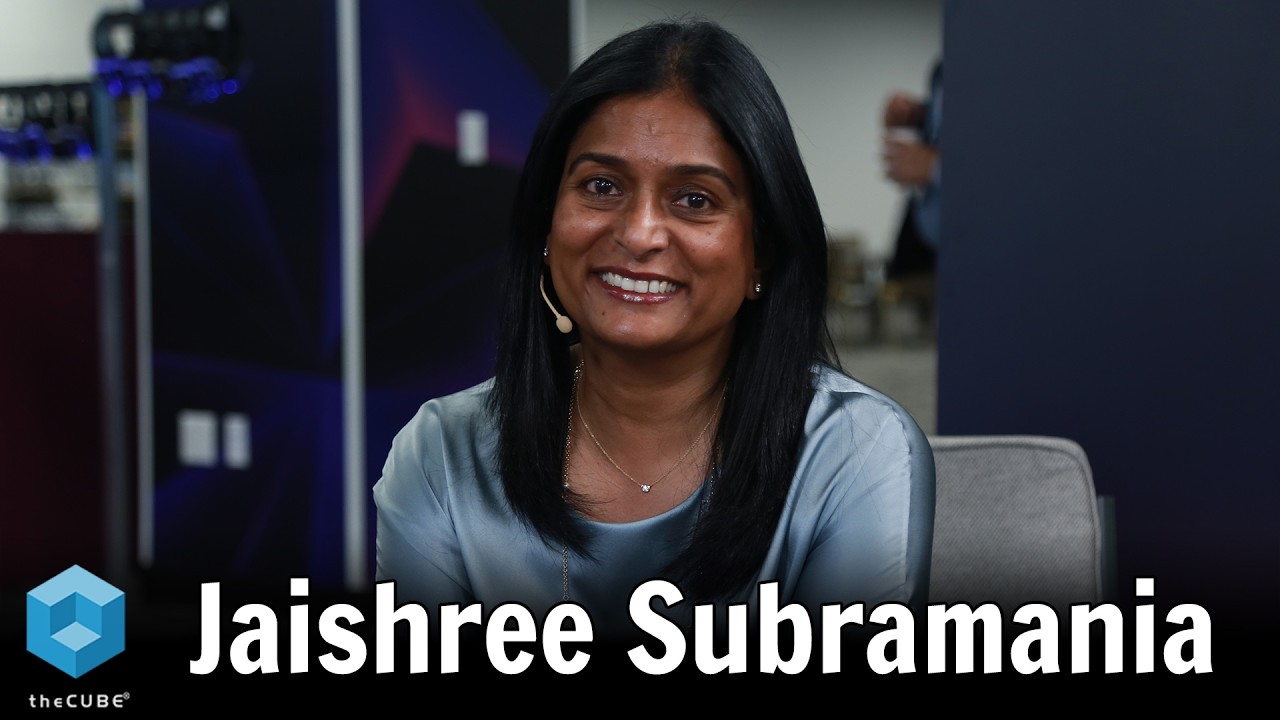
>> That wraps up day 1 of theCUBE's live coverage of SailPoint Navigate 2026. Come back here tomorrow, same time, same place for more of our live coverage. You've been watching theCUBE. The leader in enterprise tech news and analysis.>> My next session will start—







 Rebecca Knight
 Krista Case