In this segment of the Rubrik "Resilience for Everything: Cloud, Identity, AI" interview series, Rubrik’s Dev Rishi joins theCUBE’s Savannah Peterson to discuss the realities of deploying AI at an enterprise scale. The conversation centers on the critical disconnect between the ease of building AI agents and the complexity of managing the associated organizational risks. Drawing from conversations with over 180 customers, Rishi reveals that while companies are eager to embrace agentic AI, they are often stalled by a lack of effective governance and the fear of allowing models to take actions in production environments. He highlights how Rubrik is addressing these challenges by "drinking its own champagne," applying rigorous internal guardrails to its own AI initiatives to ensure security and resilience alongside speed.
The discussion explores Rubrik’s strategic announcements, including the Rubrik Agent Cloud and its integration with AWS Bedrock Agent Core, which are designed to provide visibility and control across the AI lifecycle. Rishi debunks the myth that the industry needs more agent-building platforms, arguing instead for a focus on observability, governance and remediation – specifically the ability to "rewind" destructive AI actions. By moving beyond "read-only" modes to secure, automated workflows, Rishi outlines a roadmap where enterprises can confidently operationalize agentic AI. The segment offers practical advice on bridging the gap between theoretical policies and software execution to unlock true ROI.
Forgot Password
Almost there!
We just sent you a verification email. Please verify your account to gain access to
Resilience for Everything: Cloud, Identity, AI. If you don’t think you received an email check your
spam folder.
Sign in to Resilience for Everything: Cloud, Identity, AI.
In order to sign in, enter the email address you used to registered for the event. Once completed, you will receive an email with a verification link. Open the link to automatically sign into the site.
Register for Resilience for Everything: Cloud, Identity, AI
Please fill out the information below. You will receive an email with a verification link confirming your registration. Click the link to automatically sign into the site.
You’re almost there!
We just sent you a verification email. Please click the verification button in the email. Once your email address is verified, you will have full access to all event content for Resilience for Everything: Cloud, Identity, AI.
I want my badge and interests to be visible to all attendees.
Checking this box will display your presense on the attendees list, view your profile and allow other attendees to contact you via 1-1 chat. Read the Privacy Policy. At any time, you can choose to disable this preference.
Select your Interests!
add
Upload your photo
Uploading..
OR
Connect via Twitter
Connect via Linkedin
EDIT PASSWORD
Share
Forgot Password
Almost there!
We just sent you a verification email. Please verify your account to gain access to
Resilience for Everything: Cloud, Identity, AI. If you don’t think you received an email check your
spam folder.
Sign in to Resilience for Everything: Cloud, Identity, AI.
In order to sign in, enter the email address you used to registered for the event. Once completed, you will receive an email with a verification link. Open the link to automatically sign into the site.
Sign in to gain access to Resilience for Everything: Cloud, Identity, AI
Please sign in with LinkedIn to continue to Resilience for Everything: Cloud, Identity, AI. Signing in with LinkedIn ensures a professional environment.
Are you sure you want to remove access rights for this user?
Details
Manage Access
email address
Community Invitation
Dev Rishi, Rubrik
In this segment of the Rubrik "Resilience for Everything: Cloud, Identity, AI" interview series, Rubrik’s Dev Rishi joins theCUBE’s Savannah Peterson to discuss the realities of deploying AI at an enterprise scale. The conversation centers on the critical disconnect between the ease of building AI agents and the complexity of managing the associated organizational risks. Drawing from conversations with over 180 customers, Rishi reveals that while companies are eager to embrace agentic AI, they are often stalled by a lack of effective governance and the fear of allowing models to take actions in production environments. He highlights how Rubrik is addressing these challenges by "drinking its own champagne," applying rigorous internal guardrails to its own AI initiatives to ensure security and resilience alongside speed.
The discussion explores Rubrik’s strategic announcements, including the Rubrik Agent Cloud and its integration with AWS Bedrock Agent Core, which are designed to provide visibility and control across the AI lifecycle. Rishi debunks the myth that the industry needs more agent-building platforms, arguing instead for a focus on observability, governance and remediation – specifically the ability to "rewind" destructive AI actions. By moving beyond "read-only" modes to secure, automated workflows, Rishi outlines a roadmap where enterprises can confidently operationalize agentic AI. The segment offers practical advice on bridging the gap between theoretical policies and software execution to unlock true ROI.
In this segment of the Rubrik "Resilience for Everything: Cloud, Identity, AI" interview series, Rubrik’s Dev Rishi joins theCUBE’s Savannah Peterson to discuss the realities of deploying AI at an enterprise scale. The conversation centers on the critical disconnect between the ease of building AI agents and the complexity of managing the associated organizational risks. Drawing from conversations with over 180 customers, Rishi reveals that while companies are eager to embrace agentic AI, they are often stalled by a lack of effective governance and the fear o...Read more
exploreKeep Exploring
What sources of feedback have influenced the development of the company's AI vision?add
What recent announcements were made regarding AWS Bedrock and its integration with Rubrik Agent Cloud?add
What do you hope to be able to say at AWS re: Invent 2026 that you cannot say today?add
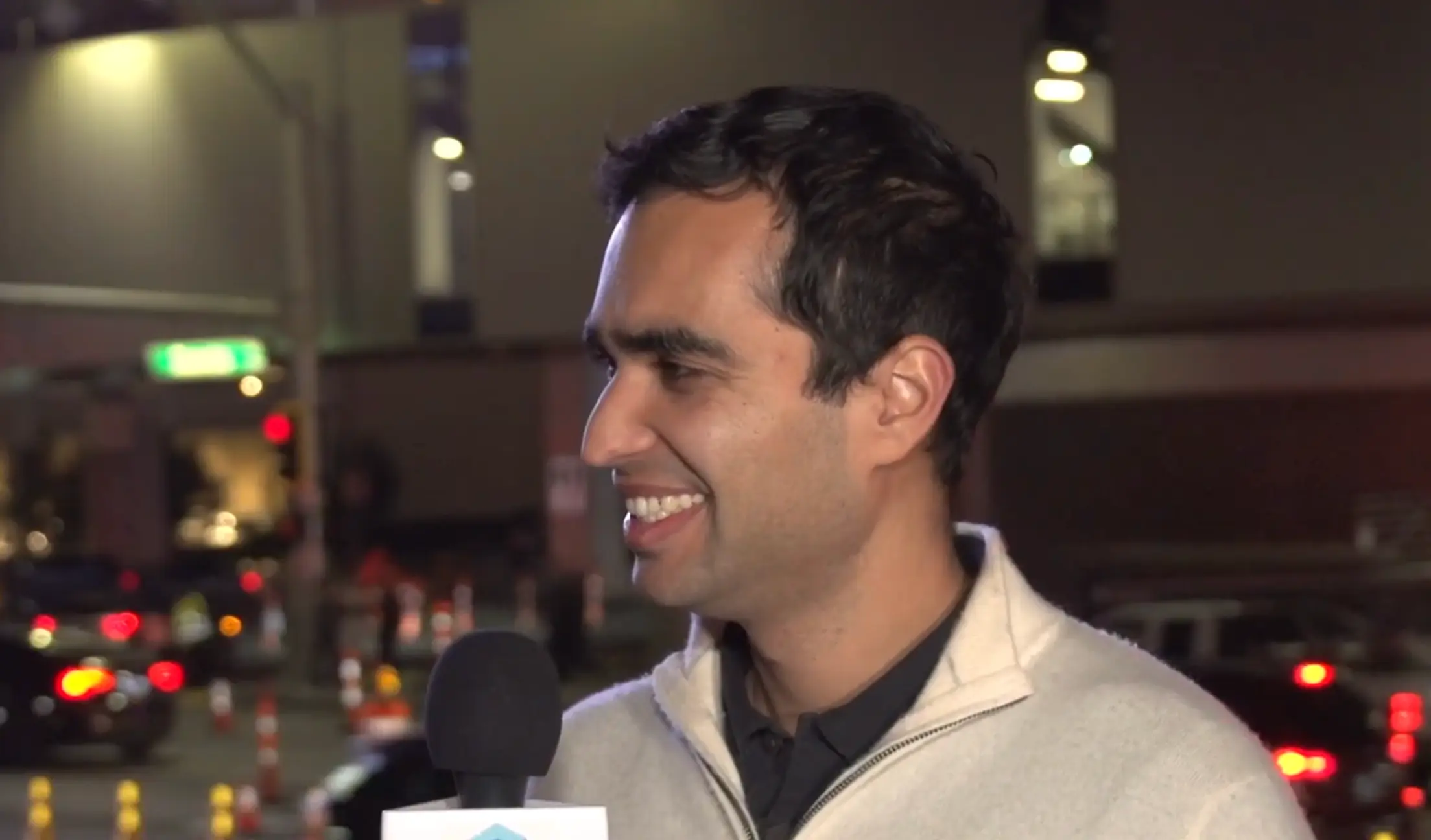
>> Good evening and welcome to fabulous Las Vegas, Nevada, where we are painting the town Rubrik. My name's Savannah Peterson, bringing you a special exclusive coverage here at AWS re:Invent. Very excited about our next guest. Dev, welcome to the show.
Dev Rishi
>> Hi, Savannah. Thanks for having me.
Savannah Peterson
>> Thank you for coming out here. It's a pretty unique location. I got to tell you, when I got into Las Vegas, I have seen the Rubrik logo everywhere. Y'all are going all out.
Dev Rishi
>> Yeah, it's been a lot of fun being here and seeing ourselves across the expo hall and everywhere else on The Strip. Pretty new experience for me coming from a startup right before this, so it's been amazing.
Savannah Peterson
>> I can imagine it's been amazing. Speaking of amazing, every company right now trying to go at an amazing velocity with their AI transformation. Talk to us about some of the challenges that you're seeing with cyber resilience as companies do this.
Dev Rishi
>> Yeah, it's a really good question. Walking around the expo hall, I think you see AI roughly everywhere, the keynote and each of the vendor demos.
Savannah Peterson
>> It's kind of the acronym of the year.
Dev Rishi
>> I agree. I've seen financial services companies brand themselves as AI companies. The challenge that I think a lot of organizations have though is actually realizing value out of what they're saying, right?
Savannah Peterson
>> Yes.
Dev Rishi
>> You've probably seen some of the studies about ROI on AI and everything else that comes across. I came from a startup. We were acquired into Rubrik over the summer. One of the first things I did when I arrived was I started to talk to as many customers as I can. Over the summer, I talked about 180 different customers. The number one challenge that organizations had when it came to production AI was not that models are now difficult to use. It's not that agents are hard to build. They've actually never been easier. The hardest thing that organizations struggle with is risk. How do they actually manage the risk around any of their agents, any of their AI deployments that they're putting out in production? And fundamentally, that's what's actually stopping them from being able to recover and discover ROI.
Savannah Peterson
>> So, that's where a lot of that uncertainty is coming and perhaps why we're not seeing it at scale, at the level that some people expect.
Dev Rishi
>> Yeah.
Savannah Peterson
>> I mean, it makes a lot of sense. I love that you went out and talked to your community, it's where all the answers lie on anything business. So, when you're thinking about how to prioritize the solutions you and the team are building, how are you integrating that feedback and what have you pulled together lately?
Dev Rishi
>> It's come from two sources, first of all. The first was meeting customers and prospects on the ground as much as possible. And sitting, not trying to ask what are the challenges that they forecast with AI 18, 24 months from now. A lot of people can think through those. What are the things that are blocking AI progress today? That's number one. The second is it's looking inward. So, Rubrik itself is a company with a lot of AI ambition. And we struggle ourselves sometimes with what it looks like to be able to deploy it quickly. What's the number one issue that we actually have? Well, Rubrik backs up data for some of the most important organizations across the globe. We have to be very careful with what do we do in terms of guardrails, governance? Everything that we're going to do from an AI standpoint, we need to make sure it is really buttoned up. And so, I think also understanding what are the unique capabilities we need ourselves. Those have been the two primary conduits that have really fed into our vision for what it's going to look like for a more resilient AI future.
Savannah Peterson
>> So, you're drinking your own champagne first?
Dev Rishi
>> Well, I've never heard of they call it that way. We just call it dog food up in San Francisco, but-
Savannah Peterson
>> But isn't champagne just so much more appealing? Oh, my gosh.
Dev Rishi
>> Yeah, we might be in Vegas for the right reason then. Yeah.
Savannah Peterson
>> Yeah, or at least some better beverage, at least a better snack. Let's talk about AWS Bedrock. Y'all just had some announcements there, correct?
Dev Rishi
>> That's right. Yeah. So, about a month ago, we announced something called Rubrik Agent Cloud. It's a totally new product and platform that makes it easy for organizations to observe, govern, and then remediate any of the destructive AI they may have out in production. This week, we announced an integration with AWS Bedrock AgentCore, which is one of the leading platforms for building agents today. For us, it's important to have hooks into all the different places that people might be building agents, so we can provide a secure platform across all of it.
Savannah Peterson
>> What do you think is the biggest myth about agentic right now?
Dev Rishi
>> I think the biggest myth about agentic is that the next thing the world needs is a really good agent platform. There's a lot of great no-code, low-code, full-code AI agent builders. You see hyperscalers, you see traditional SaaS and enterprise companies building out more and more ways to make it easy to build agents, but I don't think making it easier to build agents is actually what the world needs any longer. Agents are pretty easy to build. A lot of organizations I talk to can build them in days, hours. The challenge, I think, is actually that organizations have all of these policies, all these guardrails, all these restrictions that they're supposed to have on AI, but there's a disconnect. Those policies are on paper and the AI is in software out in the world, it's operating on systems. That disconnect, I think, is where a lot of the actual opportunity lies.
Savannah Peterson
>> I think that's a really good way of putting it and those have been conversations rather than executed, to your point, deployments when it comes to agentic. You get to see a lot of different instances, and like you said, some of the biggest, most important companies in the world. What gets you most excited in terms of solutions? What is agentic going to change in our world?
Dev Rishi
>> Yeah. So, I like to say if you ask three different people what agentic means, you get five definitions. I think what's the coolest... It actually relates to my definition for agents as well.
Savannah Peterson
>> Love this.
Dev Rishi
>> I think about agents and define them as LLMs are models with access to tools. So, you can really think about those as models that can take action on people's behalf. 2023, when ChatGPT was in its heyday, AI was a lot about really good search, really good knowledge retrieval. It could tell you great answers. What excites me is when AI actually starts to take action. It starts to be able to operate on users. It updates that opportunity in Salesforce for you. It files a calendar event. It tells you how to respond and it responds to your emails. That's really what excites me. Today, a lot of organizations are still in read-only mode. They're in the world where they want to be able to give it access to ingest data, but maybe not really take action in the production systems because they're nervous, because there's a fear of what can go wrong. It's a really well justified fear. They don't have the guardrails necessarily in place. But what excites me is when organizations figure that out and get to that next level and AI is actually starting to automate workflows on their behalf.
Savannah Peterson
>> What I'm hearing from you is companies need to dream a little bigger.
Dev Rishi
>> I actually think the dreams are there. The problem is, and if I walk down The Strip, I'm sure we'll hear 10 of the most compelling, highest ROI AI ideas. The hard part actually ends up being in the exit-
Savannah Peterson
>> Really?
Dev Rishi
>> Okay. If we walk down the street in San Francisco, we'll hear 10 of the best AI ROI ideas.
Savannah Peterson
>> And now, I'm kind of curious about the top-10 ROI ideas in Las Vegas.
Dev Rishi
>> We'll do a walking interview next.
Savannah Peterson
>> Yeah, yeah, yeah.
Dev Rishi
>> If I actually think about when I speak to IT and security leaders at these organizations, what's holding them back? I no longer think it's the dreaming. You know why? OpenAI and Claude can dream for me. It can generate these ideas too.
Savannah Peterson
>> You don't even have to dream anymore.
Dev Rishi
>> But someone has to step up and actually say, "I want to go implement this in my organization," which means what am I going to do to make sure it operates in guardrails? And what am I going to do if something goes wrong? With human systems, we have employed background checks, we have all these areas for when something goes wrong, what to be able to do to remediate.
Savannah Peterson
>> We have our intuition.
Dev Rishi
>> We have our intuition. And ultimately, we have someone we can point to. With AI, the wave has happened so fast. We haven't really developed that. So, that's why we think what people need is observability, we need to be able to see what's going on. An actual governance framework that has teeth, not just paper, but software and tech. And then, remediation. What that means to us is being able to undo destructive actions by an agent. Being able to do what we call AI Agent Rewind when an agent has done something wrong.
Savannah Peterson
>> It's that control-alt-delete, but on a totally different scale now.
Dev Rishi
>> Exactly, yeah. And I think ultimately that's what's required for people to get comfortable. If I told you something is non-deterministic, it's going to make random actions and it might delete a production database or the other. It's very hard to get comfortable with that if you don't have level of control and the ability to actually recover from it.
Savannah Peterson
>> Yeah. What else would you tell someone who's feeling a bit uncertain? There seems to be an air of uncertainty at scale when it comes to enterprise deployment. What's your advice?
Dev Rishi
>> Yeah, definitely. I think my main advice is it starts with observability. It's a vanilla piece of advice, but in a lot of organizations I talk to, one of the first challenges that they're running into is, how do I even know what AI is running inside of my organization? What kind of tools and data I can access? Let's get that answer first. And then from there, I think there's some amazing things you can do. Once you can observe, you can fix, you can make better, and then you can also determine what level of controls you want for next time, but I think it really starts with fixing that problem first.
Savannah Peterson
>> No, I think that's true and you can really optimize when you can't fix what you can't see.
Dev Rishi
>> Exactly.
Savannah Peterson
>> And I think in some organizations, they didn't even know what the humans were doing, let alone the digital version thereof.
Dev Rishi
>> Right. Yeah, exactly.
Savannah Peterson
>> So, I'm curious also, since you get such a swath of different businesses, are there any verticals or instances, I realize some of this you can't talk about, but where you really see a lot of growth and people accelerating and being very successful versus others? Or is it a mixed bag across the board?
Dev Rishi
>> Can I say an interesting thing?
Savannah Peterson
>> Of course.
Dev Rishi
>> It's actually incredibly vertical-agnostic from what I've been able to tell.
Savannah Peterson
>> Really?
Dev Rishi
>> We see leading companies in financial services doing advanced things in AI that I used to see only in the most advanced tech companies. I see that. I just was with the leader of a large Fortune 100 services and consulting company doing some of the really advanced work within AI too. Bio and pharma has always been on the cutting edge of machine learning and now is adopting that in AI as well. I see it as vertical agnostic and oftentimes very leadership dependent. The leadership themselves, how leaned in are they? How willing are they to be able to accept or accelerate past risk, run experiments? That's actually the number one determinant that I've seen with what it looks like for AI projects to get off the ground.
Savannah Peterson
>> I think you're absolutely right with that. And I think that's a really good point. And it's about having a culture where you can experiment and potentially put these systems in a more treacherous place than they were before so you can optimize them.
Dev Rishi
>> Exactly.
Savannah Peterson
>> Obviously, if you're using Rubik, you'd be fine.
Dev Rishi
>> Yeah. And there is that stat, right? 95% of AI pilots fail. I think this came out from an MIT study recently.
Savannah Peterson
>> I've never talked about that study. I don't know what you're talking about.
Dev Rishi
>> No one that I've talked to seems to. Everybody has, I think, now brought it up over and over. I think we shouldn't necessarily orient on that as even being a bad thing. As long as the pilots are fast enough, as long as they're easy enough to be able to go ahead and move off of, more than 95% of startups fail, but we see a lot of really amazing results for the ones that actually do succeed. What we need to be able to do is pilot quickly, pilot safely, and then deploy in a way that you know is actually going to work well for you in production. That's really what the product that we're building out towards is also intended to be able to do. Same thing we do at Rubrik today. We have over 150 agents and agentic projects that we're prioritizing on our roadmap next year.
Savannah Peterson
>> Wow.
Dev Rishi
>> It would not be possible to do those if every single one required a three to six month review and approval cycle, like a lot of times you need to. And so, that's really, I think the problem that we've set out to solve.
Savannah Peterson
>> I bet that meeting's interesting when you're prioritizing those 150 projects. Does it get spicy?
Dev Rishi
>> It can. There's a lot of different stakeholders that I think are rightfully very interested, legal, security, engineering, IT. Everybody I think really cares about the direction, so it's nice. Well, everyone's passionate.
Savannah Peterson
>> Yeah, I love to hear that. All right. Last question for you. When we are at AWS re:Invent 2026 this time next year, what do you hope to be able to say then that you can't yet say today?
Dev Rishi
>> That organizations have moved past read-only agent mode and are starting to automate actions all the time. And it's thanks to Rubrik Agent Cloud and AI Agent Rewind that they've gotten that comfort, that's what I'm hoping to be able to say. I'm hoping that all of the AI-forward billboards and others that we see, go beyond saying AI and start talking about the really interesting work that AI is actually doing.
Savannah Peterson
>> I am so here for it. Louder for the people in the back, Dev. Thank you so much for taking the time and a busy week.
Dev Rishi
>> Thank you very much, Savannah. It was a really pleasure.
Savannah Peterson
>> Yeah, total joy. And thank all of you for tuning in to our very unique setting and exclusive coverage here at AWS re:Invent for Rubrik. My name's Savannah Peterson. You're watching theCUBE, the leading source for enterprise tech news.