We just sent you a verification email. Please verify your account to gain access to
RSAC 2026 Conference. If you don’t think you received an email check your
spam folder.
In order to sign in, enter the email address you used to registered for the event. Once completed, you will receive an email with a verification link. Open the link to automatically sign into the site.
Register for RSAC 2026 Conference
Please fill out the information below. You will receive an email with a verification link confirming your registration. Click the link to automatically sign into the site.
You’re almost there!
We just sent you a verification email. Please click the verification button in the email. Once your email address is verified, you will have full access to all event content for RSAC 2026 Conference.
I want my badge and interests to be visible to all attendees.
Checking this box will display your presense on the attendees list, view your profile and allow other attendees to contact you via 1-1 chat. Read the Privacy Policy. At any time, you can choose to disable this preference.
Select your Interests!
add
Upload your photo
Uploading..
OR
Connect via Twitter
Connect via Linkedin
EDIT PASSWORD
Share
Forgot Password
Almost there!
We just sent you a verification email. Please verify your account to gain access to
RSAC 2026 Conference. If you don’t think you received an email check your
spam folder.
In order to sign in, enter the email address you used to registered for the event. Once completed, you will receive an email with a verification link. Open the link to automatically sign into the site.
Sign in to gain access to RSAC 2026 Conference
Please sign in with LinkedIn to continue to RSAC 2026 Conference. Signing in with LinkedIn ensures a professional environment.
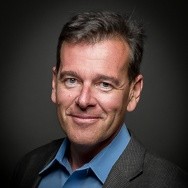
In this interview from RSAC 2026, Henry Comfort, co-founder and chief executive officer of Geordie AI, joins theCUBE Research's Christophe Bertrand to discuss how enterprises can gain visibility and governance over agentic AI deployments before unseen risks undermine innovation. Comfort traces the company's name to the Geordie lamp — a 19th-century mining tool that warned workers of invisible flammable gases — positioning Geordie AI as the modern equivalent for enterprises that can see agent productivity but not agent risk. Fresh off winning the RSAC Innovati...Read more
exploreKeep Exploring
1) How many customers do you currently have, and what types of customers are they?
2) For agentic AI deployments, is success mainly achieved by applying AI to discrete, controllable workflows (with process data you can govern) to get ROI and then scale, or do organizations need to change how they operate more fundamentally to truly benefit from AI?add
How should organizations approach adopting, governing, and enabling the use of AI/automation agents in the enterprise?add
What changes for an organization when Dually is deployed in its environment?add
How do you expect agentic architectures (AI agents) to evolve over the next few months, and what impact will that have on enterprise use and governance?add
>> Welcome back to RSAC 2026 in San Francisco. I'm Christophe Bertrand, principal analyst at theCUBE Research. Very, very pleased to be joined today by Henry Comfort, the CEO and co-founder. You have two other co-founders, if I'm not mistaken.
Henry Comfort
>> I do. Yeah, yeah.
Christophe Bertrand
>> Of Geordie AI.
Henry Comfort
>> Got it.
Christophe Bertrand
>> So I got to ask about the name first and then I want to talk about some very important news for your company that just happened, so tell us about the name.
Henry Comfort
>> Thank you so much for having me. We drew a parallel when we were first starting Geordie between the industrial revolution and what was possible with agents. All of a sudden, we, through technology, had access to loads more like operational leverage for our businesses. And we had the same during the industrial revolution where we went from our hands and our horses to all of a sudden being able to leverage trains powered by steam and electricity then entered the fold. But there were unseen risks that came with that innovation. And essentially, coal-powered progress. But as you mined coal from the walls of coal mines, with it came invisible flammable gases. Those would build up in the environment, cause explosions, horrendous for the innovation, but more importantly, horrendous for the workers. But we turned to technology to help us solve the problem. And an example of this was the Geordie lamp. You'll see our logos, a little lamp. And it was a mining lamp, right? It had a small candle inside. And at the moment, flammable gas is built up in the environment, candle went out. And it gave the workers at the time line of sight to a risk that they otherwise couldn't see so that they could do something about it. And we were really on the front lines of this with agents at the time. We were speaking to teams who were saying, "We want to bring agents into production." And we were very early into this space. We were very focused on it, but very early. And I was like, "We want to bring agents into production, but we have no idea what the agents are doing, what risks they're creating for my business, how do I get line of sight to it?" So it was unseen risk again. And you could turn to technology to enable you to unlock innovation and to really embrace this period. We believe technology like ours is a catalyst for that. And that's where the name came from, taking inspiration from past innovation.
Christophe Bertrand
>> Okay. Well, we'll talk about that in a second. We'll double click. I guess you had Geordie or canary in a coal mine, I guess, as the option, but that's kind of what it is, right?
Henry Comfort
>> This is the point. Canary in the coal mine, you need to breed birds. It's not technology. They fly away. And if too many of them die, you're waiting for the next birthing cycle. I mean, come on. But with a lamp, it was a very visual cue of it's suddenly dark. That clearly signifies to me that there is risk here because I literally can't see anything, so it was a real good visual cue for workers at the time.
Christophe Bertrand
>> Yeah. And there's plenty of risk with agents and we'll talk about that. I think there's a lot to discuss. So RSAC has awards.
Henry Comfort
>> Yes.
Christophe Bertrand
>> And they give the awards typically on the Monday or the Tuesday, I think it was on Monday and we're on Thursday now. And turns out you received, I want to make sure I say this right, the Innovation Sandbox Award. That's a big deal.
Henry Comfort
>> It is. It really is. It's described to me as like the cyber Oscars and winning it, there's so many amazing companies that have come through, but the top 10 most innovative startups in the world are listed every year. There's wonderful competitors in there. There wasn't any agent security competitors per se, but wonderful other startups. And in the past, you've got Wiz, you've had all kinds of people in it and we won. So it was wonderful to really have validation of the space, but also our approach that we're taking as a company, recognition of the traction that we've already gained, the team that we've put behind it. So it's wonderful for our team, wonderful for our investors and a wonderful signal to customers that they can trust us in this period.
Christophe Bertrand
>> Yeah. I must imagine you've probably got a bunch of VCs now talking to you all of a sudden.
Henry Comfort
>> I know.
Christophe Bertrand
>> They were not before.
Henry Comfort
>> I know. I know. They weren't before as well, but I mean, yeah.
Christophe Bertrand
>> We want it done for you.
Henry Comfort
>> Yeah, that's been good fun.
Christophe Bertrand
>> So we're talking earlier and so you're based out of London and New York. So sort of two continents. How many customers do you have at this point, just roughly? And tell me about them.
Henry Comfort
>> Yeah, we're helping almost two dozen enterprises now. So, yeah, just over 20. There is a spread. I mean, financial services, there's plenty of innovation, but also real awareness of risk. So we're helping out a number of mortgage lenders, FinTech, private equity funds, a whole bunch of financial services as a result. Also in tech sector where there's been a real embrace of agents, both to get work done, but also to do work for the company from a product perspective. And then really from a large enterprise perspective, there's a kind of real thought around how do we leverage AI to fundamentally change the way we operate as a business, operate more efficiently, get the things done that we couldn't do before, and you can really start to do the work with agents. But if you're in a large enterprise, transformation is not just about, "Are we getting more work done?" It's about, "Are we also aware of the risk? Are we governing this effectively?" And we're seeing a lot of very large enterprises lean into agents, but they cannot lean out of governance and risk. And we help them therefore lean into both.
Christophe Bertrand
>> Right. Yeah. I think that's one of the biggest issues actually with agents. It feels like people are well ahead of their skis. They're letting agents room free and do we have the right governance in place? Do we have the right access to the right data? There are all so many layers of conversations here, but let's talk about agents. Obviously, this is cybersecurity show, yet all I see is AI. So obviously, that's changing the way we look at security, the way we think about what resilience really means. Not only are the markets converging number of areas, but on top of it now we have AI and agentic AI. So if we take a step back, think about what you're delivering, and it's interesting that you're mentioning the industries you've highlighted, the financial industry seems to be a little bit ahead of the game. Others who have come this week on theCUBE have told us, "Yeah, well, it's multiple different industries." What I heard though is that in many cases, it's very discreet workflows. It's controllable environments. Do you think that is the success for AI, agentic AI deployment, having process data you reasonably control, then you can get some ROI out of that and move to the next one? Or should you do something more fundamental in how you operate your business to truly benefit from AI? I'm sure you've seen that research that says there's no ROI in AI at this point. Or very little, and I think it's because it's poorly deployed.
Henry Comfort
>> Yeah. And I think also a lot of the AI pilots that studies have been done upon were maybe a year ago, 18 months ago, whereby we were really talking about generative AI use cases, you and I in the prompt window. It was maybe helping us have access to a bit more information, feedback, knowledge, but it wasn't fundamentally AI doing work for you. And this time last year, I was at RSA. We'd literally just started our company. We signed a term sheet here. It was 11 months ago. No one was talking about Cursor or Claude Code. I mean, Claude Code didn't exist then. Now, Claude Code has fundamentally changed the way that software is built, how engineers work. And if you speak to any engineers about how they're leveraging Claude Code, none of them are saying, "Oh, I'm not really seeing the benefits." The horse is bolted. People are seeing the benefits of Agentic AI and it's moving through use cases and software engineering, customer service were initial landing points for it that were well applied, but you're really seeing it move through. And I think the ROI conversation with agentic AI is very different to generative AI as a result because work is getting done. And so for us, then getting back to your first question around, do you get the right controls in place? How should you approach it? I think there's two schools of thoughts. We help companies who are currently saying no, say yes. So we enable innovation in the enterprise. We've done that for a number of companies who say, "We now can understand what agents we have, what they're doing, and we can govern them, remediate, manage the risk because we're partnered with Geordie."
So for them, it's about we have to have the right controls in place from the get go. But in some organizations that are maybe a little bit more free spirited, again, the horse is already bolted. People are already leveraging agents, but Geordie, the way that we approach things, we enable you to really enable innovation in quite a free spirited way because we go out to your agents, we go out and find them, we help you understand however your engineers are using them, however they're configured, whatever team it is in the business that's leveraging agents, we can tell you about it and then we can help you govern it in a way in which you're not necessarily restricting how people can innovate in super aggressive ways. And I think actually people that do take a really aggressive approach with agents are going to struggle to unlock innovation because you need to empower the business user who understands the business process that they're reshaping with agents. So there's two schools of thoughts here.
Christophe Bertrand
>> Right. So that's what Beam does, that's enabled your platform, your solution. So essentially, it feels like you're controlling risk and herding cats at the same time in many ways. So okay, let's take your typical customer. I mean, 11 months in business or 12 months in business, but you still have some insight that's interesting here. So looking at your early adopters, they bring you in, you deploy the technology. What changes? What changes with the people? What are the processes, and then what's the architecture? I'm curious about the three, because to me the three work together and we're only talking about tech here, a lot about tech and I think we're forgetting this is fundamentally a process thing and in the end, agents are supposed to be an extension of, well, like human beings doing the work and in many cases an extension of people. So I'm curious about those three dimensions. What have you noticed in the past 12 months?
Henry Comfort
>> Yeah, I'll do my best to remember those three parts, but do prod me if I forget either one of them. The first thing I'd say, so what changes for someone when they have dually in the environment? Well, firstly, yesterday, you did not understand where you had agents, what they were doing, how they were configured, and what risk existed. With Geordie, it's as simple as we can deploy in a couple of calls. We've engineered the product in a way in which it's quick time to value, quick visibility, quick understanding, and quick remediation too, but you very quickly, the lights turn on. So instead of the candle going out, the lights go on in the organization. You say, "I now understand how various different teams are leveraging agents, be they in cloud hosted services like AWS Bedrock or Microsoft Copilot Studio, or be they coding agents on the endpoint, or be they agents that you're building within your own code base from a product perspective."
All of a sudden, you have a level of visibility, which you didn't have yesterday. And then you can really start to enable innovation, make better architectural decisions to make your agents a bit more secure by design and things of that nature very fast and therefore move at pace with innovation as a result because you feel like you can now get the full picture and put controls in place.
Christophe Bertrand
>> Well, let's talk about the people that I mentioned. Obviously, there's a risk that agents will replace people, or is it really enhancing the ability of people to better work? So in the financial space, I can see the use cases, it's probably a great way of sorting through complex transactions potentially. There's a lot of so much going on. People have to deal with so much and may actually just help them do their job better. But what's your take on that? I mean, because it's a big deal.

Henry Comfort
>> Yeah, it certainly is a big deal and there are lots of people more intelligent than me who will give a perspective on how work is being reshaped. It's having a significant impact for people today. For engineers who've been an early adopters of agents, especially with coding agents, it is changing the way they work. They're now overseeing, especially people on the leading edge and there's a lot of them. They're really saying, "We now manage a team of agents." We are thinking about how we're architecting the end goal that we're aiming for and the agents are then going to help us get there as opposed to writing code, right? So the significant change there. I think for banks and financial institutions, there's actually a lot of work that was hard work. So KYC as a process for years, how many people have been saying, "All right, I received the same documents from the same customers, the same format. It tends to be the same issues. They've sent me the wrong document, there isn't a signature, there isn't whatever it might be." And we've been putting people through real drudgery work, dealing with those types of workflows. Agents are amazing at it. There's pattern recognition on the documents. You can go back and forth to ask for a slightly different version of the document because the scan isn't of high quality and all of a sudden work which people quickly said, "I don't want to do that for the rest of my life," is being done very efficiently by agents. And I myself have had a lot of experience kind of overseeing administrative teams, many of which the tasks now are the ones that maybe you can replace are the ones that people didn't want to do. And I do think that enables people to go and do more creative work, more value add work.
Christophe Bertrand
>> So listing people out.
Henry Comfort
>> Yeah. I don't think we fully understood the degree to which it's going to unlock people to live out their professional and creative potential. And I think there's going to be a lot more of that, which is going to be wonderful. We're all seeing how that's going to shake out and there is going to be disruption, of course. And again, people smarter than me are telling the world about that in various different ways, but there is a lot of potential here for good and we're really excited to play a significant part in it.
Christophe Bertrand
>> Right. You're certainly doing a great job, only 12 months into it.
Henry Comfort
>> Yeah.
Christophe Bertrand
>> Innovation Sandbox Award, that's a big deal. What do you think happens next year? I mean, in closing, RSAC 2027, what's the theme? Is it AI again? Is it agents this time, fully agents? I mean, I'm curious, it's going so fast.
Henry Comfort
>> Yeah. I mean, I think agents are the future. So I expect to see lots more about agents. I expect to hear a lot more about success stories. I expect people to be further along in their adoption and we're going to see the vendors, the tech evolve to enable people to go even further and even faster. And it's going to be really exciting. There are obviously lots of other developments within AI, the use of world models, things of that nature, which are going to impact security. And I think if you or I made really concrete predictions around what that is, we look at it with agentic architectures. They evolve in three months, six months in ways that you couldn't imagine. So who knows quite the extent to where we'll be into a month's time, but I think agents are going to be doing a significant amount more work for the enterprise and we're really excited to see how that enables companies to go to places they couldn't before. And we want to play a really important part in helping them understand that transformation and change, but also ensure it's being done in a well-governed and secure way. And so I can't wait for Geordie to be lighting up things in wholly other ways than we could achieve this year because of how much further along we are.
Christophe Bertrand
>> Perfect. Well, thank you so much, Henry. This is a great conversation. It's great to see young entrepreneurs, young companies.
Henry Comfort
>> Thank you.
Christophe Bertrand
>> I've been around for ages, it feels, well before AI, but I can still feel the energy here. That's what we get in this business. I think you're doing some amazing work here. I'm very curious to see where you are next year. We definitely want to have you on next year.
Henry Comfort
>> I look forward to it.
Christophe Bertrand
>> And look at the progress of the company and congratulations again and we'll see you next year.
Henry Comfort
>> Thank you so much.
Christophe Bertrand
>> All right. And to our viewers, stay tuned. theCUBE in San Francisco RSAC 2026.