In this interview from RSAC 2026 in San Francisco, Ronan Murphy, chief data strategy officer of Forcepoint, joins theCUBE Research's Christophe Bertrand to discuss why a well-governed data foundation is the prerequisite for any organization's AI journey. Murphy traces how data loss prevention has evolved from a compliance checkbox into a mission-critical discipline as AI operationalization accelerates across every industry. He argues that data — not AI itself — is the true oxygen of any modernization agenda, whether organizations are pursuing productivity gains through copilots, automation through agentic AI, or smarter R&D through LLMs.
The conversation also explores a risk that organizations consistently underestimate: the accuracy of existing data classification programs. Murphy reveals that companies often assume their labeling efforts are sound, yet in practice roughly 30% of classified data is incorrectly labeled — putting organizations one prompt away from a major breach or IP loss once AI agents gain access. He breaks down Forcepoint's approach to securing data at rest, in motion, and in use across hybrid and multi-cloud environments, and outlines a prioritization framework for tackling the most sensitive assets first. From dismantling the myth that agentic AI can be safely deployed on unverified data foundations to making the case that a clean data estate becomes a force multiplier for AI ROI, Murphy provides a practical roadmap for security leaders who want to accelerate their AI ambitions without building on shaky ground.
Forgot Password
Almost there!
We just sent you a verification email. Please verify your account to gain access to
RSAC 2026 Conference. If you don’t think you received an email check your
spam folder.
In order to sign in, enter the email address you used to registered for the event. Once completed, you will receive an email with a verification link. Open the link to automatically sign into the site.
Register for RSAC 2026 Conference
Please fill out the information below. You will receive an email with a verification link confirming your registration. Click the link to automatically sign into the site.
You’re almost there!
We just sent you a verification email. Please click the verification button in the email. Once your email address is verified, you will have full access to all event content for RSAC 2026 Conference.
I want my badge and interests to be visible to all attendees.
Checking this box will display your presense on the attendees list, view your profile and allow other attendees to contact you via 1-1 chat. Read the Privacy Policy. At any time, you can choose to disable this preference.
Select your Interests!
add
Upload your photo
Uploading..
OR
Connect via Twitter
Connect via Linkedin
EDIT PASSWORD
Share
Forgot Password
Almost there!
We just sent you a verification email. Please verify your account to gain access to
RSAC 2026 Conference. If you don’t think you received an email check your
spam folder.
In order to sign in, enter the email address you used to registered for the event. Once completed, you will receive an email with a verification link. Open the link to automatically sign into the site.
Sign in to gain access to RSAC 2026 Conference
Please sign in with LinkedIn to continue to RSAC 2026 Conference. Signing in with LinkedIn ensures a professional environment.
Are you sure you want to remove access rights for this user?
Details
Manage Access
email address
Community Invitation
Ronan Murphy, Forcepoint
In this interview from RSAC 2026 in San Francisco, Ronan Murphy, chief data strategy officer of Forcepoint, joins theCUBE Research's Christophe Bertrand to discuss why a well-governed data foundation is the prerequisite for any organization's AI journey. Murphy traces how data loss prevention has evolved from a compliance checkbox into a mission-critical discipline as AI operationalization accelerates across every industry. He argues that data — not AI itself — is the true oxygen of any modernization agenda, whether organizations are pursuing productivity gains through copilots, automation through agentic AI, or smarter R&D through LLMs.
The conversation also explores a risk that organizations consistently underestimate: the accuracy of existing data classification programs. Murphy reveals that companies often assume their labeling efforts are sound, yet in practice roughly 30% of classified data is incorrectly labeled — putting organizations one prompt away from a major breach or IP loss once AI agents gain access. He breaks down Forcepoint's approach to securing data at rest, in motion, and in use across hybrid and multi-cloud environments, and outlines a prioritization framework for tackling the most sensitive assets first. From dismantling the myth that agentic AI can be safely deployed on unverified data foundations to making the case that a clean data estate becomes a force multiplier for AI ROI, Murphy provides a practical roadmap for security leaders who want to accelerate their AI ambitions without building on shaky ground.
In this interview from RSAC 2026 in San Francisco, Ronan Murphy, chief data strategy officer of Forcepoint, joins theCUBE Research's Christophe Bertrand to discuss why a well-governed data foundation is the prerequisite for any organization's AI journey. Murphy traces how data loss prevention has evolved from a compliance checkbox into a mission-critical discipline as AI operationalization accelerates across every industry. He argues that data — not AI itself — is the true oxygen of any modernization agenda, whether organizations are pursuing productivity gai...Read more
exploreKeep Exploring
What is your view on the state of data loss prevention (DLP) — its regulatory-driven challenges and resurgence — and the role of data governance in the current AI-driven environment?add
How should organizations integrate AI into their board-level strategic initiatives, and what data-related considerations and risks need to be addressed?add
What risks do organizations face when they operationalize AI (e.g., copilots/LLMs) using years of manually labeled DLP data, and how reliable are those labels?add
How should organizations protect and manage data in the AI era—specifically data at rest, data in motion (in flight), and data in use—and how does a platform like Forcepoint address those needs across on‑prem and multi‑cloud environments?add
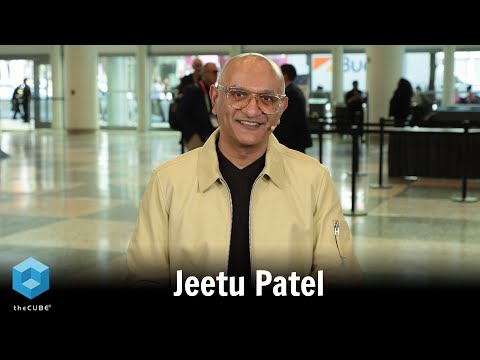
>> Welcome back to RSAC 2026 in San Francisco. My name is Christophe Bertrand. I'm the principal analyst here at theCUBE Research, and we're going to be talking about data loss prevention or maybe other things with Ronan Murphy, Chief Strategy Officer at Forcepoint. Welcome, Ronan. Good to have you.
Ronan Murphy
>> Delighted to be here. Thank you.
Christophe Bertrand
>> Great to have you. Tell us about yourself.
Ronan Murphy
>> My name is Ronan Murphy. I'm the chief data strategy officer with Forcepoint and delighted to be here at RSA of 2026.
Christophe Bertrand
>> So tell us about the customer problems you're solving today at Forcepoint.
Ronan Murphy
>> So Forcepoint is a global leader in data security. We've been around for a long time, right? Over 20 years. Many of your viewers will be familiar with the old Websense. Well, that's effectively who we are. So we have a long heritage of working in data loss prevention, CASB, and obviously now data security.
Christophe Bertrand
>> Right. And it's an area I've been tracking for many years as an analyst, but also on the vendor side, had a number of partnerships through the years. So let's talk about data loss prevention because I like to joke, well, that's the market that never was.
Ronan Murphy
>> Yes.
Christophe Bertrand
>> And now actually is.
Ronan Murphy
>> Correct.
Christophe Bertrand
>> And I'm curious about that. We'll talk more about that. So what's your take on DLP? Is it a buzzword? What does that really mean to the market?
Ronan Murphy
>> You know what? I totally agree with you. DLP is a very tough industry, it's a very tough sector. And it was something that was driven, I would say predominantly by regulatory mandates. So the regulators came in, they said, "You have to have DLP capabilities for regulated data like PII or CUI data or payment data." So DLP became almost, I would say, a tick the box compliance requirement. And you could argue that DLP is almost an impossible task because data, unlike let's say vulnerability management, is not standardized. Different data represents different risk or value to different organizations who have different risk mandates, who have different internal governance structures. So a very, very difficult challenge to solve. But right now, it's making a resurgence and it's making a resurgence for the buzzword that is here at RSA, which is AI.
Christophe Bertrand
>> Exactly. I like to joke, well, this is supposed to be a cybersecurity event, yet it's AI everywhere. But actually what is interesting in my personal view is this and the research that I've done supports that is it's not about AI, it's not about cybersecurity, it's about data. And that's really what it comes down to. That's the most essential component that really will drive success in anything you do for business. The big buzzword now is AI, to your point, yet you can only do that if you understand data and if you govern your data and if you govern its access, if you govern its existence, it's recovery depending on what part of the market you come from. So what's your take on this new wave of governance that's really infused by what seems to be this craziness of AI with people implementing AI without necessarily having all of the stop gaps in place, all of the securities in place?
Ronan Murphy
>> It's a great question. What I tend to do, what I like to do is I like to maybe take AI out of it for a moment and look at the macro initiatives that any organization has from a board level perspective. And they will typically be outside of your typical sales and finance and marketing, they've got a modernization agenda. They're probably looking at how to get improvements in productivity. They're looking at how they drive automation. They're looking at how they can improve research and development. And AI forms a fundamental part of all of those macro mandates. So whether you're trying to drive automation using agentic AI, whether you're trying to improve productivity with copilots, whether you're trying to make smarter decisions on research and development using LLMs, and as you rightly say, the oxygen for any of those initiatives is your data. And data is tough. It's tricky because data could be on prem and NetApp, our SMB drives, our endpoints, data can be in the cloud, in Microsoft, in Oracle, in Google, in Amazon. Data is like water, it literally goes everywhere. And if you don't have a capability to put the correct guardrails around that data, then obviously you introduce very significant, substantive risk to any organization that wants to operationalize these very powerful tools across their business.
Christophe Bertrand
>> Right. And what's so interesting is a few years ago, we would have had this discussion without AI or agents being in a loop. We would have talked about just this, which is where organizations now, do they actually have their stuff together, for lack of a better term, when it comes to data management in general terms with their structured data and their unstructured data, arguably one may be easier than the other, TBD. And it feels to me like in this era of AI or agentic AI, we've sort of decided, "Oh yeah, we've got the data figured out, but now we're working on the AI stuff." Well, I don't think the fundamentals are in place to begin with, which is interesting. So what's your take, first of all, on structured versus unstructured? I think let's start there and how does that work out from your standpoint when you think about agentic AI and people potentially being ahead of their skis, letting AI agents run free, roam free and use whatever data they want?
Ronan Murphy
>> Yeah. There's a lot in that question, right? So first and foremost, I entirely agree that organizations are now coming to terms with they have to understand their data at scale. Because if they do, they set themselves a very strong foundation to build and operationalize AI at scale. And again, that doesn't necessarily need to be agentic AI. It might be copilots, it might be AI applications, it might be LLMs or whatever they decide. But agentic AI is scary the power that it brings, the benefits to organizations are profound. And I see it every day. We have a global customer base in manufacturing, defense, medical, retail, and I see many of them looking to operationalize these AI programs and it is profoundly powerful. But the definition of an agent is that they can access multiple different repos and then they can have actions associated with the ask, right?
Christophe Bertrand
>> Right.
Ronan Murphy
>> And that's incredible, but you are dead right. If you don't have the correct guardrails in place when you operationalize these technologies, that introduces very substantive risk, both from a regulatory, a governance, a compliance perspective.
Christophe Bertrand
>> Right. So AI agents are essentially, in theory, the extension of humans. They should be like employees, yet there's no consequence when they screw up, right?
Ronan Murphy
>> It depends.
Christophe Bertrand
>> Well, there's a consequence for the company.
Ronan Murphy
>> Yes.
Christophe Bertrand
>> Not for the agents themselves.
Ronan Murphy
>> They're not going to get worried about disciplinary pay or...
Christophe Bertrand
>> I'd love that job actually, thinking about that. But more seriously for a second here, two things. First of all, I want to double click on the verticals you mentioned. Is there any vertical, in your opinion, from your experience, in your customer base, again, without divulging any secrets here, that seems to be a little more ahead in the operationalization of AI agents. Is it banking? Is it manufacturing? Do you see any sort of early winner of that race?
Ronan Murphy
>> Honestly, I think that the plates are moving under our feet right now. The whole world is grappling with the potential opportunity that exists in front of them. Every industry vertical, health, retail, manufacturing, defense, they're all looking at this and they're trying to figure out where can we get a competitive advantage in our industry sector. So honestly, equally, I think every sector is going after this. I would say from a operationalization of R&D initiatives with these technologies, manufacturing obviously is an area where you can definitely get a competitive edge very quickly. Our companies that are looking to replace large offshoring call center type business with these agent capabilities.
Christophe Bertrand
>> That's interesting. So kind of an even playing field at this point. Yeah. Let's talk a little bit about some misconceptions people may have about data and AI in general, data governance and AI. What would be the top two or three? I mean, on average that you see out there when you engage with customers or partners dealing with customers, what are they getting wrong that you have to tell them, "Look, hang on. There's more to this than that"?
Ronan Murphy
>> Yeah. Look, typically, right, and I think you introduced this conversation very well, typically, organizations who have implemented a DLP program over many years, they've gone through a process of manually labeling what they consider their data to be. So they may be an Excel document that they've labeled or Word documents or PDFs or databases. And for many years, that's been a manual process and that ticked the box in terms of their compliance, which was perfectly adequate. But now when you operationalize AI, you're putting structure to all of that data and that data can be queried. You can ask an agent or you can ask a copilot, literally anything you want. Now, when you establish these systems, you've a thing called a system card. That system card will determine which data can be used and which cannot be used. And typically you will tell the system card if it's labeled X, use it, if it's labeled Y, don't use it. And there's a common misconception in companies that because they've been labeling their data, it's all correct. But in reality, when you look at it, you'll find that for the last 15 years, we've got a 70% classification of our data which is accurate. 30% is wrong. But that 30% finding its way into a Copilot or an LLM or an AI application literally means you're one prompt away from a major data breach or from losing trade secrets or IP or regulated content.
Christophe Bertrand
>> Right. Or a big compliance issue.
Ronan Murphy
>> Correct.
Christophe Bertrand
>> On top of it all, that's talking about, or assuming that people have managed and classified and understand data on prem or in the cloud. What about data in flight? This is also changing literally as we speak.
Ronan Murphy
>> So we break it down into three categories. You've data at rest, you've data in motion, and you've data in use, right? And all three in fact have to be captured in this new AI era that we find ourselves in. So you need to be able to look at the data that's being accessed by agents because effectively that's data at rest. You need to be able to look at data when it's moving. For example, if I send data to you and you're not authorized to see it, how can you look at data in flight? And then you need to be able to consider, "What if I have a document open and I copy a whole body of very sensitive data and I paste it into a new document?" That's data in use. So there's three very distinct areas, but all three of them can represent very significant risk. So from a Forcepoint perspective, we take that very seriously and we cover the whole paradigm. We look at the data at rest, we look at the data in motion, and we look at the data in use.
Christophe Bertrand
>> And you do that with a platform that is essentially a hybrid, right? On-prem, multi-cloud, I imagine.
Ronan Murphy
>> Absolutely.
Christophe Bertrand
>> Okay. And so let's talk about that. What do you think the biggest issue is if you take that sort of multiple set of platforms, which are not all born equal, the ability or inability to understand what data you have and then manage it and govern it and apply to that, this insatiable need to feed said data to agents or to some AI process or application, whatever it may be? Where do you think people are in terms of maybe percentage? Are they 10% there, 20% there? I mean, are they antiquated because they're relying on old tagging methodologies or classification methodologies?
Ronan Murphy
>> Truthfully, we've only scratched the surface.
Christophe Bertrand
>> Okay.
Ronan Murphy
>> I think companies are now waking up to the art of the possible in terms of what AI represents in terms of the opportunity. And we're starting every week that passes, you're seeing these new breakthroughs that companies are making using AI and therefore other companies are looking and they're saying, "You know what? We need to catch up. We need to invest in this." It starts out typically in organizations where they're very bullish about, "Let's get agentic AI, let's turn on productivity," but they quickly kind of come back to, "Okay, you know what? It would be a good idea if we got our data estate as a foundational level into a good place." And I think that that appetite, that realization is really starting to land now. And it's thankfully the type of evolution of capabilities that Forcepoint and others bring to the table has made that possible.
Christophe Bertrand
>> Great. So let's maybe not connect that to, well, today's show or even here, RSAC, how does that translate into security?
Ronan Murphy
>> Yes.
Christophe Bertrand
>> What do you do specifically with the Forcepoint platform to ensure that the data is secure in a way that it will be available in that secure and compliant fashion, government fashion to AI applications?
Ronan Murphy
>> Absolutely. So typically in any organization, the very first question you're going to have to ask is, "What is our most valuable data?" And it's interesting, I speak to many organizations, if you ask that question, they'll say, "All of our data." And I'd say, "Well, if someone broke into your house, you were out at the cinema, you come home and your house has been burgled, you're not going to run in and ask, 'Did they steal the toaster?' You're going to run upstairs and see if they stole your jewels or your watch or whatever it might be." Data is the same. There's specific data assets that represent the most value. And again, it might be trade secrets, it might be PII, it might be regulated content. So the analogy I would often use is when it comes to data, it's how do you eat an elephant? It's one bite at a time. And what you have to do is you have to look at the data assets that represent the most value to your business. You'll start off by finding your PII data or your PCI data or your HIPAA data or your trade secrets or your CUI. And then you'll work your way through the respective data assets, make sure you know where they are, make sure they're classified correctly, make sure they're in the right location, and make sure that they're aligning with the AI initiative that your organization has.
Christophe Bertrand
>> Well, that's the elephant in the room.
Ronan Murphy
>> Yes.
Christophe Bertrand
>> One bite at a time. Ronan, what final thoughts do you have for our viewers? What should they do next?
Ronan Murphy
>> I believe that you'll have people who look at AI and they'll have a perspective of pull down the iron curtain and we block it all. I don't believe that that's sustainable. Given the pace of innovation, I fundamentally believe that everybody is going to start operationalizing AI in their modernization journey, in their automation, in their research and development and their productivity in every part of the company. But I also know, 20 years of doing cybersecurity, that the data layer, and you and I spoke about this earlier, that getting the data layer right is the foundation of success. Not addressing data and ensuring that you understand where it is and what it is means you're building your castle on shaky foundations. So my overriding view is that companies who get the data layer right, they will really accelerate their AI journey. It'll become a force multiplier and ultimately demonstrate tremendous ROI and success for that business.
Christophe Bertrand
>> Totally agree. Music to my ears. Well, Ronan, thank you so much for joining us today.
Ronan Murphy
>> Thank you so much. Pleasure.
Christophe Bertrand
>> And to our viewers, stay tuned for more. RSAC 2026 in San Francisco.












 Christophe Bertrand