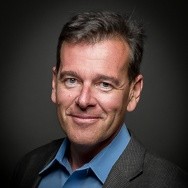
Recorded at RSAC 2026 this conversation examines human risk management, agentic artificial intelligence, workforce trust management and data-driven defense. Roger A. Grimes of KnowBe4 is chief information security officer advisor and a long-time expert in security awareness and data-driven defense. Grimes outlines human risk management, HRM, fundamentals such as training nudges and culture and explains how agentic AI reshapes human behavior threat surfaces and the operational models security teams must adopt to manage risk effectively. They also discuss the role of AI-driven orchestration and hyper-personalized awareness programs in improving defensive outcomes.
Key takeaways include two complementary AI-era risks — attacks from AI such as deepfakes and AI-enabled phishing and attacks against AI such as model and data poisoning — and the need to govern both people and agents. Grimes highlights that KnowBe4 early data indicate AI-enabled campaigns reduce simulated phishing risk approximately threefold compared with human-managed programs while nudges and agent governance remain essential. This discussion emphasizes practical strategies for security awareness training, phishing simulations, workforce trust management and data-driven defense to strengthen organizational cybersecurity posture.
Forgot Password
Almost there!
We just sent you a verification email. Please verify your account to gain access to
RSAC 2026 Conference. If you don’t think you received an email check your
spam folder.
In order to sign in, enter the email address you used to registered for the event. Once completed, you will receive an email with a verification link. Open the link to automatically sign into the site.
Register for RSAC 2026 Conference
Please fill out the information below. You will receive an email with a verification link confirming your registration. Click the link to automatically sign into the site.
You’re almost there!
We just sent you a verification email. Please click the verification button in the email. Once your email address is verified, you will have full access to all event content for RSAC 2026 Conference.
I want my badge and interests to be visible to all attendees.
Checking this box will display your presense on the attendees list, view your profile and allow other attendees to contact you via 1-1 chat. Read the Privacy Policy. At any time, you can choose to disable this preference.
Select your Interests!
add
Upload your photo
Uploading..
OR
Connect via Twitter
Connect via Linkedin
EDIT PASSWORD
Share
Forgot Password
Almost there!
We just sent you a verification email. Please verify your account to gain access to
RSAC 2026 Conference. If you don’t think you received an email check your
spam folder.
In order to sign in, enter the email address you used to registered for the event. Once completed, you will receive an email with a verification link. Open the link to automatically sign into the site.
Sign in to gain access to RSAC 2026 Conference
Please sign in with LinkedIn to continue to RSAC 2026 Conference. Signing in with LinkedIn ensures a professional environment.
Are you sure you want to remove access rights for this user?
Details
Manage Access
email address
Community Invitation
Roger Grimes, KnowBe4
Recorded at RSAC 2026 this conversation examines human risk management, agentic artificial intelligence, workforce trust management and data-driven defense. Roger A. Grimes of KnowBe4 is chief information security officer advisor and a long-time expert in security awareness and data-driven defense. Grimes outlines human risk management, HRM, fundamentals such as training nudges and culture and explains how agentic AI reshapes human behavior threat surfaces and the operational models security teams must adopt to manage risk effectively. They also discuss the role of AI-driven orchestration and hyper-personalized awareness programs in improving defensive outcomes.
Key takeaways include two complementary AI-era risks — attacks from AI such as deepfakes and AI-enabled phishing and attacks against AI such as model and data poisoning — and the need to govern both people and agents. Grimes highlights that KnowBe4 early data indicate AI-enabled campaigns reduce simulated phishing risk approximately threefold compared with human-managed programs while nudges and agent governance remain essential. This discussion emphasizes practical strategies for security awareness training, phishing simulations, workforce trust management and data-driven defense to strengthen organizational cybersecurity posture.
play_circle_outlineRSAC 2026: Roger Grimes on KnowBe4's Human Risk Management and Real-Time Nudges to Prevent Data Exposure
replyShare Clip
play_circle_outlineAgentic AI and Workforce Trust: Managing Autonomous Assistants to Mitigate Organizational Risk
replyShare Clip
play_circle_outlineAI Threats to People and Models: Deepfakes, Phishing, Model Poisoning, Data and Inference Attacks
replyShare Clip
play_circle_outlineAI Orchestrators Transform Security Awareness: Automated, Personalized Training and Phishing Simulations Reduce Risk Up to Threefold
In this interview from RSAC 2026, Roger Grimes, chief information security officer advisor at KnowBe4, joins theCUBE's Christophe Bertrand to discuss how AI is simultaneously expanding the attack surface and supercharging the defense toolkit in human risk management. Grimes introduces KnowBe4's evolving framework — from traditional security awareness training to what the company now calls "workforce trust management" — which extends protection beyond individuals to encompass the AI agents acting on their behalf. He explains why AI-enabled scams are surging in...Read more
exploreKeep Exploring
1) What is KnowBe4 and what do you do for the company?
2) What is human risk management (HRM) and how does it differ from traditional security awareness training?add
How should organizations manage the security risks introduced by AI agents used by employees?add
How are cyber attackers leveraging AI to their advantage, and what types of attacks target AI systems?add
How can AI be used to automate and improve security awareness training and simulated phishing campaigns, and what results and risks (for example AI-generated deepfakes) have you observed?add
>> Hello everyone. Welcome to RSAC 2026 in sunny San Francisco. I'm Christophe Bertrand, principal analyst with theCUBE. We have four days of back-to-back coverage of this conference, biggest cybersecurity conference probably in the world at this point. I'm also very pleased to be joined today by CUBE alum and a good friend of theCUBE, Roger Grimes, who's the CISO advisor for KnowBe4. So Roger, tell us a little bit about KnowBe4 and what you actually do for the company.
Roger Grimes
>> Sure. I'm Roger Grimes, CISO advisor. I speak and write and kind of look at trends and try to figure out where the malicious scams and trends are going, where the industry's going. I've been with KnowBe4 going on eight years. KnowBe4 is the largest human risk management provider since I started, again, going on eight years. And I like to tell people, we just try to encourage people to make the right cybersecurity risk decisions.
Christophe Bertrand
>> Absolutely. So what's interesting is a human element that's been one of the big topics. We've talked about this in the past together and this idea that obviously it's all about managing people in the context of technology as technology changes. Can you tell us more about what you call HRM?
Roger Grimes
>> Yeah. So early on it was talked more about is security awareness training, which is ... And let me say training is a big part of it, but training a human to have a natural response to cybersecurity risk is more than training. It's also what we call nudges. If they do something that is maybe violating a policy or doing a dangerous behavior, you're giving them a little, "Hey, be careful. This could be something ... " Maybe they're installing AI and they get a nudge that says, "Hey, be careful not to put in confidential information."
So it's more than trying to train people about trying to avoid scams and that sort of stuff, although that's a big part of it. It's trying to encourage them to have a natural behavior to make the right appropriate security risk decisions. And certainly with technology, it's a bigger deal. Somebody could install a grammar checker and not realize, "Hey, it's using AI and it's taking that data and putting it out on the cloud." All you're trying to do is grammar check an email or something like that and all of a sudden it's sending that email up into the cloud.
Christophe Bertrand
>> Right. And I think that's the part that's very interesting is that now we're dealing with this new world of agentic AI. It seems to be the wild west as far as I'm concerned because you don't really know what the agents are doing, to your point. You don't know what's what. And you quickly can get out of compliance. And as a human, it's the last thing you want to do because you've been trained not to do that. And ideally ... It's hard enough with humans, but now you have to also manage and police agents. So in this new world of AI meets traditional human interactions, what is the right approach? How do you then get people trained and how do you get people to fully understand what they're dealing with?
Roger Grimes
>> Well, I tell you, a big part of it is actually training and looking at the risk of the AI agents they use. All of us, if you don't know it or not, you could be someone that hates AI, doesn't believe in AI. And let me say, I'm not someone that thinks that AI is going to put everybody out of a job, but AI is either already or going to be a big part of your life. It's going to be controlling your desktop. You're less likely to be going out to websites and surfing the web. You're probably going to be more interfacing with one or more desktop agents. And so how it's changed, the way that we think of it now is human plus their AI agents, which we kind of call ... Working through terms, right now we call it workforce trust management, because the idea is if the agent is doing a lot of things on your behalf, it's looking at your calendaring events. We're seeing like, for example, a lot of calendar phishing and stuff. If you're interfacing, telling it to go to websites and book travel for you and that sort of stuff, you have to look at the risk that the agents are adding to the equation. The agent is learning you and having your context, it's extension of you. So we can't just train you and decrease your security risk. We also have to decrease the security risk of the agents you use, because if you're not, I'm not protecting you.
Christophe Bertrand
>> Right. And that's very interesting because essentially what you have is now this sort of ... And that's the way I use it to this sort of personal executive assistant doing a lot of stuff for you, checking your spelling, maybe booking a trip or making recommendations. When I go do a search on a search engine, it's coming up with an AI option. So all of these things are essentially agentic AI based. Yet the risk is actually multiplied when you think about it. Two things that come to mind. Number one is, what data are those AI agents actually using and is it data that I want them to use as an organization? And secondly, as an individual leveraging tools that may have been provided actually by my employer, what risk am I taking or incurring? And if you could put that in the context of this advanced phishing and social engineering that we're starting to see now, that is powered by AI itself, the cyber attackers leveraging AI to their advantage.
Roger Grimes
>> Yeah. And let me say, you said it, and I'll say it even in another way. You have two major types of categories. One is attacks from AI. So let's say a deep fake AI attack where it's pretending to be my CISO or CIO or something like that. We know for sure that's taking off this year. Chainalysis who kind of tracks the blockchain just a couple of weeks ago said that AI enabled scams still 4.5 times more value than scams without AI in them, which means that every attacker this year is going to be going AI, right? You'd have to be a dumb attacker not to want to maximize your revenue. So one of the threats we have is attacks to us from AI. But there's this whole other big category that you're talking about with the data leak prevention and stuff that is attacks to my AI. So it's things like context poisoning, data poisoning, trying to convince my AI agent maybe to take in a malicious email or to schedule a calendar or to make my AI wrong, right? To come up with some data poisoning or something like that. So we really do have both types of risk, which is again, attacks from AI and then attacks to the AI I use. And when I look at the ... I was researching for my latest books called How AI and Quantum Impacts Cyber Threats and Defenses. The attacks against AI, huge. I came up with 22 separate types of attacks. And literally, I remember a couple of weeks ago, someone sending me a demo of how they could send someone an email and take over their desktop through their AI agent. I was like, "Oh my God, oh my God, I've got to write about this." I started writing about, "Well, I have a hundred of those now." Those attacks and exploits against AI agents, whether it's their desktop agent or AI enabled browser agent or whatever, are just exploding. I think you called it the wild, wild west. I'd certainly say that we're in a new place. But I'm an AI realist. I've also looked at AI. AI is really a big part of the defense. And I tell people, you need to be worried about capabilities versus focusing on whether is it AI enabled or not for your capability, but for sure an AI enabled tool just inherently has some flexibility that allows it to be a better defense tool. A big part of it is just able to consume data and new data and make a new decision or a new configuration option that wasn't there before. That allows it to be a better cybersecurity defense tool because it can respond quicker. It's not a stayed thing that's doing the same thing over and over. It's being updated in real time. So using an AI enabled defense agent is absolutely the future because it's just inherently better, but we certainly do lots of attacks coming, attacks from AI to our AI, and it's certainly a wild, wild west world and we have to figure it all out and somehow decrease cybersecurity risk overall.
Christophe Bertrand
>> Right. So let's talk about that for a second, two sides of the same coin. Actually, our research, I conducted research at the QB research on this topic of data protection and AI, both sides of the same coin. And to confirm, yes, indeed we have seen people responding to the fact and to us survey respondents that their AI, their nascent AI infrastructure has been attacked. And I offered a bunch of options from model poisoning to all sorts of inference pollution or et cetera. And there are lots of, unfortunately, different ways to literally go screw with your AI, which is terrible. And of course, there are other issues associated with that, with the fact that people do not have good ways of recovering their AI infrastructure today. They don't do good backups. So that's kind of the part that I've been looking at very closely. I also know, to your point, that people are responding pretty clearly that they expect their recovery vendors to provide them with more AI, more automation, more ability to better defend themselves and become more cyber resilient. So I'd like to double click on that because from a KnowBe4 standpoint, how does it change how you approach your clients now that they have to truly understand the AI wave that's coming their way on the attack side and how you can now leverage through better training, through better tools, whether training tools or actual cyber tools? How can they better respond sort of almost fire against fire type of thing?
Roger Grimes
>> Yeah. Well, so maybe I even take it kind of in the reverse order that you pushed out. One of the things we're seeing, and we have something like 12 AI agents today, but a big part of what's called our artificial intelligence defense agents Orchestrator, where it can actually handle ... You can turn it on and tell it to run the security awareness training program. So send out training to people, pick the simulated phishing templates, phish the people if they fail, send them remedial training. If they don't fail, actually increase the difficulty of the type of phishing, automatically update based upon new phishing trends. And we've got early data back that suggests some great things. One is that if you enable the AI, on average, it's better than a human admin performing the same function. And a big part of that is that the AI chooses higher levels of difficulty, and we looked at the data and the human admins keep it at the same level of difficulty, even if the person passes it. So that seems to be a major thing. So you can turn on the AI to handle the base application of our secure awareness training platform, you're going to get the same or better outcomes without doing any of the work. And then if you're a good human admin, you can actually look at what it's doing and finesse and fine-tune what it's doing, but you're not stuck in that small part where you're having to figure out this hyper personalized who gets what phish and what template and do I increase the difficulty? Let the AI take care of all that kind of busy work and you fine-tune it to go, "Hey, like we have this new business division coming on and they may be more susceptible to this thing. So I'll tell the AI to concentrate on." So that's one way, is that you can actually use AI to better . And we got the data to show. And let me say, I don't want to say I'm an AI critic. I like to call myself an AI realist. And what I like to say is I don't immediately say because it has AI that it's better. What I can tell you is our data is showing that the AI is returning equal or better results. That's what the data is showing. So that's positive. But then the other thing, letting people know that AI is going to create these AI deep fakes, like we have a new part that allows you to upload a video of your CEO or CISO and just click, click, click, make an AI enabled deep fake and send that out as part of a simulated phishing campaign. If they fail it, they get training. So you've got to educate people, you have to educate them about the data loss prevention stuff. It's a little bit of everything. So again, it's attacks from AI and then attacks to your AI and educate people appropriately. And again, not only training, but even nudges like in our office, if we install AI, it warns you, "Hey, you have to have this approved through IT." If you go to one of the AI engines, it warns you, "Hey, make sure you don't put any confidential company information in it. " So you're nudging people to make the right choices as part of that. So you're creating a culture where people are starting to make the right decisions in an AI enabled world.
Christophe Bertrand
>> Yeah. I think this hyper personalized training with AI sort of learning you as an individual and making you better is very interesting. I'd be surprised to see if you actually do competitions internally to see who would be the best non-phisher or non-phishing type of individual. But I imagine that at some point even the best will fail. So does that create some sort of critical threshold where you know that phishing can really get to someone at some point? And that's an area that I'm curious about because-
Roger Grimes
>> We do see a little bit higher phishing failure rates, the simulated phishing failure rates, which we actually see as a good thing because you always have these people say, "You can't phish me, you can't phish me." And thinking you can't be scammed actually increases their security risk. So if you are able to get them and show them that they are susceptible to a scam, they get some training that actually lowers your company's overall security risk. And let me say, by the way, the AI enabled stuff is, we're showing so far lowering the risk three times than if a human admin ran the program.
Christophe Bertrand
>> Wow.
Roger Grimes
>> It's pretty significant. And again, I started out as kind of an AI realist, but I wasn't going to love AI just because of AI, but I can't ignore the data.
Christophe Bertrand
>> Yeah. I think I'm with you on that. I feel there's significant risk in how AI is being deployed a bit, again, the wild, wild west from an infrastructure standpoint, data management standpoint. But clearly there are so many advances that I've been able to see from the tools that help protect against attackers. And so it has both sort of the positive and the negative. So let's talk about the security leaders and admins and really what has AI done for them in terms of efficiency. What do you see as sort of the next step with AI helping them becoming more operationally efficient? Does it change their job description even maybe in the future?
Roger Grimes
>> Yeah. I mean, that's actually a great question. I think kind of like if you're a programmer, they always call themselves software engineers, but they were doing a lot of programming and now the AI is handling the programming and they're making more decisions about strategy and how do I prompt the AI to get the result that I want? I think the same thing's going to be in security awareness training, is that it's going to handle the whole thing of orchestrating it, being hyper personalized to be no one size fits all, I'm going to hit everybody with the same phishing campaign. I'm going to hit you with a phishing campaign that's right for your education. And then again, you're going to be more of an engineer looking at strategic things, seeing where potential weaknesses are. The AI may generate the report, but you as a human are going to be reading these reports, figuring out how do I need to change my strategy. So when I think about it, I think it's going to get rid of some of the boring work that was repetitive and you're going to be able to use the strong parts of humanity about what are the trends I'm seeing that makes sense and other contexts, like you can't see that you bought a new division and this new division's in another country that maybe has a lower security culture maturity or something like that, like, "Oh, I'm going to have to do this and do that."
So I really think it's good for most people. I wouldn't necessarily want to be just a transcriptionist today or something like that, but I think in most cases, the AI is just going to allow us to be an extension, a better part of what we are trying to do the whole time. And you're not going to be spending an hour trying to find a phishing template. It's going to take care of that part.
Christophe Bertrand
>> Yeah, I totally agree. I think this is where efficiency can be leveraged so you can really provide higher value consulting or analysis and of course, taking care of those operational aspects a lot more easily. We're almost at time. I was wondering, do you have any recommendations, your last thoughts maybe for our viewers today?
Roger Grimes
>> I would say this, that look at when you hear about AI agents and things like that, look at the capabilities that they're providing, right? Because I say, if it's giving you a capability that's really good and benefits you, I don't care if it's AI or not. But I do think that AI does give an increased chance of that capability being better, stronger, hyper personalized. I mean, that's at least what I'm seeing. I couldn't ... Again, maybe I was a little bit of an AI critic in the beginning, but I've come around because I've seen the data and I wrote a book called Data Driven Defense. So when I see the data, it kind of drives me and I was like, oh, I can see the benefits of this.
Christophe Bertrand
>> Wow, perfect class words. Thank you so much, Roger, for joining us. And our viewers, stay tuned for more content here from theCUBE, RSAC 2026 San Francisco.