This conversation at RSAC 2026 examines agentic AI, shadow AI governance and a unified security operations center, SOC, architecture for enterprise cybersecurity. Russ Schafer of Fortinet joins the session hosted by TheCUBE Research with Dave Vellante, co-host Christophe Bertrand and Jon Oltsik reporting. Topics include Fortinet's agent fabric, FortiOS 8.0 agent capabilities, FortiAnalyzer, FortiSIEM, FortiSOAR integration, the model context protocol and operational governance for artificial intelligence, AI, across cloud, endpoint and on-prem environments.
Schafer explains how Fortinet applies agentic AI and a unified cyber defense architecture to address shadow AI risks and SecOps transformation. They outline three pillars for securing agents — trust, architecture and fabric — and emphasize identity and zero trust for agent management. They highlight FortiOS 8.0 features and triage agents that improve visibility, automation and compliance while keeping humans in the decision loop. Schafer describes how converging network operations center, NOC, and SOC workflows with agent-based automation can dramatically shorten ransomware detection and response from days to seconds while reducing dwell time and strengthening AI governance.
Forgot Password
Almost there!
We just sent you a verification email. Please verify your account to gain access to
RSAC 2026 Conference. If you don’t think you received an email check your
spam folder.
In order to sign in, enter the email address you used to registered for the event. Once completed, you will receive an email with a verification link. Open the link to automatically sign into the site.
Register for RSAC 2026 Conference
Please fill out the information below. You will receive an email with a verification link confirming your registration. Click the link to automatically sign into the site.
You’re almost there!
We just sent you a verification email. Please click the verification button in the email. Once your email address is verified, you will have full access to all event content for RSAC 2026 Conference.
I want my badge and interests to be visible to all attendees.
Checking this box will display your presense on the attendees list, view your profile and allow other attendees to contact you via 1-1 chat. Read the Privacy Policy. At any time, you can choose to disable this preference.
Select your Interests!
add
Upload your photo
Uploading..
OR
Connect via Twitter
Connect via Linkedin
EDIT PASSWORD
Share
Forgot Password
Almost there!
We just sent you a verification email. Please verify your account to gain access to
RSAC 2026 Conference. If you don’t think you received an email check your
spam folder.
In order to sign in, enter the email address you used to registered for the event. Once completed, you will receive an email with a verification link. Open the link to automatically sign into the site.
Sign in to gain access to RSAC 2026 Conference
Please sign in with LinkedIn to continue to RSAC 2026 Conference. Signing in with LinkedIn ensures a professional environment.
Are you sure you want to remove access rights for this user?
Details
Manage Access
email address
Community Invitation
Russ Schafer, Fortinet
This conversation at RSAC 2026 examines agentic AI, shadow AI governance and a unified security operations center, SOC, architecture for enterprise cybersecurity. Russ Schafer of Fortinet joins the session hosted by TheCUBE Research with Dave Vellante, co-host Christophe Bertrand and Jon Oltsik reporting. Topics include Fortinet's agent fabric, FortiOS 8.0 agent capabilities, FortiAnalyzer, FortiSIEM, FortiSOAR integration, the model context protocol and operational governance for artificial intelligence, AI, across cloud, endpoint and on-prem environments.
Schafer explains how Fortinet applies agentic AI and a unified cyber defense architecture to address shadow AI risks and SecOps transformation. They outline three pillars for securing agents — trust, architecture and fabric — and emphasize identity and zero trust for agent management. They highlight FortiOS 8.0 features and triage agents that improve visibility, automation and compliance while keeping humans in the decision loop. Schafer describes how converging network operations center, NOC, and SOC workflows with agent-based automation can dramatically shorten ransomware detection and response from days to seconds while reducing dwell time and strengthening AI governance.
play_circle_outlineShadow AI Risks and Agentic Automation: Unified Machine-Speed Cyber Defense Slashes Ransomware Response from 168 Hours to 38 Seconds
replyShare Clip
play_circle_outlineAI Governance and Compliance: Preventing HIPAA, Financial-Discrimination, and IP Penalties through Unauthorized-Use Detection and Data Loss Prevention
replyShare Clip
play_circle_outlineZero-Trust Identity and Privilege Management: Containing Rogue and Compromised Agents
replyShare Clip
play_circle_outlineModel Context Protocol (MCP) and agent fabric enable cross-agent communication
replyShare Clip
play_circle_outlineFortiOS 8.0 features: AI for security, security for AI, SD-WAN, unified SASE
In this interview from RSAC 2026, Russ Schafer, executive vice president of marketing at Fortinet, joins theCUBE's Dave Vellante to discuss how shadow AI is amplifying enterprise risk — and why agentic AI deployed on a unified platform is the only defense that can keep pace with machine-speed attacks. Schafer opens with a stark contrast: ransomware deploys in roughly four minutes, yet enterprises last year averaged 168 hours to detect an incident and another 12 hours to resolve it. He illustrates the governance stakes with real regulatory penalties — a health...Read more
exploreKeep Exploring
How is the rise of "shadow AI" affecting organizations and cybersecurity, and how can agentic AI be strategically implemented—on a unified platform rather than fragmented tools—to automate defenses and dramatically reduce ransomware discovery and response times?add
What risks do organizations face from employees using public generative AI tools, and how can businesses detect, prevent, and govern that use to avoid regulatory and legal penalties?add
What new security challenges do AI agents introduce for security teams?add
How can organizations control and adjudicate agentic AI systems—managing access, privileges, communication, and coordination among agents?add
What were the main components and features included in the 8.0 release?add
>> Hi everybody. Welcome back to RSAC 2026. You're watching theCUBE's live coverage. My name is Dave Vellante and Christophe Bertrand is also one of the co-hosts as is Jon Oltsik who's out doing his reporter's notebook, gathering all the data. I'm excited to have Russ Schafer here, he's the EVP of marketing at Fortinet. Russ, good to see you. Thanks for coming on theCUBE. Thanks for all the support.
Russ Schafer
>> Sure. Good to see you again. Good to be here.
Dave Vellante
>> So big topic. Obviously shadow IT, now we're talking about shadow AI. I was hopeful that unlike the kind of big data days when it was Wild West, that AI wouldn't be the same and it's actually a lot worse, isn't it?
Russ Schafer
>> Yeah. I think everybody's trying to implement it. I think there's a lot of pressure from everybody's board to try and use AI to become more efficient, to go after new markets, to automate processes that were before manual. So every organization, I don't care what it is, manufacturing, finance, and cybersecurity is no different, right? So we're trying to help customers automate their processes using agentic AI. We think it can be a real difference maker because currently most IT organizations operate at human speed. Whatever they can actually consume, look at, analyze, and react to versus machine speed. So attackers are working at machine speed. So if you take like a typical ransomware incident, it takes about four minutes to enact and deploy a ransomware incident. A average last year, an average discovery timeline for an IT organization was 168 hours to basically discover that ransomware and then another 12 hours to resolve that. So about seven and a half days worth of time. And during that time, they call it dwell time, the attackers are basically going throughout the organization and gathering all the information they can to then give them maximum leverage when they actually make a ransomware request. So by implementing agentic AI on a unified platform versus a fragmented sort of tool based system that most people are using today, you'll be able to take that timeline down to about 38 seconds. So a massive difference. But the key thing is sort of how do you do that strategically? How do you implement agentic AI within your organization, not only for security, but for everything else you're trying to do? How do you create a framework for doing that? So my talk that I did here just yesterday kind of covered all that. We talked about how you use agentic AI to create a unified automated cyber defense system that can operate at machine speed.
Dave Vellante
>> And you touched on shadow AI in your talk. And I want to ask you about that because you see, last week we were at GTC and we heard a lot about OpenClaw and open source. I was just talking to a former CISO and I asked her, "Are you using OpenClaw?" She goes, "Oh yes, got to use it all." I said, "Really? You're not concerned?" She goes, "Of course I am, but I got to set up and I know what I'm doing." Somebody told me this week earlier that more than 800, there's more like 1,000 of the downloadable skills for OpenClaw are straight out malware. So as I said earlier, I was hopeful that shadow AI wouldn't be like shadow IT, but it actually people are more enthused and it's actually easier to experiment. So it's actually a bigger risk than I thought people, they're just diving in. It's kind of always the way, and then you guys got to come in and protect us.
Russ Schafer
>> Yes.
Dave Vellante
>> Exactly.
Russ Schafer
>> I think you're absolutely right. I think the whole human interface to GenAI applications makes it so easy for anybody, attackers and for common people to use it for almost anything. I was sort of stunned by some of the numbers that I found out when I looked into it. The AI Act for the EU, which will be live in August of 2026 this year, they have a penalty of 35 million euros, a maximum penalty for a violation of that actual act. And so that puts kind of everybody on notice that if you're doing business in Europe especially, you have to manage that risk. And that could be personally identifiable information being publicized, IP being publicized, or just any kind of proprietary data being put out in the wild. And the challenge is that most people don't know where the source is or where the information is going when they're using a public GenAI application. So I'll give you three examples. So one was a healthcare company that was using ChatGPT to summarize patient meetings or activities with a doctor.
Dave Vellante
>> Oh no.
Russ Schafer
>> Of course, unfortunately-
Dave Vellante
>> Oh gosh.
Russ Schafer
>> ... that violated the HIPAA law and they had a penalty of $3.5 million for that one incident.
Dave Vellante
>> They're taking patient notes into ChatGPT. That's like, here it is, internet.
Russ Schafer
>> Exactly. Yeah. Here's all the information for that patient. Wow.
Dave Vellante
>> Oh, wow.
Russ Schafer
>> So people just don't realize the connection between those two. And so that's part of what our mission is to sort of protect people from themselves. And so part of what I described was kind of a, how do you create a policy? So how do you... Just like you said, shadow IT has been around forever. Cloud was the biggest probably instance of that where everybody had a credit card, you can open up a cloud instance. So I think in this case, it's even worse because so many people can do it. Normally you probably have someone in the business development or business department do a cloud instance, this way anybody can use it. So one other example was a finance firm that was using AI to modify their loan strategies for how they're actually, who they're going to loan against. And unfortunately, that actual AI engine created sort of a discriminatory loan practice-
Dave Vellante
>> It wasn't them.
Russ Schafer
>> ... methodology. It wasn't them, they didn't choose that. It was basically kind of how it actually developed the system to optimize it for the best return on investment, which is not going to work with today's laws, right? So they had a penalty of $23 million. And one last one, which I thought kind of gets to a little bit on the development side, a manufacturer used an AI coding assistant to help them code one of their applications. And unfortunately, their proprietary data got out into the wild. That was $54 million in lost revenue and legal fees. So these are all examples of the dangers of the new AI environment. And the good thing about it with companies like ourselves, we have tools that'll prevent all that. So we can discover any AI application being used by anybody in your organization. We can determine what they're using it for, what their data source is. We can then create a policy to prevent the use of that, use data loss prevention to basically, whether it be on the network or on the actual endpoint to prevent that. And then you have, most importantly, the compliance reporting side where you actually can then tell your board, "Hey, we're using AI responsibly, securely, and here's the reporting saying we're not violating any of the rules that we actually set forth." And companies, most of the customers I've met with are trying to set some kind of governance, sort of policies around the use of it. Now you can actually match together your reporting to those policies.
Dave Vellante
>> So this is a really important point you're making because it really does start with governance. I mean, how do you adjudicate all this? It has to be cultural. There's got to be corporate edicts and it comes back to governance. And so if I understand it correctly, Fortinet is aligning with the best practice of governance frameworks, providing technology that supports that so that you can, at least to a great degree, close those gaps. And the risks are much higher with cloud. Yeah, maybe spinning up cloud instances was expensive. Hey, you might leave a S3 bucket open, but you can pretty much figure that out and close that up. This is the Wild West. It really does. You have to have a much stronger governance infrastructure, don't you?
Russ Schafer
>> Exactly. I think it's, like you said, it's everybody in your organization. Everybody's using it. Most people are using it as a consumer, so they just bring that into the office and they don't think about the implications of where that data is actually going. So we have systems in place that make that easy to be responsible and to take advantage of what AI brings, the productivity benefits.
Dave Vellante
>> I want to get into the sort of agentic and the unified defense that you were talking about, but before we do, the big topic here is sort of the AI, SOC, SecOps transformation. How do you see that evolving? In the last three years, it's just things have changed so much. You're seeing sort of startups pop up around AI, SOCs. And how do you guys fit in that? What's your sort of philosophy on SecOps transformation?
Russ Schafer
>> Good question. I think the key is unifying the network security operations with the traditional security operations. One focused on network health, availability, and uptime, and the other one focused on security incidents and converging those together. Because the attackers want to operate in those gaps where the visibility on one is not complete and they're all looking at two different angles of the same picture and no one has a complete picture. So for Fortinet, with our unified SOC, all the different components are pulled together. We have a FortiAnalyzer, FortiSIEM, FortiSOAR, and our threat prevention is all unified into one system. So you have complete visibility of what's going on. So you can actually stop those attackers that are operating in the cracks, I call them, of the system, so you're no longer missing incidents that are happening. And so to us, that's sort of the key to having a holistic platform that can find every attacker, no matter where they may be hiding.
Dave Vellante
>> So this says to me that the solution is not a tooling problem, it's really an architectural vision. Is that consistent with Fortinet's view of the world? And what does that mean in your terms?
Russ Schafer
>> Yeah, I think the architecture problem is even though you could have a unified interface and have all the unified tools, you also need to integrate in agents to actually take some of those tasks that are sort of manual in nature or you're doing with people operating at human speed and make them operate at machine speed. So we have over 21 different agents that we actually have deployed across our entire security platform. And we just announced a new one for specifically SOC for doing triage, threat hunting, and configuration assistance. So that'll actually, as I mentioned earlier in that example, that'll accelerate the ability to find and resolve problems. And there's two different approaches you can take. One is you can go with, we call human in the loop where you can actually automate the whole process. So we take, let's say, a VPN goes down. So you have an agent go out and check the VPN health, figure out what the problem is, then recommend a solution. These are all different agents doing different functions. And then the human can basically say, "Hey, let's go ahead and implement that change." And then the process completes. A fully automated system is where you have both a NOC and a SOC working together and you have an orchestrator. Same kind of situation. The NOC goes out and analyzes it. The SOC looks at the threat. The orchestrator analyzes the two together and then makes a decision and it automates that process. There's no one that needs to be involved. Of course, most people want to approve big changes because no one knows what happens after a change. So people get more and more comfortable with the automated piece and that'll allow them to operate at machine speed because attackers are operating using AI. So the attacks are voluminous. They're happening all the time. The volume is tremendous. They're operating again at machine speed. So this gives them a defense that operates at the same level. So the ransomware incident I told you before took seven days, with an automated SOC platform, it takes 38 seconds. Massive, massive difference. So that's the difference between machine speed and human speed where you have the tools doing the work for you. And that's how you leverage agentic AI in a system. Now, the key to it is actually having a unified platform approach, not just for the SOC, but for everything that you have, because the AI engine learns with every single incident and gets smarter and smarter. If you don't have complete visibility, let's say you have firewalls on one thing and endpoint on another, that does impact the ability for the engine to learn across the board.
Dave Vellante
>> Russ, what's the human's role in all this? Are they there to sort of course correct and then the AI can learn from the reasoning traces of the humans? Where's the human fit?
Russ Schafer
>> They're a part of the entire process. So the key thing is they control that. So instead of it being doing the actual threat hunting and triage, they can actually make the decisions and create more of an architecture and structure. So if you're spending all your time doing triage and the typical VPN incident I mentioned takes 30 minutes. You get a ticket, it calls the person, they do the research, it's 30 minutes versus it automatically getting fixed. So instead of that person doing that menial task of trying to triage it, now they're saying, "Great, I'll just make that decision, click that button, and now it's taken care of." So one click of a button takes a few seconds versus a full 30 minutes just to find out what's going on. So it makes them a decision maker, it makes them a strategist versus a firefighter. Instead, in a sense, trying to resolve incidents, doing it all themselves, now they can rely on these tools to do most of the work and then make the strategic decision on yes or no and also how it's learning, how they apply new policies. So they'll recommend new policies. "Would you like to use this for the future?" And you make that decision. So it'll also cull all those things that are relevant. So take all those firewall rules that don't matter anymore, get rid of them all. So those are all things that'll take lots of time that now the person that's in the loop will basically make those decisions and focus more on strategy, implementation, architecture, where we're headed and compliance, and making sure we're in line with those that need that reporting.
Dave Vellante
>> I was listening to the business news this morning and they were debating about jobs. And I think it was Bill McDermott came out a couple weeks ago and said," We're going to lose as many as 30% of entry level jobs, et cetera, et cetera, et cetera." But when it comes to security and SecOps, there's a huge gap in terms of we need way more people than we have. And so are you an optimist? I'm sure you are. Do you see AI filling that gap?
Russ Schafer
>> Yeah, because the AI agents bring a whole new set of problems that security teams need to solve. So one is around identity management. So because of the fact that you have, just like people, each different agent needs an identity and you need to manage their access, their privileges. Use zero trust just like we do for humans and end users. Now we use that with agents. So now you've got an issue of context, so you need to make sure that they have the right context. So right now the question is where do they get that information? What do they have access to? And the last thing is sort of the domino effect. So if you have a series of agents that are working on your behalf, what if one of them goes rogue or gets occupied by an attacker and then it impacts everything else down flow. So those security teams that just focused on getting a VPN up and going now, now I can focus on how do I manage all these different agents that are doing my work for me? And that's a whole career in itself. It's not replacing, it's actually giving you a different job that's actually going to be around for many, many years. So if you think about just security agents, think about all the manufacturing and all the things really, to finance and HR and everybody's doing agents that I'm doing agents and marketing. So I've created my own three agents. I created my own language models for data modeling, for propensity to buy. I did my own data sort of optimization using AI to make sure I have the right target segments. And then I have three different agents that are external, two external, and then one internal. I have a sales coach for my sales team, I have a web chat one, and I have a content engine. Those are all exposed externally that give me the information based upon how people sort of select to optimize my marketing processes. So that's another set of agents that you have to manage as a security team, not just yours for security, but all the other ones. So the key is having a framework to be able to manage all of them.
Dave Vellante
>> This is a whole nother podcast. You built these yourself or-
Russ Schafer
>> I did.
Dave Vellante
>> Really?
Russ Schafer
>> My team did. So we used-
Dave Vellante
>> Okay. So you basically direct this. This is what I need.
Russ Schafer
>> Yes, exactly.
Dave Vellante
>> And then your technical team-
Russ Schafer
>> Put it together. And my marketing operations group, actually it's that easy. So obviously they consult with some of our engineering team, but using Salesforce as sort of a baseline platform, we're able to build the agents and then create the language models and put it into an operational mode. Now we're facing the same questions from our own IT department. So how do you make sure when it's out there that it's secure? So that's a whole nother world that security teams can focus on now that they don't have today.
Dave Vellante
>> So I want to ask you, so it felt like... You and I each have seen many waves in the tech business and in the cloud era, everything was cloud, cloud native, cloud security, cloud storage, whatever it was. And now everything's, of course, AI. During the cloud, I felt like the cloud was the first line of defense. You knew, okay, Amazon's going to secure its infrastructure and I've got my shared responsibility. Okay. And then I've got other lines of defense, the SOC, the NOC, the DevOps team, audit, et cetera. Is the first line of defense shifting? And if so, where is it shifting to? Is it the endpoints, the agents, is it the identity, all of the above? How do you think about that?
Russ Schafer
>> I think of it as a good comparison is sort of thinking about a rogue piece of malware that's in within an IT organization and you want to identify that piece of malware, you want a sandbox that are separated from everything else. And then you want to investigate it and dispose of it, right? So you know that it's actually harmful. So the same kind of thing has to happen with agents. So we're going to use some of the same philosophy except for the agents are now thinking, acting activity-based systems. They're not fixed function capabilities. They're actually live learning engines that you have to actually manage. So that problem is similar to what we've had today with people. So I would be able to... There's a nice pivot that you can take away from zero trust for managing access to systems, files, applications, data. That can all be applied here as well, except now you have a scale that's beyond what traditional identity management systems handle, because you're going to have the tens of thousands and potentially millions of agents over time that you'll have to manage. So it's a whole nother area. So I think the responsibility is in two areas. One is you're going to be hosting it in different places, right? So you could have an agent in the cloud, you could have an agent on premise, or you can have an agent on your actual endpoint. So the actual concept that I showed in my presentation yesterday was around the exact thing is no matter where they're at, this model context protocol, which is kind of the new agent language and how they communicate, operates across all those areas. So your cloud provider needs to have guardrails on its own, needs to allow you to communicate just like you do internally in your own on-premise system to the cloud. So the cloud has some responsibility there. They have to provide guardrails and the communication systems. So as a IT organization, you can have flexibility to deploy it wherever it might be, where it's most optimal, but you're going to have agents everywhere making those intelligent decisions. So I think each different provider has to play their role. It's your shared responsibility, just like cloud, and doing your part, and then plugging into the ecosystem that is the agent ecosystem that the other providers have to play into. So you pick them based upon how much they actually connect to the standards that'll allow you to have a cross system agent platform.
Dave Vellante
>> Okay. So Russ, given that the agents are constantly learning, how do you make sure, because they're now exposed to learning bad things, how do you make sure that they only learn good things? How do you kind of control that or adjudicate that?
Russ Schafer
>> Good question. I think there's three major pillars, I think, from an agentic AI security framework. One is the trust element, so the ability to identify, manage access, just like you would do for zero trust in a human situation, just like for users. Second is an architecture that allows you to manage, deploy, and communicate to agents from a standpoint of privilege as far as access. So that uses the MCP protocol or uses agent-to-agent because some of them are developed uniquely between agents before MCP became a new capability. And by the way, in our FortiOS 8.0, we actually released a bunch of different MCP capability on our platform. So that's out there and ready to use. And then you've got the fabric. So the fabric is how you implement it within your organization. And what we've done is we've created a agent fabric to plug in not only our 21 agents that we already have deployed in our IT operations and security operation platform, but also any third party. So you could use something from a third-party competitor in cybersecurity. You could implement something for manufacturing, all had the same agent framework, agent fabric, so we can communicate. We have context, we have the ability to hand off responsibility, we know what they're looking at, we know what they're learning, and you can keep that under control by using those kind of three pillars, trust, architecture, and a fabric that has them all connected together.
Dave Vellante
>> And that's in 8.0, right?
Russ Schafer
>> Right.
Dave Vellante
>> That's new in 8.0. Are you seeing customers... Because 8.0, a lot of what I infer from 8.0 is you're making things simpler for your customers. Do you see customers sort of... Let me ask it this way. Are they prioritizing operational simplicity over incremental features? It sounds like you're trying to give, and maybe you are giving both, you're giving rich features and the operational simplicity so I don't have to make those trade-offs. Can you comment on that?
Russ Schafer
>> Yeah. I think there's two big components that we release in 8.0. One was AI for security, which is the optimization aspect of making your security more efficient, using agents in a structured way where you can get the huge benefits. So that's number one. And then the security for AI where you actually are building an AI architecture across your entire organization. So how do you create trust? How do you create an architecture and a fabric? That's all part of securing AI with the model context protocol being sort of the key baseline for communication. And then we did some enhancements in SD WAN. The SOC, we actually created a new triage agent to do threat hunting, configuration, and triaging. So that again, efficiency plus benefit, so those who come together. And then the other piece was just around unified SASE.
Dave Vellante
>> Excellent. All right Russ, hey, thanks so much for coming on theCUBE and filling us in on what you guys are up to. Congratulations on the announcement and love to have you back a year from now.
Russ Schafer
>> Love to do it.
Dave Vellante
>> If not sooner, maybe we see at Black Hat or around the block.
Russ Schafer
>> Yeah, sounds good.
Dave Vellante
>> Appreciate it.
Russ Schafer
>> All right. Thanks for the time. Appreciate it.
Dave Vellante
>> Very welcome. All right. Thank you for watching. This is Dave Vellante for theCUBE at RSAC 2026. We'll be right back here from Moscone West right after this short break.







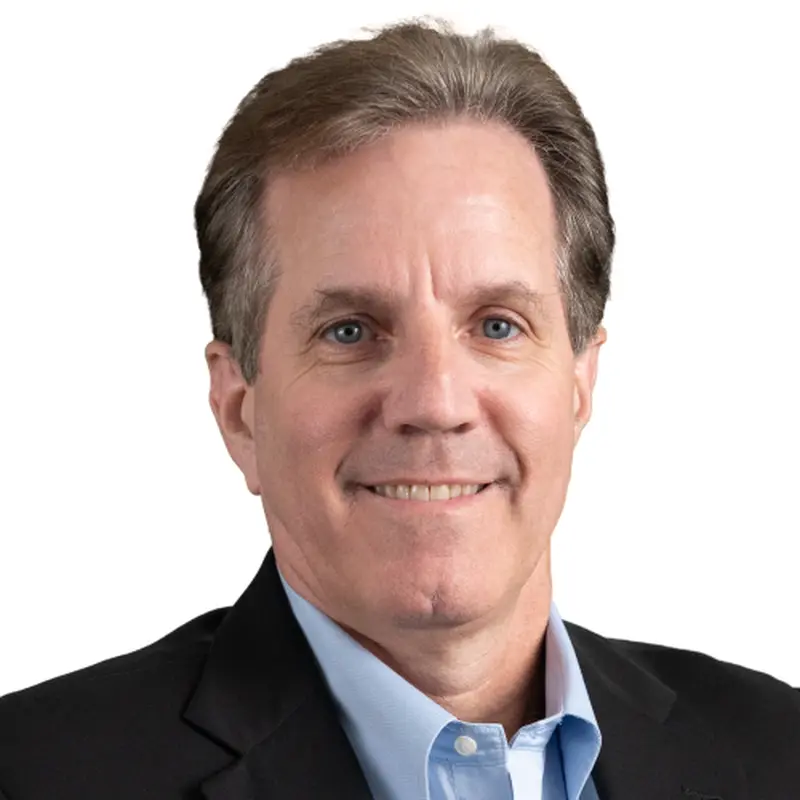

 Dave Vellante