We just sent you a verification email. Please verify your account to gain access to
RSA Conference 2024. If you don’t think you received an email check your
spam folder.
In order to sign in, enter the email address you used to registered for the event. Once completed, you will receive an email with a verification link. Open this link to automatically sign into the site.
Register For RSA Conference 2024
Please fill out the information below. You will recieve an email with a verification link confirming your registration. Click the link to automatically sign into the site.
You’re almost there!
We just sent you a verification email. Please click the verification button in the email. Once your email address is verified, you will have full access to all event content for RSA Conference 2024.
I want my badge and interests to be visible to all attendees.
Checking this box will display your presense on the attendees list, view your profile and allow other attendees to contact you via 1-1 chat. Read the Privacy Policy. At any time, you can choose to disable this preference.
Select your Interests!
add
Upload your photo
Uploading..
OR
Connect via Twitter
Connect via Linkedin
EDIT PASSWORD
Share
Forgot Password
Almost there!
We just sent you a verification email. Please verify your account to gain access to
RSA Conference 2024. If you don’t think you received an email check your
spam folder.
In order to sign in, enter the email address you used to registered for the event. Once completed, you will receive an email with a verification link. Open this link to automatically sign into the site.
Sign in to gain access to RSA Conference 2024
Please sign in with LinkedIn to continue to RSA Conference 2024. Signing in with LinkedIn ensures a professional environment.
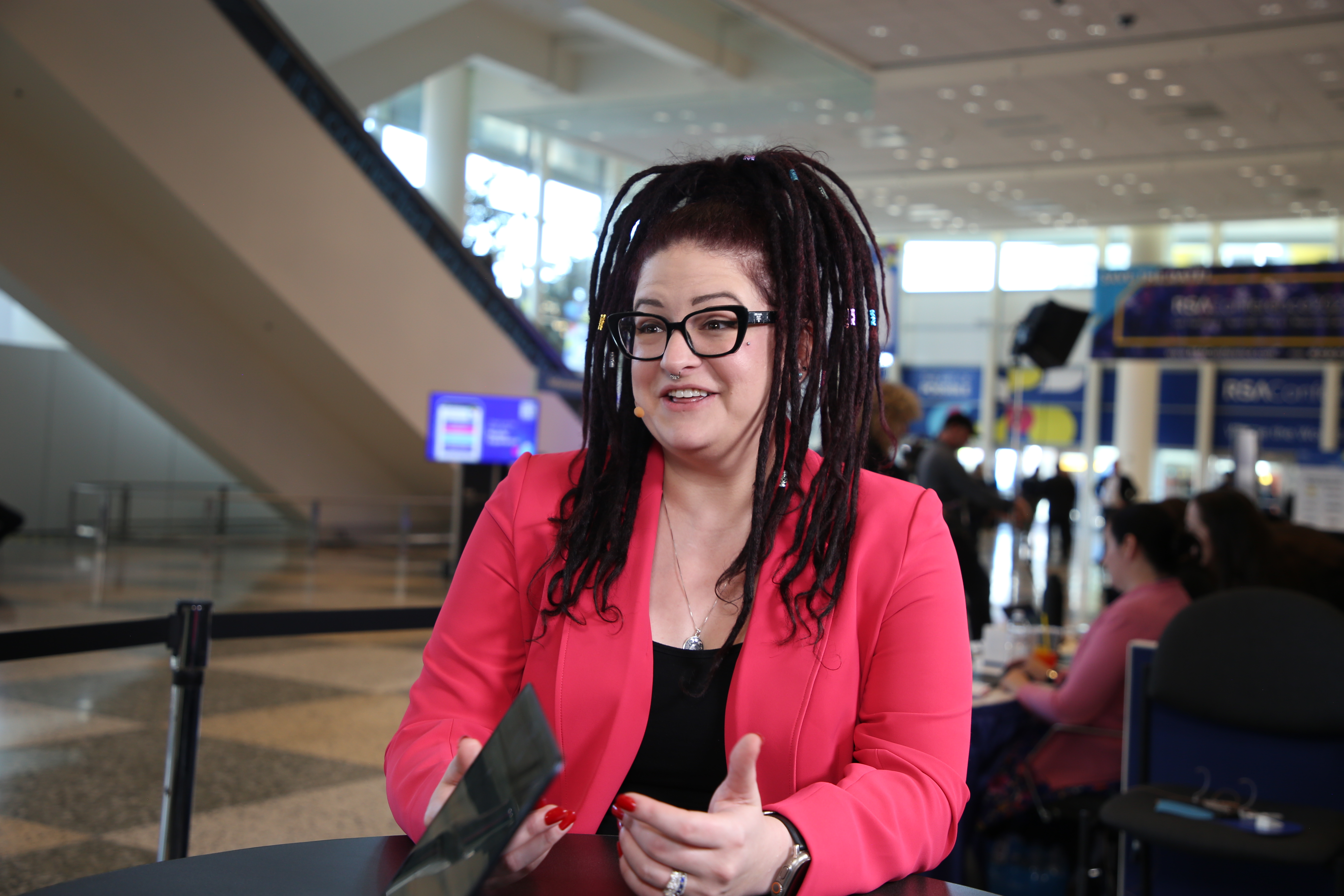
>> Hello, and welcome back to our coverage here. I am Shelly Kramer with theCUBE, and I'm here with Dave Vellante and David Linthicum, covering RSAC, the biggest security event happening in the United States right now. And lots of exciting things happening, and equally exciting is my guest today, Melissa Bischoping, who is the Director of Endpoint Security Research for Tanium. Melissa, welcome. I'm so glad to have you.>> Thank you so much for inviting me. This is an honor to be here.
Shelly Kramer
>> Absolutely. Well, I want to say that you have really shown me up in terms of, I show up in my basic black, and you're totally slaying in your hot pink and your amazing hair. Oh my gosh, I'm so jealous.>> Life is too short for boring business wear. That's my rule.
Shelly Kramer
>> All right. Well, I'm going to have to my game. You heard it here on camera. So what we're going to talk about today, is I love the topic that we get, a headline that we came up with for this particular conversation, and that headline is, Don't Marry the AI, Date It. And I will say this has been my life mantra for a very long time. I actually managed to say single for 16 years through just having that mindset. But I love that. Explain to me a little bit Melissa, about what you mean.>> We were having a great conversation earlier during the conference, about how organizations are adopting AI, and whether there's this fear or apprehension about moving too fast, or letting the AI take over really critical workloads that might be dangerous. And I said, "It's kind of like a relationship. You don't immediately go get a mortgage and a marriage certificate the first time you meet someone. You go out for coffee, you meet somewhere public, you maybe then after you've gotten to know them, you go away for a weekend together, to see how it's working for you." And I think that we're going to see that with any emerging technology that's really disruptive, and really changing the industry. You want to get to know the technology. You want to learn to trust the technology, before you fully commit to letting it take over essential workloads.
Shelly Kramer
>> I think it makes perfect sense. It's kind of slow the roll. And I'll say this, I come to these conversations with a background of a couple of decades as a strategist. And so my job has always been to look at things from the 30,000-foot angle, and to really think through all the different ramifications. And it's boring, but it's so important. We were having this conversation earlier today. You have to get the foundation here right, and that foundation doesn't have to necessarily be an entire basement pour, to use a building a house analogy. It can be, these are the footings, or these are the drawings or whatever. And I really think that that is, there's so much tendency in our world to do things, and just throw stuff against the wall, and hurry up, and we can make it pretty later. But I think that when it comes to security, and when it comes to AI security, slowing the roll really is kind of an important thing to do and really making sure you can get that foundation built.>> Yeah, I agree. Because I think that we have a lot of apprehension from engineers, architects, people who are charged with keeping their organizations reliable and available, and there's a lot of concern about if you let these brand new, flashy tools come in and take over your workload, is that going to cause an outage? Is there going to be an unexpected fallout from a tool you don't fully understand? So by slowing the roll, and actually having a really strategic, controlled adoption of that new technology, you are improving the resiliency of your organization while using that technology.
Shelly Kramer
>> Right. Yeah, no, it makes perfect sense. So Tanium is, when I think of endpoint management, and best-in-class endpoint, I truly do think of Tanium. You guys are doing an awesome job. Talk with me a little bit about what Tanium is doing with customers, to introduce automation into its IT Ops, and Security Ops workflows. I know this is a big thing and it's a big change for a lot of customers. So what are you doing to kind of shepherd them into this?>> Absolutely. So we have always said that our speed and scale of our solution is one of our huge differentiators in the market, but speed and scale still benefits from automation of those workflows. And we are looking at things like Autonomous Endpoint Management, AEM, and the first step towards that is Tanium Automate, which is going to be out later this summer. Tanium Automate allows you to build low-code, or no-code playbooks, that help you walk through the actions you want taken, how you're going to verify their success, and intelligently have those rolled out without having to burn so much of your time on writing really complex code and logic. And we want to free up your engineer's time to go focus on the harder problems, and give you this lightweight ability to build playbooks for almost any action you can think of. The great thing about this, and this goes back to the sort of date the AI approach, is it's dipping your toes in the water, getting comfortable with automation, getting comfortable with measuring the success of the automation that you do deploy. And you're not blind to it. It's not happening in a black box. You actually see the steps being taken, and the measures of success, and I think that's going to help people build trust and build confidence. So really excited about that. And then as we continue to go forward, enhancing that automation further.
Shelly Kramer
>> My question on this front is, it seems to me that this would be a great process, a great tool to use to up-level the skill set of your IT team who aren't yet highly skilled. But these playbooks seem... You're nodding, so I must be onto something here. But I think we do have a skills gap that we're navigating. We have highly, highly skilled people over here, and we have relatively inexperienced people here, and then we've got this magic middle where we have a gap. And so some of this solution seems like it would be perfect for that. So talk with me a little bit about how you're able to use that, to kind of up level your team.>> So two different approaches on that. One is that as providers of software, we know how complex and capable our tool sets can be, but it's not necessarily easy to individually educate every operator of that software, on all of the different possibilities. And I think being able to use things like Automate, are going to give us opportunities to pre-deploy, or pre-provide you with playbooks that you can then use as and say, "Oh, wow, I didn't even know I could do that with Tanium. Look at this. This is really cool." And people get very excited about that new and innovative use case. So it's an opportunity for us to educate by doing, people learn by seeing it in reality, and putting it in the context of their environment. So that's one part of it. The second, and something that is very near and dear to me, is helping people build the cyber skills to elevate their own careers. Not everyone comes into the industry already knowing how to write complex logic and code, and deploy it themselves. We've got a lot of junior analysts who might benefit from being able to build out these logic in low or no-code playbooks, because they understand the logic that needs to be applied, even if they're not a developer, or a really skilled scripter that could do it from scratch. So I think there's an opportunity there to allow junior employees, or some of your analysts, to build out playbooks that could be reviewed by your senior staff, but it saves both sides time. And I'm a huge fan of the idea that we need to automate the boring stuff. Your talent is expensive. Head count is really expensive, and everyone's trying to do more with less. So by using the power of automation, especially automation that you've learned to trust, and that you've learned to build upon, what you can do is force multiply the staff that you have, freeing their time up to tackle the really hard in-depth challenges.
Shelly Kramer
>> Which is, I think that's the beauty right there of Gen AI in particular and things like that. And we have conversations about jobs going away. And yes, there are jobs that are going away, but the reality of it is that this technology is best when you work alongside humans, and when you can free humans up to do the higher value things, and the things that you actually enjoy more. I had a conversation last night. We did a pop-up cube at a New York Stock Exchange event, and I had a conversation with somebody that's in the business of partnering with universities, training young people, and not necessarily just young people, but people from and things like that, who want to learn cyber skills, and then helping them get through the course and then actually placing them in jobs. But my point here, is that he mentioned that there were 750,000 unfilled jobs. So I see solutions like this as going a long way toward really upskilling where we need it most. And I think that's incredibly important.>> I agree with you, because I think that when we talk about that big number of unfilled jobs in the market, we're not talking about entry-level jobs. We have a lot of people fighting over those entry-level jobs. We have to get a pipeline, so that we can make those entry-level employees educated and informed, and capable of doing more advanced workflows, because that's really where the shortage is. Is you've got your super experts up at the top who are still around. You've got a lot of competition here at the entry-level, getting people comfortable to move up through the ranks at those mid-level roles, I think is where automation. And when we talk about AI, I always say it's not artificial intelligence, it's augmented human intelligence. This is making humans faster at making decisions, about making critical thinking skills, having the data to enrich the decisions you're already going to make and do it faster.
Shelly Kramer
>> Yeah, makes perfect sense. So let's talk a little bit about Tanium's Guardian solution, and really what's going on with that and how your customers are using that.>> Yeah, so Tanium Guardian is near and dear to my heart. This started as sort of a project in our field technical account management org several years ago. This was how we would see headlines in the news about the biggest zero day, or the biggest threat, and we would get together and build custom content that we could give to our customers to help solve that solution. Because our product is dynamic, it's extensible. You can do a lot with it. That of course doesn't scale. So we started posting blogs with that content. Blogs also don't scale. So Tanium Guardian is now us taking this hive mind of security research expertise, coupled with deep Tanium expertise about all the different capabilities we can offer, and shipping it directly to the console, and letting customers know if I was sitting in your environment today, me, Melissa Bischoping, if I'm sitting there working alongside you, this is where I would put my attention right now. This is the thing that's keeping me awake tonight that I think you should focus on. And I think this is important, because as an industry, we're throwing more and more data, more and more vulnerabilities, more and more reports, and no team can really digest all of that. And I think we have a duty in the industry, you bought our technology, let us empower you on a new and innovative way to use it. And let us help you in a time when it's a headline grabbing issue, or something that your boss is knocking on your door saying, "Hey, have you heard about this? I read about it on this tech blog. This seems like it's going to burn down the internet this week."
Shelly Kramer
>> And you want your response to be, "Yes, already on it.">> Already got it taken care of. I say to a lot of people, "My job is to save people some more Friday nights and weekends, so they're not on a bridge trying to dive through technical documentation, and then translate that into a solution." We want to be a partner in going after some of these really complex issues, supply chain vulnerabilities, zero days, malicious exploits and campaigns. And so we're doing that by combining the research of understanding the security problem, with the expertise of our product, and just giving it to you direct in the console, and it's part of Tanium Core.
Shelly Kramer
>> Well, I cannot imagine that's not incredibly attractive. And I will tell you, my job is different. I'm an analyst, but I feel on a daily basis that the ability to stay on top of the news, my email, my messaging, all the things that are going on with the clients that I serve, with the industries that I cover, it is huge. So I love that it's really a proactive delivery of information, that is going to help you do your job better. And I think that's a services component that I would be singing from the treetop. I would find that incredibly valuable, I bet. How long has this been in the field?>> Four years ago, five years ago was when we were starting to do this as sort of a grassroots effort, but Tanium Guardian itself, we formally launched in November of '23 at Tanium Converge, and then have been continuing to grow, and looking at new types of content we can share. Not even just zero days, but looking at things like, "Hey, we have a spotlight on this misconfiguration that we know is really prevalent, and introduces a lot of risk in your environment. Let's break it down for you. No fluff, not marketing speak. This is the technical information you need to explain the problem, understand the solution. And then, oh, by the way, here's a single button you can click to deploy that pre-configured fix, that we're shipping with it." I think the powerful piece of Guardian, is that it's still human curated insight and intelligence. It's not the machine trying to tell you what to do, but we're using that automation component that I talked about earlier, and we're using the power of our platform at the speed and scale that it functions, to get that out into your environment faster. It's marrying the human and the machine into a harmony, versus a push and pull relationship.
Shelly Kramer
>> Well, that makes perfect sense. So I have two more questions. One is, you've been here for a day. What are you feeling, like from a vibe from the show? And I'll step back and I'll tell you my answer first. So I'll give you a minute to think about this surprise question. But we talked about this a little bit this morning as we kicked off the show. And one of the things that we felt, was that this was an exploratory moment, and that what we are seeing from vendors, and partners, and customers, is that people are looking for information. They're looking for, "Okay, this is my challenge. Okay, this is your challenge. How are we similar?" We're trying to learn from vendors. We're trying to learn from information like interviews like this. We're trying to learn from conversations just with our peers in the industry. And David Linthicum and I talked about this a little bit this morning, but we felt like this was a time for learning, and kind of getting all the puzzle pieces out on the table. And then the next year will be spent sort of trying to put that puzzle together. And then when we're back here next year, we feel like the conversations will be more around actually doing some really bigger things with security products, with artificial intelligence products. What are your sensing as it relates to the vibe here?>> I think every year at RSA, is you're getting some of the best and brightest minds in the industry into these rooms and having conversations. And there's no real substitute for that. And yes, there's a lot of marketing hype, and stuff around like the expo floor. But when you actually get people in a hallway having conversations about how they're using different solutions, and how they're solving problems, and what they're looking at from a policy and regulatory perspective, we're all trying to solve the same problem. We're all in this together. And actually, I think that was last year's RSA slogan, but we're at a pivotal moment where we have a new defining technology that's becoming readily accessible. The AI conversation is loud and clear across the conference, but people are still learning what they want to do with that capability. They're still exploring the options. And to the art of the possible theme this year, we're looking at new ways to integrate technologies we have, we're looking at how to layer on top of technologies that we already own, maximize. Everyone wants to do more with less. So I think we're looking for efficiency, not necessarily looking for new, glittery like whiz-bang features. People are looking for stability and resilience. Resilience is a word that I have heard come up in almost every conversation I have had in the last 24 hours. And I think that's important.
Shelly Kramer
>> I agree.>> Because security is about being ready, but it's also about being able to recover.
Shelly Kramer
>> Right. Absolutely. And I think you and I talked about this before we hopped on, and the importance of trust, and really, I think that's what a lot of vendors are focusing on right now, because AI is scary, and the promise is incredible, but the risks are also equally incredible and scary. And so I think really getting to a place where you can trust in your AI, you're working with trusted vendor partners. I think that's something that everybody's looking for. And I know that's something you all feel pretty passionately about.>> It is. And one of our core messages is that the human being always has to be in control. If you are the architect, or the engineer in your organization, or if you're the CISO, or the CIO, it is your job to make sure things are stable, and things are secure, and things are running, and you're not impeding the business. And so learning to trust new ways of solving problems, learning to trust new tooling, requires actually engaging with the human beings. There's still a lot of human work that goes into, even if you're using AI, the humans are all along the path verifying, validating and helping you build that trust. And for me specifically, that's part of the Guardian and Automate sort of play off each other. We're using Automate to make things faster, but the work that we're doing at Guardian is very high touch from the human perspective. And we want organizations to know that they have powerful capabilities to scale the human effort. And I think that's trust your humans to do the work, and then trust your tooling, your infrastructure to scale that work out.
Shelly Kramer
>> What an amazing way to wrap this conversation. Melissa Bischoping from Tanium, thank you so much for joining me today, and this is Shelly Kramer here at the RSA Conference in San Francisco. I'm here with Dave Vellente and David Linthicum, covering all of the news that's coming out of this event. And keep it here on theCUBE. We'll be back for more soon.
>> Hello, and welcome back to our coverage here. I am Shelly Kramer with theCUBE, and I'm here with Dave Vellante and David Linthicum, covering RSAC, the biggest security event happening in the United States right now. And lots of exciting things happening, and equally exciting is my guest today, Melissa Bischoping, who is the Director of Endpoint Security Research for Tanium. Melissa, welcome. I'm so glad to have you.>> Thank you so much for inviting me. This is an honor to be here.
Shelly Kramer
>> Absolutely. Well, I want to say that you have really shown me up in terms of, I show up in my basic black, and you're totally slaying in your hot pink and your amazing hair. Oh my gosh, I'm so jealous.>> Life is too short for boring business wear. That's my rule.
Shelly Kramer
>> All right. Well, I'm going to have to my game. You heard it here on camera. So what we're going to talk about today, is I love the topic that we get, a headline that we came up with for this particular conversation, and that headline is, Don't Marry the AI, Date It. And I will say this has been my life mantra for a very long time. I actually managed to say single for 16 years through just having that mindset. But I love that. Explain to me a little bit Melissa, about what you mean.>> We were having a great conversation earlier during the conference, about how organizations are adopting AI, and whether there's this fear or apprehension about moving too fast, or letting the AI take over really critical workloads that might be dangerous. And I said, "It's kind of like a relationship. You don't immediately go get a mortgage and a marriage certificate the first time you meet someone. You go out for coffee, you meet somewhere public, you maybe then after you've gotten to know them, you go away for a weekend together, to see how it's working for you." And I think that we're going to see that with any emerging technology that's really disruptive, and really changing the industry. You want to get to know the technology. You want to learn to trust the technology, before you fully commit to letting it take over essential workloads.
Shelly Kramer
>> I think it makes perfect sense. It's kind of slow the roll. And I'll say this, I come to these conversations with a background of a couple of decades as a strategist. And so my job has always been to look at things from the 30,000-foot angle, and to really think through all the different ramifications. And it's boring, but it's so important. We were having this conversation earlier today. You have to get the foundation here right, and that foundation doesn't have to necessarily be an entire basement pour, to use a building a house analogy. It can be, these are the footings, or these are the drawings or whatever. And I really think that that is, there's so much tendency in our world to do things, and just throw stuff against the wall, and hurry up, and we can make it pretty later. But I think that when it comes to security, and when it comes to AI security, slowing the roll really is kind of an important thing to do and really making sure you can get that foundation built.>> Yeah, I agree. Because I think that we have a lot of apprehension from engineers, architects, people who are charged with keeping their organizations reliable and available, and there's a lot of concern about if you let these brand new, flashy tools come in and take over your workload, is that going to cause an outage? Is there going to be an unexpected fallout from a tool you don't fully understand? So by slowing the roll, and actually having a really strategic, controlled adoption of that new technology, you are improving the resiliency of your organization while using that technology.
Shelly Kramer
>> Right. Yeah, no, it makes perfect sense. So Tanium is, when I think of endpoint management, and best-in-class endpoint, I truly do think of Tanium. You guys are doing an awesome job. Talk with me a little bit about what Tanium is doing with customers, to introduce automation into its IT Ops, and Security Ops workflows. I know this is a big thing and it's a big change for a lot of customers. So what are you doing to kind of shepherd them into this?>> Absolutely. So we have always said that our speed and scale of our solution is one of our huge differentiators in the market, but speed and scale still benefits from automation of those workflows. And we are looking at things like Autonomous Endpoint Management, AEM, and the first step towards that is Tanium Automate, which is going to be out later this summer. Tanium Automate allows you to build low-code, or no-code playbooks, that help you walk through the actions you want taken, how you're going to verify their success, and intelligently have those rolled out without having to burn so much of your time on writing really complex code and logic. And we want to free up your engineer's time to go focus on the harder problems, and give you this lightweight ability to build playbooks for almost any action you can think of. The great thing about this, and this goes back to the sort of date the AI approach, is it's dipping your toes in the water, getting comfortable with automation, getting comfortable with measuring the success of the automation that you do deploy. And you're not blind to it. It's not happening in a black box. You actually see the steps being taken, and the measures of success, and I think that's going to help people build trust and build confidence. So really excited about that. And then as we continue to go forward, enhancing that automation further.
Shelly Kramer
>> My question on this front is, it seems to me that this would be a great process, a great tool to use to up-level the skill set of your IT team who aren't yet highly skilled. But these playbooks seem... You're nodding, so I must be onto something here. But I think we do have a skills gap that we're navigating. We have highly, highly skilled people over here, and we have relatively inexperienced people here, and then we've got this magic middle where we have a gap. And so some of this solution seems like it would be perfect for that. So talk with me a little bit about how you're able to use that, to kind of up level your team.>> So two different approaches on that. One is that as providers of software, we know how complex and capable our tool sets can be, but it's not necessarily easy to individually educate every operator of that software, on all of the different possibilities. And I think being able to use things like Automate, are going to give us opportunities to pre-deploy, or pre-provide you with playbooks that you can then use as and say, "Oh, wow, I didn't even know I could do that with Tanium. Look at this. This is really cool." And people get very excited about that new and innovative use case. So it's an opportunity for us to educate by doing, people learn by seeing it in reality, and putting it in the context of their environment. So that's one part of it. The second, and something that is very near and dear to me, is helping people build the cyber skills to elevate their own careers. Not everyone comes into the industry already knowing how to write complex logic and code, and deploy it themselves. We've got a lot of junior analysts who might benefit from being able to build out these logic in low or no-code playbooks, because they understand the logic that needs to be applied, even if they're not a developer, or a really skilled scripter that could do it from scratch. So I think there's an opportunity there to allow junior employees, or some of your analysts, to build out playbooks that could be reviewed by your senior staff, but it saves both sides time. And I'm a huge fan of the idea that we need to automate the boring stuff. Your talent is expensive. Head count is really expensive, and everyone's trying to do more with less. So by using the power of automation, especially automation that you've learned to trust, and that you've learned to build upon, what you can do is force multiply the staff that you have, freeing their time up to tackle the really hard in-depth challenges.
Shelly Kramer
>> Which is, I think that's the beauty right there of Gen AI in particular and things like that. And we have conversations about jobs going away. And yes, there are jobs that are going away, but the reality of it is that this technology is best when you work alongside humans, and when you can free humans up to do the higher value things, and the things that you actually enjoy more. I had a conversation last night. We did a pop-up cube at a New York Stock Exchange event, and I had a conversation with somebody that's in the business of partnering with universities, training young people, and not necessarily just young people, but people from and things like that, who want to learn cyber skills, and then helping them get through the course and then actually placing them in jobs. But my point here, is that he mentioned that there were 750,000 unfilled jobs. So I see solutions like this as going a long way toward really upskilling where we need it most. And I think that's incredibly important.>> I agree with you, because I think that when we talk about that big number of unfilled jobs in the market, we're not talking about entry-level jobs. We have a lot of people fighting over those entry-level jobs. We have to get a pipeline, so that we can make those entry-level employees educated and informed, and capable of doing more advanced workflows, because that's really where the shortage is. Is you've got your super experts up at the top who are still around. You've got a lot of competition here at the entry-level, getting people comfortable to move up through the ranks at those mid-level roles, I think is where automation. And when we talk about AI, I always say it's not artificial intelligence, it's augmented human intelligence. This is making humans faster at making decisions, about making critical thinking skills, having the data to enrich the decisions you're already going to make and do it faster.
Shelly Kramer
>> Yeah, makes perfect sense. So let's talk a little bit about Tanium's Guardian solution, and really what's going on with that and how your customers are using that.>> Yeah, so Tanium Guardian is near and dear to my heart. This started as sort of a project in our field technical account management org several years ago. This was how we would see headlines in the news about the biggest zero day, or the biggest threat, and we would get together and build custom content that we could give to our customers to help solve that solution. Because our product is dynamic, it's extensible. You can do a lot with it. That of course doesn't scale. So we started posting blogs with that content. Blogs also don't scale. So Tanium Guardian is now us taking this hive mind of security research expertise, coupled with deep Tanium expertise about all the different capabilities we can offer, and shipping it directly to the console, and letting customers know if I was sitting in your environment today, me, Melissa Bischoping, if I'm sitting there working alongside you, this is where I would put my attention right now. This is the thing that's keeping me awake tonight that I think you should focus on. And I think this is important, because as an industry, we're throwing more and more data, more and more vulnerabilities, more and more reports, and no team can really digest all of that. And I think we have a duty in the industry, you bought our technology, let us empower you on a new and innovative way to use it. And let us help you in a time when it's a headline grabbing issue, or something that your boss is knocking on your door saying, "Hey, have you heard about this? I read about it on this tech blog. This seems like it's going to burn down the internet this week."
Shelly Kramer
>> And you want your response to be, "Yes, already on it.">> Already got it taken care of. I say to a lot of people, "My job is to save people some more Friday nights and weekends, so they're not on a bridge trying to dive through technical documentation, and then translate that into a solution." We want to be a partner in going after some of these really complex issues, supply chain vulnerabilities, zero days, malicious exploits and campaigns. And so we're doing that by combining the research of understanding the security problem, with the expertise of our product, and just giving it to you direct in the console, and it's part of Tanium Core.
Shelly Kramer
>> Well, I cannot imagine that's not incredibly attractive. And I will tell you, my job is different. I'm an analyst, but I feel on a daily basis that the ability to stay on top of the news, my email, my messaging, all the things that are going on with the clients that I serve, with the industries that I cover, it is huge. So I love that it's really a proactive delivery of information, that is going to help you do your job better. And I think that's a services component that I would be singing from the treetop. I would find that incredibly valuable, I bet. How long has this been in the field?>> Four years ago, five years ago was when we were starting to do this as sort of a grassroots effort, but Tanium Guardian itself, we formally launched in November of '23 at Tanium Converge, and then have been continuing to grow, and looking at new types of content we can share. Not even just zero days, but looking at things like, "Hey, we have a spotlight on this misconfiguration that we know is really prevalent, and introduces a lot of risk in your environment. Let's break it down for you. No fluff, not marketing speak. This is the technical information you need to explain the problem, understand the solution. And then, oh, by the way, here's a single button you can click to deploy that pre-configured fix, that we're shipping with it." I think the powerful piece of Guardian, is that it's still human curated insight and intelligence. It's not the machine trying to tell you what to do, but we're using that automation component that I talked about earlier, and we're using the power of our platform at the speed and scale that it functions, to get that out into your environment faster. It's marrying the human and the machine into a harmony, versus a push and pull relationship.
Shelly Kramer
>> Well, that makes perfect sense. So I have two more questions. One is, you've been here for a day. What are you feeling, like from a vibe from the show? And I'll step back and I'll tell you my answer first. So I'll give you a minute to think about this surprise question. But we talked about this a little bit this morning as we kicked off the show. And one of the things that we felt, was that this was an exploratory moment, and that what we are seeing from vendors, and partners, and customers, is that people are looking for information. They're looking for, "Okay, this is my challenge. Okay, this is your challenge. How are we similar?" We're trying to learn from vendors. We're trying to learn from information like interviews like this. We're trying to learn from conversations just with our peers in the industry. And David Linthicum and I talked about this a little bit this morning, but we felt like this was a time for learning, and kind of getting all the puzzle pieces out on the table. And then the next year will be spent sort of trying to put that puzzle together. And then when we're back here next year, we feel like the conversations will be more around actually doing some really bigger things with security products, with artificial intelligence products. What are your sensing as it relates to the vibe here?>> I think every year at RSA, is you're getting some of the best and brightest minds in the industry into these rooms and having conversations. And there's no real substitute for that. And yes, there's a lot of marketing hype, and stuff around like the expo floor. But when you actually get people in a hallway having conversations about how they're using different solutions, and how they're solving problems, and what they're looking at from a policy and regulatory perspective, we're all trying to solve the same problem. We're all in this together. And actually, I think that was last year's RSA slogan, but we're at a pivotal moment where we have a new defining technology that's becoming readily accessible. The AI conversation is loud and clear across the conference, but people are still learning what they want to do with that capability. They're still exploring the options. And to the art of the possible theme this year, we're looking at new ways to integrate technologies we have, we're looking at how to layer on top of technologies that we already own, maximize. Everyone wants to do more with less. So I think we're looking for efficiency, not necessarily looking for new, glittery like whiz-bang features. People are looking for stability and resilience. Resilience is a word that I have heard come up in almost every conversation I have had in the last 24 hours. And I think that's important.
Shelly Kramer
>> I agree.>> Because security is about being ready, but it's also about being able to recover.
Shelly Kramer
>> Right. Absolutely. And I think you and I talked about this before we hopped on, and the importance of trust, and really, I think that's what a lot of vendors are focusing on right now, because AI is scary, and the promise is incredible, but the risks are also equally incredible and scary. And so I think really getting to a place where you can trust in your AI, you're working with trusted vendor partners. I think that's something that everybody's looking for. And I know that's something you all feel pretty passionately about.>> It is. And one of our core messages is that the human being always has to be in control. If you are the architect, or the engineer in your organization, or if you're the CISO, or the CIO, it is your job to make sure things are stable, and things are secure, and things are running, and you're not impeding the business. And so learning to trust new ways of solving problems, learning to trust new tooling, requires actually engaging with the human beings. There's still a lot of human work that goes into, even if you're using AI, the humans are all along the path verifying, validating and helping you build that trust. And for me specifically, that's part of the Guardian and Automate sort of play off each other. We're using Automate to make things faster, but the work that we're doing at Guardian is very high touch from the human perspective. And we want organizations to know that they have powerful capabilities to scale the human effort. And I think that's trust your humans to do the work, and then trust your tooling, your infrastructure to scale that work out.
Shelly Kramer
>> What an amazing way to wrap this conversation. Melissa Bischoping from Tanium, thank you so much for joining me today, and this is Shelly Kramer here at the RSA Conference in San Francisco. I'm here with Dave Vellente and David Linthicum, covering all of the news that's coming out of this event. And keep it here on theCUBE. We'll be back for more soon.