We just sent you a verification email. Please verify your account to gain access to
RSA Conference 2024. If you don’t think you received an email check your
spam folder.
In order to sign in, enter the email address you used to registered for the event. Once completed, you will receive an email with a verification link. Open this link to automatically sign into the site.
Register For RSA Conference 2024
Please fill out the information below. You will recieve an email with a verification link confirming your registration. Click the link to automatically sign into the site.
You’re almost there!
We just sent you a verification email. Please click the verification button in the email. Once your email address is verified, you will have full access to all event content for RSA Conference 2024.
I want my badge and interests to be visible to all attendees.
Checking this box will display your presense on the attendees list, view your profile and allow other attendees to contact you via 1-1 chat. Read the Privacy Policy. At any time, you can choose to disable this preference.
Select your Interests!
add
Upload your photo
Uploading..
OR
Connect via Twitter
Connect via Linkedin
EDIT PASSWORD
Share
Forgot Password
Almost there!
We just sent you a verification email. Please verify your account to gain access to
RSA Conference 2024. If you don’t think you received an email check your
spam folder.
In order to sign in, enter the email address you used to registered for the event. Once completed, you will receive an email with a verification link. Open this link to automatically sign into the site.
Sign in to gain access to RSA Conference 2024
Please sign in with LinkedIn to continue to RSA Conference 2024. Signing in with LinkedIn ensures a professional environment.
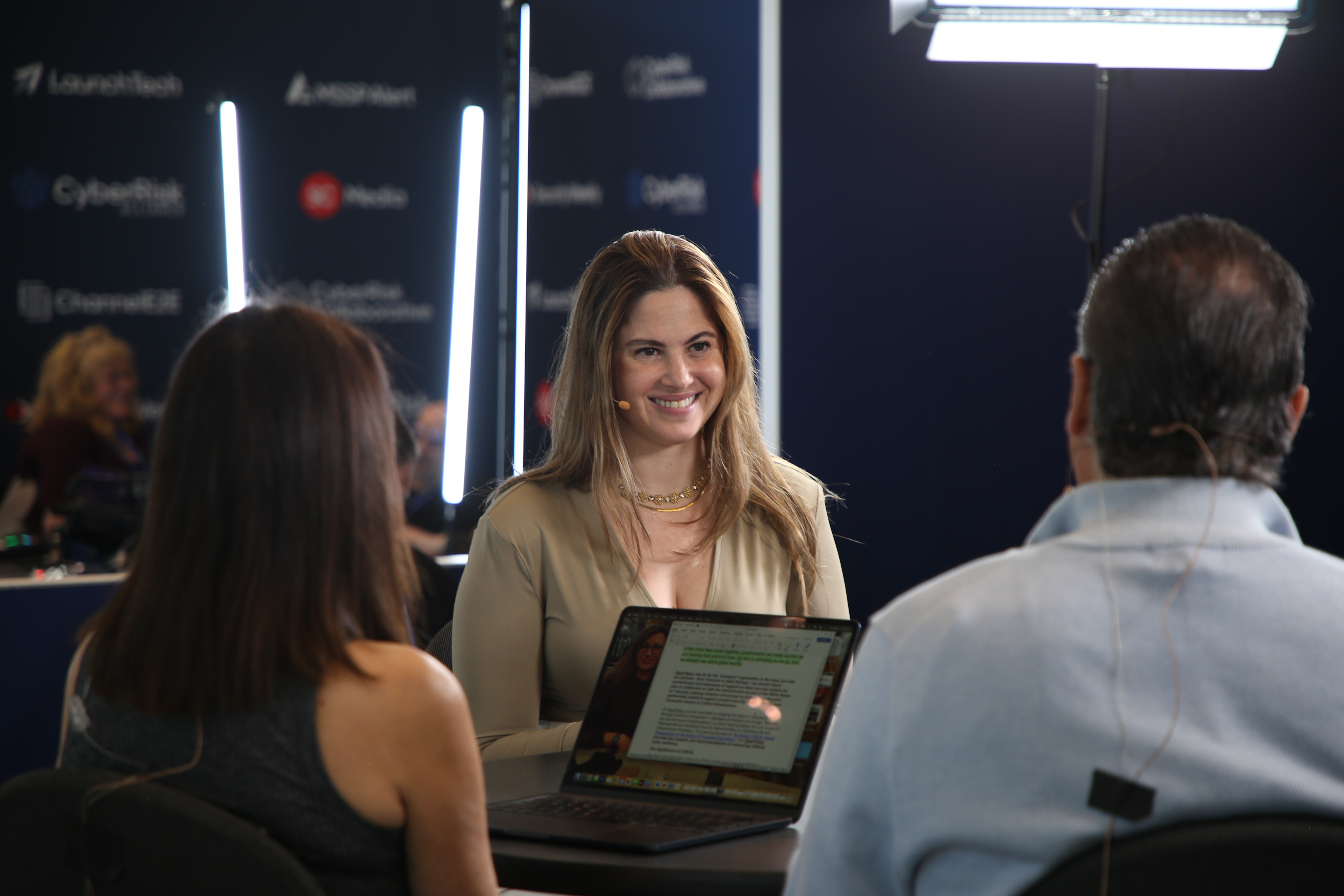
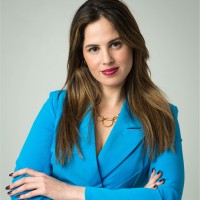
>> Hi everybody. Welcome back to theCUBE's coverage of RSAC. This is day four. Come on inside theCUBE. Dr. Amit Elazari is here. She's the CEO and co-founder of OpenPolicy. Great to see you again. Thanks so much for being here.
Dr. Amit Elazari
>> Thank you for having me. Great to see you.>> We had an awesome party the other night. We were co-hosting along with you, Elastic, Intel Capital, of course NYSE, Intel.
Dr. Amit Elazari
>> Yeah, it was fantastic.>> It was great, wasn't it?
Dr. Amit Elazari
>> Yeah. And I think that's what OpenPolicy tries to do, is to create connections and be a platform for those connections that would never be made. So we had government officials, but then we had venture capital and we had the innovators and we had you, with all your leadership. So we are really seeing this in the making, both the relationship with the connections, and now of course with our platform, we are scaling this technology. So pretty exciting time for us.>> I didn't know what to expect because it was at La Mar on the pier. And we're down at Moscone, so you didn't know. But we walked in at maybe 10 past the hour and it was already packed. There were people who came later who were texting me, "Oh, we just missed you." It was really a great success, so congratulations.
Dr. Amit Elazari
>> We are very honored to be a company one year in the making, so a early stage company, and be partnering with you and those brand names. And excited to compete with our RPR in the market, because it's very competitive over who's coming during RSA. But I think it was, for me, one of the best nights of the year. So really appreciate the collaboration.
Shelly Kramer
>> Well, you had a platform launch this week, didn't you? Here at RSA. Tell us a little bit about that.
Dr. Amit Elazari
>> Yeah, absolutely. OpenPolicy's pretty new. Last RSA I was here, I was just finishing up my role at Intel as the head of cybersecurity policy. And I shared my vision with the audience. I said, "We are experiencing a moment." Everybody here, coming to RSA, tries to understand, what's going to be the future of the market? And we know regulation, government policy, it's a power shaping those dynamics. And we have those conversations here, the talks, but we see from this ecosystem they are ready to engage. So last RSA I announced our vision, how we want to tech-enable and leverage the power of AI and coalitions to really unlock the value of government affairs to entities, even unicorns, that today are not in the conversation. They don't see what's coming and they don't have a way to engage, to influence at scale. And it is really, really fun to be here a year later with lighthouse customers like HiddenLayer, like Kiteworks, like Armis, and a lot of more demand. And launching our platform. So we have our product, we are bringing it to our customers. And this allows our ecosystem to really take their product and understand what's coming from proposed policies and regulations that is changing all the time, and connect the dots. Connect the dots for their marketing collateral, for their product strategy, and then even participate in the conversation. Influence.
Shelly Kramer
>> I think that, though, we had a conversation about this last night. And I think, to me, what's so special about what it is you're doing and so unique about it is that you're democratizing the process, because you're working with companies who can't afford to hire lobbyists in D.C. and that sort of thing. So I know you've testified before Congress. I know you've done some amazing things at really an early juncture with regard to OpenPolicy. But talk with me some more, talk with us some more about that passion you have for democratizing that access to knowledge and to government, and what's happening on a regulatory standpoint.
Dr. Amit Elazari
>> Yeah, fantastic. The vision for OpenPolicy came a little bit from my experience. I was doing this important work in one of the best technology companies in the world, Intel Corporation. And it is amazing to see how much being able to know what proposed regulations and market requirements and outcomes, see them ahead of the curve and have that insight, and then being able to shape it. And it's a capability that is today really reserved to that 1% because government affairs professionals that are really experts on cyber policy or AI policy and privacy policies, we don't have a lot of us. So these people usually work for large organizations, big tech. And I saw this opportunity to do two things. A, bring more innovators to the fold because, frankly speaking, we need their perspective. The cutting edge innovation that is being developed and showcased right here on the floor at RSA, those are the type of technologies we want to bring to the front lines as we combat threats. And part of that is educating the government. So I saw there was a need, but the need had to be answered by an answer which is not just people, because that's not scalable. So the idea came from democratizing and leveling the playing field, but it had to be complemented with technology, with AI, with the platform, and coalitions. So a lot of our approach is not to try to come in one-on-one to government, but bring those innovators together. So this is why my co-founder, David Uzan, comes in and is a second-timer CTO. And he really brings that technology expertise. And we are seeing that there is a need for this, and we are starting to see the results, the actual engagements with governments are bringing our perspective forward. And ultimately this creates market opportunities, because if you see what's coming, you can design better. And if you engage, then you see that government understands there is a need to have those security solutions in the requirements. So super exciting for us to be able to be that bridge, and just extremely grateful for our early adopters. And this RSA has been fantastic for us. We are converting a lot more customers. We have a lot of, actually, inbound, and we are excited to scale. And this is where the platform comes in.>> What's so important about the work that you're doing is this whole notion of democratization. You mentioned several called HiddenLayer. You said Armis is also part of that. These are smaller organizations that don't generally have the influence.
Dr. Amit Elazari
>> Right.>> That's something that you said you can bring to the table. So often public policy favors those big, giant companies like an Intel. And then you get regulatory capture, and then the others are shut out of the market.
Dr. Amit Elazari
>> Yeah.>> By bringing the innovation in, it does a couple of things, I would think. One is it modernizes, helps modernize, anyway, the public policy, keep it closer to the actual activity on the ground. And the other is it allows everybody to participate, not just those big companies that are monopolistic or monopoly-like, where they have so much control and power in the industry.
Dr. Amit Elazari
>> Yeah. And Intel actually is a partner of ours, so they've done a great job in actually supporting others and bringing them to the fold. But generally speaking, even though it's really important to have the perspective of big tech and government, and those large companies are doing a lot to elevate others, the reality is that there are a lot of solutions, especially for security and for AI, that are going to be naturally developed first within the startups, because they want to take risk. And this is why we see all these acquisitions in the market. They are able to bring them. What we are doing is bridging the innovation voice directly into the government. And some of our customers are smaller. Some of them, like Armis, they have government affairs capabilities and they have coalitions, and they use us to scale. Because a part of our platform is not just about creating you an avenue to see what's coming and connecting it to your roadmap and do better marketing. it's also creating a coalition around you. But it also allows an organization that has one person for government affairs to scale their work to benefit different parts of the business itself. So pretty exciting time. Definitely there is a demand for this. We're excited to be the solution, but we are going to grow and see what more applications we can have in this space. I can tell you that, from a lot of our customers, they are eager for federal marketing. So we are helping with compliance narrative. That is not less important to change you to meet the environment as we are changing the environment collectively to meet the innovation.>> Does this have a global scope?
Dr. Amit Elazari
>> Today, in our feeds we are starting to also include information that is coming from other regulators. We know that in the policy space, part of the complexity of influencing and understanding what matters is we just have a lot. Let's just take one example, the executive order on AI. Such an important development. We have about 50 different documents being developed under that executive order. So that duplicity, especially when it scales globally, that's part of what we solve. It's like we take all that information, and with generative AI we can really focus on matter. So today the approach we take is, we call it strategic global, which we would focus on the main hub of regulatory development. So certainly Five Eyes, certainly Europe. That is important because the future of regulation in AI, in cybersecurity, in privacy is not happening in silos, right?>> Right.
Shelly Kramer
>> Yeah.
Dr. Amit Elazari
>> The US is looking at the EU and it's all happening together. But we still need to be strategic, so we don't cover all of the world. We take the approach of the way a policy expert at a big company would do it, and try to democratize that approach and learn from that approach to scale it on the platform for those different companies.>> So can we go through an example? So for instance, you know that EU is going to lead perhaps in privacy.
Dr. Amit Elazari
>> Yes.>> So that would inform the strategy, as an example?
Dr. Amit Elazari
>> Absolutely.>> Okay.
Dr. Amit Elazari
>> So the way we work is we track. I'll give you a real example. We do a lot of work on product security. In fact, I'm very honored that we were part of the launch of the IoT Cyber Trust Mark labeling initiative that I think was also discussed here at RSA. Big development. We are going to have labels that demonstrate the security of consumer IoT devices all around the United States. So we were part of that. But as we track that, we know that there is a big development also in Europe, the European Cyber Resilience Act. So we look at that as well and how our engagement strategy and the things we track, take into account not just US. And in fact we advocated. In the process of creating the program we participated in the process, we filed comments, we brought our companies to the table, and the FCC, the Federal Communication Commission, adopted our approach. And we said, "In order to support more alignment between Europe and the US, we need this type of scope for the program."
And they adopted our approach and they started us. So that was a big, big honor for us, especially on the other side there were giants like LG and Samsung. So that was a little bit of a real example of how we brought the innovators to the table, drove the impact, tracked it globally. And now we think there is a better result for security because we are securing in a way that allows more and more companies to comply because it reduces the burden from the regulatory duplication. So that's part of what we do. But it starts with bringing those perspectives to the table to engage. And it used to be the case that you had to have very unique access to very unique experts to really being able to be at that level of talking with the Commission. And we see from the Commission, they were eager, eager to hear the perspective of innovators.>> So we used the EU example, and that's pretty obvious and prominent. As you see things like sovereign cloud, people want to keep data in their own country.
Dr. Amit Elazari
>> Right.>> Or people talking now about sovereign AI and private AI. Do you see any pockets emerging or do you see a very diffuse, country-by-country, which maybe makes things more challenging?
Dr. Amit Elazari
>> I love that question because what we are trying to do is... the specific question you ask is, we have this major wave of sovereignty requirements. Organizations that have access to that wave and see that two, three years ahead can create a strategy to create a technology to solve that. So we saw the sovereignty requirements evolving and then we saw the big cloud provider coming in with a sovereign cloud. This is because they have the government affairs professionals that see what's coming and they have enough time to design the solution. That's exactly the type of insights we are trying to bring to organizations of all sizes with our platform. But to answer your specific question, I'm super excited about what we're going to see with governance. So across the board, in security and AI and privacy, the regulation is going to create what we call a mesh. So if you're a CISO that is not looking into AI governance, you might be left behind. So this regulatory mesh between the requirements of cyber, privacy, and AI, and regulators doubling down on attestations, on measurements or artifacts of compliance, is creating a big opportunity for governance companies. So not a surprise, in our ecosystem we have companies that are really on the cutting edge of not just securing but helping their organizations to address governance, the risk issue. And that will continue to grow. So that's one trajectory that is very clear from the US and what's coming.>> Well, and OpenPolicy can play a role in creating global standards and influencing those global standards. I know in the United States you get sometimes certain regulations. You have 50 states, they have 50 different regulations. And it's a real problem, for companies to comply. A lot of times some of those may or may not make sense. So to the extent that you can neutralize those differences across the globe, I know it's going to be... obviously places like China and other countries, they're probably a little more difficult. But there could be a lot of commonality that you can effect.
Dr. Amit Elazari
>> Absolutely. One of the most interesting use cases of our platform, which is actually an interest for governments, is it allows one government to see what other government. Everything is public.
Shelly Kramer
>> Yeah.
Dr. Amit Elazari
>> But to be able to connect the dots and see what what's coming, that is helpful not just for organizations but also for governments. And yes, a lot of the process of engaging allows us to see, "Oh, we have a gap here in the technology outcome, but it's a small gap." Then we file comments. Then we reach them together. Then it's a lot easier for our innovators to create a solution that is not just addressing the US or even the federal agency concerned. It's now addressing two big markets: US and EU. And the product security work that we've done on IoT a great example for that. So that's exactly what we want to do, but we want to scale the ability to spot those issues. So this is where the AI comes in. This is where the tracking comes in, but also the policy expertise. So our tech-enabled approach suggests that it's not just about the SaaS. That's great, but you also need to have the experts, that you know how to look at those documents and create the right narrative and spot the issues.
Shelly Kramer
>> So everything that you're talking about is,, really what I'm hearing is the pitch is we're stronger together.
Dr. Amit Elazari
>> Absolutely.
Shelly Kramer
>> Innovators, cutting-edge technology, visionaries. And so to me, when I think about, okay, if I'm you and your sales pitch, how is it possible to not say, "Yes, I'm in?" Really, everything that you've talked about in terms of what OpenPolicy does, bringing coalition together, bringing experts together that you probably certainly don't have. You don't have the money to hire, you don't have the expertise. I don't know how you ever get to the no, because it's so attractive.
Dr. Amit Elazari
>> Yeah. We are frankly very excited about the opportunity. When we started that journey, we wanted to validate that government affairs value is starting to be considered as a top business development strategic capability of a business. It's just that it hasn't been available because there is no path to influence if you're not a crowd. There are not a lot of experts. People don't know where to find those experts.
Shelly Kramer
>> Right.
Dr. Amit Elazari
>> And it is actually very overwhelming, and we are excited about it. But there are some companies. Part of our journey was to figure out who to sell. The very small companies, the seed companies, I think we have one seed company, sometimes it's just too early.
Shelly Kramer
>> Yeah.
Dr. Amit Elazari
>> But we still give back. So we would work with them, we would try to give them advice, and then they mature into the A and they convert as a customer. So sometimes they say no because they are too early but, frankly speaking, I think I'm really excited because I think there is a model here that works and there is an opportunity. And what's striking is that the bigger players are helping the smaller players.>> Yeah.
Shelly Kramer
>> Yeah, that's great.
Dr. Amit Elazari
>> This is the coalition model.>> Yeah.
Shelly Kramer
>> Yeah.
Dr. Amit Elazari
>> And sometimes you would have a case where companies in one side of the solution, let's just take OT Security, can work with an IoT security solution company. And they come together to increase the collective both times. But also just awareness of the problem.
Shelly Kramer
>> Everybody wins.
Dr. Amit Elazari
>> So it really is about not just leveling the playing field, because the regulatory capture issue is real.>> Yeah.
Dr. Amit Elazari
>> It's also about creating a solution that can really scale. And I had conviction when we started the journey. Me and my co-founder, we had conviction. This is not a consultancy because it cannot scale. It's also not a pure SaaS because we need tech-enabled. But above all, it's not a one-on-one. We need the coalition model, the partnering, in order to really drive impact.
Shelly Kramer
>> Yeah.
Dr. Amit Elazari
>> And some of our organizations are partners. They're interested in intelligence, they are interested in the marketing. They want to be really focusing on changing them to meet the environment. But then when there is that appetite for engagement, that's where I'm so excited to see this. And we had the Secure by Design Pledge. This is RSA.
Shelly Kramer
>> Yeah.
Dr. Amit Elazari
>> One of the most exciting things that we had this week is of course the effort by CISA, by DHS with the Secure by Design Pledge. And I think we brought about 10 companies to that effort. So out of the 68 that signed, 10 companies came from our ecosystem, including I think the smallest signer of the pledge, which is Lasso Security. So super exciting thing. And we are seeing that it's actually happening. And the policy makers are also excited about that.>> It's really remarkable what you've put together. Your experience at Intel. As you said, Intel's a great partner. They have affected public policy globally. Pat Gelsinger of course running around the world and educating governments on the importance of semiconductors. Congratulations on all your work. And it sounds like the best is yet to come.
Dr. Amit Elazari
>> Thank you so much, and thank you so much for having me. I'm so excited to see how next year is going to look.>> We love our partnerships.
Dr. Amit Elazari
>> Yes.>> Thank you so much for the collaboration. All right, keep it right there. We'll be back right after this short break. You're watching theCUBE from RSAC 2024. Right back.
>> Hi everybody. Welcome back to theCUBE's coverage of RSAC. This is day four. Come on inside theCUBE. Dr. Amit Elazari is here. She's the CEO and co-founder of OpenPolicy. Great to see you again. Thanks so much for being here.
Dr. Amit Elazari
>> Thank you for having me. Great to see you.>> We had an awesome party the other night. We were co-hosting along with you, Elastic, Intel Capital, of course NYSE, Intel.
Dr. Amit Elazari
>> Yeah, it was fantastic.>> It was great, wasn't it?
Dr. Amit Elazari
>> Yeah. And I think that's what OpenPolicy tries to do, is to create connections and be a platform for those connections that would never be made. So we had government officials, but then we had venture capital and we had the innovators and we had you, with all your leadership. So we are really seeing this in the making, both the relationship with the connections, and now of course with our platform, we are scaling this technology. So pretty exciting time for us.>> I didn't know what to expect because it was at La Mar on the pier. And we're down at Moscone, so you didn't know. But we walked in at maybe 10 past the hour and it was already packed. There were people who came later who were texting me, "Oh, we just missed you." It was really a great success, so congratulations.
Dr. Amit Elazari
>> We are very honored to be a company one year in the making, so a early stage company, and be partnering with you and those brand names. And excited to compete with our RPR in the market, because it's very competitive over who's coming during RSA. But I think it was, for me, one of the best nights of the year. So really appreciate the collaboration.
Shelly Kramer
>> Well, you had a platform launch this week, didn't you? Here at RSA. Tell us a little bit about that.
Dr. Amit Elazari
>> Yeah, absolutely. OpenPolicy's pretty new. Last RSA I was here, I was just finishing up my role at Intel as the head of cybersecurity policy. And I shared my vision with the audience. I said, "We are experiencing a moment." Everybody here, coming to RSA, tries to understand, what's going to be the future of the market? And we know regulation, government policy, it's a power shaping those dynamics. And we have those conversations here, the talks, but we see from this ecosystem they are ready to engage. So last RSA I announced our vision, how we want to tech-enable and leverage the power of AI and coalitions to really unlock the value of government affairs to entities, even unicorns, that today are not in the conversation. They don't see what's coming and they don't have a way to engage, to influence at scale. And it is really, really fun to be here a year later with lighthouse customers like HiddenLayer, like Kiteworks, like Armis, and a lot of more demand. And launching our platform. So we have our product, we are bringing it to our customers. And this allows our ecosystem to really take their product and understand what's coming from proposed policies and regulations that is changing all the time, and connect the dots. Connect the dots for their marketing collateral, for their product strategy, and then even participate in the conversation. Influence.
Shelly Kramer
>> I think that, though, we had a conversation about this last night. And I think, to me, what's so special about what it is you're doing and so unique about it is that you're democratizing the process, because you're working with companies who can't afford to hire lobbyists in D.C. and that sort of thing. So I know you've testified before Congress. I know you've done some amazing things at really an early juncture with regard to OpenPolicy. But talk with me some more, talk with us some more about that passion you have for democratizing that access to knowledge and to government, and what's happening on a regulatory standpoint.
Dr. Amit Elazari
>> Yeah, fantastic. The vision for OpenPolicy came a little bit from my experience. I was doing this important work in one of the best technology companies in the world, Intel Corporation. And it is amazing to see how much being able to know what proposed regulations and market requirements and outcomes, see them ahead of the curve and have that insight, and then being able to shape it. And it's a capability that is today really reserved to that 1% because government affairs professionals that are really experts on cyber policy or AI policy and privacy policies, we don't have a lot of us. So these people usually work for large organizations, big tech. And I saw this opportunity to do two things. A, bring more innovators to the fold because, frankly speaking, we need their perspective. The cutting edge innovation that is being developed and showcased right here on the floor at RSA, those are the type of technologies we want to bring to the front lines as we combat threats. And part of that is educating the government. So I saw there was a need, but the need had to be answered by an answer which is not just people, because that's not scalable. So the idea came from democratizing and leveling the playing field, but it had to be complemented with technology, with AI, with the platform, and coalitions. So a lot of our approach is not to try to come in one-on-one to government, but bring those innovators together. So this is why my co-founder, David Uzan, comes in and is a second-timer CTO. And he really brings that technology expertise. And we are seeing that there is a need for this, and we are starting to see the results, the actual engagements with governments are bringing our perspective forward. And ultimately this creates market opportunities, because if you see what's coming, you can design better. And if you engage, then you see that government understands there is a need to have those security solutions in the requirements. So super exciting for us to be able to be that bridge, and just extremely grateful for our early adopters. And this RSA has been fantastic for us. We are converting a lot more customers. We have a lot of, actually, inbound, and we are excited to scale. And this is where the platform comes in.>> What's so important about the work that you're doing is this whole notion of democratization. You mentioned several called HiddenLayer. You said Armis is also part of that. These are smaller organizations that don't generally have the influence.
Dr. Amit Elazari
>> Right.>> That's something that you said you can bring to the table. So often public policy favors those big, giant companies like an Intel. And then you get regulatory capture, and then the others are shut out of the market.
Dr. Amit Elazari
>> Yeah.>> By bringing the innovation in, it does a couple of things, I would think. One is it modernizes, helps modernize, anyway, the public policy, keep it closer to the actual activity on the ground. And the other is it allows everybody to participate, not just those big companies that are monopolistic or monopoly-like, where they have so much control and power in the industry.
Dr. Amit Elazari
>> Yeah. And Intel actually is a partner of ours, so they've done a great job in actually supporting others and bringing them to the fold. But generally speaking, even though it's really important to have the perspective of big tech and government, and those large companies are doing a lot to elevate others, the reality is that there are a lot of solutions, especially for security and for AI, that are going to be naturally developed first within the startups, because they want to take risk. And this is why we see all these acquisitions in the market. They are able to bring them. What we are doing is bridging the innovation voice directly into the government. And some of our customers are smaller. Some of them, like Armis, they have government affairs capabilities and they have coalitions, and they use us to scale. Because a part of our platform is not just about creating you an avenue to see what's coming and connecting it to your roadmap and do better marketing. it's also creating a coalition around you. But it also allows an organization that has one person for government affairs to scale their work to benefit different parts of the business itself. So pretty exciting time. Definitely there is a demand for this. We're excited to be the solution, but we are going to grow and see what more applications we can have in this space. I can tell you that, from a lot of our customers, they are eager for federal marketing. So we are helping with compliance narrative. That is not less important to change you to meet the environment as we are changing the environment collectively to meet the innovation.>> Does this have a global scope?
Dr. Amit Elazari
>> Today, in our feeds we are starting to also include information that is coming from other regulators. We know that in the policy space, part of the complexity of influencing and understanding what matters is we just have a lot. Let's just take one example, the executive order on AI. Such an important development. We have about 50 different documents being developed under that executive order. So that duplicity, especially when it scales globally, that's part of what we solve. It's like we take all that information, and with generative AI we can really focus on matter. So today the approach we take is, we call it strategic global, which we would focus on the main hub of regulatory development. So certainly Five Eyes, certainly Europe. That is important because the future of regulation in AI, in cybersecurity, in privacy is not happening in silos, right?>> Right.
Shelly Kramer
>> Yeah.
Dr. Amit Elazari
>> The US is looking at the EU and it's all happening together. But we still need to be strategic, so we don't cover all of the world. We take the approach of the way a policy expert at a big company would do it, and try to democratize that approach and learn from that approach to scale it on the platform for those different companies.>> So can we go through an example? So for instance, you know that EU is going to lead perhaps in privacy.
Dr. Amit Elazari
>> Yes.>> So that would inform the strategy, as an example?
Dr. Amit Elazari
>> Absolutely.>> Okay.
Dr. Amit Elazari
>> So the way we work is we track. I'll give you a real example. We do a lot of work on product security. In fact, I'm very honored that we were part of the launch of the IoT Cyber Trust Mark labeling initiative that I think was also discussed here at RSA. Big development. We are going to have labels that demonstrate the security of consumer IoT devices all around the United States. So we were part of that. But as we track that, we know that there is a big development also in Europe, the European Cyber Resilience Act. So we look at that as well and how our engagement strategy and the things we track, take into account not just US. And in fact we advocated. In the process of creating the program we participated in the process, we filed comments, we brought our companies to the table, and the FCC, the Federal Communication Commission, adopted our approach. And we said, "In order to support more alignment between Europe and the US, we need this type of scope for the program."
And they adopted our approach and they started us. So that was a big, big honor for us, especially on the other side there were giants like LG and Samsung. So that was a little bit of a real example of how we brought the innovators to the table, drove the impact, tracked it globally. And now we think there is a better result for security because we are securing in a way that allows more and more companies to comply because it reduces the burden from the regulatory duplication. So that's part of what we do. But it starts with bringing those perspectives to the table to engage. And it used to be the case that you had to have very unique access to very unique experts to really being able to be at that level of talking with the Commission. And we see from the Commission, they were eager, eager to hear the perspective of innovators.>> So we used the EU example, and that's pretty obvious and prominent. As you see things like sovereign cloud, people want to keep data in their own country.
Dr. Amit Elazari
>> Right.>> Or people talking now about sovereign AI and private AI. Do you see any pockets emerging or do you see a very diffuse, country-by-country, which maybe makes things more challenging?
Dr. Amit Elazari
>> I love that question because what we are trying to do is... the specific question you ask is, we have this major wave of sovereignty requirements. Organizations that have access to that wave and see that two, three years ahead can create a strategy to create a technology to solve that. So we saw the sovereignty requirements evolving and then we saw the big cloud provider coming in with a sovereign cloud. This is because they have the government affairs professionals that see what's coming and they have enough time to design the solution. That's exactly the type of insights we are trying to bring to organizations of all sizes with our platform. But to answer your specific question, I'm super excited about what we're going to see with governance. So across the board, in security and AI and privacy, the regulation is going to create what we call a mesh. So if you're a CISO that is not looking into AI governance, you might be left behind. So this regulatory mesh between the requirements of cyber, privacy, and AI, and regulators doubling down on attestations, on measurements or artifacts of compliance, is creating a big opportunity for governance companies. So not a surprise, in our ecosystem we have companies that are really on the cutting edge of not just securing but helping their organizations to address governance, the risk issue. And that will continue to grow. So that's one trajectory that is very clear from the US and what's coming.>> Well, and OpenPolicy can play a role in creating global standards and influencing those global standards. I know in the United States you get sometimes certain regulations. You have 50 states, they have 50 different regulations. And it's a real problem, for companies to comply. A lot of times some of those may or may not make sense. So to the extent that you can neutralize those differences across the globe, I know it's going to be... obviously places like China and other countries, they're probably a little more difficult. But there could be a lot of commonality that you can effect.
Dr. Amit Elazari
>> Absolutely. One of the most interesting use cases of our platform, which is actually an interest for governments, is it allows one government to see what other government. Everything is public.
Shelly Kramer
>> Yeah.
Dr. Amit Elazari
>> But to be able to connect the dots and see what what's coming, that is helpful not just for organizations but also for governments. And yes, a lot of the process of engaging allows us to see, "Oh, we have a gap here in the technology outcome, but it's a small gap." Then we file comments. Then we reach them together. Then it's a lot easier for our innovators to create a solution that is not just addressing the US or even the federal agency concerned. It's now addressing two big markets: US and EU. And the product security work that we've done on IoT a great example for that. So that's exactly what we want to do, but we want to scale the ability to spot those issues. So this is where the AI comes in. This is where the tracking comes in, but also the policy expertise. So our tech-enabled approach suggests that it's not just about the SaaS. That's great, but you also need to have the experts, that you know how to look at those documents and create the right narrative and spot the issues.
Shelly Kramer
>> So everything that you're talking about is,, really what I'm hearing is the pitch is we're stronger together.
Dr. Amit Elazari
>> Absolutely.
Shelly Kramer
>> Innovators, cutting-edge technology, visionaries. And so to me, when I think about, okay, if I'm you and your sales pitch, how is it possible to not say, "Yes, I'm in?" Really, everything that you've talked about in terms of what OpenPolicy does, bringing coalition together, bringing experts together that you probably certainly don't have. You don't have the money to hire, you don't have the expertise. I don't know how you ever get to the no, because it's so attractive.
Dr. Amit Elazari
>> Yeah. We are frankly very excited about the opportunity. When we started that journey, we wanted to validate that government affairs value is starting to be considered as a top business development strategic capability of a business. It's just that it hasn't been available because there is no path to influence if you're not a crowd. There are not a lot of experts. People don't know where to find those experts.
Shelly Kramer
>> Right.
Dr. Amit Elazari
>> And it is actually very overwhelming, and we are excited about it. But there are some companies. Part of our journey was to figure out who to sell. The very small companies, the seed companies, I think we have one seed company, sometimes it's just too early.
Shelly Kramer
>> Yeah.
Dr. Amit Elazari
>> But we still give back. So we would work with them, we would try to give them advice, and then they mature into the A and they convert as a customer. So sometimes they say no because they are too early but, frankly speaking, I think I'm really excited because I think there is a model here that works and there is an opportunity. And what's striking is that the bigger players are helping the smaller players.>> Yeah.
Shelly Kramer
>> Yeah, that's great.
Dr. Amit Elazari
>> This is the coalition model.>> Yeah.
Shelly Kramer
>> Yeah.
Dr. Amit Elazari
>> And sometimes you would have a case where companies in one side of the solution, let's just take OT Security, can work with an IoT security solution company. And they come together to increase the collective both times. But also just awareness of the problem.
Shelly Kramer
>> Everybody wins.
Dr. Amit Elazari
>> So it really is about not just leveling the playing field, because the regulatory capture issue is real.>> Yeah.
Dr. Amit Elazari
>> It's also about creating a solution that can really scale. And I had conviction when we started the journey. Me and my co-founder, we had conviction. This is not a consultancy because it cannot scale. It's also not a pure SaaS because we need tech-enabled. But above all, it's not a one-on-one. We need the coalition model, the partnering, in order to really drive impact.
Shelly Kramer
>> Yeah.
Dr. Amit Elazari
>> And some of our organizations are partners. They're interested in intelligence, they are interested in the marketing. They want to be really focusing on changing them to meet the environment. But then when there is that appetite for engagement, that's where I'm so excited to see this. And we had the Secure by Design Pledge. This is RSA.
Shelly Kramer
>> Yeah.
Dr. Amit Elazari
>> One of the most exciting things that we had this week is of course the effort by CISA, by DHS with the Secure by Design Pledge. And I think we brought about 10 companies to that effort. So out of the 68 that signed, 10 companies came from our ecosystem, including I think the smallest signer of the pledge, which is Lasso Security. So super exciting thing. And we are seeing that it's actually happening. And the policy makers are also excited about that.>> It's really remarkable what you've put together. Your experience at Intel. As you said, Intel's a great partner. They have affected public policy globally. Pat Gelsinger of course running around the world and educating governments on the importance of semiconductors. Congratulations on all your work. And it sounds like the best is yet to come.
Dr. Amit Elazari
>> Thank you so much, and thank you so much for having me. I'm so excited to see how next year is going to look.>> We love our partnerships.
Dr. Amit Elazari
>> Yes.>> Thank you so much for the collaboration. All right, keep it right there. We'll be back right after this short break. You're watching theCUBE from RSAC 2024. Right back.