This insightful video presents a discussion featuring Prakash Venkata, Principal of PwC's Cyber Risk and Regulatory Practice, and Vinod D'Souza, Google Cloud's head of manufacturing and industry at the office of the Chief Information Security Officer. This session is a part of the live coverage of RSAC 2025, examining the evolving cybersecurity landscape, particularly how artificial intelligence is transforming threat management and security operations.
The session introduces these distinguished guests, highlighting Venkata's and D'Souza's extensive experience in cybersecurity from their roles at PwC and Google Cloud. The hosts of theCUBE Research navigate key topics such as the impact of AI and cloud security dynamics, providing viewers with a comprehensive understanding of current industry shifts.
Throughout the video, Venkata and D'Souza share insights on leveraging agentic AI to enhance security operations, discussing the significance of transforming Security Operations Centers, known as SOCs, and cloud security. D'Souza notes that Google Cloud focuses on reducing human toil through AI, while Venkata emphasizes the importance of end-to-end security workflows and agent integration within SOCs. The discussion offers vital takeaways for organizations seeking to innovate in their security strategies and enhance cyber resilience.
Forgot Password
Almost there!
We just sent you a verification email. Please verify your account to gain access to
RSAC Conference 2025. If you don’t think you received an email check your
spam folder.
In order to sign in, enter the email address you used to registered for the event. Once completed, you will receive an email with a verification link. Open this link to automatically sign into the site.
Register For RSAC Conference 2025
Please fill out the information below. You will recieve an email with a verification link confirming your registration. Click the link to automatically sign into the site.
You’re almost there!
We just sent you a verification email. Please click the verification button in the email. Once your email address is verified, you will have full access to all event content for RSAC Conference 2025.
I want my badge and interests to be visible to all attendees.
Checking this box will display your presense on the attendees list, view your profile and allow other attendees to contact you via 1-1 chat. Read the Privacy Policy. At any time, you can choose to disable this preference.
Select your Interests!
add
Upload your photo
Uploading..
OR
Connect via Twitter
Connect via Linkedin
EDIT PASSWORD
Share
Forgot Password
Almost there!
We just sent you a verification email. Please verify your account to gain access to
RSAC Conference 2025. If you don’t think you received an email check your
spam folder.
In order to sign in, enter the email address you used to registered for the event. Once completed, you will receive an email with a verification link. Open this link to automatically sign into the site.
Sign in to gain access to RSAC Conference 2025
Please sign in with LinkedIn to continue to RSAC Conference 2025. Signing in with LinkedIn ensures a professional environment.
Are you sure you want to remove access rights for this user?
Details
Manage Access
email address
Community Invitation
Prakash Venkata, PwC & Vinod D'Souza, Google Cloud
This insightful video presents a discussion featuring Prakash Venkata, principal of PwC's Cyber Risk and Regulatory Practice, and Vinod D'Souza, Google Cloud's head of manufacturing and industry at the office of the Chief Information Security Officer. This session is a part of the live coverage of RSAC 2025, examining the evolving cybersecurity landscape, particularly how artificial intelligence is transforming threat management and security operations.
The session introduces these distinguished guests, highlighting Venkata's and D'Souza's extensive experience in cybersecurity from their roles at PwC and Google Cloud. The hosts of theCUBE Research navigate key topics such as the impact of AI and cloud security dynamics, providing viewers with a comprehensive understanding of current industry shifts.
Throughout the video, Venkata and D'Souza share insights on leveraging agentic AI to enhance security operations, discussing the significance of transforming Security Operations Centers, known as SOCs, and cloud security. D'Souza notes that Google Cloud focuses on reducing human toil through AI, while Venkata emphasizes the importance of end-to-end security workflows and agent integration within SOCs. The discussion offers vital takeaways for organizations seeking to innovate in their security strategies and enhance cyber resilience.
Prakash Venkata, PwC & Vinod D'Souza, Google Cloud
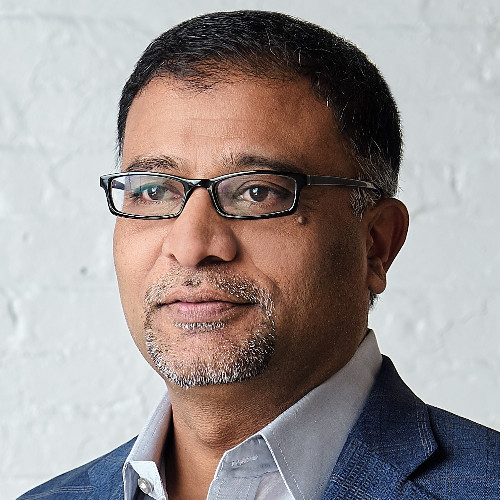
Prakash Venkata
Principal, PwC’s Cyber, Risk & Reg PracticePwC
Vinod D'Souza
Head of Manufacturing & Industry, Office of the CISOGoogle Cloud
Prakash Venkata of PwC and Vinod D’Souza of Google Cloud join theCUBE’s John Furrier at the RSAC 2025 Conference to discuss how AI is reshaping threat detection and transforming security operations. The conversation focuses on how enterprises can modernize their SOCs to keep pace with today’s threat landscape.
D’Souza explains how Google Cloud uses AI to reduce manual toil and boost response speed across industry verticals. Venkata shares how agentic AI and end-to-end workflows are key to evolving SOC capabilities and driving resilience.
The dis...Read more
exploreKeep Exploring
What is the current state of the market in security transformation projects, according to PwC?add
What are some examples of how we can reduce human involvement in security operations through agentic AI?add
What are some challenges and considerations for CISOs when it comes to utilizing agents in the SOC area for automation, alert triaging, and analyzing data points?add
What is the meaning of cyber resilience and how can it help organizations withstand and continue to operate in situations where attackers are already inside their systems?add
What is the concept of alert triaging and the collaboration between machines and humans to protect businesses from attackers leveraging AI?add
What are the key components to consider when starting a journey with data analysis and AI implementation?add
Prakash Venkata, PwC & Vinod D'Souza, Google Cloud
search
>> Welcome back, everyone to theCUBE's live coverage here in San Francisco. I'm John Furrier. Dave Vellante, Jackie McGuire, Jon Oltsik, the entire Cube research team. Of course, SiliconANGLE's team is getting all the news. This is our third day wrapping up. Wall-to-wall coverage on the impact of AI in the enterprise and overall cybersecurity landscape. We've covered it all. Network security all the way now to LLMs. Everything in between. The platformization is happening. A lot of people are looking at what's the best approach. We have two experts here, Prakash and Vinod here. Prakash Venkata, principal PwC, Cyber, Risk, Regulatory Practice. Good to see you. Thanks for coming on.
Prakash Venkata
>> Thank you, John.>> Vinod D'Souza, head of Manufacturing and Industry of Office of the CISO at Google Cloud. Google Cloud, PwC. Guys, I know you're working on a lot of big things. Just been covering both your assignments. I've never seen the security market as... I won't say upside down because it's not upside down in this classical sense. It's going through material change and the problems of data being a key part of it is key. So one, welcome to theCUBE and I want to get your perspective. PwC, you see all the big transformation projects, security. What is going on? What do you see? Scope the market in security right now?
Prakash Venkata
>> The market is in an interesting place. Right now, if you look at it, either you are all in or hesitant and trying to figure out, I mean, should I wait for it to happen? Okay, the all-in guys are thinking end-to-end. In the past, they would just jump in and try to play around and figure it out. Now, they're starting with, "What are the controls I need? What are the governance pieces I need? How do I democratize but have control over it?" That is a significant change, the way we are looking at the industry and the organizations.>> end-to-end seems to be a winning conversation when we talk about AI because it's workflows and data well-defined to some degree. That seems to be the magic of AI world now is that people are seeing their workflows end-to-end. They want the data visibility. Vinod, what's your take on this? I mean you probably agree.
Vinod D'Souza
>> Yeah. But I think from an AI perspective, I think the word these days is agentic AI, right?
Prakash Venkata
>> Yeah.
Vinod D'Souza
>> I think we are seeing a fundamental shift around how agentic AI being used. We at Google, our vision is around how we can reduce the toil for customers and how we can automate things. I can give a couple of examples. One is we recently announced the agentic AI for security operations and threat intelligence within security operations. How do we reduce the human involvement at this point that some of the routine tasks can be leveraged through agents as well as some of the decision-making can be augmented. That's one example. The other one is malware analysis and how we can leverage agents to do tons of code that previously needed a lot of manual effort on how they can look through agents and automate for whether the code is harmful or safe to run. So we are seeing a fundamental shift and some of the use cases we are seeing in the security operations.>> It's interesting, when I look at the agent conversation, I want to get to this whole practical AI is what I called it on my research note I published on Sunday is that there's an appetite for getting in and solving either stuff I'm repeating and then stuff that's just random, predictable things that I can send an agent on. But the two hot areas here that I see a lot of action on I want to also get your reaction to is cloud security and SOC transformation. Two areas where there's a lot of action. Cloud security, obviously distributed computing, Google Next, we covered that at length. Folks who want to watch those videos on YouTube, check it out. But cloud security is still hot and changing. That's not going anywhere. But the SOC roles, the agents fit into those two areas. Guys, thoughts on that piece?
Vinod D'Souza
>> Okay, Prakash.
Prakash Venkata
>> So agents in the SOC area, that will be the first place where CISOs will see a greatest value. A lot of automation, repeated task, correlation, scale and the immediate value between the alerts triaging and how you are going to be analyzing the data points. I mean to triage that one. That is the biggest impact. If you start your journey on agentic AI, I would say definitely look at your SOC. Once you're successful, you can take that into other security domains.
Vinod D'Souza
>> Yeah, I completely agree and I think you probably heard our preview, our announcement at Next, SOC is one of the use case that we are seeing this and using this most of the customer as well, triage, alert triage as well as malware analysis to kind of help some of the customers. The goal is faster detection and response.>> Yeah. I mean, I don't know how I feel. But first of all I agree. I mean, that's why I brought it up. But there's a lot of layers to peel back because I'm not sure if I feel especially because where the action is, that's where the pain is, that's where the opportunity is. But we know the data volume is massive so the data becomes a big part of it because they're seeing a lot of data. They also got to look at all the threats. They got to look at what's in their environment. People are operating on the assumption that adversaries are already in and then pipelining data. I mean, these are all like... Go back five years. What was the conversation? Pipelining data to the SOC. So all that comes to bear now all at once. How do you advise customers? That's where you come in at PwC. This is what you do.
Prakash Venkata
>> Yeah. This is where, again, as you said, the volume and the scale, automation and how do you triage, to your point, where you can actually manage it. And that is the next level we are talking about. We talked about SOC. This is coming in. Am I ready to remediate? Can I automate more of that one? Can I look at my critical assets and non-critical assets? Something should be so automated, it can be streamlined. We'll just let it pass through. Okay. Agentic AI can take care of it, fix it. When it comes to critical application, how do we have human AI hybrid working together without impacting your environment? So those are the things we are talking about to our clients.>> We heard a couple of people on theCUBE say things, and back in the old days, "Hey, I'll throw a honeypot out there. We'll go in there. It'll be fine." Now you're hearing elaborate orchestrations of red team agents and kind of like decoupled honeypots. Just like a series of puzzle pieces. This is real. I mean, can you share, because I think this is a sea change of what I call the craft of cyber where the humans are starting to apply their thinking to the mechanisms now available with agents. Can you enlighten the audience on this? Because I think this is a major trend. We haven't seen this level of sophistication of not trapping the advanced, but just let them in. We'll hit them up. We'll get them out quick.
Prakash Venkata
>> See, that's the thing. That was the thing. In the old school, it was like the time. We had the time. I mean to an extent. Now, I do not have the time. I don't have weeks. I don't even have days. In real time, I want to capture what's going on and I want to analyze how they are going about it. I want to use that as a threat intelligence so that my neighbor is not getting attacked. So those things are shifting so fast and these things... Just think about it. All you need is like 5% of the human population to think smarter, enable those things out there and these guys are thinking on their own now.
I mean, the reasoning is happening. So the attack vectors when they're coming in and we can harden it off and pass it on and see how they are behaving, but it's going both directions too. If you look at it, even on the offense side and the defense side, those advancements are interesting dynamic.>> We had another Google interview on and the word legend came up. When you're a legend, Prakash, you got to keep being a legend. Be legendary. This is what you're enabling. I want to talk about how this works because this is what we're seeing at scale, the enabling. You guys have to do at Google's end to kind of make him successful because he's going to do all this intelligence to protect and you can't get it wrong. And the agents on the outside are coming in. They can be smarter with machine learning one time so they can spin up a hundred attacks faster and you can block 99% of them but still lose one.
Vinod D'Souza
>> Yeah. I agree with Prakash. I think one of the fundamental things is I think you made a point around we assume that the attacker is already in, and this is where the resiliency concept is in today. We hear everywhere cyber resilience. What that means is assuming that somebody is in, how we can withstand and continue to operate in those situations. That's where agents and AI tools come in handy. And we are not saying that the human is not in the loop, but how to keep in the loop. But we are also trying to give the humans the additional horsepower or additional time to work on some of the complex issues where the automation and the agents are taking care of all the things that we used to spend a lot of time. So I think that's where you get the volume and the scale and the efficiency.>> All right. So you just set the table. We just riffed on the problem. It's massive. There's a lot of opportunities. Let's break down cyber resilience because the bar is high. CISOs that I talk to out who are dealing with this every day, replatforming, they got a large scale data. They got a high bar, but they got to get stuff into production and that's a huge task. So there's sandboxes spinning up. There's POC, purgatory going on. Everything is going on. But the road to get into production is narrow because the resilience bar. So gen AI is leaking. But machine learning has been there. So you've got all kinds of... What's the resilience equation look like? How are people thinking about it as fast as possible? What's the state of the art and what is it? What is cyber resilience today?
Prakash Venkata
>> So cyber's ability to withstand an attack, if you look at it in the simplest words. Now, how do you withstand it by scaling your infrastructure or thinking smarter or stopping something or monitoring something? This is where we talk about understanding their infrastructure and what they are trying to do. How we want to have that architecture enabled in such a way, they can withstand, they can come back or they can back off and think differently. So those are the kinds of things we are talking about. This is where the architecture is going to be very distinct. It's not going to be like one size fits all.
Vinod D'Souza
>> Yeah. I think just to add on to that, I think>> Thank you.
Vinod D'Souza
>> Especially within my vertical and customers that I'm dealing with and especially manufacturing critical infrastructure, the resilience is when you think about there's no connectivity or how do you make sure that these systems are continuing to function. Ultimately, CISOs are responsible for business operations. So the resilience part in my opinion is about making sure that how do we make sure the business continue to run when the systems are in the worst stage like in more deteriorated stage, but we enable them.>> I'm glad you brought up manufacturing because a lot of these things we've been saying on theCUBE, there's a systems revolution. You heard the podcast. Dave and I riff on this all the time. It's a systems architecture. end-to-end is just one pointer to the fact that if you got to understand the second order, third order effects of decisions. That's a systems thinking mindset. This isn't by a tool and we're good and everyone's got all the tools. So okay, you got a system architecture. In robotics and physical AI that's here, whether it's a driving car, the data security, the software has to run. You can't rely on someone else's pipelining of data sharing. So you got to have full visibility on the data security. So what's your reaction to that? Because this brings up the argument that you can have an architecture where I can have a fully integrated solution completely end-to-end, like a self-driving car. I got the light. So all these things kind of bring up conventional paradigms that get slaughtered. But it's not that way. What's your reaction to that? I'm just putting that out there because we're seeing use cases, certainly in manufacturing. Models are plugging into hardware and changing the precision or the use case. Multi-function manufacturing is coming. One factory, multiple things. That's a software game.
Vinod D'Souza
>> So I think about these manufacturing companies as now data software and AI companies as well. So from a traditional manufacturing to how companies are going through this industry 4.0 revolution, we're already talking about human-machine collaboration. So my perspective is we're already living that alike. I mean autonomous cars and other things. So absolutely the data is important, where the data is coming from. I think from a source perspective, governance around all these issues and making sure that the right stakeholders within the business are a part of it. We have the right data. Because ultimately you want to trust the data and you want to have the right controls and processes to trust that data is available to make the right decision.>> So you're talking about data risk. This is a data risk problem set. Would you guys frame it that way?
Vinod D'Souza
>> Yes.>> Okay. So what do I do? What's my strategy? PwC, give me a masterclass. Come on.
Prakash Venkata
>> I'm going to make a different analogy here. A lot of things, what we do is overall experiences. That is the data we process and put the experiences together. And then we think on our feet. We are not going back to looking for the data, I'm looking for the experiences. I think that is the mind shift where you have to think about it when it comes to this whole->> Explain further. Explain further. This is a good point.
Prakash Venkata
>> So think about it. You take certain data points, you extract that, you correlate it, you do get it out, whatever you want to do and say, "Okay, based on these conditions, this is the kind of decisions I make." You teach the model, "This is how it is." Now that becomes an experience. If little things changes there, is the outcome going to be different? And how different it is? And what guardrails do I have on that one?>> So that's an approach to take for agents too, right?
Prakash Venkata
>> Yes, exactly. I mean, every one of those things, it's so interrelated now. You can't do one without the other. We have to think holistically. No siloed methodology at all. I mean, you can have the best data risk, but if you are not thinking about your agents behaving the right way, that's going to be the challenge.>> So you're saying flip it around, go human first, go in and then figure out what data you need, lock it down or not. That's my word. Secure it.
Prakash Venkata
>> Secure it.>> Making sure that data security is part and parcel of these-
Prakash Venkata
>> And make the experiences into the experiences.>> And train the agent.
Prakash Venkata
>> Yes.
Vinod D'Souza
>> And to kind of do that, I think you also need to have the visibility of what is important for you, where the data lies and how do we... Inventorying, I think you want to make sure that you are looking at the right assets in the visibility of the data.>> I really like that angle on data because it really makes you think, what are we doing it for? And then it also supports the end-to-end workload and then end process which has data and it's well known. All right. So I have to ask, I want to get your reaction to a comment I heard on theCUBE for day one all about agents. And they're bullish on agents. I won't say their name. You probably figure it out if you watch the videos. But we were talking and it's like we both had kids. My kids are now out of college, but we all had 16-year-olds at one point that drove the car for the first time. And the freeway as a parent you freak out.
"Oh my god, watch out, don't change lanes, put your blinker on." So the comparison was agents like your 16-year-olds driving the car for the first time on the freeway, you're nervous and they don't know what they're doing, but they know what they're doing. And I said it's like all 16-year-olds at the same time driving on the freeway that doesn't have any lines or roads, but there's a guardrail. So this brings up the chaos and opportunity. So the metaphor is, "Okay, you don't know what's going to happen. It's weird, it's kind of chaotic." That's where we're at. Do you agree we're there? And if so, what has to happen for some of these rules of engagement? Because if you take precautious notion of experience first, each agent is going to be driving all over the place. How do you frame that? How do you think about that? How would you... Do you agree or not?
Prakash Venkata
>> No, that's an interesting concept you bring to me now. I mean, I'm thinking differently now. Okay? The reason I say that is all 16-year-olds, no experience, okay? They're all on the road. And the agent is trying to help them out. Think about it like that. Okay? And they're confused. This is humans confused. Agents saying they know what they're doing, but the control is in the human hand. So who do you want to trust?>> The human.
Prakash Venkata
>> Okay. So that is where the concept is going to be. Now, this is where the experiences of the individual, the kids and the agents' interaction is going to be more important. Where do I trust? And that is what... We talked about the confidence levels. Where is my confidence levels? Which one should I be going out? And that is what I would teach my kids saying that, "Hey, if you're going there and this guy's confidence level is really high and you still think you are right, your confidence is different. Let's talk about it. How do you want to handle these things?">> And you can write an algorithm for that too.
Prakash Venkata
>> Yes.>> All right. So let's take that to the SOC because they're not 16-year-olds, but they are dealing with a lot of things. This is where people are thinking about agents. So coming back to the practitioner, what is the best practice? What are some things you guys are seeing? Because we're seeing humans lean in with their craft, not some playbook. They got playbooks. They'll get automated away and they know some personalization, but the real value will be the human who knows what to do or has situational awareness, assuming they have agents handling the data at scale. What happens? What would you see as a best practice to implement the beginning phases of this?
Vinod D'Souza
>> Yeah. I think the best phase, I think we need to think about how the SOC operates, right? I mean, you have your tier one, tier two analysts and more advanced level analysts to look at some of these events. Where the technology is coming into place, humans have been doing a lot of repetitive things to get there, right? There's huge amounts of data. Now, we are training these agents by their experience and by the history and the evidence to make decisions based on historical amounts of data that is readily available. So what it does is, it frees up their time to focus on the most, as you said, the most important things. So agents are coming up with this alert triaging. The human is still in the loop to make the decision, right? In many cases, based on the historical evidence, agents can be automated. But at the same time, what we are saying is this is now the collaboration between the machine and the human to help businesses to protect and if obviously the attackers, the adversaries are leveraging AI, so the concept here is the good person should have better AI to protect against the threat. So obviously machine and humans are in the loop and they're collaborating.>> Prakash, you deal with a lot of clients and you advise and set the agenda for some of these directions. What would be your prioritization to effect change in an organization around thinking about agents, unifying data controls? Because we're talking about data management at some different level. I like the way you're rethinking. It's not data management in the classic sense, but it's like data control. I need to see everything.
Prakash Venkata
>> So this is where if you look at it, even in our current environments, the journey starts with your data. I mean, if you look at it, three components, I put it, okay? There's data, there is expertise, and there's the AI agent. If you look at it, this is the three components. That's it. So I start always with data. If you have bad data, all these things aren't going to be helping you out. Okay? Now that means right data at the right time and quality data. And then I need to have control over it. Whether you call it heterogeneous or homogeneous, we'll talk about it. And like we say, what kind of function we are trying to get out of it, and that is the area we talk. And then also protect that data in such a way you're not looking for the PII. So that becomes an aspect. Then comes the expertise. You cannot have a one-year-old trying to teach these things. But at the same time, you don't want to go over complicated like baby steps. Let's take one level at a time and let's get it in and then monetize that one before we jump into the most complex things. And this is where the agents, same thing, governance now. Everybody is talking about... Before even writing anything, what if drift happens? And this is where we need to talk about the whole thing. What are the guardrails? When it comes to kids, we say morals, principles, values. We teach them. Same thing here like we have to teach these guys. What if those guardrails you're putting->> So the first principles of AI is needed. You have to lock that in.
Prakash Venkata
>> Lock that in. Yes.>> Do you agree with that?
Vinod D'Souza
>> Yeah, I agree with it. I think I want to add on to it, right? I think ultimately you ask what is the first step. I think to know what your data is, where your data is, what you're protecting. I think if you have a good visibility of what you're trying to protect, I think that's probably a good step to take the next step around how we take this technology for the benefit of the companies.>> Well, Prakash, Vinod, it's been a great conversation. I guess we'll end on a fun note. Share the coolest thing you're working on. It could be a customer, a situation, a personal thing. We're all trying to build an AI, a news cycle agent trying to get all to do my job for me. We all have 10 jobs, right?
Prakash Venkata
>> Yup.>> Can we reduce one of our jobs? I mean, more stuff is coming on the plate. What's some fun, cool things you're working on that you can point to.
Prakash Venkata
>> Right now, the fun, cool things are changing day to day. I'm telling you that. This was a couple of weeks ago. We have a great partnership with Google and we are working together on some of the agentic stuff. And the way they were thinking about it and how PwC was thinking at it and bringing both the engineers together, we found a very different way of doing things. So they were talking about the job functions, which is job agents and then service agents, and how do we want to connect these things? And then all of a sudden the whole anthropic and the MCP service came out. In the last two weeks, we have done what would've taken anywhere between six to nine months, which we did it in the last two days actually saying that, "Hey, we want to demo this one." So putting the engineers together and showing that this is the vision we want to go to and those guys trying to make that all seamlessly work and showing that output was an interesting thing for me. And also putting the heads together because sometimes it's very theoretical, sometimes there is a very practical one. Putting those guys together was a very... And the guys, the way they were working was interesting to see.>> This has come up a lot. I like the way you said that because this kind of crystallizes it. AI is a communal experience and innovation because you make a decision to do something and then five other random things happen, like the propensity and the serendipity around the human side of the collision. We do a task. Like, "Well, we can do five other things." Because that's where I started this. This is coming up a lot actually. We're in this discovery, Cambrian explosion of mindset.
Prakash Venkata
>> Yes. And at the time, I mean, it used to take weeks. We do it in hours and that is the big difference. We see the results right there and I'm like, "Okay." It's a very interesting time for us.>> But no, it's an AI party. Everyone is getting together and partying with AI.
Prakash Venkata
>> Yeah, I love it. I love it.>> I mean, this creates the spontaneous, but you're going down a thread almost like the neural network of innovation by people collaborating.
Vinod D'Souza
>> Yeah. I think for me, the fun part is I work with a number of customers and with partners to help our customers going through this exciting journey. And there are unique situations, almost unique situations. And dealing with them and helping them I think is really fun.>> It's magical actually. I got to say, in my entire 30-year career in tech, in the enterprise and in cloud and everything else, I've never seen a moment where there was so much human technical, magical computer science vibe going on. And they've even got vibe coding now. I mean, have you seen vibe coding?
Vinod D'Souza
>> Yes.>> I mean, how cool is that? Who watches TV anymore? You can just vibe code all day.
Vinod D'Souza
>> You don't have to code anymore.>> Yeah. Guys, thank you so much. Been a pleasure. A great conversation. Again, the real reality is that the computer science and the engineering and the art of craft and computer science and security is happening. The revolution is happening here in theCUBE. Bringing you all the action. I'm John Furrier, thanks for watching.