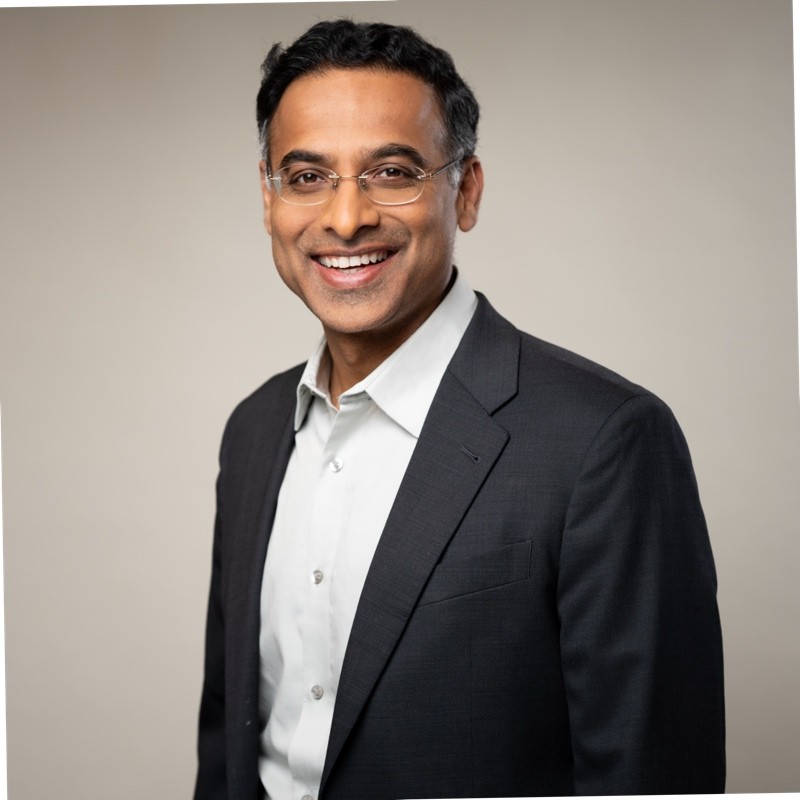
Anand Oswal, SVP and GM at Palo Alto Networks, talks with theCUBE's John Furrier at the RSAC 2025 Conference. Their discussion focuses on the intersection of AI and cybersecurity, examining the impact of replatforming on today’s organizations.
Oswal shares his expertise on the significant changes AI is driving in the security landscape. He emphasizes how Palo Alto Networks addresses these changes with innovations such as the Prisma AIRS platform, which emphasizes consistency and comprehension in AI application deployment.
The conversation also focuses on Palo Alto Networks’ acquisition of Protect AI. Oswal stresses the importance of this acquisition in addressing AI-powered application threats with precision, helping enterprises navigate the increased attack surface without compromising core operations.
Forgot Password
Almost there!
We just sent you a verification email. Please verify your account to gain access to
RSAC Conference 2025. If you don’t think you received an email check your
spam folder.
In order to sign in, enter the email address you used to registered for the event. Once completed, you will receive an email with a verification link. Open this link to automatically sign into the site.
Register For RSAC Conference 2025
Please fill out the information below. You will recieve an email with a verification link confirming your registration. Click the link to automatically sign into the site.
You’re almost there!
We just sent you a verification email. Please click the verification button in the email. Once your email address is verified, you will have full access to all event content for RSAC Conference 2025.
I want my badge and interests to be visible to all attendees.
Checking this box will display your presense on the attendees list, view your profile and allow other attendees to contact you via 1-1 chat. Read the Privacy Policy. At any time, you can choose to disable this preference.
Select your Interests!
add
Upload your photo
Uploading..
OR
Connect via Twitter
Connect via Linkedin
EDIT PASSWORD
Share
Forgot Password
Almost there!
We just sent you a verification email. Please verify your account to gain access to
RSAC Conference 2025. If you don’t think you received an email check your
spam folder.
In order to sign in, enter the email address you used to registered for the event. Once completed, you will receive an email with a verification link. Open this link to automatically sign into the site.
Sign in to gain access to RSAC Conference 2025
Please sign in with LinkedIn to continue to RSAC Conference 2025. Signing in with LinkedIn ensures a professional environment.
Are you sure you want to remove access rights for this user?
Details
Manage Access
email address
Community Invitation
Anand Oswal, Palo Alto Networks
Exploring AI-Powered Security Innovations with Anand Oswal of Palo Alto Networks at RSA 2025
Anand Oswal, Senior Vice President and General Manager at Palo Alto Networks, joins theCUBE's live coverage from RSA 2025 in San Francisco. Hosted by John Furrier and featuring insights from theCUBE Research team's experts, this discussion delves into the intersection of AI and cybersecurity, examining the impact of replatforming on businesses today.
Oswal shares their expertise on the significant changes AI is driving in the security landscape. They discuss how Palo Alto Networks addresses these changes with innovations such as the Prisma AIRS platform, which emphasizes consistency and comprehension in AI application deployment. Furrier and theCUBE team provide their expert analysis on how AI transforms cybersecurity, making it crucial for businesses to adapt swiftly.
Key insights from this session underscore the necessity for comprehensive AI security platforms, as highlighted by discussions with industry leaders and Palo Alto Networks' acquisition of Protect AI. Oswal stresses the importance of addressing AI-powered application threats with precision to ensure enterprises navigate the increased attack surface without compromising their core operations, according to insights shared by theCUBE team and analysts.
EVP and GM, AI and Network SecurityPalo Alto Networks
Anand Oswal, SVP and GM at Palo Alto Networks, talks with theCUBE's John Furrier at the RSAC 2025 Conference. Their discussion focuses on the intersection of AI and cybersecurity, examining the impact of replatforming on today’s organizations.
Oswal shares his expertise on the significant changes AI is driving in the security landscape. He emphasizes how Palo Alto Networks addresses these changes with innovations such as the Prisma AIRS platform, which emphasizes consistency and comprehension in AI application deployment.
The conversation also ...Read more
exploreKeep Exploring
What is the current state of security in the industry and how is AI and machine learning impacting it?add
What is the significance of Protect AI as a leading startup in AI security and how will their technology be utilized in the Prisma AIRS platform?add
What is the approach to deploying AI bravely in light of concern about the plethora of agent platforms and app platforms available?add
What is the reason for the significant increase in the number of attacks being blocked every day?add
What are the two fundamental things that should be considered from a security perspective when building agents on multiple platforms?add
What advantage do bigger companies have in the cybersecurity industry?add
>> Welcome back everyone to theCUBE's live coverage here in San Francisco. I'm John Furrier, host of theCUBE. We've got Dave Vellante, Jackie McGuire, Jon Oltsik, the entire CUBE research team. Of course, we've got SiliconANGLE reporters out there getting all the top stories here in the security. A major inflection point is happening or a moment in time where not only is it a systems' revolution in AI infrastructure, it's really impacting up and down the stack security has always been the center of the conversations, whether it's infrastructure data, but now it's center of AI. And with machine learning, a whole nother category, a new era is upon us in the security industry. The re-platformization movement, I just wrote a research note on it. And here to talk about is Anand Oswal, SVP and general manager at Palo Alto Networks, which re-platformed I should say, or have a platform have been re-platforming. It's their product. Anand, thank you for coming on, theCUBE. Welcome back.
Anand Oswal
>> John, great to be with you.>> I saw the interviews you've done before and I know the conversation you had with Dave Vellante in New York just a couple of weeks ago at your event with all your top customers and your team, your CEO said to Dave privately and he wrote about it since it's now in the public domain, "Best of breed was a thing, but as you look at all the complexity and the cost overruns, the plethora of tools, it's being rethought." So we started looking at it and saying Customers are making big bets right now. They're their entire operations. They're looking at AI factories. They're rethinking how supercomputing Is going to change their game, and then they have to usher in all this pressure, generate AI apps. And then Nirvana, we're going to see the future intelligence, but at the end of the day, security is still game on. You guys are in the middle of it. I know you have a very strong opinion on this. Okay. The airplane's at 35,000 feet in security, engine's got to be changed out for a customer. Huge set of challenges. Huge topic. This is pretty much the conversation here at RSA. We're already hearing it in the hallways. Yeah. There's all these issues. They're longer longest list than I've ever seen before in my 30 years. But specifically rethinking security is top of mind, your reaction to that?
Anand Oswal
>> Look, I mean, if you think of AI, if you just look at 10 months ago, we talked about seismic shift that AI was bringing to businesses, but a year, John is a lifetime in the world of AI. Things are changing faster than ever before and we announced some amazing innovations today. Let's break it down. If you think of AI, think of two broad use cases. First is your employees, all of them accessing general applications, they all want to be efficient, fast, they want look good, they want to get their work done faster. Now, in many cases, IT is not aware of it. What organizations really want is that do I have the right visibility? Can I control which applications are being used, and how do I protect the most important crown jewel, my sensitive data? So we launched that last year. Now, what we did this year is that we said, "Look, majority of these applications are getting access from the browser. The browser is the new workspace, and the browser is the prominent attack right now. So consumer browsers cannot protect you from these," and let me give you a few examples. First is that the browser sees everything before encryption. So if you think about traffic that cannot be decrypted because new protocols or because you can't do it for business reasons or technical reasons, the browser sees them. There's also new kinds of threats, John. Threats like malware that we are seeing that are getting reassembled only in the browser that evades traditional solutions. So with Prisma access browser, that's natively integrated into SASE, we can have safe and compliant usage of general applications. We can protect you from the advanced threats with our precision AI services, but that's not enough. What you really want is you don't want to compromise your user experience. So we'll untether your web and SaaS applications for maximum performance. We'll reduce your reliance on this legacy media infrastructure, all by ensuring that every single application is consistently secure. So that's how you will take care of the employees accessing general applications.>> First of all, let's break that down because everyone can relate to this. Certainly COVID, we saw that working at home now, there's a whole mix of that, but what's the old way and new way? Break down, what goes away? What falls by the wayside, and what ushers in? What technology is ushered in?
Anand Oswal
>> So look, of course AI is a big technology that ushered in.>> You mentioned VDI, that's specific to that?
Anand Oswal
>> Yeah. But if you think of VDI, customers had to choose between costly legacy architectures and really bad user experience. They got to be a better way. You want to have good user experience but not compromising on security. So now when you have your applications that you want to remotely render, yes, you can still do some of them, but most of the applications today are web and SaaS applications. So I can provide you with consistency, the best class security. That's what we mean by getting in new technology to solve some of these problems.>> So I like that employee angle because now you've got policy mapping from where the environment's controlled to the home as an example. What other innovations do you guys have with Prisma? Because now it's not just the employees. You now have no code, low code. You were talking before we came on camera, you're building agents. I mean, I could probably build that haven't coded in 30 years.
Anand Oswal
>> Yeah. I mean I just built mine two weeks ago.>> Talk about the agent impact because now you have stuff happening under the covers on behalf of the users via the user experience prompts. Now, that reaches into the enterprise.
Anand Oswal
>> Yes. Look, every single business application in every single industry or category will be AI powered. There's no looking back on that. That's going to happen. But if you think about AI powered applications, maybe you step back, think of how applications were built once upon a time. A three tier architecture, you had a front end, you had a back end, which was they called the application and your database, along came the cloud. What did the cloud do? It gave organizations the opportunity to modernize these applications using a microservices architecture leveraging the cloud. Now, AI powered applications are the third wave of application transformation because it's not just taking your application, taking your model and plugging it. You're bringing in an entire ecosystem, AI infrastructure, AI models, AI tools, vector databases, all of these components, John, they talk to each other, but they also talk to the outside world. It increases your attack surface, adding new risks. So for example, you can do prompt injection attacks. I can fool the model to think you am I and get your data, steal customer data. I can make the model deliver malicious code. I can do the data leaks. I can do model dos attacks by a single query, making the model do things multiple times. So all of these new types of attacks have to be secured. Supply chain risks, configuration risks and runtime risks.>> Another one that comes up a lot is context poisoning, prompt injections. This is on the model side. So people think about the consumer experience. You mentioned people are using prompts in Gen.AI. Okay, yeah. It's great for US users, but now the impact of the infrastructure, what's the-
Anand Oswal
>> Actually, it is amplified. If you think of AI innovation, AI innovation is getting accelerated by the introduction of agents. Now, unlike large language models that give you answers, agents will give you action. And agents can reason. Agents can act autonomously. Agents can coordinate with other agents. We have new protocols now. The model context protocol, allowing easier communication with models and data. Agent to agent protocols that allow easy coordination of agents, and this brings in newer components. Agents have memory, what have poisoned the memory to alter the behavior of the agent. But I have excessive permissions because agents are doers, they act, and so all of this is causing the attack surface to increase that needs to have consistent, thoughtful security.>> I like how you brought up policy and context to the browser feature and the SaaS thing because policy consistency is cool, but now apply policy to agents. Now, you almost have rules of the road. You were using an example of your son getting his license on the road. We both have kids and anyone who's been a parent knows, "They're going to go out on the freeway."
Anand Oswal
>> I mean, you think of Waymo.>> You got to get some time under your belt.
Anand Oswal
>> John, if you think of Waymo, think of Waymo as an agent. It's making decisions autonomously. Deciding when to turn, when to not turn, what speed to go on.>> Is that the best practice? Because I mean like driving a car for a son or daughter, you sit in the co-pilot, you watch them take the exit, slow down, break down until they get proficient. I mean in networks, that's the way it tends to roll out. Let's look at it, let's evaluate it and then lock it in.
Anand Oswal
>> John, 100% right. And that's exactly why we introduced Prisma AIRS. The industry's most complete and most comprehensive AI security platform because what you really want is five key pillars, but before that, you need discovery. I want to know in my organization what apps are there? What agents are there? What models are these apps and agents connected to? What data is used to train these models? What are the things that are connected to the agents and applications? What permissions do I have? Once you have discovery, John, that's just the first part because that's like me telling you, you have a leak in the house. So what? Now I need to tell you the five pillars. First model is scanning. So if you think of what traditional security, we scan code today, we scan infrastructure today. Now what's different for models? The difference in models is that it depends on the training data. It depends on model architecture. It depends on the model behavior. When you talk posture management, now this cannot be just for the app, it's for the app, it's for the agent, it's for the network, it's for the model, it's for the dataset. Once you do that, you have to do continuous red teaming. Now, agents are different than applications because they execute code, but they also relearn act react. So now I need to think about how the attacker will think, how does the model think? How does the model interact? And I need this autonomous.>> Prisma AIRS brings up good points. You brought up red teaming because this comes up a lot. There's a lot of security. People love to break things because they got to test it. Red teaming is a strategy now in the models because you have to test the integrity of the agents. Is that basically the reason?
Anand Oswal
>> It's everything. It's also the model behavior, the model intent, the model interaction. Because once you do red teaming, then you roll this into production and then you have to protect these applications or agent from all the threats that you see in classical applications, but also the new runtime threats where I talked to you, prompt injection attacks, model dos attacks, malicious code generation, data leaks, memory poisoning, and so on and so forth.>> Take me through some of the customer conversations you're having because we're seeing from the research side and talking to CISOs and security practitioners and companies, they have a lot on their mind. They got to retrofit the infrastructure for AI, supercomputing, oversimplifying, but think Nvidia is super clusters and AI factories and the apps need to be high performance. So data is a key part of that. How is security adopting AI agents now? Is it practical? Are you seeing certain use cases where security folks that I talk to when I say Gen.AI, they all roll their eyes and they go, "We're security people. We treat it like just another app," and that's oversimplifying, but that's the consistent answer. It's just another app to us. Machine learning has been used in production all the time, but Gen.AI, what's the AppSec review look like?
Anand Oswal
>> If you look at agents, we work with OWASP to define multi-agent architecture, to define a threat modeling. The two biggest risks that AI agents will have will be first identity and permissions, which come in the posture category and second, when the agent is running in action, the runtime threats for the real-time behaviors. So all these five pillars I talked to, you have to deliver consistently. What's happening is that when I talk to customers, they say, "Look, we have three different point products sometimes presented to us for posture, different products for model scanning, different products for red teaming, my runtime has three different things. This cannot work. It's just impossible." Let me say it directly. You can't have mishmash of 10, 12 different point products to secure your AI lifecycle. You won't get it right. There's not enough skills and expertise available to understand them all, and they don't talk to each other. They don't share threat intelligence.>> Yeah. Dave and I were talking on our podcast last Friday and the Friday before about Palo Alto. It was two pods ago. Your market share, I mean you guys do are very successful, but still there's a ton of market share you guys can take. You just acquired a Protect AI, a bold start venture, Ed Sim, likes to invest in multi-time entrepreneurs, so good team, we covered them at SiliconANGLE. Where does that fit in? Because that was, I think the second largest M&A deal in the space.
Anand Oswal
>> Look, Protect AI is the leading startup in AI security, this amazing, awesome team. Ian Swanson and his entire team are just amazing. They've built an incredible technology. And what we'll do is that we will use what they have to accelerate our journey to secure the entire AI lifecycle. So it'll be part of the Prisma AIRS platform in discovery, model scanning, posture management, red teaming, runtime, security, agent security, all delivered comprehensively so that you can discover your entire AI ecosystem. You can assess all the risks in your ecosystem, and then you can protect no matter what the situation will be.>> What was attractive on that? Was it the scale-up speed? Was it the team? Was it the code? What caught your eye on that? I mean, they were known in the circles of entrepreneurs, but what jumped out?
Anand Oswal
>> Yeah, absolutely. The technology, the people and what they've built, and it was a great culture fit. Ian and Badar and Sean and the team there, just incredible people to operate with. I've met them so many times right now. I think we are on a joint mission on how do we secure, how do we have our customers deploy bravely? That's what we're saying. We're going to deploy AI bravely because right now there's so much concern. Like you see, we have plethora of agent platforms, app platforms, and people are wondering, "What do I do with it? I can have these point products and piece it together. We want to have a comprehensive story->> It's like everyone's putting their kids on the road at the same time with no guardrails or rules. I'm writing on the left side. I mean, it's chaotic on the agent front.
Anand Oswal
>> Yes.>> What would they say if I asked the founders of Protect AI, what would they say to me if I asked them, why did you sell to Palo Alto? Because they were looking good. Off the tee, they were in the middle of the fairway.
Anand Oswal
>> I think they're on a mission just like we are on a mission to basically provide the world's best, the most comprehensive AI security solution, and they know that Palo Alto Networks and Protect AI, that partnership together will access our customer's journey to provide them the best AI security solution in the industry.>> I have to ask you, because you have good pedigree in Cisco, you've been in networks for a long time. You've seen the nineties wave. You saw what open systems interconnected, TCPIP changed the world. We all saw that, that spawned massive wealth creation, massive innovation. Now with Gen.AI, it's almost 100 X feeling. When you look at Palo Alto knowing what you know, there's also a digital transformation on what I call the classic enterprise, network storage, compute, of course supercomputing. How do you see Palo Alto re-platforming or platform... I should say, you have a platform while your customers are re-platforming.
Anand Oswal
>> Yes.>> What does it mean to them? What do you see? Connect the dots for us, because the world's going into a very fast cycle, super cycle, we call it. Dave and I both love that, where we believe it's true, where the consequences for not building the right systems could be quantified, certainly on security, nevermind the enterprise.
Anand Oswal
>> 100%. Look, why is every company building AI bot applications? Because it's going to completely transform their business. It's going to change their whole P&L in some sense. It's going to give amazing new experiences to their customers. So this is a once in a lifetime on once a generation type of transformation that we are seeing. Look, the adoption of AI is faster than any technology in history of the mankind. What we are focusing on, John, is to ensure that when employees are using AI applications, they can browse bravely with Max's browser. When employees are building and deploying AI power applications, they can deploy bravely because consistently they want to make sure that they're able to focus on what they do best and leverage the technologies to take care of themselves.>> I was talking with Sanjay, who's the CEO of Cohesity. He's been on theCUBE 15 years now. I'll get back on it, but he and I were talking, I want to get your reaction with your experience in integration. We were talking about that the integration task used to be very hard to do in the old days. Go back to old days, 10 years ago, 5 years ago. What is the key to integration? Because words like non-disruptive, seamless, it's not just APIs you're connecting with. You're actually connecting with engineered solutions. So ecosystems looking different, partnerships are looking different. What's different now as the leader looking at the portfolio of what you're building, you got to scale. Everything's at scale. I mean even open source, I interviewed a company chain guard. They're solving a problem in open source because it's an at-scale problem. So a whole nother set of at-scale problems, opportunities exist. What do you see?
Anand Oswal
>> I mean, I'll give an example. We are today blocking over 31 billion attacks every single day, billion, and that's probably more than doubled in the last year or so. And the reason it's happening is that because we're using the best of deep learning models to be able to look at structured unstructured data, to protect, look at threats that you have seen, known threats, but also unknown threats, and that's one aspect of what we talked about at scale, and that's using AI for security, and it's happening across every single facet of technology industry and happening concurrently. It's fascinating.>> What's it like internally inside Palo Alto and your customers? Because when you talk about those numbers, it's like we've all grinded the old days. It's like we blocked but we blocked 10. Now you're talking, the numbers are in the millions. What has AI done to the psychology of the practitioner and the engineer and the craft?
Anand Oswal
>> Look, if you think about traditional ways of providing detection, they're based on this notion of a signature or a database. So I see that you're infected by a certain type of threat, I learn about it, I build a signature, I push it. It used to take two days, maybe it takes two hours. That doesn't work. I got to protect you in line real time. And that only happens when you're using these deep learning models that are able to look at structured unstructured data and give recommendations. We have today 5,000 plus deep learning models, what we call part of our precision AI services, combination of machine learning, deep learning, use Gen.AI for variability to protect you from both known threats and unknown threats.>> I love the platform strategy. The reason why I like it, and the reason why I wrote the post on re-platforming era is that platforms have advanced like an operating system. You can have subsystems that look like best of breed in a platform with highly cohesive decoupled elements. This accelerates AI because agents can be protected. Some call it guardrails. I mean, I'm bullish on agents and security because in platforms, end-to-end constructs exist, networks are end-to-end.
Anand Oswal
>> 100%. Look, there's a report that says that 93% of enterprise companies will have agents in the next 12 to 18 months, 93%. Now, you can build agents on a plethora of platforms. You have SaaS platforms that you can build agents, no code, low-code platforms, CSP providers. So you're right, there'll be a plethora of agents. Now, it may feel chaotic. From a security perspective, what you really care about is two fundamental things. Do the agents, what identity and permission they have and what happens on runtime. And that's what with Prisma AIRS we're solving. If you solve those, it makes it easy for you to deploy agents bravely.>> I mean, AI runtime security by far is the hottest category or capability because you're talking end-to-end. And the other thing, network guys and security folks love as you know, they love things to be locked and loaded, move on to the next thing. Rules of the road. Talk about back to driving. Hey, let's just create the roads networks and figure out rules of engagement. Protocols.
Anand Oswal
>> It's very different than security. If you think about security, it's an interesting situation. I have to be right every single time. The attacker has to be right once.>> Yeah, that's where policy comes in.
Anand Oswal
>> Exactly.>> All right. So I know we've got time to get a very busy schedule, but I want to ask you one entrepreneurial question. Obviously, we're both in Silicon Valley, New York's booming with entrepreneurship. There's huge startup ecosystem emerging. Nevermind the partner ecosystem, which we talked about. In the old days, it was the startup beats the incumbent. It's slow, the battleship that can't turn. Some would call it the HPs and the Ciscos of the world. Now the incumbents are Google, Palo Alto, AWS and others, and you got the big startups. It used to be war, take down the big guy, David versus Goliath. We were talking about on our CUBE Pod this Friday about this. I want to get your thoughts. The first time in my career I've ever seen this, and you highlighted it with Palo Alto, agility and speed is the name of the game, and if you have the data and the workflows and big companies can be just as fast as startups because of the ability to use the data and the AI. So that means if you believe that to be true, then the next step would be startups and big companies have to co-align. So okay, if you believe that to be true, then the next question is, first of all, we'll discuss if you believe that to be true. Then the third question is, okay, if that's true, the entrepreneurship equation comes into question, how do they succeed? Is it white spaces? Is it new markets? So take me through, I know it's a little bit complex, but do you agree that agility favors both?
Anand Oswal
>> I'll give you two aspects. It all depends on, of course, the company and all that . At the end of the day, execution will beat strategy every single time. But I think in some cases, the bigger companies have an advantage, if they're able to move fast because of... If you look at customer problems, like customers are tired of these 23 different vendors, 80 different solutions to solve cybersecurity. They don't have enough skills, they don't have enough people, and they're not getting the outcome. So they're saying, "Help me solve this for a platform." Look, cybersecurity is a 20-year-old industry in some sense. So for the first time, we are able to get these things, and it's not just point products delivered together. When I talk about platformization, it's a simple and unified workflow. When I talk about Prisma AIRS, it's not like I'm giving you model scanning, posture risk, red teaming and runtime as together. No, all this coordinated. I run the model. I look at posture and the posture is network, application, data model, agent, I run the runtime and it's comprehensive. So because you can run good AI when you have good data. One advantage is that you have as you scale is you have a lot of data, so you're able to get better.>> I think the culture is huge because if you listen to the customer and you're fast and you have a good culture for that, you can respond with the right product market fit if the market changes. Okay, check. I believe you, by the way. I agree.
Anand Oswal
>> I'll give you an example just to see. Two years ago, I think also Gen.AI came in with ChatGPT, et cetera. Last RSA, we were the first companies to launch secure AI access and run AI runtime. This is a large company innovating faster than most startups.>> Yeah. That's my point again. Okay. I totally love that data. Thanks for sharing. Okay. Now, if you're going to give advice, mentoring, say, I'm a startup founder, take me, what's the white space? What should I do? My advice tends to be find a white space. So now the exit strategy becomes go big or go home, used to be the way in Silicon Valley, not many big go big or go home opportunities. Enterprise is the hottest startup category right now. That's our world. What's your advice to startups? Pick a white space, get bought by Palo Alto, because you're also a buyer growing organically, but inorganic, you just did a deal.
Anand Oswal
>> Yes, exactly. I think, look, the market demands us to move fast. Our customers require more comprehensive and complete solutions. So yes, there'll always be things that we can do to accelerate that journey or fill a gap, and that's what startups should look at.>> I think Protect AI is a great example of the entrepreneurship equation. Great exit, not a lot of upfront capital. So again, entrepreneurship's the same game, different playing field.
Anand Oswal
>> Yeah, exactly.>> Anand, final word, what are you working on? What's your priorities? What's your focus? What's on your to-do list?
Anand Oswal
>> I think the number one, number two, and number three priority for me is AI. How do I use AI for security? How do I build the best product to secure AI? How do I make sure that employees can use AI application and browse bravely? How developers can build and deploy applications bravely, because it's all going to be about AI and agents and the world is changing at a very rapid pace.>> I think Palo Alto, you guys have great human capital, great data at scale that's going to be goldmine for AI.
Anand Oswal
>> We've got to execute.>> Well, thank you for coming on theCUBE. Great to see you again, CUBE alumni.
Anand Oswal
>> Thank you, John. Appreciate it.>> Again, theCUBE, we're bringing all the data to you live in the open. I'm John Furrier, your host with Dave Vellante, Jackie McGuire and Jon Oltsik extracting the signal from the noise here in RSA. Stay tuned for more coverage after this short break.