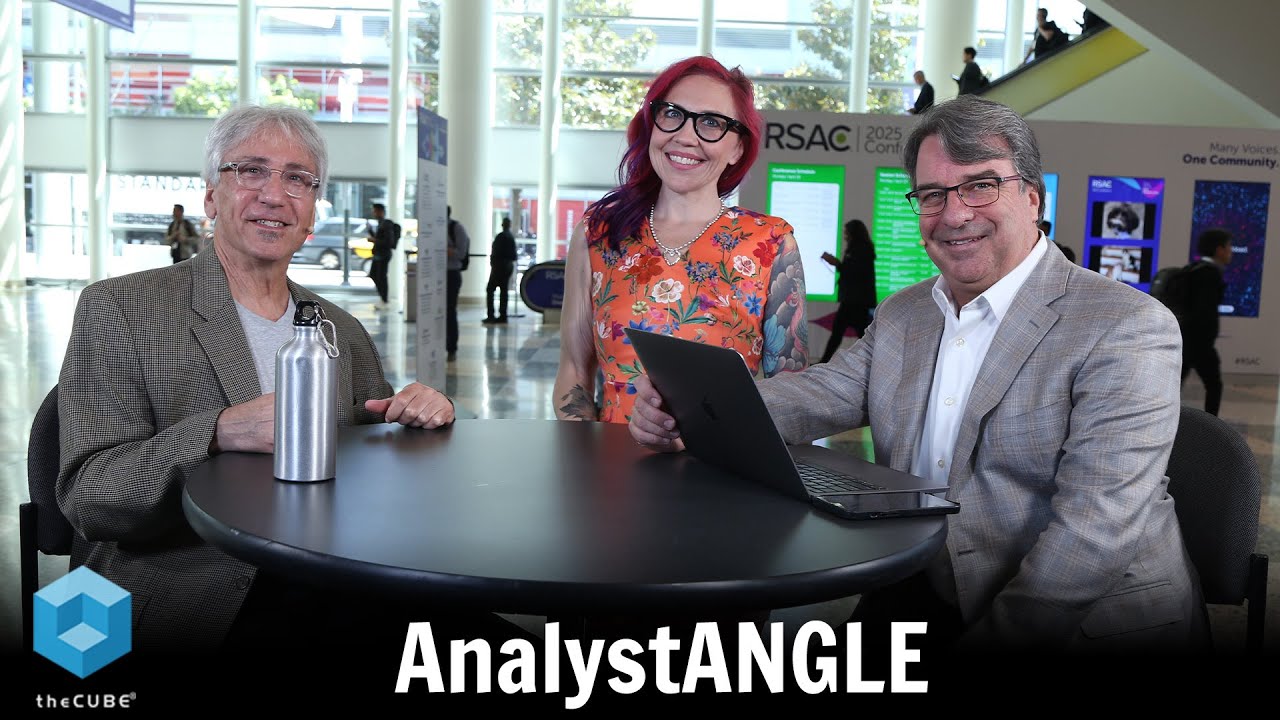
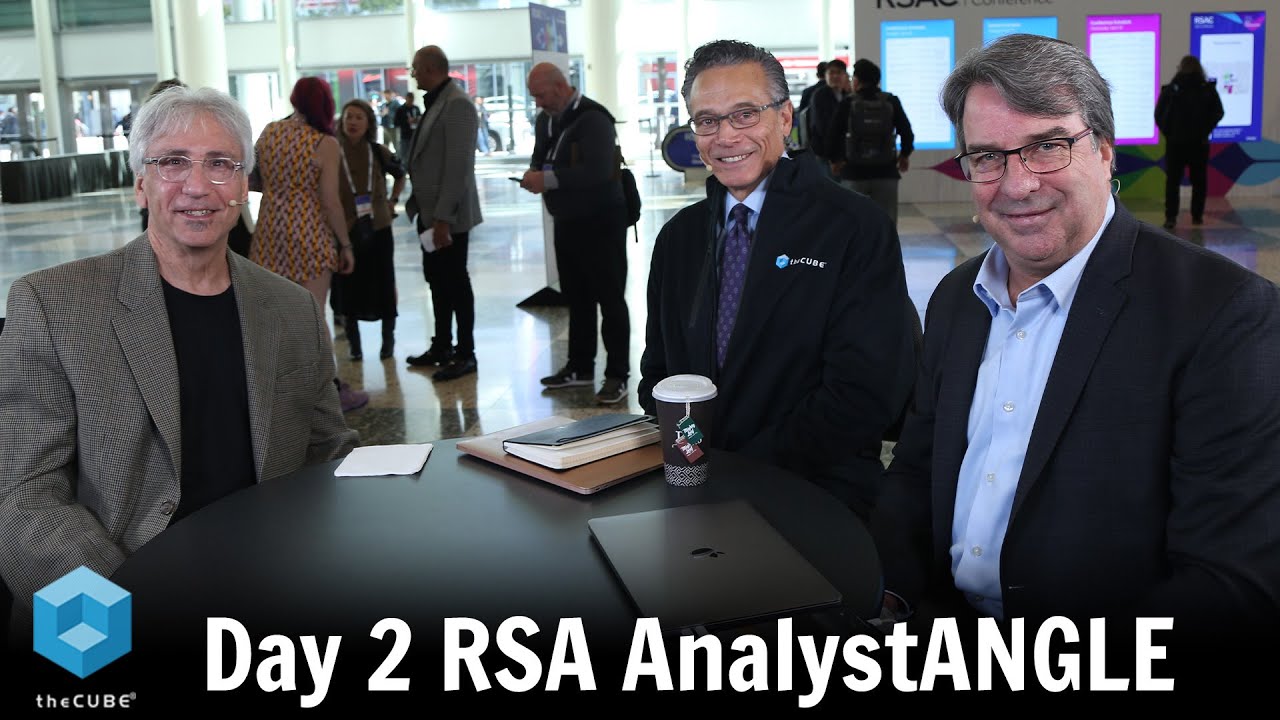
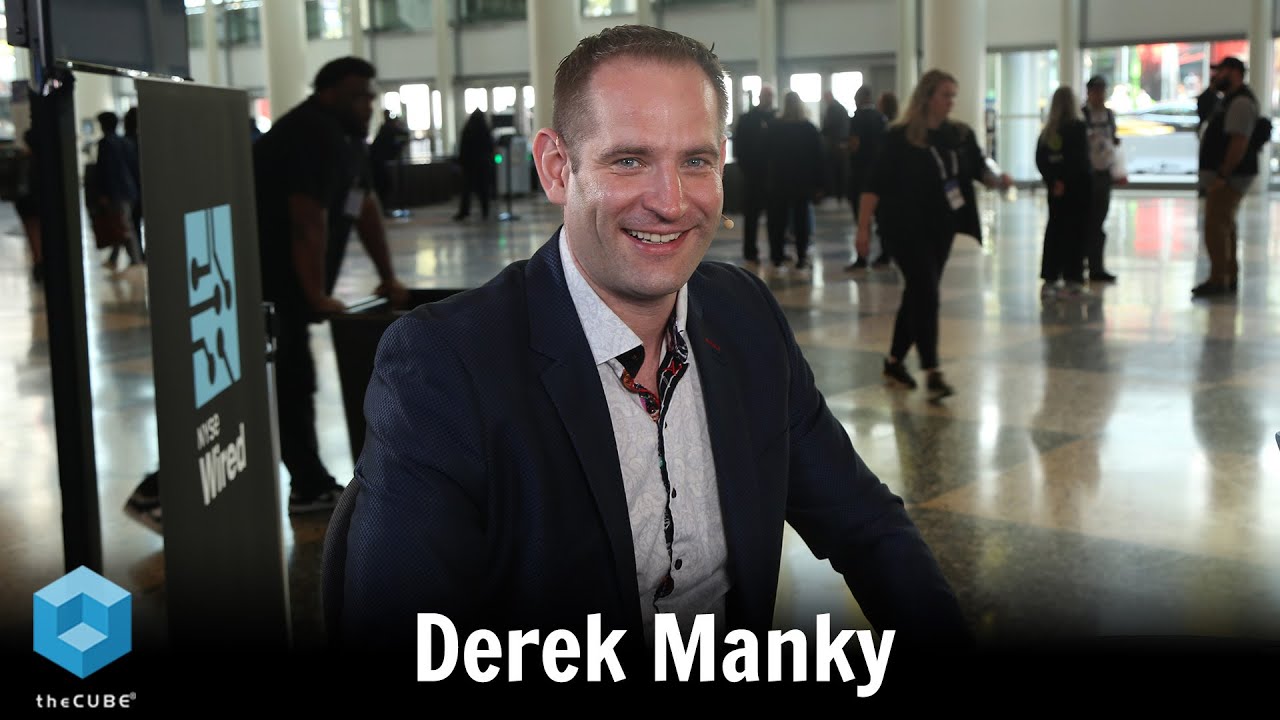
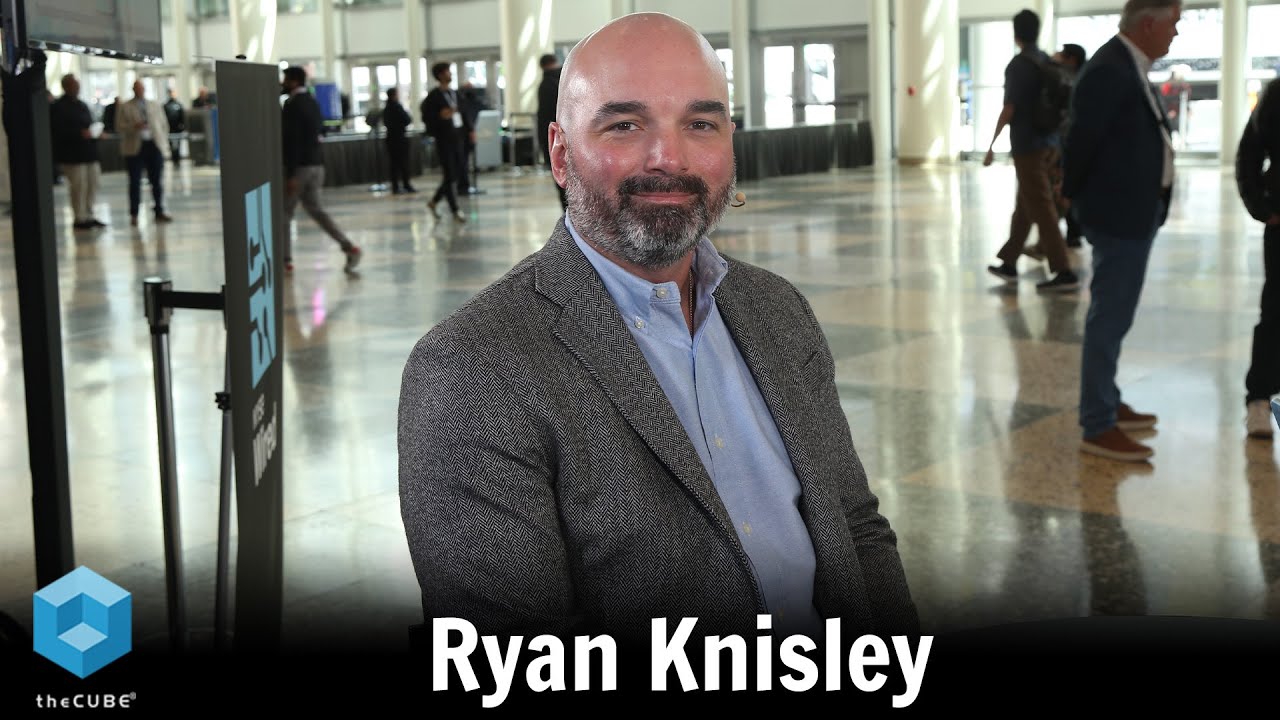
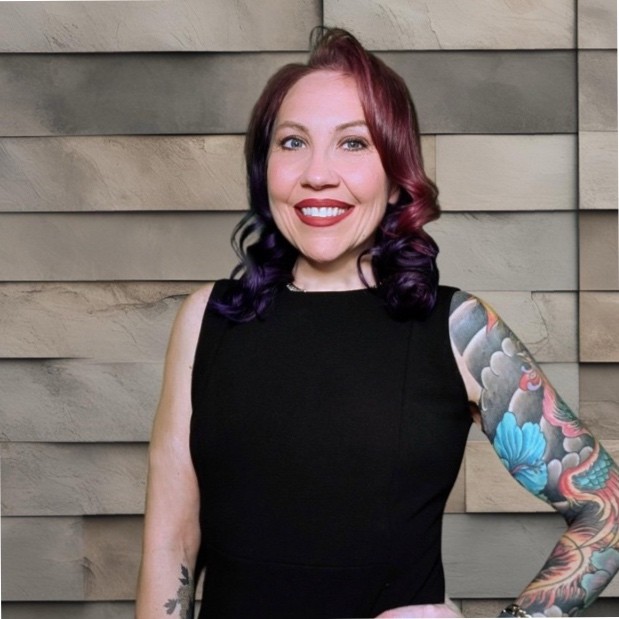
TheCUBE's Jackie McGuire, principal analyst at TheCUBE Research, and John Furrier, co-founder and Co-CEO of SiliconANGLE Media Inc., provide an insightful analysis of the RSA Conference 2025. They delve into the dynamic landscape of cybersecurity, touching on significant shifts in market demographics, vendor strategies, and the ever-evolving security threats that organizations face.
Jackie McGuire's extensive experience, paired with insights from TheCUBE's esteemed team, offers a deep dive into the challenges and innovations at RSAC 2025. Discussing with industry leaders such as Palo Alto Networks and CrowdStrike, McGuire and Furrier explore the ongoing "re-platformization" of the cybersecurity marketplace, highlighting the strategic shifts and technological advancements reshaping the industry.
The discussion emphasizes the shifting dynamics and how enterprises adapt to new threats, according to McGuire. With insights from founders such as Nir Zuk of Palo Alto Networks and Jay Chaudhry, the video captures the essence of innovation in security solutions. McGuire highlights key takeaways, focusing on evolving buyer behavior, integration challenges, and the critical role of AI in shaping future security practices.
Forgot Password
Almost there!
We just sent you a verification email. Please verify your account to gain access to
RSAC Conference 2025. If you don’t think you received an email check your
spam folder.
In order to sign in, enter the email address you used to registered for the event. Once completed, you will receive an email with a verification link. Open this link to automatically sign into the site.
Register For RSAC Conference 2025
Please fill out the information below. You will recieve an email with a verification link confirming your registration. Click the link to automatically sign into the site.
You’re almost there!
We just sent you a verification email. Please click the verification button in the email. Once your email address is verified, you will have full access to all event content for RSAC Conference 2025.
I want my badge and interests to be visible to all attendees.
Checking this box will display your presense on the attendees list, view your profile and allow other attendees to contact you via 1-1 chat. Read the Privacy Policy. At any time, you can choose to disable this preference.
Select your Interests!
add
Upload your photo
Uploading..
OR
Connect via Twitter
Connect via Linkedin
EDIT PASSWORD
Share
Forgot Password
Almost there!
We just sent you a verification email. Please verify your account to gain access to
RSAC Conference 2025. If you don’t think you received an email check your
spam folder.
In order to sign in, enter the email address you used to registered for the event. Once completed, you will receive an email with a verification link. Open this link to automatically sign into the site.
Sign in to gain access to RSAC Conference 2025
Please sign in with LinkedIn to continue to RSAC Conference 2025. Signing in with LinkedIn ensures a professional environment.
Are you sure you want to remove access rights for this user?
Details
Manage Access
email address
Community Invitation
Keynote Analysis
TheCUBE's Jackie McGuire, principal analyst at TheCUBE Research, and John Furrier, co-founder and Co-CEO of SiliconANGLE Media Inc., provide an insightful analysis of the RSA Conference 2025. They delve into the dynamic landscape of cybersecurity, touching on significant shifts in market demographics, vendor strategies, and the ever-evolving security threats that organizations face.
Jackie McGuire's extensive experience, paired with insights from TheCUBE's esteemed team, offers a deep dive into the challenges and innovations at RSAC 2025. Discussing with industry leaders such as Palo Alto Networks and CrowdStrike, McGuire and Furrier explore the ongoing "re-platformization" of the cybersecurity marketplace, highlighting the strategic shifts and technological advancements reshaping the industry.
The discussion emphasizes the shifting dynamics and how enterprises adapt to new threats, according to McGuire. With insights from founders such as Nir Zuk of Palo Alto Networks and Jay Chaudhry, the video captures the essence of innovation in security solutions. McGuire highlights key takeaways, focusing on evolving buyer behavior, integration challenges, and the critical role of AI in shaping future security practices.
>> Welcome back everyone to theCube's live coverage here at RSAC. Day four is 2025. It's our ninth year covering RSA with theCube, our 15th year SiliconANGLE and team. Again, the changing market. It's an incredible change. Incredible rapid acceleration, agenetic AI, really a forcing function. The game is still the same. Protect the organizations from the bad guys. I'm John Furrier, you host at theCUBE with Jackie McGuire doing an RSA summary. We had Dave Vellante, Jon Oltsik, our entire team, SiliconANGLE getting the news. Jackie, great to see you. Day four kickoff. You look great as usual.
Jackie McGuire
>> Thank you. Home stretch.>> You ready for the color commentary?
Jackie McGuire
>> I am here for the color. I feel like that is my purpose in life, is to bring the color.>> It's been really great to have your analysis all week, so thank you so much for coming in on theCube. I know you've out in the ground on the show floor, out at the events, little karaoke, a little bit of a concert, little music. I mean, it's the business. It's not Black Hat, Black Hat's more the festival of the teams. This is a little business vibe and it's been really good, because you've got the classic show and then there's a lot of action off the floor, meaning in the hallways, at dinners, at the parties. I mean, there's a party fest here. It is a festival.
Jackie McGuire
>> It was, it was fantastic.>> What is your takeaway? What is your impression? What's your vibe? What's the experience of RSA this year? How would you sum up the RSA as we look at day four here?
Jackie McGuire
>> Yeah, it's been a really interesting kind of, lots of conflicting things. So we were just talking, I talked to many, many vendors who've actually scaled back their presence on the floor. Smaller booths, less things on the actual show floor because that thing is like a half mile wide. It's really, really hard to compete with that noise. So because we're seeing shifting demographics and buying patterns, what we're seeing is a lot of vendors trying to do more after hours things, more intimate sessions with their customers. And so kind of investing in, to your point, the whole ecosystem around RSAC and kind of trying to create more experiences for their customers and their vendors.>> And the theme of RSA this year is many voices, one community. I know you and I were talking before we came on day four about what that actually means. It was a great wrap session on this, but the vendor consolidation, the re-platformization is real. We're seeing that and we're seeing Palo Alto, we've had CrowdStrike on, we had Zscaler, all the top leaders. We had three billionaires on, and they're walking around with no security. The security vibe is strong. But when you look at that, do we need all these booths? I mean, in the old days you go figure out who's got what, but everyone has everything. And Jon Oltsik and some of the CISOs that came on was saying the big enterprises have everything.
Jackie McGuire
>> Yeah.>> They don't want to get rid of anything. And then the growing security threat, so you have this re-platformization or vendor consolidation is a real pressure point. Does that change the nature of the show, the relationship of the practitioners who were trying to source the best stuff while dealing with what they got and the new? I mean, what's your take on that relative to the consolidation the show?
Jackie McGuire
>> Yeah, so I think there's a few things that I think vendors could do better on the show floor. So I spent the last two and a half years at a vendor working the show floor for Cribl. And what I found is that a lot of the people coming into the booth are not our buyers. They're looking for a job, they're looking for a T-shirt. So yeah, I think a lot of vendors are trying to come to terms with that, with the fact that the ROI on the booths may not be quite what they want it to be. And with that, because I've talked all the time about enterprise wallet is shifting to millennials right now, and we were just saying millennials buy vibes, they buy experiences. And so if you can't produce a whiz-type experience on the show floor and you're expecting to just put some tchotchkes out and have people come in, you're really not going to get the best ROI on your investment in your booth. And so we're seeing, and yeah, I think we're talking about platformization. So security has become absolute alphabet soup. Every analyst wants to make a career by inventing a new acronym. Every company wants to make, every product marketer wants to make a career by inventing a new product category. And so we just had this massive fragmentation. And so there's even just thinking about identity, there's like 400 acronyms in identity. And so we have a lot of the bigger, bigger players, the CrowdStrikes, the Palo Altos, the Splunk and Ciscos, they're saying, "Platformization, we're going to become this kind of catch-all platform." In practice on the show floor and meeting with vendors, that's not what I think is actually happening. I think we're just consolidating those alphabet soups into specific platforms. So the IAM, PAM, all of the identity will become an identity platform. The data security, DSPM, all of that will be a data platform. And so we are seeing platformization, I just don't think it's quite the one login to rule them all that the big, big vendors would have you believe.>> Yeah, I call it the re-platformization, because some people are replatforming, some are actually adopting platforms for the first time because they had best of breed. And the theme is homogeneous layers where you need data and people use the Waymo example where you have so much data and devices or things connected that you need to have data controls, that's become a big theme. So there's clearly lines of sight on that, but then you go, okay, we live in a heterogeneous world. So it seems like it's a very big transition around, okay, philosophy and then what reality? How do I swap out all this stuff and then where's that data? And so it's a real challenge.
Jackie McGuire
>> Well, and cynically, a lot of the bigger vendors, they're working on the front end integration and this normalization layer. But on the back end, a lot of these vendors who have grown by acquisition, it's still a mess. An IP is not called the same thing in one of their platforms is the other. So while to the customer, it may look like that, when a lot of these large vendors sell 90, 95, 99% through the channel and really rely on integration partners and go-to-market partners, they need to be investing on the back end too. So I think a lot of the younger upstart vendors who've been around for four or five years are going to eat these legacy vendors' lunch if they can't get both the front end and the back end platformed.>> Integrations are going to be with AI, could be assistant there. I want to get your thoughts on something because I know you've got a lot of research coverage areas that you're digging in deeply on. But what I love about theCUBE is we get a lot of horizontal observation data from all the guests that come through. I paid particular attention this year to two guests because they're founders, Nir Zuk, founder of Palo Alto Networks and also Jay Chaudhry because they're still the founders in charge of their companies. And so a couple of data points I want to react to. Nir Zuk was like, "Look it, network security, firewalls." Cloud was coming. They ran to the cloud, they saw that first. No one else saw it. Everyone's like, they pooh-poohed the cloud, because that's where their money is. I mean, network security. So he made the point that that stuff kind of went away. Jay Chaudhry's like, "Look it, we're network oriented." They have a network approach, but this transit, they move into the data layer, what their kind of switchboard he calls it. So two founders and founders have the ability to smell the future and sense the opportunity. That gives me kind of directional vibes on, okay, Palo Alto's running at the new thing. SOC was a huge conversation there, that's well known. And then Palo Alto just saying, "We're going to control data end to end, a whole nother thinking." So what is your reaction to that? What does that tell us? Does that tell us that? Does that give us an end user view of the replatforming? Because if you buy Nir Zuk's argument, it's classic cannibalization argument. They're going to cannibalize their own before they go out of business like everyone else he referenced.
Jackie McGuire
>> Yeah.>> That's the Nir Zuk observation. And Jay Chaudhry was just like, "This is the best way to take end-to-end zero trust." I mean, so two simple concepts.
Jackie McGuire
>> Yeah, so it's interesting you bring that up. I was actually talking to someone who went from one of those large vendors to one of the smaller new unicorns. And she was saying that, yeah, that was one of the biggest kind of existential crises that happened within that vendor is the migration to cloud. But you still had these really, really deeply embedded physical network people who were convinced that the best place to handle security was at the physical network. And then 2020 happens and you just have no choice but to move to the cloud because your employees can't come to the office. And so I think it has been, what you find in these big companies is that a lot of times the different groups aren't aligned. And so you guys have revenue rolling up to different business units and it does create a lot of conflict. And so I do think that there is a lot of value in security at the network layer, but these legacy vendors are having to come to terms with how do you create a hybrid network between on-premise? And I actually think there's going to be a move back and cloud. How do you create a uniform experience between a virtual firewall, a hardware firewall, a virtual VPN? I used to have a hardware, a Cisco hardware VPN. And I think the question is how do you unify those experiences? And that's the kind of platformization talking about, I think. And that's where I think there is use for it. I think the Cisco had the AI pods they announced, which are kind of the pods on the network layer. So we are going to need more security at that layer. And I do think a lot of sensitive companies will bring, especially things like LLM training back on-prem because it's so expensive to do in the cloud. So yeah, we're going to continue to see this push and pull, but I actually don't think that physical network security is going to go away as quick as we think it is because I don't think the cloud is the best place to do a lot of super heavy machine learning lifting.>> Yeah, especially about security. It's crossing over other sectors. I even brought this up with I think Nir Zuk when I said, "Physical AI like robotics, which is going to impact manufacturing." It was with Google and one other guest, I think it was Accenture, PWC. Physical AI kind of points to, okay, who's running the robots? What's the data security on that? Because now you've got Tesla and these self-driving, all these things are embedded. So it brings up the whole question of, okay, there's other tell signs that are outside the security industry that are going to impact some of these kind of architectural discussions. What are your thoughts on that? Are there things that we should look at that are kind of outside. I won't say the security bubble, because it's really not a bubble, because I think it's the most active. I think security is I think the most active vertical that will shape AI. But there are AI forces coming in. How do you deal with robotics?
Jackie McGuire
>> And I think that everything is a security issue now. And it used to be that you had a computer at your office and then you had a different desktop at your house and now everything is security. So Waymo, you mentioned Waymo and the automated driving. We're in a Waymo the other day, and I was telling them, "I remember hearing a statistic like a year or two ago that 85% of Waymo rides had some type of human intervention." So they're not actually autonomous, they're remote controlled, which is the difference. But yes, thinking about the amount of data that has to flow back and forth and what could go really, really wrong if you breach that data stream. You could make, and we're actually seeing this, so around the Baltic Sea, Russia, it's been attributed to Russia. They've been messing with the GPS of delivery trucks. So Amazon Prime trucks, they have all their trucks have GPS, and they know exactly where to go, and they've been scrambling the GPS, sending them to the wrong places. We've also seen them interfering with aircraft radar and causing false turf alerts, which means you're about to crash into the ground and causing pilots to yank and pull up way too fast when they aren't anywhere near the ground. So everything is now a security issue and the fact that almost our entire critical infrastructure from power to water to everything is now reliant on cybersecurity. And those are all becoming the highest targets for nation state actors. So there's a real->> Surface area is extended to beyond the surface.
Jackie McGuire
>> It's everything.>> You talking about airplanes, they're in the air, the air interface is an interface threat.
Jackie McGuire
>> Yeah. Well, and I think, I hate to be cynical, but the extent to which you're being monitored every day, you have no idea. Almost all the large retailers have these crazy Bluetooth triangulations that follow you through the store, look at what you pick up and put down, figure out, there are even some stores now that have LCD prices and they're changing prices dynamically throughout the day based on what they know. So that stuff is all security too. And now you have these retailers, so if you've developed one of these crazy surveillance and dynamic pricing models, that is your IP. And that is the thing you have to really maintain. And I think we talked about this yesterday, the nature of the types of things you have to protect is fundamentally changing. It's not just your API keys, it's not just, it's things that you can extract from AI, things you can extract from a lot of different things. And yeah, it's a wild world.>> I want to get into the whole humanity piece in a second, but I do want to ask you about theCUBE research. Jon Oltsik came on early, you were on multiple segments with us. You and Jon are teaming up covering this area. One, talk about the areas that interest you guys. What are you guys talking about? What's the thesis? Can you share what you're looking at? And then what did you guys find out here and what's the puzzle pieces you're putting together? Share the mission of what you guys are focused on so folks can know what to engage you guys on.
Jackie McGuire
>> Yeah, so I think Jon has the benefit of having roughly a couple decades as a security analyst. So I think Jon brings the really, really good deep background of, we've been through these transitions before. So interestingly, studies show that Gen Xers are dealing with AI better than millennials because we've been through the PC revolution, the internet revolution. We've had four different things that we're going to take all of our jobs.>> We have had the most change of all generations, because we were pre-cell phones, pre-iPhone, pre-Google, per-internet.
Jackie McGuire
>> I sold the first camera phone at RadioShack. It was a Sanyo flip phone that you clipped a camera to the bottom of. Yeah, and it makes me feel old, but->> We're versatile. The X generation's versatile. Millennials and Gen Zs, they're native. They have, again, back to vibes and experience, now you have a cross-melting pot. Okay, so what does that mean for what you guys cover? I mean, what does that mean?
Jackie McGuire
>> I think for coverage, and we saw this when Jon and I are a meeting and he sits down, he gets right to business and he's asking technical questions and stuff where I'm trying to get a feel for how do you understand your audience? How do you understand the way people buy? What are the actual conversations you're having with your CISO like? Because while I love living in the future as an analyst, having sat on the vendor side, I'm like, "I need to know how to read the market right now." And so I think that Jon is really focused on the evolution of hardware and software and where that's going and how companies are using it. And he really likes to cut through the BS and the marketing terms for, and he asks the really hard questions where I think I am an elder millennial, I'm trying to feel the vibes. And it's not that I'm not super interested in the IP and the tech and how it's used, but 40% of SIM standups fail. That is insane. If you think about the fact that almost half of the time people try to deploy a new SIM, it doesn't go right that I'm trying to figure out why that's happening, because you could have the best technology in the world and if your customers can't make it work, it doesn't matter. So I think I'm more focused on->> You're a vibe analyst.
Jackie McGuire
>> Yes, I'm a vibe analyst.>> No vibe coding is, I mean, Jon also had a great kind of comment on his article he wrote going into the show, and of course vibe coding. It was a tongue-in-cheek clever comment, but he wasn't joking 100%. Vibe coding is actually very working, it's very generational too. And now you got the, like you mentioned, I think there's a vibe marketing, there's a vibe analyst relations angle, there's a vibe psychology, because people are now connected. And we talk about the digital twins here at theCUBE all the time. But when you go look at a customer, the challenges that they have, there's the psychology of their mind, the craft that's coming back, because agentic is going to be augmenting the human intelligence. So you have this new- y.
Jackie McGuire
>> You almost have to run two separate marketing .>> Vibe is legit in the sense of understanding context.
Jackie McGuire
>> Yeah. Well, and the thing I think is that the Moore's law, the rate of change in technology has gotten exponential. And so there were through the '90s, early 2000s, even the 2010s, technology changed, but it wasn't AI. And just because of the rate of change, I think that the level at which you have to keep up with what's happening, you almost can't ignore vibes because that's what's driving buying decisions right now. And so I think historically we've been very focused on the tell, the info sheets, the lists of features, the stats, the how many bits per second. And now it's really the show. It's like, "Well, what's the end result?" Because a CISO can't possibly understand the technical details of everything that's in security now. So they really need it distilled into like, "What can I do today that I couldn't do yesterday? How is this going to save me head count? And how the hell do I sell this to my CFO and CEO?">> So I think the vibe thing is legit and I'll tell you why. Because teamwork is everything. It's kind of a cliche in my standpoint, but it's really fact. It's a shared economy, shared responsibility-
Jackie McGuire
>> Shared fate.>> Teamwork, everything in security has always been sharing, intelligence. Everything's teamwork oriented. So vibes matter, good vibrations, good vibes on theCUBE course. But I think that tells to the cultural shift and everything about this show to me speaks to the cultural shift we're seeing because it's not just the security vertical of the industry. Security is everything. And if you look at AI being permeated into the horizontal aspects of every capability, which security has been for many, many years, almost a decade, AI and security, because data's involved, will be a fact. It's not a department.
Jackie McGuire
>> Yeah. Well, and I think the vibes thing, it's easy to roll your eyes at, but Common, who's a phenomenal artist and public speaker. He did the opening keynote. And the theme, as you said, is many voices, one community. And I always tell people that security is the place that renews my faith in humanity. Because when you get into a room with some of the really elite security people, they come from everywhere. They come from super tight-laced military, they come from the kids who look like me in the basements who play World of Warcraft. But at the end of the day, we all come together with shared fate and shared objective. And what he said in his opening keynote that kind of choked me up a little bit is that community doesn't mean that we all look the same or we all share the same things, it means that we all hold space for each other and we feel safe being ourselves with each other. And my friend Joe Hall put it, I think as best as I've heard it, "In security, we fly so close to the sun." We do. We see the things people don't see. It's really hard not to go to bed with anxiety when you work in security. And one of the things that drew me to theCUBE was that you create community. And I'm so happy to be the person helping us get more deeply embedded in security because that is the thing that keeps security running, is the community we have the shared fate, the shared objective, and really the focus on what is the result we want at the end of the day. And I think you'd mentioned Jeetu came on and he said, "Yeah, all these vendors are competitors, but our biggest competitor is the adversary." And I feel like in security we really understand that and we really, really put that to work.>> That's awesome. And Jeetu Patel's Head of Product, so he's got a great cultural mindset too. He believes in that same ethos. Humanity is at the doorstep of war or peace. We're at a global economy and I think it's going to be a next challenging five to 10 years. I think the next three are going to really set the table. If you're watching theCUBE, of course, we've got all the good vibes and good experiences happening here. We're going to bring you all the action. Jackie, thank you so much. Love that commentary. Of course, day four, starting Stay with us. I'm John Furrier, Jack McGuire, Dave Vellante, Jon Oltsik, and the whole team, we'll be right back.
>> Welcome back everyone to theCube's live coverage here at RSAC. Day four is 2025. It's our ninth year covering RSA with theCube, our 15th year SiliconANGLE and team. Again, the changing market. It's an incredible change. Incredible rapid acceleration, agenetic AI, really a forcing function. The game is still the same. Protect the organizations from the bad guys. I'm John Furrier, you host at theCUBE with Jackie McGuire doing an RSA summary. We had Dave Vellante, Jon Oltsik, our entire team, SiliconANGLE getting the news. Jackie, great to see you. Day four kickoff. You look great as usual.
Jackie McGuire
>> Thank you. Home stretch.>> You ready for the color commentary?
Jackie McGuire
>> I am here for the color. I feel like that is my purpose in life, is to bring the color.>> It's been really great to have your analysis all week, so thank you so much for coming in on theCube. I know you've out in the ground on the show floor, out at the events, little karaoke, a little bit of a concert, little music. I mean, it's the business. It's not Black Hat, Black Hat's more the festival of the teams. This is a little business vibe and it's been really good, because you've got the classic show and then there's a lot of action off the floor, meaning in the hallways, at dinners, at the parties. I mean, there's a party fest here. It is a festival.
Jackie McGuire
>> It was, it was fantastic.>> What is your takeaway? What is your impression? What's your vibe? What's the experience of RSA this year? How would you sum up the RSA as we look at day four here?
Jackie McGuire
>> Yeah, it's been a really interesting kind of, lots of conflicting things. So we were just talking, I talked to many, many vendors who've actually scaled back their presence on the floor. Smaller booths, less things on the actual show floor because that thing is like a half mile wide. It's really, really hard to compete with that noise. So because we're seeing shifting demographics and buying patterns, what we're seeing is a lot of vendors trying to do more after hours things, more intimate sessions with their customers. And so kind of investing in, to your point, the whole ecosystem around RSAC and kind of trying to create more experiences for their customers and their vendors.>> And the theme of RSA this year is many voices, one community. I know you and I were talking before we came on day four about what that actually means. It was a great wrap session on this, but the vendor consolidation, the re-platformization is real. We're seeing that and we're seeing Palo Alto, we've had CrowdStrike on, we had Zscaler, all the top leaders. We had three billionaires on, and they're walking around with no security. The security vibe is strong. But when you look at that, do we need all these booths? I mean, in the old days you go figure out who's got what, but everyone has everything. And Jon Oltsik and some of the CISOs that came on was saying the big enterprises have everything.
Jackie McGuire
>> Yeah.>> They don't want to get rid of anything. And then the growing security threat, so you have this re-platformization or vendor consolidation is a real pressure point. Does that change the nature of the show, the relationship of the practitioners who were trying to source the best stuff while dealing with what they got and the new? I mean, what's your take on that relative to the consolidation the show?
Jackie McGuire
>> Yeah, so I think there's a few things that I think vendors could do better on the show floor. So I spent the last two and a half years at a vendor working the show floor for Cribl. And what I found is that a lot of the people coming into the booth are not our buyers. They're looking for a job, they're looking for a T-shirt. So yeah, I think a lot of vendors are trying to come to terms with that, with the fact that the ROI on the booths may not be quite what they want it to be. And with that, because I've talked all the time about enterprise wallet is shifting to millennials right now, and we were just saying millennials buy vibes, they buy experiences. And so if you can't produce a whiz-type experience on the show floor and you're expecting to just put some tchotchkes out and have people come in, you're really not going to get the best ROI on your investment in your booth. And so we're seeing, and yeah, I think we're talking about platformization. So security has become absolute alphabet soup. Every analyst wants to make a career by inventing a new acronym. Every company wants to make, every product marketer wants to make a career by inventing a new product category. And so we just had this massive fragmentation. And so there's even just thinking about identity, there's like 400 acronyms in identity. And so we have a lot of the bigger, bigger players, the CrowdStrikes, the Palo Altos, the Splunk and Ciscos, they're saying, "Platformization, we're going to become this kind of catch-all platform." In practice on the show floor and meeting with vendors, that's not what I think is actually happening. I think we're just consolidating those alphabet soups into specific platforms. So the IAM, PAM, all of the identity will become an identity platform. The data security, DSPM, all of that will be a data platform. And so we are seeing platformization, I just don't think it's quite the one login to rule them all that the big, big vendors would have you believe.>> Yeah, I call it the re-platformization, because some people are replatforming, some are actually adopting platforms for the first time because they had best of breed. And the theme is homogeneous layers where you need data and people use the Waymo example where you have so much data and devices or things connected that you need to have data controls, that's become a big theme. So there's clearly lines of sight on that, but then you go, okay, we live in a heterogeneous world. So it seems like it's a very big transition around, okay, philosophy and then what reality? How do I swap out all this stuff and then where's that data? And so it's a real challenge.
Jackie McGuire
>> Well, and cynically, a lot of the bigger vendors, they're working on the front end integration and this normalization layer. But on the back end, a lot of these vendors who have grown by acquisition, it's still a mess. An IP is not called the same thing in one of their platforms is the other. So while to the customer, it may look like that, when a lot of these large vendors sell 90, 95, 99% through the channel and really rely on integration partners and go-to-market partners, they need to be investing on the back end too. So I think a lot of the younger upstart vendors who've been around for four or five years are going to eat these legacy vendors' lunch if they can't get both the front end and the back end platformed.>> Integrations are going to be with AI, could be assistant there. I want to get your thoughts on something because I know you've got a lot of research coverage areas that you're digging in deeply on. But what I love about theCUBE is we get a lot of horizontal observation data from all the guests that come through. I paid particular attention this year to two guests because they're founders, Nir Zuk, founder of Palo Alto Networks and also Jay Chaudhry because they're still the founders in charge of their companies. And so a couple of data points I want to react to. Nir Zuk was like, "Look it, network security, firewalls." Cloud was coming. They ran to the cloud, they saw that first. No one else saw it. Everyone's like, they pooh-poohed the cloud, because that's where their money is. I mean, network security. So he made the point that that stuff kind of went away. Jay Chaudhry's like, "Look it, we're network oriented." They have a network approach, but this transit, they move into the data layer, what their kind of switchboard he calls it. So two founders and founders have the ability to smell the future and sense the opportunity. That gives me kind of directional vibes on, okay, Palo Alto's running at the new thing. SOC was a huge conversation there, that's well known. And then Palo Alto just saying, "We're going to control data end to end, a whole nother thinking." So what is your reaction to that? What does that tell us? Does that tell us that? Does that give us an end user view of the replatforming? Because if you buy Nir Zuk's argument, it's classic cannibalization argument. They're going to cannibalize their own before they go out of business like everyone else he referenced.
Jackie McGuire
>> Yeah.>> That's the Nir Zuk observation. And Jay Chaudhry was just like, "This is the best way to take end-to-end zero trust." I mean, so two simple concepts.
Jackie McGuire
>> Yeah, so it's interesting you bring that up. I was actually talking to someone who went from one of those large vendors to one of the smaller new unicorns. And she was saying that, yeah, that was one of the biggest kind of existential crises that happened within that vendor is the migration to cloud. But you still had these really, really deeply embedded physical network people who were convinced that the best place to handle security was at the physical network. And then 2020 happens and you just have no choice but to move to the cloud because your employees can't come to the office. And so I think it has been, what you find in these big companies is that a lot of times the different groups aren't aligned. And so you guys have revenue rolling up to different business units and it does create a lot of conflict. And so I do think that there is a lot of value in security at the network layer, but these legacy vendors are having to come to terms with how do you create a hybrid network between on-premise? And I actually think there's going to be a move back and cloud. How do you create a uniform experience between a virtual firewall, a hardware firewall, a virtual VPN? I used to have a hardware, a Cisco hardware VPN. And I think the question is how do you unify those experiences? And that's the kind of platformization talking about, I think. And that's where I think there is use for it. I think the Cisco had the AI pods they announced, which are kind of the pods on the network layer. So we are going to need more security at that layer. And I do think a lot of sensitive companies will bring, especially things like LLM training back on-prem because it's so expensive to do in the cloud. So yeah, we're going to continue to see this push and pull, but I actually don't think that physical network security is going to go away as quick as we think it is because I don't think the cloud is the best place to do a lot of super heavy machine learning lifting.>> Yeah, especially about security. It's crossing over other sectors. I even brought this up with I think Nir Zuk when I said, "Physical AI like robotics, which is going to impact manufacturing." It was with Google and one other guest, I think it was Accenture, PWC. Physical AI kind of points to, okay, who's running the robots? What's the data security on that? Because now you've got Tesla and these self-driving, all these things are embedded. So it brings up the whole question of, okay, there's other tell signs that are outside the security industry that are going to impact some of these kind of architectural discussions. What are your thoughts on that? Are there things that we should look at that are kind of outside. I won't say the security bubble, because it's really not a bubble, because I think it's the most active. I think security is I think the most active vertical that will shape AI. But there are AI forces coming in. How do you deal with robotics?
Jackie McGuire
>> And I think that everything is a security issue now. And it used to be that you had a computer at your office and then you had a different desktop at your house and now everything is security. So Waymo, you mentioned Waymo and the automated driving. We're in a Waymo the other day, and I was telling them, "I remember hearing a statistic like a year or two ago that 85% of Waymo rides had some type of human intervention." So they're not actually autonomous, they're remote controlled, which is the difference. But yes, thinking about the amount of data that has to flow back and forth and what could go really, really wrong if you breach that data stream. You could make, and we're actually seeing this, so around the Baltic Sea, Russia, it's been attributed to Russia. They've been messing with the GPS of delivery trucks. So Amazon Prime trucks, they have all their trucks have GPS, and they know exactly where to go, and they've been scrambling the GPS, sending them to the wrong places. We've also seen them interfering with aircraft radar and causing false turf alerts, which means you're about to crash into the ground and causing pilots to yank and pull up way too fast when they aren't anywhere near the ground. So everything is now a security issue and the fact that almost our entire critical infrastructure from power to water to everything is now reliant on cybersecurity. And those are all becoming the highest targets for nation state actors. So there's a real->> Surface area is extended to beyond the surface.
Jackie McGuire
>> It's everything.>> You talking about airplanes, they're in the air, the air interface is an interface threat.
Jackie McGuire
>> Yeah. Well, and I think, I hate to be cynical, but the extent to which you're being monitored every day, you have no idea. Almost all the large retailers have these crazy Bluetooth triangulations that follow you through the store, look at what you pick up and put down, figure out, there are even some stores now that have LCD prices and they're changing prices dynamically throughout the day based on what they know. So that stuff is all security too. And now you have these retailers, so if you've developed one of these crazy surveillance and dynamic pricing models, that is your IP. And that is the thing you have to really maintain. And I think we talked about this yesterday, the nature of the types of things you have to protect is fundamentally changing. It's not just your API keys, it's not just, it's things that you can extract from AI, things you can extract from a lot of different things. And yeah, it's a wild world.>> I want to get into the whole humanity piece in a second, but I do want to ask you about theCUBE research. Jon Oltsik came on early, you were on multiple segments with us. You and Jon are teaming up covering this area. One, talk about the areas that interest you guys. What are you guys talking about? What's the thesis? Can you share what you're looking at? And then what did you guys find out here and what's the puzzle pieces you're putting together? Share the mission of what you guys are focused on so folks can know what to engage you guys on.
Jackie McGuire
>> Yeah, so I think Jon has the benefit of having roughly a couple decades as a security analyst. So I think Jon brings the really, really good deep background of, we've been through these transitions before. So interestingly, studies show that Gen Xers are dealing with AI better than millennials because we've been through the PC revolution, the internet revolution. We've had four different things that we're going to take all of our jobs.>> We have had the most change of all generations, because we were pre-cell phones, pre-iPhone, pre-Google, per-internet.
Jackie McGuire
>> I sold the first camera phone at RadioShack. It was a Sanyo flip phone that you clipped a camera to the bottom of. Yeah, and it makes me feel old, but->> We're versatile. The X generation's versatile. Millennials and Gen Zs, they're native. They have, again, back to vibes and experience, now you have a cross-melting pot. Okay, so what does that mean for what you guys cover? I mean, what does that mean?
Jackie McGuire
>> I think for coverage, and we saw this when Jon and I are a meeting and he sits down, he gets right to business and he's asking technical questions and stuff where I'm trying to get a feel for how do you understand your audience? How do you understand the way people buy? What are the actual conversations you're having with your CISO like? Because while I love living in the future as an analyst, having sat on the vendor side, I'm like, "I need to know how to read the market right now." And so I think that Jon is really focused on the evolution of hardware and software and where that's going and how companies are using it. And he really likes to cut through the BS and the marketing terms for, and he asks the really hard questions where I think I am an elder millennial, I'm trying to feel the vibes. And it's not that I'm not super interested in the IP and the tech and how it's used, but 40% of SIM standups fail. That is insane. If you think about the fact that almost half of the time people try to deploy a new SIM, it doesn't go right that I'm trying to figure out why that's happening, because you could have the best technology in the world and if your customers can't make it work, it doesn't matter. So I think I'm more focused on->> You're a vibe analyst.
Jackie McGuire
>> Yes, I'm a vibe analyst.>> No vibe coding is, I mean, Jon also had a great kind of comment on his article he wrote going into the show, and of course vibe coding. It was a tongue-in-cheek clever comment, but he wasn't joking 100%. Vibe coding is actually very working, it's very generational too. And now you got the, like you mentioned, I think there's a vibe marketing, there's a vibe analyst relations angle, there's a vibe psychology, because people are now connected. And we talk about the digital twins here at theCUBE all the time. But when you go look at a customer, the challenges that they have, there's the psychology of their mind, the craft that's coming back, because agentic is going to be augmenting the human intelligence. So you have this new- y.
Jackie McGuire
>> You almost have to run two separate marketing .>> Vibe is legit in the sense of understanding context.
Jackie McGuire
>> Yeah. Well, and the thing I think is that the Moore's law, the rate of change in technology has gotten exponential. And so there were through the '90s, early 2000s, even the 2010s, technology changed, but it wasn't AI. And just because of the rate of change, I think that the level at which you have to keep up with what's happening, you almost can't ignore vibes because that's what's driving buying decisions right now. And so I think historically we've been very focused on the tell, the info sheets, the lists of features, the stats, the how many bits per second. And now it's really the show. It's like, "Well, what's the end result?" Because a CISO can't possibly understand the technical details of everything that's in security now. So they really need it distilled into like, "What can I do today that I couldn't do yesterday? How is this going to save me head count? And how the hell do I sell this to my CFO and CEO?">> So I think the vibe thing is legit and I'll tell you why. Because teamwork is everything. It's kind of a cliche in my standpoint, but it's really fact. It's a shared economy, shared responsibility-
Jackie McGuire
>> Shared fate.>> Teamwork, everything in security has always been sharing, intelligence. Everything's teamwork oriented. So vibes matter, good vibrations, good vibes on theCUBE course. But I think that tells to the cultural shift and everything about this show to me speaks to the cultural shift we're seeing because it's not just the security vertical of the industry. Security is everything. And if you look at AI being permeated into the horizontal aspects of every capability, which security has been for many, many years, almost a decade, AI and security, because data's involved, will be a fact. It's not a department.
Jackie McGuire
>> Yeah. Well, and I think the vibes thing, it's easy to roll your eyes at, but Common, who's a phenomenal artist and public speaker. He did the opening keynote. And the theme, as you said, is many voices, one community. And I always tell people that security is the place that renews my faith in humanity. Because when you get into a room with some of the really elite security people, they come from everywhere. They come from super tight-laced military, they come from the kids who look like me in the basements who play World of Warcraft. But at the end of the day, we all come together with shared fate and shared objective. And what he said in his opening keynote that kind of choked me up a little bit is that community doesn't mean that we all look the same or we all share the same things, it means that we all hold space for each other and we feel safe being ourselves with each other. And my friend Joe Hall put it, I think as best as I've heard it, "In security, we fly so close to the sun." We do. We see the things people don't see. It's really hard not to go to bed with anxiety when you work in security. And one of the things that drew me to theCUBE was that you create community. And I'm so happy to be the person helping us get more deeply embedded in security because that is the thing that keeps security running, is the community we have the shared fate, the shared objective, and really the focus on what is the result we want at the end of the day. And I think you'd mentioned Jeetu came on and he said, "Yeah, all these vendors are competitors, but our biggest competitor is the adversary." And I feel like in security we really understand that and we really, really put that to work.>> That's awesome. And Jeetu Patel's Head of Product, so he's got a great cultural mindset too. He believes in that same ethos. Humanity is at the doorstep of war or peace. We're at a global economy and I think it's going to be a next challenging five to 10 years. I think the next three are going to really set the table. If you're watching theCUBE, of course, we've got all the good vibes and good experiences happening here. We're going to bring you all the action. Jackie, thank you so much. Love that commentary. Of course, day four, starting Stay with us. I'm John Furrier, Jack McGuire, Dave Vellante, Jon Oltsik, and the whole team, we'll be right back.