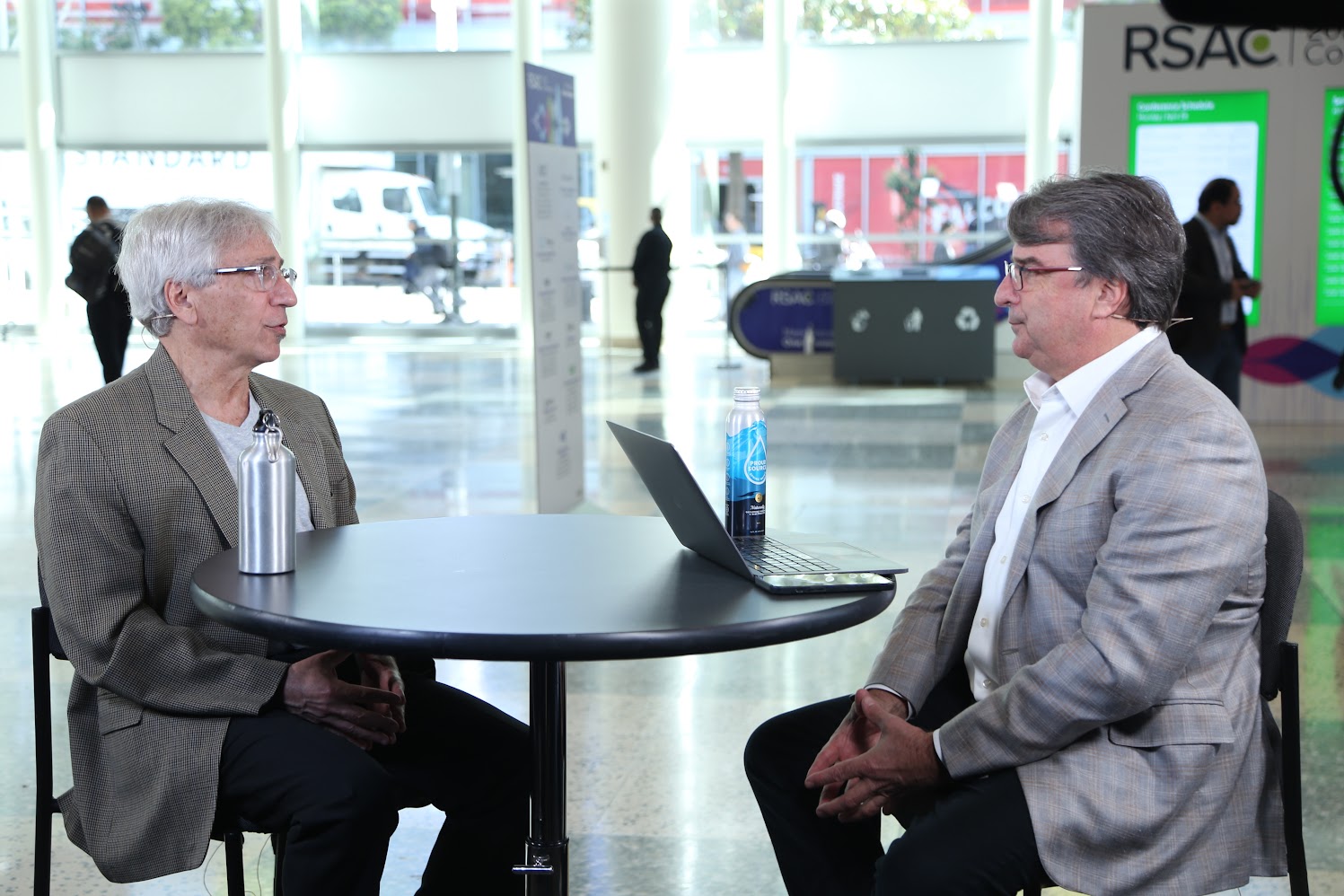
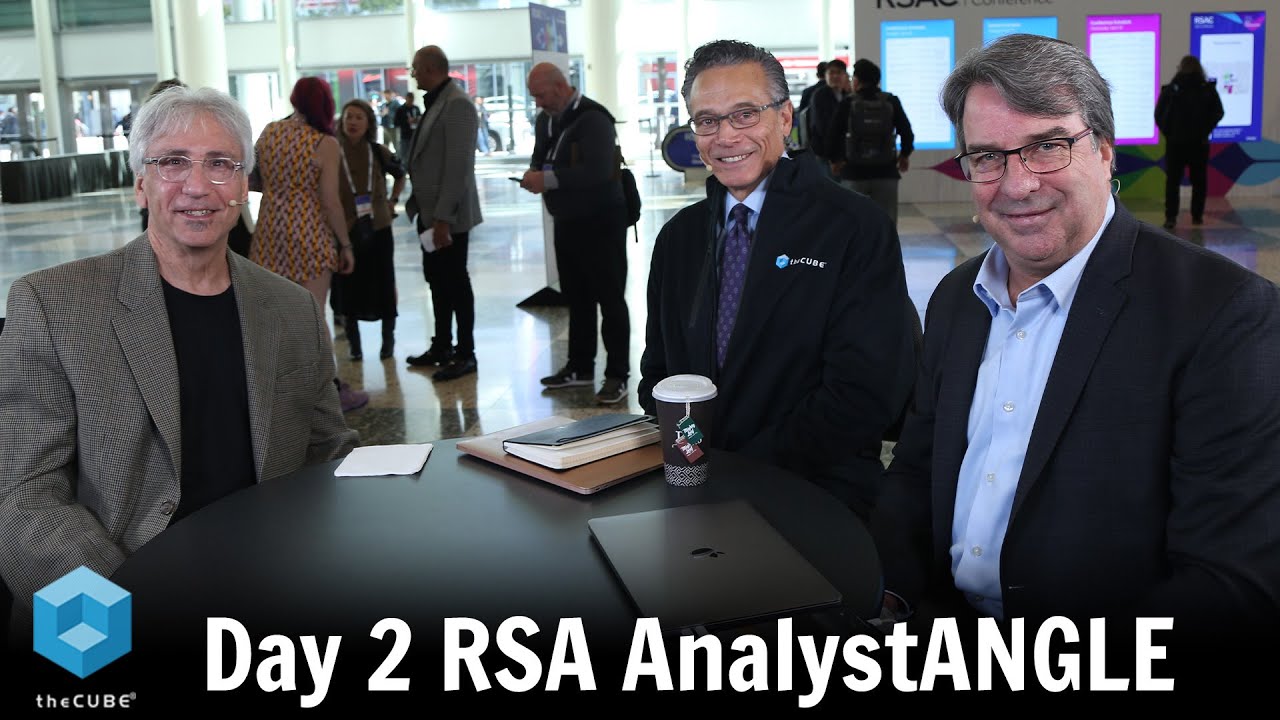
Kicking off RSAC 2025, theCUBE Research’s John Furrier and Jon Oltsik speak about the shifting cybersecurity landscape, where generative AI is rewriting the rules. Oltsik, marking his 20th year at the conference, shares a seasoned perspective on how security leaders are recalibrating strategies to meet the demands of a rapidly changing environment.
Furrier and Oltsik spotlight how cybersecurity is reaching a critical inflection point. The conversation explores the balance between consolidating security platforms and encouraging specialized innovation — a delicate dance as AI complexity reshapes identity security, multicloud management and enterprise resilience.
While AI brings new power to security strategies, it also raises the stakes, according to Oltsik. They highlight the need for sharper preparedness across the industry and talk more about how organizations must rethink their defenses amid sweeping technological change.
Forgot Password
Almost there!
We just sent you a verification email. Please verify your account to gain access to
RSAC Conference 2025. If you don’t think you received an email check your
spam folder.
In order to sign in, enter the email address you used to registered for the event. Once completed, you will receive an email with a verification link. Open this link to automatically sign into the site.
Register For RSAC Conference 2025
Please fill out the information below. You will recieve an email with a verification link confirming your registration. Click the link to automatically sign into the site.
You’re almost there!
We just sent you a verification email. Please click the verification button in the email. Once your email address is verified, you will have full access to all event content for RSAC Conference 2025.
I want my badge and interests to be visible to all attendees.
Checking this box will display your presense on the attendees list, view your profile and allow other attendees to contact you via 1-1 chat. Read the Privacy Policy. At any time, you can choose to disable this preference.
Select your Interests!
add
Upload your photo
Uploading..
OR
Connect via Twitter
Connect via Linkedin
EDIT PASSWORD
Share
Forgot Password
Almost there!
We just sent you a verification email. Please verify your account to gain access to
RSAC Conference 2025. If you don’t think you received an email check your
spam folder.
In order to sign in, enter the email address you used to registered for the event. Once completed, you will receive an email with a verification link. Open this link to automatically sign into the site.
Sign in to gain access to RSAC Conference 2025
Please sign in with LinkedIn to continue to RSAC Conference 2025. Signing in with LinkedIn ensures a professional environment.
Are you sure you want to remove access rights for this user?
Details
Manage Access
email address
Community Invitation
AnalystANGLE
Kicking off RSAC 2025, theCUBE Research’s John Furrier and Jon Oltsik speak about the shifting cybersecurity landscape, where generative AI is rewriting the rules. Oltsik, marking his 20th year at the conference, shares a seasoned perspective on how security leaders are recalibrating strategies to meet the demands of a rapidly changing environment.
Furrier and Oltsik spotlight how cybersecurity is reaching a critical inflection point. The conversation explores the balance between consolidating security platforms and encouraging specialized innovation — a delicate dance as AI complexity reshapes identity security, multicloud management and enterprise resilience.
While AI brings new power to security strategies, it also raises the stakes, according to Oltsik. They highlight the need for sharper preparedness across the industry and talk more about how organizations must rethink their defenses amid sweeping technological change.
Kicking off RSAC 2025, theCUBE Research’s John Furrier and Jon Oltsik speak about the shifting cybersecurity landscape, where generative AI is rewriting the rules. Oltsik, marking his 20th year at the conference, shares a seasoned perspective on how security leaders are recalibrating strategies to meet the demands of a rapidly changing environment.
Furrier and Oltsik spotlight how cybersecurity is reaching a critical inflection point. The conversation explores the balance between consolidating security platforms and encouraging specialized innovation —...Read more
exploreKeep Exploring
What event is being covered by theCUBE in San Francisco in 2025?add
What is currently happening in the market landscape of the security world from one's perspective?add
What are some focus areas in the field of cybersecurity that are being explored by experts?add
addresses the changing landscape of the security operations center and the potential outsourcing of tasks to AI agents?add
What is the importance of specialization in security for a security professional's career growth?add
What do you think is the best way to get valuable insights and information at RSA conferences?add
>> Hello, welcome to theCUBE's
coverage here in San Francisco for RSAC 2025. I'm John Furrier, host of theCUBE, Dave Vellante's in-flight. He'll be here in a few hours. We have four days of
wall-to-wall coverage. This is our ninth year live
broadcasting here at RSA. We're now in Broadcast Alley. This is the industry show for the security industry
on the business technology as it has amazing opportunities with generative AI, among other things. It's at a critical inflection point. We'll have all the coverage for
you here on the Analyst set- up and AnalystANGLE session. John Ulczyk, principal research
Analyst at theCUBE Research. And again, we've got our whole
team here, team coverage, SiliconANGLE. com, theCUBE and theCUBE
Research all out scouring, getting all the data and
sharing that with you. Of course, the NYSE Wired
community is here as well. Brian Baumann, the
founder, is out and about, and the New York Stock
Exchange rang the opening bell from San Francisco. John Ulczyk, great to have you on. Thanks for coming and thanks
for being on the team. You're a veteran,
well-known industry legend, influencer in the securities. What year is this for you on RSA?
Jon Oltsik
>> This is my 20th, so almost a third of my life I've been visiting RSA. It was in San Jose one
year, but yes, 20th. >> Well, it's great to have you on the team and your perspective and your experience because you're seeing the
security industry really be, to me, the canary in the
coal mine of generative AI because they don't suffer fools in this community, and it's one
mission, one community. That's the theme of RSA. Security practitioners are
hardcore on resilience. They're hardcore on the battles
that they fight every day to secure their enterprises, and they're not going to
fall for the shiny new toy. However, that being said, there
are a lot of new toys coming and there's some market
dynamics playing out with some of the automation because
security is a data opportunity. And so this is really an interesting year. I want to get your thoughts,
first of all one, on that whole concept of
how security folks think about AI, one. And two, why now is a critical
inflection point for them?
Jon Oltsik
>> Yeah, it's a great question, John, and I had this conversation
with some CISOs, and we've kind of seen this movie before. So when iPods came into the enterprise, when wireless access points
came into the enterprise, of course when Shadow IT
came into the enterprise, it was a new business-driven initiative that security had to deal with. This one's coming on faster and stronger, and it's got probably broader implications and it provides an
opportunity for security. So while certainly there'll
be a lot of hype here at RSA, it's really worth paying attention to because we really need to be
prepared on what's going on, not only in security, but
in the business at large. >> Yeah, I was watching our
threads internally at theCUBE Research team going through
the prep for this week, and I know you guys worked
tirelessly on squinting through the trends,
looking at all the data. Dave did a breaking analysis, you had some ETR critical data. I thought the survey
was on point this year. A serious change in spending patterns, a change in mindset with the geopolitical situation, generative AI. It's been documented,
we've been covering this, that the threat vectors are increasing. Your comment about new shifts in iPod and wireless, these are
new things that have kind of infiltrated the networks and systems.
Jon Oltsik
>> That's right.
- This has been interesting. So how do you see the big picture? Lay out the market landscape for me. What's actually going on? Consolidation's been the big story, but that means something's
going on under the covers. What's actually happening in
the market right now in the security world from your perspective?
Jon Oltsik
>> There are multiple things
happening, no surprise, consolidation's a biggie. So we've got all the platform
vendors, so CrowdStrike, Palo Alto, Cisco, Microsoft,
Trend Micro, a lot of them. And they're trying to
convince customers to go with one throat to choke. Now that makes a lot of sense, and as a CISO, my job is to rationalize my stack every year. So that is going on, but at the same time,
there's so much innovation. There are areas like AI, and you're going to need
specialization there. So while it's easy to think, "Okay, we'll just get everything in one platform, common data elements,
common data pipelining, common analytics," that makes sense and it absolutely makes
sense for a small company, but for a large enterprise, there are too many things moving. Things are moving too fast.
So you're going to have both. You're going to have
innovation in siloed areas or specific areas, and then you're going
to have platformization. At the same time the financial
issues around budgets and the economy, yeah, those
are considerations as well. >> I know Jackie McGuire's here as well, and our other analyst, new to the team, you guys have been working together. Are there notable focus areas
that you're seeing, some that people are talking about
here in the hallways early on as identity security, AI and cyber's impact,
critical infrastructure, the networks themselves? Are there areas that you see that you're spending more time on looking at what's the focus? What are some of the focus areas that you are paying attention to?
Jon Oltsik
>> Well, you mentioned identity, and this goes back, this has
to be 15 years ago, John, when maybe your first RSA, the thought was there are
two new perimeters, identity and data because everything
else in the middle was in flow with, first it was software
defined networking, and then it was cloud,
et cetera, et cetera. That's still true. Now,
identity is one of those areas that's owned by everybody,
but owned by no one. And so making changes
there has been difficult. The difference now is that
the infrastructure's there, it's there in browsers,
it's there in endpoints, it's there in mobile, and the infrastructure's really
based on something called FIDO, the FIDO2 specification. It's there. Microsoft
is making a big push. It's taking off in the consumer industry where you're supporting millions
and millions of customers. And so the notion that we'll
get rid of passwords is finally, I have to qualify
this, it's more real than in the past because
it's one of those themes that we've been talking about forever. It's more real today than in the past. So that's one of the areas I'm looking at. >> I love that passwordless
area, I saw your post on that, and I think that's right. I think people would prefer
better password manage, not just some tool, but
you're seeing multi- function authentication and biometrics. We all have our MacBooks or
machines where you type in or use your bio. So I think that's a hot area. I want to get your thoughts
on something that you wrote. You said, "Has anyone
noticed network securities has a big comeback? " Did it ever leave the building? I mean, talk about the impact of network because we used to talk for years that network's the last area because it's so hardcore, right? It's like, but now that's
where the footprints are. That's where packets are moving from point A to around the network. So lateral movement, whatever
you want to talk about, the network, is it a comeback
or is it finally arrived or did it ever leave?
Jon Oltsik
>> Yeah, that's a good question. So I do think it never disappeared, but it left the mainstream of conversation and security with the onset of EDR. Now, there's a tremendous
amount of telemetry that you can garner from
endpoints, of course, but the bad guys know that. So they can circumvent
that. They can disable EDR. There are lots of devices that don't have EDR agents on them, and so they attack those devices. But the saying goes, and it's been 20 years I've
been hearing people have been saying this, the network doesn't lie. So if you see packets
going between two devices that never talk to each other, there's probably something wrong. And so the network and
network security is making a comeback, but it never really left. If you talk to a practitioner,
it never really left. >> Yeah, it's interesting. I
was in Seattle two years ago when Microsoft announced
Copilot, just happened to be up there meeting some AWS executives for some private one-on-one briefings. And so I was at the Westin,
which is the hotel there, Microsoft just had their event there. And I'm at the bar area
having a little bit of a bite. No one knew who I was, and I hear the chatter, a bunch of security people were there, not CSU. We're talking about in the
trenches frontline folks, and I'm just a hole in the wall
there just like, "Hey, just sitting here minding my own,
what's this Copilot thing? " I asked the rhetorical question. Oh my God, you thought
it was a shit storm. They just went off. "We
disable that. That's bullshit. " Because it was forced down their throat. So okay, the first thing they
do is they just disabled it. You mentioned disabling EDR. And then so now fast-forward
to today, I had posted a tweet. I want to get your
reaction on this is that, and folks that I've been talking
to, they're disabling GenAI by just shutting it down and
having a resilience bar like any other app, that's one thing I hear, but agents in areas where
they can automate is working. So there's a practical
approach to AI in security that is not in the consumer side. So you start to see there's
no one's rejecting agents if they're motivated, is what I'm hearing. But GenAI as a feature,
the bar is really high, not a lot in production
going on with GenAI. What's your thoughts
on that? Do you agree? Are you hearing the same thing? Is it just the makeup of the psychology of a practitioner? What's your thoughts?
Jon Oltsik
>> It is kind of the
makeup of a practitioner. Security people are paid to be skeptical. They're paid to break things, and the culture of security is, there's a long history there. However, this is happening fast. And as security professionals,
what are we there to do? We're there to protect the business. The business is going full blazes on AI because of the business benefits. So the CISO can't be Dr. No. Okay? So if that's the case,
not only do they have to accommodate the business, but they absolutely should be
seeing how this can help them. What I heard from some CISOs
recently was look, why wait around for the vendors to
catch up with the feature sets that you want that may be
customized to your organization, to your industry, when
you have this opportunity to innovate yourself? Now that assumes you have the
knowledge and the skill sets and the resources to do that. Large enterprises that we
typically deal with do. And so I think that the new
mindset is absolutely move with, and I am going to use this in blogs and stuff, it's excited cautious optimism. Be excited about the opportunity, be cautious about the risks, but be optimistic about the future because it's coming and we know that. >> And confidence is
what they're going for. I need to have full confidence.
This is bulletproof. And that's the nirvana, the confidence.
Jon Oltsik
>> Well bulletproof.
- Well bulletproof.
Jon Oltsik
>> I don't know about that.
- A little bit hyperbole.
Jon Oltsik
>> But confidence, absolutely. And you have to, and you should, and that's really your job is to confidently support the business while you're mitigating risk. >> I want to get your thoughts
on a thesis I put out there, a little bit over the top. And so for the folks watching
in security business, it's my haymaker, but I'm
going to put it out there. I said, there's a big security replatforming movement going on. We're in an era of replatforming security. I think Dave said this
about over 10 years ago to Pat Gelsinger, he
asked him the question, "Is security a do-over? " And he said, "Absolutely it's a do-over, but it's hard to do-over. " So the question is, do you
see a replatforming going on? Are we in a replatforming era? And if so, what does that look like?
Jon Oltsik
>> You mean specifically
in terms of security? >> Security in general.
Is it a big movement now? Is it legit or is it just
a few companies doing it? Or is it something that most
people actually considering given the scale and accelerated
change we're seeing?
Jon Oltsik
>> Yeah, I would agree. We were absolutely in a replatforming. And the way I've characterized it over the last few years
is everything's in play. There's innovation in every layer of the security stack. So, yeah. And it's driven by the scale. It's driven by the diversity of hybrid IT. It's absolutely driven by the applications we're
building at a faster pace. And we've talked about
AI, where's the killer app for AI right now? It's in software development. So more applications, bigger
attack surface, more to secure. So absolutely. Now, the platform vendors
do have an advantage there because they've got the sensor network. If you talk about Microsoft or Google, they're in at
the application layer. So they do have some mode of an advantage, but we could get around that
with the right connectivity, the right data, plane, things like that. >> Yeah, Dave's got a good narrative. He talked about all
the networks about best of breed versus platforms,
best of breed going away.
Jon Oltsik
>> That's a religious
argument, these halls here. >> Let's get the arm wrestling going. All right, I want to do a
little lightning round with you because I wrote a fun
listicle on LinkedIn. I want to get your thoughts on it. Came from my post I wrote
on theCUBE Research. The 10 things driving the RSA this year, and I want to get your
reaction to each one. First one, it's kind of a David Letterman. It's not a top 10, but
it's 10. It's 10 less.
Jon Oltsik
>> All right, I'm ready. >> RSA isn't about shiny
objects, about survival through simplification. Your thoughts on that? Agree, disagree?
Jon Oltsik
>> Agree. That's part of
it. Absolutely simplify. Automate, get more out of technology, get more out of your people. Absolutely. >> Got it. Okay. Second one. Number two, cloud security
isn't slowing down. It's evolving into multi-cloud, what we call supercloud security. Yes or no. Is that happening? Is that a focus or is that just fluff?
Jon Oltsik
>> No, it's a focus. And I
mean, Google just bought Wiz for one of those reasons
is exactly what you said. >> You think Wiz and relationship with AWS will be impacted by that?
Jon Oltsik
>> Oh, yeah. I mean, the alternatives have to evolve, but absolutely, AWS
has to respond to that. >> That deal's not closed
yet, so there's going to be some arbitrage around Wiz.
Jon Oltsik
>> That's true. It's got a little bit of money in my pocket and see
if we can make some money. >> I mean, Wiz really had
a great business with AWS.
Jon Oltsik
>> Oh, it's an incredible story. >> It's going to be, we're going to have to watch that closely. So we'll keep on. Number three, AI hype is high, but agents are where the action is.
Jon Oltsik
>> Agentic AI, you won't be able to cross the street here without hearing that term. Absolutely right. >> Okay. Complexity, not cost is the driver behind vendor consolidation, meaning I'm not sure who I want to go with. Do I want another tool?
Jon Oltsik
>> Yes and no. Yes, but
not in Microsoft's case. Microsoft plays the cost
angle very, very well. Complexity is real. And this is especially true
for smaller organizations who either go with platforms
or they go with outsourcers. >> Got it. Cool. All right, next one. Security priorities are
shifting from identity and endpoint to exposure,
posture and automation.
Jon Oltsik
>> Identity's still a part of that. And if you think of
zero trusted encompasses all of what you just said. >> Okay, we'll get the zero
trust, is in the one coming on-
Jon Oltsik
>> All right
- Next one. Social engineering is the breach vector everyone is afraid of.
Jon Oltsik
>> Yes, but if you look at
the Verizon DBIR, the newest, the biggest threat vector was exposures. So vulnerabilities, edge devices. So yeah, they're concerned
with social engineering as they should be, but other things too. >> Got it. Okay. Password
list is no longer hype. It's happening. You just mentioned that, so I think you agree with that one.
Jon Oltsik
>> I better agree otherwise
I sound like a hypocrite. >> No, I think the data
on ETR points to that.
Jon Oltsik
>> Absolutely. - The data's
solid there. That's an easy one. Zero trust is everywhere in theory, but incomplete in practice.
Jon Oltsik
>> It's a journey, it's not a destination. >> And that's because of
just the breadth of tools and the framework adoption. Is that just brute force.
Jon Oltsik
>> Yeah, and different access
controls, different people that you have to get involved, different regulations. So yeah, it's- >> It's not going away.
Jon Oltsik
>> No, it's-
- It's fundamental.
Jon Oltsik
>> It's a fundamental piece
of security architecture and it's still a work in progress. >> So it's the journey
you mean it's evolving.
Jon Oltsik
>> Exactly.
- Got it. Okay, cool. All right. CISOs aren't shopping for new
tools, they're replatforming. We kind of talked about that already, but they probably are shopping for tools.
Jon Oltsik
>> They're always shopping for tools. But yeah, again, it's
about risk mitigation. >> Okay. You're going to like this one because I think you wrote
about it. I picked up on this.
Jon Oltsik
>> Okay.
- Watch the MSSPs, they're the bellwether of what's next. Thoughts on that. Explain.
Jon Oltsik
>> Well, to grow their
business they have to scale. To scale they have to automate because you can't just
hire an army of people. You need cloud scale applications. You'll probably be much more
on the cutting edge with AI. So absolutely watch what they do and they may be out
innovating the platform guys. >> Yeah, I love that insight. I think that one was, of all the things I read
over the weekend, I think that was very much nuanced but on point. That was really well done. All right, big picture
as we kind of wrap up and kind of look at the show. As you look at cloud security and on-prem, I was just getting my badge, got stopped a bunch of times. "Hey, love theCUBE."
And as a practitioner, really loved the narrative about on-prem. They'd been watching some of our coverage, you actually watch it on the plane. Clearly a on-prem, it's a
situation going on with AI because that's what the data is. Cloud isn't going away. So
the cloud security on-prem. I mean, if it's cloud operations,
it's basically multi-cloud because what's a premise? It's just the cloud on the prem. So what's your thoughts on
security vis-à-vis cloud security and on-prem security? Is it hybrid cloud? What
are some of the things? Can you share your thoughts
on what's happening in that area?
Jon Oltsik
>> The cloud's the backbone, that's where all the data has to go. But I think you have to think of a distributed infrastructure. So why do we have all these
different tools, John? Why do we have data
security posture management and identity security posture management? Because there are finite risks there. If we're big enough we
might have specialists who can just look at that. So it's kind of a push-pull thing. This is an enterprise issue, not a smaller organization issue. But yeah, I think it's- >> It's front and center. >> It's front and center. Absolutely. >> All right, well one
of the things, I mean, I love this market, I got to tell you. It's super exciting, it's very dynamic. I mean, the consequences
can be quantified. When you get in those
situations, there's no BS. There's a really thin
road, you can't really... There's a lot of BS, but
when you're rolling out stuff, the stakes are high.
Jon Oltsik
>> Oh, yeah. - So I have to
ask you, if you look at GenAI, what does your instinct tell
you as a veteran over 20 years of this show, but in the industry. As GenAI comes out, you'll start to see it like an application. We hear that a lot. It's
another app that's kind of off the cuff, kind of haymaker. I've heard from many CISOs including JPMorganChase, by the way. So they have a high bar of
resilience, but it's coming. They know it's coming. What do
you think the impact will be just generationally? I mean, look at the previous scar tissue and the grinding, red team, blue team, now you got purple teams. The infiltration of the
security team's evolution and their position in an
enterprise is so fundamental. What does GenAI do for them? Is it really going to turn
the gas up on productivity? Is it going to be an
actual agent-based system? What is your vibe? What
is your take on this? Because it's kind like you kind of have to use experience squint through. How do you get through the
fog and what happens next? What's your vision and
what your focus on there?
Jon Oltsik
>> Yeah, it's a great question. And every CISO should be researching that, asking their people to research that. Because as you say, it's coming. q The most likely thing
in my mind is that a lot of the pedestrian work gets
outsourced to AI agents. So if you think of the
security operations center, the level one analyst whose
job is to look at alerts and triage alerts and then escalate things, that job gets outsourced to AI. But you're going to need
to write the rule sets. You're going to need to
fine-tune the models. So you're going to need
those skills as well. And as a CISO, you need to
sharpen your skills accordingly. So I'm not sure I'm
answering your question, but in general, this industry in five years
will be completely different. The skill sets will be different.
They're not going away. Some of the maybe basic
skills will get outsourced to AI agents. >> Is there a comparable, if any, that you could even compare scope
in terms of change? Is there a moment in time
in the security industry where this came out and changed the game? Is there that looks kind of like now, but maybe it's obviously
bigger now, it seems bigger. Is there anything you can
point to say, "Wait, when that came out, everything changed? " Is it cloud? Is there a
moment in time in the past that could give us some resemblance of what's happening today?
Jon Oltsik
>> Well, there are lots of
different moments where new and interesting technologies came out. But the thing, and IBM used
to say this all the time, is the thing about security
is unlike other areas where you've got the vendors and the users, you've got a third-party and that's the adversaries. And so all of these technologies
you have to figure on, well what are the bad guys going to do with it? And we know they're using it already and we know that nation
states will really use it. So I don't think there's been
anything quite to this extent that came out, but we've
had different technologies that we either saw used for
offensive or defensive purposes. It's escalated the game,
it hasn't changed that. >> I think social engineering is one that the bad guys are
definitely leveraging hard right now. Seeing great-
Jon Oltsik
>> Yes, and AI helps. >> AI helps them. All right,
final question for you because this is more of a big picture. One of the things that I've
been asking at these different CUBE conferences with
security practitioners and experts is, "Okay, we've
seen the ways of innovation, the trend cycle, lean
startup, agile mechanism, software and there's a lot of playbooks and now compliance and security. But it's always been
kind of a craft business where the human, how do I win? It's like chess. The
computers help the grandmaster and you don't have to
be a super grand master. You can be somewhat a grand, but the computer can help
you be super grand master the craft and security right now seems to be a top skill set. What is your thoughts on that? Do you have an opinion or thoughts on how as we
get into the mechanisms where agents could be great, they'll let the paperwork
do the grunt work for me, do the toil, undifferentiated
heavy lifting? That might free up the craft.
Does that change the makeup? Does that accelerate? What's
your thoughts on the craft behind security and winning?
Jon Oltsik
>> I think you're right. I think the opportunity is
specialization in security. So you come out, you get
a CISSP certification after five years. That's a general purpose type of thing. I think if I'm a security professional and what I advise people and what others that I know
do is what do you want to do? Where's your career going? And start plotting that out a lot more carefully than in the past. Security people tend to be
enamored with the technology and they often don't
think about their career. I think AI is a force
multiplier to make them do that. And if you do that as a
security professional, you can really thrive. I think there'd be
incredible opportunities and we know about the
general skill set shortage. If you don't do that,
you might get caught in a no man's land, which is
not where to be, of course. >> All right, well got RSA four days. They had kicked it off today
with the NYSE opening bell. Shout out to the NYSE,
Lynn Martin and the team. Great stuff. 20 years, you've fished this pond dry many times. I have to ask you, what
are you going to look at? What's going to be your plans? You got the sandbox,
you've got the forums, got the executive programs,
you got Jackie here, you got the whole team from
the research side here, got the SiliconANGLE media coverage, get all the news on SiliconANGLE. com, theCUBE Research. What is your approach this year,
given that you kind of know where the fish are as they say? What's the focus, what's the
plan? How do you attack RSA? It's a monster show.
Sometimes stories don't get the visibility they do. You got to go hunt those stories down that get those puzzle pieces. What's the strategy that you guys are taking
in the research team?
Jon Oltsik
>> I think you hear the
buzz in the hallways. So I would say I don't pay
much attention to the keynotes because those are paid for gigs. There's a lot of rhetoric there. You really get the stories in
the informal, in the hallways and the dinners, and
the breakfasts, I guess. But what I try to do is I talk
to the practitioners, John. So I mean, I can get the vendor pitch. You can go online and
get the vendor pitch. But if you talk to practitioners,
where are they struggling? What are they looking for? What
are their concerns with AI? Where are they with AI? That's what every RSA, not the early ones where I was still kind of learning, but the last few years,
what are the CISOs saying? How can I talk to them and
what can I get out of it? >> Well, John, thanks for deep diving and unpacking some of the issues we're going to face this week. We'll be trying to ask the questions. Thanks for coming on
you and Jackie McGuire, the whole team is here from theCUBE. Dave Vellante will be here soon. Thanks for kicking off the AnalystANGLE and again, great to have you on. Again, your experience and leadership, it's got a huge audience
out there. Thank you.
Jon Oltsik
>> My pleasure, John. My pleasure. >> Okay. I'm John Furrier with
Dave Vellante, John Olsen, Jackie McGuire, the whole CUBE team. Of course, with the
SiliconANGLE writers here. They're getting all the news rolling that out on SiliconANGLE. Check out theCUBEresearch.com
for all the AnalystANGLEs. We'll be right back
after this short break.