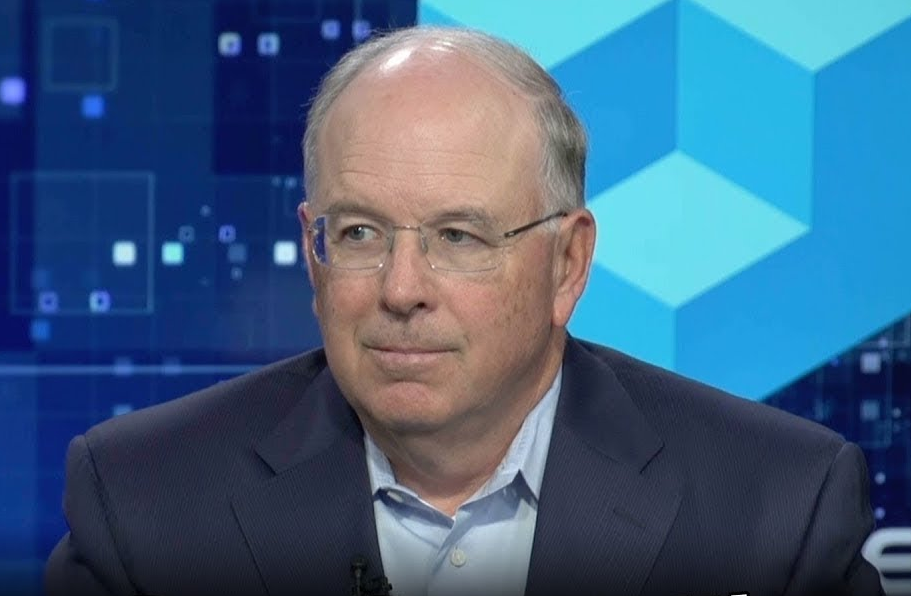
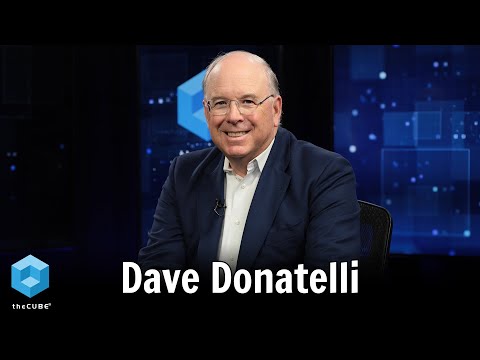
Riverbed Technology, founded in 2002, focuses on WAN optimization. After going public in 2006 and being taken private in 2014, Dave Donatelli was appointed as the new CEO in 2023. Recent findings from a global AI study by Riverbed highlighted challenges in AI adoption such as data management and scalability issues. Despite CEOs' interest in AI, only 37% feel ready. Data accuracy and practicality are key concerns for organizations. Riverbed offers practical solutions to drive productivity, with a platform aiming to prevent, identify, and resolve IT problems. Modules like NPM Plus and Unified Communications enhance real-time problem-solving. Riverbed focuses on network acceleration to support the growing demands of AI implementation. Surveys show that security, AI, and data management are customer priorities. Riverbed plans to roll out more AI tools in 2025. The CEO emphasizes the importance of understanding all aspects of a tech company and empathizing with different roles. Riverbed's focus on AI automation sets them apart in the industry, making advancements in application acceleration and data visibility.
Forgot Password
Almost there!
We just sent you a verification email. Please verify your account to gain access to
Riverbed Content Library. If you don’t think you received an email check your
spam folder.
In order to sign in, enter the email address you used to registered for the event. Once completed, you will receive an email with a verification link. Open this link to automatically sign into the site.
Register For Riverbed Content Library
Please fill out the information below. You will recieve an email with a verification link confirming your registration. Click the link to automatically sign into the site.
You’re almost there!
We just sent you a verification email. Please click the verification button in the email. Once your email address is verified, you will have full access to all event content for Riverbed Content Library.
I want my badge and interests to be visible to all attendees.
Checking this box will display your presense on the attendees list, view your profile and allow other attendees to contact you via 1-1 chat. Read the Privacy Policy. At any time, you can choose to disable this preference.
Select your Interests!
add
Upload your photo
Uploading..
OR
Connect via Twitter
Connect via Linkedin
EDIT PASSWORD
Share
Forgot Password
Almost there!
We just sent you a verification email. Please verify your account to gain access to
Riverbed Content Library. If you don’t think you received an email check your
spam folder.
In order to sign in, enter the email address you used to registered for the event. Once completed, you will receive an email with a verification link. Open this link to automatically sign into the site.
Sign in to gain access to Riverbed Content Library
Please sign in with LinkedIn to continue to Riverbed Content Library. Signing in with LinkedIn ensures a professional environment.
Are you sure you want to remove access rights for this user?
Details
Manage Access
email address
Community Invitation
Dave Donatelli, Riverbed Technology | CUBE Conversation
In a CUBE Conversation, theCUBE Research Executive Analyst John Furrier talks with Riverbed Technology CEO Dave Donatelli, as they discuss the company’s evolution from WAN optimization to leveraging AI for network performance. A global survey of 1,200 IT decision-makers revealed challenges in AI adoption, including scalability and data issues, with only 37% of firms feeling ready for AI implementation.
Dave Donatelli, Riverbed Technology | CUBE Conversation
Dave Donatelli
CEORiverbed
search
Dave Vellante
>> Riverbed Technology was founded in 2002 and its original focus was on WAN optimization to improve network performance, which would with current AI wave, continues to be really important. The company went public in 2006 and grew very rapidly. And then, in December 2014, Riverbed announced it'll be taken private. Now, it's owned by Vector Management. In the summer of 2023, Riverbed brought in a new CEO, Dave Donatelli, an individual with a proven track record of driving product and operational excellence. Joining me today to give the updates on Riverbed, its recent progress and some new survey data is the CEO of Riverbed, David Donatelli. Welcome to our studio here in Marlborough, Massachusetts. Thanks for coming in.
Dave Donatelli
>> Thanks, Dave. It's great to be with you.
Dave Vellante
>> So, you guys just released a survey, some findings from a global AI study. We're showing the cover of that here, it's 1,200 IT decision-makers focused on the state of AI adoption. We're going to review some of those findings, but tell us why did you conduct the survey? What were some of the key takeaways from your perspective?
Dave Donatelli
>> Sure. Well, we like to do a survey every year to kind of tune into what's happening in the marketplace. Last year, our survey, as an example, highlighted the fact that people wanted to move to fewer IT tools that covered more their environment. People were looking to simplify their environment. So, we built a lot of products based on that. This year, as you know, AI discussions have been all the rage, so we thought it was important to check in globally to see where people really were with AI. And as you know, we're deep into the hype-cycle, not so deep into the actual implementation in use case cycle of AI at this point in time.
Dave Vellante
>> Well, I like the end. 1,200, global survey, so you can really dig into the data. We have some other data points from the survey related to adoption and some of the things that are holding adoption back. Here, we're showing... This is a reality gap. It's very unlikely that 82% of the firms are ahead of their competitors. So, there may be some blind spots there for some of the respondents. And we've talked extensively in theCUBE about the data challenges. You got to get your data act together before you can do good AI. And of course, most firms, 72% according to the Riverbed survey say it's hard to scale. So, from your perspective, what are some of the obstacles and gaps that customers are facing?
Dave Donatelli
>> Yeah, it's one of these interesting things because if you take it up a level and you look at the CEOs, 94% of CEOs want to implement this. Why? To me, it harkens back to they don't want to get caught in the dot-com trap again. So, as you know, when the dot-com era happened more than 20 years ago now, but you and I happened to be working back then. You saw some companies get caught, go out of business. You saw other companies flourish, like never before, they pivoted. Think companies like Walmart. Walmart's bigger and better than ever as a retailer, and new companies emerge. CEOs have seen this. What they're saying is, "Hey, I'm not going to be that company. I want to make sure our organization is one that advances really well." Well, that's all wonderful to say, but if we go to the chart where you talk about what are the challenges, only 37% say they're really ready for it. Only 40%, four out of 10 are confident in their data. And then, as you also saw the whole issue around overconfidence where 82% of the people are saying, "Hey, I'm better than everybody else." Only mathematically, that doesn't quite work out. And I think it really comes down to data and practicality is really one of the big concerns already. We've known for years that getting data right is key to having good machine learning, good AI, and it's a problem that companies of all sizes and organizations of all sizes struggle with. If you're a smaller organization, it's very challenging to do both from a budget and technology perspective. If you're a larger organization, it really gets down to not the technology side because they're pretty good at that, but really internal. Are there limitations if you're a multi-national kind of company, where you can share data to use for AI? There's definitely political problems as well within organizations. "Hey, I run this region, I'm not going to give my data to that region." I've seen that as being a big inhibitor. So, put all that together, it's more complex than people like to talk about on TV and it takes a while for people to really get to practical solutions that work. And I think that's what we're going to settle in on, practical solutions that work.
Dave Vellante
>> You know what's interesting about what you're saying is, we all talk in the industry, you hear it all the time, we've never seen the pace of technology as fast as it is today. Maybe that's true, but for sure the adoption is not faster than it's ever been. I mean if you look at historically, it's like every 10 years some new wave comes in, and it takes a long time for the reasons that you mentioned. The technology is one thing. I know it's bromide, but it's people in process and it just takes a long time. So, how long do you think it will take to overcome some of these gaps?
Dave Donatelli
>> Well, 86% of the people said that within three years they think they're ready, and I think that's a reasonable number. In the sense that, look, as you know, there's massive investment going in across from the producers of the technology. You have 94% of the people who want to consume it, i.e. the CEOs who are going to ask all their people when they budget, "What's your AI budget and what are you doing for me?" And I think within three years, you'll start to see real progress, but it's not three months. It's over time. Now, on our products, I can tell you where we focus just on specific areas, not what I call enterprise-wide AI, but AI to solve practical problems. We already see customers doing that today. For instance, I was talking to a regional bank the other day. In our case, they're solving over 13,000 incidents that they used to have to use with humans now through full automation. So, again, that's a more practical solution within a reasonable scope and scale that you can do, but also offers real benefits to the end user.
Dave Vellante
>> What's interesting is our survey data with our survey partner suggests that there's a real solid mix, like 50-50 between those that want to do AI on their own and those with embedded AI. You're talking about embedded AI. And I've always said you're most likely going to buy AI that's embedded, whether it's in applications or other products, then going off and building your own. But surprisingly, today anyway, I think a lot of people want to do experiments, and that maybe is holding things back. So, there's a lot of hype around AI, as we know. But as your survey shows here, the C-suite is firmly behind AI initiatives, even if they're not completely opening their checkbooks. Our survey data also shows that about 45% of the customers are stealing from other budgets to fund AI. But this broad consensus that AI is going to be the biggest tech wave we've ever seen. If the entire industry is wrong on this front, we're all in trouble. It's going to be a very large proportion of your survey base here, it says they're accelerating AI. So, how do we move, Dave, beyond the hype into real practical-
Dave Donatelli
>> Yeah, I think we're again still at the beginning of the stage that you mentioned, right? Half the people want to build their own. May I remind you of Hadoop clusters? Everybody wanted to build their own of those as well, and you don't see a lot of people bragging about the results they got out of that over time. So, I think if you look at it, the expertise resides in the providers. They have the engineers, they have the years of experience and they have the data, and you need all three of those to really make things work. So, while I think it's always tempting for people to want to self-build, particularly in big sophisticated organizations, not saying they can't do that, but for most of the people out there listening to this, whether you're in a government organization or whether you're in a business, you're probably going to buy from somebody else. And the people you're going to buy from are the traditional providers in the technology industry, whether they're mainstream folks who have been around a while or whether it's a startup that's delivered. And why is that? Because focus, expertise and understanding of specific areas. Second thing I'd say is, again, I don't think the uber enterprise-wide solution is really practical at this point in time. We've got to work our way there. What people really want are built-in AI type solutions, helping them solve problems that they already have today.
Dave Vellante
>> Well, to your point, when you look at what people are actually doing with AI today, it's very ChatGPT-like. They're summarizing text, they're maybe creating images. There's certainly some code generation and that's great, but to your point, people, they want this stuff to work, they want it to drive more productivity. And so, I think you're right, it's probably going to take a few years. Especially when you look at... Everybody's talking about agents or copilots, but they're really single agents. We're imagining a world where you've now got multiple swarms of these working together. As you well know, you've got all this data and IP locked up inside of applications, there's metadata, there's business logic, et cetera, and getting to that is going to take some time. Once you can get to that, now the user interface is going to change, it's going to be speaking to it. So, those are some of the adoption challenges. Was there anything in the survey, anything else that you were surprised that stood out that were shockers to you?
Dave Donatelli
>> I mean, personally, I don't think it was shocking, but I think it was a good dose of reality for everybody to understand. As you saw, I think the most shocking thing was the overconfidence. "Oh yeah, we've got this down." And the reality piece of, "Well, maybe in three years we have this down." And so, I think it's always important to really be frank about where do we really stand in the market? It's a great technology, it's going to make a big difference, but we're moving into it. It's in a typical evolution cycle versus just a revolutionary cycle.
Dave Vellante
>> Let's talk a little bit about Riverbed and some of your unique IP and what you're doing in this space. Walk us through the value components of your business and that differentiated strategy that you have. How would you describe your approach? We're showing here your Unified Agent, your Riverbed IQ, which is your intelligence, you've got all this great dashboarding. Help us understand why Riverbed? What's unique? And how it differentiates from the competition?
Dave Donatelli
>> Yeah, in its simplest form, what we do is we help prevent, identify and resolve problems that people have in their IT space. And whether that's at an endpoint, whether that's in their network, whether that's a problem with their application. As you're aware, IT environments get more complex every day, whether you're talking about what people run in-house, how they interact with the cloud, people working from home. And because of all those factors, it gets harder to determine when something breaks, what is it? Where is it? How do I fix it as soon as possible? And then, ideally, how do I prevent it from breaking at all? That's in essence a problem we solve. And we help people by really ending what I call blind spots in their environment. Meaning, that as the environment continues to expand, people have a need to understand more about what's happening in that expanding environment. Let me give you an example. Mobile devices. With mobile devices today, people say companies are deploying 150 million of these a year. And you see them everywhere. You go on an airplane today, how are they checking you in? "Oh, hi David, it's great to see you again. I see that you're a premier flyer with us." That's a mobile device. Mission-critical to them now. If you look at your power company, when they come out to work in your environment or work on recovering from one of these storms we're having, mobile device. So, it's the front door of the enterprise mission-critical. But up until now, no one had a way of seeing that. That's what I mean by a blind spot. So, something is going wrong, people need to understand what is going wrong? How do I fix it as soon as possible to keep my people, make them productive? That's in essence what we do and we do that again at all different levels of the enterprise. AI is important to what we do because it enables people to take the human element out of it, because simply put, people are getting inundated with alerts, inundated with problems, and it's too much for someone just to swivel around and look at screens to do. You need automation to help do that and you need data to do that. So, one of the important things we've done, and it's a product we actually don't sell, but it's fundamental to all our products, is we built a data store that scales. So, for years you mentioned the company's been in business more than 20 years, we have collected data, data around how your network is working data, data how your applications are working, as I just talked about, data about how your mobility works. The key with all that data is it's real, it's not synthetic data. So, we take only real data. We have a data store that scales and enables us aggregate all that data together and then find what I call the proverbial needle in the haystack. What has gone wrong? Is it my network? Is it my app? Is it someone working from home? And give you the ability through automation and AI to understand what that is and through what we call remediations, if you so desire, automatically fix it for you. So, the account I mentioned earlier when we were talking about the AI survey, it's 13,000 events for them, which is a mid-sized business, in 90 days that were fixed through automation, no human intervention. So, that's in essence what we do, is that we collect data that we can then use to analyze and automate, again, the detection or prevention or fix of problems, and then we report it out. Typically, we report out our results, most of our customers run ServiceNow. We automatically report ServiceNow and tell them exactly what we did and how we did it.
Dave Vellante
>> So this ties back to you can't have good AI without data, which again, sounds like a tagline and a talking point, but it's true.
Dave Donatelli
>> It's true.
Dave Vellante
>> And it's important for people to understand, you're not Snowflake. You have a purpose-built data store specifically for the markets that you're in and you're helping people with their data problem through your observability chops. You're not trying to be the next great data platform. Rather, you're solving problems with your unique IP. And so, how's that resonating with customers? Do they get it or when they hear, "Oh, you need good data for..." Are they thinking analytics? Are they thinking their data pipeline? Are they thinking all these data engineers? Do they understand it?
Dave Donatelli
>> Well, I think from a customer point of view, what we like to say is, "Look, we're safe, secure, and accurate. And then, this gets back to our survey, what are some of the inhibitors that people have around AI? They worry about safety in the sense of, if you look at large language models, people don't want to interact their proprietary data with outside data, and then in essence, make their data public. Very, very concerning for them. Security, the same thing. Our system is a closed-loop system. It's only the customer's data working within their four walls. So, extremely secure, they don't have to worry about that. Accuracy comes from only using real data. We've all seen the various hallucinations you can get when you start to use synthetic data around AI and some of the crazy answers you get. By only using real data, you get more accurate data. And to me, that's very key to adoption. Because again, when you start to work with these big companies, they have really for very smart reasons, limited what kind of outside models you can use because of all the security concerns around that. And once you start to do that, back to our time about implementation, then implementation time start to get a lot longer because you've got to go through all kinds of different security hurdles before you can actually get benefit. By making kind of a closed-loop system that the customer controls what the data inputs are makes it much easier for them to adopt, and so we think that's really a key for people. And then, I think the other key to people is showing them real results, is they want practical things that actually help their business, that provide an ROI that's measurable versus more kind of far out things that sound really neat, but they're not really sure what the value they're getting.
Dave Vellante
>> Or a tick of the box, so it allows you to tell the C-suite, "Oh, yeah. We have an AI strategy." When you took over as CEO of Riverbed, as you recall, you came into our office in Palo Alto and you talked about what you were going to do. Now, of course, we know you all the way back to EMC when the world was very product-centric. And you told us at the time, and in fact you talked to John last time on theCUBE about your platform focus and the importance and relationship to just the entire customer experience and the digital experience. So, explain that platform mindset and how's it going with respect to customer adoption? How's it resonating?
Dave Donatelli
>> Yeah, so when we met with John, we had just announced everything. So, the great news, everything's GA, you can run it all today. And it was really in response to the survey, we talked about the last year survey where people wanted fewer tools to solve a larger part of their problem. Our platform combines, as I mentioned, what used to be point products. So, the state-of-the-art was to have a point product that looked at your endpoints, your PCs, your laptops, your phones, a point product that looked at your network, a point product that looked at your applications. I talked to a customer, they have 56 different tools trying to figure out what the heck was going on. So, the platform itself we made takes advantage of the fact that we've been at this for over 20 years. We know a lot about network acceleration, we know a lot about network performance, we know a ton about applications and endpoints. By combining those all together with common interfaces, common abilities to manage like the Unified Agent, makes their life a lot simpler and so we've seen that resonate very well. The Unified Agent itself has really taken off very quickly. So, the whole idea, as you know, customers hate agents, they don't want to have lots of agents. By having a Unified Agent with what we call modules that plug into it, you can get one agency when you go to the agent police, you only have one agent, but the different modules give you different technology. So, we talked about in June announcement something called NPM Plus, Network Performance Monitoring Plus. In this world where you get zero-trust networks, we have people working from home, we have people accessing the cloud, traditional network monitoring no longer works. You just can't see things like you used to. NPM Plus takes that network monitoring, puts it on an endpoint, and by doing so you now get visibility again. Where we talked about visibility is important, data is important. So, we've seen pretty widespread adoption of that. People are very excited about that because it allows them to do zero trust architectures while still having the observability they need in order to run those effectively in production. In addition to that, we're announcing our next module for the combination. This is work we did in joint engineering work with Intel, so it's a joint product we bought out and it has to do with Thunderbolt as well as with Wi-Fi around Intel and end user devices. So, by sharing their technology, they gave us, in essence, with their drivers the ability to understand what was happening. Let's say you're sitting here working from home, something's gone wrong, you want to understand what's happening. By installing that module, you get a deeper understanding of your Intel environment and we can help solve that problem faster.
Dave Vellante
>> So, this is extending observability beyond the PC to whatever Thunderbolt-connected devices, Wi-Fi-
Dave Donatelli
>> Correct. So, again, back to if you think about it simply, the collect, the analyze, automate report, blind spots are all about collection. How do I get the most understanding of what's happening in your environment so I can solve problems? We have a new one coming out as well around Unified Communications. So, the whole idea is in real time, and we get the scenario all the time, is the board of... It's invariably with the board of directors. Board of directors are having some kind of meeting, let's say over Teams. Something goes horribly wrong because it always does, and your CIO is just getting pummeled with what's happening. By having a module that goes into this Unified Agent. Again, you can mix and match whatever ones you want, it just deals with real time. You can understand what's happening in real time, and therefore, correct problems as they occur. So, the whole idea again is make it easier for people to manage these very complex environments. And finally, it's worth saying we do this in an open way. So, our data store can collect data that's our own, as I mentioned, that's how it's built. But in addition to that, we have all kinds of integration with third-party popular software the customers would run. It's the customer's choice, do they want to integrate that or not? Again, back to the security and safety concerns. As long as they want to put it in, we allow. You can put anything in. You can put ingress, regress, whatever. And the more data we get, the more accurate solutions we provide. And so, we think that's very important.
Dave Vellante
>> So, the Intel module, that capabilities fits into your Unified Agent?
Dave Donatelli
>> Correct. And the Unified Communications thing I talked about will be a module again into the Unified Agent. And so, you'll see a whole series of these over time continue to come out where you'll have a whole host of selection of different things you can do with a Unified Agent, depending again on what your particular needs are, what your big interests are in your environment.
Dave Vellante
>> And that's platform. You've got basically a single, I'm assuming relatively lightweight agent. And then, you snap these modules in, that allows you to scale. Maybe over time, you do some tuck-ins and M&A if it's the right architecture. And you guys do that engineering, is that right?
Dave Donatelli
>> Correct.
Dave Vellante
>> With Intel and you make sure that everything's cool and secure and governed and-
Dave Donatelli
>> Yep. And on that particular agent, we're going to market jointly with Intel as well.
Dave Vellante
>> Now, you talked before about the importance of data in terms of accelerating AI. What about the network? The network, as you well know, spinning disk used to be the big bottleneck. It seems like the network is now really a choke point here.
Dave Donatelli
>> Yeah, I mean, my joke I like to say internally, what is old is now new again. And so, what I mean by that is for the last 20 years, there's been this battle of what's faster? Is there more data than the network can handle? Or people always argue the network's bigger than the amount of data going through. With AI, we've now come back again where people have a need, as you well know, to move tons of data at very high speed from different locations than before. So, we're seeing the best results we've seen in our acceleration business in years. And this is an area where we have a tremendous amount of IP. We've been the leader in there forever. If you look at all the various analysts out there, they even say that. And people want it right now because of AI. And so, we're really happy to do that. We've tied it into our platform as well. So, it's a holistic solution, where not only can we determine if you have a network issue, we can help you speed it up and that's what our acceleration business does.
Dave Vellante
>> When we look at our surveys, and that's why I love looking at big surveys, things that pop up as important in 2024, security, AI, and then data, getting your data house in order because it's feeding the AI, and security and governance is always number one. Looking ahead to next year, what do you think and what are you hearing from customers as to what their priorities are going to be and then what does that mean for the future of Riverbed?
Dave Donatelli
>> Yeah. Well, I think a big thing around all customers right now is anything they're deploying has to have a really good ROI. So, you and I were discussing a little bit earlier off camera that spending is not crazy right now. People are managing their dollars very closely. So, whatever you're doing from an IT perspective, you got to be able to show, "Hey, if you put this in, the organization's going to get a good return on it very quickly." So, I think that's very important. As we look into 2025, we're very happy, we have great ROI tools. We'll show people immediately how much money they save by deploying our solutions. You'll continue to see the AI rollout. As we mentioned, only 37% of the people said they've tried gen AI, so it's going to take a while and continue to roll out. In our case around AI, as I mentioned, our solutions that I've talked about so far are all shipping today. We are adding generative AI early next year as well. So, you'll be able to get on your phone a thing that says, "Something has gone wrong. Based on everything we see, it's your network and it's your network in Houston and this is what you should go do with that." So, we're very excited about where that's taking us. Early in this quarter, you'll see predictive AI. So, if you're worried about, let's say you've opened a new branch or as we said, the board is meeting somewhere and you want to make sure that you get alerted when some kind of threshold is going to happen, that's all coming as well. So, what I see next year is products are going to get more and more intelligent. And the more intelligent they are, they enable people to keep up with this avalanche of data they're dealing with in today's world.
Dave Vellante
>> So, kind of personal question, I'm interested in how you're liking the CEO gig. You've worked for some epic CEOs, Dick Egan founder-led, Mark Hurd. Obviously, Larry Ellison, another founder-led. Again, icons in the industry. How's it going? What have you learned from those guys? Anything you'd do over? What's it like?
Dave Donatelli
>> I would never do anything over. I am so grateful for what I've been able to do in my career. I've worked for seven CEOs directly, I've learned something from all of them, whether it was Mike Rutgers or Dick Egan or Larry Ellison or Mark Hurd, I mean just so much from all these people. And everybody's different, I've been able to take everything I learned from them and then kind of do it myself in my own way that works for me, having a blast doing it. What's so fun about technology, as you know, it's always changing. And it's so exciting to bring customers. What I've always loved is drawing something on a whiteboard, actually building it, designing it, and then bringing it to the largest organizations on earth and having that make a difference for them, making their jobs easier, the organizations more competitive, whatever it happens to be. That's the whole fun that I enjoy every day. What I'm excited about Riverbed is when I got there, I knew the products were really good. Again, it's a long track record in the industry. Riverbed products are run by virtually every large organization on earth. If you think about it, over time they've run them. And we've accelerated R&D around this hot new space, which is simplify my life, use AI to automate what has been a very difficult challenge for people to have. And so, I enjoy it every day. It's great.
Dave Vellante
>> Would you describe yourself as a... You've always had a product role, but then you sort of evolved into very much operational roles, which you always had, but had greater scope of responsibility. Some CEOs are very product and engineering focused, some are more sales focused, some are more balanced. How would you describe your primary objectives and focus and comfort level?
Dave Donatelli
>> Yeah, I think what makes me different is, and I owe this to all these people I work for, is I've worked on every aspect of a technology company. So, I was hired as a sales rep out of college, then went into software engineering, which is not a typical path. Hardware engineering, manufacturing, supply chain, customer service, corporate marketing, product management. I mean, you name it, professional services, go right down the list. I've had to run all this from the ground up. And so, I think it gives me a really good understanding of how all the pieces fit together and a really good empathy for how difficult each job is. I think it's easy if you don't do the other person's job to say, "Well, their job's easy. My job's difficult." When you've done all of them, you're kind of like, "I understand what their challenges are and I understand what your challenges are. Let's kind of figure out how to make this work." And again, my luck in doing that was I had mentors and bosses who gave me these opportunities to run in all these different places, these individual roles before I took on large roles. So, I'm equally comfortable doing a sales review in the morning and a deep engineering dive in the afternoon, and I'm happy about that.
Dave Vellante
>> Interesting you say that because you and I have talked about this before. A company will see what another company's doing and say, "Oh, we can do that," or, "We can buy a company and do that. That's easy." And then, they get into it and-
Dave Donatelli
>> And it's really hard.
Dave Vellante
>> And it's interesting and it's relevant because what Riverbed is doing is really focused and not trivial. Well, congratulations on your new role. I know it's not so new anymore, and it seems like you guys are making great progress and appreciate your support in coming into our studio.
Dave Donatelli
>> Thanks, Dave. Always great to be with you.
Dave Vellante
>> Yeah, good deal. Okay, and we went pretty deep today. Covered the survey data, took a run through Riverbed's portfolio and how the company is transforming, building on its existing WAN acceleration business, and leveraging the unique data it has to provide better visibility, application acceleration, and other value markers, which are increasingly important as the AI wave takes hold. Thanks for watching this CUBE conversation. This is Dave Vellante for Dave Donatelli, and we'll see you next time.
Dave Donatelli, Riverbed Technology | CUBE Conversation
search
Dave Vellante
>> Riverbed Technology was founded in 2002 and its original focus was on WAN optimization to improve network performance, which would with current AI wave, continues to be really important. The company went public in 2006 and grew very rapidly. And then, in December 2014, Riverbed announced it'll be taken private. Now, it's owned by Vector Management. In the summer of 2023, Riverbed brought in a new CEO, Dave Donatelli, an individual with a proven track record of driving product and operational excellence. Joining me today to give the updates on Riverbed, its recent progress and some new survey data is the CEO of Riverbed, David Donatelli. Welcome to our studio here in Marlborough, Massachusetts. Thanks for coming in.
Dave Donatelli
>> Thanks, Dave. It's great to be with you.
Dave Vellante
>> So, you guys just released a survey, some findings from a global AI study. We're showing the cover of that here, it's 1,200 IT decision-makers focused on the state of AI adoption. We're going to review some of those findings, but tell us why did you conduct the survey? What were some of the key takeaways from your perspective?
Dave Donatelli
>> Sure. Well, we like to do a survey every year to kind of tune into what's happening in the marketplace. Last year, our survey, as an example, highlighted the fact that people wanted to move to fewer IT tools that covered more their environment. People were looking to simplify their environment. So, we built a lot of products based on that. This year, as you know, AI discussions have been all the rage, so we thought it was important to check in globally to see where people really were with AI. And as you know, we're deep into the hype-cycle, not so deep into the actual implementation in use case cycle of AI at this point in time.
Dave Vellante
>> Well, I like the end. 1,200, global survey, so you can really dig into the data. We have some other data points from the survey related to adoption and some of the things that are holding adoption back. Here, we're showing... This is a reality gap. It's very unlikely that 82% of the firms are ahead of their competitors. So, there may be some blind spots there for some of the respondents. And we've talked extensively in theCUBE about the data challenges. You got to get your data act together before you can do good AI. And of course, most firms, 72% according to the Riverbed survey say it's hard to scale. So, from your perspective, what are some of the obstacles and gaps that customers are facing?
Dave Donatelli
>> Yeah, it's one of these interesting things because if you take it up a level and you look at the CEOs, 94% of CEOs want to implement this. Why? To me, it harkens back to they don't want to get caught in the dot-com trap again. So, as you know, when the dot-com era happened more than 20 years ago now, but you and I happened to be working back then. You saw some companies get caught, go out of business. You saw other companies flourish, like never before, they pivoted. Think companies like Walmart. Walmart's bigger and better than ever as a retailer, and new companies emerge. CEOs have seen this. What they're saying is, "Hey, I'm not going to be that company. I want to make sure our organization is one that advances really well." Well, that's all wonderful to say, but if we go to the chart where you talk about what are the challenges, only 37% say they're really ready for it. Only 40%, four out of 10 are confident in their data. And then, as you also saw the whole issue around overconfidence where 82% of the people are saying, "Hey, I'm better than everybody else." Only mathematically, that doesn't quite work out. And I think it really comes down to data and practicality is really one of the big concerns already. We've known for years that getting data right is key to having good machine learning, good AI, and it's a problem that companies of all sizes and organizations of all sizes struggle with. If you're a smaller organization, it's very challenging to do both from a budget and technology perspective. If you're a larger organization, it really gets down to not the technology side because they're pretty good at that, but really internal. Are there limitations if you're a multi-national kind of company, where you can share data to use for AI? There's definitely political problems as well within organizations. "Hey, I run this region, I'm not going to give my data to that region." I've seen that as being a big inhibitor. So, put all that together, it's more complex than people like to talk about on TV and it takes a while for people to really get to practical solutions that work. And I think that's what we're going to settle in on, practical solutions that work.
Dave Vellante
>> You know what's interesting about what you're saying is, we all talk in the industry, you hear it all the time, we've never seen the pace of technology as fast as it is today. Maybe that's true, but for sure the adoption is not faster than it's ever been. I mean if you look at historically, it's like every 10 years some new wave comes in, and it takes a long time for the reasons that you mentioned. The technology is one thing. I know it's bromide, but it's people in process and it just takes a long time. So, how long do you think it will take to overcome some of these gaps?
Dave Donatelli
>> Well, 86% of the people said that within three years they think they're ready, and I think that's a reasonable number. In the sense that, look, as you know, there's massive investment going in across from the producers of the technology. You have 94% of the people who want to consume it, i.e. the CEOs who are going to ask all their people when they budget, "What's your AI budget and what are you doing for me?" And I think within three years, you'll start to see real progress, but it's not three months. It's over time. Now, on our products, I can tell you where we focus just on specific areas, not what I call enterprise-wide AI, but AI to solve practical problems. We already see customers doing that today. For instance, I was talking to a regional bank the other day. In our case, they're solving over 13,000 incidents that they used to have to use with humans now through full automation. So, again, that's a more practical solution within a reasonable scope and scale that you can do, but also offers real benefits to the end user.
Dave Vellante
>> What's interesting is our survey data with our survey partner suggests that there's a real solid mix, like 50-50 between those that want to do AI on their own and those with embedded AI. You're talking about embedded AI. And I've always said you're most likely going to buy AI that's embedded, whether it's in applications or other products, then going off and building your own. But surprisingly, today anyway, I think a lot of people want to do experiments, and that maybe is holding things back. So, there's a lot of hype around AI, as we know. But as your survey shows here, the C-suite is firmly behind AI initiatives, even if they're not completely opening their checkbooks. Our survey data also shows that about 45% of the customers are stealing from other budgets to fund AI. But this broad consensus that AI is going to be the biggest tech wave we've ever seen. If the entire industry is wrong on this front, we're all in trouble. It's going to be a very large proportion of your survey base here, it says they're accelerating AI. So, how do we move, Dave, beyond the hype into real practical-
Dave Donatelli
>> Yeah, I think we're again still at the beginning of the stage that you mentioned, right? Half the people want to build their own. May I remind you of Hadoop clusters? Everybody wanted to build their own of those as well, and you don't see a lot of people bragging about the results they got out of that over time. So, I think if you look at it, the expertise resides in the providers. They have the engineers, they have the years of experience and they have the data, and you need all three of those to really make things work. So, while I think it's always tempting for people to want to self-build, particularly in big sophisticated organizations, not saying they can't do that, but for most of the people out there listening to this, whether you're in a government organization or whether you're in a business, you're probably going to buy from somebody else. And the people you're going to buy from are the traditional providers in the technology industry, whether they're mainstream folks who have been around a while or whether it's a startup that's delivered. And why is that? Because focus, expertise and understanding of specific areas. Second thing I'd say is, again, I don't think the uber enterprise-wide solution is really practical at this point in time. We've got to work our way there. What people really want are built-in AI type solutions, helping them solve problems that they already have today.
Dave Vellante
>> Well, to your point, when you look at what people are actually doing with AI today, it's very ChatGPT-like. They're summarizing text, they're maybe creating images. There's certainly some code generation and that's great, but to your point, people, they want this stuff to work, they want it to drive more productivity. And so, I think you're right, it's probably going to take a few years. Especially when you look at... Everybody's talking about agents or copilots, but they're really single agents. We're imagining a world where you've now got multiple swarms of these working together. As you well know, you've got all this data and IP locked up inside of applications, there's metadata, there's business logic, et cetera, and getting to that is going to take some time. Once you can get to that, now the user interface is going to change, it's going to be speaking to it. So, those are some of the adoption challenges. Was there anything in the survey, anything else that you were surprised that stood out that were shockers to you?
Dave Donatelli
>> I mean, personally, I don't think it was shocking, but I think it was a good dose of reality for everybody to understand. As you saw, I think the most shocking thing was the overconfidence. "Oh yeah, we've got this down." And the reality piece of, "Well, maybe in three years we have this down." And so, I think it's always important to really be frank about where do we really stand in the market? It's a great technology, it's going to make a big difference, but we're moving into it. It's in a typical evolution cycle versus just a revolutionary cycle.
Dave Vellante
>> Let's talk a little bit about Riverbed and some of your unique IP and what you're doing in this space. Walk us through the value components of your business and that differentiated strategy that you have. How would you describe your approach? We're showing here your Unified Agent, your Riverbed IQ, which is your intelligence, you've got all this great dashboarding. Help us understand why Riverbed? What's unique? And how it differentiates from the competition?
Dave Donatelli
>> Yeah, in its simplest form, what we do is we help prevent, identify and resolve problems that people have in their IT space. And whether that's at an endpoint, whether that's in their network, whether that's a problem with their application. As you're aware, IT environments get more complex every day, whether you're talking about what people run in-house, how they interact with the cloud, people working from home. And because of all those factors, it gets harder to determine when something breaks, what is it? Where is it? How do I fix it as soon as possible? And then, ideally, how do I prevent it from breaking at all? That's in essence a problem we solve. And we help people by really ending what I call blind spots in their environment. Meaning, that as the environment continues to expand, people have a need to understand more about what's happening in that expanding environment. Let me give you an example. Mobile devices. With mobile devices today, people say companies are deploying 150 million of these a year. And you see them everywhere. You go on an airplane today, how are they checking you in? "Oh, hi David, it's great to see you again. I see that you're a premier flyer with us." That's a mobile device. Mission-critical to them now. If you look at your power company, when they come out to work in your environment or work on recovering from one of these storms we're having, mobile device. So, it's the front door of the enterprise mission-critical. But up until now, no one had a way of seeing that. That's what I mean by a blind spot. So, something is going wrong, people need to understand what is going wrong? How do I fix it as soon as possible to keep my people, make them productive? That's in essence what we do and we do that again at all different levels of the enterprise. AI is important to what we do because it enables people to take the human element out of it, because simply put, people are getting inundated with alerts, inundated with problems, and it's too much for someone just to swivel around and look at screens to do. You need automation to help do that and you need data to do that. So, one of the important things we've done, and it's a product we actually don't sell, but it's fundamental to all our products, is we built a data store that scales. So, for years you mentioned the company's been in business more than 20 years, we have collected data, data around how your network is working data, data how your applications are working, as I just talked about, data about how your mobility works. The key with all that data is it's real, it's not synthetic data. So, we take only real data. We have a data store that scales and enables us aggregate all that data together and then find what I call the proverbial needle in the haystack. What has gone wrong? Is it my network? Is it my app? Is it someone working from home? And give you the ability through automation and AI to understand what that is and through what we call remediations, if you so desire, automatically fix it for you. So, the account I mentioned earlier when we were talking about the AI survey, it's 13,000 events for them, which is a mid-sized business, in 90 days that were fixed through automation, no human intervention. So, that's in essence what we do, is that we collect data that we can then use to analyze and automate, again, the detection or prevention or fix of problems, and then we report it out. Typically, we report out our results, most of our customers run ServiceNow. We automatically report ServiceNow and tell them exactly what we did and how we did it.
Dave Vellante
>> So this ties back to you can't have good AI without data, which again, sounds like a tagline and a talking point, but it's true.
Dave Donatelli
>> It's true.
Dave Vellante
>> And it's important for people to understand, you're not Snowflake. You have a purpose-built data store specifically for the markets that you're in and you're helping people with their data problem through your observability chops. You're not trying to be the next great data platform. Rather, you're solving problems with your unique IP. And so, how's that resonating with customers? Do they get it or when they hear, "Oh, you need good data for..." Are they thinking analytics? Are they thinking their data pipeline? Are they thinking all these data engineers? Do they understand it?
Dave Donatelli
>> Well, I think from a customer point of view, what we like to say is, "Look, we're safe, secure, and accurate. And then, this gets back to our survey, what are some of the inhibitors that people have around AI? They worry about safety in the sense of, if you look at large language models, people don't want to interact their proprietary data with outside data, and then in essence, make their data public. Very, very concerning for them. Security, the same thing. Our system is a closed-loop system. It's only the customer's data working within their four walls. So, extremely secure, they don't have to worry about that. Accuracy comes from only using real data. We've all seen the various hallucinations you can get when you start to use synthetic data around AI and some of the crazy answers you get. By only using real data, you get more accurate data. And to me, that's very key to adoption. Because again, when you start to work with these big companies, they have really for very smart reasons, limited what kind of outside models you can use because of all the security concerns around that. And once you start to do that, back to our time about implementation, then implementation time start to get a lot longer because you've got to go through all kinds of different security hurdles before you can actually get benefit. By making kind of a closed-loop system that the customer controls what the data inputs are makes it much easier for them to adopt, and so we think that's really a key for people. And then, I think the other key to people is showing them real results, is they want practical things that actually help their business, that provide an ROI that's measurable versus more kind of far out things that sound really neat, but they're not really sure what the value they're getting.
Dave Vellante
>> Or a tick of the box, so it allows you to tell the C-suite, "Oh, yeah. We have an AI strategy." When you took over as CEO of Riverbed, as you recall, you came into our office in Palo Alto and you talked about what you were going to do. Now, of course, we know you all the way back to EMC when the world was very product-centric. And you told us at the time, and in fact you talked to John last time on theCUBE about your platform focus and the importance and relationship to just the entire customer experience and the digital experience. So, explain that platform mindset and how's it going with respect to customer adoption? How's it resonating?
Dave Donatelli
>> Yeah, so when we met with John, we had just announced everything. So, the great news, everything's GA, you can run it all today. And it was really in response to the survey, we talked about the last year survey where people wanted fewer tools to solve a larger part of their problem. Our platform combines, as I mentioned, what used to be point products. So, the state-of-the-art was to have a point product that looked at your endpoints, your PCs, your laptops, your phones, a point product that looked at your network, a point product that looked at your applications. I talked to a customer, they have 56 different tools trying to figure out what the heck was going on. So, the platform itself we made takes advantage of the fact that we've been at this for over 20 years. We know a lot about network acceleration, we know a lot about network performance, we know a ton about applications and endpoints. By combining those all together with common interfaces, common abilities to manage like the Unified Agent, makes their life a lot simpler and so we've seen that resonate very well. The Unified Agent itself has really taken off very quickly. So, the whole idea, as you know, customers hate agents, they don't want to have lots of agents. By having a Unified Agent with what we call modules that plug into it, you can get one agency when you go to the agent police, you only have one agent, but the different modules give you different technology. So, we talked about in June announcement something called NPM Plus, Network Performance Monitoring Plus. In this world where you get zero-trust networks, we have people working from home, we have people accessing the cloud, traditional network monitoring no longer works. You just can't see things like you used to. NPM Plus takes that network monitoring, puts it on an endpoint, and by doing so you now get visibility again. Where we talked about visibility is important, data is important. So, we've seen pretty widespread adoption of that. People are very excited about that because it allows them to do zero trust architectures while still having the observability they need in order to run those effectively in production. In addition to that, we're announcing our next module for the combination. This is work we did in joint engineering work with Intel, so it's a joint product we bought out and it has to do with Thunderbolt as well as with Wi-Fi around Intel and end user devices. So, by sharing their technology, they gave us, in essence, with their drivers the ability to understand what was happening. Let's say you're sitting here working from home, something's gone wrong, you want to understand what's happening. By installing that module, you get a deeper understanding of your Intel environment and we can help solve that problem faster.
Dave Vellante
>> So, this is extending observability beyond the PC to whatever Thunderbolt-connected devices, Wi-Fi-
Dave Donatelli
>> Correct. So, again, back to if you think about it simply, the collect, the analyze, automate report, blind spots are all about collection. How do I get the most understanding of what's happening in your environment so I can solve problems? We have a new one coming out as well around Unified Communications. So, the whole idea is in real time, and we get the scenario all the time, is the board of... It's invariably with the board of directors. Board of directors are having some kind of meeting, let's say over Teams. Something goes horribly wrong because it always does, and your CIO is just getting pummeled with what's happening. By having a module that goes into this Unified Agent. Again, you can mix and match whatever ones you want, it just deals with real time. You can understand what's happening in real time, and therefore, correct problems as they occur. So, the whole idea again is make it easier for people to manage these very complex environments. And finally, it's worth saying we do this in an open way. So, our data store can collect data that's our own, as I mentioned, that's how it's built. But in addition to that, we have all kinds of integration with third-party popular software the customers would run. It's the customer's choice, do they want to integrate that or not? Again, back to the security and safety concerns. As long as they want to put it in, we allow. You can put anything in. You can put ingress, regress, whatever. And the more data we get, the more accurate solutions we provide. And so, we think that's very important.
Dave Vellante
>> So, the Intel module, that capabilities fits into your Unified Agent?
Dave Donatelli
>> Correct. And the Unified Communications thing I talked about will be a module again into the Unified Agent. And so, you'll see a whole series of these over time continue to come out where you'll have a whole host of selection of different things you can do with a Unified Agent, depending again on what your particular needs are, what your big interests are in your environment.
Dave Vellante
>> And that's platform. You've got basically a single, I'm assuming relatively lightweight agent. And then, you snap these modules in, that allows you to scale. Maybe over time, you do some tuck-ins and M&A if it's the right architecture. And you guys do that engineering, is that right?
Dave Donatelli
>> Correct.
Dave Vellante
>> With Intel and you make sure that everything's cool and secure and governed and-
Dave Donatelli
>> Yep. And on that particular agent, we're going to market jointly with Intel as well.
Dave Vellante
>> Now, you talked before about the importance of data in terms of accelerating AI. What about the network? The network, as you well know, spinning disk used to be the big bottleneck. It seems like the network is now really a choke point here.
Dave Donatelli
>> Yeah, I mean, my joke I like to say internally, what is old is now new again. And so, what I mean by that is for the last 20 years, there's been this battle of what's faster? Is there more data than the network can handle? Or people always argue the network's bigger than the amount of data going through. With AI, we've now come back again where people have a need, as you well know, to move tons of data at very high speed from different locations than before. So, we're seeing the best results we've seen in our acceleration business in years. And this is an area where we have a tremendous amount of IP. We've been the leader in there forever. If you look at all the various analysts out there, they even say that. And people want it right now because of AI. And so, we're really happy to do that. We've tied it into our platform as well. So, it's a holistic solution, where not only can we determine if you have a network issue, we can help you speed it up and that's what our acceleration business does.
Dave Vellante
>> When we look at our surveys, and that's why I love looking at big surveys, things that pop up as important in 2024, security, AI, and then data, getting your data house in order because it's feeding the AI, and security and governance is always number one. Looking ahead to next year, what do you think and what are you hearing from customers as to what their priorities are going to be and then what does that mean for the future of Riverbed?
Dave Donatelli
>> Yeah. Well, I think a big thing around all customers right now is anything they're deploying has to have a really good ROI. So, you and I were discussing a little bit earlier off camera that spending is not crazy right now. People are managing their dollars very closely. So, whatever you're doing from an IT perspective, you got to be able to show, "Hey, if you put this in, the organization's going to get a good return on it very quickly." So, I think that's very important. As we look into 2025, we're very happy, we have great ROI tools. We'll show people immediately how much money they save by deploying our solutions. You'll continue to see the AI rollout. As we mentioned, only 37% of the people said they've tried gen AI, so it's going to take a while and continue to roll out. In our case around AI, as I mentioned, our solutions that I've talked about so far are all shipping today. We are adding generative AI early next year as well. So, you'll be able to get on your phone a thing that says, "Something has gone wrong. Based on everything we see, it's your network and it's your network in Houston and this is what you should go do with that." So, we're very excited about where that's taking us. Early in this quarter, you'll see predictive AI. So, if you're worried about, let's say you've opened a new branch or as we said, the board is meeting somewhere and you want to make sure that you get alerted when some kind of threshold is going to happen, that's all coming as well. So, what I see next year is products are going to get more and more intelligent. And the more intelligent they are, they enable people to keep up with this avalanche of data they're dealing with in today's world.
Dave Vellante
>> So, kind of personal question, I'm interested in how you're liking the CEO gig. You've worked for some epic CEOs, Dick Egan founder-led, Mark Hurd. Obviously, Larry Ellison, another founder-led. Again, icons in the industry. How's it going? What have you learned from those guys? Anything you'd do over? What's it like?
Dave Donatelli
>> I would never do anything over. I am so grateful for what I've been able to do in my career. I've worked for seven CEOs directly, I've learned something from all of them, whether it was Mike Rutgers or Dick Egan or Larry Ellison or Mark Hurd, I mean just so much from all these people. And everybody's different, I've been able to take everything I learned from them and then kind of do it myself in my own way that works for me, having a blast doing it. What's so fun about technology, as you know, it's always changing. And it's so exciting to bring customers. What I've always loved is drawing something on a whiteboard, actually building it, designing it, and then bringing it to the largest organizations on earth and having that make a difference for them, making their jobs easier, the organizations more competitive, whatever it happens to be. That's the whole fun that I enjoy every day. What I'm excited about Riverbed is when I got there, I knew the products were really good. Again, it's a long track record in the industry. Riverbed products are run by virtually every large organization on earth. If you think about it, over time they've run them. And we've accelerated R&D around this hot new space, which is simplify my life, use AI to automate what has been a very difficult challenge for people to have. And so, I enjoy it every day. It's great.
Dave Vellante
>> Would you describe yourself as a... You've always had a product role, but then you sort of evolved into very much operational roles, which you always had, but had greater scope of responsibility. Some CEOs are very product and engineering focused, some are more sales focused, some are more balanced. How would you describe your primary objectives and focus and comfort level?
Dave Donatelli
>> Yeah, I think what makes me different is, and I owe this to all these people I work for, is I've worked on every aspect of a technology company. So, I was hired as a sales rep out of college, then went into software engineering, which is not a typical path. Hardware engineering, manufacturing, supply chain, customer service, corporate marketing, product management. I mean, you name it, professional services, go right down the list. I've had to run all this from the ground up. And so, I think it gives me a really good understanding of how all the pieces fit together and a really good empathy for how difficult each job is. I think it's easy if you don't do the other person's job to say, "Well, their job's easy. My job's difficult." When you've done all of them, you're kind of like, "I understand what their challenges are and I understand what your challenges are. Let's kind of figure out how to make this work." And again, my luck in doing that was I had mentors and bosses who gave me these opportunities to run in all these different places, these individual roles before I took on large roles. So, I'm equally comfortable doing a sales review in the morning and a deep engineering dive in the afternoon, and I'm happy about that.
Dave Vellante
>> Interesting you say that because you and I have talked about this before. A company will see what another company's doing and say, "Oh, we can do that," or, "We can buy a company and do that. That's easy." And then, they get into it and-
Dave Donatelli
>> And it's really hard.
Dave Vellante
>> And it's interesting and it's relevant because what Riverbed is doing is really focused and not trivial. Well, congratulations on your new role. I know it's not so new anymore, and it seems like you guys are making great progress and appreciate your support in coming into our studio.
Dave Donatelli
>> Thanks, Dave. Always great to be with you.
Dave Vellante
>> Yeah, good deal. Okay, and we went pretty deep today. Covered the survey data, took a run through Riverbed's portfolio and how the company is transforming, building on its existing WAN acceleration business, and leveraging the unique data it has to provide better visibility, application acceleration, and other value markers, which are increasingly important as the AI wave takes hold. Thanks for watching this CUBE conversation. This is Dave Vellante for Dave Donatelli, and we'll see you next time.




 Dave Vellante