We just sent you a verification email. Please verify your account to gain access to
Red Hat Summit 2024. If you don’t think you received an email check your
spam folder.
In order to sign in, enter the email address you used to registered for the event. Once completed, you will receive an email with a verification link. Open this link to automatically sign into the site.
Register For Red Hat Summit 2024
Please fill out the information below. You will recieve an email with a verification link confirming your registration. Click the link to automatically sign into the site.
You’re almost there!
We just sent you a verification email. Please click the verification button in the email. Once your email address is verified, you will have full access to all event content for Red Hat Summit 2024.
I want my badge and interests to be visible to all attendees.
Checking this box will display your presense on the attendees list, view your profile and allow other attendees to contact you via 1-1 chat. Read the Privacy Policy. At any time, you can choose to disable this preference.
Select your Interests!
add
Upload your photo
Uploading..
OR
Connect via Twitter
Connect via Linkedin
EDIT PASSWORD
Share
Forgot Password
Almost there!
We just sent you a verification email. Please verify your account to gain access to
Red Hat Summit 2024. If you don’t think you received an email check your
spam folder.
In order to sign in, enter the email address you used to registered for the event. Once completed, you will receive an email with a verification link. Open this link to automatically sign into the site.
Sign in to gain access to Red Hat Summit 2024
Please sign in with LinkedIn to continue to Red Hat Summit 2024. Signing in with LinkedIn ensures a professional environment.
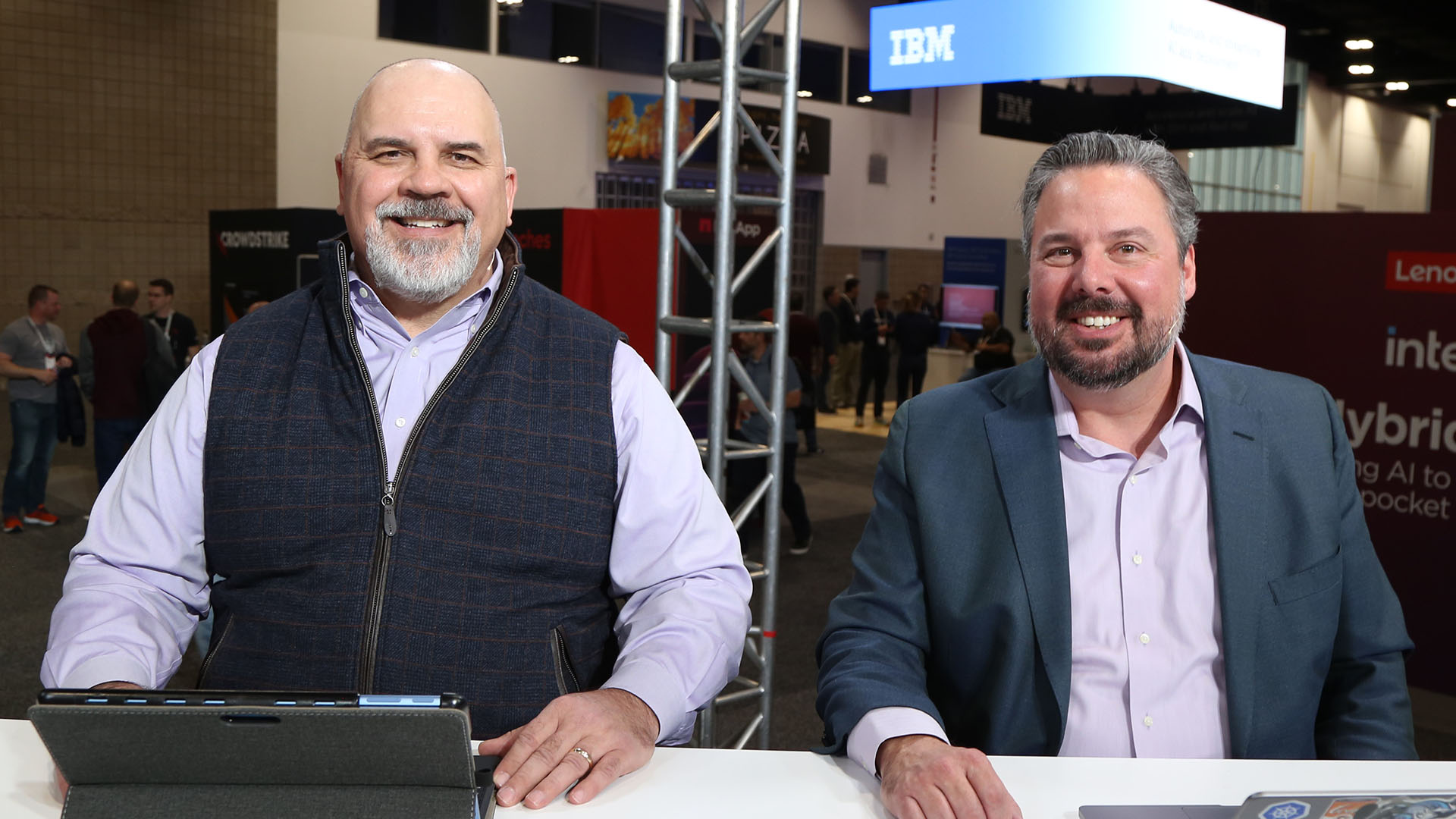
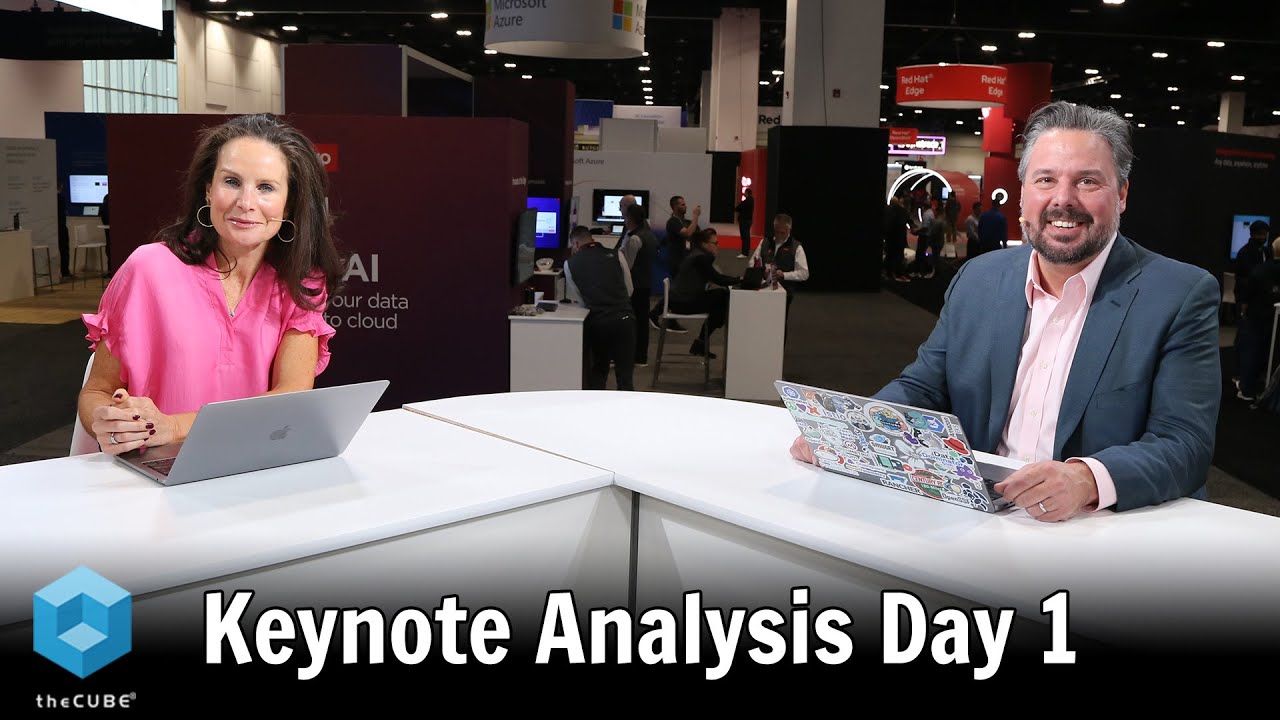
>> Hello, and welcome back to Red Hat Summit in AnsibleFest here in sunny, brisk, breezy Denver. This is really where we're going to bring it home. We're doing an analyst angle. And I'm joined by Bob Laliberte, our principal analyst with theCUBEResearch, and it's so great to have you on board and have you here. I mean, you've been going through the analyst track all week, and you've been able to talk with a lot of the executives, some of the same people we had on board. So I thought it'd be great for us to really get your insights and see what you were seeing, and then we'll kind of join back with what we've been hearing all week as well.
Bob Laliberte
>> Yeah, that sounds great, Rob. Thanks. And it's been a great week. And I think the overall takeaway, which shouldn't be a surprise to anyone, is that the topics were really around AI. It started with AI and continued on with AI throughout. So the difference is though, it's not just any kind of proprietary AI, the real focus here is on open-source AI and how that can really enable change in an organization and how it can foster transformation, modernization. Those are a lot of big topics. I think one of the other things that impressed me from a high level was the real commitment to that open partnership model and having ecosystems. And not just ecosystems from like, hey, we've got a couple of partners, they've actually defined their ecosystem as having partners along each stage of the journey and where not just one or two, but multiple partners can play to form the appropriate solution for the customer. So giving them a lot of open, a lot of choice for all that and then trying to drive that transformation. Certainly, other topic modernization was important. A lot of people, migration was important. So there's a lot of interest in OpenShift Virt, for example, right now, and how do organizations move to that. But the overall impression I got was that Red Hat was really trying to democratize AI for the enterprises and drive that AI and model tuning and things like that on-premises with some of their announcements.>> Yeah. I think, again, we were hearing similar things. We had similar people here as well, but I think some of the other things that I was struck by was that the fact that they were trying to lay out a roadmap to AI. And I think it wasn't just about AI in their products, which we will get into in a second. But I think that from a perspective of how you go from one product to another product and how it's a journey with AI. And it's not just about the destination. It's about how you get there, how you do the fine-tuning, how you're really going to look at securing it longer term, which we had a little bit. And I think yesterday, we actually had a really good conversation about the sustainability and sustainable IT aspect of it as well, which I thought was key. What were some of the key announcements that you thought were top of mind?
Bob Laliberte
>> Yeah, there were a bunch of them. I've even put a list together because I don't know if I'm going to remember them all off the top of my head. But certainly, some of the big ones, you had the Red Hat OpenShift AI with the in InstructLab and Podman being part of that, so trying to help organizations bring that back on-premises. Red Hat Enterprise Linux AI that included the Granite, getting that open-source, that was a big shift that I think a lot of people recognized and were appreciative of. I saw some other interesting things about it made people remember Lightspeed and helping to drive a lot of that with Ansible last year. Now they're going to be extending that to both Red Hat Enterprise Linux and OpenShift. And another one that I saw and I liked was the policy as a code for Ansible, so really enabling organizations to put some guardrails around what happens from an event and how things to make sure that you stay on track with them, especially for mission-critical applications. So there was a lot of great product announcements, but like you said... You're right. The key overall was this is a journey, and there's no one product that's going to be a destination. That was evident in their partner ecosystems about how do we help accelerate the journey. And again, a lot of things were around how do we drive better business outcomes. So it wasn't just about technology for technology's sake. And I would say the most common thing that I heard, especially from customers, was probably around how do I accelerate that time to market? How do I improve my developer productivity leveraging AI so that I can better service my customers and deliver better experiences?>> We heard some similar things, and I think, also, the RHEL image mode, which was very interesting, I think, from a security perspective and hey, why not be able to just add the pieces you need on top of an attestation? That's the wrong word. But a known, good gold copy of that image and things of that nature as well.
Bob Laliberte
>> And taking that not just in your on-premises environment but being able to extend that across your public cloud and multiple public cloud environments. And that's what's helping to drive some of that, not only the operational efficiency, but also improve business continuity or disaster recovery even, that portability of the applications, that continuity of having those modern applications on that common platform across both your on-premises data centers and your public cloud.>> And they even had Salesforce on stage talking about how they were moving from CentOS to RHEL 9 and that they were actually using image mode because, again, they wanted to get out of the building their own images, RPM-type, bringing all the RPMs together. And I think when we were talking about it... In fact, Rebecca and I were talking to Darren who heads up security for all of the software internally, and when you started to look at the cognitive load of doing these things, it makes so much sense. And I think that also ties into where they're bringing Lightspeed to RHEL and to OpenShift helps with that cognitive load. So somebody can go from being an amateur at some of these things... I mean, again, I started my life as a Unix admin and Linux admin back in the day and a DBA, and the cognitive load if you went between different pieces was just so hard. And I think that was key.
Bob Laliberte
>> Yeah. For the developers and then certainly even from the operational side eliminating that swivel chair management, being able to have tight, cohesive, integrated solutions that they can drive some operational efficiencies from are going to be super important. It was interesting. I did get to hear from a number of customers, which was really cool. Some of the things that they were able to share I thought were worth repeating. One of them got up on stage and just said, "Okay, let me just tell you right from the get-go the most important thing you can do is get your cultural side first. Make sure you focus on that so that you get everyone on board with sharing information." Because again, it's an ecosystem. It's going across multiple different domains, different areas. So making sure that you're doing that, I think, is super important. It was interesting to hear from organizations that were further along in the journey and had built out an AI model. And it was interesting because I think they'd only reached a 3% efficacy rate, which you would think isn't great, but this person was super excited because they're on the journey, they're understanding, they're learning. They know, hey, we need to add more automation to this, we're going to improve that. But the overall theme was just get started. It's going to take time, so just get started, make sure you're leveraging automation to do all of these things. The other big piece that was coming clear with some of these modernization aspects of it was that OpenShift platform to provide the portability of those applications across the on-premise data centers into the multiple public clouds.>> I think that was another big key that I saw as well was we've been talking about OpenShift Virt and KubeVirt underneath, which is the upstream for probably almost two years now. And I was trying to think back to when I first started talking to it. And I think that, to me, with the hybrid cloud nature and where people are looking to simplify their licensing in some cases, again, I think much like Salesforce was moving from CentOS, that was a pivotal point where they could have gone to another distribution. But I think what Red Hat has talked about this week is they've actually made it really simple to go from CentOS to RHEL 9, and they've had these migration tool sets that are in there while they keep the open nature of what they do as well.
Bob Laliberte
>> Absolutely. And the partners to help accelerate that journey for them if the users don't have the time or the expertise to execute it.>> Yeah, I think, again, as we've been talking and I've been thinking back to some of the research that we have with ETR and how we've been seeing that, really, there's only 20% of organizations that they polled that aren't doing something with gen AI. Now a lot aren't in production yet, but I think 80% are still figuring out which use case makes sense. But it looked like, again, it's going to be a hybrid world when it comes to AI. What were you hearing from some of the other customers about how they're trying to put workloads in the right place?
Bob Laliberte
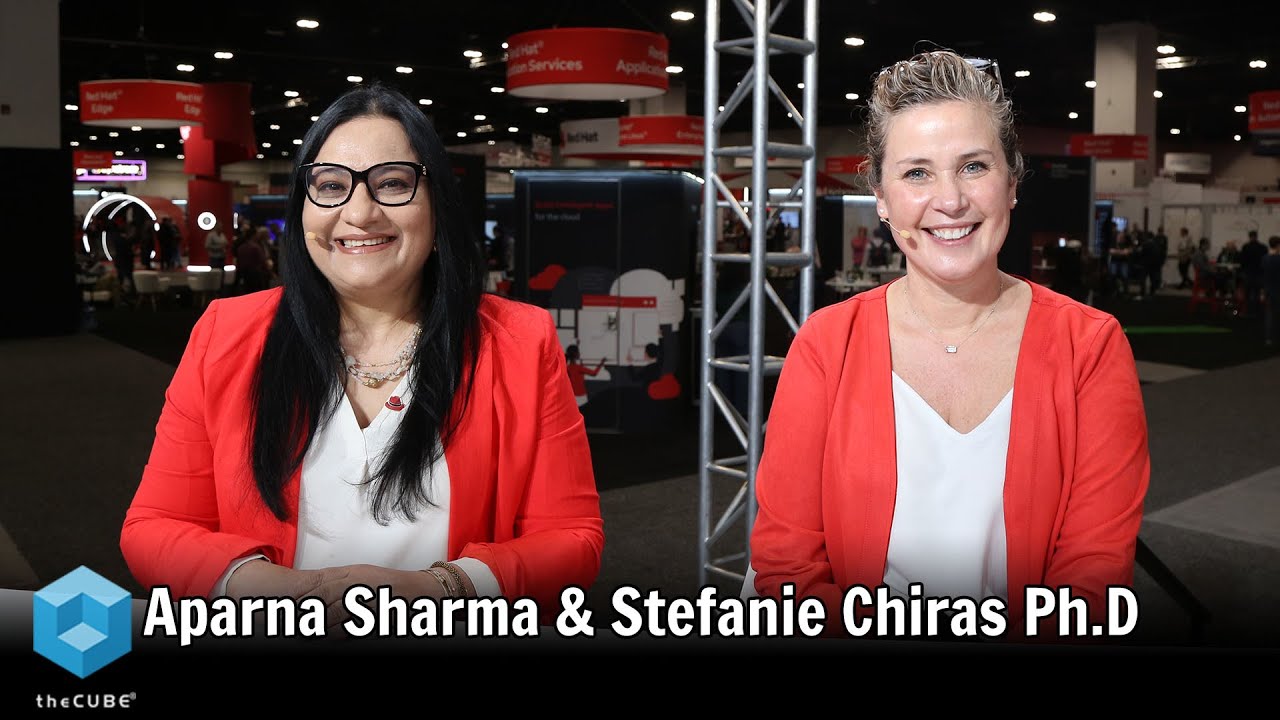
>> Yeah, I think that's an ongoing challenge for organizations. And again, they're all trying to figure it out. And that's why, I think, while it's great to try and figure it out, I think leveraging the partner ecosystem is definitely going to be the way to go. We heard earlier from Aparna, from IBM Consulting talking about starting with what's the end state? So again, this isn't all technology for technology's sake, it's what are you trying to accomplish? How are you going to do that? And then making sure that you've got help so that you can overcome those hurdles that others have seen before. So I think to me, that the key to adopting a lot of this technology is if you don't have that expertise, make sure you understand that, make sure you seek out partners that give you the ability to accelerate that journey. Because I think one of the other interesting pieces she had made was that cloud was an equalizer, but gen AI is going to be a differentiator. So if you can get gen AI right, it means it's really going to be a differentiator for you.>> And I think, again, I actually went over to take the InstructLab lab. The line was enormous, and I think that's one of the things that I've always loved about this show in particular is people are coming and learning so much. They have so many demos, so many places you can go and actually get your hands dirty on the tech. And I think that the actual openness, in fact, a lot of the people we had on board this week weren't even talking about Red Hat products. We talked about Conveyor, which is an open-source project that Red Hat is actually supporting and actually IBM as well, that actually helps in those migrations. And I think that was a big theme is how do you use the community? And it may not necessarily be a commercial product. What were you hearing from the execs as well as you were going through the analyst track as well?
Bob Laliberte
>> Yeah. Like I said, everyone from Matt to Chris and the others, Ashesh, they were all focused on how to help the organizations first and foremost. And the community was a huge part of that, like you said. So coming together, learning from others, being open about stuff, about the technology, about how to move from one thing to another was really on the forefront. They had a slogan that they put up multiple times. It said, "Customer first, partner always." And so it really shows their dedication to helping organizations get the right fit regardless of what that solution might be. Like I said, when you look across their partner ecosystem, they also have a partner ecosystem database of all the solutions that were ever created. So if you're thinking about doing something, you can go there and look and say, "Hey, this has already been done before. So how do I learn from those who have gone before me and be able to then accelerate my transition?">> And I think you mentioned this up front on one of the things that Matt was also talking about when we had him on, and it was very interesting. His reflections on where we are and how he feels with gen AI and with AI in general, we're basically at the beginnings of Linux. Again, it feels like that kind of energy around AI, especially where they were able to get IBM to open-source Granite and the Code Assistant, which I think is huge. Because I think when you look at their ethos of open and how they live that ethos, I think it's really compelling for them as well.
Bob Laliberte
>> Yeah, absolutely. Like I said, right out of the gate and all the way through the show, they just kept re-emphasizing all those points.>> Yeah. No, this has been great. Any closing thoughts that you want to throw out there?
Bob Laliberte
>> I think, like I said, for me, coming back after last year, it's great to see all the progress, the continued innovation. And I think that's one of the most important things for organizations out there to think about and understand is that what we're seeing overall is that that pace of innovation is accelerating. So more and more is happening. You talked about the ability to InstructLab from paper, from concept to product in 10 to 12 weeks, and we're seeing more and more of that. So it's really going to be important for organizations to stay on top, whether they're leveraging their partners or not, but stay on top of what technologies are coming out and how those might be able to be leveraged to deliver better business outcomes.>> Yeah, I totally agree. And I think it's starting with the outcome and what the takeaway is, and I think also giving people that path to AI as well was a big piece of it. From Podman on your laptop to RHEL AI on a server with everything built in with InstructLab in there and then moving on to OpenShift and being able to do it at scale, I think they really had a very clear, consistent thread that went throughout the week that was super powerful. Well, thanks for joining me to do this wrap-up. I really appreciate it, Bob.
Bob Laliberte
>> You're welcome. Thank you.>> And again, color coordinated as well, so we're on brand. And thank you for watching this entire three days of theCUBE's Red Hat Summit or Red Hot Red Hat Summit as we were saying earlier in the week in AnsibleFest. We're coming to you live from Denver for the last time, saying go and watch those. If you missed any of them, they're up on the site. Have fun. Enjoy. Thank you for watching theCUBE, the leader in tech information, news and analysis.
>> Hello, and welcome back to Red Hat Summit in AnsibleFest here in sunny, brisk, breezy Denver. This is really where we're going to bring it home. We're doing an analyst angle. And I'm joined by Bob Laliberte, our principal analyst with theCUBEResearch, and it's so great to have you on board and have you here. I mean, you've been going through the analyst track all week, and you've been able to talk with a lot of the executives, some of the same people we had on board. So I thought it'd be great for us to really get your insights and see what you were seeing, and then we'll kind of join back with what we've been hearing all week as well.
Bob Laliberte
>> Yeah, that sounds great, Rob. Thanks. And it's been a great week. And I think the overall takeaway, which shouldn't be a surprise to anyone, is that the topics were really around AI. It started with AI and continued on with AI throughout. So the difference is though, it's not just any kind of proprietary AI, the real focus here is on open-source AI and how that can really enable change in an organization and how it can foster transformation, modernization. Those are a lot of big topics. I think one of the other things that impressed me from a high level was the real commitment to that open partnership model and having ecosystems. And not just ecosystems from like, hey, we've got a couple of partners, they've actually defined their ecosystem as having partners along each stage of the journey and where not just one or two, but multiple partners can play to form the appropriate solution for the customer. So giving them a lot of open, a lot of choice for all that and then trying to drive that transformation. Certainly, other topic modernization was important. A lot of people, migration was important. So there's a lot of interest in OpenShift Virt, for example, right now, and how do organizations move to that. But the overall impression I got was that Red Hat was really trying to democratize AI for the enterprises and drive that AI and model tuning and things like that on-premises with some of their announcements.>> Yeah. I think, again, we were hearing similar things. We had similar people here as well, but I think some of the other things that I was struck by was that the fact that they were trying to lay out a roadmap to AI. And I think it wasn't just about AI in their products, which we will get into in a second. But I think that from a perspective of how you go from one product to another product and how it's a journey with AI. And it's not just about the destination. It's about how you get there, how you do the fine-tuning, how you're really going to look at securing it longer term, which we had a little bit. And I think yesterday, we actually had a really good conversation about the sustainability and sustainable IT aspect of it as well, which I thought was key. What were some of the key announcements that you thought were top of mind?
Bob Laliberte
>> Yeah, there were a bunch of them. I've even put a list together because I don't know if I'm going to remember them all off the top of my head. But certainly, some of the big ones, you had the Red Hat OpenShift AI with the in InstructLab and Podman being part of that, so trying to help organizations bring that back on-premises. Red Hat Enterprise Linux AI that included the Granite, getting that open-source, that was a big shift that I think a lot of people recognized and were appreciative of. I saw some other interesting things about it made people remember Lightspeed and helping to drive a lot of that with Ansible last year. Now they're going to be extending that to both Red Hat Enterprise Linux and OpenShift. And another one that I saw and I liked was the policy as a code for Ansible, so really enabling organizations to put some guardrails around what happens from an event and how things to make sure that you stay on track with them, especially for mission-critical applications. So there was a lot of great product announcements, but like you said... You're right. The key overall was this is a journey, and there's no one product that's going to be a destination. That was evident in their partner ecosystems about how do we help accelerate the journey. And again, a lot of things were around how do we drive better business outcomes. So it wasn't just about technology for technology's sake. And I would say the most common thing that I heard, especially from customers, was probably around how do I accelerate that time to market? How do I improve my developer productivity leveraging AI so that I can better service my customers and deliver better experiences?>> We heard some similar things, and I think, also, the RHEL image mode, which was very interesting, I think, from a security perspective and hey, why not be able to just add the pieces you need on top of an attestation? That's the wrong word. But a known, good gold copy of that image and things of that nature as well.
Bob Laliberte
>> And taking that not just in your on-premises environment but being able to extend that across your public cloud and multiple public cloud environments. And that's what's helping to drive some of that, not only the operational efficiency, but also improve business continuity or disaster recovery even, that portability of the applications, that continuity of having those modern applications on that common platform across both your on-premises data centers and your public cloud.>> And they even had Salesforce on stage talking about how they were moving from CentOS to RHEL 9 and that they were actually using image mode because, again, they wanted to get out of the building their own images, RPM-type, bringing all the RPMs together. And I think when we were talking about it... In fact, Rebecca and I were talking to Darren who heads up security for all of the software internally, and when you started to look at the cognitive load of doing these things, it makes so much sense. And I think that also ties into where they're bringing Lightspeed to RHEL and to OpenShift helps with that cognitive load. So somebody can go from being an amateur at some of these things... I mean, again, I started my life as a Unix admin and Linux admin back in the day and a DBA, and the cognitive load if you went between different pieces was just so hard. And I think that was key.
Bob Laliberte
>> Yeah. For the developers and then certainly even from the operational side eliminating that swivel chair management, being able to have tight, cohesive, integrated solutions that they can drive some operational efficiencies from are going to be super important. It was interesting. I did get to hear from a number of customers, which was really cool. Some of the things that they were able to share I thought were worth repeating. One of them got up on stage and just said, "Okay, let me just tell you right from the get-go the most important thing you can do is get your cultural side first. Make sure you focus on that so that you get everyone on board with sharing information." Because again, it's an ecosystem. It's going across multiple different domains, different areas. So making sure that you're doing that, I think, is super important. It was interesting to hear from organizations that were further along in the journey and had built out an AI model. And it was interesting because I think they'd only reached a 3% efficacy rate, which you would think isn't great, but this person was super excited because they're on the journey, they're understanding, they're learning. They know, hey, we need to add more automation to this, we're going to improve that. But the overall theme was just get started. It's going to take time, so just get started, make sure you're leveraging automation to do all of these things. The other big piece that was coming clear with some of these modernization aspects of it was that OpenShift platform to provide the portability of those applications across the on-premise data centers into the multiple public clouds.>> I think that was another big key that I saw as well was we've been talking about OpenShift Virt and KubeVirt underneath, which is the upstream for probably almost two years now. And I was trying to think back to when I first started talking to it. And I think that, to me, with the hybrid cloud nature and where people are looking to simplify their licensing in some cases, again, I think much like Salesforce was moving from CentOS, that was a pivotal point where they could have gone to another distribution. But I think what Red Hat has talked about this week is they've actually made it really simple to go from CentOS to RHEL 9, and they've had these migration tool sets that are in there while they keep the open nature of what they do as well.
Bob Laliberte
>> Absolutely. And the partners to help accelerate that journey for them if the users don't have the time or the expertise to execute it.>> Yeah, I think, again, as we've been talking and I've been thinking back to some of the research that we have with ETR and how we've been seeing that, really, there's only 20% of organizations that they polled that aren't doing something with gen AI. Now a lot aren't in production yet, but I think 80% are still figuring out which use case makes sense. But it looked like, again, it's going to be a hybrid world when it comes to AI. What were you hearing from some of the other customers about how they're trying to put workloads in the right place?
Bob Laliberte
>> Yeah, I think that's an ongoing challenge for organizations. And again, they're all trying to figure it out. And that's why, I think, while it's great to try and figure it out, I think leveraging the partner ecosystem is definitely going to be the way to go. We heard earlier from Aparna, from IBM Consulting talking about starting with what's the end state? So again, this isn't all technology for technology's sake, it's what are you trying to accomplish? How are you going to do that? And then making sure that you've got help so that you can overcome those hurdles that others have seen before. So I think to me, that the key to adopting a lot of this technology is if you don't have that expertise, make sure you understand that, make sure you seek out partners that give you the ability to accelerate that journey. Because I think one of the other interesting pieces she had made was that cloud was an equalizer, but gen AI is going to be a differentiator. So if you can get gen AI right, it means it's really going to be a differentiator for you.>> And I think, again, I actually went over to take the InstructLab lab. The line was enormous, and I think that's one of the things that I've always loved about this show in particular is people are coming and learning so much. They have so many demos, so many places you can go and actually get your hands dirty on the tech. And I think that the actual openness, in fact, a lot of the people we had on board this week weren't even talking about Red Hat products. We talked about Conveyor, which is an open-source project that Red Hat is actually supporting and actually IBM as well, that actually helps in those migrations. And I think that was a big theme is how do you use the community? And it may not necessarily be a commercial product. What were you hearing from the execs as well as you were going through the analyst track as well?
Bob Laliberte
>> Yeah. Like I said, everyone from Matt to Chris and the others, Ashesh, they were all focused on how to help the organizations first and foremost. And the community was a huge part of that, like you said. So coming together, learning from others, being open about stuff, about the technology, about how to move from one thing to another was really on the forefront. They had a slogan that they put up multiple times. It said, "Customer first, partner always." And so it really shows their dedication to helping organizations get the right fit regardless of what that solution might be. Like I said, when you look across their partner ecosystem, they also have a partner ecosystem database of all the solutions that were ever created. So if you're thinking about doing something, you can go there and look and say, "Hey, this has already been done before. So how do I learn from those who have gone before me and be able to then accelerate my transition?">> And I think you mentioned this up front on one of the things that Matt was also talking about when we had him on, and it was very interesting. His reflections on where we are and how he feels with gen AI and with AI in general, we're basically at the beginnings of Linux. Again, it feels like that kind of energy around AI, especially where they were able to get IBM to open-source Granite and the Code Assistant, which I think is huge. Because I think when you look at their ethos of open and how they live that ethos, I think it's really compelling for them as well.
Bob Laliberte
>> Yeah, absolutely. Like I said, right out of the gate and all the way through the show, they just kept re-emphasizing all those points.>> Yeah. No, this has been great. Any closing thoughts that you want to throw out there?
Bob Laliberte
>> I think, like I said, for me, coming back after last year, it's great to see all the progress, the continued innovation. And I think that's one of the most important things for organizations out there to think about and understand is that what we're seeing overall is that that pace of innovation is accelerating. So more and more is happening. You talked about the ability to InstructLab from paper, from concept to product in 10 to 12 weeks, and we're seeing more and more of that. So it's really going to be important for organizations to stay on top, whether they're leveraging their partners or not, but stay on top of what technologies are coming out and how those might be able to be leveraged to deliver better business outcomes.>> Yeah, I totally agree. And I think it's starting with the outcome and what the takeaway is, and I think also giving people that path to AI as well was a big piece of it. From Podman on your laptop to RHEL AI on a server with everything built in with InstructLab in there and then moving on to OpenShift and being able to do it at scale, I think they really had a very clear, consistent thread that went throughout the week that was super powerful. Well, thanks for joining me to do this wrap-up. I really appreciate it, Bob.
Bob Laliberte
>> You're welcome. Thank you.>> And again, color coordinated as well, so we're on brand. And thank you for watching this entire three days of theCUBE's Red Hat Summit or Red Hot Red Hat Summit as we were saying earlier in the week in AnsibleFest. We're coming to you live from Denver for the last time, saying go and watch those. If you missed any of them, they're up on the site. Have fun. Enjoy. Thank you for watching theCUBE, the leader in tech information, news and analysis.