We just sent you a verification email. Please verify your account to gain access to
Red Hat Summit 2026. If you don’t think you received an email check your
spam folder.
In order to sign in, enter the email address you used to registered for the event. Once completed, you will receive an email with a verification link. Open the link to automatically sign into the site.
Register for Red Hat Summit 2026
Please fill out the information below. You will receive an email with a verification link confirming your registration. Click the link to automatically sign into the site.
You’re almost there!
We just sent you a verification email. Please click the verification button in the email. Once your email address is verified, you will have full access to all event content for Red Hat Summit 2026.
I want my badge and interests to be visible to all attendees.
Checking this box will display your presense on the attendees list, view your profile and allow other attendees to contact you via 1-1 chat. Read the Privacy Policy. At any time, you can choose to disable this preference.
Select your Interests!
add
Upload your photo
Uploading..
OR
Connect via Twitter
Connect via Linkedin
EDIT PASSWORD
Share
Forgot Password
Almost there!
We just sent you a verification email. Please verify your account to gain access to
Red Hat Summit 2026. If you don’t think you received an email check your
spam folder.
In order to sign in, enter the email address you used to registered for the event. Once completed, you will receive an email with a verification link. Open the link to automatically sign into the site.
Sign in to gain access to Red Hat Summit 2026
Please sign in with LinkedIn to continue to Red Hat Summit 2026. Signing in with LinkedIn ensures a professional environment.
VP of Sales - Private Modern CloudOptions Technology
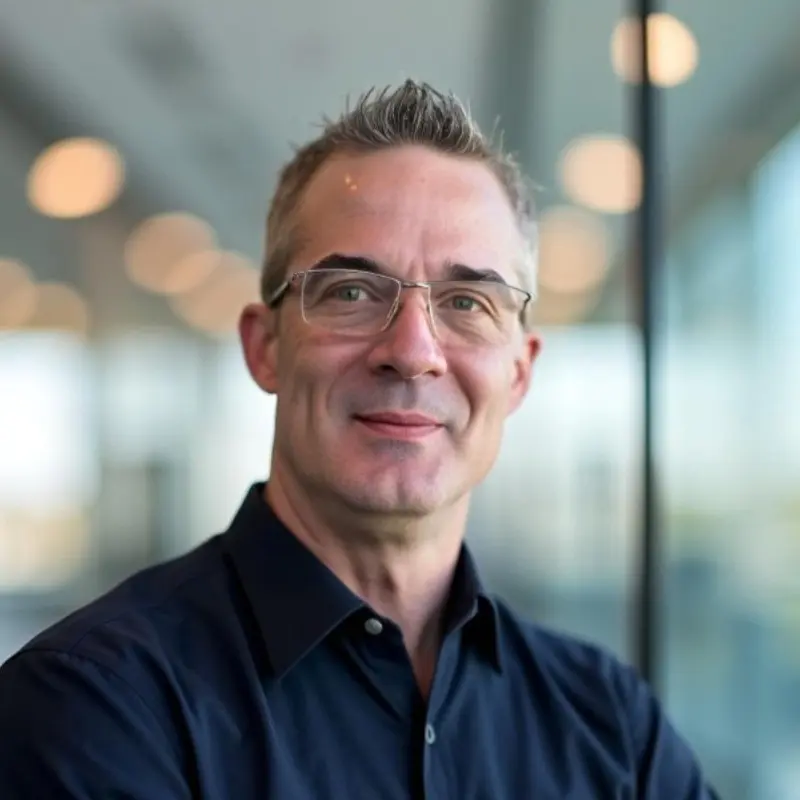
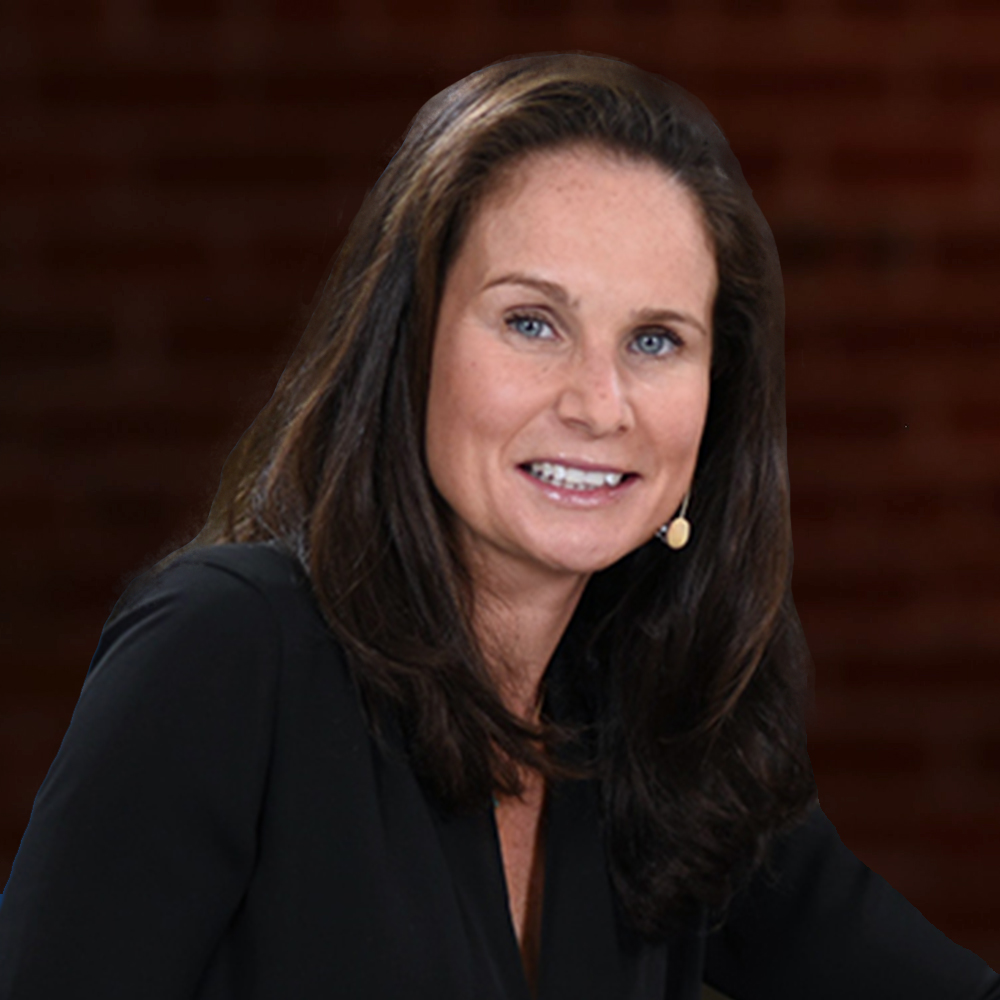
In this interview from Red Hat Summit 2026, Todd Millard, vice president of sales of modern private cloud at Options Technology Ltd., joins theCUBE's Rebecca Knight to discuss how financial services firms are navigating the convergence of legacy infrastructure pressure, AI demands and regulatory complexity. Millard explains how the recent Crossvale acquisition combined deep Red Hat and OpenShift containerization expertise with Options' FSI infrastructure managed services, delivering a full-stack offering from bare metal to the application layer. He describes ...Read more
exploreKeep Exploring
How did the transition go after Crossvale was acquired by Options earlier this year, and what does the combined company's story and offering look like?add
How can organizations simplify their virtualization strategy and cut infrastructure costs—particularly for legacy Java applications—and what role do platforms like OpenShift and Quarkus play in that transition?add
When customers face VMware repricing at renewal, what conversations should be had and how can Options help them plan and execute the migration to avoid high costs and business disruption?add
>> Hello everyone and welcome back to theCUBE's live coverage of the Red Hat Summit here in Atlanta. I'm your host, Rebecca Knight. I would like to welcome to the show Todd Millard. He is VP of sales, modern private cloud, Options Technology. Thanks so much for coming on the show, Todd.
Todd Millard
>> Thank you so much. I appreciate you inviting me.
Rebecca Knight
>> Yeah. So you just came to Options through the Crossvale acquisition that happened earlier this year. Talk a little bit about the transition and about the combined story and what it looks like.
Todd Millard
>> Very good. Thank you so much. Yeah, it's really amazing. The culture at Options is exactly what we were looking for. Crossvale's been in the Red Hat ecosystem for many, many years focusing on containerization and OpenShift and we built a managed service around that and Options has been in the FSI market doing a managed service around the infrastructure. So when you put the two of us together, now we have the platform all the way down to the metal and it's an amazing experience now for the customers. So they get the full stack all the way up into the application stack. So now, we can help the customers get everything they need in containers and modernize today.
Rebecca Knight
>> So you have spent over a decade helping financial services companies get off of their legacy infrastructure. I'm curious about your perspective now as a veteran of this industry from where you sit today, does this moment feel different to you or does it feel like business as usual or does this AI revolution feel like a real change?
Todd Millard
>> No, it is moving fast. It is really amazing. What the IT leadership has to deal with today on all the different factors that are happening today. If you think about stuff like with VMware and the cost of DRAM pricing, you have the cost of AI infrastructure, even public cloud repatriation, all of these factors all happening at once. People are really having problems trying to figure out how to solve this problem.
Rebecca Knight
>> There's a lot of headaches out there and you mentioned them, DRAM prices, Broadcom, VMware, repricing, cloud repatriation, AI infrastructure build out. When you are talking to CIOs today, how are they sleeping at night, first of all, but how are they thinking about these problems? Are they trying to tackle them one by one or are they thinking about them holistically?
Todd Millard
>> Yeah. And I think a lot of them are trying to figure out how to solve this. They're getting into kind of an analysis paralysis. Last year we walked into the year last year thinking this is going to be just a phenomenally huge year on the virtualization side. And we saw a lot of companies that were kicking tires, trying to figure things out and resigning their VMware contracts to be able to go, "I have to figure out what's the best thing that I can do." So I think as we move further into 2026 and as we're moving through 2027, there's a lot more decisions that are being made where people are actually making the move. They're seeing that there are great options out there such as OpenShift virtualization and OpenShift container platform as one place that they can run their containers, their VMs and their AI all in one spot. And that's what we're seeing is people starting to make that shift over in droves and we're seeing it in the numbers with OpenShift as well.
Rebecca Knight
>> And so it should be more of a single answer to the problem is what you're saying?
Todd Millard
>> Yes. Yeah. I mean, when you take a look at the issues that are going on, you have not only these issues related to you have a VMware cost increase, you also have the cost of the DRAM price. This is all very focused around what the cost of infrastructure is. But if you just take a look at things related to like how you're architecting a legacy Java app and you're running this Java app on old JDK, running it in VMware and if you were to move that app onto OpenShift and you move that into Quarkus, which we're the only app platform Red Hat specialized partner globally because we've been working on Quarkus for the last five years, you move that into Quarkus and now you drop the cores you need in half. You drop the memory footprint 10 times, maybe 40 times. And when DRAM pricing is the price that it is today and you have all these other, now you're taking hundreds of thousands of dollars expenses out of this one app that may have cost you several hundred thousand to run and now it can cost you 20,000 when architected right and running on Options modern cloud.
Rebecca Knight
>> Another challenge that the companies are having right now are regulatory challenges. Talk a little bit about DORA, how it's affecting your customers and how they're approaching it.
Todd Millard
>> Yeah, definitely. Regulations is one of the biggest issues that our customers in financial services are having to deal with when it comes to making this change. Like we talked about like, "What are they thinking about?" Well, nobody's sitting there thinking, "I want to stay on my old legacy platform." But what happens is they have these regulations that they built their entire platform around and they have to figure out how do I modernize and I move over to this new platform, but I have to stay within regulations. I have all this compliance I have to deal with. And DORA forcing sovereignty is another major issue. This is a problem for AI. This is a problem for even just running your containers, having to have your infrastructure have that sovereignty built into it. So it is very important that the CIOs understand how do I make that move and how do I solve the regulations over on this side? And that's one thing that Options Modern Cloud does. We realized that someone wants containers, AI and VMs all to run on one platform. They want the compliance guaranteed and taken care of. And we do that in the stack where we guarantee that compliance. And they also want price predictability. This is why we're seeing so much change on the side where people are coming from public cloud is because egress costs, they don't understand exactly what the costs are going to be. Price predictability is a huge aspect of this.
Rebecca Knight
>> Sovereign AI, you mentioned that. That is now a board level conversation. What are the questions that you're hearing boards asking that they weren't say even a year ago?
Todd Millard
>> Yeah. And AI, the questions are all over the place because you've got people in so many different segments of what they're trying to solve for.
Rebecca Knight
>> And the majority too.
Todd Millard
>> Yeah. And it's really hard to even narrow that down into just saying like, "Hey, what are the CIOs asking for?" I think a lot of people right now, a lot of the CIOs are just trying to figure out where's the business value. I need to understand the business value. And when I architect it, can we understand that business value and architect it in a space where we're going to have that sovereignty and we're also going to have lowered risk and the compliance built in. And that is super important because the business value is one thing, but if you have chaos over on this side, it's impossible for them to go get that business value. So sovereign AI is super important, especially when you think about like people going to public cloud and their data, maybe not stay exactly where they want their data. This is what Options Modern Cloud does. We offer on private mind sovereign AI for our financial services clients to be able to solve that problem for them.
Rebecca Knight
>> So speaking of chaos, you have called the VMware repricing the biggest forced modernization event in a decade. When a customer is facing this kind of renewal, what are the conversations that you're having and how are you at Options trying to help them think through how to approach it?
Todd Millard
>> Yeah. The biggest issue when it comes to that is really the fear over the migration. So it's like again, they go, "I don't like this provider because of this economic thing that they did." Nobody's going, "I want to leave VMware because the platform's not good." It's great platform. Legacy platform has done great over the years, but it's all about how do I move this in a way that I'm going to be able to get the value out of that move and not spend a huge amount of money on this migration. And that's really where most of the uncertainty comes in. So the questions all come down to, yes, we actually have this platform that we can solve this problem for you, but it really comes down to how do I deal with that migration? And that's one thing that Options has solved for our customers with our... We have a factory migration team that takes care of that and we do this after hours and weekends as well so they don't have to do this while the banks are open, while FSI is conducting business, while the trading floor is still trading, this can happen after hours and weekends where we can help them through our factory migration team to solve that problem for them. So we're solving costs, we're solving compliance, we're solving one platform for them to do it all and then taking care of the migration for them in a way that makes it simple.
Rebecca Knight
>> Is there a temptation to just swap one hypervisor for another, would you say?
Todd Millard
>> Yeah, actually, I have a fun analogy that I use for this. I'll go into this analogy. We all used to love going to Netflix. I mean, I'm sorry, we all used to love going to Blockbuster and renting a video, right?
Rebecca Knight
>> Those date night. .
Todd Millard
>> Yeah. And you go out there, you rent the video. It's very manual. You have to go back, you have to return the video, you have to rewind the video, all of this stuff, but we loved it and that was just part of our experience. And then Netflix came out. So Netflix comes along as providing digital streaming. And at this point, we're still over here renting videos, but we also have this digital streaming over here and obviously this is the future. This is the way things are going to go. But what happens is now this, let's think of Blockbuster as VMware. It's the legacy way. OpenShift is Netflix. It's the new way or Kubernetes. It's the new way. This is the way you know you're going to be. So if you're upset with Blockbuster because they 3Xed your price on video rental, why are you trying to go to Hollywood video and open a new account? You're going to get the same experience.
Rebecca Knight
>> It's good analogy. It's good. Right.
Todd Millard
>> You should be looking at moving to digital streaming and changing that whole pattern instead of going, "I'm used to this. Let me find this other hypervisor."
Rebecca Knight
>> There is a narrative out there that cloud repatriation is wholesale, but you have a more nuanced view of this. What do you think is actually happening?
Todd Millard
>> And the reason why cloud repatriation, well, from a financial services aspect of this, a big part of this has to do with where their data is running. So you got that part of it that is the sovereignty issue that they have to deal with from public cloud. The other thing is the bill at the end of the month. If any of you guys out there have seen that bill, can you tell me what every single one of those charges are on that bill? It is almost impossible to understand exactly what that bill is and people want price predictability. They're looking at the cost of how much they need to run AI workloads, all of that compute, all that stuff going on and then sit there and go, "I don't even know how the cost is going to get out of control." So if they can put it into an environment where they have price predictability, but they get the performance and the sovereignty they need, it solves their problem much better than public cloud. And that's why we're seeing that repatriation.
Rebecca Knight
>> It's all about price predictability. What are the workloads that you see coming back most often and what are the common threads?
Todd Millard
>> So an interesting one that we see is people that are kind of frustrated with Oracle. So a lot of audits in Oracle, legacy database, you want to run AI, you need to be running your workloads over in containers. And we work with a partner EDB, that's EnterpriseDB Postgres that has a whole entire solution around solving getting people out of Oracle and moved over onto Postgres and you cut your database costs by, in most places, 60%. And then you also are moving over onto containers. So now, you actually have this data in a place that you can consume it with AI, use your AI workloads. It's those type of things where people aren't just going, "I'm looking at price." They're going, "How do I re-architect the technology so I can use the future stuff that I want to use and save money at the same time?"
Rebecca Knight
>> Well, I'm imagining a lot of customers' eyes lighting up right now. I mean, that is, I think you've talked a lot about the pain points of customers, the challenges that they're facing. When you are talking to them, what do they most need to hear from you about what you can do for them, would you say?
Todd Millard
>> The three things that we say we can do for them. One, re-platform you into a modern platform where you're going to get your VMs, your containers, and your AI all running in one platform. We are a managed service provider where we run the platform for them. They need no subject matter experts. We use CCSP Red Hat, which is a great method of being able to solve this so we even can manage the subscriptions for them, so, that. Second, compliance, you need a specialized provider that knows financial services. This is all we do is only financial services. We know how to solve the compliance on the platform wherever you're running it. And we're in 70 data centers globally in where all the market all the exchanges are happening, where the trades are happening as well as on the other side, price predictability. Those are the three things that we're bringing to the table to go, "I can solve this for you, the modernization. I can solve the compliance for you and I can solve price predictability."
Rebecca Knight
>> A year from now, what are the signals that would tell you that a financial services organization got this moment right? When we're here at Red Hat 2027, what will be that moment?
Todd Millard
>> Yeah. The vision is when you go up and you talk to anybody in financial services a year from now and you ask them, "Hey, what are your cloud options? What cloud do you run in?" And they take a look at you and go, "Well, there's four options. You got AWS, you got Azure, you got GCP and you got Options Modern Cloud." Because those are the four different options that are out there that everybody knows when it comes to financial services, Options Modern Cloud is specially designed for them." And they go, "We choose that because we know it's specialized just for us." That's what we want to be talking about on stage next year.
Rebecca Knight
>> That's ambitious, Todd. Great to have you on the show. Real pleasure.
Todd Millard
>> Very good. Thank you so much. I appreciate it.
Rebecca Knight
>> Thank you. I'm Rebecca Knight. Stay tuned for more of theCUBE's live coverage of the Red Hat Summit. Tomorrow, this is wrapping up day one. We'll be back here tomorrow with my co-host, Rob Strechay. You're watching theCUBE, the leader in enterprise tech news and analysis.