We just sent you a verification email. Please verify your account to gain access to
Red Hat Summit 2026. If you don’t think you received an email check your
spam folder.
In order to sign in, enter the email address you used to registered for the event. Once completed, you will receive an email with a verification link. Open the link to automatically sign into the site.
Register for Red Hat Summit 2026
Please fill out the information below. You will receive an email with a verification link confirming your registration. Click the link to automatically sign into the site.
You’re almost there!
We just sent you a verification email. Please click the verification button in the email. Once your email address is verified, you will have full access to all event content for Red Hat Summit 2026.
I want my badge and interests to be visible to all attendees.
Checking this box will display your presense on the attendees list, view your profile and allow other attendees to contact you via 1-1 chat. Read the Privacy Policy. At any time, you can choose to disable this preference.
Select your Interests!
add
Upload your photo
Uploading..
OR
Connect via Twitter
Connect via Linkedin
EDIT PASSWORD
Share
Forgot Password
Almost there!
We just sent you a verification email. Please verify your account to gain access to
Red Hat Summit 2026. If you don’t think you received an email check your
spam folder.
In order to sign in, enter the email address you used to registered for the event. Once completed, you will receive an email with a verification link. Open the link to automatically sign into the site.
Sign in to gain access to Red Hat Summit 2026
Please sign in with LinkedIn to continue to Red Hat Summit 2026. Signing in with LinkedIn ensures a professional environment.
play_circle_outlineRed Hat OpenShift for Secure Container Modernization and Hybrid Cloud Portability: Assessing App Stacks, Tech Debt, Refactor vs Lift-and-Shift
replyShare Clip
play_circle_outlineAdvisory-Led AI Assessments: Use-Case-Driven Model Selection for Measurable Business Outcomes
replyShare Clip
play_circle_outlineNTT DATA Grows 160 Global Data Centers, Prioritizing AI, Efficiency, Sustainability and ESG
replyShare Clip
play_circle_outlineBeyond GPTs: Winning Executive Buy-In and Organizational Change to Operationalize Agentic AI
VP Hybrid Infrastructure & AI Factory PlatformsNTT DATA
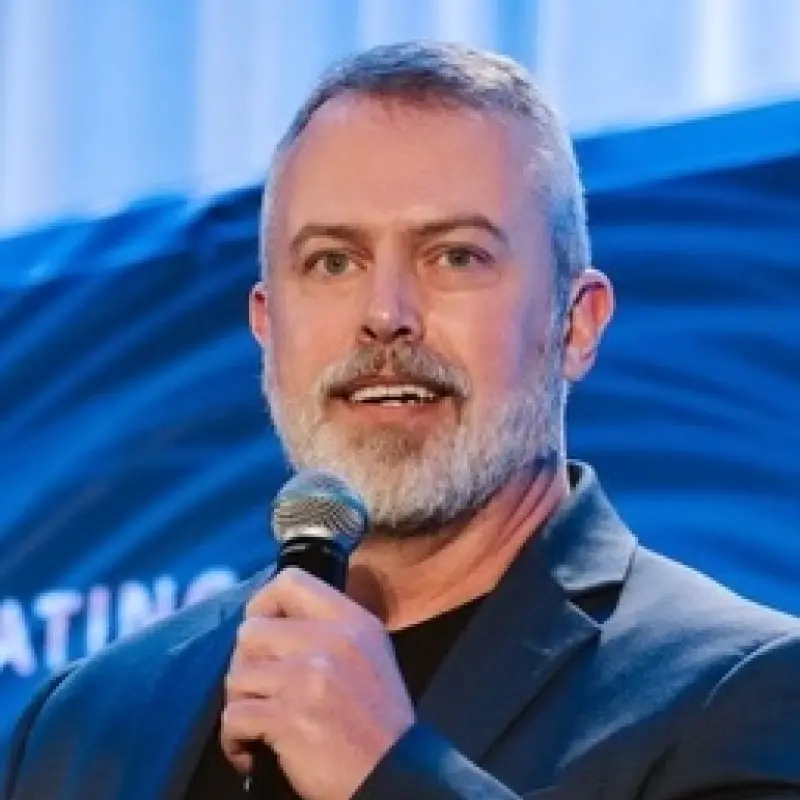
At Red Hat Summit 2026 Jeff Ehrenhart of NTT DATA discusses hybrid infrastructure, artificial intelligence AI factories and data center modernization. Ehrenhart outlines NTT DATA's strategy for securing agentic AI adoption, modernizing applications with OpenShift and building scalable infrastructure for AI-driven operations. They describe an advisory-first consulting approach that maps application stacks to business objectives to deliver measurable AI outcomes.
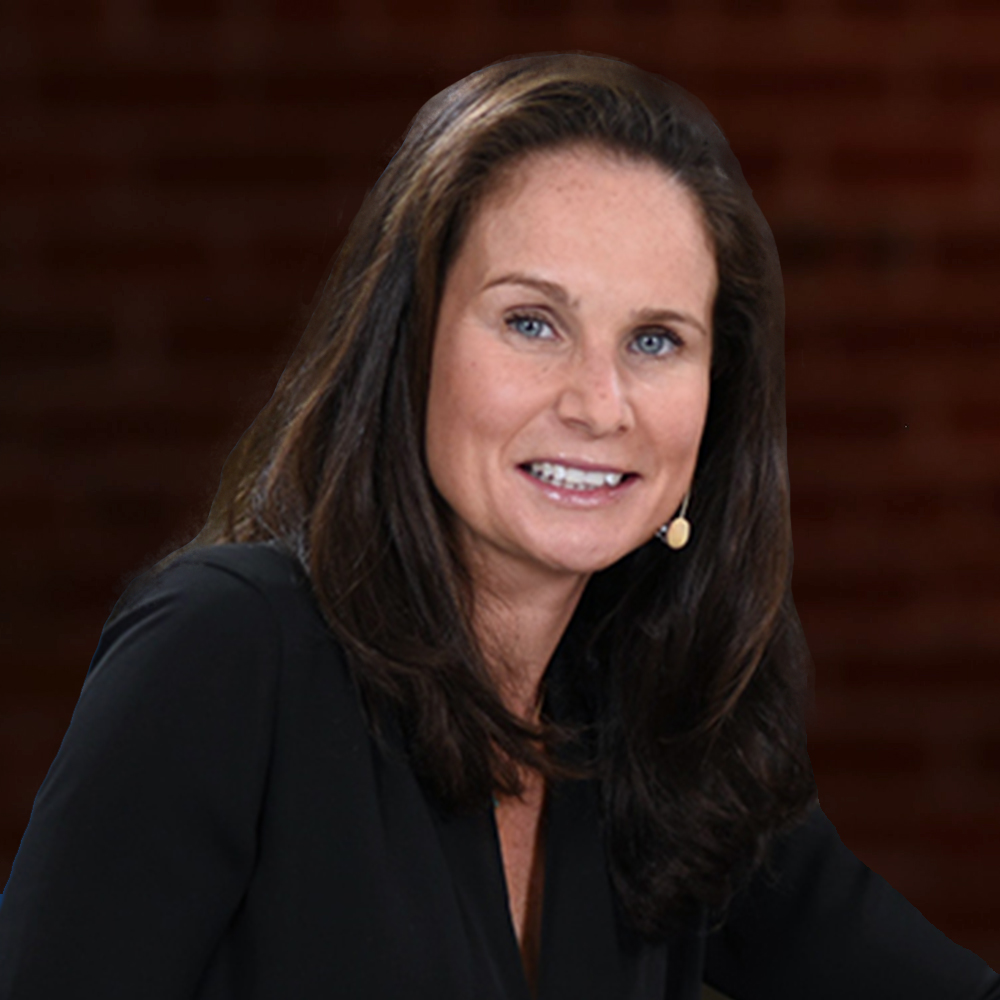
Hosts Rob Strechay and Rebecca Knight of theCUBE Research moderate a conversation that addre...Read more
exploreKeep Exploring
How should a provider assess and approach a customer's migration to containers/Kubernetes and hybrid cloud (and how can a platform like OpenShift help)?add
How do you begin consulting with a client to assess their technical environment, business use cases, and readiness, and then develop AI-driven solutions?add
What is NTT DATA's strategy for data center modernization and expansion—given its global footprint and ongoing construction of new (including AI-focused) facilities—and how does it address site selection, power/cooling/water needs, efficiency, and sustainability?add
At next year's Red Hat Summit, what progress would you like NTT DATA to have made?add
>> Good afternoon everyone and welcome back to day two of theCUBE's live coverage of the Red Hat Summit here at the Georgia World Congress in Atlanta. I'm your host, Rebecca Knight alongside Rob Strechay. We're in the afternoon stretch.
>> And we've got a terrific new guest to the show, Jeff Ehrenhart, VP Hybrid Infrastructure and AI Factory Platforms at NTT DATA. Welcome Jeff.
Jeff Ehrenhart
>> Thank you for having me. I really appreciate it.
Rebecca Knight
>> We're excited to have you here because NTT DATA sits at this really fascinating intersection where you see infrastructure trends at so many global organizations in many different industries.
Jeff Ehrenhart
>> Yes.
Rebecca Knight
>> We're going to be talking about all of that over the next 15 minutes, but first what is the conversation would you say? If you could encapsulate your interactions with customers into this one pain point that many of them are having, what is the conversation that you're having over and over again?
Jeff Ehrenhart
>> One pain point. I think there's a few. There's a few and we've probably heard this a lot on the broadcast thus far, but really there's a lot of conversation around security is paramount, especially as we get into the agentic era. That's the one thing in my opinion that's going to keep people from adopting agentic and really kind of turning it loose. The power of agentic is going to be to say not only with AIOps or something like that, "Okay, I've identified a root cause of an issue," but then trusting it enough to say, "Sure, go ahead and do that. Go ahead and make that change. I've trained you enough. I've given you enough information and I've made sure that you know what you're talking about. You're a CCIE level engineer and you're able now to then make those changes and I feel good about it. I'm going to be able to sleep at night turning you loose."
So I think we've got the security piece and I know on the last discussion we were talking about sovereignty and things like that. There's always the data security element of that too. When we say security, that's an all-encompassing statement. There's a lot of things that go into security and as everyone's heard, you have to be right every time where the hackers only have to be right once. So it's very, very critical to focus on that and have layers of that. But I think on the flip side of that, we also have outside of the security, we have the data gravity. And when we look at the adoption of AI, having organizations that truly understand where their data lives and what their data really is and what's in it and how am I going to clean it and how am I going to get it prepared to be able to be utilized in some AI model or AI agent process. That is where a lot of organizations hit kind of a full stop. They get started, they have a good idea. They're like, "We think we can make this work," but then the data is the stop on that. So I would say it's kind of two things. It's data and security and there's a lot of conversations around that and then it gets nuanced from there.
Rob Strechay
>> So what about the fact that there's just so many people who are looking to modernize as they go on this journey? How are you working with Red Hat and OpenShift around that modernization as people say, "Hey, I want to move to NTT and NTT data and I need to be able to move some of these apps as is and other ones I'm going to refactor, but I need to get efficiencies too>"
Jeff Ehrenhart
>> Absolutely. The biggest thing there I think is understanding where is the customer coming from, what is their tech debt, where are they at in their life cycle of what they already have. Once we kind of lay the groundwork there and we understand that, we definitely pivot during kind of a parallel work stream there to the application stack because we have to understand the application stack. Some applications will not port well to like a container without a lot of work, a lot of refactoring and things like that, or port into a public cloud for instance without a lot of refactoring. So those may be a non-starter right there. But ultimately what we're working towards with a lot of our clientele is that they don't want to get locked into long-term contracts and things like that, that certain organizations are trying to push towards and in doing so they're finally hitting that inflection point after all these years that they're finally going, "Okay, I will finally bite the bullet and I will finally make a change and maybe look at running containers or K8s for my infrastructure." And in doing so, what it does is it unlocks their ability to create that hybridity, a really seamless hybridity into and out of public cloud, onto the premise based solutions, but then it also gives them the ability they can still run their VMs, their hypervisors along with the containers. And it paves the road for the AI platforms because all the AI platforms are running on containers, not on hypervisors. So when we look at that, we've got that ability then to kind of pave that road for the foreseeable future for them once they make that jump and OpenShift gives us that ability to do that in a secure way.
Rebecca Knight
>> So NTT DATA is a company that is in the Magic Quadrant of GenAI implementation and consultation. Can you walk us through your engagements with customers? And I know that it really scans the gamut in terms of who you're working with, but talk a little bit about your approach and how you listen to customers and figure out what their needs are.
Jeff Ehrenhart
>> It all starts with consulting. So sometimes that is a informal consulting. So it doesn't necessarily have to be, okay, let's all get in a room with a whiteboard for six months and just torture each other for a while. Sometimes it's just having an informal conversation around, do you understand what your app stack is and how your applications interact, how your databases interact with the applications and those applications interact with the web front end? Just understanding the application stack and things like that, but that advisory piece is huge to understand that and that's where we will typically unveil where the gaps are, where the deltas are. If I sit down with a client and they say, "I don't really understand my application stack." It works. For the most part, it works, but I don't truly understand how this interacts with this and eventually I log into a webpage and bam, I can do my job. Sometimes that's a telltale sign that, okay, well, that's an area we need to dig into and that might become a six-month project. But same thing with the data gravity, understanding their security compliance requirements, things like that and their technical debt, all of that can be vetted out during the advisory status. And then from there, then we can actually move into starting to build a solution once we understand those pieces and what the business is trying to do. So when we approach a client around AI, we want to understand their tech debt and their background and then also getting into the business use cases of you're a manufacturing partner, what are you trying to do? Well, we want to build better widgets, want to do them with less defects, we want to know when equipment's going to break down, predictive failure analysis and things like that. All of those things basically give us the blueprint of, okay, well, this is where we want to go with it then and here's the models and things like that that may work for you. And then all that background work then gives us the ability to drive them towards an actual outcome, not just kind of throwing a dart at a dartboard and going, "Well, let's try this and see if this works."
Rob Strechay
>> So you brought up manufacturing and I think that's always a good use case because they've been very automated for a long time. There's a lot of robotics in there, there's a lot of sensors and there's a lot of telemetry and data and so it is like ripe for helping because some of this stuff is just unknowable. How does the whole concept of AI factories mesh with manufacturing and their real factories, AI meaning real things?
Jeff Ehrenhart
>> Yeah. The physical AI side of it is very interesting because a lot of times the physical AI side of it is kind of a one-off. It's not like you go to Best Buy or something and go just pick up a robot that'll build a car or something. So a lot of times when we look at those situations, it's very unique. For instance, we had one auto manufacturer that they had about 20 or so people that would do the quality control. So when the cars would roll off the line, they would look at it, they would try to analyze the paint quality, the gaps in the doors to make sure it's consistent all the way around and on both sides of the car it's the same. Just little things like that, that for a human being, you've got to use tools and things like that to really be able to do that or special flashlights and things like that to be able to kind of see the depth of the paint and the clear coat and things like that. We were able to come up with a solution where we use an arch that the car goes under with, I think there's 40 cameras, high def cameras around that arch that literally inspect the whole thing and then build models around it so that as the car comes out on the other end, it identifies anything that is a defect and then determines is that defect actually far enough out of the norm that it would cause the car to actually have to go and get worked on, get repaired, get changed in some way, or is it such a minor defect that it still meets quality assurance and goes out the door and goes to a client? So it's very interesting though how you do that and marry that together and that's just a small learning model that does that because it's very specific for something very specific.
Rebecca Knight
>> Another hot topic here is data center modernization. And I know that NTT DATA has 160 data centers around the world, you're breaking ground on new ones all the time. What is the strategy there?
Jeff Ehrenhart
>> Well, essentially when we look at it, there's obviously a demand for data centers.
Rebecca Knight
>> Obviously, yeah.
Jeff Ehrenhart
>> With NTT, having the third-largest footprint of data centers worldwide, that is a very developed, very mature practice within the organization globally. And so we have a dedicated team that essentially is looking for the opportunities of where can we find the land, the cooling, the power, the water that's required, things like that. A lot of these are going to be AI data centers going forward. And in doing so, the idea is we want to be able to supply our clients with this infrastructure because we have the practices to be able to do that. We have people that are dedicated to these things and they focus on high efficiency around that because being a Japanese owned company, we are very cognizant of our impact on the environment, very focused on ESG and sustainability. So everything that we do as we're building out these new data centers, we're doing it as responsibly as we possibly can, knowing there will still be an impact, but we're trying to minimize that impact as much as possible.
Rob Strechay
>> So given that you have such a reach around the world and you have all of this and you're in the Gartner Magic Quadrant for GenAI consultation and it's great, when you start to bring all these pieces together, how do customers find out about you? How do they engage with you? What does a typical engagement look like from that?
Jeff Ehrenhart
>> For the most part, we have our client executive teams, which are, they're exactly that. They're executives that work with many of the largest organizations around the world and they will typically be engaged with these clients. But it's not to say that clients can't come to us and say, "We're interested in what you're offering. Can you come talk to us?" We will absolutely entertain that and bring everything we can to the organization to help them because we do manage services, we do staff augmentation, have our global data center group that owns data centers and rack space and has the ability to sell that. We've got a lot of infrastructure around the globe also to support those data centers. So there's a lot that we can offer the client base and it's just a matter of if it's a good fit because we definitely do not want to say that we can help a client out and be really stretching out to the edge of what we're really good at. We definitely want to kind of stay in the sweet spot or what we know we're good at because we don't want to do a disservice to a client by offering them up something that we're not maybe really, really good at.
Rebecca Knight
>> Okay. So finally, we're here at the 2026 Red Hat Summit. When you're back here next year with us, what will you want to be talking about in terms of the progress that NTT DATA has made this year?
Jeff Ehrenhart
>> I would love to have multiple customers actively using AI in their organization. Something beyond just the GPTs of the world, have clients that have literally changed their operation by utilizing agentic AI, even if it's rag models and things like that, but just meaningfully using AI within their organization and really transforming what they do.
Rebecca Knight
>> I think that's achievable, Jeff, I think so.
Jeff Ehrenhart
>> I hope so. I hope so. But it does take an executive approach where the executives are willing to change the way they operate and depending on the industry, some industries are a little bit more apt to be a little bit more risky than others, but I think that's the big hurdle is trying to get operational change to adopt it.
Rebecca Knight
>> Well, it's not just the technology issue. It's a people problem.
Jeff Ehrenhart
>> Yeah. We can prove it out, but then trying to get the board to say, "Sure, that sounds like a good idea. Let's adopt that and totally change the way we do something." That's the hurdle.
Rebecca Knight
>> That's another conversation altogether, Jeff.
Jeff Ehrenhart
>> That could be another hour.
Rebecca Knight
>> Thank you so much for coming on the show. A really interesting conversation.
Jeff Ehrenhart
>> You're very welcome.
Rebecca Knight
>> I'm Rebecca Knight for Rob Strechay. Stay tuned for more of theCUBE's live coverage of the Red Hat Summit. You're watching theCUBE, the leader in enterprise tech news and analysis.