We just sent you a verification email. Please verify your account to gain access to
Red Hat Summit 2026. If you don’t think you received an email check your
spam folder.
In order to sign in, enter the email address you used to registered for the event. Once completed, you will receive an email with a verification link. Open the link to automatically sign into the site.
Register for Red Hat Summit 2026
Please fill out the information below. You will receive an email with a verification link confirming your registration. Click the link to automatically sign into the site.
You’re almost there!
We just sent you a verification email. Please click the verification button in the email. Once your email address is verified, you will have full access to all event content for Red Hat Summit 2026.
I want my badge and interests to be visible to all attendees.
Checking this box will display your presense on the attendees list, view your profile and allow other attendees to contact you via 1-1 chat. Read the Privacy Policy. At any time, you can choose to disable this preference.
Select your Interests!
add
Upload your photo
Uploading..
OR
Connect via Twitter
Connect via Linkedin
EDIT PASSWORD
Share
Forgot Password
Almost there!
We just sent you a verification email. Please verify your account to gain access to
Red Hat Summit 2026. If you don’t think you received an email check your
spam folder.
In order to sign in, enter the email address you used to registered for the event. Once completed, you will receive an email with a verification link. Open the link to automatically sign into the site.
Sign in to gain access to Red Hat Summit 2026
Please sign in with LinkedIn to continue to Red Hat Summit 2026. Signing in with LinkedIn ensures a professional environment.
In this day-one wrap from Red Hat Summit 2026 in Atlanta, theCUBE's Rebecca Knight and Rob Strechay break down the most significant themes and announcements from the show floor, from the AI ROI gap pressing enterprise leaders to Red Hat's open-source-first approach to agentic infrastructure. Strechay zeroes in on a tension Matt Hicks surfaced in his keynote: technology environments have grown far more complex while budgets have not kept pace, leaving enterprises caught between board-level pressure for AI returns and the organizational reality on the ground. H...Read more
exploreKeep Exploring
What are technology leaders saying day to day about the gap between board expectations for AI ROI and the on‑the‑ground realities (budget limits, increasing complexity)—who are they talking to, what are they hearing, and how are they trying to move from pilots to production and control costs?add
How do Red Hat and its partners (for example, Intel) engage with and benefit from open source community collaboration when developing and productizing technology?add
>> Hello everyone and welcome back to theCUBE's coverage of the Red Hat Summit here at the Georgia World Congress in Atlanta. I'm your host, Rebecca Knight. I've been alongside Rob Strechay all day long. We're wrapping up here. This is our wrap up.
Rob Strechay
>> We're bringing it to an end of day one, which has been fantastic. Such a great mix of partners, Red Hatters, and customers on here today, which is awesome always.
Rebecca Knight
>> Well, I want to do a call back to what Matt Hicks said on the main stage this morning where he was talking about how technology environments have become so much more complex than they ever have before, whereas budgets have not kept a pace. And he was talking about something that I think a lot of technology leaders in the room are feeling and that there's this chasm between what the board is pushing for and what the board wants to see in terms of return on investment for AI and the organizational reality, what's actually happening on the ground and the speed at which they're expected to compete and how they really can. Can you speak to that in terms of who you're talking to day in, day out and what you're hearing?
Rob Strechay
>> Yeah. I mean, I think again, a lot of the folks that we had on today also talked to the whole thing of token economics and this whole chasm between token producers and token consumers. Right now, most people are token consumers and that is part of the reason they're trying to figure out how do they get to production, how do they get out of these pilot, death by pilot kind of situations and become token producers so that they can offset the cost or at least lower the cost so they can get to the ROAI of those applications. So I think a lot of these, we talked about it at the Red Hat Linux side. We talked about it at OpenShift and OpenShift AI side about how you can use this infrastructure along with things like VLLM and some of the other things in Red Hat AI to get and become efficient in how you produce your tokens.
Rebecca Knight
>> What has been striking to you today about product announcements? Because a lot of it has been about choice and a lot of it has been about control as well. So what would you say are the biggest takeaways from this morning?
Rob Strechay
>> I would say one thing that we didn't talk about today during the day, and I have a funny feeling it'll come up tomorrow, so stay tuned for tomorrow is the fact that really the migration and the app modernization, part of that is they announced their ability to do a virtualization migration assessment and being able to do that and that it can be self-run, you don't even have to have a support contract. I think there's a lot of things that go into that. Now there's still work that has to be done to figure out what apps can actually move, but we had people like HCLTech on that was talking about that. We had others that were on, Core42 as well as NTT DATA that were talking about how they approach that with their customers. And I think to me there was a lot of learnings out of today that really tie into that product announcement, not to mention there was just so many things that they talked about that are coming to the open source community that they're helping build out and maintain, which is fantastic. But that to me was a big takeaway.
Rebecca Knight
>> And open source really, that is the pulse of Red Hat. And that's what you feel so much walking around the floor here. This is a real community that wants to collaborate and wants ideas.
Rob Strechay
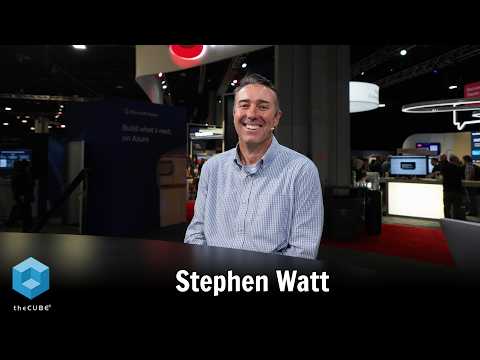
>> Yeah. I mean, again, from the folks at Intel, from Stephen Watt in the CTO's office talking about where they're going with things like VLLM and how good the community is at leaning in and how they deploy upstream and then build their products. So again, he can't commit to when these things are going to pop out because it has to go through the community, which I love and I think everybody here loves that because that does lead to sovereignty as well because it's not just that they're productizing their own code and it's their IP. They're actually building on top of open source and enhancing it in a way that provides more value in supporting it, which is key to their success.
Rebecca Knight
>> Well, that is really coming through loud and clear here, the messaging that we're hearing that Red Hat is committed to the future, making the future of work work better and they are living it alongside the organizations that they're working with and working for. And I think one of the things that really struck me this morning about what Matt Hicks was saying is that chestnut that you will not be replaced by AI, you will be replaced by someone who uses AI. And he said, "Software developers, how you spend your time, that's what's going to drastically change because your craft is going in a new direction." And he spoke directly to managers, to the leaders out there and he said, "You are going to be tested on your ability to delegate." And this is not only delegating to the humans on the team, but also delegating to the agents. And really your KPI as a leader is going to be your understanding of knowing which tasks are best for the humans, when to involve both of them, when to make this an AI only deal.
Rob Strechay
>> Yeah. And we talked to a number of people who had said, "Hey, this is where the process is and the people and how you optimize them and how you move forward and pick those programs to use agentic buddies for."
Rebecca Knight
>> Buddies. Yes, exactly. Exactly. Well, tomorrow it's going to get even better because we're having Matt Hicks, the President and Chief Executive Officer of Red Hat on the show. We're having Ashesh Badani, who is of course Chief Product Officer, as well as Chris Wright, always a favorite CTO. So I'm looking forward to more.
Rob Strechay
>> I mean, and Sathish and Kevin Kennedy with the partners and ecosystem, I think tomorrow is going to be power packed to put it mildly. So I'm really looking forward to it.
Rebecca Knight
>> Indeed. And we hope to see you back here tomorrow with us at the Georgia World Congress live in Atlanta. More from us, Rebecca Knight and Rob Strechay at the Red Hat Summit 2026. You're watching theCUBE, the leader in enterprise tech, news and analysis.