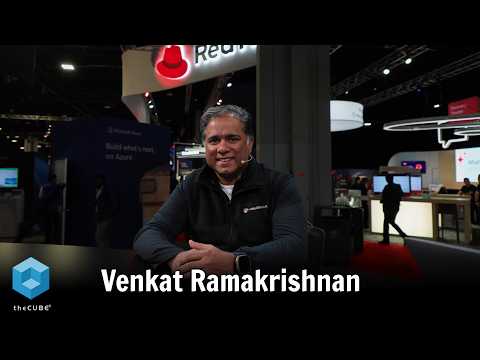
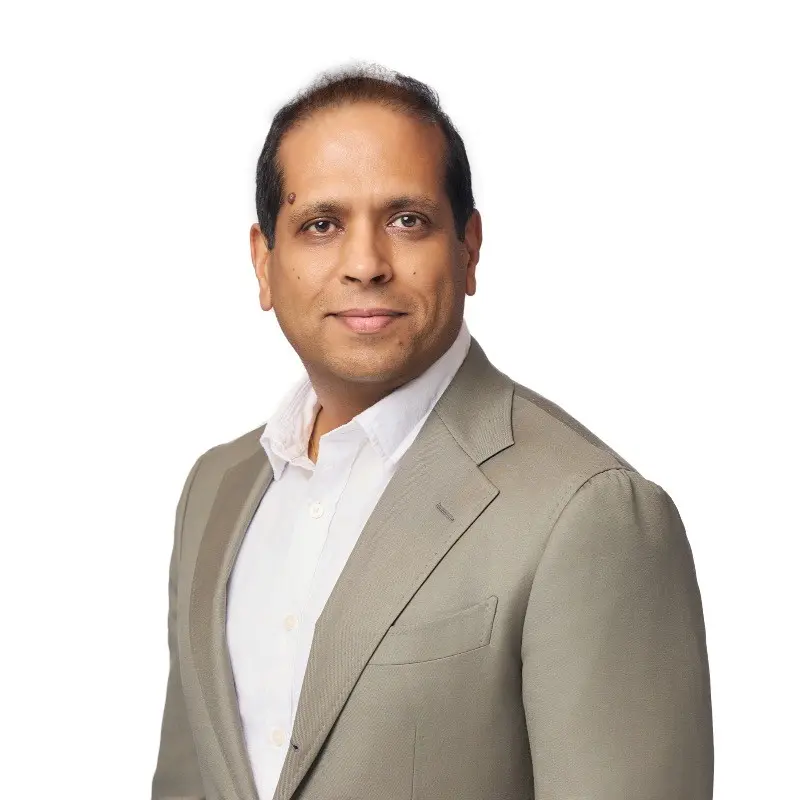
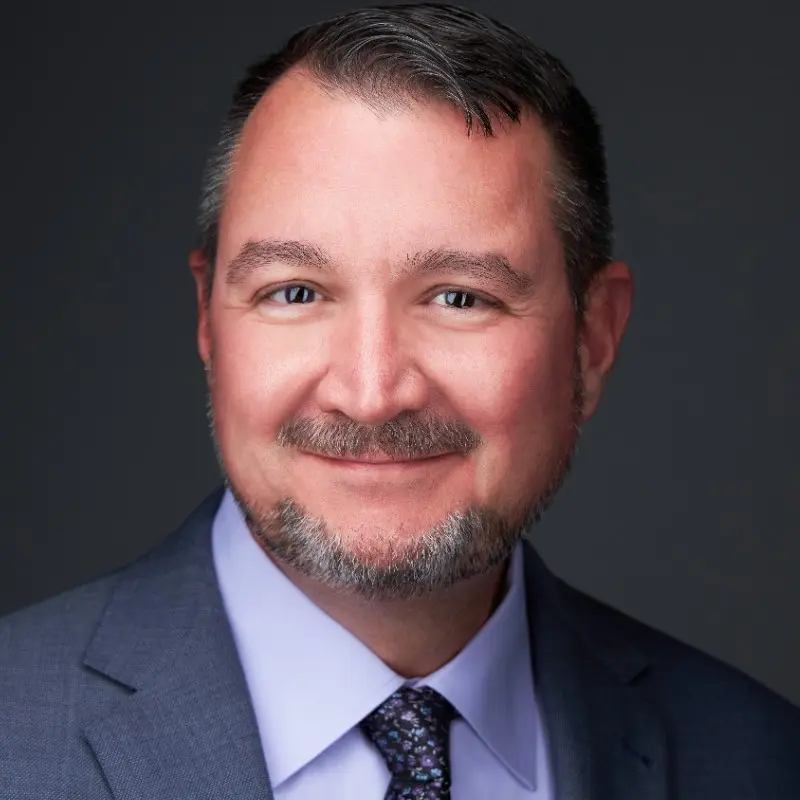
In this interview from Red Hat Summit 2026, Debasis Roy Choudhuri, distinguished engineer of modernization practice at IBM Consulting America, joins Ian Willis, executive director of IT infrastructure at the Cleveland Clinic, to talk with theCUBE's Rob Strechay and Rebecca Knight about building a unified hybrid cloud foundation that bridges legacy virtualization and AI-ready infrastructure at enterprise scale. Roy Choudhuri outlines how IBM Consulting and Red Hat are helping enterprises navigate the compounding pressures of legacy virtualization costs, cloud sprawl and rising infrastructure complexity. He describes OpenShift as a common hybrid control plane — a single management layer spanning cloud-native workloads, on-premises environments and AI deployments alike. Willis details how Cleveland Clinic used a major virtualization inflection point not merely to swap platforms, but to rethink its entire operating model from first principles, assembling a cross-vendor architecture team with IBM, Red Hat, Dell, NetApp and Cisco to white-board the future state together.
The conversation also explores how Cleveland Clinic validated its new direction through a phased proof of concept, starting with tier-4 workloads before expanding until the organization was running across five major cloud providers. Willis underscores that at Cleveland Clinic's scale, automation is a baseline requirement, not an enhancement, and that the new architecture had to meet or exceed existing resilience standards for patient-critical systems. Roy Choudhuri notes that AI is no longer confined to innovation labs — it is now a core business process requirement, and only a standardized, harmonized technology stack can deliver the KPI-driven benefit realization enterprises expect. He points to OpenShift Virtualization's 417% year-over-year adoption uptake and 93% cluster management growth in 2025 as evidence that enterprise confidence in the platform is accelerating. From rigorous disaster recovery testing to co-creating modular architectures alongside strategic partners, the discussion offers a practical roadmap for organizations navigating complex infrastructure transformations in highly regulated environments.
Forgot Password
Almost there!
We just sent you a verification email. Please verify your account to gain access to
Red Hat Summit 2026. If you don’t think you received an email check your
spam folder.
In order to sign in, enter the email address you used to registered for the event. Once completed, you will receive an email with a verification link. Open the link to automatically sign into the site.
Register for Red Hat Summit 2026
Please fill out the information below. You will receive an email with a verification link confirming your registration. Click the link to automatically sign into the site.
You’re almost there!
We just sent you a verification email. Please click the verification button in the email. Once your email address is verified, you will have full access to all event content for Red Hat Summit 2026.
I want my badge and interests to be visible to all attendees.
Checking this box will display your presense on the attendees list, view your profile and allow other attendees to contact you via 1-1 chat. Read the Privacy Policy. At any time, you can choose to disable this preference.
Select your Interests!
add
Upload your photo
Uploading..
OR
Connect via Twitter
Connect via Linkedin
EDIT PASSWORD
Share
Forgot Password
Almost there!
We just sent you a verification email. Please verify your account to gain access to
Red Hat Summit 2026. If you don’t think you received an email check your
spam folder.
In order to sign in, enter the email address you used to registered for the event. Once completed, you will receive an email with a verification link. Open the link to automatically sign into the site.
Sign in to gain access to Red Hat Summit 2026
Please sign in with LinkedIn to continue to Red Hat Summit 2026. Signing in with LinkedIn ensures a professional environment.
Are you sure you want to remove access rights for this user?
Details
Manage Access
email address
Community Invitation
Debasis Roy Choudhuri, IBM & Ian Willis, Cleveland Clinic
In this interview from Red Hat Summit 2026, Debasis Roy Choudhuri, distinguished engineer of modernization practice at IBM Consulting America, joins Ian Willis, executive director of IT infrastructure at the Cleveland Clinic, to talk with theCUBE's Rob Strechay and Rebecca Knight about building a unified hybrid cloud foundation that bridges legacy virtualization and AI-ready infrastructure at enterprise scale. Roy Choudhuri outlines how IBM Consulting and Red Hat are helping enterprises navigate the compounding pressures of legacy virtualization costs, cloud sprawl and rising infrastructure complexity. He describes OpenShift as a common hybrid control plane — a single management layer spanning cloud-native workloads, on-premises environments and AI deployments alike. Willis details how Cleveland Clinic used a major virtualization inflection point not merely to swap platforms, but to rethink its entire operating model from first principles, assembling a cross-vendor architecture team with IBM, Red Hat, Dell, NetApp and Cisco to white-board the future state together.
The conversation also explores how Cleveland Clinic validated its new direction through a phased proof of concept, starting with tier-4 workloads before expanding until the organization was running across five major cloud providers. Willis underscores that at Cleveland Clinic's scale, automation is a baseline requirement, not an enhancement, and that the new architecture had to meet or exceed existing resilience standards for patient-critical systems. Roy Choudhuri notes that AI is no longer confined to innovation labs — it is now a core business process requirement, and only a standardized, harmonized technology stack can deliver the KPI-driven benefit realization enterprises expect. He points to OpenShift Virtualization's 417% year-over-year adoption uptake and 93% cluster management growth in 2025 as evidence that enterprise confidence in the platform is accelerating. From rigorous disaster recovery testing to co-creating modular architectures alongside strategic partners, the discussion offers a practical roadmap for organizations navigating complex infrastructure transformations in highly regulated environments.
Debasis Roy Choudhuri, IBM & Ian Willis, Cleveland Clinic
Debasis Roy Choudhuri
Distinguished Engineer, Modernize Apps for AIIBM
Ian Willis
Exec Director IT InfrastructureCleveland Clinic
In this interview from Red Hat Summit 2026, Debasis Roy Choudhuri, distinguished engineer of modernization practice at IBM Consulting America, joins Ian Willis, executive director of IT infrastructure at the Cleveland Clinic, to talk with theCUBE's Rob Strechay and Rebecca Knight about building a unified hybrid cloud foundation that bridges legacy virtualization and AI-ready infrastructure at enterprise scale. Roy Choudhuri outlines how IBM Consulting and Red Hat are helping enterprises navigate the compounding pressures of legacy virtualization costs, cloud ...Read more
exploreKeep Exploring
How can enterprises manage and simplify heterogeneous multi‑cloud, on‑premises and edge workloads via a common hybrid control plane, and what can they optimize?add
How did you use that inflection moment to rethink your entire operating model, and how did partnering with IBM Consulting and Red Hat help you and your architects move that effort forward?add
How should organizations approach technology modernization—including infrastructure optimization, simplification, and standardization—to enable AI and automation at scale and realize measurable business benefits?add
How do IBM Consulting and Red Hat collaborate to build client trust, co-create modular architectures, and drive adoption of technologies like OpenShift virtualization?add
Debasis Roy Choudhuri, IBM & Ian Willis, Cleveland Clinic
search
Rebecca Knight
>> Hello everyone and welcome back to theCUBE's live coverage of the Red Hat Summit here at the Georgia World Congress in Atlanta. I'm your host, Rebecca Knight alongside Rob Strechay. Rob, what's so fun about these shows is we live in this cool new world of AI and when you hear how the rubber meets the road.
Rob Strechay
>> Absolutely. I think the use cases and how they're applicable to all these different organizations, even if you're in a different vertical or industry, definitely is something you can take away from and learn from. So I love this.
Rebecca Knight
>> Well, with more on that, I would like to introduce our next guest. We have Debasish Roy Chowdhury, distinguished engineer at IBM Consulting America, driving the modernization practice. Welcome, Deb.>> Thank you for having us here.
Rebecca Knight
>> And Ian Willis, Executive Director IT Infrastructure at the Cleveland Clinic. Thank you so much for coming on the show, Ian.
Ian Willis
>> Thanks. Happy to be here.
Rebecca Knight
>> Yeah. So I want to start with you, Deb, because IBM Consulting and Red Hat have been working together on some pretty ambitious and bold client transformations, which we're going to hear more about. But can you talk a little bit about what that partnership looks like in practice and how you're helping clients with those transformations?
Ian Willis
>> Yeah, I'm happy to discuss that. So I think if we look back probably last year and a half, majority of the enterprises are going through many different challenges. Whether the challenge is related to legacy virtualization platform cost pressure, whether challenge is related to cloud sprawl. Also, if we look at the infrastructure and the overall ecosystems becoming more and more complex day by day. And now on top of that, AI is now disrupting every parts of the industry. So the way we have been working, the Red Hat being one of our strongest technology partners, and we become the business process, bringing the business acumen knowledge of application, knowledge of client base and knowledge of process. We partner together and then help them to demystify not only the complex problem to solve through technology, but also where outcome matters. And I'm sure Ian will be talking more about that, that how we are actually working together, partnering with Red Hat and other parts of IBM and other ecosystem partners.
Rob Strechay
>> So before we get to Ian on this and bring you in, I mean, one of the big things that IBM leaned in on early on was really hybrid cloud, hybrid multi-cloud, and IBM has its own cloud, but at the same time has partnered with everybody else who is here too, including Red Hat. Help us understand how that really plays into when you're talking to different organizations and consulting to them, how that helps them see into the future about what they can do and what they can optimize.>> Yeah. So I think if you look at any enterprise today, everybody has more or less more than one cloud, if not more, but it's not just one cloud only. Enterprises workload are also running on several clouds, on-prem as well as edge. One of the area where we along with Red Hat are partnering with our clients and help clients like Ian is to understand and build a common hybrid control plane. And Red Hat, we talked about OpenShift as one of the prominent platform or suite, which helps to build a common control plane so that it's almost like one single pane of lens where you are managing workload running on cloud-native, workload running on hybrid environment or on-prem legacy virtualization platforms or containerization platform or AI workload all together. And that's where I think clients started looking at like, how do I manage and simplify a set of heterogeneous environment through a common control plane so that it becomes a lot more agile and interoperable. That's one of the things which we have been doing.
Rebecca Knight
>> Ian, I want to bring in you here to this conversation and hear your perspective from where you sit on the partner side, because I know that your team was facing a pretty big inflection point around virtualization and infrastructure strategy. Talk a little bit about that moment and how you used it to really rethink the entire operating model.
Rob Strechay
>> Well, we used that catalyst of change, that inflection point to bring together a real dream team of architects. We went back to first principles, back to the absolute basics, and we didn't want to just reimagine virtualization. We wanted to look at our operating model moving forward. How can we do this not just right, but very well? How can we do this the best way possible?
Rob Strechay
>> So as you're going through that, and a lot of organizations are sitting in your seat today, right, where they're trying to figure out what do we do with bringing together virtualization containerization, and hey, we want to go in a new direction, but we have all of this storage, servers, backup, all these other requirements. I mean, Cleveland Clinic is doing some really important stuff in healthcare and all of the things and the research that you do, you got to get it right. It's got to be rock solid. How did partnering with IBM Consulting and Red Hat really help you and your
Rob Strechay
>> Architects move that forward? So it was a team and IBM was part of the team. Red Hat was part of the team. We brought all of our best minds together and we also partnered well with Dell and NetApp and Cisco. We brought all of our heavy hitters together. We got in a room. They came to Florida to visit me in Florida and we got in a room and we white-boarded out what does the future look like? And we really dug in until we got to how do we evolve into this next. And so it was completely a collaborative effort and absolutely helped us to be comfortable with our choice to move forward, because we were choosing that next operating model.
Rob Strechay
>> So talk to kind of how you organize, because you said going back to first principles. Talk to how you got everybody to buy in to this because it is a change in process and you want to make sure that you're optimizing, but at the same time, things aren't hitting the ground. Kind of talk to that.
Rob Strechay
>> So we had to prove, so we actually did proof of concept. We moved a percentage of our workloads, but we have our tiered system, so our tier four workloads. We started there. We started with small workloads, one server, two servers. And as we began to move more and more over, everybody, the people who are hands on keyboard, they're used to this way. We're showing them this way and they're seeing how good it is, how easy it is and how much it can change in agility because now this new workload isn't just fit for this one OS in this one place. Now it's we're in five clouds. So it's now available, we can go to any one of the major cloud service providers.
Rebecca Knight
>> Deb, one of the things we always hear is that 2026 is really the year where we are moving from pilot, from experimentation to actual execution. I'm curious from your perspective, how does a well-designed hybrid cloud foundation make that possible, make that practicable?
Ian Willis
>> I think that's a great questions. And as we are in this summit as well as many other technology submits, I think we have been seeing that we are well past through the POC stage. So naturally, AI is no longer confined or restricted within the innovation or research. Now AI is part of the business process and part of the basic hygiene factor of the enterprise. So since we passed through the POC stage, a well-designed architecture, first we have to look at, before even we go into the technology, first we have to look at what is the outcome enterprises like Ian and many other organizations are looking at. So when we look at the well-designed architecture, we are not limiting ourself only in the infrastructure layer. So you have the hardware. We talked about NVIDIA, many GPUs. I'm sure Ian can also talk about that. Then we, on top of that, we have operating platform. Then we have middleware, then we have middleware databases, then we have different business process and then application. So when you look at the well-designed architecture or design principle, we look at the holistic stack so that app, AI, infrastructure, integration are not disjointed AI systems. Rather, they work as one ecosystem as one stack, and the benefit realization would be a lot more cumulative in that nature, number one. So that's why we help along with Red Hat as our technology partner, we help to unlock the business process, identify the process debt, identify the process simplification along with technology debt. And here, we have, IBM Consulting has a set of products like we have done the acquisition of IBM Txture. We also have IBM Consulting Advantage as one of our AI-powered automation platform. We have Enterprise Advantage. And then if we look at Red Hat, OpenShift become one of the very, very strong prominent platform ecosystem for us. Plus there are so many Red Hat Accelerator, which you also partner with. Take an example, MTA, MTC, Ansible Automation Platform. When all this technology and business process come together, then clients started seeing that, okay, how can I look at the overall stack and look at every layer of the stack to make the process nimble, make the process a lot more agile so that... I always say that, leverage cloud, but don't get married with a particular cloud. That's the way we can-
Rob Strechay
>> I love that. And that actually brings up two questions in my mind to Ian here that one, first question, really you talked about the five major clouds. I'm looking around and I think I see them all have their booths out back here, which is great to see because that's open. And I think was a big push for this, hey, we can have that hybrid nature and we don't have to care what GPU, CPU is underneath the hood. We can take these workloads and move them between that. Did that help simplify your architecture and your developer's mindset going into that?
Rob Strechay
>> It's a very big selling point for us to have that agility. And we've been, at our scale, automation is a requirement. It is a baseline, right? It's not something new that we're doing, but we must be able to automate, and the more agile we can become, those tools become preferable.
Rob Strechay
>> Yeah. And I mean, just building off of that, I mean, I also think of it as day zero, day one, and day two. Day two operations, thankless stuff that you only see it when it goes wrong usually. So help people understand how day two operations and fitting into what you do really was also advantageous.
Rob Strechay
>> So the biggest lesson that we learned is that you had to go back to the basics. You had to get your requirements in order, you had to test, test, test. And that's not just testing. So day two operations are great, but what about in a disaster? So we had to take it a step further. So we had to really challenge our partnership and our vendors to make sure we have, as a healthcare system, patient care is critical. So we had to challenge them to meet our current standards and requirements. If we're going to move forward, if we're going to make this choice, it has to at least be as resilient or better than what we were doing before.
Rebecca Knight
>> And that's really a learning from any organization, although healthcare is of course highly regulated and as you're talking about patient care, these are matters of life and death here. Deb, as you are looking forward, what are some of the things that you see as the next phase of modernization for clients like the Cleveland Clinic that are operating in highly regulated environments?
Ian Willis
>> Yeah. So I think, we talked about the technology modernization, Ian double-clicked on infrastructure optimization, simplification. We as a consulting, along with the Red Hat technology partner, we are looking at understanding the business process, how to simplify the business process number one, and also the fail first approach is very important, right? Because as you rightly mentioned that we pass through the exploration to the productionalization. So everything has to be measured in terms of the KPI because business wants to see how AI and automation, which Ian mentioned, is going to give the benefit to them. Now in order to do that, the measurement has to be very, very KPI-centric and then how we can embrace the technology, client partnership, overall ecosystem integration and make the entire process a lot more simplified so that we do not want to end up having an enterprise with thousand different type of databases technologies, 500 different operating platforms or so many different integration technologies and all. It's not just the heterogeneity, it's also looking at the licensing, looking at the procurement, looking at the cost and people and talent. These are also important factors in the organization, right? So more we simplify, more we harmonize, more we create a standardized operating model, standardized software stack, standardized hardware, then you can actually embrace the AI which is coming as part of the next evaluation in the modernization business. So now that's why the modernization is a foundation which will embrace the AI to get to the scale and that's the only way clients will start getting the benefit realization like Ian and many other clients which we do.
Rob Strechay
>> So Ian, just kind of bringing this full circle here because a lot of people, like I said at the beginning, are kind of sitting in your seat now going, "Okay, where do I start? How do I get moving?" What's one thing you learned through this process that you want to impart on people to say, "Hey, definitely think about this."
Rob Strechay
>> Change is difficult, but fearlessly bring your requirements and find someone that you can work with, partner with very well, make them a part of your team and move forward, because change doesn't happen until you move.
Rob Strechay
>> I love that.
Rebecca Knight
>> And last one to you, where do you think that the Red Hat and IBM Consulting partnership, which obviously is enduring over the years, where do you think it's going in the next couple of years?
Ian Willis
>> Yeah. Before even we start IBM and Red Hat as a consulting partnership, first I would like to thank Ian and many of our clients because first we need to build the trust with the client. And in order to build the trust, you just do not need to develop the solution, you also need to be part of the problem and be in the trenches as well so that we can build the trust. What Ian has fit, he mentioned that how we have done that, the Florida workshops and all the problems and white-boardings and the deep debate and passionate discussions and all, and then collectively build the architecture, co-create the architecture, develop certain intentional decision-making to make the architecture more modular, more decomposed, more nimble. Now, coming back to the technology, Red Hat become one of our strongest technology partners, right? And if we look at IBM Consulting and Red Hat together where we build the ecosystem, where the knowledge of application, knowledge of middleware, knowledge of modernization, knowledge of process and their partners together, I believe one plus one becomes three. That's the way I look at it. If we look at the, because he talked about the virtualization, 417% uptake from last year. We have seen the OpenShift virtualization platform, 93% of cluster management has grew up in 2025. So that gives us a confidence that clients like Ian and many other enterprises, they trusted on this technology. All we need to do is build a partnership and to make happen. Then I think many of the clients will follow Cleveland Clinic and the other healthcare enterprises.
Rebecca Knight
>> You make it sound easy. Deb and Ian, thank you both so much for coming on the show. A real pleasure having you on.
Rebecca Knight
>> Thank you so much. Thank you, Ian.
Rebecca Knight
>> I'm Rebecca Knight for Rob Stretchay. Stay tuned for more of theCUBE's live coverage of the Red Hat Summit. You're watching theCUBE, the leader in enterprise tech news and analysis.












 Rebecca Knight
 Rob Strechay