In this interview from Red Hat Summit in Atlanta, Kevin Kennedy, vice president of global ecosystem sales at Red Hat, joins theCUBE's Rebecca Knight and Rob Strechay to discuss how AI is reshaping Red Hat's partner ecosystem strategy and accelerating a shift toward collaborative, full-lifecycle go-to-market models. Kennedy explains that as AI intensifies, the long-held belief that no company can succeed alone is finally taking center stage across every partner type — from GSIs and resellers to hyperscalers. He notes that partner relationships are evolving well beyond resell-and-rebate structures, with incentives now anchored around net new customer acquisition and solution specialization through Red Hat's technical accreditation program.
The conversation also explores how Red Hat is systematically removing friction from partner operations through automation — including AI-powered deal registration bots that replace manual approval processes with instant responses. Kennedy outlines the program's core mantra — simple, predictable and profitable — and explains how partners can build on existing investments in RHEL, OpenShift and Ansible to guide customers from legacy virtualization to cloud-native and AI-ready environments without a rip-and-replace overhaul. He highlights pre-engineered AI stacks with OEM partners, including Cisco-Red Hat-Nvidia rally kits and the Dell AI Factory, as models of best-of-breed collaboration that give the entire ecosystem credibility in AI conversations. Kennedy also shares how Red Hat is applying AI internally — using intelligent notebooks to query partner program data and compress hours of preparation into seconds. Looking to the remainder of 2026 and beyond, he identifies virtualization migration, AI monetization and sovereign cloud — especially across EMEA and APAC — as the three primary growth vectors, and outlines how Red Hat intends to become simpler and more rewarding to partner with at every tier.
Forgot Password
Almost there!
We just sent you a verification email. Please verify your account to gain access to
Red Hat Summit 2026. If you don’t think you received an email check your
spam folder.
In order to sign in, enter the email address you used to registered for the event. Once completed, you will receive an email with a verification link. Open the link to automatically sign into the site.
Register for Red Hat Summit 2026
Please fill out the information below. You will receive an email with a verification link confirming your registration. Click the link to automatically sign into the site.
You’re almost there!
We just sent you a verification email. Please click the verification button in the email. Once your email address is verified, you will have full access to all event content for Red Hat Summit 2026.
I want my badge and interests to be visible to all attendees.
Checking this box will display your presense on the attendees list, view your profile and allow other attendees to contact you via 1-1 chat. Read the Privacy Policy. At any time, you can choose to disable this preference.
Select your Interests!
add
Upload your photo
Uploading..
OR
Connect via Twitter
Connect via Linkedin
EDIT PASSWORD
Share
Forgot Password
Almost there!
We just sent you a verification email. Please verify your account to gain access to
Red Hat Summit 2026. If you don’t think you received an email check your
spam folder.
In order to sign in, enter the email address you used to registered for the event. Once completed, you will receive an email with a verification link. Open the link to automatically sign into the site.
Sign in to gain access to Red Hat Summit 2026
Please sign in with LinkedIn to continue to Red Hat Summit 2026. Signing in with LinkedIn ensures a professional environment.
Are you sure you want to remove access rights for this user?
Details
Manage Access
email address
Community Invitation
Kevin Kennedy, Red Hat
In this interview from Red Hat Summit in Atlanta, Kevin Kennedy, vice president of global ecosystem sales at Red Hat, joins theCUBE's Rebecca Knight and Rob Strechay to discuss how AI is reshaping Red Hat's partner ecosystem strategy and accelerating a shift toward collaborative, full-lifecycle go-to-market models. Kennedy explains that as AI intensifies, the long-held belief that no company can succeed alone is finally taking center stage across every partner type — from GSIs and resellers to hyperscalers. He notes that partner relationships are evolving well beyond resell-and-rebate structures, with incentives now anchored around net new customer acquisition and solution specialization through Red Hat's technical accreditation program.
The conversation also explores how Red Hat is systematically removing friction from partner operations through automation — including AI-powered deal registration bots that replace manual approval processes with instant responses. Kennedy outlines the program's core mantra — simple, predictable and profitable — and explains how partners can build on existing investments in RHEL, OpenShift and Ansible to guide customers from legacy virtualization to cloud-native and AI-ready environments without a rip-and-replace overhaul. He highlights pre-engineered AI stacks with OEM partners, including Cisco-Red Hat-Nvidia rally kits and the Dell AI Factory, as models of best-of-breed collaboration that give the entire ecosystem credibility in AI conversations. Kennedy also shares how Red Hat is applying AI internally — using intelligent notebooks to query partner program data and compress hours of preparation into seconds. Looking to the remainder of 2026 and beyond, he identifies virtualization migration, AI monetization and sovereign cloud — especially across EMEA and APAC — as the three primary growth vectors, and outlines how Red Hat intends to become simpler and more rewarding to partner with at every tier.
In this interview from Red Hat Summit in Atlanta, Kevin Kennedy, vice president of global ecosystem sales at Red Hat, joins theCUBE's Rebecca Knight and Rob Strechay to discuss how AI is reshaping Red Hat's partner ecosystem strategy and accelerating a shift toward collaborative, full-lifecycle go-to-market models. Kennedy explains that as AI intensifies, the long-held belief that no company can succeed alone is finally taking center stage across every partner type — from GSIs and resellers to hyperscalers. He notes that partner relationships are evolving wel...Read more
exploreKeep Exploring
How is the acceleration of AI changing your partnership strategy — including collaboration with GSIs, resellers, distributors, hyperscalers, and how partners are compensated?add
How can partners leverage the investments they've already made in core platforms (e.g., RHEL, OpenShift, Ansible) as customers move from legacy virtualization to containerized environments and into AI—do they need to rip-and-replace existing architectures?add
What makes a partnership successful, and what cultural and value-based ingredients are essential for effective collaboration in an open-source ecosystem like Red Hat?add
How will the convergence of partner ecosystems and Red Hat’s sales force be used to bring integrated AI solutions to market?add
>> Good morning, everyone, and welcome back to theCUBE's live coverage of the Red Hat Summit here in Atlanta, Georgia. I'm your host, Rebecca Knight, alongside of Rob Strechay. We are talking the partner ecosystem here.
Rob Strechay
>> Yeah. I mean, again, it's one of these things that Red Hat is really central to a lot of organizations in how they approach their customers and how they bring new solutions, especially around AI, to that.
Rebecca Knight
>> Well, indeed, and here to talk more about that is Kevin Kennedy. He is vice president, global ecosystem sales at Red Hat. Thanks so much for coming on the show.
Kevin Kennedy
>> Thanks for having me. Appreciate it.
Rebecca Knight
>> Yeah. So you run the global partner ecosystem here at Red Hat. I'm curious to hear more about the conversations that you're having here on the show floor and also at the dinners that you're no doubt having too a lot this week and how that is shaping your thinking about your mission for 2026 and beyond.
Kevin Kennedy
>> Yeah. What's interesting is as AI continues to accelerate, some of our things we've talked about over the last probably 10, 15, 20 years about partnering with partners is actually coming to the forefront because the recognition that none of us can go it alone any longer is clear. It doesn't matter what type of partner you talk to, whether you're talking to a GSI or a reseller or a distributor, hyperscaler, that all of us having to work collectively to deliver solutions to customers as they're on their journey is paramount. So it's an exciting time for us. I think it gives us an opportunity to build a lot of unique things together, change the way we've compensated partners, because no longer is this about resell and getting a rebate on resell. It's about full customer lifecycle management and delivering solutions. So that's been probably top of mind for most of our conversations this week.
Rob Strechay
>> Yeah. I mean, I think what's been great, even on the product side with the migration assessment and things of that nature where people are looking to move to and modernize their VM stack, how are you seeing partners kind of lean into that? I mean, we've even heard it from the hyperscaler side, as well as from the others, the GSIs and the VARs, that are out there.
Kevin Kennedy
>> Yeah. Well, I think for our partners, what's been really important for them is the investments they've made with us in the past around some of our core platforms are the same investments they're going to be able to build on in the future. So when they're going out to talk to the customers and they're saying, "All right, do we want to move away from legacy virtualization into more of a modern, containerized environment and then continuing that journey onto AI," they're able to leverage the same investments they've already made. It's not a rip and replace. It's not having to go do something completely different under the covers of their architecture. It's to utilize RHEL, utilize OpenShift, bring in Ansible. It's going to be that same level of investment moving forward into their AI journey and saying, "Good, we're just going to continue the course we've already started."
Rebecca Knight
>> Reducing friction, I mean, this is something that is just... It's annoying, but it's also costly and it slows you down. What are some of the biggest changes that you're making to reduce friction this year?
Kevin Kennedy
>> That's a great question. We have done so much manual lift over the years, and partners have to endure a lot of that. We're trying to bring a lot more automation to scale. So we're changing a lot of our tooling. We're giving partners visibility so they can see how they're performing relative to their partner tiering, how their rebates are looking so that as they're making educated decisions about where they want to push and double down on their investments, what's that ROI look like for them in terms of our partner program? How are they able to leverage some of our other relationships, again, outside of maybe their core business to go bring holistic solutions to their customers? They can see that through the portal. They can see other solutions that we've crafted and where they might be able to take that to their already established go-to-market motion. So I think just trying to take some of the manual lift out. We're going to introduce AI bots going forward. So when you talk about deal reg, which is a traditional partner thing, how do I get protection with my customers to ensure that my investment I'm making is going to be rewarded, typically we've had to go through a manual process and somebody has to approve or reject that deal reg. We're putting the other bots that will have algorithms attached to it, so you go submit that, you'll get an instant response on approved. So it doesn't slow down your sales motion. You'll recognize that you're protected. You don't lose a step in the process. It's just going to be slick. So that's something to look forward to later on in the year.
Rob Strechay
>> So as you move towards that efficiencies and that reducing of friction, how does that help those organizations from a predictability perspective so that they lean into Red Hat versus going a different direction?
Kevin Kennedy
>> Yeah, that's a great question. We're trying to have... Simple, predictable, profitable is the mantra of the program. They can't guess on, is this going to qualify? Is it not going to qualify? What kinds of activities do I need to do to make sure that I'm rewarded with? So all of that stuff is clearly outlined now. Where in the past it might have been a little bit more piecemeal, now we got one established place; you can see all the activities that qualify for you to move up in the tiering structure, that qualify for rebates, qualify for MDF, so taking that unpredictability out and making sure that they understand, here are the activities you're going to be rewarded for. We've positioned a lot of our incentives around a couple of core areas this year. One is net new customers. So we recognize we've got to go find net new customers. That's going to be the lifeblood of the future. We're going to pay handsomely for that, whether that's to the partner seller, that's to the firm on the back end, but working collaboratively with some of our other partners to go tackle those new workloads, bring AI into the forefront, that's going to recognize new opportunity, new business for us. We also have pivoted pretty heavily around solution orientation. So we've got a specialized partner program where it's a heavy lift. You got to go get technical accreditations. We want to reward that investment, right? There's rebates associated with that. There's also a recognition from our sellers that these are partners that are leaned in with us. They're making an investment in our portfolio, and they've got the technical chops to go back it up and go to deliver the solutions as we would ourselves to our customers.
Rebecca Knight
>> Red Hat is synonymous with collaboration with open source. I mean, this is the community here. What is it that you would say makes a partnership successful? What are the ingredients here in terms of the culture and the value that come together?
Kevin Kennedy
>> Yeah. There's got to be trust, right? Trust is paramount. If we don't do what we're saying we're going to do, we're going to lose the trust of that partner. They're going to go do business with one of our competitors. There's also got to be intense collaboration. And as I said, some of the solutions around virtualization and AI, that's forcing that kind of collaboration that maybe we didn't do as effectively in the past. So being able to work holistically with partners that come from different levels of the business, bring different areas of expertise to bear, it's paramount that we are working together, again, so we can bring a holistic solution to go solve the customer's problem. Because no longer does customers want to just buy things; they want to know we're all working well together. I know this solution that I have is going to pour very easily over to where we're going in the future because those ISVs have all been certified on your platform. You've already vetted and tested all of that thing. I don't need to worry about that, right? If we're not working that collaboratively with our partners, we can't guarantee that outcome.
Rob Strechay
>> I mean, I'm looking around the floor here and I see a ton of your partners here that you're working with, from Lenovo to HPE to Dell to many of the others that are out here that I'm probably missing names on. But when you start to look at even just the OEM side of things where people are, they're going to market as well, how do you see that as part of it? Because they're putting you in a stack, maybe it's an AI stack, and they're going out with a, almost what we would call in the old days hyperconverged stack or something like that, where they're trying to make it more simple. How do you see that helping and joining that with Red Hat's sales force to go out there?
Kevin Kennedy
>> So that kind of convergence has been playing right into our wheelhouse because we're open, because we partner with so many different OEMs, so many different providers. I mean, you look at, we've got the Cisco rally kits going onwards, Cisco, Red Hat, Nvidia. We've got the Dell AI Factory, Dell, Nvidia, Red Hat. I mean, those are all trusted names in the industry. The fact that we're all working together, that we have already done all that engineering work to ensure that we've put together a stack that is kind of best-of-breed... To your point about... I was in the old VCE days where you had Cisco, EMC all coming together with converged infrastructure, VMware at the time. This is a very similar concept where you've just got a trusted environment. You know you're going to go buy something that's going to work.
Rob Strechay
>> Right.
Rebecca Knight
>> Every partner in the ecosystem is trying to figure out how to play in AI. How do you approach it, and how do you think through the AI opportunity with your partners or perspective partners?
Kevin Kennedy
>> Well, we're doing a lot of listening right now, for one. To your point, AI is top of mind for everybody. How do we monetize that in the real world? I think there's a lot of very interesting engineering work taking place, but when we're talking to our partners, to the customers, what am I going to do with this? Where do I start? And I think what we've seen over the last year or so is that the partners that are very dialed in on specific, whether it's processes that they're going to line of business executives to talk about, like we can modernize this, we can take a lot of your manual intervention out, take something that took two weeks, now it takes two hours, that seems to be the low-hanging fruit, instead of the more comprehensive things that I think will come along later.
Rob Strechay
>> Yeah, I mean, I just remember I was part of the partner summit you did in Boston almost three years ago now, and I remember that was when we just started talking about AI. Do you see that the partners are not only looking to you for good product and things like that, but also the blueprints to go out and be able to have those conversations? Because there is so much, I guess you could say, noise in the system from that, that they're looking to you guys as a trusted, "Hey, here's what a model as a service looks like," or, "Here's how you can help these customers become token producers versus token consumers." Is that a big challenge?
Kevin Kennedy
>> Yeah, it is, and I think some of the things we've just discussed around the work we're doing with Dell, the work we're doing with Intel, with Nvidia, with Cisco, I think that gives us a lot of credibility with customers and partners to bring us into the conversation and to recognize that we're not going to come with, "It's got to be just Red Hat only. Let's go talk." We understand where we fit in the grand scope of the entire AI solution, and we've been vetted and validated by some of the best in the industry, and that's why they're building on their platform.
Rebecca Knight
>> Speaking of credibility, one of the things that really stands out here is that Red Hat is also figuring out AI in its own organization and being very transparent and candid with everyone here certainly about the challenges and the opportunities that come along with that. How would you describe, Kevin, how AI and AI agents are changing how you work and how you interact with your team, the humans and the AI?
Kevin Kennedy
>> So Matt Hicks talked about it when he kicked the summit off on Tuesday, that we're sort of mandated to be able to figure out, how do we integrate that into our own daily practice? I'll tell you very simplistically, I mean, we've taken a lot of information that we have on our partners and some of the programs we've run, and we've got that all in a notebook, and we can run queries against that, what's worked, what hasn't worked? Where have we seen the greatest return on the event? How do we go double down on that going forward? Even in our presentations, we can go query everything we've done in every area of Red Hat and pull out some of the nuggets that are going to be very pertinent to the audience we're going to go talk to. We wouldn't have ever been able to do it very effectively in the past, but it would have taken us hours and hours to get anywhere close, to now we can get that in seconds. So it's really transformed the way we're working just internally, the way we collaborate.
Rob Strechay
>> Yeah, I mean, I look at it and go, the closer you can get to the partners, it has to be great and help them have that trust, which is just key to it. Where do you see for this year, the remainder of '26 into '27, where do you see the focus for your partners? Is it AI? Is it the convergence of VMs and containers? Is it all of the above? What do you see?
Kevin Kennedy
>> I think for us, the primary drivers are still going to center around virtualization. We still see tremendous opportunity with virtualization, AI certainly, but a lot of that's still going to be a lot of the conversation versus the real revenue recognition, at least for, I think, the balance of this year. And then sovereign is probably a hot topic right now that we're spending a lot of time on, especially with some of our EMEA and APAC teams. How do we create more holistic sovereign solutions to deliver to the market? Those have been probably the three greatest topics that we've had over the course of the week.
Rebecca Knight
>> So last question. Rob mentioned next year. What do you want to be telling everyone on stage next year about the progress that you made in 2026?
Kevin Kennedy
>> Well, I want there to be recognition that we've continued to make improvements. I look at this as an evolutionary iterative process. We constantly seek feedback from the partners on, how are we doing? Are the incentives where they need to be to drive the behavior that we collectively want? Have we recognized the value you're bringing as part of your solution? Have we recognized that both from a programmatic standpoint? Have we recognized it monetarily? Are we being the collaborative partner that we say that we want to be? Where can we improve? How can we do that more effectively? So I think all those... Have we taken friction out of the system, which we've talked about? Have we made some of that manual stuff go away so that we're easier to do business with? If we can get yeses to a lot of those things and we can tout that next year, I'll be thrilled.
Rebecca Knight
>> All right. Well, great. Thank you so much, Kevin Kennedy.
Kevin Kennedy
>> Thank you for having me.
Rebecca Knight
>> Pleasure having you on the show.
Kevin Kennedy
>> I really appreciate it.
Rebecca Knight
>> I'm Rebecca Knight for Rob Strechay. Stay tuned for more of theCUBE's live coverage of the Red Hat Summit here in Atlanta. You're watching theCUBE, the leader in enterprise tech news and analysis.













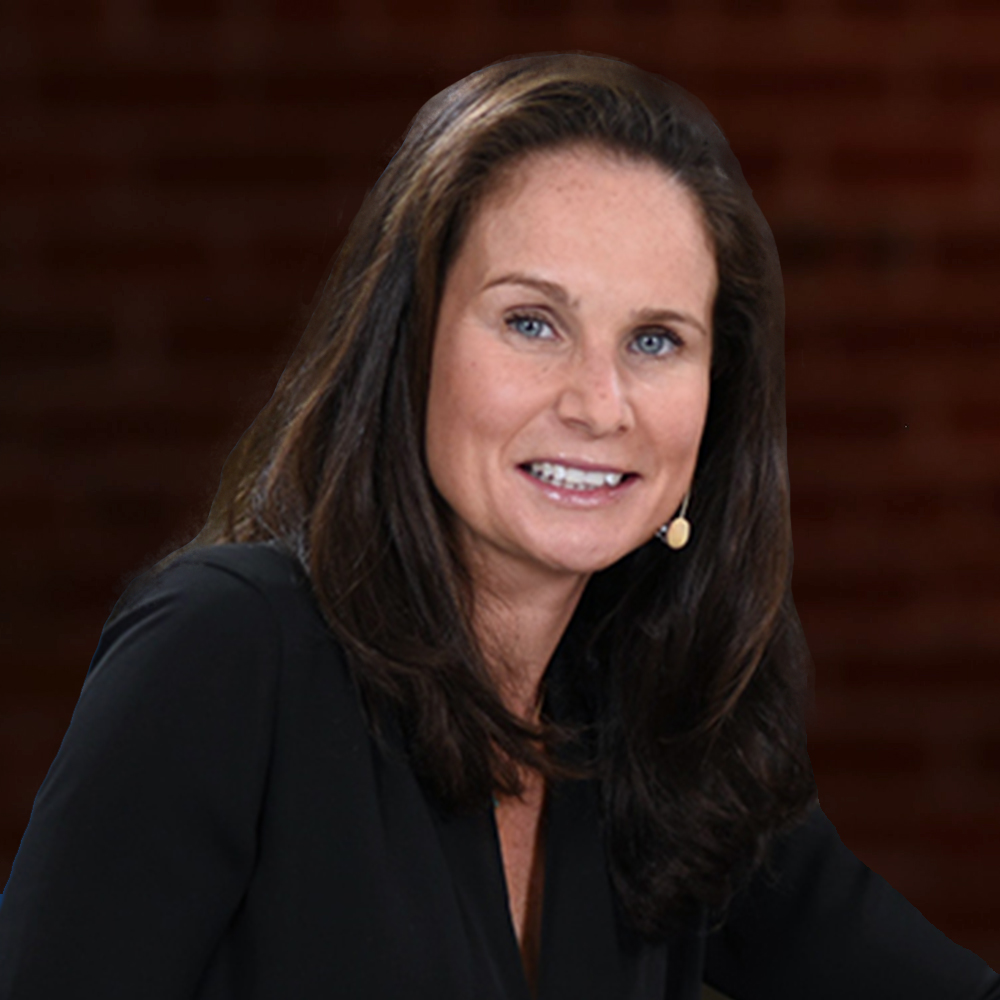 Rebecca Knight
 Rob Strechay