We just sent you a verification email. Please verify your account to gain access to
RAISE Summit 2025. If you don’t think you received an email check your
spam folder.
In order to sign in, enter the email address you used to registered for the event. Once completed, you will receive an email with a verification link. Open this link to automatically sign into the site.
Register For RAISE Summit 2025
Please fill out the information below. You will recieve an email with a verification link confirming your registration. Click the link to automatically sign into the site.
You’re almost there!
We just sent you a verification email. Please click the verification button in the email. Once your email address is verified, you will have full access to all event content for RAISE Summit 2025.
I want my badge and interests to be visible to all attendees.
Checking this box will display your presense on the attendees list, view your profile and allow other attendees to contact you via 1-1 chat. Read the Privacy Policy. At any time, you can choose to disable this preference.
Select your Interests!
add
Upload your photo
Uploading..
OR
Connect via Twitter
Connect via Linkedin
EDIT PASSWORD
Share
Forgot Password
Almost there!
We just sent you a verification email. Please verify your account to gain access to
RAISE Summit 2025. If you don’t think you received an email check your
spam folder.
In order to sign in, enter the email address you used to registered for the event. Once completed, you will receive an email with a verification link. Open this link to automatically sign into the site.
Sign in to gain access to RAISE Summit 2025
Please sign in with LinkedIn to continue to RAISE Summit 2025. Signing in with LinkedIn ensures a professional environment.
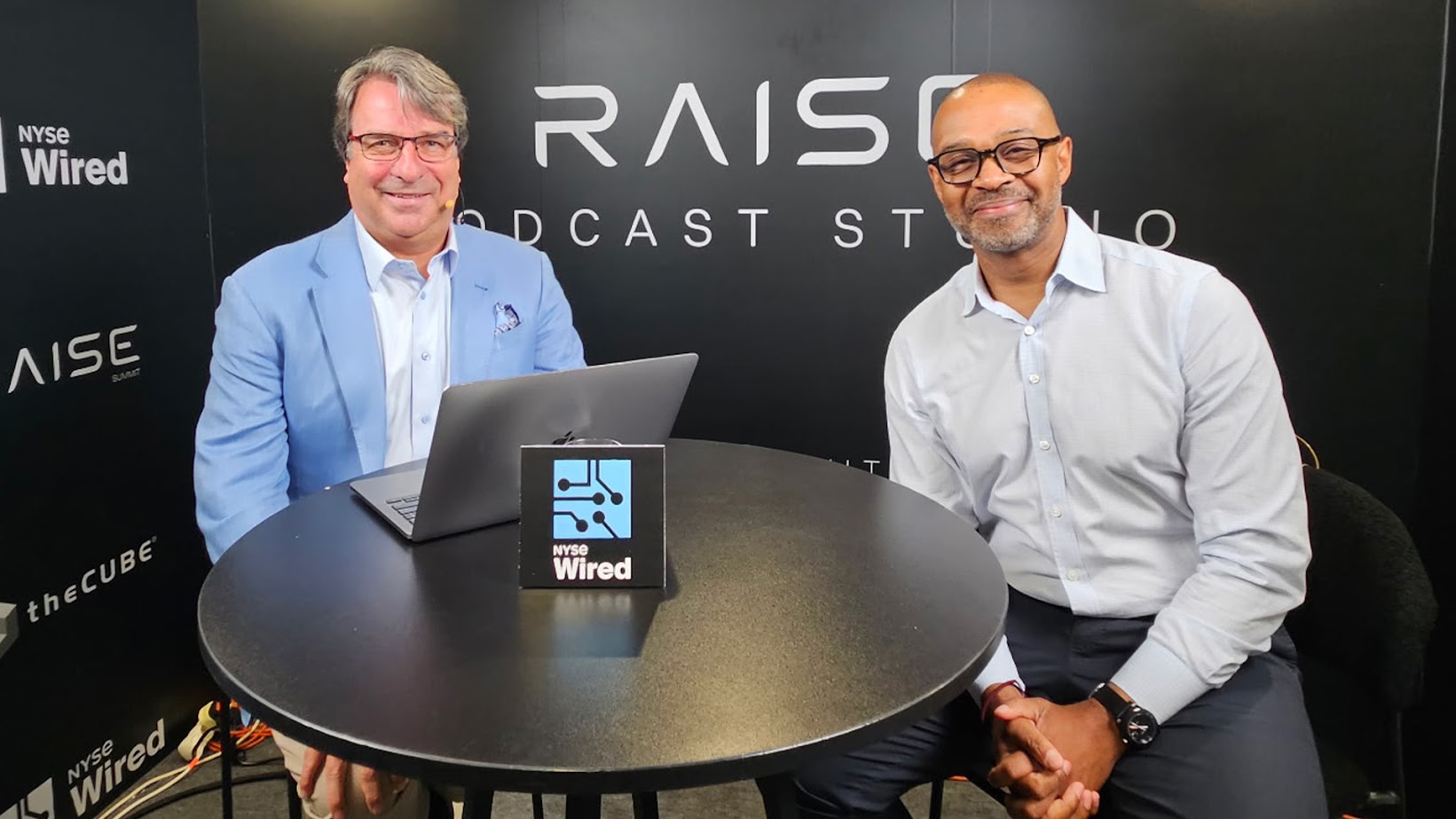
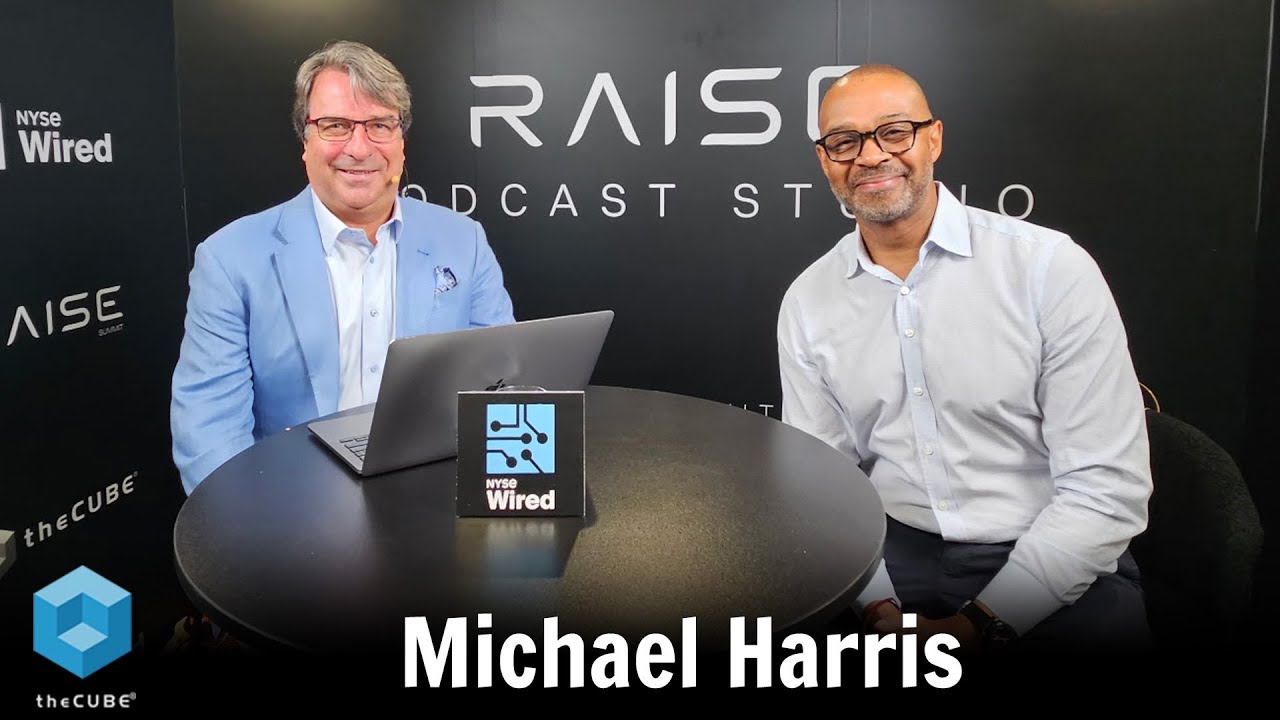
In this RAISE Summit interview, Nutanix chief executive, Rajiv Ramaswami, joins theCUBE’s John Furrier to unpack how Nutanix and NVIDIA are building a turnkey stack that brings generative AI from proof-of-concept to production. Ramaswami explains how Nutanix’s invisible infrastructure, combined with Kubernetes and the NVIDIA AI Enterprise suite, creates shared inference endpoints that hide complexity and protect data wherever it lives – in the datacenter, at the edge or in the cloud. He highlights fast-start use cases such as customer-support chatbots, docum...Read more
exploreKeep Exploring
What was the topic of the keynote interview at the RAISE Summit 2025?add
What is the role of enterprises in consuming and building applications using models, and how is Nutanix addressing their needs?add
What are the components of the relationship with NVIDIA and how do they contribute to the enterprise AI stack?add
>> Welcome back everyone to theCube's live coverage here in Paris, France. I'm John Furrier, your host of theCube. We're here for two days
of wall-to-wall coverage of RAISE Summit 2025. We've got a distinguished Cube alumni on. Rajiv Ramaswamy, CEO of Nutanix. Rajiv, I feel like we just saw
each other a few months ago at Nutanix next in D.C.- >> Indeed.
- ... but we're in Paris, France. >> Welcome back to theCube. >> Glad to be here.
- Good to see you. >> In a great city, Paris.
- Great city. >> You just had a keynote
interviewed by a leader at NVIDIA >> on the main stage. Thanks for coming into the post- game review keynote. What was the topic? >> Yeah, the topic was
around enterprise AI. How can we make it easy for companies to go build all these
generative applications, consume these models and run them? And what we talked about
is how Nutanix combined with NVIDIA is enabling that full stack, the infrastructure stack as
well as all the AI stack on top of it to provide inference
endpoints for companies to build these applications. >> NVIDIA's got their
hands in a lot of action. Obviously they've been
dominating on the supply chain. Dave and I were just reporting last week, Intel's market share
dropped from 73% in X-86. Now it's like 13, 15%, it's in the teens basically in one year, which is incredibly
that that could happen. It just goes to show that the GPU side of the market is booming. This event here in Paris is
speaking to entrepreneurs, developers, builders, neoclouds, infrastructure leaders like you and Nutanix where you
have that enablement on that supply chain enabling
the AI infrastructure. And then the next layers
of the stack are tooling up and scaling up, and then
that's enabling in a wave of applications and builders. You're on that layer of
the infrastructure layer so great partnership. What does it mean to customers? Because at the end of the day, do I have to do anything differently? Let's just add it on top
of Nutanix. I love Nutanix. What do I do with it? I
want to go to Nutanix. So as customers make these
generational decisions- >> Indeed.
- ... >> because we are talking about
right now, large enterprises, large cloud companies
are making generational calls on the system- >> Indeed.
- ... >> that they're building
so it's a one-way door, but they're doing their homework. What's your answer to that
because this is a big deal? >> The vast majority of
enterprises, customers are going >> to be consuming models and building inferencing applications. They're not in the business
of creating these models or training these models. That's a handful of companies
that have the capital and investment to do that,
and we know who they are. But here we have this broad universe and that's really where
value actually gets created. If you think about it, this is where real applications get
built that can change the nature of how you run your business. And so the vast majority of them don't really have the wherewithal or the sophistication to
really build all of this stuff. They want a turnkey solution. And so that's what we are doing
in Nutanix. We started out by making the infrastructure
stack really simple. Everything is hidden under the covers. We hide a lot of the
underlying complexity, make it really simple for companies. We used to call it invisible
infrastructure back in the day, but it really is about simplicity. And then now the new layer is
an AI stack that sits on top of it to create these inference endpoints. And that's just where we
partnered together with NVIDIA and others to say, "Okay, now
we have an infrastructure, platform on top of it we
have a Kubernetes platform, and then we have the AI stack to really bring it all together
into a turnkey solution," where a company now who wants to build an AI application can simply say, "I got everything else covered. Here's a shared infrastructure that I can use just like I used to run my regular applications,
I can now program to an API that this provides and build
my applications and run them." >> And that's an innovation
strategy that flips the >> IT blocking and tackling to a value creation extraction formula. >> Yeah, indeed. And by
the way, we've seen this over multiple generations. Whenever things start getting
mature, IT needs to be able to run it and operate
it at scale to be able to deliver value to that business. And that's really what this is about. We are in the early stages
of enterprise AI adoption and it's getting to a
point where now again, and IT teams have to
embrace this, figure out how to stand up this infrastructure and be able to deliver shared services to their internal clients that can then build these
applications easily. >> You mentioned the rich, my
words, you didn't say rich, >> the rich companies, the banks, and we know who they are,
JPMorgan Chase had a 17 billion IT budget. Not a lot of other people have that, so let's call them the one
percenters, the enterprise, but the rest of the enterprise,
they're doing cool things. So they have IT. They
bought over the years, many generations of servers and storage fabrics, storage systems, probably network attached storage. They've always been foreclosed
and left out of the mix. Yeah, they've probably
got some homegrown apps. They've probably got some Salesforce here. They got some off the shelf applications. They've been in this lull. This is my research, our
research we're pointing to where, yeah, there's some examples. They do some cloud native stuff, but not actually writing
transformative apps. I think that's what you're referring to is there's a sweet spot- >> Correct.
- ... >> of market that's untapped. Is that what you're referring to? >> Well, I think first of all,
we include the 1% as well. So the big companies, the
most sophisticated ones, >> which have huge investments,
big software development teams, of course, they're going to
be the ones that are going to be building thousands of these types of applications themselves. Now, the others can still
actually very quickly make use of simple use cases. So one of the most simple use cases is around customer support, and
it's very easy on a relatively small infrastructure, a
four node cluster to be able to build a customer support use case, a chatbot using standard
open source models and put these things together. It doesn't require a lot of effort. So the simple use cases,
document summarization, translation, chatbots, those I think can be easily put together. And even content creation,
you're going to have third- party people, third-party
providers for example, for software development, you've got a bunch of companies out there. So there'll be pre-packaged
providers as well for AI software that companies can use also. Now, what they need though is to be able to run these wherever
their data is located. And the data can be anywhere and they need to run it securely. They need to make sure
that their IP is protected. And so some of this is going
to be run in the data center, some of it is going to
be run in the edges, others will be run in the public cloud. And so they just want
to be able to consume and build these apps and run them simply. So there's a huge sweet spot
for broad-scale adoption. >> All right, so I didn't mean
the pigeonhole Nutanix is >> going after the underserved. What I was trying to get at, and again, a good call-out on that, yeah, you're a public company,
you got to make your number, you're doing well, you got
those companies already. But I think it's a growth strategy. Would you say that that's
a growth opportunity for Nutanix as a business? >> Indeed it is.
- So it's not necessarily, >> you're not doing any pivots. >> You already have a great
customer base there. >> So today we have 28,000
customers, that includes a thousand of the top 2000
globals in the world. So we have the big customers.
We have the small customers. We are across every vertical. And all these customers are
going through a journey. They all have these bulk of
their applications today, virtual machine applications. They are slowly but surely
moving into a world where more of their modern applications
are containerized, and Kubernetes is a platform for doing that, which we provide. The next phase in this
journey is almost all the applications they run are going to have some form of AI embedded. That's the next 5 to 10 years, and that's just at the beginning. So for us, it's just about
enabling all the applications that our customers want
to run on our platform. >> And I think that's the
point, the take away is that the Gen. AI apps sit on top of what you do. You make it easier for
them. You mentioned NVIDIA. I know , you
have a really strategic relationship with AWS. >> Indeed.
- I talked to Tark and Maynard about >> that the other day. >> That's going to stream
live tomorrow on theCUBE, our AWS mid-half-time report on the cloud. You got cloud, multi-cloud or distributed computing hybrid cloud, you got all the customers,
you got the Gen. AI wave. What's the NVIDIA piece? What are you working with them on? Is that enterprise go-to-market? Is that enterprise functionality? What specifically around NVIDIA? >> So there's three components
of our relationship >> with NVIDIA, and we've had a long history with them dating back to days before AI where we were virtualizing GPUs for virtual desktops. But today the first
component is NVIDIA has what they call NVAI NVIDIA
AI enterprise stack. That also includes their microservices engines for inferencing. So we include all of that in
our platform in the AI stack that we can provide to the enterprise, and customers can put that
in, put those together, have automated workflows to download models from
the repository and do that. Second, NVIDIA has a reference
architecture for compute that's based on top of Kubernetes. We are part of that
reference architecture. So they have a similar thing for storage. It's called AIDP I believe
data protection storage, so we are part of that as well. That includes all the storage elements, vector databases, et cetera. So we are a fully validated
design partner of NVIDIA, and we take elements of their stack and customers can use
those elements on top of our infrastructure
to get a turnkey stack. >> So you're basically taking
platform engineering concepts and infrastructure concepts
that you guys have been doing well in, bringing NVIDIA into the table to bring in all the AI goodness
that they're coming in with so that those enterprise can scale up. >> Exactly. Think about
it as building on top of our Kubernetes stack. We already have a
Kubernetes stack. Now all of these AI stack elements are
being built on top of that, the different kinds of models
that people can download now, the security and
governance elements of that that we provide, the
automation of the workflows. So that's the value that we
add on top of this to be able to provide that turnkey
solution for our enterprises. >> What's interesting about
what you guys are doing, I think it's the first
of all, great strategy. I have to give you my thumbs up on it, but because you have done the hard work, it's still not going to go away. It's just going to be
abstracted away. But now Gen. AI is going to enable the
agent layer, which is going to create more- >> That's right.
- ... services. >> That's right.
- So you've got the data checked off, >> you've got the Kubernetes,
which is cloud native, >> that scale out and scale up with the Gen. >> AI. As you look at customers,
what are they doing? Can you share some examples
of where they're innovating and where they're extracting the value? I love the Nutanix stack AI stack because in the enterprise,
that's been a real problem. Kubernetes has actually done great. >> Yes.
- It's de facto rallied >> and become an orchestration
layer for cloud native services. But the enterprise has been
holding like there's a blockade, there's a blockage of POCs
trying to get into production. >> That's exactly right.
- This is a >> problem that's getting solved. Sounds like you're solving it. >> It is. We've seen some simple use >> cases go into production. I will put them into three categories. The first category is just
simply around summarization of content, summarization of
content, automated translation of languages, et cetera,
that's a very simple category. That's something that
simple LLMs can do really well, first use case. Second use case is around customer support and chatbots, another simple use case. By the way, these can be done
with very small clusters. It doesn't require massive investment in farms, small clusters. That's the second use case. The third use case is content creation, whether it be creating code, whether it be creating documents, whether it be creating video
content, whatever it may be. These are three relatively simple use cases for enterprise AI. Now, in all these cases,
the data may be on-prem, the data may be in secure locations. You need to provide governance. You need to provide security,
roles-based access, control, and protect the IP so
those are all critical things that you need to simplify it. So these are three simple use cases today. Now, this stuff is becoming
more sophisticated though. You can see a world where you're going to have much more sophisticated
multi-agent workflows that get enabled on top
of a platform like this, and that's coming, not quite
here yet, but it's coming. >> I have to ask you because
I love interviewing startups because they like to
throw out the haymakers. I interviewed a startup earlier
, I won't say their name. People could go look at the
videotape, video disc or stream. He said in three years, everything that we do is going to be automated. Now you live in the automation world. So I have to ask you the reality, he's mainly talking
about tasks with agents, but it's been hard to
automate end-to-end workflows to get it 100% accurate, because you really don't want to failure. Forget the hallucinations
that's more on the top of the stack, but take me
through your mindset on how you see automation
accelerating or not accelerating. What's your view on, you
can comment on the three- year mark if you believe that
or not, but he said three. That's a startup. What's
your view on automation? >> First of all, it's a continuous
process. It never ends. It never ends. So this notion
that we are all going to be done in three years, no. It'll continuously be going on. I'll just give you an example.
I'm picking it off the cuff. As a software development
company here, yeah, whenever we develop new software, of course we write test cases for it. The first time you do it, you
have to write it yourself, but now we can potentially use AI to start generating those test cases. But after that it's automated. But you're going to create
new content all the time, and some of that stuff may be manual, but over time, more and
more will get automated. So it's a never-ending
thing on that front. But I'd say one more
thing. It's not just about automating existing workflows. It's about how you think about reimagining the workflow itself because the workflows
don't have to be the same. I'll give you an example.
This is not original. I heard this from a
McKinsey guy one time ago. Think about it, if you're
interacting, for example, between three different people,
maybe there's a designer to mark it up, and then
afterwards writes a set of requirements, and that process could take weeks to months. Now all of that, you can actually specify what you want from a
workstream perspective, from a flow perspective, all of that can be auto- generated and done very quickly. So you don't need these three
people doing these things. You can actually do them
all in a much simpler way. So that's just one example of how a workflow could be reimagined. >> So automation really is
about efficiency of task. >> Absolutely, yes. >> So that's what you're getting.
It's not so much... We're >> like robots. >> And reimagining how these
tasks have to change. You don't >> have to do them the same way
that you're doing before. >> Rajiv, it's always great
to have you on theCUBE and congratulations on a great keynote and your business success at Nutanix. You guys have got a lot of customers. I have to ask you a personal question, and I've interviewed you many, many times. You've seen many ways of innovation. >> Yes.
- You have a great technical pedigree. >> You've written books on the topics that we've talked in the past. Given all your internal knowledge and instincts, scope the
opportunity that's in front of us because we're seeing such a major shift. You could look at any
dimension of it, the data side, the automation, the ages,
how that's going to have to be delegated and deployed, the operating system side of it. There's so much tech and
computer science now. There's so much business
transformation, again, business transformation,
technology transformation, societal transformation. How do you see the future, I guess from your personal perspective, because if we were in college again and we said, "Hey, Rajiv,
let's do a startup. " What would we do? We
be like, it depends. There's so much to go after. >> Look, that's exciting about tech. I've been in tech now for 35
plus years, and it's never... still, it's always evolving. There's always a new thing that comes in, and these things take time to shape. There'll be ideas and then
there'll be investments. There'll be some wrong starts. There'll be some losers and winners. Then eventually winners, and
then once it's established, then it starts taking root
over a period of time. We saw this with the
internet a long time ago and in 20 plus years ago,
and there was a big boom and there was a bust, and then
there was a steady uptick, and now it's such, we don't
even think twice about it. >> It all happened.
- It all happened. >> Now it's everywhere and we
don't even think twice about it. >> It's the same thing with
AI I think we are in that same phase now where it's
huge potential, I think long- term to change how we think
about things in every way, but we past the early stages now and it's evolving at a very rapid clip. We talked about LLMs and we
talked about inferencing, and now we are talking about agents and this thing changes every year, and that's exciting for a
tech guy like me to keep up with it first for all and
learn about it, and then figure out how to eventually make this stuff be available in production. As an industry, we have to figure out, it's not enough to think about cool ideas. It's about how do we actually enable it and enable people to
become users of this stuff. >> What jumps out at you technically? I know you've done a lot of tech, you're a deep techie at heart. Are you coding still? Are you vibe coding? >> It's been a long time since
I've coded. I don't think I >> should ever code at this point. In fact, frankly, most
people are not going to do actual coding. They're going to figure out how to use these models and do . >> I actually vibe coded two weekends ago, didn't write a single line of
code, and it was actually fun. It was entertaining. And the app, I built something I
really wanted to build, but I actually did the low level- >> I do. I play around with ChatGPT
or other tools all the time and tell it what I want to
do and that it's not bad. >> As a techie, what's jumping out at you? I know you have a deep tech background. Are there any things that, it doesn't have to be Nutanix plate, is there
anything that's popping up that really gets your
attention that, "Man, if I had free time, I would dive
down that rabbit hole. I would really explore that technology. " Is there anything you see that gets you personally energized? >> I would just say I think the potential to see broad-scale adoption. It's not one piece of technology. To me it's actually about how
do all these different pieces of technologies come together to create something that people can use? Because you see a lot of
concepts being thrown around, but how do people actually get to use them and simplify them? It's more about that for me at this point, and that's really what Nutanix's
philosophy is about, trying to make these things simple,
hide the underlying complexity and make it useful for people. >> I can tell you're an
operating systems guy. That's what an operating systems thinker thinks about. Rajiv, great
to have you on theCUBE. >> Thank you, John.
- Thanks for closing out our day one. >> Rajiv here, the CEO of
Nutanix CUBE, friend, alumni, >> and deep tech leader closing
out day one of theCUBE here. Our stream is wrapped up. We'll
see you tomorrow on Thecube. net. I'm John Furrier, host of
theCUBE. Thanks for watching.