We just sent you a verification email. Please verify your account to gain access to
RAISE Summit 2025. If you don’t think you received an email check your
spam folder.
In order to sign in, enter the email address you used to registered for the event. Once completed, you will receive an email with a verification link. Open this link to automatically sign into the site.
Register For RAISE Summit 2025
Please fill out the information below. You will recieve an email with a verification link confirming your registration. Click the link to automatically sign into the site.
You’re almost there!
We just sent you a verification email. Please click the verification button in the email. Once your email address is verified, you will have full access to all event content for RAISE Summit 2025.
I want my badge and interests to be visible to all attendees.
Checking this box will display your presense on the attendees list, view your profile and allow other attendees to contact you via 1-1 chat. Read the Privacy Policy. At any time, you can choose to disable this preference.
Select your Interests!
add
Upload your photo
Uploading..
OR
Connect via Twitter
Connect via Linkedin
EDIT PASSWORD
Share
Forgot Password
Almost there!
We just sent you a verification email. Please verify your account to gain access to
RAISE Summit 2025. If you don’t think you received an email check your
spam folder.
In order to sign in, enter the email address you used to registered for the event. Once completed, you will receive an email with a verification link. Open this link to automatically sign into the site.
Sign in to gain access to RAISE Summit 2025
Please sign in with LinkedIn to continue to RAISE Summit 2025. Signing in with LinkedIn ensures a professional environment.
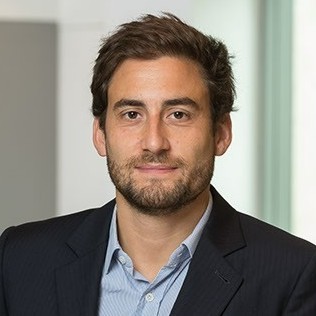
In this RAISE Summit segment, theCUBE’s John Furrier sits down with Romain Mombert, managing director at Eurazeo Growth, to unpack how a new breed of European investors is going “risk on.” Mombert explains why the firm backs graph pioneers like Neo4j, frontier model builders such as Mistral and conversational AI leader Cognigy, all while importing Silicon Valley know-how through seasoned operating partners. The discussion highlights a third generation of founders who start global from day one, the shift from downside protection to upside conviction in Europea...Read more
exploreKeep Exploring
What is the context and significance of the RAISE Summit 2025 in relation to European entrepreneurship and investment?add
What are the experiences and observations of being a pioneer in the European tech industry?add
What is a notable European company in the field of conversational AI, and what are its achievements and relevance in the market?add
>> Welcome back everyone to
theCUBE's live coverage here exclusive in Paris, France
for the RAISE Summit 2025. I'm John Furrier, your host of theCUBE. Two days of wall-to-wall coverage. We're coming down to the end of day two. We're closing it out here in Europe with a European investing
platform that's making a ton of great bets in AI and really is a tell sign for
what is coming in the future of European entrepreneurship. Romain Mombert's here, managing
director at Eurazeo Growth. Great to have you on theCUBE.
Thanks for closing us out. You're the last interview, you're going to close out our exclusive coverage.
Romain Mombert
>> Oh, wow, what an honor! Thank you, John. >> Thanks for coming on. So,
I'm super psyched to talk >> to you for two reasons. It's very fitting to close
out with a European investor as good as you guys are. You're deploying a lot of
capital, you're making bets, your risk is on. It's a great environment,
you're doing a lot of AI from seed to later stage. You got some great names
like Neo4j, Mistral, and a handful of other
great growth companies. Well, first of all, congratulations and I think this is
going to be a template. We're seeing a lot of other
Europeans doing the same thing. What's it like to be
that pioneer in Europe?
Romain Mombert
>> I think it's very exciting, John, because when I started
working in this industry, you couldn't really build this very large business from Europe. So, take the example of Datadog and Snowflake, all European founders, but had to go to the US
to find the know-how, to find the capital to build a very large software businesses. Then there has been a second
generation like anyways, 2010 to 2020 and you started to have companies coming
out from the ground and C-level starting to understand how you can create global
business from Europe and that's really what we're after. The global category leader,
but that are born in Europe, and now we are the third generation, which is very ambitious. That doesn't see any barrier to growth. I don't know if you think of
the Mistral, we talk about it, the Lovable and day one, the
world is their global play and they are not shy to go for it and they can find capital and they can find also
investor like us that try to be as much value add as we can. We bring on board operating partners from very large successful US tech businesses that share their unique knowledge and know-how to the
European entrepreneurs. >> I mean entrepreneur
investing is really easy. Just bet on the winners.
Romain Mombert
>> It sounds easy when you say it. >> Of course, like I used to tell my kids, >> "In soccer it's easy, just
put the ball on the net. " It's hard. I mean it's
hard, but it's a team sport. I want to bring that up, because
it sounds easy but it's not and one of the things I noticed
about Silicon Valley being there 25 years moving from the East Coast, from the New York area in Boston to California was this
mindset of managing risk. East Coast used to be manage
the downside scenario on the seed round, the angel investors
or series A investors. West coast was managing
the upside scenarios and assuming everything fails. Europe I think is moving over from managing, "What's in it for me? " Which really disables the founder, and Jonathan Ross from
Groq was pointing that out to me in my last interview. The fact that you're doing
what you're doing is a risk on, manage the upside, make the right bets. Are others following your footsteps? Is there a Keiretsu forming in Europe or is it by sovereign country? How is the landscape?
What's the landscape like?
Romain Mombert
>> Yeah, so I think similarly to what I was describing from the tech landscape maturing over the generation and the cohorts, same
happened with the investors. And I remember my early
days when I was a banker and I would see very
structured term sheets with compounding, with- >> Perfective protective provisions on >> hypotheticals.
- ...
Romain Mombert
>> protective provisions. Yeah, exactly. I think we moved to something
closer to the US mindset also because we have a lot of US
fund now present in Europe and it's great because they're
bringing their expertise and we're also partnering with them. And I think now also
from the investor side, we're much more in this
focused on the upside and actually we are very
convinced that the upside can be as big as in the US, which
was not the case 10 years ago. And so back to your point,
we're actually looking to underwrite upside case in any scenarios that we try
to bring to four, five X and so that's really what
we are focusing on at the growth stage, at least. Venture will be more, but those kind of investment
didn't exist so much, so people were focusing
a lot on the downside. >> Well, I appreciate what you do. >> I love entrepreneurship and
I love the European culture. We're seeing a lot of
entrepreneur successes that aren't in the US and so you're seeing this democratization where digital culture
is we're all connected. Electronic is infinitely
scalable technology, so founders can be anywhere,
capital markets can flow. So, I think there's
going to be a resurgence of collaboration globally. >> Exactly.
- I saw here at the hackathon, >> at the RAISE Summit, the
winners weren't even here.
Romain Mombert
>> They were in Hungary,
right? It's like, "Okay. " They flew here to get the trophy. So, I mean this is the culture. You don't have to be
in Silicon Valley, but because you can connect to it first party and this is the new networks being built, these trust networks. So, I have to ask you about
some of the investments because you've got some
winners, Mistral's one.
Romain Mombert
>> Yeah. - You just recently
put capital into Neo4j, >> a company we've been covering. Talk about that investment.
What was the motivation? What was the thesis there?
Romain Mombert
>> Very happy to cover this one, because that was our first step in AI and at the time it was 2020
and I had met Emil, the CEO, and it was this Swedish
engineer who had in mind that you could get much more
value from the data if you represent it as a graph
natively than rows and columns. And it sounded a bit crazy to me, but then I started to dig
in and talking to customer and starting to realize how important connected data will be. Specifically as AI was
starting to kick in, and I remember putting in
our IC memo at the time. A quote from Bob Muglia
who was at the time CEO of Northlake, and he was saying, "By 2030, most of AI workload will be
powered by a knowledge graph. " And so to me it really kicked in and I was like, "Okay, so
there is a big upside scenario. " Which is AI kicks in and this capability to create interconnected data and interconnected brain
will suddenly become a must and that's what the team
has been executing on and what he's getting
us super excited about. >> Yeah, and what I love about, >> I mean I've been following Emil, everyone knows I'm a huge
fan of graph databases, because I saw that over a decade ago because graphs are how
data should be represented. Now, if you're a database
person, you'd be like, "Well, I could just have a pointer to tables. " And that's what Ben
Waugh said yesterday on theCUBE when he talked about graphs. But I think that's just, and I was talking to Philip who's the CTO of Neo4j. He and I were riffing on that at dinner, but that's just the mindset of he's just a database
guy, that's his view. So, you have that dogma
to the way you grew up, but I think if you look at the success of native AI at scale, it's
graph, it's graph of graphs. You're starting to see more infrastructure and algorithms moving
through graphs now better. So, the startups are the
proof point at the end of the data's customers. Exactly. You're starting
to see that evidence. All right, so what other
investments have you put in Neo4j good? >> Yeah.
- Mistral said that you've one.
Romain Mombert
>> One very interesting
company in AI is Cognigy. >> They are the leader in
conversational AI from Europe.
Romain Mombert
>> So, it's a competitor to
the Sierra for instance, of this world in the US, but they've been relentless in
focusing on creating the best possible automation
platform for conversation. And they are able to automate up to 80% conversation on
millions of conversation for the biggest airlines, biggest insurance company
you can think of around here. And they're having tremendous growth and ride. And yes, it's a company
based in Düsseldorf and highlighting again, all those gems that you can find in Europe. And actually for us as
investor are interesting because we can invest that
valuation that are more easily to back than in the US. So, >> Yeah, I think the latest
stage investments is good strategy, because you can
jump on category winners, you have visibility, maybe pay
a little premium if they go public, if the valuations are within a range, you can do the math on that. I think the magic for you and the investors going
forward will be the seed deals and series A as the unification of the entrepreneurship comes together and rallies around this OpenAI
system that's being built and all the enablement if the
governments get out of the way and let everyone do their thing, that's going to be a huge opportunity. What's your thesis on that?
How are you looking at deals? Assuming steady state things
are going to continue? Market's great, I think the
market's going to be great for at least another two years. IPO window's opening up
more, we're seeing Q4, Q1, 2026 is predicted to be a
big IPO year, which means anyone in a series B
plus is in line for IPO.
Romain Mombert
>> Yeah, I mean I've learned how to be very patient with IPOs. I think you know our
first vintage we started to deploy in 2015 and we still are waiting
for those IPO today, so it's going to come up, but the Doctolib, Dataiku,
so you have to be patient and I think we have a
great leadership on that. That people that worked
as a public investor and so we're not so focused on the IPO. I think
it's more about building great- >> Well, the IPO's coming, >> but that means you have
to an active investment so you have a portfolio that's ready.
- ...
Romain Mombert
>> yes, we have a portfolio that's ready, but on top of that, as you say, there is this newer generation
of very fast-growing company that can create new categories in AI and that will create a new cohort of very high quality businesses. >> I guess my question, Romain
is different. Let me rephrase. >> Yeah.
- What is your investment thesis now >> as you write checks and deploy capital?
Romain Mombert
>> As you look at the landscape and evaluating deals,
what do you look for?
Romain Mombert
>> Yeah, what do we look
for? So, we're looking for, I think if I focus on AI,
because that's the thing today. We're looking first for defensibility at the core,
which is not easy to find, at least at the growth stage, because you see how
things are moving fast. The cursor of this world, Windsurf getting acquired by OpenAI. So, either you invest early
and you get acquired quickly or you might also get
disturbed by the models. So, for us it's about
very high-value use cases. So, our last investment we
made, it's not announced yet, is in robotics, typically because here we see much
more barrier to entry because you need to get the right marriage between the hardware and the software and so we see increasing
amount of that in the pipeline. So, actually our pipeline
has shifted a bit. We didn't use to do robotics at all, but now this is . >> AI enables different capabilities.
Romain Mombert
>> So, that's what we're seeing and we're expecting that this
vintage will actually have a very different composition than our prior vintage that was a
lot of marketplace and FinTech and now it's more going
to be AI and robotics. So, it's super exciting. >> Physical AI is the
hottest category right now, >> it's because it's obvious.
Romain Mombert
>> And another thing that we
cover a lot here in Europe and really matters is what we called climate solutions. And so we invested also in EcoVadis, it's the largest ESG
scoring platform globally and we see if you can combine AI with use case around climate, I think that's something that's
also very . >> And check sizes that you like to write. Can you just give a range?
Romain Mombert
>> Yeah, absolutely.
- What's the normal check size?
Romain Mombert
>> 20 to 100 million. We
come in generally with a 50, >> 60 million check and then we can re-up and we tend to be pretty long-term focus. >> You're a good guy to know.
I like those check sizes.
Romain Mombert
>> Yeah, I mean-
- That's a good >> number.
- ...
Romain Mombert
>> we hope we'll be able to do
even more in the next vintage >> and continue to grow, but
we're very . >> It's a nice area because you
really got to be smart too in that and that's an area
where it's going to go. So, you're at a good
point, good valuations, but size enough where
the skin in the game.
Romain Mombert
>> Yeah, exactly. You
need to be also patient and cold-minded. Especially right now when you
see things are going so fast, because in a gross fund
you cannot do so many bets. It's more concentrated portfolio, but yet again, the quality
of entrepreneur, the quality, the robustness of the business has never been as good in Europe. So, I think it's going to
be a great . >> I think the economic
opportunity is huge for Europe >> and I'm a big believer in just
let things roll a little bit. Don't get too sovereign. Don't try to solve the
sovereignty problem 100%.
Romain Mombert
>> Yes.
- The degree of difficulty high. >> It's yeah.
- You can >> still, sovereign cloud and...
Romain Mombert
>> Sovereign cloud first, do
that. That's an easy one. >> Yeah, it's a good . >> Sovereign AI is just a little bit
Romain Mombert
>> abstract, it's not clear. I'd put that in the
back burner for Europe. That's my recommendation.
But sovereign cloud, there's demand and
that's technical, right? That's not just some more political. So, I think that's a great way to start and I think let entrepreneurs run.
Romain Mombert
>> Exactly, I think that's the-
- All right. Romain, thank >> you-
- ... that's the final word.
- ... very much for closing us out. >> Thank you so much.
- Closing us out here-
Romain Mombert
>> Thank you, John.
- ... >> for the RAISE Summit. >> I'm John Furrier, two days
coverage in the books.