In this interview from Phi Moments at Google Cloud Next, Harshini Infanta, associate practice lead of agentic enterprise intelligence at Quantiphi, joins Vishal Gupta, chief techco transformation and procurement officer of Indosat Ooredoo Hutchison, to talk with theCUBE's Rebecca Knight about reimagining a 100-million-subscriber telecom as an AI-first organization anchored by a sovereign AI platform built to serve every corner of Indonesia. Gupta explains how Indosat's mission to empower every Indonesian drove its pivot from traditional telco to techco, using AI as a democratizing force across an archipelago of 17,000 islands. At the center of that vision is Sahabat-AI — not just a large language model, but a sovereign ecosystem designed to preserve the cultural and linguistic nuances of Bahasa and guard against what Gupta calls "digital colonization." Infanta describes Quantiphi's role as co-architect alongside Google Cloud, positioning the company as an industrializer that makes transformative technology invisible — infrastructure so embedded it simply works.
The conversation also explores the organizational redesign required to operate as a truly AI-first enterprise. With agent workers projected to outnumber human workers at Indosat within a few years, Gupta details how the company built change management from the top down — running quarterly two-day immersion sessions first with 13 CXOs, then expanding to 100 senior leaders, framing agentic AI as empowerment rather than displacement. Infanta outlines how Quantiphi's platform-led, modular approach — now accelerated by Gemini Enterprise — ensures deployments scale beyond one-time initiatives. She introduces the principle of adoption-led engineering: building with the end user in mind from day zero, so solutions earn trust before they scale. Both guests close with advice for senior leaders navigating AI-first transformation. Infanta emphasizes collaborative ownership and obsessive ROI measurement, while Gupta distills the challenge into three principles — speed as strategy, organizational metabolism as the true constraint and trust as the scarcest resource in any agentic environment. From democratizing AI across 17,000 islands to building a replicable blueprint for sovereign, human-centered transformation, the discussion charts how bold ambition and engineering discipline can converge at scale.
Forgot Password
Almost there!
We just sent you a verification email. Please verify your account to gain access to
Phi Moments @ Google Cloud Next '26. If you don’t think you received an email check your
spam folder.
In order to sign in, enter the email address you used to registered for the event. Once completed, you will receive an email with a verification link. Open the link to automatically sign into the site.
Register for Phi Moments @ Google Cloud Next '26
Please fill out the information below. You will receive an email with a verification link confirming your registration. Click the link to automatically sign into the site.
You’re almost there!
We just sent you a verification email. Please click the verification button in the email. Once your email address is verified, you will have full access to all event content for Phi Moments @ Google Cloud Next '26.
I want my badge and interests to be visible to all attendees.
Checking this box will display your presense on the attendees list, view your profile and allow other attendees to contact you via 1-1 chat. Read the Privacy Policy. At any time, you can choose to disable this preference.
Select your Interests!
add
Upload your photo
Uploading..
OR
Connect via Twitter
Connect via Linkedin
EDIT PASSWORD
Share
Forgot Password
Almost there!
We just sent you a verification email. Please verify your account to gain access to
Phi Moments @ Google Cloud Next '26. If you don’t think you received an email check your
spam folder.
In order to sign in, enter the email address you used to registered for the event. Once completed, you will receive an email with a verification link. Open the link to automatically sign into the site.
Sign in to gain access to Phi Moments @ Google Cloud Next '26
Please sign in with LinkedIn to continue to Phi Moments @ Google Cloud Next '26. Signing in with LinkedIn ensures a professional environment.
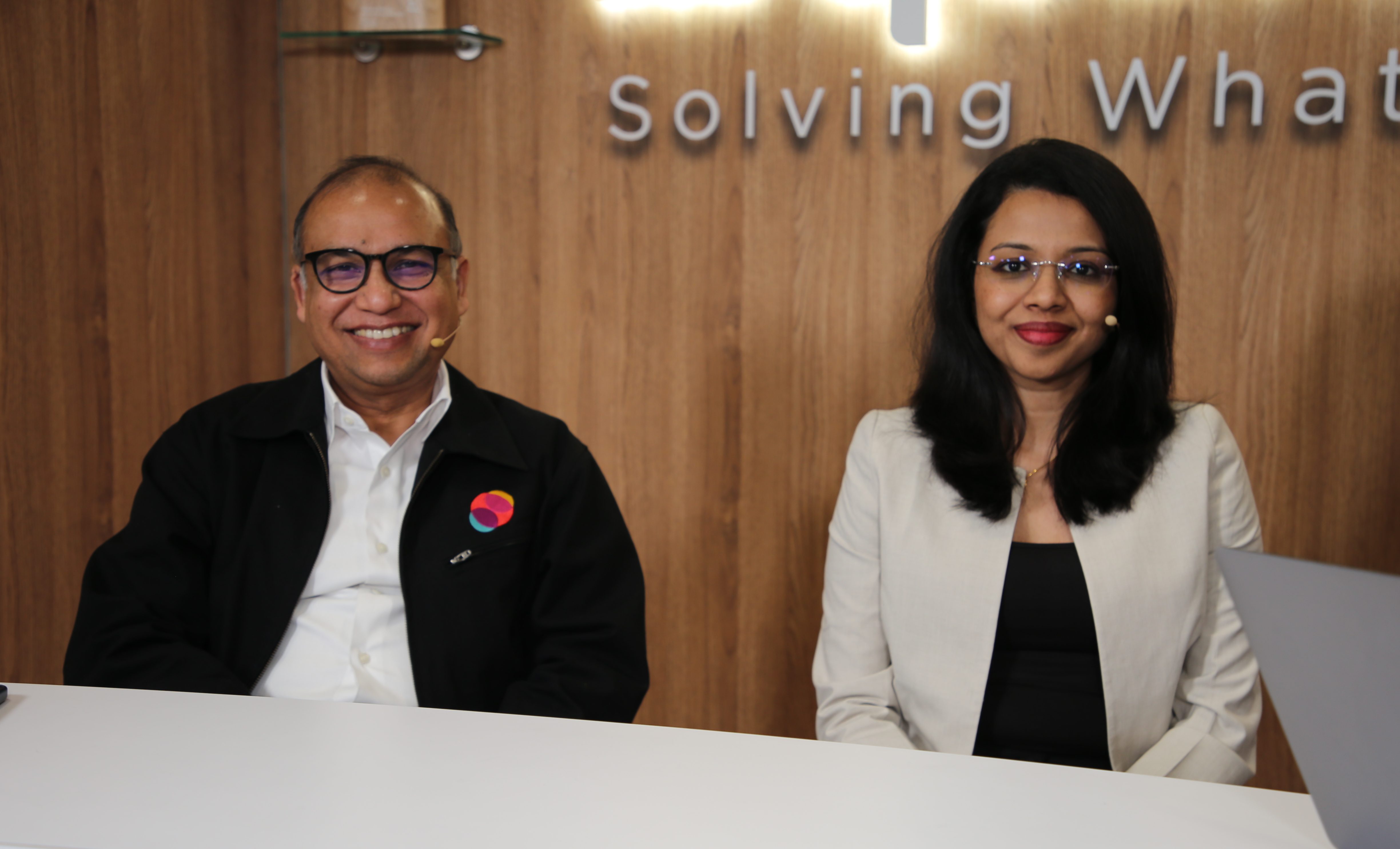
Rebecca Knight hosts a discussion with Vishal Gupta, Chief TechCo Transformation and Procurement Officer, Indosat Ooredoo Hutchison & Harshini Infanta, Associate Practice Lead, Agentic Enterprise Intelligence, Quantiphi as part of theCUBE's coverage of Phi Moments @ Google Cloud Next ’26
play_circle_outlineFrom Telco to Techco: How Indosat Is Democratizing AI Across Indonesia’s 17,000 Islands
replyShare Clip
play_circle_outlineSahabat-AI: A Sovereign Bahasa LLM Ecosystem Preserving Indonesian Culture and Resisting Digital Colonization for Indosat and Partners
replyShare Clip
play_circle_outlineStrategic partnership: Indosat, Quantiphi, Google Cloud, NVIDIA, and other alliance partners
replyShare Clip
play_circle_outlineAdoption-led engineering: prioritize user adoption and ROI from day zero
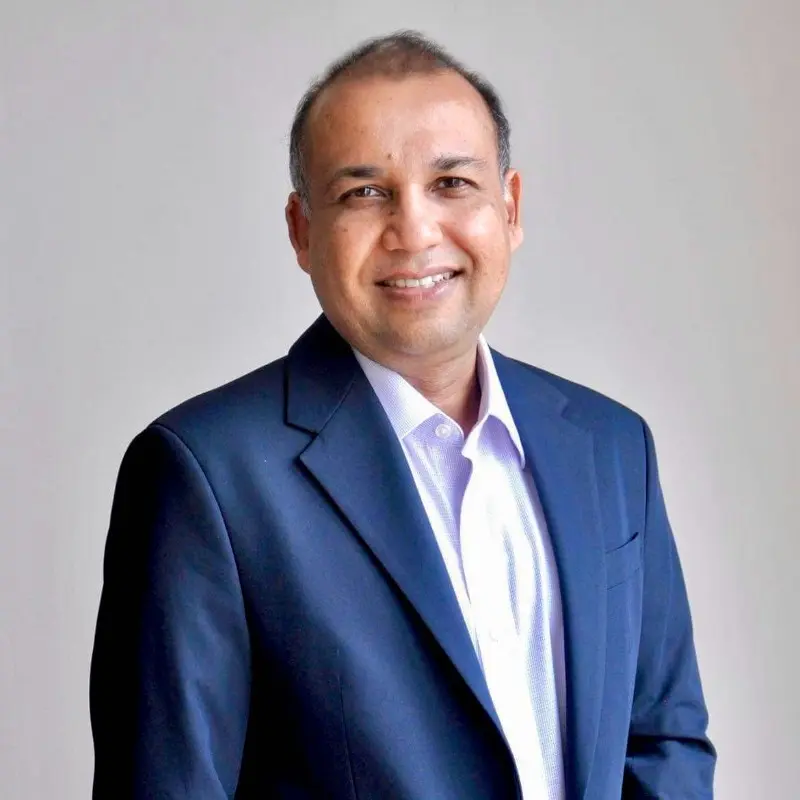
Chief TechCo Transformation and Procurement OfficerIndosat Ooredoo Hutchison
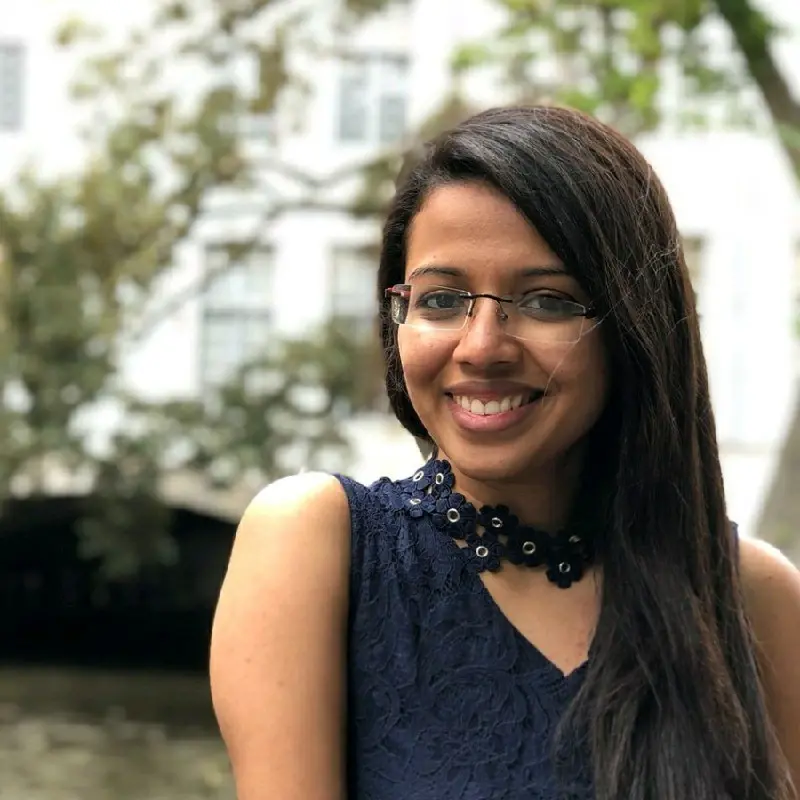
Harshini Infanta
Associate Practice Lead, Agentic Enterprise IntelligenceQuantiphi
In this interview from Phi Moments at Google Cloud Next, Harshini Infanta, associate practice lead of agentic enterprise intelligence at Quantiphi, joins Vishal Gupta, chief techco transformation and procurement officer of Indosat Ooredoo Hutchison, to talk with theCUBE's Rebecca Knight about reimagining a 100-million-subscriber telecom as an AI-first organization anchored by a sovereign AI platform built to serve every corner of Indonesia. Gupta explains how Indosat's mission to empower every Indonesian drove its pivot from traditional telco to techco, using...Read more
>> Good morning, everyone, and welcome back to day two of theCUBE's live coverage of fi moments here at Google Cloud Next in Las Vegas, Nevada. I'm your host, Rebecca Knight, and I have two great guests for this next segment. I would like to first welcome Harshini Infanta, Associate Practice Lead Agentic Enterprise Intelligence at Quantiphi. Welcome, Harshini.
Harshini Infanta
>> Thank you.
Rebecca Knight
>> And also Vishal Gupta, Chief Techco Transformation and Procurement Officer at Indosat Ooredoo Hutchison. Welcome.
Vishal Gupta
>> Hi, pleasure being here.
Rebecca Knight
>> You have quite a title.
Vishal Gupta
>> It is quite a title.
Rebecca Knight
>> We'll start with that. So, Indosat is making a pretty big shift from a traditional telecom provider, to a techco. Why don't you start a little bit by just telling us about the shift that you're making right now?
Vishal Gupta
>> So, the vision of Indosat is to empower every Indonesian. And we have been empowering the whole digital economy of Indonesia through connectivity of mobile and enterprise connectivity. But what we realized is, tech was limited to the main cities, and Indonesia is a country with 17,000 islands. So the main islands had access to connect to tech. Democratization of AI fortunately allowed us to take tech to all the nations, it's a great equalizer, as we call it. We thought it's our responsibility now to empower Indonesia, every corner of Indonesia. So, AI gave us an opportunity to take that tech to every corner of Indonesia, and that's how the techco piece started coming in from a telco. So, that's the transformation from a telco to a techco.
Rebecca Knight
>> Empowering every corner of Indonesia, that is an ambitious goal. With Sahabat-AI, you're not just deploying AI, you're also building a sovereign platform. Can you talk a little bit about why that is so central to this transformation?
Vishal Gupta
>> Yeah. So again, a country which speaks very little English, Bahasa is the main language of Indonesia. We had to take the responsibility of maintaining the cultural and the linguistic nuances of the nation. So our take of sovereignty was, how do I prevent, for lack of better word, digital colonization?
Rebecca Knight
>> Digital?
Vishal Gupta
>> Colonization.
Rebecca Knight
>> Oh, okay.
Vishal Gupta
>> Right? Because the whole context of any translation of Bahasa is through the Western world. We wanted to bring in that cultural and local nuance into AI, so grounding the whole AI and the context of AI into the local nuances. So, that's where the whole concept of sovereignty came in. Then we went into being the NVIDIA cloud provider in Indonesia, and having scaled that, I think the whole concept of sovereignty came in. Now, Sahabat is not just an LLM, Sahabat is also an ecosystem which will power up almost every app that Indosat provides or third party apps, as an LLM. So, we are trying to bring Bahasa and AI together.
Rebecca Knight
>> Well, it's very bold and also very nuanced, as you say. So Harshini, I want to bring you into this. When you hear something like that, with this incredible vision, how do you step in and help make it practical for the real world?
Harshini Infanta
>> Yeah. So first of all, Vishal, thank you for joining us, it's an absolute pleasure to share the stage with you at... When we started on this partnership and when we heard about this vision, we were deeply humbled by the responsibility that came with it. When we talk about the digital sovereignty of an entire nation, it's about fundamentally changing what it means for the citizens of that country and how they live their everyday life. And what we believed was, technology can be transformational only when it becomes invisible. Now, what I mean by that is, when we had the electricity moment or when we had the light bulb moment, initially it was very sketchy, it was sparkling, people were not very comfortable unless we had the power grid. And that was the industrialization which transformed how electricity became a utility and an everyday thing. And that has become our role in this entire journey. So we look at ourselves as industrializers and co-architects, jointly with Google Cloud and with Indosat, to see how we can make this a reality. So, this became a three-way partnership with Google Cloud's power in the computational side and their vertically integrated data and AI tech stack came as the engine for what we wanted to set to achieve. And like Vishal pointed out, there was a lot of understanding that went into what was the local reality and the cultural nuance that we had to understand, and we had to embed ourselves in that journey. And then we came in with the engineering, understanding, and the expertise that Quantiphi has built over time. So with our pre-built accelerators, we were able to accelerate how we can bring some of this to the market faster, because at the end of it, it's about what it means for the citizens of the country that they're going to use every day. So, that's essentially how the journey has been with co-architecting the entire vision and journey at scale.
Rebecca Knight
>> That's fascinating. You're not just technologists, you're almost cultural anthropologists too, as you said, embedding yourself in the culture to understand. Vishal, this isn't just about strategy, it's really changing how your organization operates. Can you talk a little bit about what it meant to your organization to become an AI first business, and how that changed the way teams interacted on a day-to-day basis?
Vishal Gupta
>> Yeah. So, bringing AI into any organization to me is not a transformation, it has to be reimagining of the organization. An organization of our size with 100 million subs, we think in a couple of years, the number of agent workers will be twice the number of human workers that we have. Now, with that context, the whole organizational design is undergoing a change. So for me, I don't call it transformation and I'm borrowing this word from maybe a lot of leaders who have talked in this conference. It is about reimagining the agentic world and how humans and agents will talk to each other. All the processes are undergoing change of, how do you put controls? How do you put safeguard guardrails around agents? And how do these interface between humans and agents happen where we feel safe? So, that's the whole premise of bringing or imagining the operating model of the organization.
Rebecca Knight
>> Right, and that's a lot of change management too, in terms of preparing the workforce for working alongside these agents, hand in glove, managing these agents. How are you doing that for your workforce, and how are you building trust, as you said, to make sure everyone does feel safe?
Vishal Gupta
>> So I think we started small, but we started with a very big ambition, as I said. And as we have made small steps and we have done small successes with our partners, I think the confidence of the whole ecosystem has grown. We have actually run a program where the transformation or the reimagining started from CXOs. We have been doing a quarterly immersion session with all CXOs every quarter for two days, where we just talk AI and how to transform the organization with AI. That started about a year and a half back. Then we took it to the next 100 leaders, now we do it with 100 leaders every quarter. So, it's not just about doing a POC or trying something new out, it's about talking of how this organization will behave differently. And every individual, first 13 CXOs, then 100 leaders, and the next 500, are undergoing that change, slowly.
Rebecca Knight
>> It's bringing people along, winning hearts and minds.
Vishal Gupta
>> One is bringing people along, but more importantly, helping them understand that this is empowering them and turbocharging them, rather than taking away their jobs. So I think the whole organization is talking of growth and how individuals like me, individuals like my peers, can be turbocharged for the future.
Rebecca Knight
>> So Harshini, I mean, transformation is a bit of an overused word here, but for lack of a better one, how do you make sure that this is something that evolves as Indosat's ambitions evolve, and not just a one-time initiative?
Harshini Infanta
>> So, Vishal brought up a great point about building trust, right? And we've been thinking about this for quite a while now, when we built agents for enterprises at scale. Now, how do we make it comfortable now? And the closest analogy that I can think of is, when we are driving a high speed car, you tend to trust the brake systems more than the engine itself. Right? So that's how we think about it, because we want to ensure that the observability and how we ensure that the agent is doing things that it's expected to do is very standardized and it is foolproof before you can actually scale. And that becomes a golden rule of how we take some of these initiatives forward. The second most important thing is about standardization. One, of course, it brings in efficiency, but it also brings in a lot of clarity around what to expect from these systems and from these agents that we build. And that is how we ensure that these are not one and done systems, but you look at building these things at scale and in a more standardized way. So our approach, which very closely aligns with how Indosat has also been thinking about it, is a platform-led method of scaling these systems. So when we talk about platforms, it's primarily about, how do you design and scale solutions in a modularized method, where we know what are the different components and systems that bring together. And interestingly, some of the engagements that we've had with Indosat is precisely on these areas, where we first build a foundational platform that then helps democratize building these agents across different business functions and across the enterprise. Now with Gemini Enterprise, this has become a lot more turbocharged than what it was a few months ago, and that's been our method of scaling with such.
Rebecca Knight
>> Here at this show, we're talking about fi moments, so when something shifts from promising to real. Can you describe a fi moment that you've had in working on this engagement with Indosat?
Harshini Infanta
>> So, one has been about adoption-led engineering. We truly believe that engineering is the servant of adoption, and it doesn't mean that engineering comes later, but thinking about, adoption comes first. So that has given us really a lot of fi moments, because when we build something and put it in front of the user, and then they go, "Wow, this has changed how I look at a task or my everyday activity." That has been our fi moment.
Rebecca Knight
>> It's making the technology invisible.
Vishal Gupta
>> Yes. So for me, if I look at... There was no single moment that we realized, "Oh, we have got this." I think the slow changes that we have made and the small successes that we have achieved has been really the journey that we have slowly realized we have gone beyond POCs, we see impact in our P&L. But if I have to name a couple of moments, I would really point out two things. One, the moment we realized we have a vision of empowering Indonesia through AI, it changed the mindset of everyone in our organization. It was all about growth, no optimization, right? And we did not have the resources, and I don't think we still have the resources. That brought us to the second important point that we realized, we can't do it alone. And that's where the whole alliance management that we have set in with Google, with Quantiphi, NVIDIA, the whole alliance piece came in, where people started adding resources more than that they had. So for me, any transformation or re-imagining like this cannot be done alone, and I think we need people together in collaboration.
Rebecca Knight
>> It's the mission and the power of partnerships.
Vishal Gupta
>> And the power of collaboration.
Rebecca Knight
>> So as we wrap up, I'd love you to give a little bit of advice to senior leaders who are perhaps trying to move toward a more AI native model and they're trying to balance that need for speed with also the nuances that we've talked about here, and making sure that something is grounded locally and also trusted. Where do they start? What's your best advice, Harshini?
Harshini Infanta
>> Our partnership with Indosat has become a blueprint of how some of these initiatives scale. And a few things that I would want to call out. One is about the collaborative partnership model. A vision of this scale is not going to have one owner to it. And of course, every person who's being part of this, the one common thing has been about how it grounds us with the scale and the ambition that we are working towards. Right? So having that kind of co-partnered or collaborative approach is very critical because a vision of this scale cannot be outsourced through a third party vendor to just come and get things done. So, that is definitely one. And the second one is about obsession around adoption and measuring the ROI of these efforts. So, that comes in from day zero, when we talk about what are the areas that we are looking to transform, or rather, reimagine, in how we approach these initiatives. So if I have to pick two things, one is about adoption and therefore, ROI. And the second one is a collaborative partnership in scaling this, where everyone has the skin in the game.
Rebecca Knight
>> Vishal, final word.
Vishal Gupta
>> Yeah. So adding to this, and I'll borrow some of the quotes I've heard in this conference and other place, leaders. Speed is a strategy. It is no more waiting, waiting is not an option. That's one. So, organizations have to move with speed. The other realization is that aspiration is not a limitation. I think the ability to execute and absorb changes in the organization is the limiting factor. So as people go around these transformations, you have to look at your ability to be able to absorb these changes. The changes are happening at such a pace, the metabolism of the organization is just not able to digest that change. Right? Agentic environment is not scarcity, trust is. How do you build trust in the environment and within the teams that they can adopt this new technology? If we can look at these three pieces, I think organizations will be able to scale this up.
Rebecca Knight
>> And it is precisely the bold vision that is so motivating to your company too. Vishal and Harshini, thank you so much. A really interesting conversation.
Harshini Infanta
>> Thank you.
Vishal Gupta
>> Thank you so much.
Harshini Infanta
>> Thank you.
Vishal Gupta
>> It's a pleasure being here.
Rebecca Knight
>> I'm Rebecca Knight, stay tuned for more of theCUBE's live coverage of fi moments here at Google Cloud Next. You're watching theCUBE, the leader in enterprise tech news and analysis.








 Rebecca Knight