In this interview from Phi Moments @ Google Cloud Next 2026, Ankur Manake, Honeywell Forge data and AI leader at Honeywell, joins Dinesh Kabaleeswaran, regional sales leader for North America at Quantiphi, to talk with theCUBE's Rebecca Knight about the journey from AI experimentation to enterprise-scale production in complex industrial environments. Manake describes the challenge of "legacy spaghetti" — a sprawling mix of sensor data, asset metadata and unstructured content across heterogeneous industrial systems — and explains why layering AI on top of existing processes inevitably produces stalled pilots. True transformation, he argues, requires rethinking workflows alongside domain experts, treating AI not as an added tool but as the new standard way of working. The north star, he notes, is reliable AI that is consistent, trustworthy and transparent enough for industrial teams to act on with confidence.
The conversation also explores how Kabaleeswaran and Quantiphi approached the Honeywell engagement as a unified team, drawing on Safi Bahcall's "Loonshots" framework to maintain a dynamic equilibrium between aggressive innovation and operational stability. Kabaleeswaran breaks down how running tightly scoped sprints — measured in weeks, not months — surfaced early wins that turned skeptics into believers and built the trust needed to scale. Both guests reflect on their Phi moments: for Kabaleeswaran, it was seeing real outcomes emerge mid-sprint; for Manake, it was watching customers experience a genuine breakthrough with technology that changed how they operated. Looking ahead, Manake outlines a vision of an "intelligence neural network" — individual nodes of AI capability that must be intelligently connected to eventually drive autonomous industrial outcomes. From starting with the right-sized problem rather than the technology to leveraging crisis moments as catalysts for change, the discussion offers a practical roadmap for executives navigating their own AI transformation journeys.
Forgot Password
Almost there!
We just sent you a verification email. Please verify your account to gain access to
Phi Moments @ Google Cloud Next '26. If you don’t think you received an email check your
spam folder.
In order to sign in, enter the email address you used to registered for the event. Once completed, you will receive an email with a verification link. Open the link to automatically sign into the site.
Register for Phi Moments @ Google Cloud Next '26
Please fill out the information below. You will receive an email with a verification link confirming your registration. Click the link to automatically sign into the site.
You’re almost there!
We just sent you a verification email. Please click the verification button in the email. Once your email address is verified, you will have full access to all event content for Phi Moments @ Google Cloud Next '26.
I want my badge and interests to be visible to all attendees.
Checking this box will display your presense on the attendees list, view your profile and allow other attendees to contact you via 1-1 chat. Read the Privacy Policy. At any time, you can choose to disable this preference.
Select your Interests!
add
Upload your photo
Uploading..
OR
Connect via Twitter
Connect via Linkedin
EDIT PASSWORD
Share
Forgot Password
Almost there!
We just sent you a verification email. Please verify your account to gain access to
Phi Moments @ Google Cloud Next '26. If you don’t think you received an email check your
spam folder.
In order to sign in, enter the email address you used to registered for the event. Once completed, you will receive an email with a verification link. Open the link to automatically sign into the site.
Sign in to gain access to Phi Moments @ Google Cloud Next '26
Please sign in with LinkedIn to continue to Phi Moments @ Google Cloud Next '26. Signing in with LinkedIn ensures a professional environment.
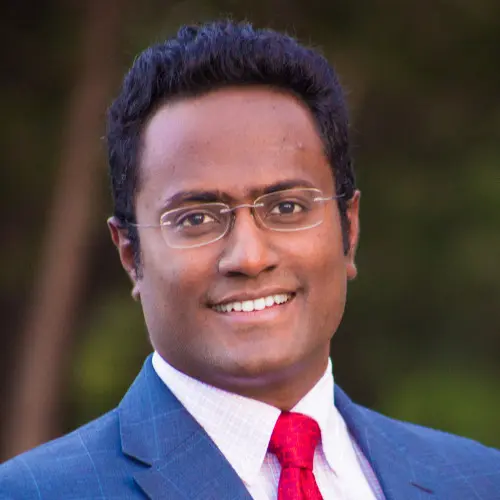
Ankur Manake, Honeywell Forge Data and AI Leader, Honeywell & Dinesh Kabaleeswaran, Regional Sales Leader - North America, Quantiphi join theCUBE host Rebecca Knight for
Phi Moments @ Google Cloud Next ’26 in Las Vegas, NV.
In this interview from Phi Moments @ Google Cloud Next 2026, Ankur Manake, Honeywell Forge data and AI leader at Honeywell, joins Dinesh Kabaleeswaran, regional sales leader for North America at Quantiphi, to talk with theCUBE's Rebecca Knight about the journey from AI experimentation to enterprise-scale production in complex industrial environments. Manake describes the challenge of "legacy spaghetti" — a sprawling mix of sensor data, asset metadata and unstructured content across heterogeneous industrial systems — and explains why layering AI on top of exis...Read more
>> Good afternoon everyone, and welcome back to theCUBE's Live coverage of Phi moments. We are here at Google Cloud Next 2026 in the Las Vegas. I'm your host, Rebecca Knight. I would like to welcome two great guests for this next segment. We have Ankur Manake. He is the Honeywell Forge data and AI leader at Honeywell. Welcome, Ankur.
Ankur Manake
>> Thank you.
Rebecca Knight
>> And Dinesh Kabaleeswaran, regional sales leader in North America at Quantiphi. Welcome.
Dinesh Kabaleeswaran
>> Thank you.
Rebecca Knight
>> So we're going to be talking about how we've hit a point where AI is not a project anymore. We were all at the keynote hearing Thomas Kurian say, we've really moved beyond the pilot phase where it's becoming core to how businesses operate. Well, Honeywell is a complex business, which is a vast under statement. Can you talk a little bit, Ankur, about the moment where you realize that these incremental fixes to the legacy stack were not going to cut it anymore and you needed to do something really transformational.
Ankur Manake
>> I think fundamentally it's very important to focus your wins towards driving outcomes. How do you want to use AI and capabilities thereof to drive outcomes, which basically help you define what decisions do you want to make differently than the way you have made them in the past? How does different element of the context, the domain, the tooling and the entire operational environment come to play, and how do you want to rethink that to drive that decision making more effectively? And when you start thinking about that, that tells you what information do you need to process as a human being, to make that right decision, that drives that outcome. And then fundamentally, what data and AI capabilities do you want to actually instrument to be able to impact the way you do things and the way you need to do things differently overall? As you think about the whole paradigm of AI transformation that the whole world is going through, keeping the fundamentals intact on how things work in an industrial environment, what is important and what's critical, and putting that into your solution context to drive the outcome is a good formula for us to use to drive those transformations in the technology space that we are in right now.
Rebecca Knight
>> There's this idea of a legacy spaghetti, which I love. It's a colorful analogy. Describe what that looked like for your teams in their day-to-day workflows.
Ankur Manake
>> I think that's fundamentally what the industrial businesses have inherited or probably run with. We sit on heterogeneous systems right now, which of course generate different forms of data. We have data coming out from sensors. We have asset metadata that comes out in different shapes and form. You actually have unstructured data from different services and things like that. The important part is how do you homogenize these different bespoke data systems together to make it meaningful for us to essentially drive those outcomes is the complex part. And that is where the importance of domain expertise combining with this technology competency becomes critical that helps you achieve some of those goals that you're changing.
Rebecca Knight
>> A lot of companies just put AI on top as a layer, but you really, as you were saying, made this decision to rethink not just the technology, but also how your teams operate and function together cross-disciplinary. Can you describe a little bit about that moment for you, when it was that you said, "We need to do things differently."
Ankur Manake
>> I think one of the fundamental part for us to imagine was that AI is not another thing. It is the way you want to start working going forward. And when you start thinking about AI's capability to help do your standard work or improve the way you work or improve the quality of decisions that you want to make, that's what gets the experts more involved in the solution itself versus we have AI engineers coming in and selling you something and hoping that that sticks. There are great POCs, but if you really want to change the way you operate, change the way you want to work, you want to work with those experts. You want to define the solution, define the new process with these new capabilities with them, and then make it part of core standard work. How do you enhance or change some of the workflows that you may have today versus what you want to have with these new capabilities in place? Let's just imagine how things can run differently. And that's a very powerful, compelling way to think about reimagining our work and our processes going forward.
Rebecca Knight
>> Dinesh, I want to bring you in here because what Ankur is describing is a lot of change management here. Really big mindset shifts and new ways of working, not just new technologies and new gizmos we're bringing in here. Can you talk a little bit about the moment when you stepped in with Honeywell and how you worked hand in glove to make that achievable and practical?
Dinesh Kabaleeswaran
>> Sure. I think the opportunity that we had to work with Honeywell was a marriage made in heaven, to put it in a phrase, what really appealed to us. Safi Bahcall in his book Loonshots he talks about any organization which is going through transformation, they're experiencing a phase change, which means what worked in a certain flow is not going to work in another flow. However, he's saying organizations which are really holding the dynamic equilibrium will be successful, right? Where they have a loonshot team and a franchisee team. What he means by that, there is a team which is driving massive transformation at scale, trying to automate everything faster. And then there's a team which is making sure efficiency is not dropping, like flying a plane and also trying to fix it.
Rebecca Knight
>> Quite literally.
Dinesh Kabaleeswaran
>> While you're trying to do that, that's where Quantiphi had this opportunity to come and play the role where we'll bring in AI capabilities and start building. But Honeywell, I should speak to it, they are extremely good in keeping efficiency parameters intact, right? They have a very strong team to run. They have legacy knowledge, which is extremely powerful. That's why it became a really good recipe for success where we could come in, the team was ready to go. The efficiency parameters were all set on target, so we don't slip on it. Otherwise, AI efforts become POCs and then you don't see proto outcomes out of it.
Rebecca Knight
>> You just talked about this, about this tension between moving fast and getting things right, especially in an environment like Honeywell's. Can you describe a little bit about that tension and how you approached it and where you even decide to begin?
Dinesh Kabaleeswaran
>> Mm-hmm. It took a lot of discovery. I think teams have to come together where, I know this is a lot of time said, but I think I saw that come to real live action that there was no difference between external vendor coming and helping, it was always from the beginning, from the top, it's always it's one team, one goal, we have one mission to chase. They brought all of us together and there were a lot of work we brought in the, how can we go fastest what we brought in, but they showed us what are the things we need to keep stable, right?
Rebecca Knight
>> Because you don't want to introduce new risks.
Dinesh Kabaleeswaran
>> Exactly, right? While we can talk about how really, we can automate a lot of things, but the second order and third order of fix are really important for us to consider. I think that's where they have a really powerful dynamic team. They came together and we were able to deliver.
Rebecca Knight
>> So Ankur, once you've made these changes, the next question becomes, how do you measure success and progress really? What do you see as your north star and how has AI shifted? What is really your focus and your priority?
Ankur Manake
>> I think when you think about the industrial world in general, classically it has been spoken in terms of reliable engineering, reliable processes, which basically means consistency in how things get done and driving reliable and consistent outcomes. And that becomes extremely important for us even in context of AI. And I define reliable AI in different forms. One, it has to be consistent, it has to be trustworthy and it has to be transparent. And it is important to have all those three together in the mix and context of AI as well, because that's how experts believe that what AI is bringing to the table is actually usable, is actually I can start trusting and I can make my decisions consistently around that. And to me, that North Star becomes how do you make consistent, high quality decisions using AI, which of course drives the outcomes that we are trying to work towards. And outcomes basically are, in the industrial setting could be one, better asset performance and better utilization. It would be coming in the form of energy efficient, operations. It would come in the form of safer operations versus what you traditionally have right now. And for each industrial setting, each of these different paradigms actually are important to influence on how you use AI to drive successful, consistent operations overall. And that becoming part of standard work of how domain experts start trusting those decisions with the AI mechanics is of course the win that we are after.
Rebecca Knight
>> And it really builds on itself too. Here on this show, we're talking about this idea of Phi moments, of this moment when something moves from experimentation, pilot to something with real measurable business impact. I'm curious to hear from both of you with this Honeywell project, what that moment was for you and when you realized this was something that wasn't just promising, this is working and it's working at scale. Do you want to go for it first, Dinesh?
Dinesh Kabaleeswaran
>> Sure. The moment for me, which really stands out, like I said, this was never done before. So the journey we started, we came out in theory, there are a lot of things we can do it and it was laid out. Now we had to build a scaffolding on, which is a team that is going to support. We had to lay out the team. Then we had a massive, highly crunched timeframe, I should say. We are not talking here in months and years, you're talking in weeks and days. We set a really tight target and it was few sprints to run and the goal is to complete all our development within that time. And from that moment onwards, we are running sprints, massive aggressive run. While we are going through, in the middle of the sprint, when I saw the outcomes, that was the Phi moment for me to say, "This is actually possible and we can do it." And that belief also kind of changed everybody. Once we completed the development cycle, then we looked at and said, "We made a big change. We've not crossed the finish line yet, but this gave us a lot of confidence to say we are on the right track."
Rebecca Knight
>> And before I hear your Phi moment, what did that do to the human beings who were working on this and being able to see that progress, how did it change the way they worked and how they felt about the work?
Dinesh Kabaleeswaran
>> Great question, right? In fact, he spoke about trust, right? Trust grows over time, but it also grows over results. Once you start tasting those smaller victories that you see, we've laid a plan, yes, it's going to be months to journey, but you want to see those smaller victories, even the way we planned the project, that we were able to experience those smaller victories. And that automatically, even the ones who were, they were believers, of course, who are running in front. And there are others who are walking along and saying, "I'm still not sure, AI, I'm not sure how it's going to work," et cetera. But the more they see that it's bringing consistency, it's helping me to have better explainability and it's eliminating a lot of complexity that will be introduced due to human decisions. Those are all streamlined right now. When that happens, it turns out to be something that everybody wants to be part of this journey.
Rebecca Knight
>> It's making their lives easier and it's motivating too. How about you, Ankur? What was your Phi moment?
Ankur Manake
>> I think for us it's the customer outcomes that matter, and that's critical. When you give that aha moment to the customers that, "Oh, actually this works. Oh, this makes sense. Oh, I did not have this before. We actually did all these transformations and ." That's basically the winning moment that you want to take back to the team who's actually putting in a lot of effort to bring these new technologies together in a complex legacy environment and still put a new aha moment in front of the customer that is extremely satisfying and that's the win that we are all after.
Rebecca Knight
>> As we hear right now, I'm curious to hear from you, Ankur, what still feels unfinished in terms of looking ahead and moving forward into more AI ways of working?
Ankur Manake
>> I think we are scratching the surface on what AI can do in different walks of life in our portfolio of processes that we support today. I call this intelligence neural network that we are trying to create here. We are just creating nodes of intelligence at this point in time, but eventually this has to become a network for the system to start behaving intelligently and sometimes even independently to drive some of these process outcomes and process operations right now. And there's a lot of work to be done to make sure, one, as we build those nodes of intelligence, we are intelligently connecting them as well and stimulating their action based on the right triggers and the sensory parts that we have off right now. Each will come with its own form of challenge, a different level of complexity, a different layer of context or environment for us to deal with differently. And I think there is a lot to be done in that space.
Rebecca Knight
>> As we're nearing the end of the conversation, let's talk best practices, particularly for executives who are watching this and also dealing with their own complex legacy spaghetti and perhaps the skeptical leadership team. What's your best advice for where they should turn first and the first moves that they should make, Dinesh?
Dinesh Kabaleeswaran
>> Sure. They normally say most of the things that are really fruitful are common sense, right? I'll start with a common sense point, always keep in mind, start with the process. The first part, you need to really think about it. Sometimes organizations get into a mode of, "Okay, let me use AI to recreate all the process that I have." That's a recipe for failure. The whole idea behind bringing it, it's not just introducing AI as a tool, but you're doing process re-engineering. I think Ankur spoke to it in the beginning when he was thinking about it. So rethink about your process. Number two, your teams have to be restructured too in a way that will support. You need to have team which carries that equal, that dynamic equilibrium of having focus on acceleration and focus on keeping the ship steady. And those same teams cannot do, but you need to structure the whole organization in a way that both are working hand in hand. So that's how you can gain capacity. And this is a great time for people to lean in and leaders. They play an important role that they step up to the plate and keep driving that message top down. I think those are the things I'll leave us on.
Rebecca Knight
>> Yeah, absolutely. How about you?
Ankur Manake
>> Don't start with technology, start with the problem to solve. I think that's a very important one. Don't pick a massive problem. At the same time, pick up a right size problem that you want to go after and chase because there is a critical mass that you want behind this to make this successful and just make this work. Lastly, look for crisis opportunities. Crisis has huge amount of power in that, and that's when you get a lot of contribution from the ecosystem and the organization to support you towards solving that problem. And those are fundamental moments that you want to look after to see how do you drive or impact that change right now. So you want to start tomorrow, Monday on what you want to go after, pick a meaningful problem to solve, don't make it a massive transformation project, get those wins, incremental wins in place and logically tie them out to of course drive the transformation and success.
Rebecca Knight
>> And we don't wish for a crisis, but we also don't want to waste a crisis because there are lots of learning opportunities in that too.
Ankur Manake
>> Yep.
Rebecca Knight
>> Well, Dinesh and Ankur, thank you so much. This was a really interesting conversation. Great insights.
Dinesh Kabaleeswaran
>> Thank you.
Ankur Manake
>> Thank you.
Dinesh Kabaleeswaran
>> .
Ankur Manake
>> Thank you. Thank you.
Rebecca Knight
>> I'm Rebecca Knight. Stay tuned for more of theCUBE's live coverage of Phi moments here at Google Cloud Next. You're watching theCUBE, the leader in enterprise tech news and analysis.






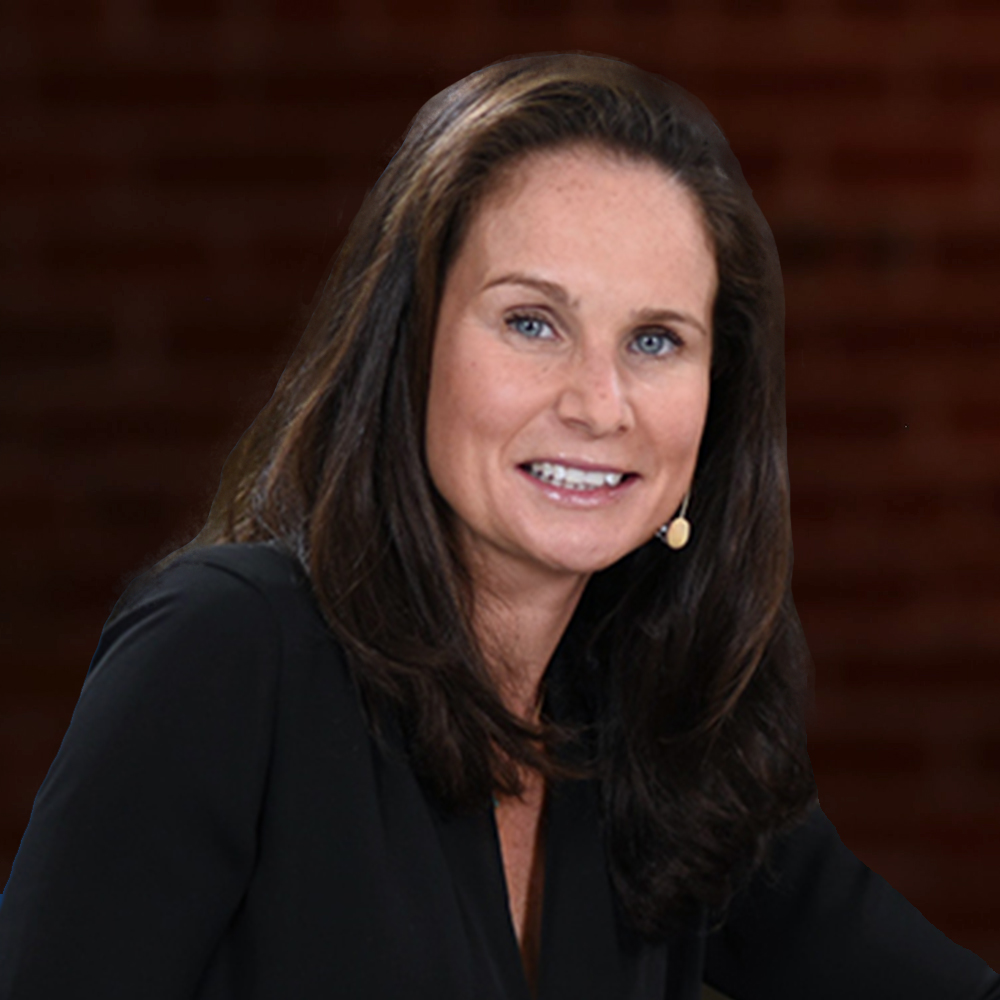 Rebecca Knight