In this interview from Phi Moments @ Google Cloud Next 2026, Erik Ashby, senior director and head of product research at Helpshift, joins Ram Kasi, head of the EMEA GCP business unit at Quantiphi, to talk with theCUBE's Rebecca Knight about how goal-driven AI agents are transforming player support from a source of friction into a genuine competitive advantage. Ashby traces Helpshift's evolution from mobile-first in-app customer service — now embedded in over two billion devices — to a family of AI agents built around a single reframing: shifting the objective from solving problems to actively engaging players. That pivot, developed in partnership with Quantiphi on Google Cloud, produced measurable results including higher player CSAT scores and a nearly 2x reduction in reopen rates. He explains how the Care AI agent works dynamically to get players back in the game — resolving issues, offering contextual rewards and handing off to human agents with full context — rather than routing them through rigid chatbot workflows.
The conversation also explores how Quantiphi served as the engineering backbone behind that transformation, bringing what Kasi describes as experience, expertise and scale to a product roadmap demanding rapid adaptation as AI models evolved every few months. Kasi underscores Quantiphi's platform-first philosophy — building shared infrastructure for security, grounding, scalability and integration so each new agent can be deployed faster and more securely than a siloed approach would allow. Ashby notes that gaming has historically been the proving ground for emerging technology, and that the engagement principles Helpshift developed for players apply equally to any brand seeking genuine consumer connection. From building goal-aligned architecture over off-the-shelf AI layers to choosing partners who can flex at the pace of change, both guests provide a practical roadmap for senior leaders ready to move beyond experimentation toward measurable business impact.
Forgot Password
Almost there!
We just sent you a verification email. Please verify your account to gain access to
Phi Moments @ Google Cloud Next '26. If you don’t think you received an email check your
spam folder.
In order to sign in, enter the email address you used to registered for the event. Once completed, you will receive an email with a verification link. Open the link to automatically sign into the site.
Register for Phi Moments @ Google Cloud Next '26
Please fill out the information below. You will receive an email with a verification link confirming your registration. Click the link to automatically sign into the site.
You’re almost there!
We just sent you a verification email. Please click the verification button in the email. Once your email address is verified, you will have full access to all event content for Phi Moments @ Google Cloud Next '26.
I want my badge and interests to be visible to all attendees.
Checking this box will display your presense on the attendees list, view your profile and allow other attendees to contact you via 1-1 chat. Read the Privacy Policy. At any time, you can choose to disable this preference.
Select your Interests!
add
Upload your photo
Uploading..
OR
Connect via Twitter
Connect via Linkedin
EDIT PASSWORD
Share
Forgot Password
Almost there!
We just sent you a verification email. Please verify your account to gain access to
Phi Moments @ Google Cloud Next '26. If you don’t think you received an email check your
spam folder.
In order to sign in, enter the email address you used to registered for the event. Once completed, you will receive an email with a verification link. Open the link to automatically sign into the site.
Sign in to gain access to Phi Moments @ Google Cloud Next '26
Please sign in with LinkedIn to continue to Phi Moments @ Google Cloud Next '26. Signing in with LinkedIn ensures a professional environment.
Are you sure you want to remove access rights for this user?
Details
Manage Access
email address
Community Invitation
Erik Ashby, Helpshift & Ram Kasi, Qunatiphi
In this interview from Phi Moments @ Google Cloud Next 2026, Erik Ashby, senior director and head of product research at Helpshift, joins Ram Kasi, head of the EMEA GCP business unit at Quantiphi, to talk with theCUBE's Rebecca Knight about how goal-driven AI agents are transforming player support from a source of friction into a genuine competitive advantage. Ashby traces Helpshift's evolution from mobile-first in-app customer service — now embedded in over two billion devices — to a family of AI agents built around a single reframing: shifting the objective from solving problems to actively engaging players. That pivot, developed in partnership with Quantiphi on Google Cloud, produced measurable results including higher player CSAT scores and a nearly 2x reduction in reopen rates. He explains how the Care AI agent works dynamically to get players back in the game — resolving issues, offering contextual rewards and handing off to human agents with full context — rather than routing them through rigid chatbot workflows.
The conversation also explores how Quantiphi served as the engineering backbone behind that transformation, bringing what Kasi describes as experience, expertise and scale to a product roadmap demanding rapid adaptation as AI models evolved every few months. Kasi underscores Quantiphi's platform-first philosophy — building shared infrastructure for security, grounding, scalability and integration so each new agent can be deployed faster and more securely than a siloed approach would allow. Ashby notes that gaming has historically been the proving ground for emerging technology, and that the engagement principles Helpshift developed for players apply equally to any brand seeking genuine consumer connection. From building goal-aligned architecture over off-the-shelf AI layers to choosing partners who can flex at the pace of change, both guests provide a practical roadmap for senior leaders ready to move beyond experimentation toward measurable business impact.
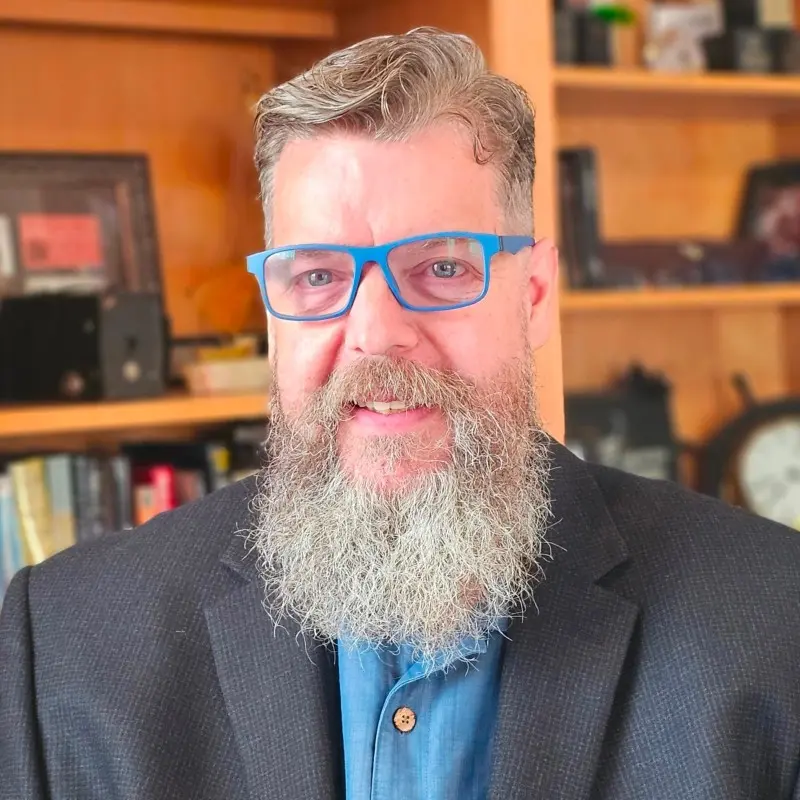
Sr. Director and Head of Product ResearchHelpshift
Ram Kasi
Head of EMEA GCP Business UnitQuantiphi
In this interview from Phi Moments @ Google Cloud Next 2026, Erik Ashby, senior director and head of product research at Helpshift, joins Ram Kasi, head of the EMEA GCP business unit at Quantiphi, to talk with theCUBE's Rebecca Knight about how goal-driven AI agents are transforming player support from a source of friction into a genuine competitive advantage. Ashby traces Helpshift's evolution from mobile-first in-app customer service — now embedded in over two billion devices — to a family of AI agents built around a single reframing: shifting the objective...Read more
>> Good afternoon everyone, and welcome back to theCUBE's live coverage of Phi Moments. We are here at Google Cloud Next in Las Vegas, 2026. I'm your host, Rebecca Knight. I've got two fantastic guests for this next segment. I would like to welcome to the show Ram Kasi, head of EMEA GCP Business Unit at Quantify. Welcome, Rom.
Ram Kasi
>> Hello, hello. Welcome, Rebecca.
Rebecca Knight
>> And Erik Ashby, senior director and head of product research at Helpshift.
Erik Ashby
>> Yeah, thank you.
Rebecca Knight
>> Thank you so much.
Erik Ashby
>> Oh, good to be here, Rebecca.
Rebecca Knight
>> Yeah, I'm excited about this because we're talking about how player support is starting to look very different in gaming and how it's becoming part of the experience itself. Erik, why don't you set the stage for us a little bit and tell us about Helpshift and how it fits into the gaming ecosystem.
Erik Ashby
>> Yeah. So Helpshift is really interesting. I've been at Helpshift since around 2016, and when we started, the whole idea was how can we provide customer service inside the app? The world was all moving to mobile at that time, and we recognized that when someone had a problem, to leave the phone and to go to a computer to get their problem solved, they're out, they're done. So the idea was let's have an in app customer service, and when we did that, what happened is that the gaming community just really resonated with that. Because as gamers, when they have a problem, if they leave to go to do something, then it's over. And so we picked up a lot of gaming companies early on and we've really doubled down on that. And so we're in a lot of games that are out there that are just very common. In fact, over two billion devices actually have Helpshift in it today to get customer service.
Rebecca Knight
>> Keeping players immersed is key, that's what keeps you in the game, so to speak, but we've all hit those dead end chatbot moments. Can you describe a little bit about what's different about the AI bots you're building now?
Erik Ashby
>> Yeah. So you talk about dead end, and so you think about the problem that gamers have. If I hit any problem at all, any friction whatsoever, it's over. I'm just going to be like, "Fine. I'm just going to go play another game," and you've lost whatever that revenue is. And often, chatbots, they're workflows. In fact, we talk about journeys, we talk about containment, we talk about deflection, we talk about all these terms, and all of those terms can be combined into one thing, friction, and if you have friction, the player is just going to be gone. And so the AI agent represents an opportunity to just eliminate that friction because it's dynamic, it's contextual, it can enter in at the time that the player wants, and in fact, what we want to do is we want to be able to solve the problem before they even ask for it, before they even have an opportunity to hit that friction, and that's really what our goal is with the AI agents.
Rebecca Knight
>> So removing that friction, Rom, that's a vision and that's a big lift. So as the engineering partner, can you describe a little bit how you bridge that gap and what it took to really move Helpshift into production with Google Cloud?
Ram Kasi
>> That's a good question, because with Helpshift, they had a massive dream and big vision of where they want to get to, and that is where a specialist partner like Quantify come in where we bring in three major things in terms of experience, expertise and scale. When I say experience, Quantify has been working with several contact center projects for a lot of several larger customers, and we bring in that experience of what it takes to, as Erik was mentioning, delighting a customer, delighting a player. So we understand that domain bit of what it takes to build, one, and second is in terms of expertise. As you know, in the last 18 months, 24 months, the technology's completely changed. Every two months, new model comes in, new infrastructure comes in, architecture changes. So this is where a specialty partner like us where 2,500 people, heavily certified, working very closely with Google Cloud brings us that experience and Helpshift teams can trust us in terms of building, working along with them in terms of building the, or making the vision true. And third is in terms of scale. When you have a large vision and then the large product roadmap, so that's where a partner like us, we have 2,900 people, we work very closely with them in their London officers and their Indian offices, we are able to scale up and down based on the demands and needs as well. So I would put it on these three things, experience, expertise and scale.
Erik Ashby
>> And I would say when we brought Quantify in, one of the things that we worked on is not just the technology, but what was the strategy and the architecture that we wanted? And that's pruned out to be very helpful because as the technology has evolved, we've had to change things and we've had to change them very rapidly. And having Quantify here to help us be able to do that, because we had the right architecture, the right skills in place to be able to do that has been absolutely phenomenal.
Rebecca Knight
>> You were able to adapt more quickly and more efficiently.
Erik Ashby
>> And in this industry right now with how fast things are moving, that is one of the keys is how fast can you be able to do that? And that really helps-
Rebecca Knight
>> You need that flexibility.
Erik Ashby
>> Absolutely. Absolutely.
Rebecca Knight
>> So Erik, you've introduced Care AI agent.
Erik Ashby
>> Yeah, Care AI agent. Yes, yes.
Rebecca Knight
>> Care AI agent. Tell me a little bit about how the platform works.
Erik Ashby
>> Okay. So Care AI agent is one of ... Actually, we have a family of agents, and it's the first one that we've come out with. And when we first started, we said, "Okay, let's take AI agents and let's have them tackle solving problems." And it did okay. It wasn't anything that we were like, "Oh, this is changing." But then as we were working with Quantify, we actually tweaked it a little bit and we said, "Let's change the goal to be about engaging the player." And so when we made the Care AI agent, its goal to engage the player, that's when it shifted. That's when we saw a shift in how it worked, how it interacted, the things that did, the answers that it gave. Because of course it's going to solve the problem, but its goal is to get the player back in the game, and so if someone has a question, it'll answer the question and then it's like, okay, now let's take this back into the game. If they have a problem, it'll solve the problem and then maybe offer them a reward about, "Okay, here's the reward for ... We saw you have this problem, so I'm going to give you something so you go back and play the game." And so that's what the Care AI agent is about. It's about creating that engagement with that player, and it's been very powerful. Unlike the workflows that would just try whatever it was designed, the agent is dynamic so it can figure that out. Now, the other agents we have is we have engage AI agent, which is going to help the management or the agents actually, the human agents engage with players. We have community AI agent and then all of this of course is backed by Guard AI agent, which we've already deployed, which of course protects the system, but all of those work together in a family of agents that we have.
Rebecca Knight
>> So how do you make sure that this family of agents is enhancing the human agents and not displacing them?
Erik Ashby
>> And that is actually extremely important. That of course is the other thing that we wanted to do. Again, when we started with ... Take an AI agent, your job is to answer questions or to solve problems or things like that. There was a little bit of friction there because that's what the human agents do and things like that. But then what happened is when we aligned with, okay, this agent, your goal is to engage players in gaming. Well, that's the same as what the human agents. They have now a shared goal. And so if the AI agent comes in, it can take some of the workload, some of the easy questions, or some of the negative questions like where there's a policy, you can't do this. I'm just going to tell you that. Really, those types of things it can handle, but the more complex things, or let's say you want to have a human come in and give some rewards or things like that, they actually work together. The Care AI agent will give all of that information, all the history, all the context, all over that, so the human agent can step in and be that hero and engage with the player, and so now they're working together on a common goal. And so what's interesting is in that, we've seen two things happen. One, we've seen increased player CSAT, which was important, but we also saw a decrease, almost by 2X, in reopen rate from the players. Because often when the players would come in before, when they got a chatbot, they're like, "Oh, screw it. I'm just going to try and close it out and I'll just try and get a human again." Now what we're seeing is when they come in talking to an AI agent or an AI agent and a human, when they're done, they're done. They're happy, they're back in the game, and so it's really about getting that goal right.
Rebecca Knight
>> I would also argue that it would be worth looking at the metric of how engaged the worker is, because the worker, getting to be the hero, that's going to lead to more satisfaction with their job, more interest, more loyalty, more engagement, and those are all the things that keep human workers happy at work.
Erik Ashby
>> Yeah.
Ram Kasi
>> Yeah. But also just to add on the same multiple agents, Rebecca. There is also what we are trying to quantify and what we're trying to do is let's build a platform so that all the agents can work on top of that as well rather than just building a different platform for each of these agents. That becomes much more faster and quicker for them to take it to the market as well.
Erik Ashby
>> Yeah. In fact, and that's the other thing that I think is really unique about Helpshift is it is a customer engagement platform. You have human agents, you have AI agents, and they're just working on that same platform together towards that same goal, and it just is a tool for then the brand to engage the players in this case.
Rebecca Knight
>> Rom, a lot of companies put AI as a layer on top, but what does it mean at scale to build AI directly into the workflow, and how does it change things?
Ram Kasi
>> Okay. I think I'm just going to go slightly more deeply. In terms of the last 18 months or so, everybody's thinking there's a lot of off-the-shelf products available, just plug it in, and it can work really well for chatbots, but we have gone through that time in terms of nobody, as Erik was mentioning, nobody wants to talk to a chatbot. They want to close and move out, right? But today, we are talking about building an agent which has human level capabilities in terms of autonomy, decision making, close tickets, or even seek help or activate, as you were saying, give rewards, et cetera. You need to have deeper integration, et cetera, as well, right? So this is very ... As Quantify, we believe in not just adding AI as a layer, but also let's go build ground up as a platform, which is several functions of securities in terms of, hey, can we build it? Every agent needs security, grounding, scalability, workflows, integration, all different factors. All of it, we have to build for every single agent. Why can't we build this as a platform so that customers can make use of the platform and build more agents faster, quicker, but also more secure as well? So that's what we believe in. Let's not look at as a layer, but also look at it as a ground up, build it for them.
Erik Ashby
>> And one thing I would say that's really interesting is that, and we've seen this honestly throughout the history of technology, is that as technology comes out, typically, it is the gaming community that's the first to push it. Like when mainframes were out there, they were playing games on it. When PCs came in, they were playing games on it. And so when we've taken our approach with the player engagement, and the platform that we built goes far beyond the gaming community, because all brands everywhere, being able to delight the customer, to have the customer engaged, those are fundamental principles. And it actually comes back to the human aspect where we want to be connected in that experience, and that's what brands are trying to do is they're trying to create that connection with their consumer. And so all of the technology that we built here is really trying to get that done. And so it goes far beyond, in my mind, beyond gaming, but this is where we really get to incubate and work on it.
Rebecca Knight
>> So the title of the show is Phi Moments, and it really refers to this moment where something shifts from experiment to real business impact. I'm curious to hear from both of you what that moment was in terms of working with Quantify and Helpshift hand in glove. Do you want to start, Ram, in terms of what you noticed?
Ram Kasi
>> Yeah. I think in our case, I think delighting the customer was the key Phi moment for us, and-
Rebecca Knight
>> But a hard thing to track in terms of what is delight?
Ram Kasi
>> Yeah. And technology is always available, but how can you make the technology get the business outcome in terms of getting that player delight? I think that's where we work towards. I think that's a Phi moment for me.
Erik Ashby
>> Yeah. And I think for me, it was that shift in our mindset when we set the goal of the AI agent to be about engaging with the customer, because our initial time, initially, we're like, "Oh, let's just make it a customer support agent." And it wasn't until we said, "No, you're actually here to engage the player," that was when all of a sudden, we saw the transformation. And it was interesting to see it in the numbers, where we saw the CSAT go up, we saw the reopen rate go down. All of those numbers started showing and we're like, "What changed?" Well, what changed was the goal, and that's when we realized that that goal is really what pins it all together. So that for us, that was the Phi moment.
Rebecca Knight
>> So as we're wrapping up here, there are I'm sure a lot of people watching this video saying, "I want to be able to do that in my organization, in my team." I would love to hear from you some advice that you would give to senior leaders who are wrestling with these same challenges and coming up against obstacles in terms of what they should focus on and where they should put their time and resources. Do you want to start, Rom?
Ram Kasi
>> Sure. So I would look at it the same way as I answered. What are we trying to see? And especially for senior leaders, can they look at the outcomes rather than looking at it as a technical challenge in terms of, "Hey, I want to build an AI agent rather look at what problem I'm trying to solve, what business problem I want to solve." If they want to start looking at that, Quantify can come and help them in terms of the same three things I said, experience, expertise and scale, and we can partner up with them and deliver great value.
Rebecca Knight
>> Excellent.
Erik Ashby
>> Yeah. For me, I would say there's a huge temptation to look at the technology and to be like, "Oh, we're here at Google Next and went to the keynote this morning. I was like, Oh, look, that's neat. Oh, look, that's neat." There's a huge temptation to be like, "Oh, we're going to go implement this," and there may even be business cases for it, but the transformation is when you align towards a goal, and to a pure goal. Not just say, "Oh, we're going to make money or we're going to ..." It's like, "We're here to engage players." That's a really pure goal. And what's so unique about AI is that AI is goal driven, and so we now have a technology where we can actually align that technology at its fundamental around our goals. And so I think that as people are getting into this, they should ask themselves the question, "What is my goal? What is it that I'm really trying to do? I'm not trying to deploy this technology. I'm trying to accomplish this. I'm trying to change this." What is that thing? And then align the technology. Literally say, "You are an agent to help me with that goal," and start there, and then I think you will see a lot of changes that were just unexpected. So that would be my advice.
Rebecca Knight
>> Yeah. And that's really terrific advice in terms of what the goal boils down to. My last question for you, Erik, because you are a technology veteran, you were at Microsoft for nearly two decades before Helpshift. As you both have said, technology is moving at breakneck speed. You feel whiplash every time there's a new product announcement, a new demo. How do you build with something that is moving so quickly in time? The technology is evolving so fast, so what is your best practice in terms of how do you get your team motivated, focused, when technology is moving so fast?
Erik Ashby
>> Yeah. And I think you and I, we've talked about this, is that we're living in a time where technology is moving faster than as consumers, we can consume it, and honestly, faster than a lot of people even understand what it is. And so we need to understand and be okay with that and put things into place such as have good partners that can help you with that, such as have a good architecture so you can be able to bring things in and out very quickly. Have good goals so that you know, are you achieving and moving forward? And if not, that's okay because your architecture and your partner will allow you to change very quickly for that. And so just understanding that we are in this type of an industry that is moving so fast and changing so much, that you then build that into your systems and how you work. And that's why it's been great working with Quantify because it's allowed us to do that. And then of course, as I said earlier, don't lose sight of your goal. Stay focused on that.
Rebecca Knight
>> Stay focused on your goal and choose your partners wisely. Ram and Erik, thank you so much.
Ram Kasi
>> Thank you, Rebecca.
Rebecca Knight
>> It was a really fascinating conversation.
Erik Ashby
>> All right. Thank you.
Ram Kasi
>> Thank you. Thanks for having us.
Rebecca Knight
>> I'm Rebecca Knight. Stay tuned for more of theCUBE's live coverage of Phi Moments at Google Cloud Next. You're watching theCUBE, the leader in enterprise tech news and analysis.







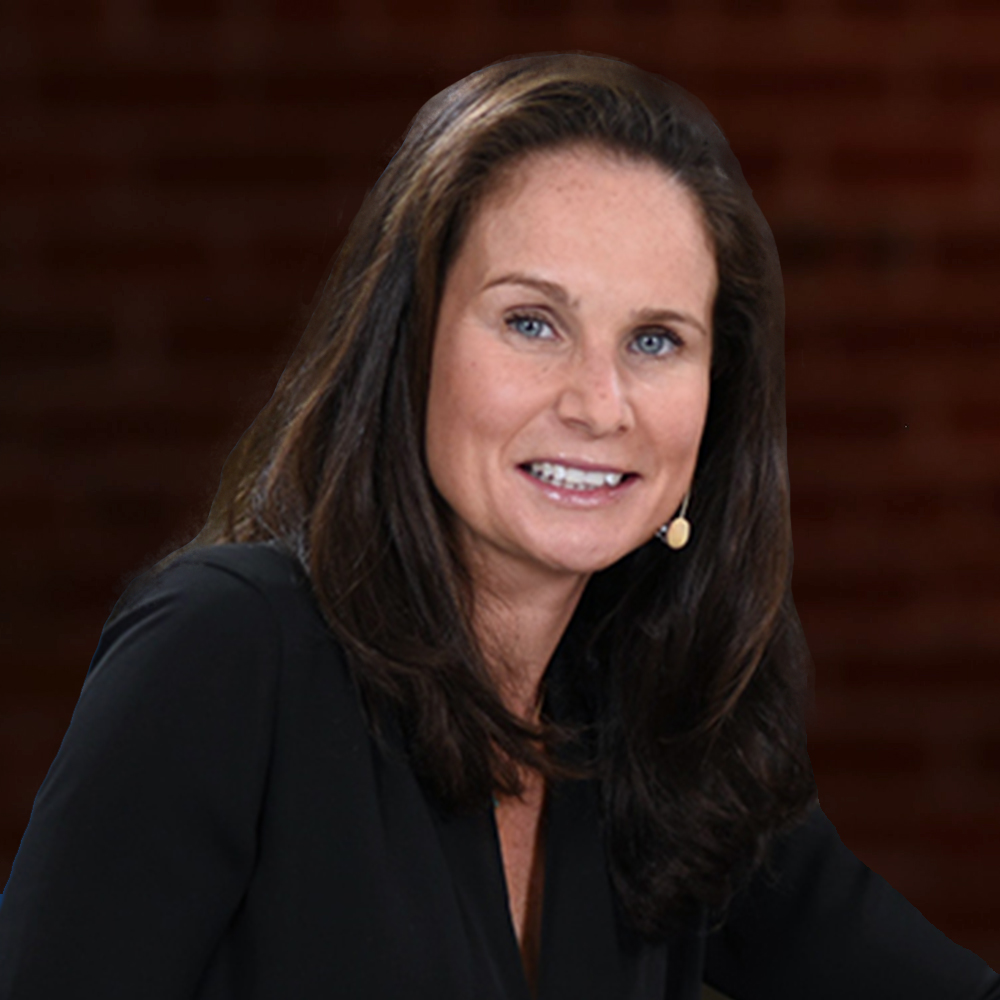 Rebecca Knight