In this interview from Phi Moments at Google Cloud Next, Ishaan Aggarwal, practice lead of CX practice at Quantiphi, joins Ray Dean, vice president of Cloud Marketplace Acceleration at Five9, to talk with theCUBE's Rebecca Knight about moving enterprise AI from promising pilots to measurable production outcomes in the contact center. Aggarwal identifies two persistent hurdles that determine whether AI transformations succeed or fail: enterprises navigating the coexistence of legacy and AI-native platforms without disrupting customer experience, and the need for deep integrations across CRMs, knowledge bases and policy engines. Without those connections, he argues, organizations end up with a well-spoken chatbot rather than a truly intelligent agent. Dean explains how Five9's expanded partnership with Google integrates the Gemini Enterprise for CX (GECX AI) solution directly into Five9's CCaaS orchestration and reporting, giving live agents complete visibility into every virtual agent interaction from a unified desktop.
The conversation also explores how Quantiphi's library of 60-plus accelerators — including its GateQeeper product, which bridges on-premises telephony with AI-native platforms — helps enterprises compress complex migrations without reinventing the wheel at every engagement. Aggarwal details why task completion rate has replaced call deflection as the north star metric for contact center AI, noting that deflection alone can mask frustrated customers who simply call back within 24 hours. Dean outlines the three components Five9 uses to validate deployment success — platform reliability, outcome alignment and financial viability — and highlights the company's availability on Google Cloud Marketplace as a way to meet customers where they procure. From redefining what success looks like before a single line of code is written to building on a foundation aligned with Google's AI roadmap, both guests provide a practical framework for senior leaders navigating the human and technical complexity of AI-driven contact center transformation.
Forgot Password
Almost there!
We just sent you a verification email. Please verify your account to gain access to
Phi Moments @ Google Cloud Next '26. If you don’t think you received an email check your
spam folder.
In order to sign in, enter the email address you used to registered for the event. Once completed, you will receive an email with a verification link. Open the link to automatically sign into the site.
Register for Phi Moments @ Google Cloud Next '26
Please fill out the information below. You will receive an email with a verification link confirming your registration. Click the link to automatically sign into the site.
You’re almost there!
We just sent you a verification email. Please click the verification button in the email. Once your email address is verified, you will have full access to all event content for Phi Moments @ Google Cloud Next '26.
I want my badge and interests to be visible to all attendees.
Checking this box will display your presense on the attendees list, view your profile and allow other attendees to contact you via 1-1 chat. Read the Privacy Policy. At any time, you can choose to disable this preference.
Select your Interests!
add
Upload your photo
Uploading..
OR
Connect via Twitter
Connect via Linkedin
EDIT PASSWORD
Share
Forgot Password
Almost there!
We just sent you a verification email. Please verify your account to gain access to
Phi Moments @ Google Cloud Next '26. If you don’t think you received an email check your
spam folder.
In order to sign in, enter the email address you used to registered for the event. Once completed, you will receive an email with a verification link. Open the link to automatically sign into the site.
Sign in to gain access to Phi Moments @ Google Cloud Next '26
Please sign in with LinkedIn to continue to Phi Moments @ Google Cloud Next '26. Signing in with LinkedIn ensures a professional environment.
Are you sure you want to remove access rights for this user?
Details
Manage Access
email address
Community Invitation
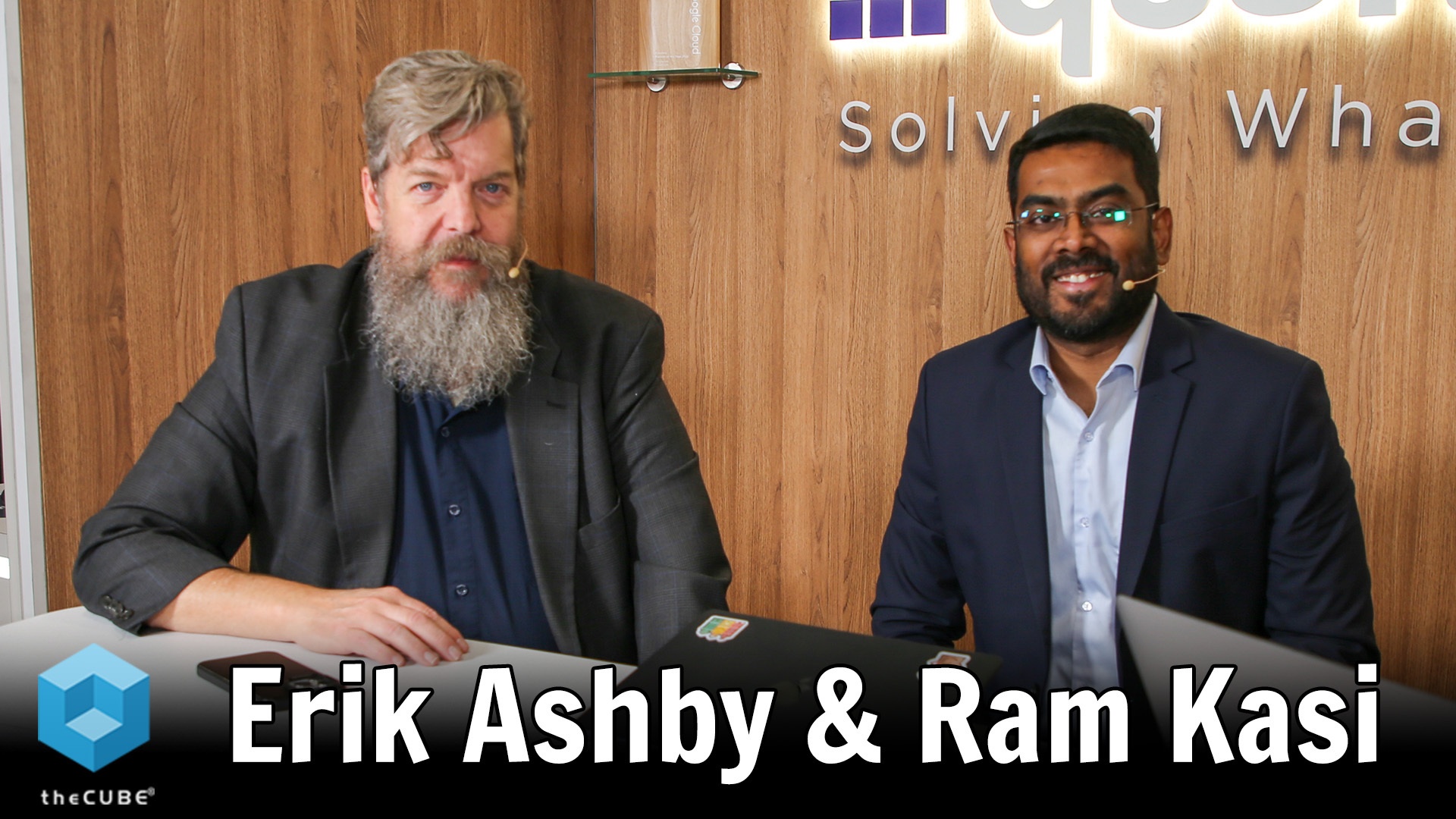
Ray Dean, Five9 & Ishaan Aggarwal, Quantiphi
Rebecca Knight is joined by Ray Dean, VP, Cloud Marketplace Acceleration, Five9 & Ishaan Aggarwal, Practice Lead, CX Practice, Quantiphi to explore the integration of artificial intelligence within contact centers, focusing on the shift from experimental pilots to achieving measurable business outcomes.
play_circle_outlineVoice as Frontline: Moving AI in Contact Centers From Hype to Measurable Business Outcomes
replyShare Clip
play_circle_outlineCoexisting with Legacy and AI-Native Platforms: Quantiphi's Orchestration, Integrations, and Accelerators for Intelligent Agents
replyShare Clip
play_circle_outlineFive9 Integrates Google Gemini Enterprise CX to Deliver Productized CCaaS and a Single Pane of Glass for Agents
replyShare Clip
play_circle_outlineContact Center AI Accelerators: Prompt Galleries, Integration Frameworks, Call Simulations, Continuous Fine‑Tuning and GateKeeper for AHT and Containment
In this interview from Phi Moments at Google Cloud Next, Ishaan Aggarwal, practice lead of CX practice at Quantiphi, joins Ray Dean, vice president of Cloud Marketplace Acceleration at Five9, to talk with theCUBE's Rebecca Knight about moving enterprise AI from promising pilots to measurable production outcomes in the contact center. Aggarwal identifies two persistent hurdles that determine whether AI transformations succeed or fail: enterprises navigating the coexistence of legacy and AI-native platforms without disrupting customer experience, and the need f...Read more
>> Good afternoon everyone, and welcome back to theCUBE's live coverage of Phi moments here at Google Cloud Next in Las Vegas. I'm your host, Rebecca Knight. We've got two fantastic guests for this next second. I would like to first welcome Ishaan Aggarwal, practice lead CX practice at Quantiphi. Welcome.
Ishaan Aggarwal
>> Thank you for having me.
Rebecca Knight
>> And also Ray Dean, VP Cloud Marketplace Acceleration at Five9.
Ray Dean
>> Thanks for having us here.
Rebecca Knight
>> Yeah, so we're talking about ... I mean, AI transformations always have ... We talk a lot about them centering around data, but really voice is still the frontline. Ray, as we all watched yesterday, Thomas Kurian said, "We're moving beyond this era of flashy pilots." This is the time when we are getting real and Five9 has doubled down on being the platform for defined measurable results. I'm curious from your perspective, why you think the AI hype has died down a little bit and why Five9 is really becoming the catalyst here?
Ray Dean
>> Well, I think we've gone from this moment in time where this AI hype was like, "Wow, look at how cool this technology is." To now we're seeing customers say, "Wait a second, how can I actually leverage this technology to drive outcomes in my business?" So one of the key things for Five9 was to ... When we started talking from customers and hearing about them wanting to drive more outcomes, we announced our expanded partnership with Google around integrating from a productization standpoint their GECX AI solution, so their Gemini enterprise contact center experience, and actually integrating that into Five9's CCAS orchestration and reporting.
Rebecca Knight
>> So Ishaan, Quantiphi is often the boots on the ground for these kinds of transformations. What do you see as often the hurdles to getting the measurable results that, as Ray said, that's what businesses want to see right now.
Ishaan Aggarwal
>> Right, right. Yeah, and actually I will start by saying that this is often the area that makes most transformations succeed or fail. It's never about turning the switch on. It's always about delivering measurable outcomes. And we consistently see two broad hurdles, right? One is enterprises often live in two worlds. You don't do a contact center migration overnight. Enterprises always live on the native platform, the legacy one, and the AI native one as well. So the challenge is how do you introduce AI without disrupting customer experience? And that is where most of the value lies. If you're able to nail that down, that's where you can unlock most of the potential. The second is the AI is only as good as what it is connected to. So it involves deep integrations with CRMs, knowledge bases, policy engines. And that is where, if you don't do that, you don't have an intelligent agent, you have just a good well-spoken chatbot. And that's where Quantiphi comes in. So we bring in the expertise on platforms like Five9 and Google. See, product companies will build a world-class product, but it will not fit the enterprise use case out of the box, so that's where we come in, right? We have product expertise, we bring in our accelerators that fast track development, we bring in orchestration layers that make sure there is no loss of context and you can always coexist in multiple platforms. And in effect, you can always have a software license that can give you the capability, but you need the engineering partner to unlock the potential out of that capability.
Rebecca Knight
>> And as you said, to not disrupt the customer experience. Ray, one of the biggest friction points is often this idea of the swivel chair problem where agents are switching between these multiple screens. You've talked about productized integration, which it's a little jargony, but can you describe what you mean here and how it creates a single pane of glass?
Ray Dean
>> Yeah. So I think you've got to take a step back to take a step forward. So over the last 27 years, Five9's been providing contact center solutions for customers. During that time, we have thousands of customers that are on our platform, hundreds of thousands of agents that log in every single day. We've gotten a lot of really good customer feedback. And as Ishaan mentioned, having those integrations with CRMs and UCaaS, we've done that. We've integrated those over the past. Now when we looked at Gemini Enterprise for CX and their AI stack, we recognized that we needed to ensure that the interactions were all visible, right? So when that call comes in and it goes through the Gemini conversational agent, gets routed back to Five9 from a standpoint of the live agent, they need to see the context of what happened during that chat with the virtual agent. And then they also need to have that exposure and view of the Google's Agent Assist that sits in the screen to give them some of that coaching. So we've built that to sit all within the Five9 agent desktop so that the agents have complete visibility into the solution.
Rebecca Knight
>> Okay. So Ishaan, you have talked about Quantiphi focusing on the plumbing of telephony, which makes a lot of sense when you think about how this all works. We're talking about measurable outcomes today. How are you using Quantifies Accelerators to help speed up these enormously complex migrations?
Ishaan Aggarwal
>> See, when we talk about measurable outcomes, speed is not the only goal. It's predictable outcomes with speed, right? At Quantiphi, we lean heavily on accelerator led development. And see, a lot of these transformations are very complex, so it's very difficult to approach them from scratch every time. So these accelerators kind of prevent the problem of reinventing the wheel. We have about 60 plus accelerators that solve this problem. And if I dive in a step further, telephony is still the biggest bottleneck. And in most situations, it is deep-rooted, oftentimes on prem. So it's not easy to just rip and replace a telephony system. And that's why back in 2021, Google was facing a lot of challenge because a lot of the enterprises were on some of these legacy systems and they were not able to tap into that market with their GECX, at that time it was known as CCAI platform. So we created this product called GateQeeper that seamlessly integrates AI native as well as on prem platforms without any loss of context. And then if you go a step further, a lot of our accelerators cater to the entire development cycle, which is design, develop, and run. As part of the design phase, we use AI to simulate AI call flows, and we use that to unlock potential automation opportunities. As part of the development process, we have built a lot of pre-built integration frameworks, prompt galleries that help organizations hit the ground running from day one. And as part of the managed phase, which is very important and very severely underlooked, we help organizations fine tune models so that they can keep improving the KPIs that business teams measure, which is containment, average handle time, all these things that actually make an impact.
Rebecca Knight
>> So what has been the response within the workforce? I mean, as you said, you have many, many agents and you've over the years gotten a lot of customer feedback, which has helped you improve your products. And now they're working alongside of AI, using AI every day agents to ... How are teams working together?
Ray Dean
>> Yeah. I mean, when we look at that from a standpoint of how are the teams working together, it's really making sure that we have three key things aligned. Number one is understanding and understanding what are we trying to accomplish. Do we have that common goal would be the second component. And then the third is how do we actually deliver that that builds the trust, the reliability and the actual outcomes? And I know I say that a lot, but we get tied up a lot of times in selling technology, right? And we need to all take a step back and say, okay, what does the end customer want to experience? And how do we work together with key strategic partners like Quantiphi, our end customers, to ensure that that full contact center experience is what their end customers want?
Rebecca Knight
>> Well, right, exactly. And I'm thinking about the customer, we've all been a customer of a call center and then I'm also thinking about the worker on the other end who is also trying to provide a good experience. And if they're able to have the right data, the right information, the right inputs and trust in that data, that they understand the context, they understand the customer journey thus far, and that therefore they're giving good direction. So it helps the workers too, the workforce.
Ray Dean
>> It does. And it really helps to ensure that they have complete visibility to every interaction. And that's one of the things we've heard over the years in working with our customers where once again, they look at one screen, they look at another screen, and then somebody who wants to look at all of the components needs to dig through all of that. And working with Quantiphi to help customers make sure that they know what their processes are allows them to actually deliver results.
Rebecca Knight
>> So at Quantiphi, as you well know, Ishaan, there's the idea of a Phi moment, and it's this shift where you know that something has moved from something that looks promising and is a good pilot to something that is actually producing measurable business impact. Ray, you're working with many skeptical boards and financial services and healthcare and other industries. What has been that Phi moment for you?
Ray Dean
>> Yeah, I wish there was one moment, it would be much easier. I think more that it's really shifted to understanding the different key components of their journey. So we really look at that in three pieces. Number one is customers want a scalable and standard platform. It has to work, right? So that's number one. You've got to have that reliable platform. When we look at it, second is that understanding. We've chatted a little bit about this already, but what are they trying to accomplish? Really understanding that and sitting down with our customers with Quantiphi again and being able to map out in a perfect world, what does that customer experience look like? And then the third component is making sure that we have the financial viability is what I would call it. And for example, from a ... Mapping the technology is important, mapping the business outcome is important. But equally as important as ensuring that we're aligning with procurement and finance within these customers to ensure that it aligns with what they're trying to accomplish. So one of the things that Five9 announced last year was our availability on Google Cloud Marketplace. So we're able to help meet customers where they want to procure that gives them predictable billing models as well as helps them to drive down their committed spend contracts with Google.
Rebecca Knight
>> So Ishaan, if call deflection is an old metric that contact centers used to use, what are the north star metrics that Quantiphi is using today to make sure that you are in fact getting the ROI that you think you should be getting?
Ishaan Aggarwal
>> Absolutely. Two broad metrics is what we are very passionate about. And when you look at call deflection, right, that's something that was probably a metric you would track in the era of the IVR.
Rebecca Knight
>> And call deflection means for viewers who are ...
Ishaan Aggarwal
>> Call deflection means if a call is contained within the IVR and there's no human involved, but that necessarily is just avoidance, right? Like you're just kicking the can down the road. I can always create an IVR, which is very tricky to navigate and make it very difficult for the caller to reach to an agent. You will probably end up with a frustrated customer calling back again in the next 24 hours. So call deflection is not the right parameter. What we try to do is task completion rate, right? We identify that an agentic agent has to do a particular task. Is that task completed or not? Because that is the actual measure of essentially making sure that the customer is not reaching out to you and their problem is getting solved and they're feeling satisfied. So that's one. The second is, and Ray touched upon it, is the human element of it. We often talk about AI, but we very conveniently ignore that agents are still a very integral part of the contact center, and there is a very strong human element to it. We were working with a very large utilities organization. We had deployed an agent as a solution for them. We were not seeing an uptick. And we spent five days in their contact center and we saw the challenges that their agents were facing, and that's when we realized there's a human element to it as well. And we understood that there are certain aspects that can be made more simpler, that can make their lives and jobs easier, and that had a huge impact on the adoption for an agent assist type of a solution. And that's where Five9 comes in, right? They create these very intuitive user experiences and agent desktops that are so easy to use, and that just helps in driving overall productivity.
Rebecca Knight
>> And as you say, burnout is a real problem for a lot of these workers. Okay, we're wrapping up here, but I have one final question, and that is your advice and counsel to senior leaders who are struggling with many of these similar issues in their organizations. Where would you say to begin? Because as you both have pointed out, this is exceedingly complicated, and there's the technology on one hand, but there's the humans on the other. So it requires a lot of different elements of problem solving here. So what would be your first advice? I'll start with you, Ishaan.
Ishaan Aggarwal
>> My advice would be to get a good sense of where you are, because any success measures can only be relative to where you stand right now, spend a lot of time on defining what success means for you, and then identify those opportunities, which can give you meaningful results in a quick short amount of time. And then just work. I think that is just something that everyone is starting to also get familiar with and more comfortable with the technologies evolving and just keep an open mind, right? You have to evolve with the technology, and that would be my advice.
Rebecca Knight
>> You have to evolve, but also to be developing and being innovative as it's happening so quickly. How about you, Ray?
Ray Dean
>> I'd say focus on the foundation, focus on the outcomes. My dad told me a long time ago that you can't build a beautiful house on a fractured foundation. So making sure that we're looking at that foundation is pretty critical. Make sure that we're aligning or that you're looking at aligning with a platform that is integrated and aligned with Google's AI Roadmap, and that it's a company that's actually done this and had migrations that actually matter.
Rebecca Knight
>> Excellent. Great advice. Great counsel. Thank you so much, Ray and Ishaan. A really fascinating conversation.
Ishaan Aggarwal
>> Thank you for having us.
Ray Dean
>> Thank you. Appreciate it.
Rebecca Knight
>> I'm Rebecca Knight. That roughs up theCUBE's coverage of Phi moments here at Google Cloud Next. You've been watching theCUBE, the leader in enterprise tech news and analysis.










 Rebecca Knight